Why PYAAS Publishes Its Quality Checks
A friend once asked me a simple question about the milk his family drinks every morning: "How do you actually know it's good?" He wasn't being difficult. He genuinely didn't know — and neither, it turned out, did the brand he was buying from. Somewhere on the carton it said "quality assured," and that was the end of the conversation. That two-word full stop is the exact thing I started PYAAS to undo.
I'm Aryan Sharma, and I run the field side of PYAAS — the farms, the collection, the quality, the relationships with our farmers. When we sat down to decide how PYAAS would handle quality, we made one decision that still shapes almost everything we do: we would not just run quality checks, we would publish them. This is a note on why we chose transparent milk quality checks over a reassuring label, and what that choice costs and gives.
Every dairy runs checks. Almost none of them show you
Here is the uncomfortable truth about the dairy industry. Most serious brands do run quality checks. Freshness, purity, temperature, handling — these things get measured. The problem isn't that the checks don't exist. The problem is that the results live in an internal file you will never see, summarised for you as a single soothing word on the front of the pack.
So you're left trusting a promise instead of reading a record. And a promise, no matter how confidently it's printed, is not the same thing as being shown the evidence. When information only flows one way — the brand knows, you don't — the balance of trust is off from the very first sip. I didn't want PYAAS to sit on the comfortable side of that imbalance.
What "publishing" a quality check actually means at PYAAS
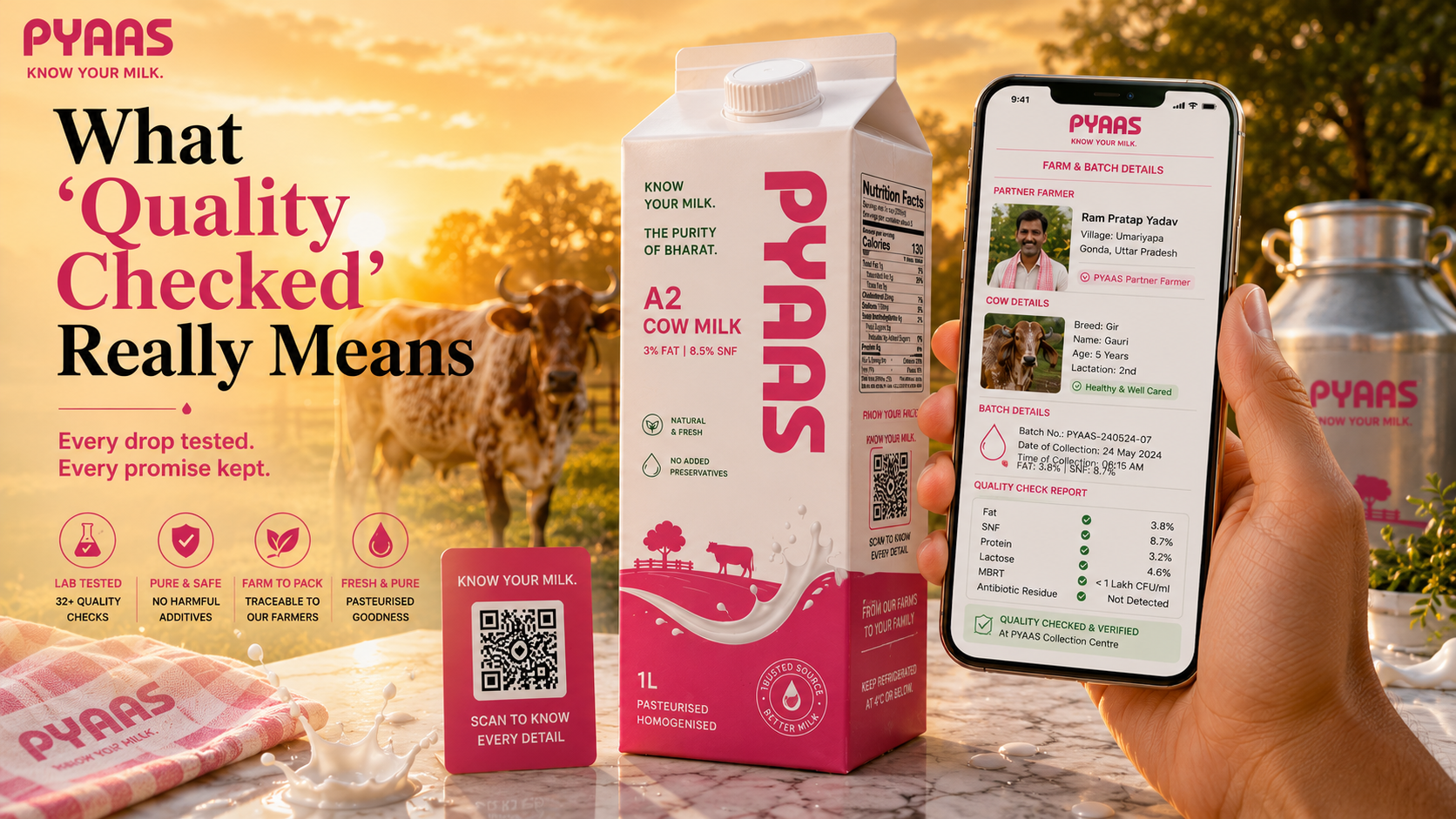
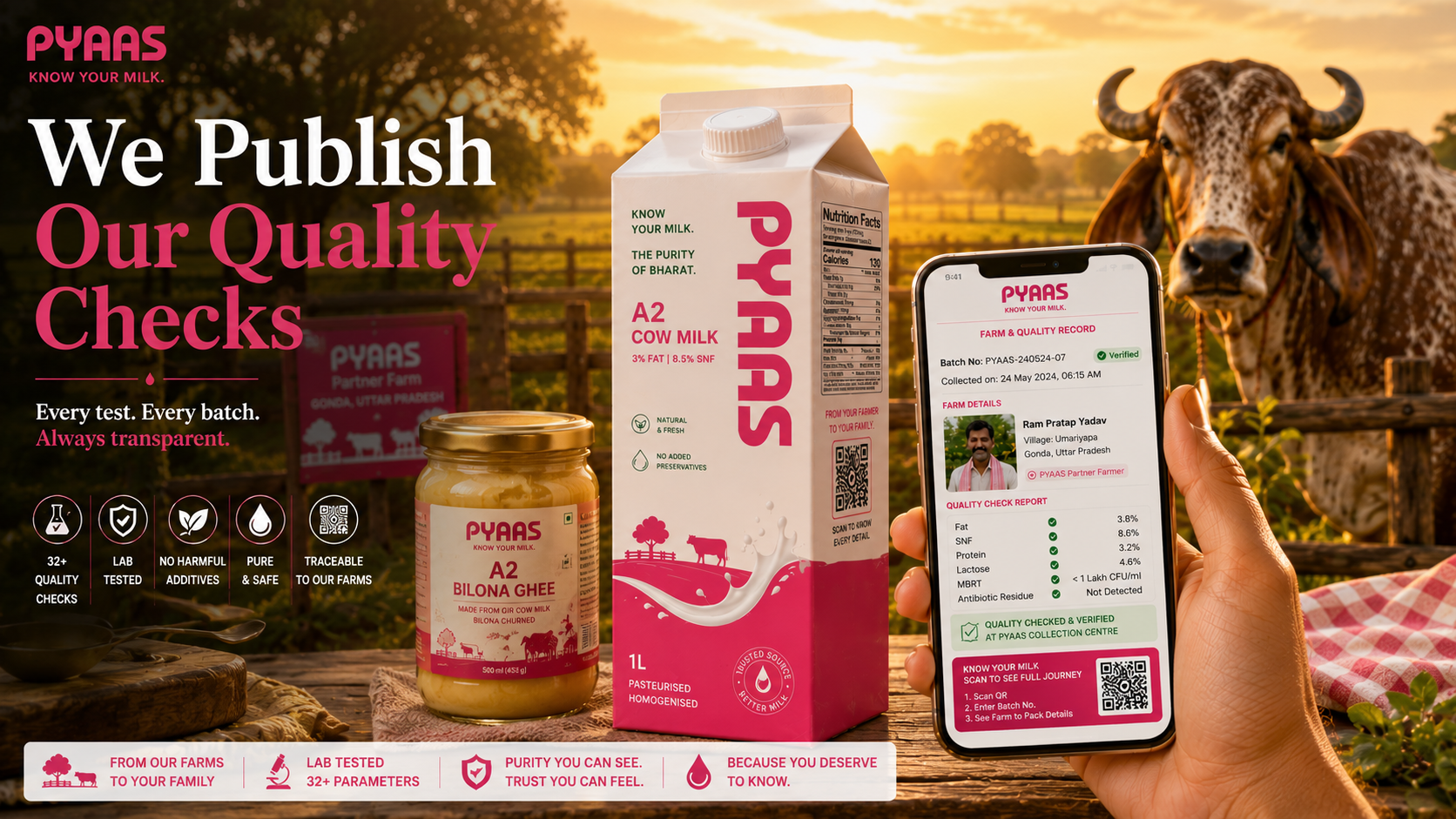
When I say we publish our checks, I mean something specific and a little unglamorous. Every PYAAS pack carries a QR code. Scan it, and you don't land on a marketing page — you land on the record for that batch: the farm it came from, the farmer who milked the cows, and the quality checks tied to that particular run of product.
The checks themselves are the routine, honest ones a responsible dairy runs — the kind that confirm the milk is clean, unadulterated, and kept at the right temperature from the farm to you. Nothing exotic. What's different is not that we do more theatre; it's that we don't keep the result to ourselves. The same record we'd keep internally is the record we hand to you.
I want to be precise here, because honesty is the whole point of PYAAS. We say quality checked, not "lab certified" or any absolute badge we haven't earned. I would rather show you a real, traceable record for your batch than print a bigger claim I can't fully stand behind. A modest truth beats an impressive-sounding overstatement every single time.
Why we'd rather be traceable than impressive
Publishing your checks is a strange business decision if your goal is to look flawless. A hidden process is always perfect, because no one can inspect it. The moment you make something visible, you're accepting that people can hold you to it. We chose that on purpose.
The reasoning is simple. If a customer can scan a code and trace their ghee — or, soon, their milk — back to a named farm and a real quality record, then our incentives are permanently pointed in the right direction. There's nowhere for a shortcut to hide. Traceability isn't a marketing feature we bolt on at PYAAS; it's the discipline that keeps us honest when no one's watching, precisely because we've arranged things so that someone always could be.
This is also why I keep saying transparency has to be structural, not seasonal. A brand can run a clean campaign for a month. A QR code on every pack that leads to a real batch record is a standing promise you have to keep every single day, or it breaks in public.
What this looks like on the ground in Gonda
None of this is abstract for us. Our A2 Bilona cow ghee is live and shipping across India today, and it comes from real, named partner farms in Gonda, Uttar Pradesh — Sri Radha Mohan Dairy Farm, where farmer Ram looks after 76 cows, along with Gonard Dairy and Ranjeet Singh Dairy Farm. These aren't stock photos. They're the people whose names sit on the records you can scan.
That matters because a quality check is only as trustworthy as the chain behind it. Knowing the farm and the farmer isn't sentimentality; it's what makes the published check mean something. When a record says a batch was handled well, you can see exactly whose hands did the handling. Our fresh A2 cow milk isn't in your fridge yet — we're launching it in Lucknow from August 2026 and expanding across Uttar Pradesh from there — but it will carry the same rule from day one: the check gets published, not buried.
The version of trust I'm building toward
My fellow founder Kushagra Shekhar Kaushik, our Founder & CTO, and I talk often about what we actually want a PYAAS pack to feel like in someone's hand. The answer we keep landing on is boring in the best way: we want it to feel like there's nothing left to hide. Not because we've said the right words, but because we've shown the actual record.
We're building toward a ₹100 crore dairy brand, and I'm convinced the honest path is also the durable one — that in a category built on quiet reassurances, the brand that simply opens the file will earn the kind of trust that compounds. "Know Your Milk" isn't a tagline we chose to sound nice. It's an instruction I want every customer to be able to follow, literally, with a phone camera. Publishing our quality checks is how we make good on it. And as PYAAS grows, my promise is that we'll keep raising both bars at once — the quality of the checks, and the openness with which we show them to you.
Written by
Aryan Sharma
Aryan Sharma is the Founder & CEO of PYAAS, an independent, transparency-first dairy brand based in Uttar Pradesh. Every PYAAS pack is traceable to its farm by QR — Know Your Milk.
More from Aryan SharmaCommon questions.
What does PYAAS actually check in its milk?
For our A2 Bilona ghee, and for the fresh A2 milk we are preparing to launch, we run the routine freshness and purity checks that responsible dairies run — the kind that confirm the milk is clean, unadulterated and handled at the right temperature from the farm onward. We record those checks against the specific batch so you can see them, rather than keeping them in an internal file.
Where can I see the quality record for what I bought?
Scan the QR code on the pack. It takes you to that product's batch record — the farm it came from, the farmer who milked the cows, and the quality checks tied to that batch. It is the same record we keep internally, shown to you instead of hidden from you.
Is PYAAS milk lab-certified?
We describe our process honestly as quality checked, not with certification badges we haven't earned. We would rather show you a real, traceable record for your batch than print an absolute claim. As PYAAS grows, we will keep raising the bar on both the checks themselves and how openly we share them.
Get the next one in your inbox.
The occasional note on milk, ghee, and how we work. Plain words, no hype, and you can leave any time.
Keep reading.
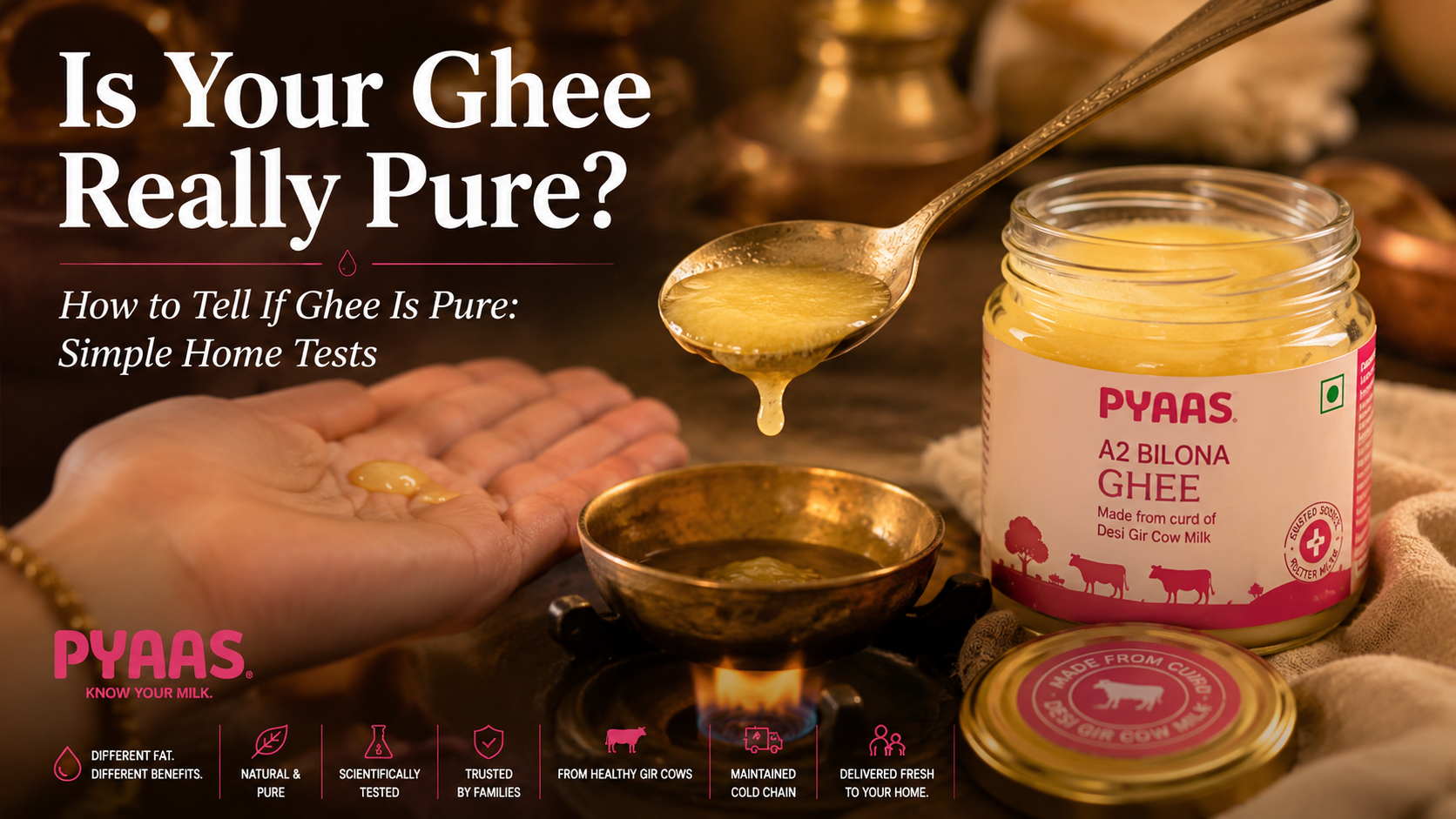
How to Tell If Ghee Is Pure: Simple Home Tests
29 August 2026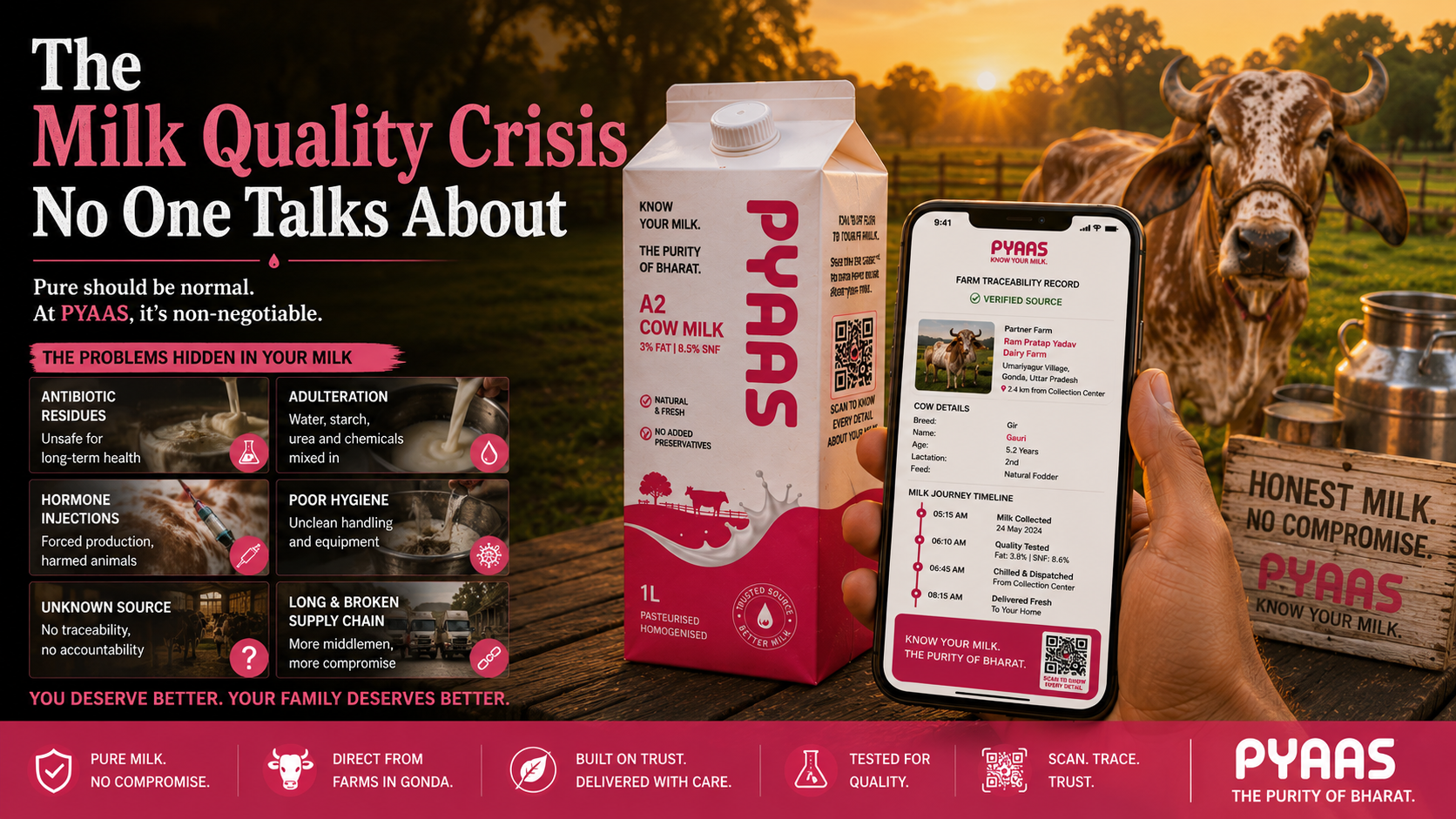
The Milk Quality Crisis No One Talks About
12 August 2026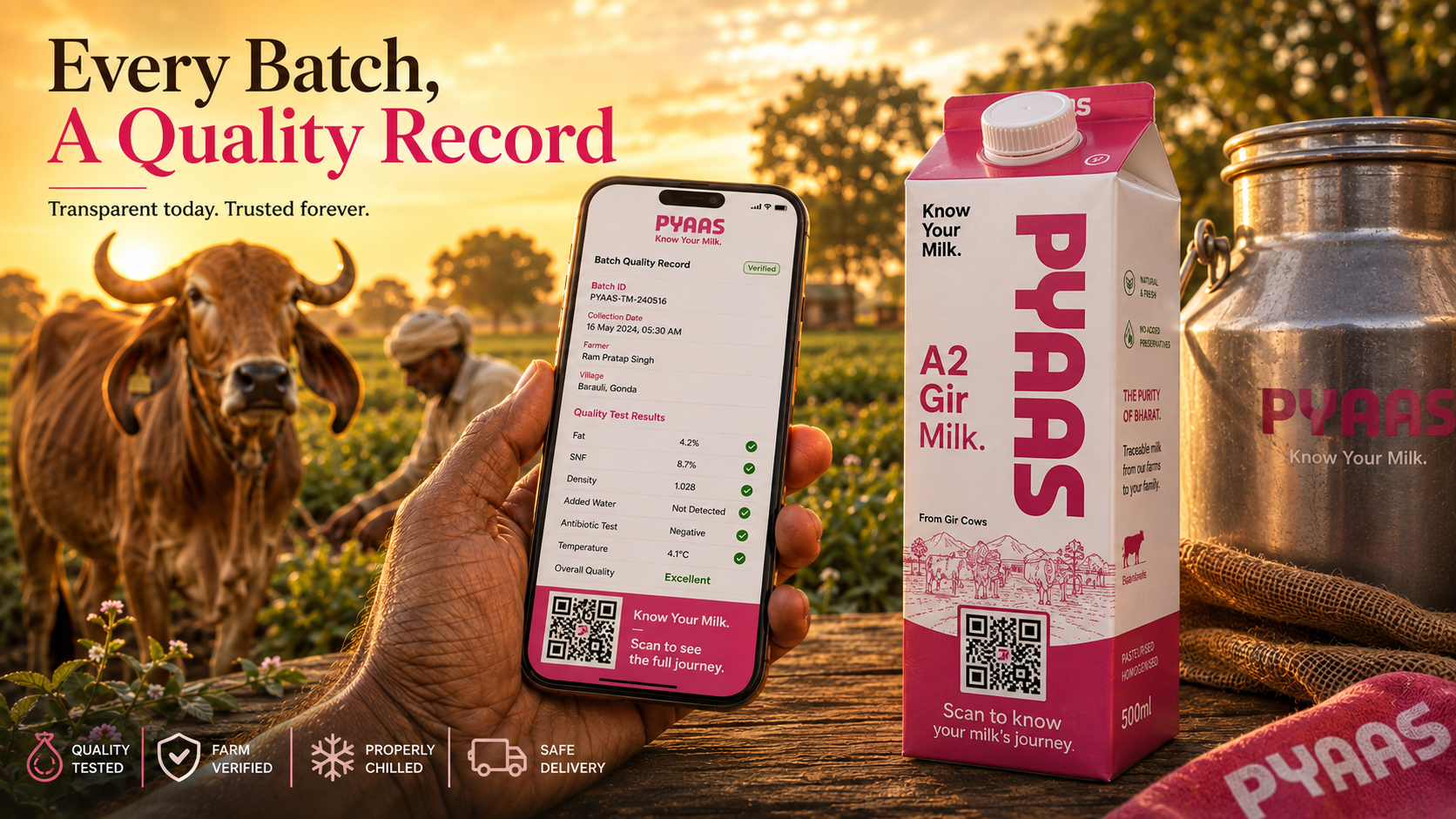
Turning Every Milk Batch Into a Quality Record
2 August 2026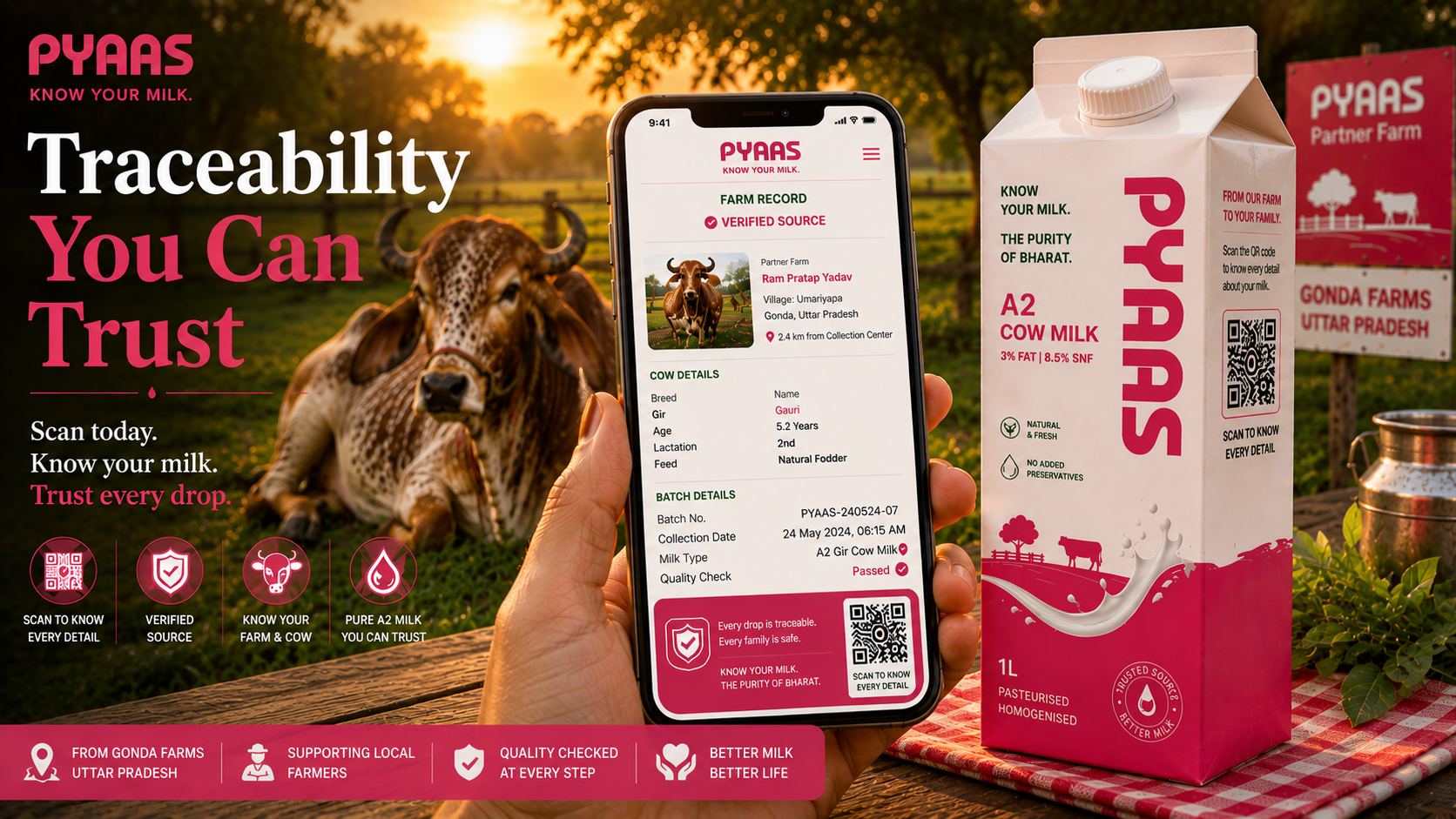
The Data Behind a Safe Glass of Milk
29 July 2026