The Data Behind a Safe Glass of Milk
Anyone can print the word safe on a carton of milk. The harder question, the one I sit with as the person who builds the technology behind PYAAS, is whether you can actually check it. I'm Kushagra Shekhar Kaushik, Founder and CTO of PYAAS, and most of my work comes down to a single idea: milk safety should be something you look up, not something you are asked to believe.
A promise is a claim. A record is evidence.
For most of the dairy industry, safety is a sentence on the packaging. It is a promise, and promises are cheap. The problem is that a promise carries no information. It cannot tell you which farm the milk came from, whether the cold chain held on a hot afternoon, or how that particular batch performed on its checks. It asks you to trust the brand and leaves you no way to test that trust.
A record is different. A record is a set of facts attached to one specific batch of milk, captured as it happens and kept where you can see it. That shift, from claim to record, is the whole reason PYAAS exists as a technology company as much as a dairy one. Turning milk safety data into something structured and checkable is not a feature we bolted on. It is the product.
What actually goes into a milk safety record
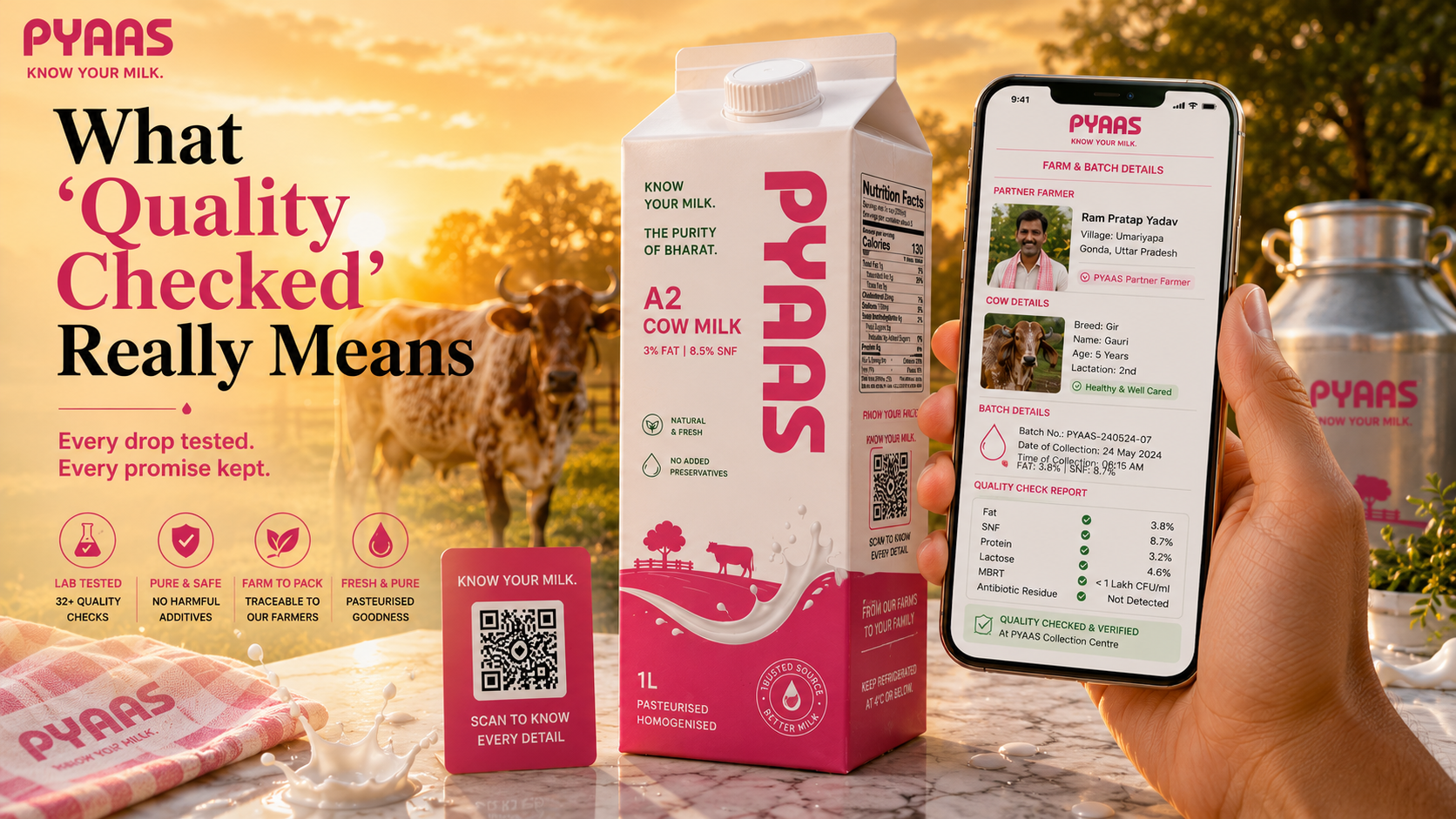
When people hear 'data', they picture something abstract. It isn't. A milk safety record is a short, human list of facts about your batch:
- The farm and the farmer. Not a region or a co-operative, but a named place and person, such as Sri Radha Mohan Dairy Farm in Gonda, where Ram tends a herd of 76 cows.
- When it left the farm. The date and time the milk was collected, so freshness is a fact and not a guess.
- The cold chain. Temperature readings as the milk moves, because most of what goes wrong with milk goes wrong when it gets warm.
- Composition. The fat and SNF for that batch, the numbers that describe what is genuinely in the milk.
- Quality checks. The batch's own quality results, quality checked rather than borrowed from an average.
- A batch ID. The single thread that ties every one of these fields together and to the pack in your hand.
None of these are impressive on their own. What makes them powerful is that they belong to your batch, not to a brochure describing dairy in general.
Where the data is captured, from cow to carton
A record is only as honest as the moment it is created. If you type numbers in at the end to make a label look good, you have marketing, not safety. So we capture data where the milk is, at the point each fact becomes true.
At the farm
Traceability starts before the milk moves. It is logged to a named farm and farmer at our partner farms in Gonda, Uttar Pradesh, where the herds are Holstein Friesian and Sahiwal, and the A2 milk comes from the A2 cows in the herd. From the first entry, the batch already knows where it is from.
Through the cold chain
Temperature and time are recorded as the milk travels, because these are the two variables that decide whether milk stays good or quietly goes wrong. A record that shows the cold held is worth far more than a promise that it usually does.
At the pack
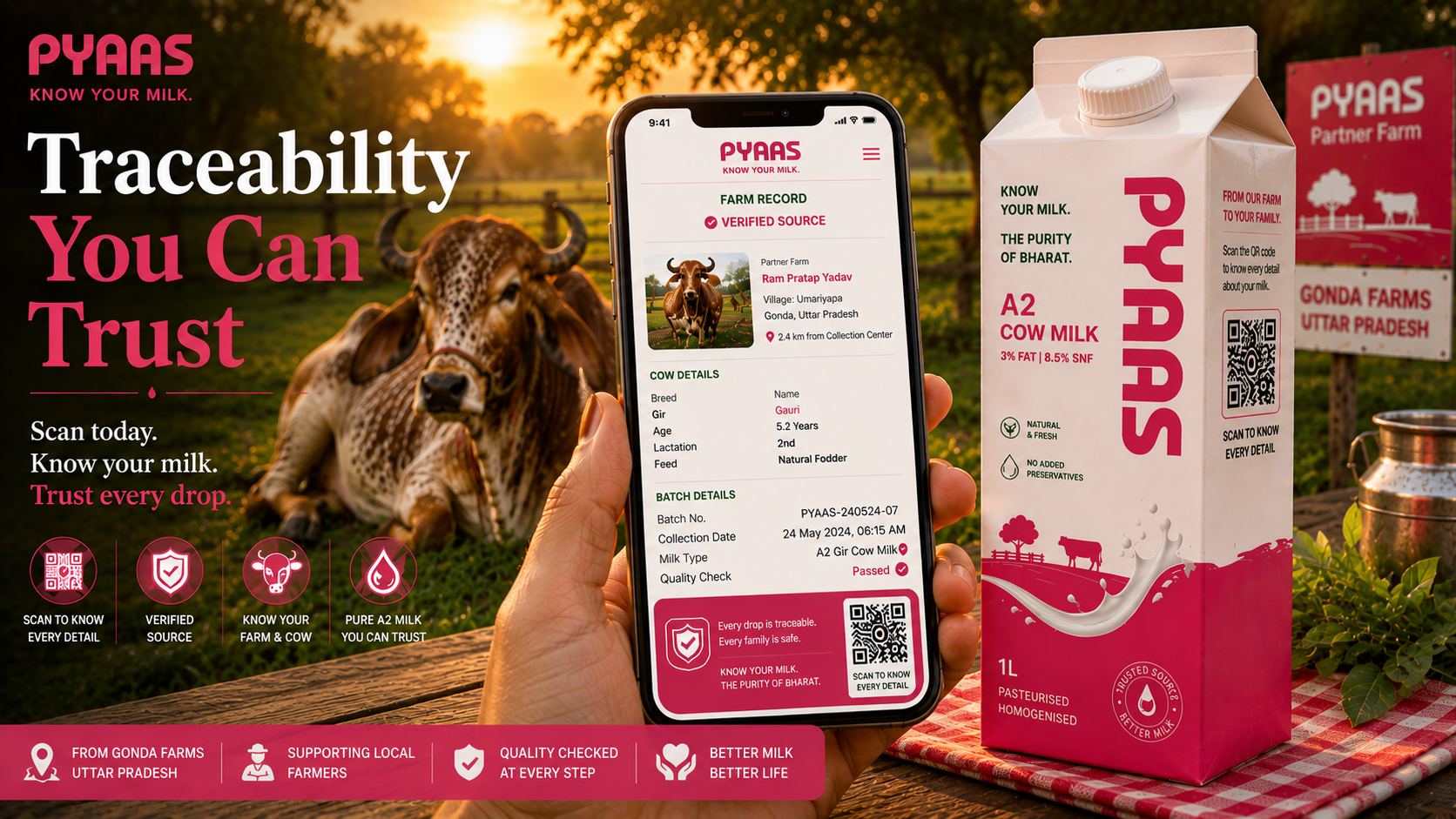
Finally, everything collapses into one batch ID printed as a QR code on the pack. That code is the key that unlocks the whole record for the person who matters most: you, standing in your kitchen.
Why it all sits behind a QR code
We could keep this data in a dashboard only we can see and simply tell you it is good. We deliberately don't. At PYAAS the whole promise is Know Your Milk, and a promise you cannot inspect is just a nicer promise. Putting the record behind a QR code is how we hold ourselves to it.
It also changes how milk is handled long before it reaches you. When every reading traces back to a named farm and a batch, a warm truck or a weak check is no longer invisible. It has an owner. Accountability, not slogans, is what quietly makes milk safer, and structured data is how you build accountability that survives a bad day.
Where milk safety data goes next
This system runs on our A2 Bilona ghee, which ships across India today, and it is the same backbone we are bringing to fresh A2 cow milk when it launches in Lucknow from August 2026 and expands across Uttar Pradesh. As more batches flow through it, the record gets richer, and my goal is simple: to make a PYAAS batch record so clear that a customer understands it faster than they could read a paragraph of claims.
A safe glass of milk should not require faith. It should come with a receipt. That is the quiet ambition behind everything I build at PYAAS, and it is why I would rather ship a record than a promise.
Written by
Kushagra Shekhar Kaushik
Kushagra Shekhar Kaushik is the Founder & CTO of PYAAS, an independent, transparency-first dairy brand based in Uttar Pradesh, building the technology that makes every pack traceable to its farm by QR.
More from Kushagra Shekhar KaushikCommon questions.
What is milk safety data?
Milk safety data is the structured record that describes a specific batch of milk: which farm and farmer it came from, when it left the farm, how cold it stayed through the supply chain, and its composition and quality checks. Instead of a general claim that milk is 'safe', it is a set of fields tied to one batch that you can look up and verify.
How can I check the safety of PYAAS milk?
Every PYAAS pack carries a QR code. Scan it and you can see the farm the milk came from, the farmer who tends the herd, and that batch's quality record. Our A2 Bilona ghee ships with this record today, and fresh A2 cow milk will carry the same traceability when it launches in Lucknow from August 2026.
Does collecting data actually make milk safer?
Data on its own does not sterilise a drop of milk. What it does is make problems visible and accountable: a temperature that drifted, a batch that failed a check, a farm a reading traces back to. When every step leaves a record, people handle the milk differently, and that is where the real safety gain comes from.
Get the next one in your inbox.
The occasional note on milk, ghee, and how we work. Plain words, no hype, and you can leave any time.
Keep reading.
How to Tell If Ghee Is Pure: Simple Home Tests
29 August 2026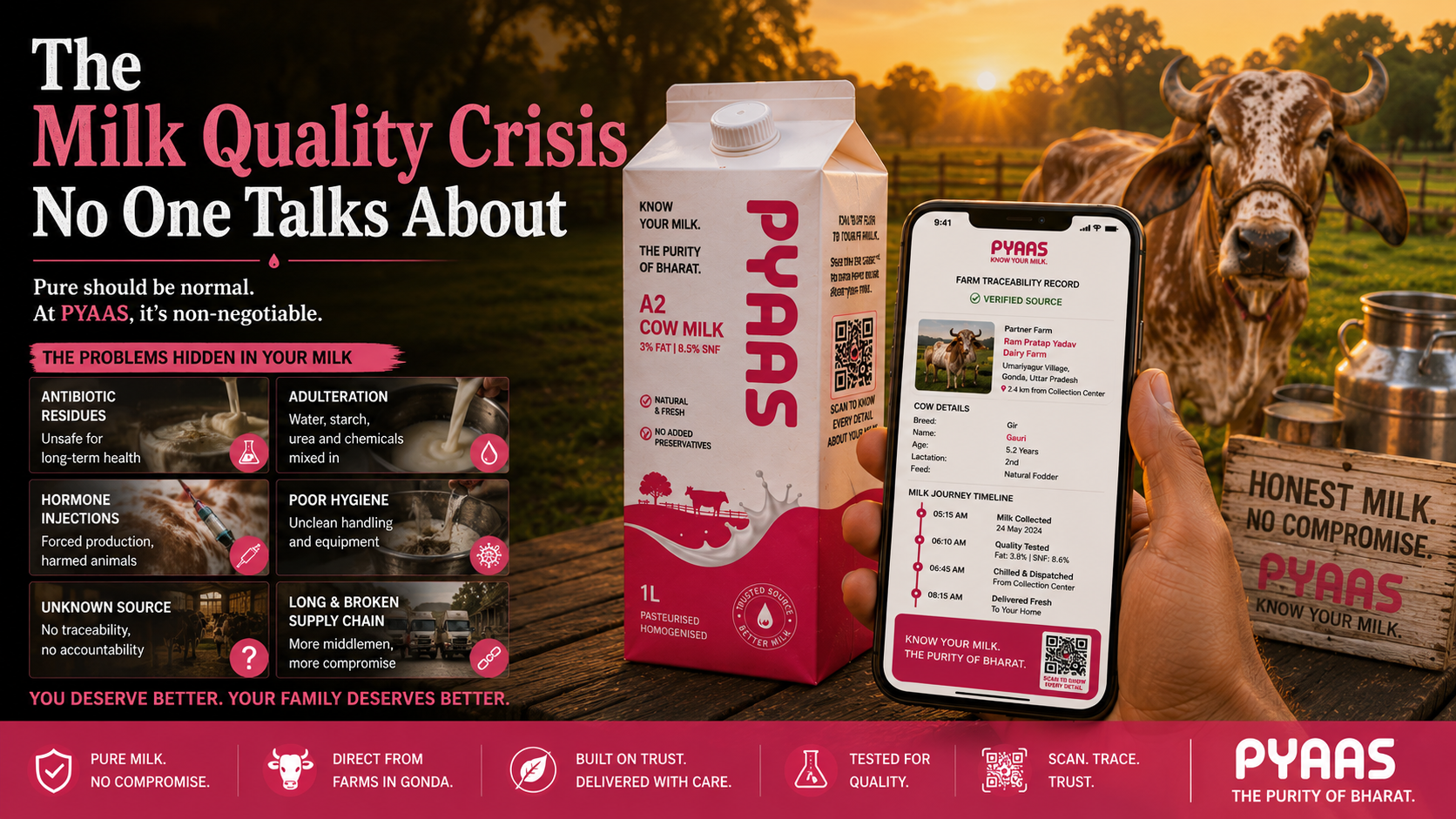
The Milk Quality Crisis No One Talks About
12 August 2026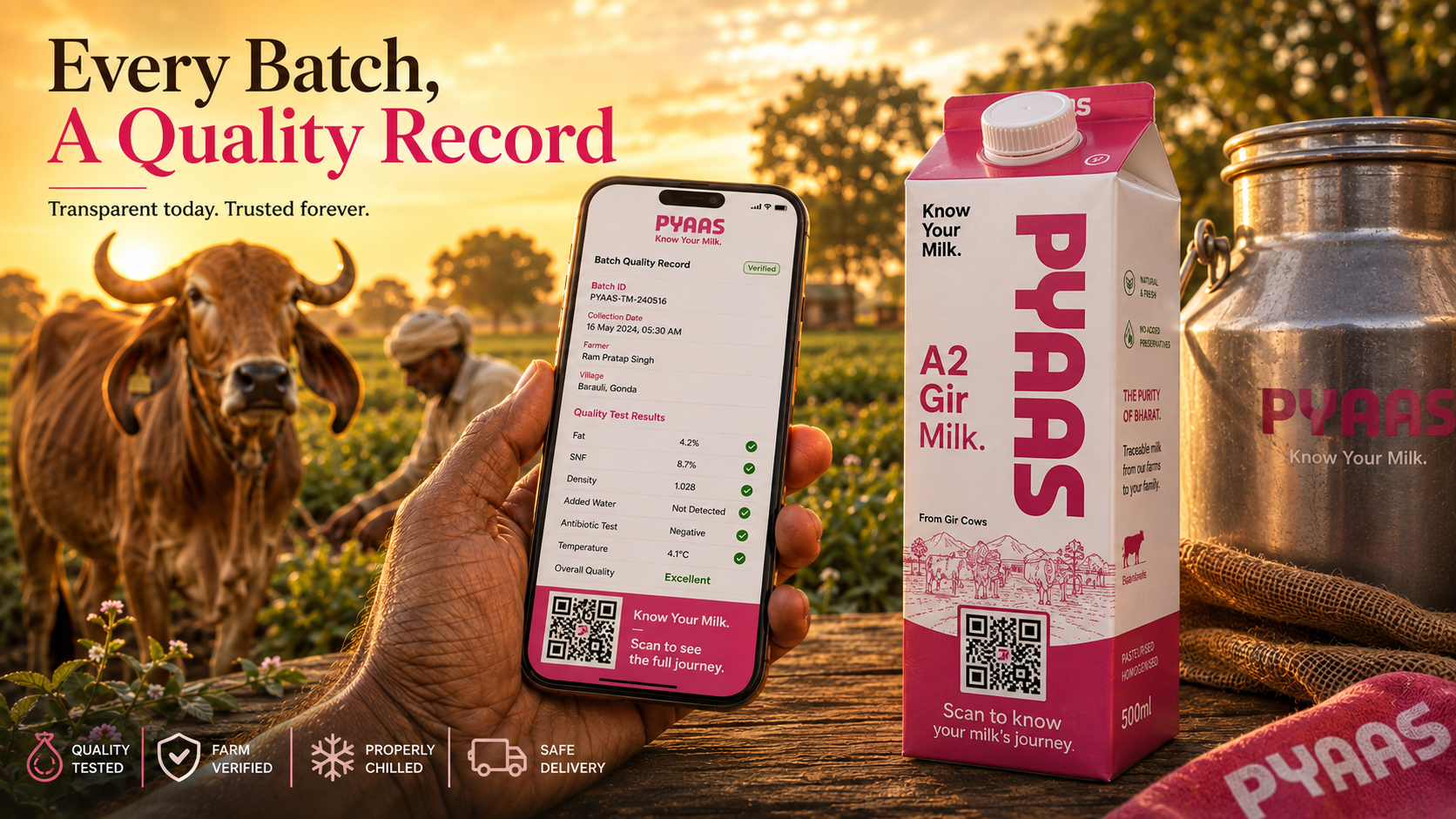
Turning Every Milk Batch Into a Quality Record
2 August 2026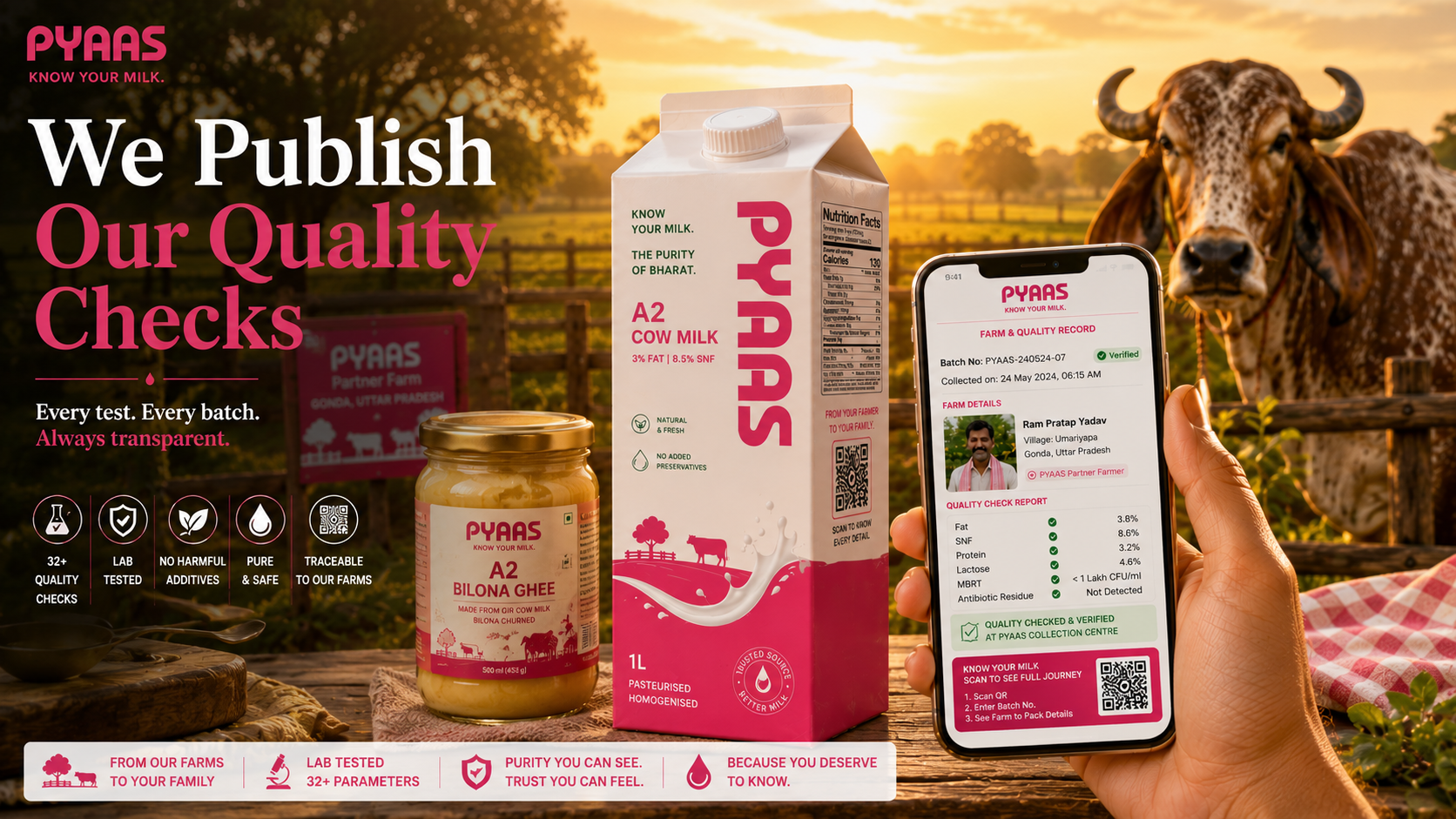
Why PYAAS Publishes Its Quality Checks
26 July 2026