The Technology PYAAS Is Building for Parag: QR Traceability and a Modern Dairy Platform
I spend my days on one question: can we prove it? Not vouch for it, not argue it — prove it, to a stranger with every reason to be skeptical. My name is Kushagra Shekhar Kaushik, and as the Founder and CTO of PYAAS I built our traceability technology so that our promise, Know Your Milk, would never rest on “trust us.” Now we are piloting that same technology with Parag, one of India’s oldest and most trusted heritage dairy brands, run by Uttar Pradesh’s cooperative dairy federation. This piece is the engineer’s version of what my fellow founder Aryan wrote about the collaboration — the actual technology, and how it works.
The two layers of dairy traceability technology
People hear “QR code” and picture a sticker. A sticker is the easy part. Real dairy traceability technology is two layers, and only the top one is visible.
Layer one: the QR-to-batch record (what the customer sees)
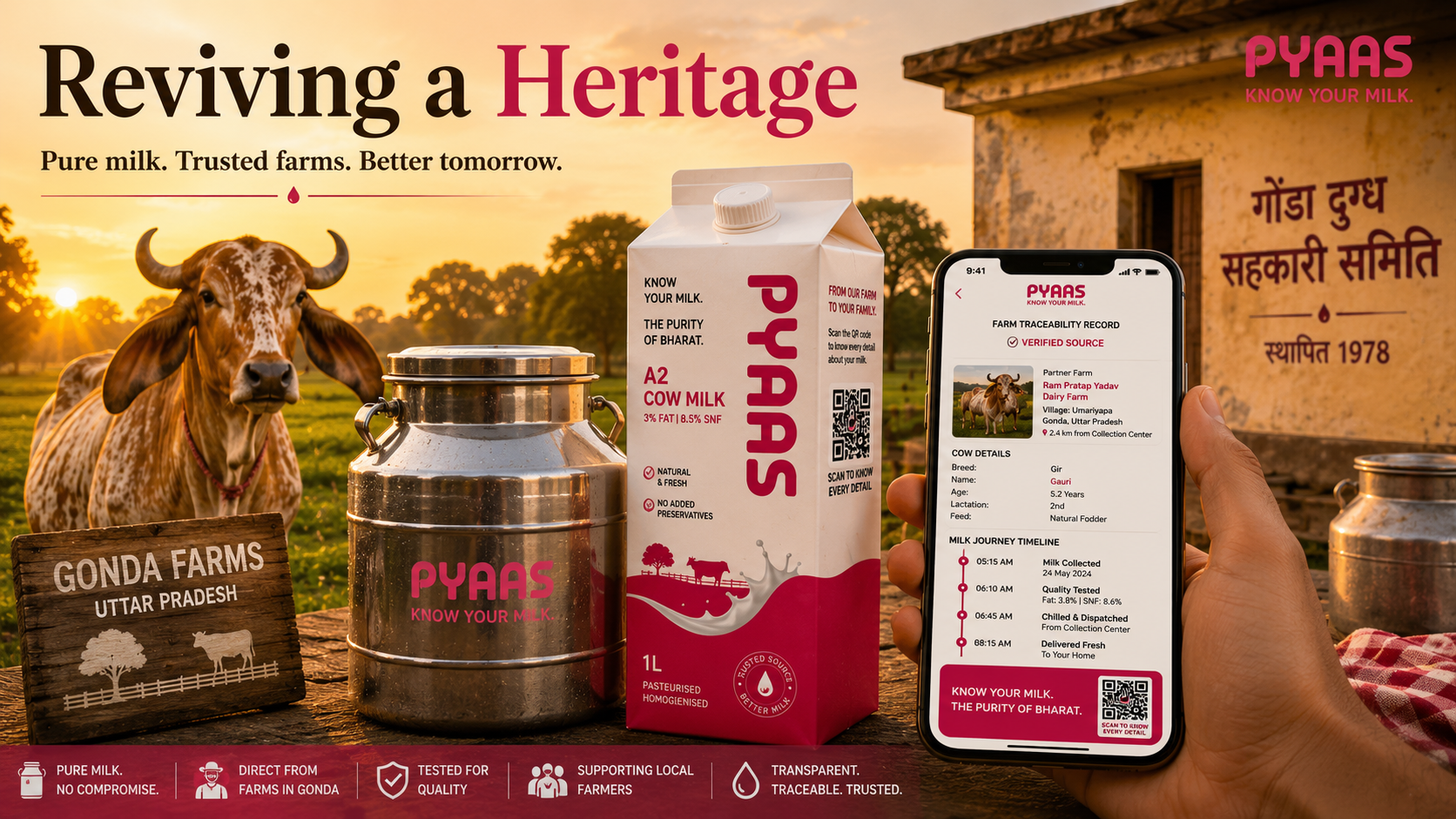
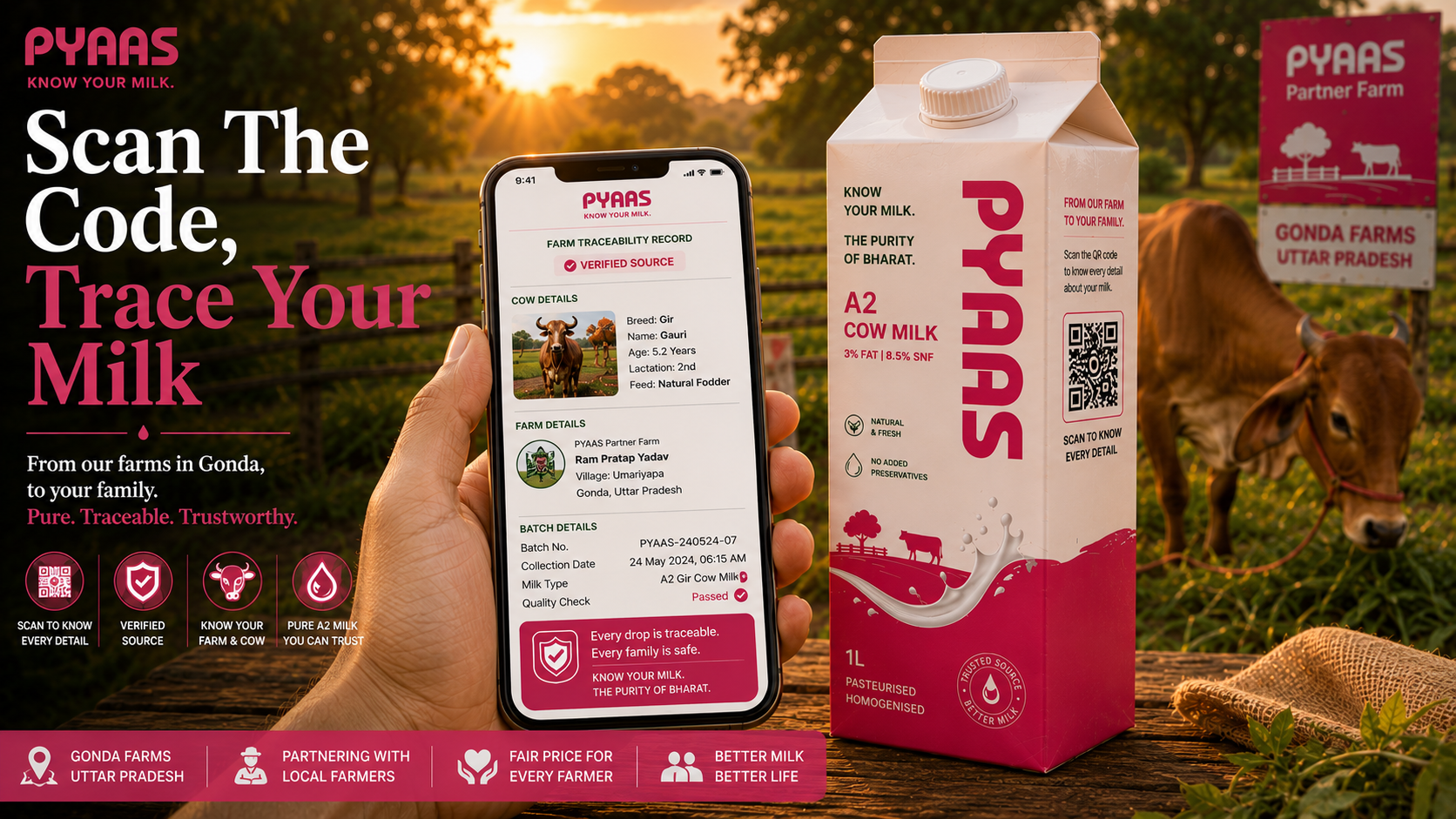
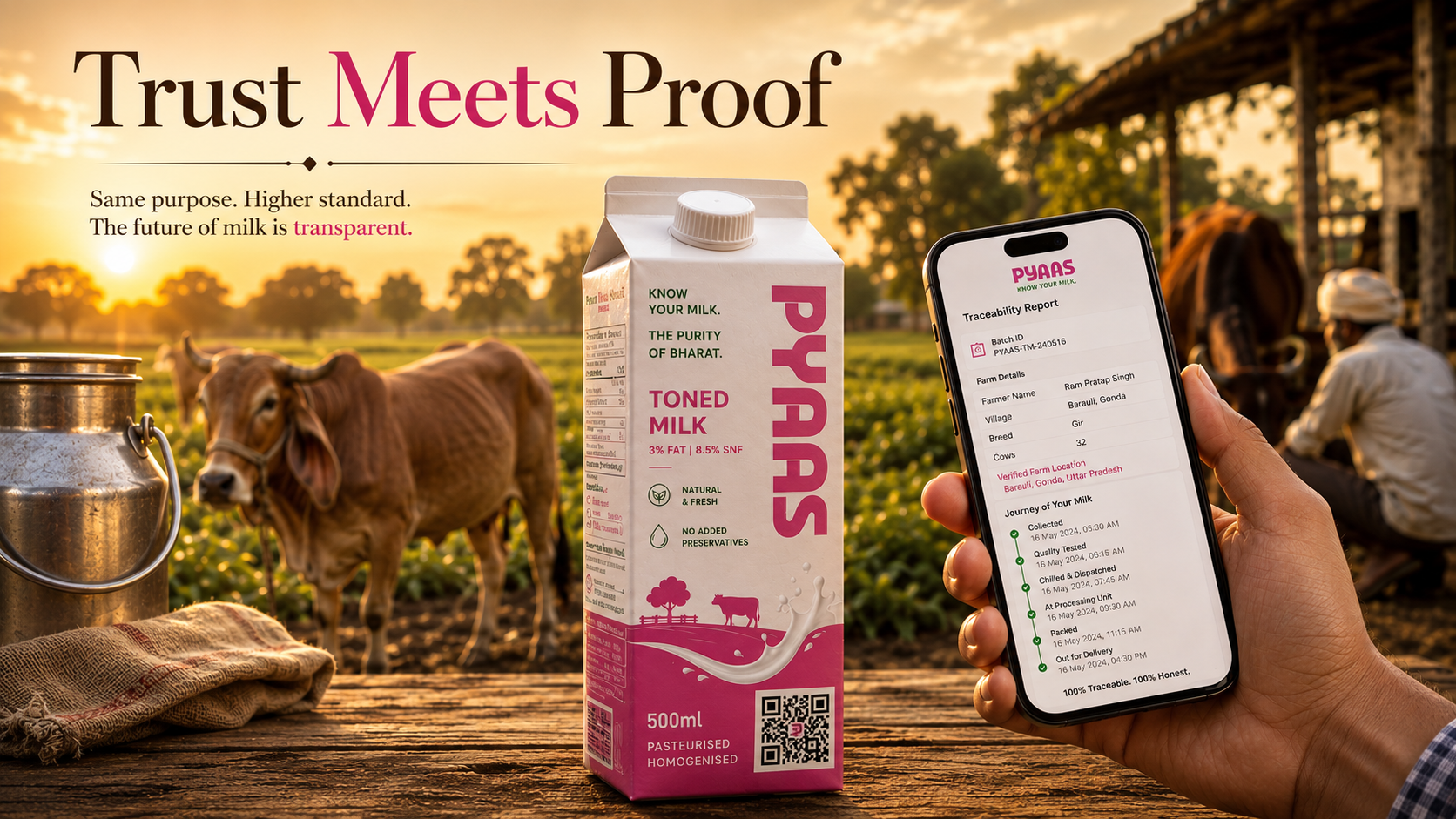
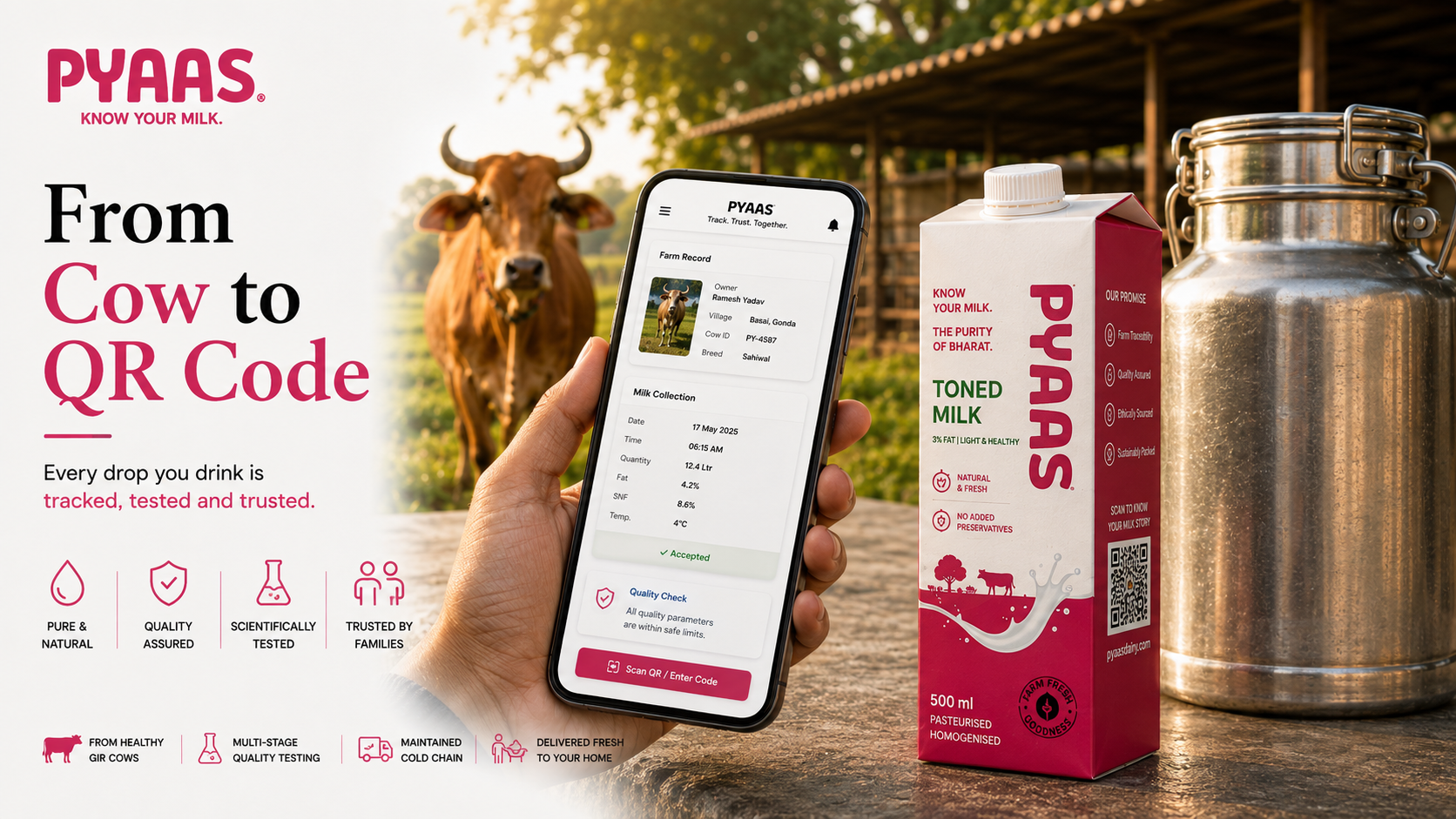
On the pack is a QR code. Scan it and it opens the record for that specific batch — where the milk came from and the quality checks it cleared. It takes a claim printed on a carton and turns it into something a person can verify in about three seconds, standing in their own kitchen. That is the entire point: to move milk from “believe the label” to “check the label.”
Layer two: the platform (what makes the QR true)
Underneath that code has to sit a system, or the QR is just decoration. The PYAAS platform captures milk at collection, gives each batch its own identity, stores the quality-checked results against that identity, links farm-level data, and carries the whole record through processing and packing without it getting lost or blended into anonymity. When we talk about bringing technology to Parag, this platform is the real gift. The QR is the tip; this is the iceberg.
How a batch becomes a scannable record
Here is the journey, in plain terms, the same one we are piloting for a cooperative’s milk:
- Collection. When milk is gathered, it is logged against its source — a farm or a collection point — rather than tipped straight into an anonymous pool. Origin is captured at the very first step, because you cannot add it back later.
- Batch identity. That collection becomes a batch with its own code. From this moment the milk has a name in the system, and everything that happens to it attaches to that name.
- Quality record. The checks a batch passes are recorded against its identity — not filed in a drawer no one opens, but tied to the batch so they can travel with it.
- The pack. The batch’s record is encoded into the QR printed on the carton. Scan it, and the origin and quality information for the exact pack in your hand appears.
None of it is flashy. Good infrastructure rarely is. The measure of it is simple: at the end, a customer can ask “where is this from?” and get a real answer instead of a shrug.
Why building this for a cooperative is different — and worth it
Building traceability for PYAAS is one thing; we are small and we control every step. Building it for a heritage cooperative like Parag is a much harder and more interesting problem, and I want to be honest about that.
A cooperative gathers milk from a vast number of small farmers through many collection points spread across the state. The technology has to meet that reality where it lives — it has to be low-friction enough to work at a village collection centre, robust enough to handle scale, and respectful enough not to demand that a decades-old system reinvent itself overnight. That is exactly why we are approaching it as a pilot: start focused, prove it works in the real conditions of a cooperative supply chain, and learn before we ever talk about scale. Any engineer who promises you a state-wide rollout on day one is selling you something.
What it changes — for the customer and the farmer
For the customer, the change is direct: a carton from a trusted heritage brand becomes a carton whose story you can open. Trust that used to be asked for is now offered as proof.
For the farmer, the change is quieter but, to me, the most important. When milk is anonymous, the farmer who did careful work disappears into an average. When every batch carries its origin, good work can finally be seen. Traceability is not just a consumer feature — it is the mechanism that lets a good farmer be recognised instead of averaged away. That is a big part of why I care about bringing this to a cooperative, where so many small farmers already do honest work that the carton never shows.
The same standard, from our brand to theirs
I hold the Parag pilot to the same rule I hold PYAAS to: if we cannot prove a claim, we do not make it. Our own A2 Bilona ghee ships across India today with this traceability already built in, and our fresh A2 cow milk launches in Lucknow from August 2026 with the same QR-to-batch record on every pack. The technology we are piloting with Parag is not a demo we cooked up for a partnership — it is the same system we bet our own name on. You can read the nuts and bolts of it in how the PYAAS QR-to-batch-record system works.
We are building toward a ₹100 crore dairy brand, but the number has never been the point for me — the standard is. If the technology I built for one honest brand can help a heritage brand prove its milk to millions of families, that is the best thing a piece of software I wrote could ever do. — Kushagra Shekhar Kaushik, Founder & CTO, PYAAS
Written by
Naina Sharma
Kushagra Shekhar Kaushik is the Founder & CTO of PYAAS, an honest, traceable Indian dairy brand.
More from Naina SharmaCommon questions.
What technology is PYAAS providing to Parag?
Two connected layers. First, QR-to-batch-record traceability: a code on the pack that opens the source and quality record for that specific batch. Second, the dairy platform underneath it that captures collection, stores quality records, links farm-level data and follows a batch through the supply chain. The QR is the visible tip; the platform is what makes it honest. This is being deployed as an early-stage pilot.
How does QR-to-batch traceability actually work?
Every batch of milk is given its own record when it is collected — tied to the farm or collection point it came from and to the quality checks it passed. That record is encoded into a QR code printed on the pack. When a customer scans it, they see the origin and quality information for the exact batch in their hands, instead of a generic brand promise.
Why does a heritage cooperative like Parag need this?
A cooperative already gathers enormous amounts of trust and milk from thousands of farmers, but much of that story is invisible to the person buying the carton. Traceability technology makes the existing supply chain legible — it lets a trusted brand prove, pack by pack, what it has always claimed. It rewards the good work already happening rather than replacing it.
Get the next one in your inbox.
The occasional note on milk, ghee, and how we work. Plain words, no hype, and you can leave any time.