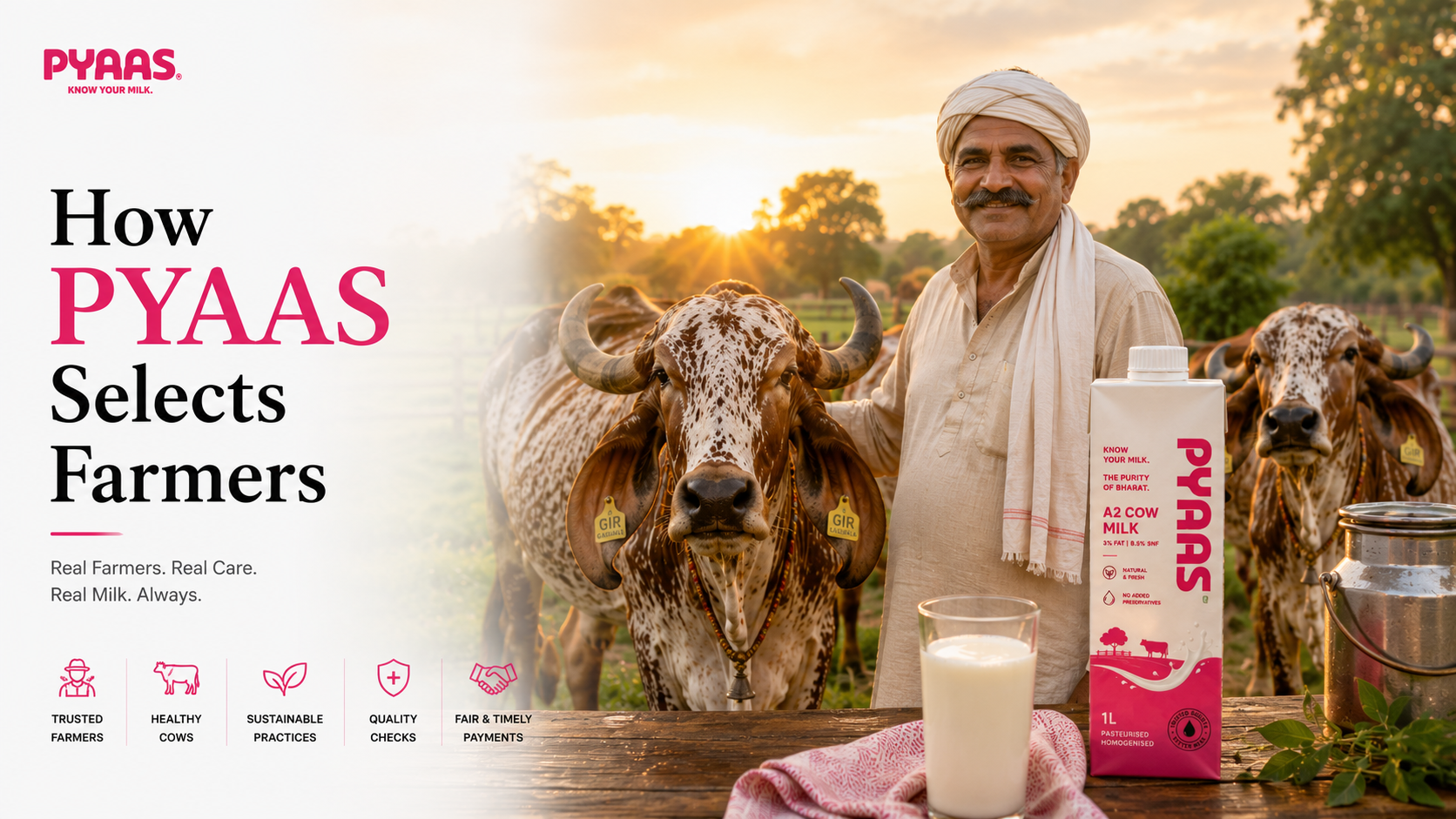
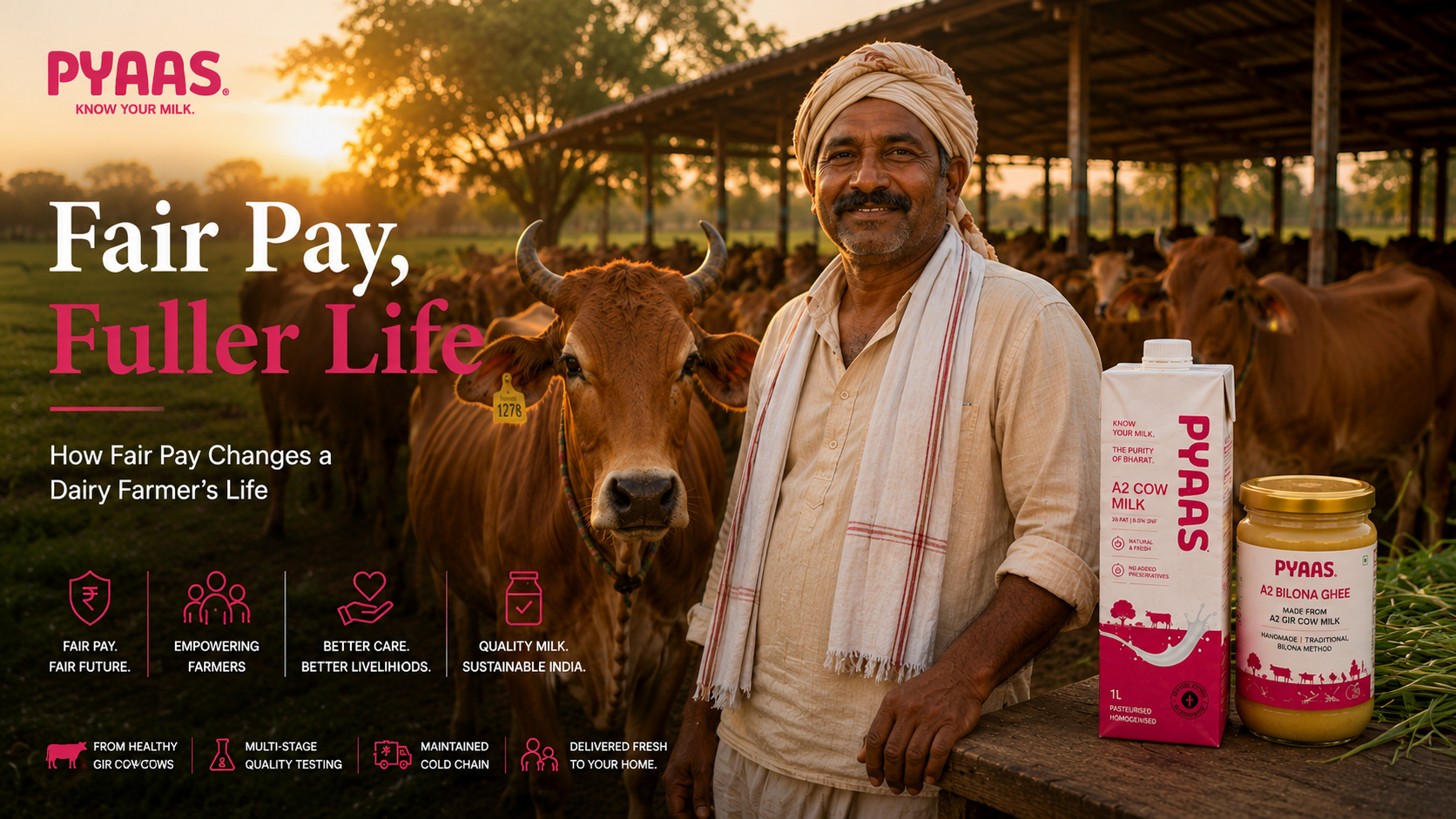
How Fair Pay Changes a Dairy Farmer's Life
When milk is cheap, someone is usually paying for it, and too often that someone is the farmer. Behind the comforting image of affordable dairy sits an uncomfortable economic reality: the person who does the hardest, most relentless work frequently earns the thinnest slice of the final price. That is why fair pay dairy farmers is not a soft, feel-good phrase but a question about how the whole system is built.
PYAAS is a brand founded on honesty, so we are not going to romanticise this or claim we have single-handedly fixed farmer economics. We have not. But it is worth explaining plainly how the money tends to flow, why fair pay matters so much, and how a named, single-origin model can help.
Where the money goes in conventional dairy
To understand why fair pay is hard, you have to follow the milk. In a typical long supply chain, milk from countless farms is pooled together, anonymous and undifferentiated, then passes through a series of intermediaries before it reaches a shop shelf. At each step, someone takes a margin. By the time you pay at the counter, the price has been divided many ways.
The farmer sits at the very start of that chain with the least leverage. When your milk is mixed into a giant anonymous pool, one farmer's care and quality cannot be distinguished from anyone else's, so there is little to bargain with. Broadly, the squeeze works like this:
- Anonymity means a farmer's quality cannot command a premium.
- Length means many hands each take a cut along the way.
- Low bargaining power leaves individual farmers as price-takers, not price-setters.
- Volatility means income can swing without warning.
The outcome is a system where the person milking cows before dawn often earns the least secure living in the entire chain. That is not a moral accusation of any single player; it is a structural feature of long, anonymous supply chains.
What fair pay actually changes
So what happens when a farmer earns a fairer, steadier share? The change is rarely dramatic overnight, but it is real. More reliable income gives a family room to breathe and to plan. It can mean investing in better feed and animal care, which loops back into better dairy. It can mean less desperate pressure in a lean month, and a little more security about the future.
We should be honest that fair pay is not a magic wand. It does not erase every hardship of farming, which remains demanding and exposed to weather, disease and markets. But it changes the range of what is possible for a family, and it restores a basic fairness: that the people doing the essential work should share properly in the value they create. That link between recognition and reward is one we also explore in women in dairy farming: the backbone of Indian milk.
Why single-origin changes the maths
Here is where our model connects. PYAAS works with named single-origin partner farms in Gonda, Uttar Pradesh, rather than blending milk into an anonymous pool. That one difference reshapes the economics. When milk is traceable to a specific farm, a specific farmer's care actually counts and can be valued, instead of vanishing into an undifferentiated tank.
A shorter, transparent chain also means fewer anonymous hands between the farmer and you, and a clearer line of sight to the person who produced your milk. We make the broader quality-and-trust case for this in single-origin milk: why one farm beats a thousand, but the economic point is just as important: visibility is what makes fair valuation possible in the first place. You can see our named partners on the farms page and meet one in meet Ram, the farmer behind Sri Radha Mohan Dairy Farm.
The honest limits of our claim
We want to be careful not to overclaim, because that would betray the whole point of the brand. Partnering with named farms and shortening the chain does not automatically solve farmer economics across India, and we are not going to pretend it does. Fair pay is a large, systemic challenge that no single brand resolves alone.
What we can say honestly is narrower and, we think, more trustworthy: a named, single-origin, traceable model is a fairer structure than an anonymous pooled one, because it lets a farmer's work be seen and valued directly. That is the version of fairness we are building toward, described as an approach and an intention, not a finished victory.
Why this sits at the heart of PYAAS
Traceability, for us, was never only about you knowing where your milk came from. It is also about the farmer being someone rather than no one in the chain. A QR code that names the farm and farmer behind your pack is, quietly, an economic statement: this person's work is identifiable, and therefore valuable. That thread ties directly to what Know Your Milk really means.
Cheap milk always has a hidden cost, and too often the farmer pays it. A fairer system will not appear overnight, and we will not insult you by claiming we have already built it. But choosing named farms over anonymous pools, and letting a farmer's work be seen, is a real step in the right direction. When you know your milk all the way back to the farmer, you also know that their work counted, and that is the kind of fairness worth building slowly and honestly.
Written by
PYAAS
PYAAS is an honest, traceable Indian dairy brand from Gonda, Uttar Pradesh.
More from PYAASCommon questions.
Why do many dairy farmers earn so little?
Fair pay for dairy farmers is often squeezed by long supply chains where milk passes through several intermediaries before reaching you. Each step takes a margin, and farmers, with little bargaining power over anonymous pooled milk, are left with a thin share. The result is that the person doing the hardest work often earns the least.
How does fair pay actually change a farmer's life?
Steadier, fairer income gives a farming family more room to invest in animal care, feed and their own future, and more security day to day. It reduces the pressure that comes from an unpredictable, squeezed livelihood. Better pay does not solve everything, but it changes what is possible.
How does the PYAAS model support fairer pay?
PYAAS works with named single-origin partner farms rather than anonymous pooled milk, which keeps the chain shorter and the source visible. A shorter, traceable chain makes it easier to value farmers' work directly. We describe it as a fairer approach, not a claim of solving farmer economics single-handedly.
Get the next one in your inbox.
The occasional note on milk, ghee, and how we work. Plain words, no hype, and you can leave any time.
Keep reading.
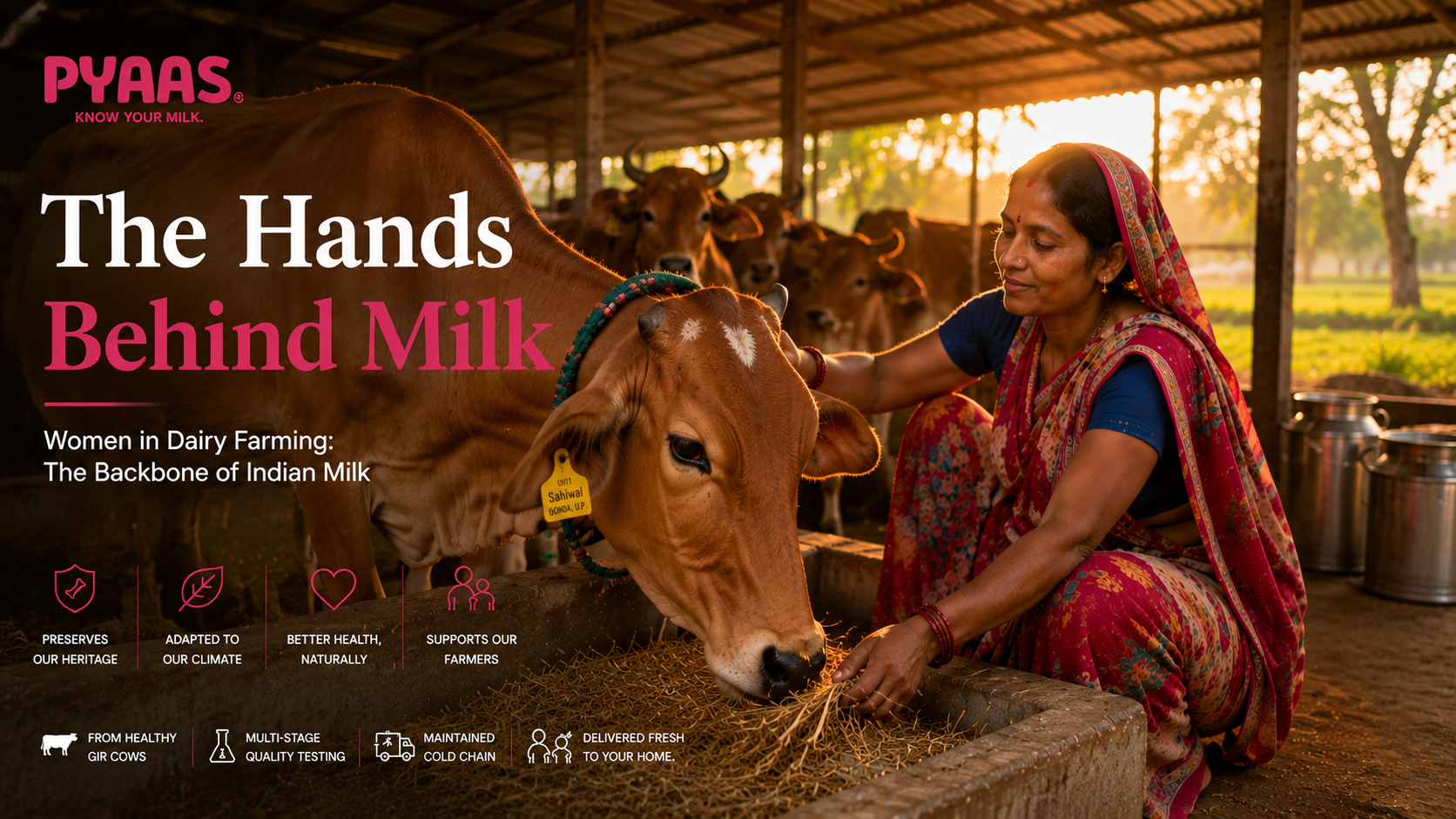
Women in Dairy Farming: The Backbone of Indian Milk
19 August 2026
A Day in the Life of a Gonda Dairy Farmer
23 August 2026
Meet Ram, the farmer behind Sri Radha Mohan Dairy Farm
24 August 2026
The farmers of Gonda: Harsh Singh and Ranjeet Singh
18 August 2026