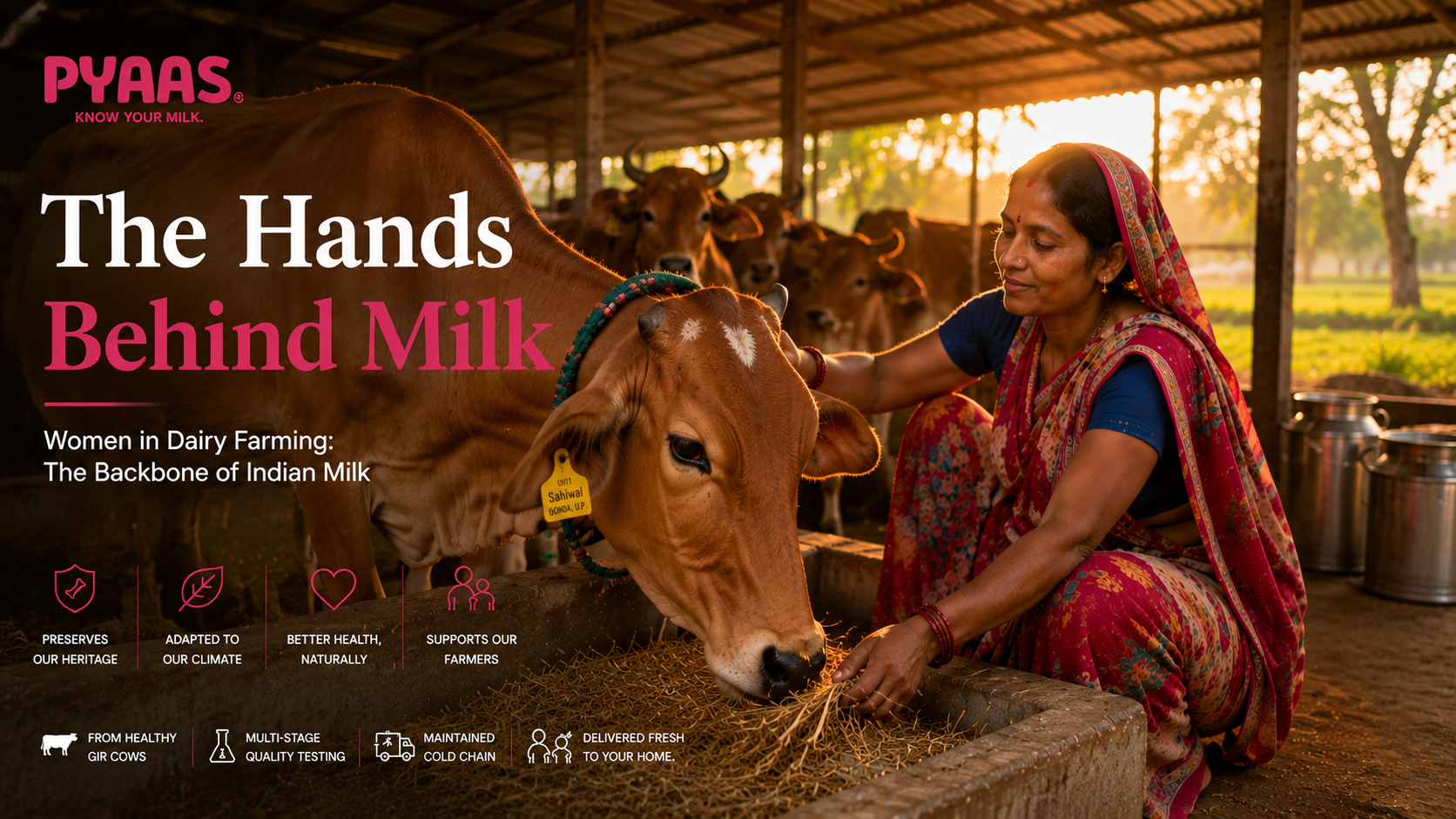
Women in Dairy Farming: The Backbone of Indian Milk
Walk onto a working dairy farm early in the morning and much of the quiet, essential labour you see, the feeding, the milking, the cleaning, the patient care of animals, is often being done by women. Across India, women in dairy farming carry an enormous share of the daily work that keeps milk flowing, and yet their contribution is frequently uncredited in any formal sense. This piece is a respectful attempt to name that work plainly.
We want to be careful here. This is a subject that invites either overblown claims or hollow celebration, and neither is useful. So we will stick to what is broadly true, avoid inventing specifics, and try to give the topic the seriousness it deserves.
The everyday work behind the milk
Dairy is not a once-a-day event; it is a rhythm that never really pauses, and much of that rhythm rests on women's hands. The daily labour commonly includes:
- Feeding and watering the animals, often several times a day.
- Milking and handling the milk with care and cleanliness.
- Cleaning sheds, vessels and the animals themselves.
- Animal care, watching for illness and tending to calves.
- Managing feed, fodder and the small daily decisions a herd requires.
None of this is occasional or ceremonial. It is relentless, physical, skilled work, repeated every single day regardless of weather, festivals or fatigue. When people picture a farmer, they often picture a man; the reality of who does much of the hands-on dairy work is frequently more complicated and more female than that image suggests.
Why the contribution is so often invisible
If women do so much of this work, why is it so easily overlooked? A large part of the answer is structural. Much dairy labour by women happens within the household and is treated as unpaid family work rather than a recognised job. It rarely appears in ownership records, formal titles or public credit. The cow may be registered to a man; the animal's daily care may belong to a woman.
Because the work sits inside the home and the family, it becomes easy to undercount and easy to take for granted. This is not unique to dairy or to India, but it is especially visible in a sector where so much depends on continuous, close, domestic-scale care. Naming this pattern honestly is the first step toward valuing the work properly.
A note on staying honest
We want to be transparent about our own limits here too. We are not going to invent statistics, individual stories or specific claims about particular women to make this article more moving. The general truth, that women carry a large and often uncredited share of India's dairy work, stands on its own and does not need embellishment. Respect, in this case, means resisting the temptation to fabricate.
Why recognition genuinely matters
Recognition is not just a nicety. When work is invisible, the people doing it tend to have less say, less security and less claim on the rewards. Making women's dairy labour visible is connected to fairness in a very practical way: you cannot value or fairly compensate work that no one formally acknowledges is happening.
This links to a broader theme we care about at PYAAS, which is that fair recognition and fair pay travel together. When the people behind milk are named and seen, it becomes possible to ensure they share in its value. We explore the economic side of that in how fair pay changes a dairy farmer's life. Visibility is where fairness has to begin.
How transparency can help, honestly
Here is where a transparency-first approach connects, though we will keep the claim modest. When a dairy supply chain names its real farms and the people behind them rather than pooling milk anonymously, it becomes easier to see everyone whose work produced it, including the women whose daily care is so central. PYAAS partners with named farms in Gonda, Uttar Pradesh, and you can see them on the farms page and in stories like meet Ram, the farmer behind Sri Radha Mohan Dairy Farm.
We will not overstate this. Naming farms does not by itself fix the deep, structural undercounting of women's work, and we are not going to pretend it does. But visibility is a real, if partial, contribution. A supply chain where the people behind the milk are seen at all is a better starting point than one where everyone disappears into an anonymous tank. Our broader thinking on this is in why India needs milk traceability.
The women who do so much of India's dairy work are not a marketing angle to us; they are a plain, important truth about how milk actually gets made. Acknowledging that work, without exaggeration and without invention, is the least an honest brand can do. Knowing your milk, in the fullest sense, means knowing the hands behind it, including the many women whose steady, uncredited labour quietly holds the whole thing up.
Written by
Naina Sharma
PYAAS is an honest, traceable Indian dairy brand from Gonda, Uttar Pradesh.
More from Naina SharmaCommon questions.
What role do women play in Indian dairy farming?
Women in dairy farming carry out a large share of the daily hands-on work, including feeding, milking, cleaning and caring for animals. Much of this labour happens close to home and is often uncredited in formal terms. Recognising it means acknowledging who actually keeps much of India's milk flowing.
Why is women's work in dairy often overlooked?
A lot of dairy work by women happens within the household and is treated as unpaid family labour, so it rarely shows up in ownership records or public credit. This makes the contribution easy to undercount. Naming and valuing that work is a first step toward fairer recognition.
How can transparency help women in dairy?
Transparency helps by making the people behind milk visible, including the women whose daily care produces it. When a supply chain names real farms and farmers, it becomes easier to recognise and value everyone's contribution honestly. Visibility is not a full solution, but it is a meaningful start.
Get the next one in your inbox.
The occasional note on milk, ghee, and how we work. Plain words, no hype, and you can leave any time.
Keep reading.
How Fair Pay Changes a Dairy Farmer's Life
19 August 2026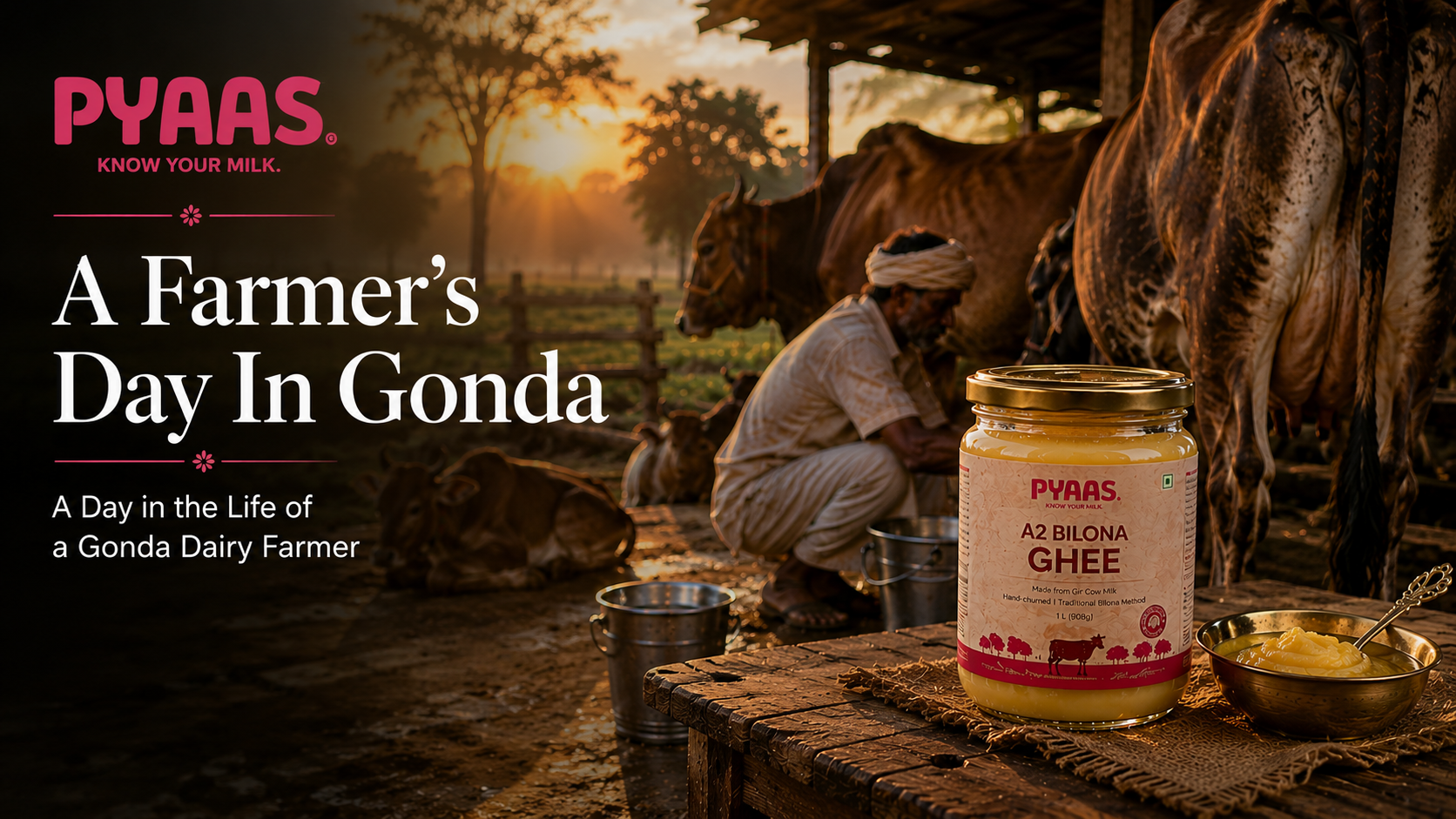
A Day in the Life of a Gonda Dairy Farmer
23 August 2026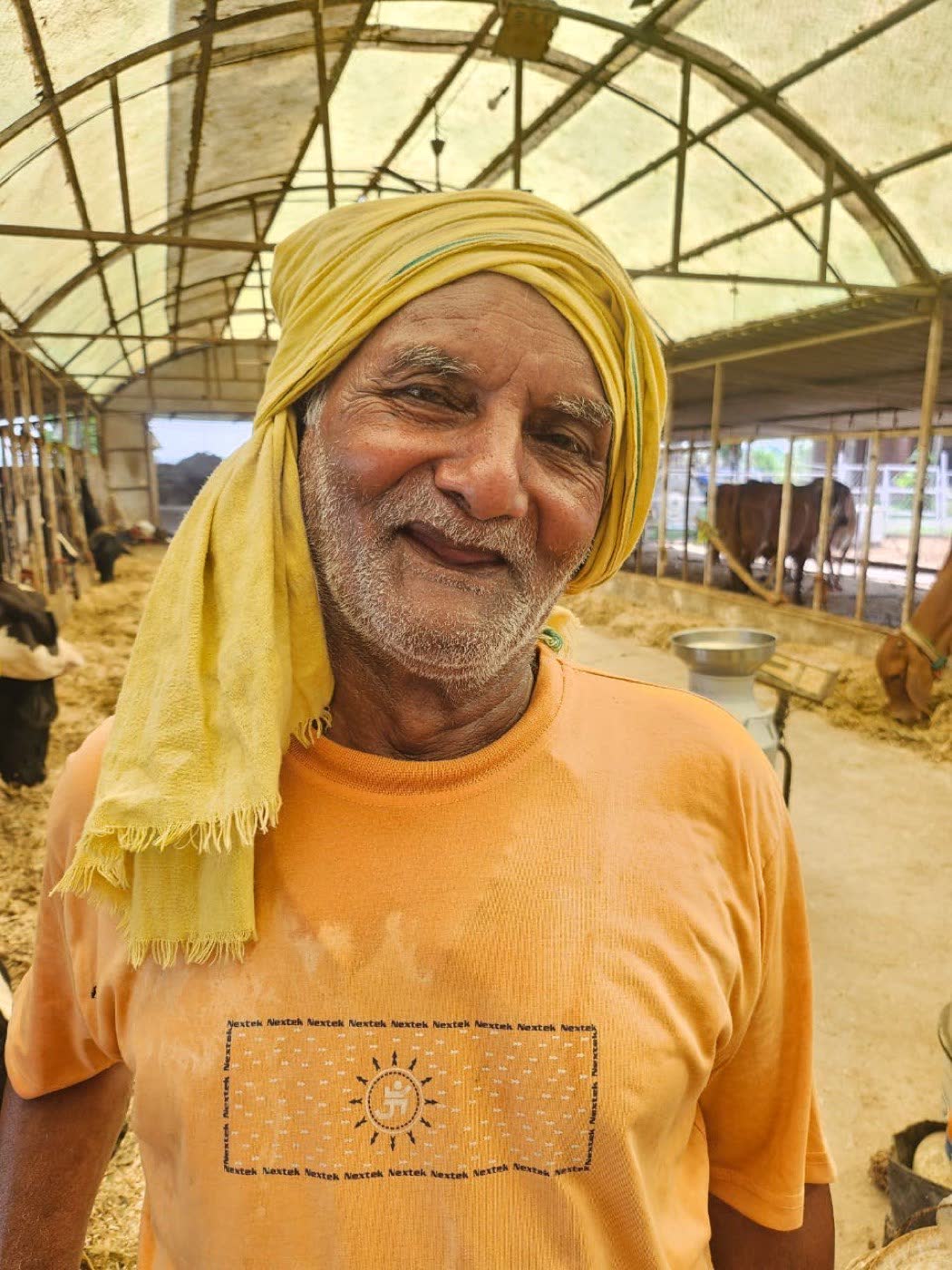
Meet Ram, the farmer behind Sri Radha Mohan Dairy Farm
24 August 2026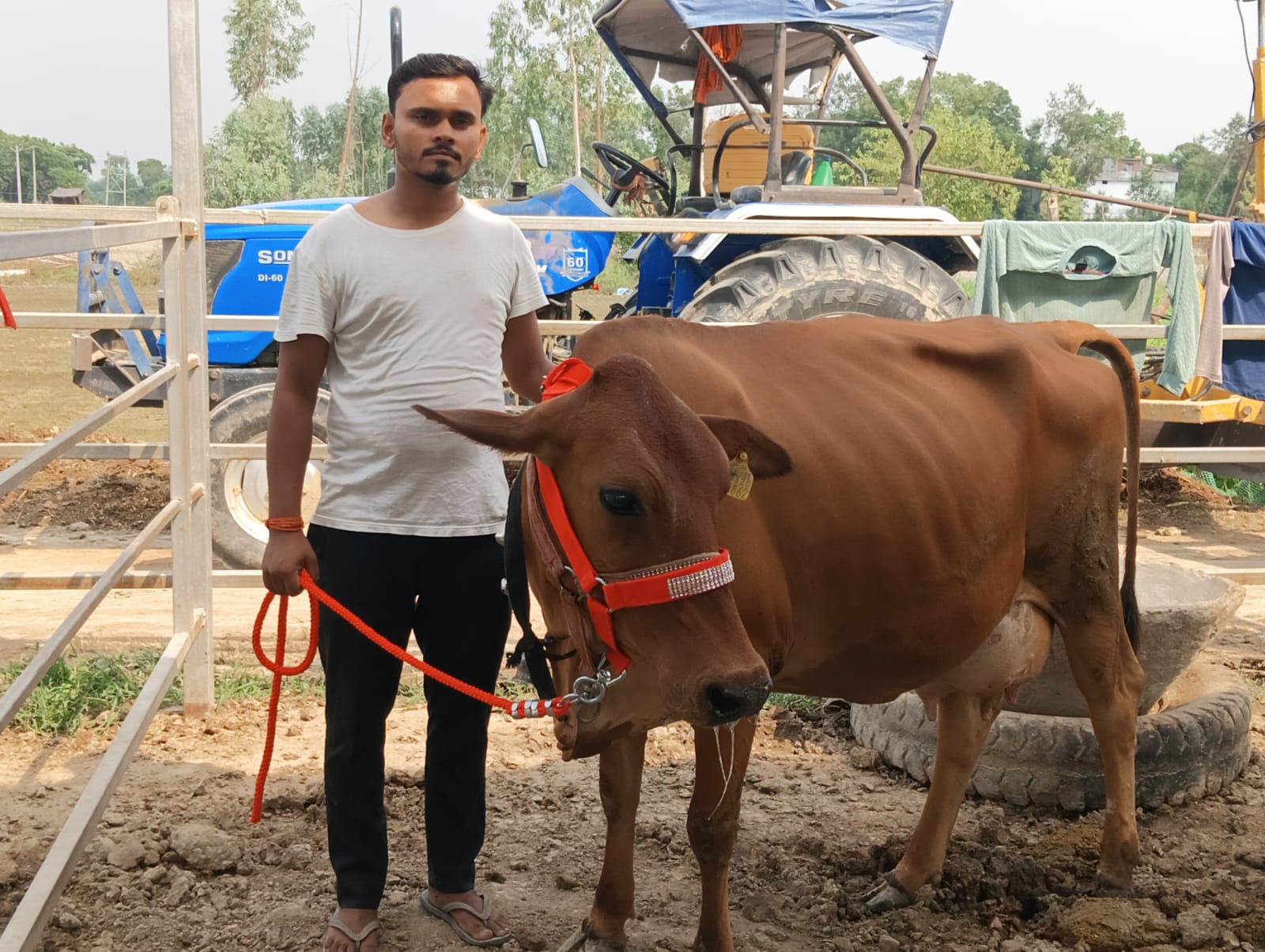
The farmers of Gonda: Harsh Singh and Ranjeet Singh
18 August 2026