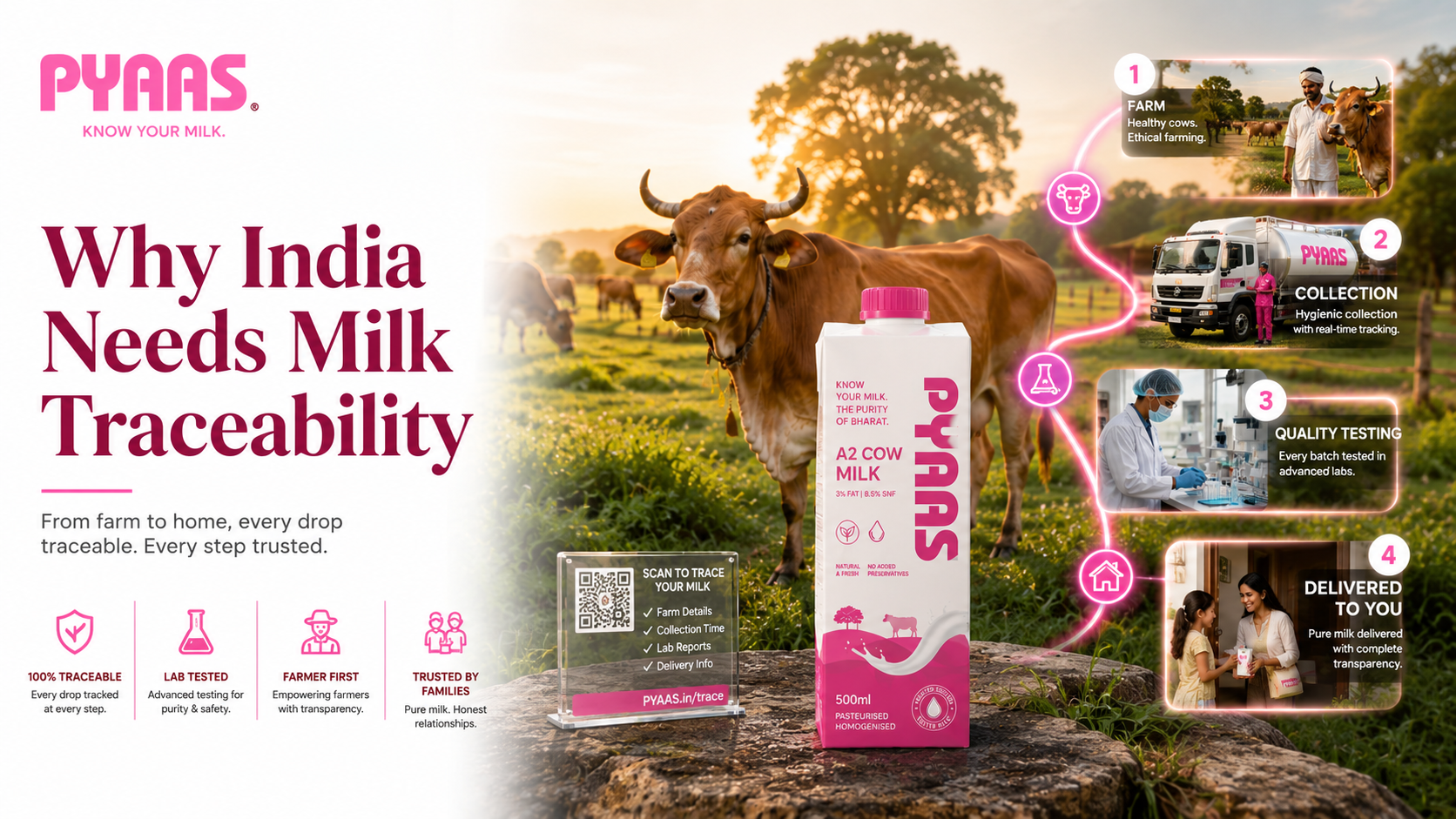
Why India Needs Milk Traceability
Walk into any store in India, pick up a milk carton, and ask one simple question: which farm produced this milk, and who is the farmer behind it? Most families cannot answer. The uncomfortable truth is that most dairy brands cannot answer it either. For decades, milk has been treated as a faceless commodity that arrives in a packet or carton, and we have all been expected to trust whatever is inside. But trust without visibility is getting harder to give, and that is exactly why India needs milk traceability now more than ever.
Milk traceability means the ability to follow every litre back to its true source: the exact farm, the named farmer, the breed of cow, the batch test results, and the time the milk left the farm. It turns trust from a marketing promise into something a family can actually verify. In a country with one of the largest and most fragmented dairy ecosystems on earth, this shift from blind faith to verifiable proof may be the single most important change Indian dairy can make.
The Transparency Gap in Indian Dairy
India produces more milk than any other nation, and that scale is something to be proud of. But scale also creates distance. Millions of small farmers contribute milk every day, and that milk passes through thousands of collection centres, chilling units, transporters and processors before it reaches your kitchen. By the time a carton lands in your hands, the original source has usually become invisible.
Here is what most consumers actually know about their milk:
- The brand name printed on the pack
- The price
- The expiry date
And here is what they almost never know:
- Which farm the milk came from
- Which farmer milked the cows that morning
- What breed of cow produced it
- What the lab results were for that specific batch
- How long ago the milk actually left the farm
This is the transparency gap. We have written more about how this disconnect builds up in the hidden problem with India's milk supply chain, because understanding the chain is the first step to understanding why traceability matters so much.
Why Families Now Expect to Know Their Milk
Indian consumers have changed. The same family that cannot name the farm behind their milk can track a food delivery to the minute, see exactly which restaurant cooked their meal, and read the full sourcing story behind their coffee beans or honey. Transparency has quietly become the default expectation almost everywhere, except in one of the most important products a family buys every single day.
Modern parents in particular are asking sharper questions. They want to know whether the milk is A1 or A2, whether the cows are indigenous desi breeds, and whether the milk is genuinely fresh rather than weeks old. If you are weighing those choices for your own home, our guide to what A2 milk is and how it differs from regular milk is a useful place to start. The deeper point is simple: families no longer want to be told to trust. They want to be shown.
Adulteration Makes Trust Even Harder
The transparency gap is not just an inconvenience. It creates real room for adulteration and quality shortcuts, because anything that cannot be seen is harder to hold accountable. When a litre of milk cannot be traced to a named source and a real test result, problems can hide inside the anonymity of the supply chain. We unpack this in detail in our piece on milk adulteration in India and what consumers need to know. Traceability is one of the strongest defences a family has, because a source that can be named is a source that can be held responsible.
What Real Milk Traceability Looks Like
True traceability is not a vague claim like "farm fresh" or "sourced with care." Those phrases sound reassuring but tell you nothing you can check. Genuine traceability gives a family specific, verifiable answers to the questions that actually matter.
A properly traceable dairy system should let you know:
- The exact farm your milk came from, not a region or a vague "network of farmers"
- The named farmer behind that batch, so there is a real person accountable for it
- The lab test results for that batch, including basic quality markers like SNF and FAT
- The time the milk left the farm, so freshness is a fact and not a feeling
This is the difference between a label and proof. To see how a single litre travels from a named farm to your kitchen, read about what traceable milk really is and why modern consumers want it. Traceability does not ask you to believe a story. It hands you the evidence and lets you decide for yourself.
How PYAAS Builds Traceability Into Every Pack
At PYAAS, traceability is not a feature we added later. It is the reason the brand exists. We source single-origin A2 cow milk and small-batch A2 Bilona ghee from named farms in Gonda, Uttar Pradesh, and we deliver it fresh across Delhi NCR, Lucknow and Ayodhya.
Every PYAAS pack carries a QR code. When you scan it, you can see the specific farm your milk came from, the farmer who produced it, that batch's lab test for SNF and FAT, and the time the milk left the farm. There is no anonymous pool, no faceless network, and no asking you to simply trust the logo. You can read the full story of how this works in how PYAAS tracks milk from farm to family, and you can explore the idea at its heart on our Know Your Milk page.
The same thinking shapes everything we make. Our A2 Bilona ghee is churned in small batches from the milk of the same traceable, named farms, so the transparency you see on a milk pouch follows through to the ghee jar on your shelf. Traceability, for us, is not a campaign. It is a standard we apply to every product, every batch, every day.
Why Traceability Is the Future of Indian Dairy
The future of premium food in India will belong to the brands willing to give honest, verifiable answers. We are already seeing this shift play out across food categories, as we explore in why consumers are demanding transparent food systems and in why traceability matters in dairy and the future of consumer trust. The direction is clear: opacity is going out of fashion, and proof is becoming the new premium.
India does not need better marketing for its milk. It needs better visibility. The country that pioneered the white revolution and built the world's largest dairy economy is more than ready to lead the next chapter, one where every family can know exactly where their milk comes from. Traceability should not be a luxury reserved for a few. It should simply be the standard.
We built PYAAS around one quiet belief: no family should ever have to guess where their milk comes from. If that idea resonates with you, you might enjoy reading about our founding family and why we started this journey. And the next time you pour a glass of milk for someone you love, we hope you will be able to do something most people in India still cannot. Scan it, see it, and truly know your milk.
Written by
PYAAS Team
The PYAAS Team writes about dairy transparency, A2 milk and traceability, drawing on the brand's work with named farms in Gonda, Uttar Pradesh to help Indian families truly know their milk.
More from PYAAS TeamCommon questions.
What is milk traceability?
Milk traceability is the ability to follow every litre of milk back to its true source. That includes the exact farm, the named farmer, the cow breed, the batch lab test results, and the time the milk left the farm. It turns trust into something a family can actually verify rather than simply assume.
Why does India need milk traceability?
India has one of the largest and most fragmented dairy supply chains in the world, so milk often passes through many hands before it reaches a home. This makes the original source invisible and creates room for quality shortcuts. Traceability closes that gap by making every litre verifiable back to a named farm and a real test result.
How can I check where my milk comes from?
With most conventional milk, you usually cannot, because the pack only shows a brand, a price and an expiry date. With a traceable brand like PYAAS, you scan the QR code on the pack to see the exact farm, the farmer, the batch lab test for SNF and FAT, and the time the milk left the farm.
Does milk traceability help reduce adulteration?
It helps a great deal. Adulteration thrives in anonymity, because milk that cannot be traced to a named source is harder to hold accountable. When every batch links to a specific farm, farmer and test result, there is far less room for problems to hide inside the supply chain.
Is traceable milk more expensive than regular milk?
Traceable milk can cost a little more because it involves single-origin sourcing, batch testing and fresh delivery rather than large anonymous pools. Many families feel the added confidence is worth it, especially for children and seniors. The real value is knowing exactly what you are giving your family instead of guessing.
Get the next one in your inbox.
The occasional note on milk, ghee, and how we work. Plain words, no hype, and you can leave any time.
Keep reading.
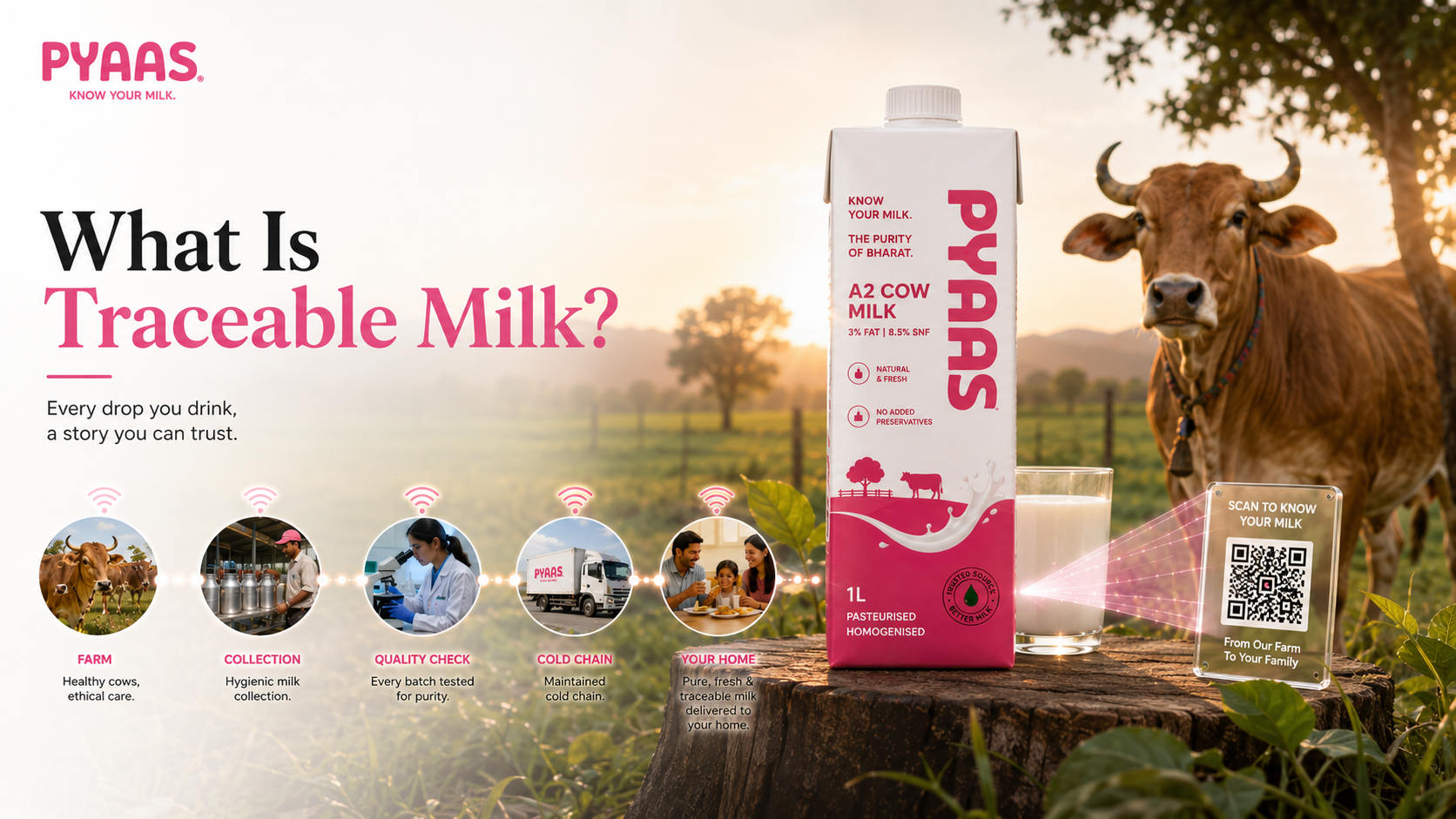
What Is Traceable Milk? Why Modern Consumers Want to Know Their Milk
5 July 2026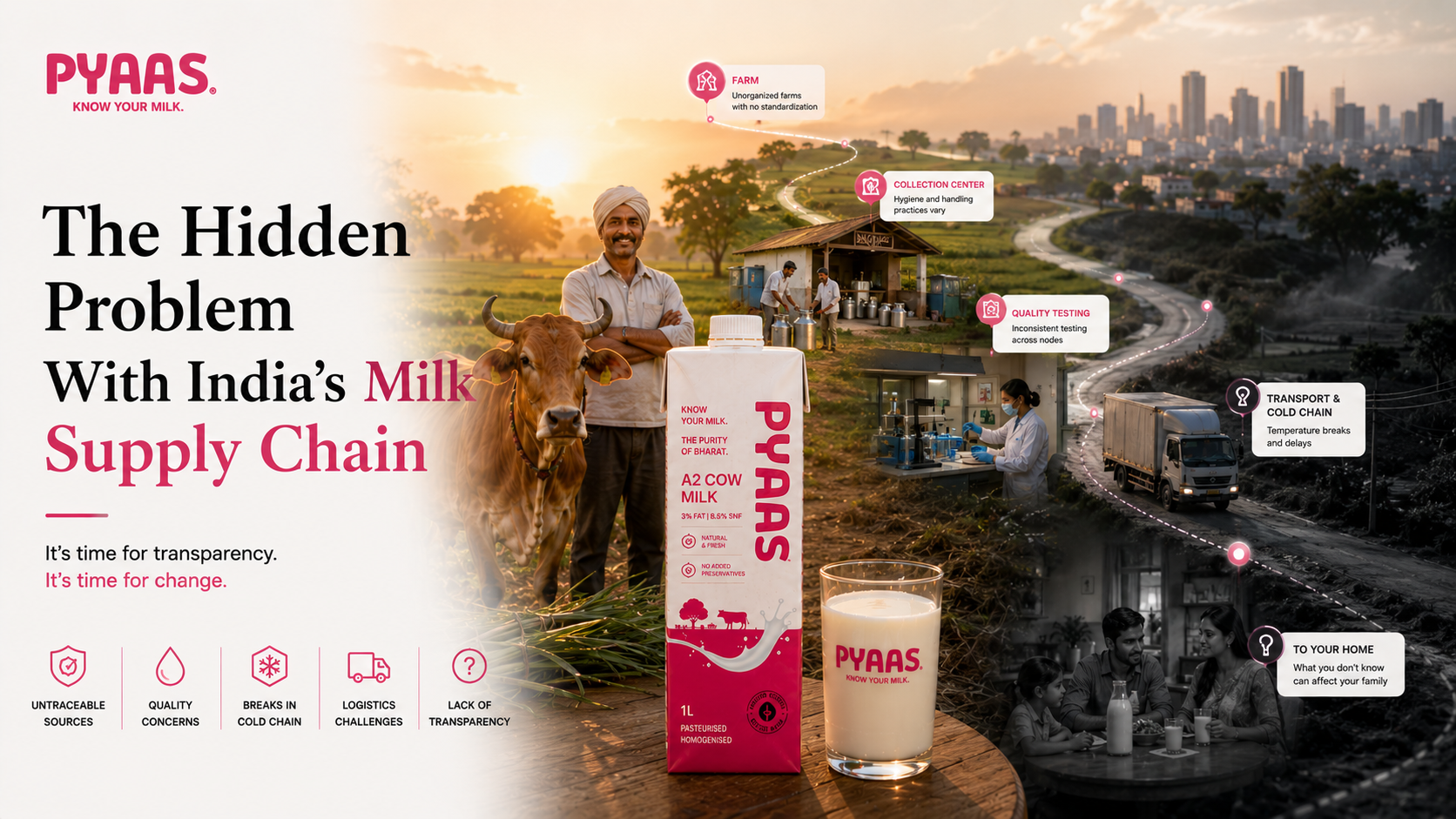
The Hidden Problem With India's Milk Supply Chain
7 July 2026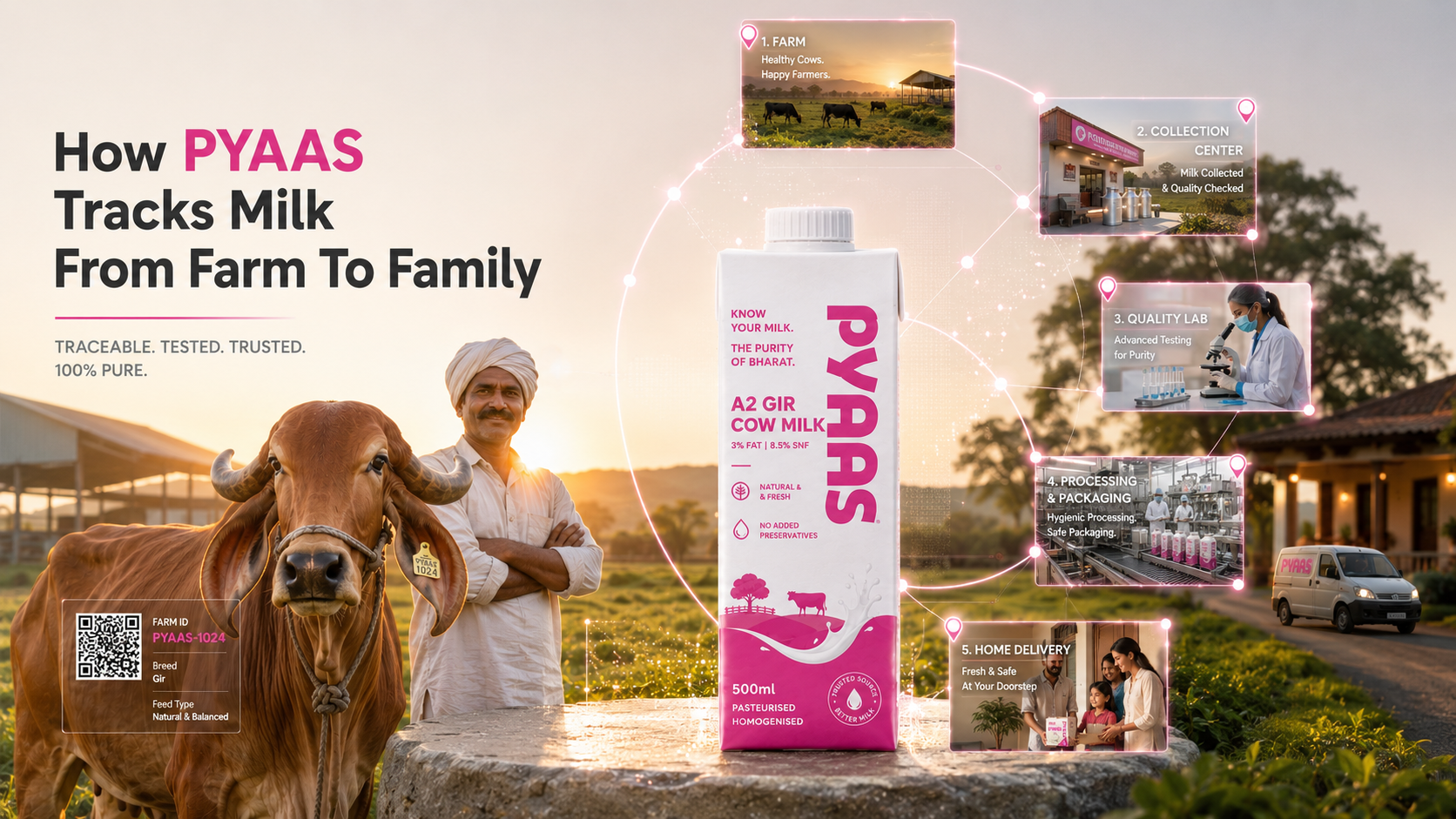
How PYAAS Tracks Milk From Farm To Family
28 June 2026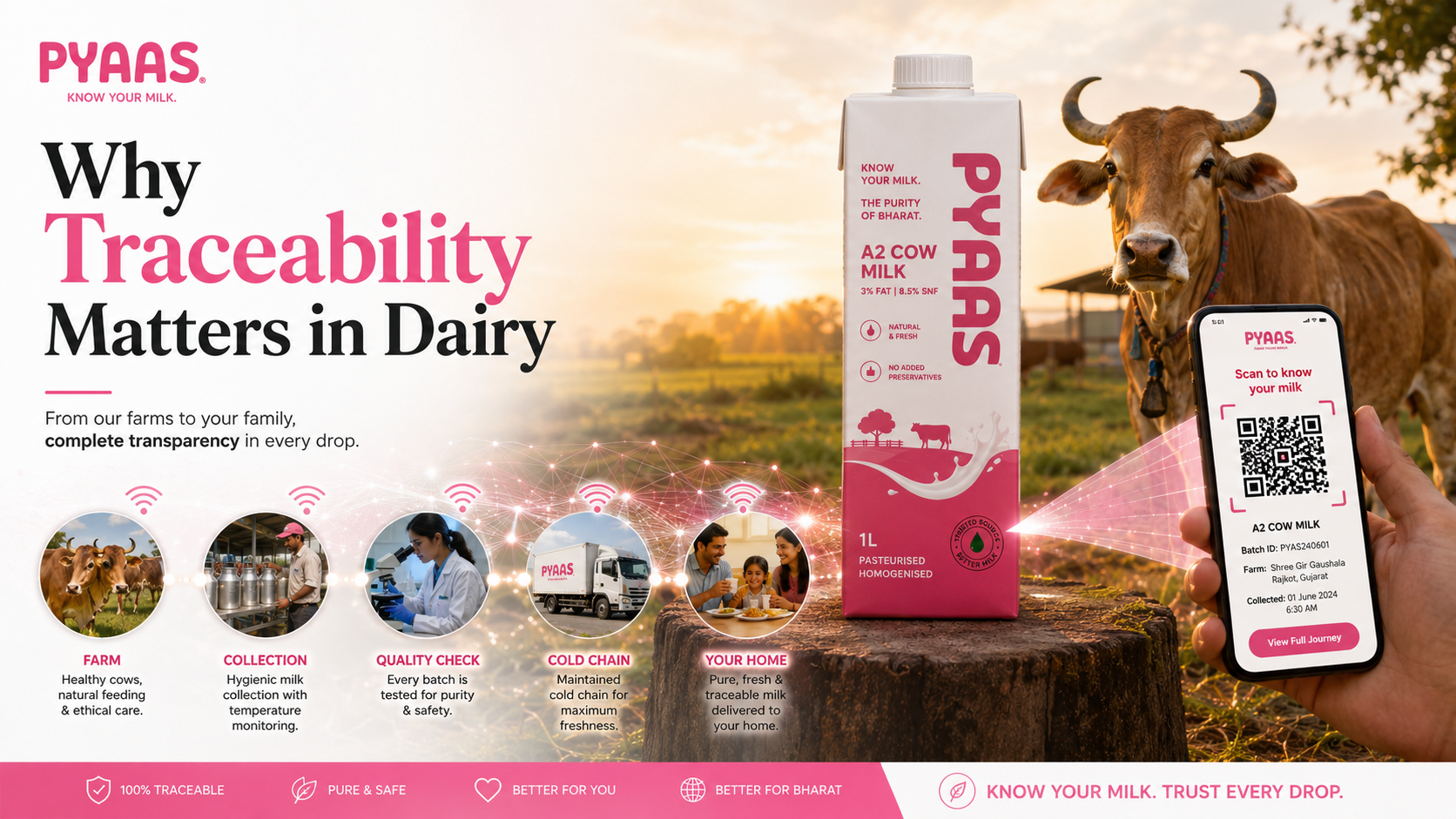
Why Traceability Matters in Dairy: The Future of Consumer Trust
5 July 2026