What Is Traceable Milk? Why Modern Consumers Want to Know Their Milk
Pour a glass of milk in most Indian homes and you will struggle to answer a simple question: where did this actually come from? You may know the brand on the carton, but you almost never know the farm, the cow, the farmer or the quality of that specific batch. Traceable milk changes that. It is milk you can follow, step by step, from the farm where it was produced to the moment it reaches your kitchen, with the proof attached rather than promised.
As more families ask harder questions about food, traceability has moved from a nice idea to a real expectation. This guide explains what traceable milk means, how a transparent dairy supply chain works, and why modern consumers increasingly want to truly know their milk before they pour it for their children, their parents and themselves.
What Is Traceable Milk?
Traceable milk is milk that can be tracked through every stage of the dairy supply chain, from a named source farm all the way to the consumer. Instead of a generic label, traceability ties each pack to a verifiable record: which farm the milk came from, who looked after the animals, when the milk left the farm, and what quality checks it passed along the way.
Good traceability answers the questions a thoughtful buyer would ask if they could stand in the dairy themselves:
- Origin: Which specific farm produced this milk, not just which region or company.
- People: Who is the farmer behind it, so there is a real name and not an anonymous chain.
- Time: When was the milk collected, so freshness is a fact and not a slogan.
- Quality: What did the lab tests for that batch show, including markers like SNF and FAT.
- Handling: How was the milk chilled, transported and packed before it reached your home.
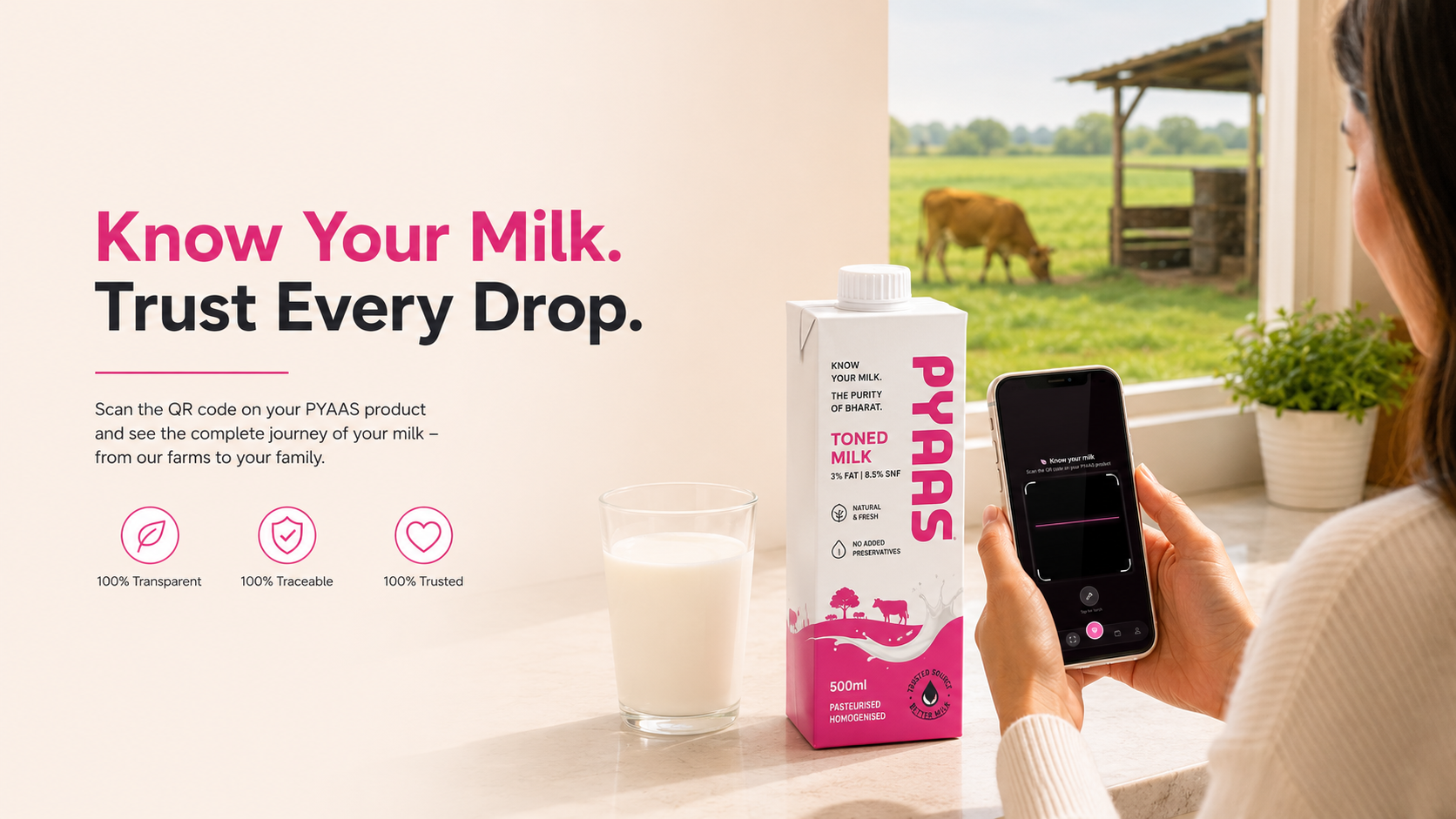
The key difference is verification. Many brands describe their values; traceable milk lets you check them. At PYAAS, that means a QR code on the pack that opens the story of your specific batch, the farm in Gonda, Uttar Pradesh, the named farmer, that batch's lab test and the time the milk left the farm. If you want the full philosophy behind this, our Know Your Milk approach explains exactly what we share and why.
Why Modern Consumers Want to Know Their Milk
People already want to know where their vegetables, fruit and meat come from. Milk is the one staple where, for decades, families have been asked to simply trust the label. That is changing fast, and for good reasons.
Adulteration has eroded blind trust
India is one of the largest milk producers in the world, but reports of adulteration and dilution have made many families wary. When you cannot see the source, you cannot rule out what might have been added. Traceability tackles this at the root by attaching the source and the test result to the pack itself. To understand the scale of the problem, read our explainer on milk adulteration in India and what consumers need to know.
Families want to verify, not assume
Parents buying milk for a growing child, or adult children buying for elderly parents, do not want to gamble on quality. They want evidence. A transparent record turns a hopeful purchase into an informed one, which is why so many shoppers now check labels, claims and sourcing far more closely than before. This shift is part of a wider movement we explore in why consumers are demanding transparent food systems.
The hidden supply chain is finally being questioned
Conventional milk often passes through many hands between the cow and the carton, with each step adding distance and reducing accountability. The longer and more opaque the chain, the easier it is for quality and freshness to slip. We unpack this in detail in the hidden problem with India's milk supply chain.
How a Traceable Dairy Supply Chain Works
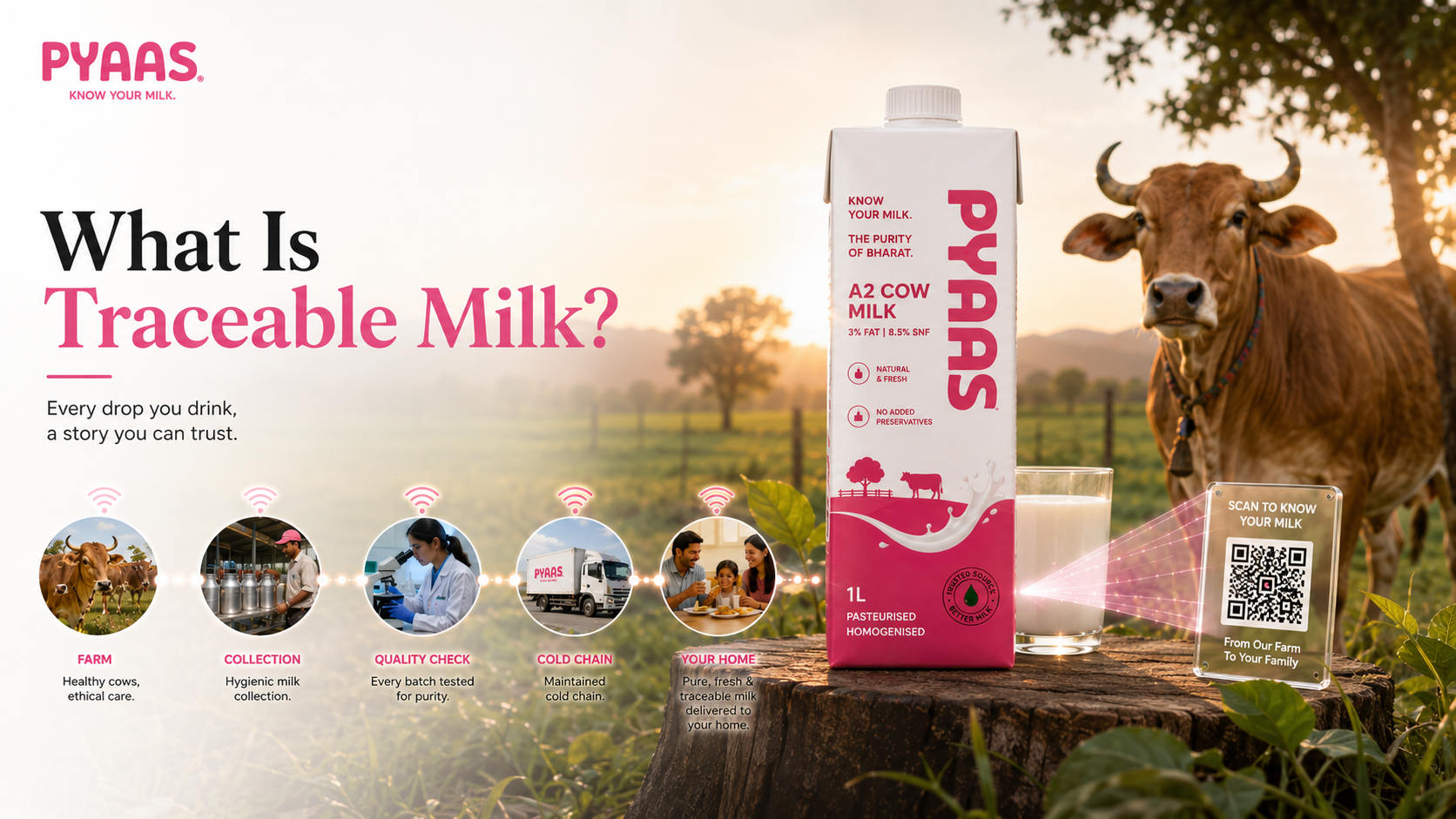
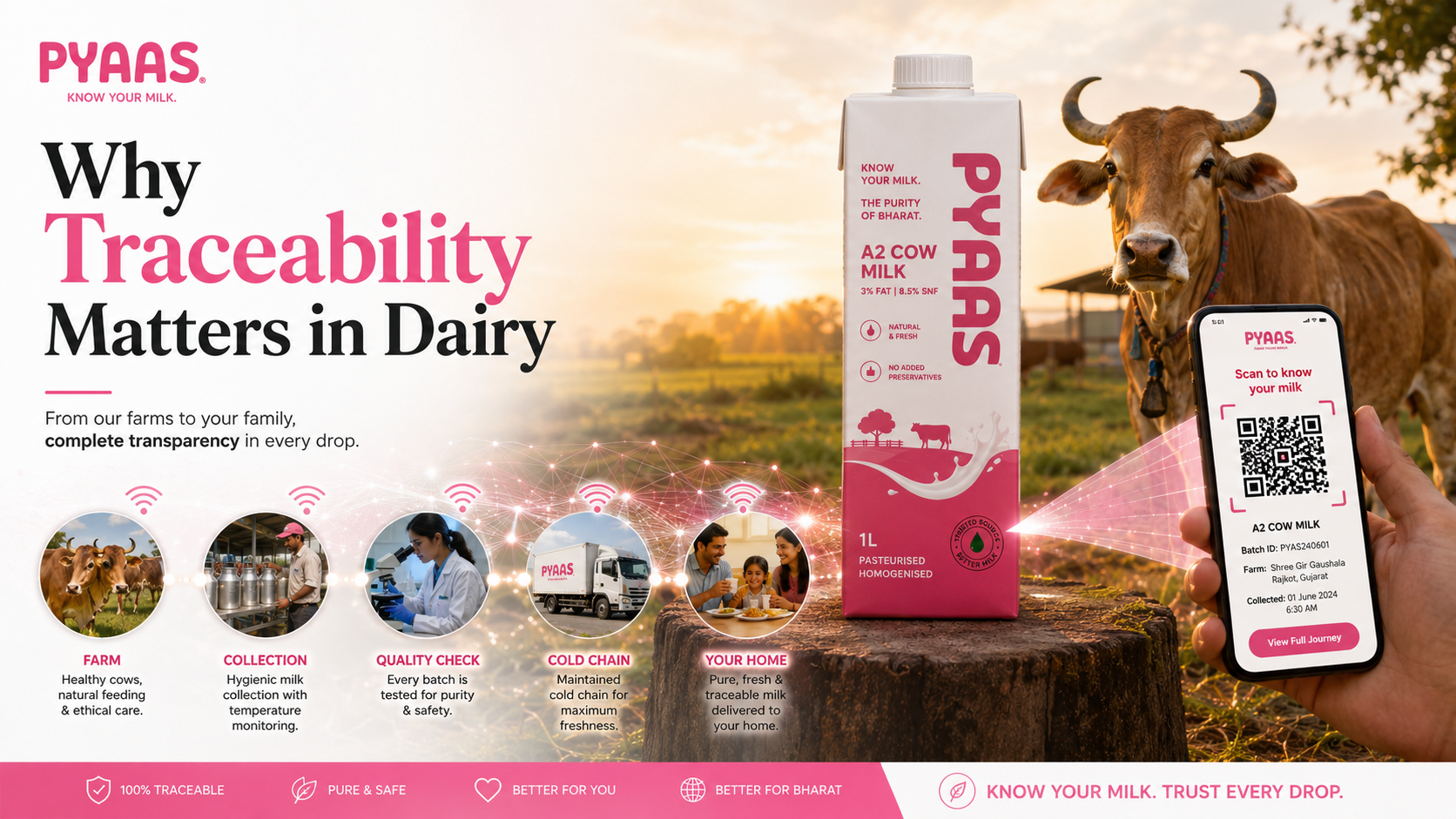
A traceable supply chain is not magic; it is discipline applied at every stage and recorded honestly. A modern, transparent dairy journey typically includes:
- Source selection: Choosing specific, known farms and building a direct relationship with each farmer rather than buying anonymous bulk milk.
- Collection with a timestamp: Recording when milk leaves the farm, so freshness can be proven rather than assumed.
- Quality testing: Checking each batch for purity and composition, including SNF and FAT, before it moves forward.
- Cold chain and handling: Keeping milk cool and clean from collection to delivery to protect quality.
- Packing and labelling: Sealing the milk into cartons or pouches that carry a code linking back to the full record.
- Last-mile delivery: Reaching the home quickly, in our case across Delhi NCR, Lucknow and Ayodhya.
Each step generates information that can be recorded and verified. When that information is made available to the buyer, trust stops depending on the brand's word alone. You can see exactly how we put this into practice in how PYAAS tracks milk from farm to family, which walks through the journey behind a single carton.
Where technology helps
Digital tools make traceability practical at scale. Batch records, lab results and timestamps can be stored and linked to a simple QR code, so a parent in Delhi can stand in their kitchen and read about a farm in Gonda in seconds. The goal is never technology for its own sake; it is making honest information easy to find.
What to Look For When Choosing Traceable Milk
Not every brand that says "farm fresh" can actually show you the farm. When you are evaluating milk for your family, look past the marketing and ask for proof:
- Can they name the source? A single-origin, named farm is far stronger than a vague claim about a region.
- Is there a real person behind it? Knowing the farmer signals a direct, accountable relationship.
- Do they share test results? Batch-level transparency on quality markers is a sign of genuine confidence.
- Can you verify freshness? A timestamp for when milk left the farm beats a generic "fresh" sticker.
- Is the breed clear? If you are looking specifically at A2 cow milk, the brand should be open about the breed and its A1 versus A2 beta-casein profile.
The more a brand is willing to show, the easier it becomes to trust them. Traceability rewards honesty and quietly exposes vagueness. For a deeper look at what real transparency means in practice, see what "Know Your Milk" really means.
Traceability Beyond Milk: Ghee and the Bigger Picture
Transparency does not stop at the carton. The same thinking applies to other dairy you bring home. Our small-batch A2 Bilona ghee is made from the same traceable A2 cow milk, using the traditional bilona method, so you know the source of your ghee just as clearly as your milk.
Traceability is ultimately about a relationship. When you can see the farm and the farmer, you are no longer buying from a faceless system; you are connected to real people doing careful work. That connection is what we are building at PYAAS, and it is the heart of why we exist. You can read more about the people who started it all on the page about our founding family. Looking ahead, the case for change is clear in why India needs milk traceability.
The Future of Dairy Is Visible
Consumers are increasingly asking about sourcing, animal welfare, quality standards and sustainability, and they expect real answers. The brands that thrive will be the ones that open up rather than close ranks. Traceable milk is not a passing trend; it is the new baseline for trust between farmers and families.
At PYAAS, we believe every family deserves to know exactly where their milk comes from, who produced it and how it was tested, with the proof attached to every pack. If that kind of honesty matters to you, scan, read and decide for yourself. Knowing your milk should never be a leap of faith. It should simply be the truth, made easy to see.
Written by
PYAAS Team
The PYAAS Team writes about traceability, A2 cow milk and honest dairy, drawing on direct work with named farms in Gonda, Uttar Pradesh to help families truly know their milk.
More from PYAAS TeamCommon questions.
What is traceable milk?
Traceable milk is milk you can track through every stage of the supply chain, from a named source farm to your home. It links each pack to a verifiable record of where the milk came from, who produced it, when it was collected and what quality tests it passed. The goal is proof rather than promises.
How does milk traceability actually work?
Traceability records information at each step: the source farm, the collection time, the batch lab tests, the cold chain and the final pack. That information is stored and often linked to a QR code on the carton or pouch. When you scan it, you can see the farm, the farmer, the test results and the time the milk left the farm.
Why do modern consumers want traceable milk?
Families already want to know where their vegetables, fruit and meat come from, and milk is no different. Concerns about adulteration and long, opaque supply chains have made many people want evidence instead of blind trust. Traceable milk lets parents verify quality and freshness before they pour it for their children and elders.
Is traceable milk the same as A2 milk?
No, they describe different things. A2 refers to the type of beta-casein protein in the milk, linked to certain cow breeds, while traceability is about being able to follow the milk's journey and verify its source and quality. PYAAS milk is both A2 cow milk and fully traceable, so you get the protein profile and the proof together.
How can I tell if a milk brand is genuinely traceable?
Look for brands that can name the exact source farm rather than just a region, identify a real farmer, and share batch-level quality results like SNF and FAT. A timestamp showing when the milk left the farm and an easy way to verify it, such as a QR code, are strong signs. The more a brand is willing to show, the more you can trust it.
Get the next one in your inbox.
The occasional note on milk, ghee, and how we work. Plain words, no hype, and you can leave any time.
Keep reading.
Why Traceability Matters in Dairy: The Future of Consumer Trust
5 July 2026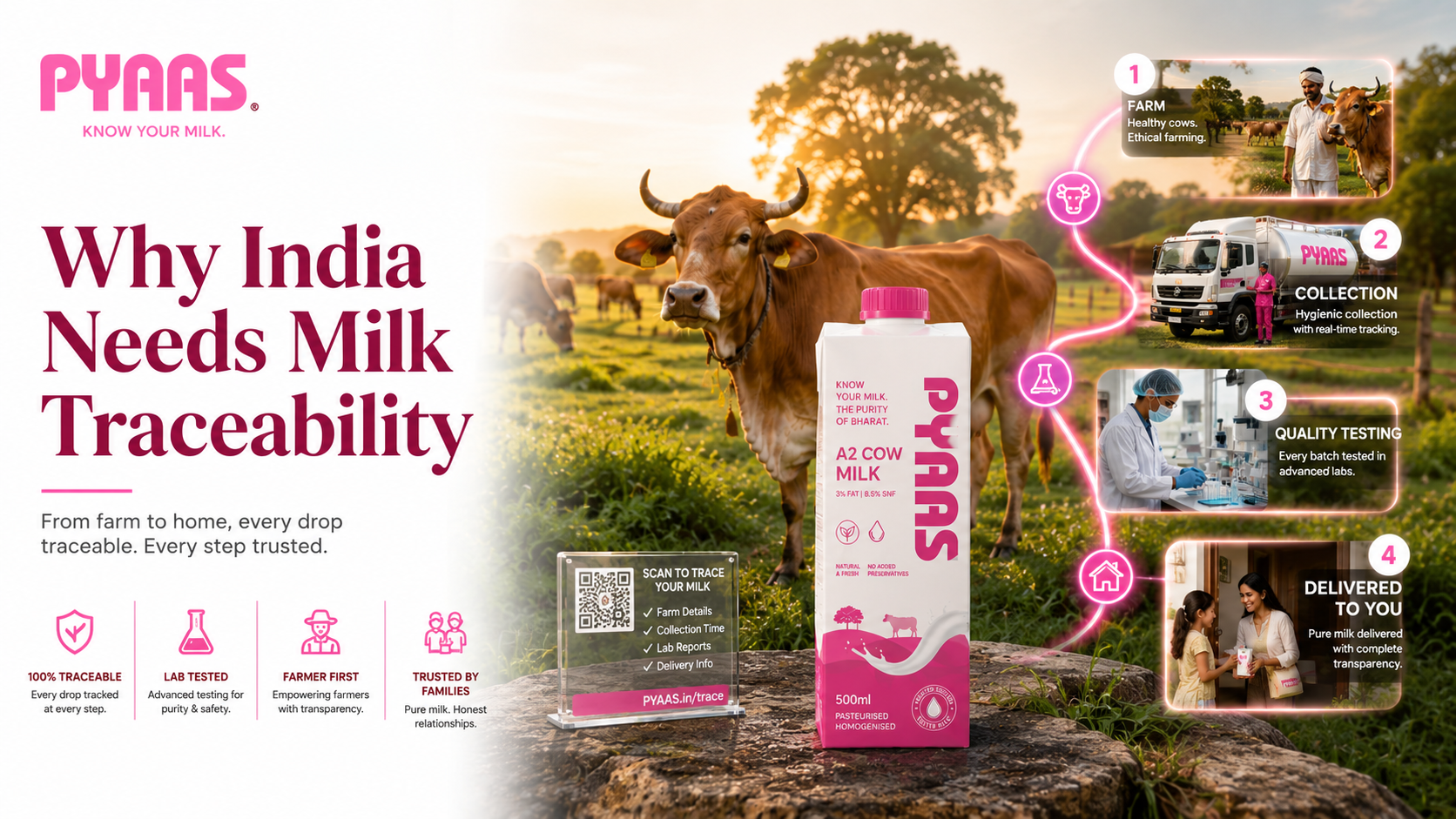
Why India Needs Milk Traceability
3 July 2026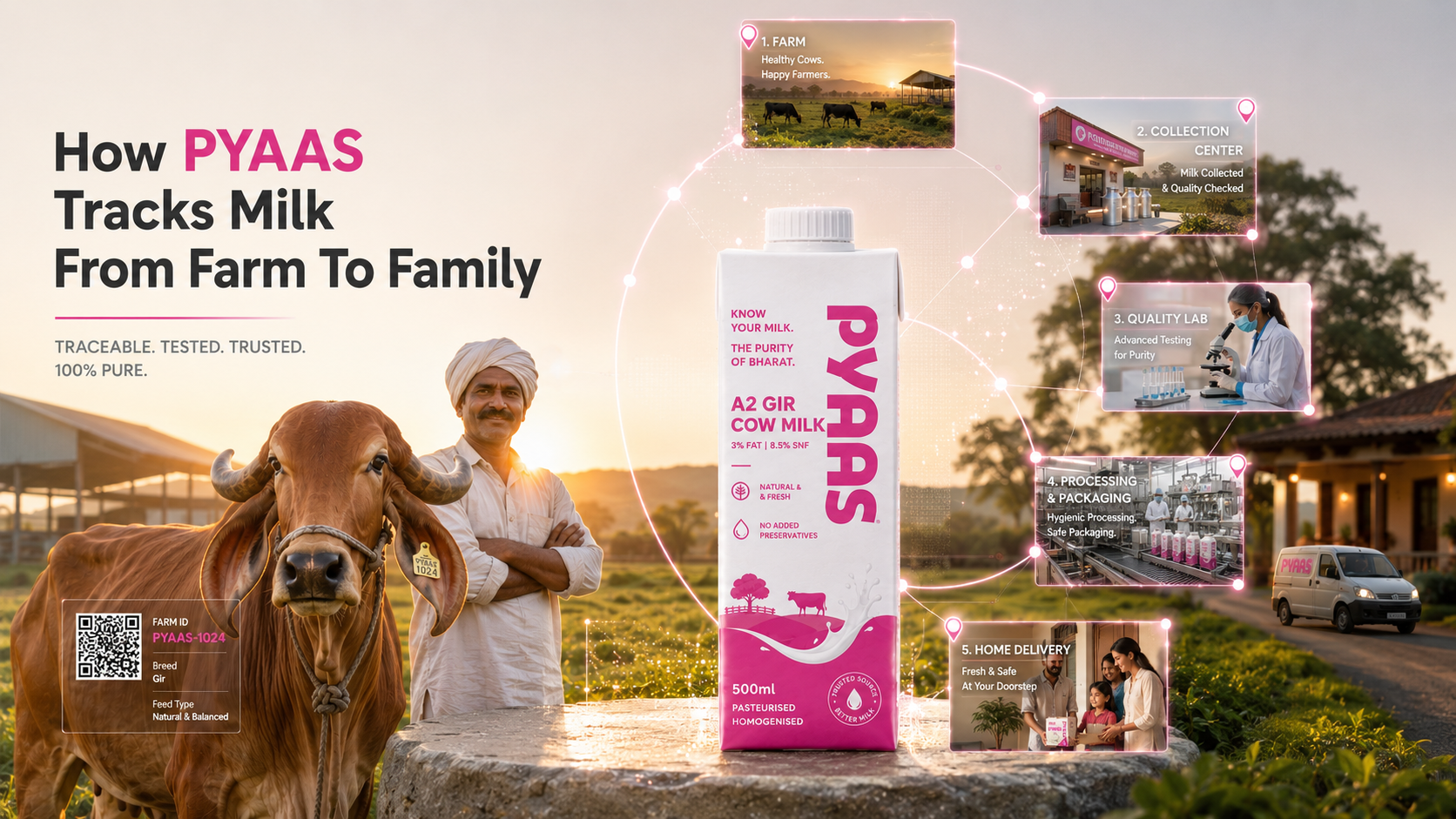
How PYAAS Tracks Milk From Farm To Family
28 June 2026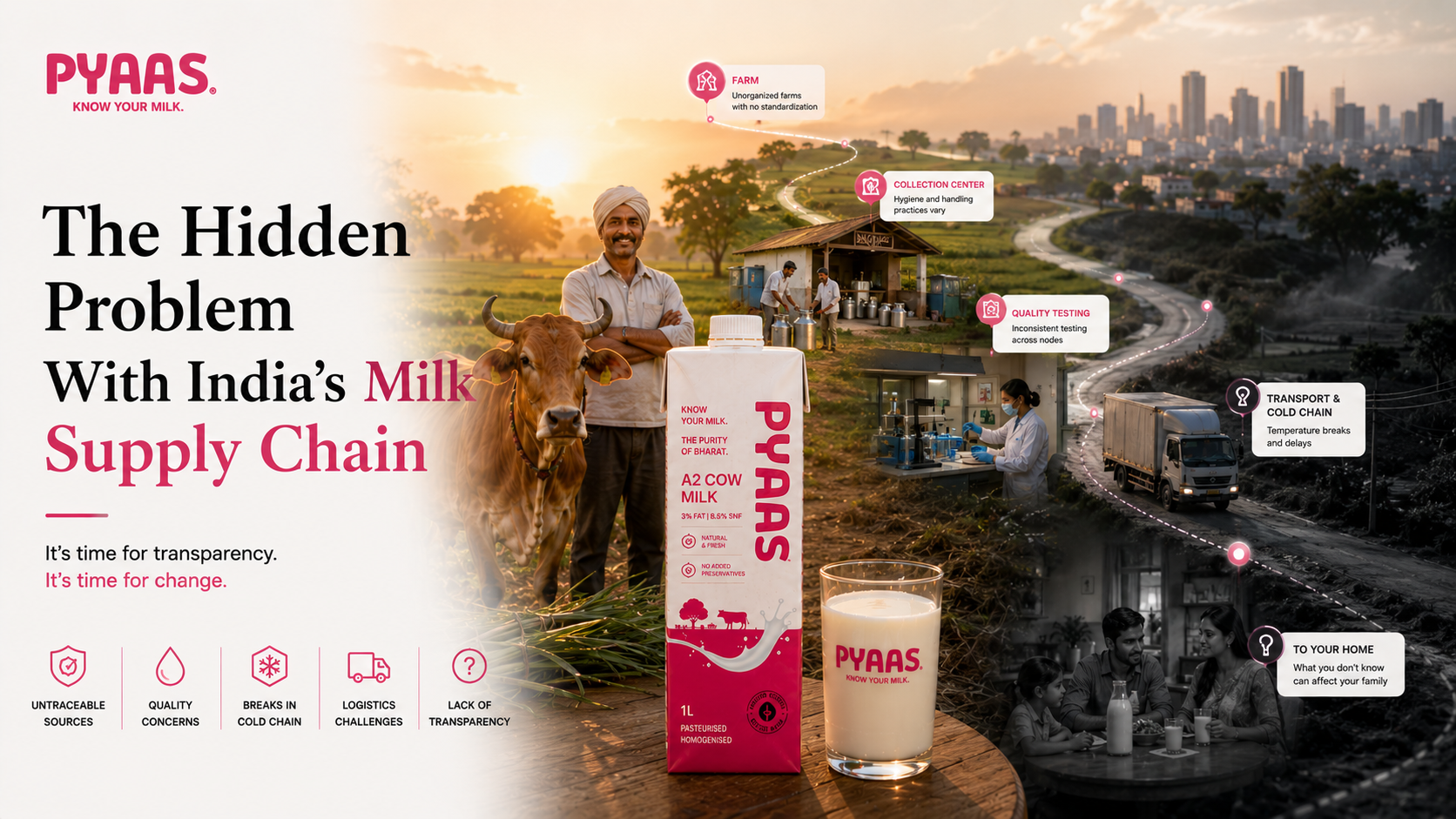
The Hidden Problem With India's Milk Supply Chain
7 July 2026