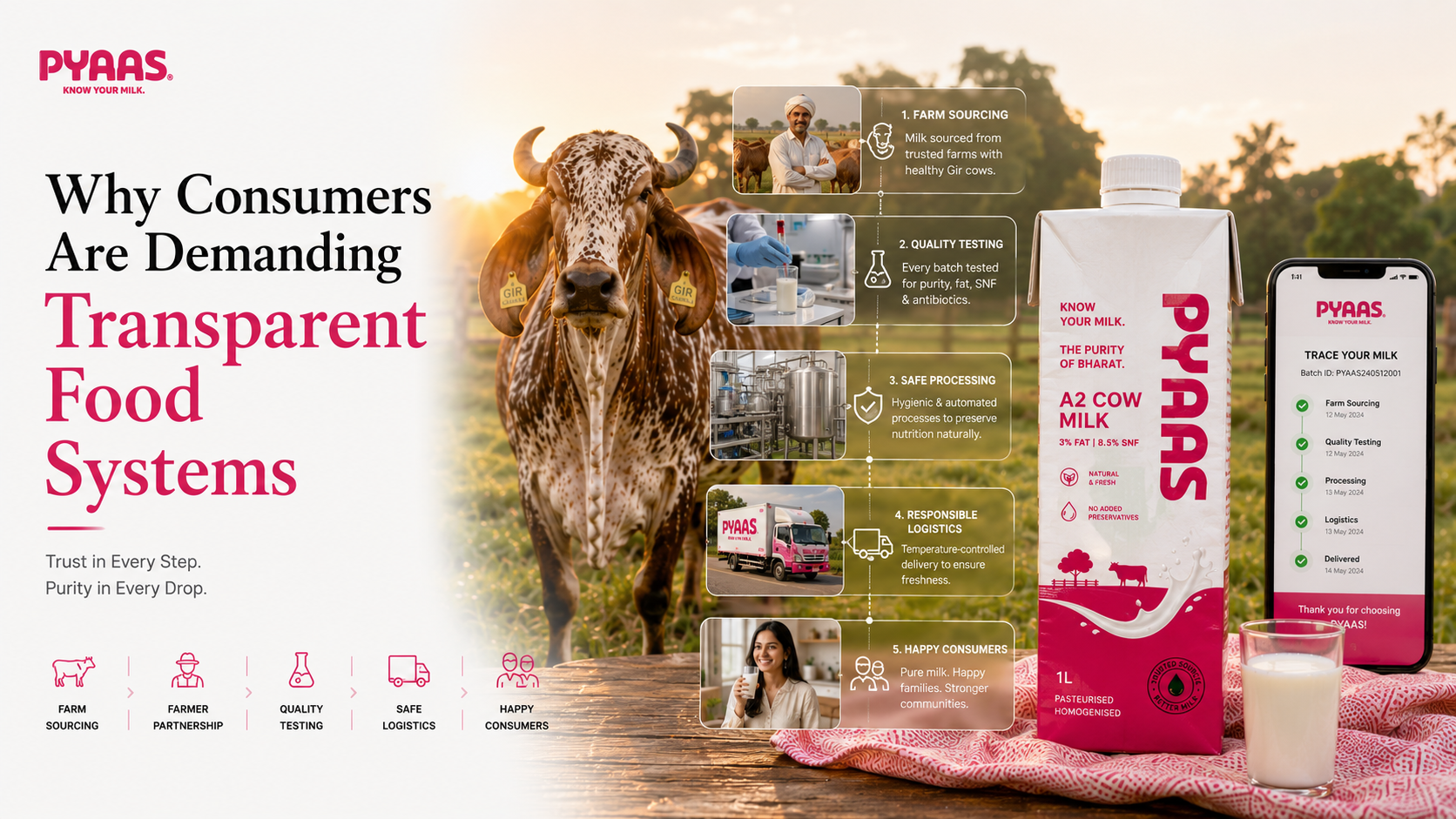
Why Consumers Are Demanding Transparent Food Systems
A decade ago, most families filled their shopping baskets based on price, convenience and a familiar brand name. Today something fundamental has shifted. People want to understand their food, not just buy it. They read the back of the pack, question vague claims like "pure" and "natural," and increasingly ask a simple but powerful question: where did this actually come from, and who made it? This is the heart of why consumers are demanding transparent food systems, and it is reshaping how trustworthy brands are built.
Nowhere is this demand louder than in dairy. Milk reaches a family every single day, often into the hands of children and elders, yet for most households it arrives with almost no story attached. The growing appetite for transparency in food is really an appetite for honesty: clear answers about sourcing, production and quality instead of marketing language. In this guide we explain what is driving the shift, why it matters most for milk, and how transparent food brands are earning a new kind of loyalty.
What Food Transparency Really Means
Food transparency means giving people genuine visibility into how their food is sourced, produced and handled before it reaches their table. It is the difference between a label that simply says "farm fresh" and a system that lets you see the exact farm, the named farmer and the test results behind a specific batch.
True transparency tends to cover three things:
- Origin: the specific farm or region, not a generic "sourced from local farms."
- Process: how the product was made, handled, tested and transported.
- Proof: evidence such as lab results or quality checks, rather than adjectives alone.
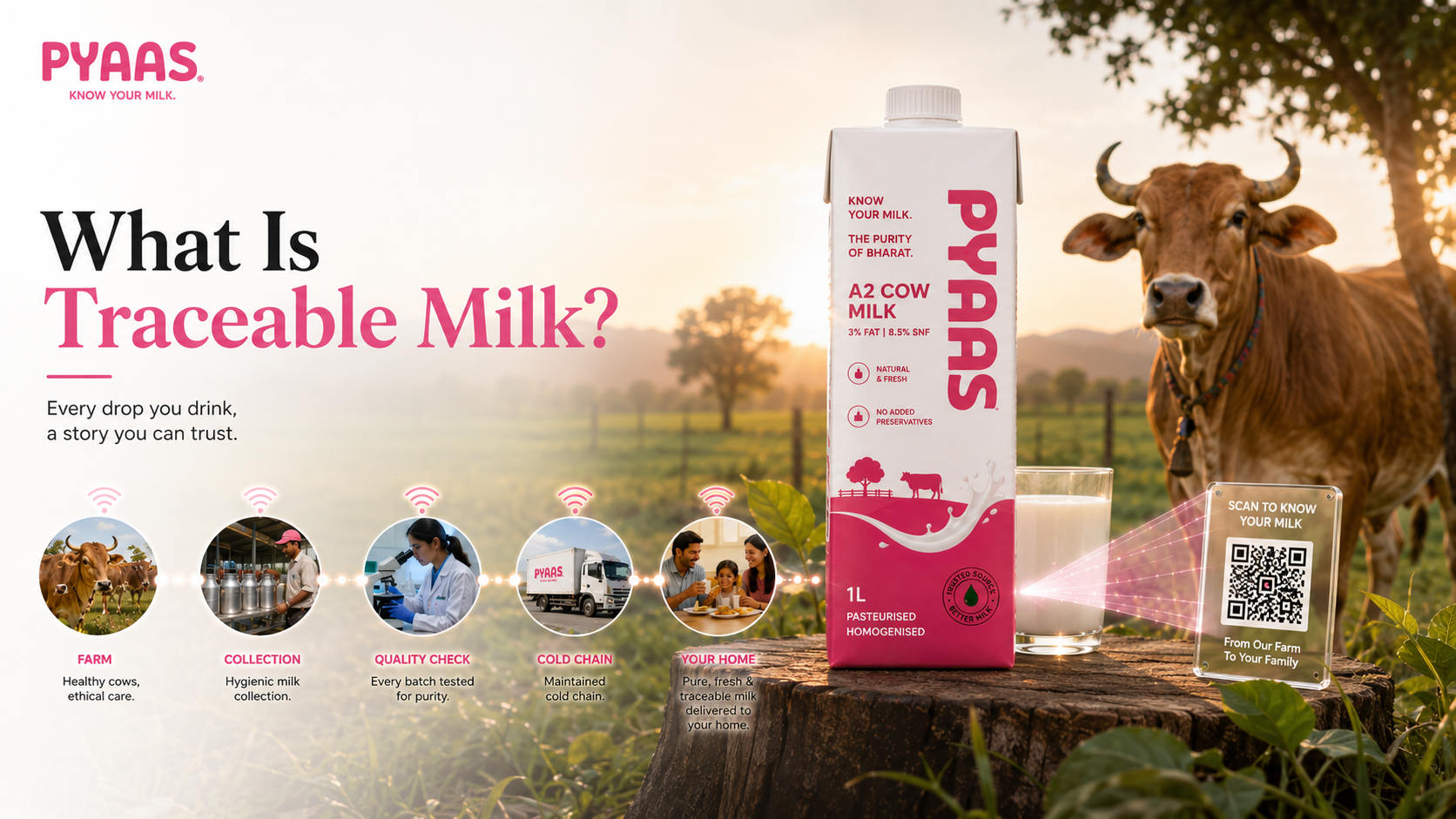
For milk, that means knowing whether it is A2 or A1, how it was treated, when it left the farm and what its quality looked like that day. If you are new to this idea, our explainer on what traceable milk really is walks through it in plain language.
Why Consumers Are Demanding Transparent Food Systems Now
Several forces have converged to push transparency from a nice-to-have into an expectation. Understanding them explains why the pressure on food brands is only going to grow.
Information Is Now in Everyone's Hands
A generation ago, the only thing most people knew about a product was what the advertisement told them. Today a parent can research a brand, read reviews, compare ingredients and check claims from a phone in the kitchen. When information is this accessible, vague promises stop working. People notice when a brand says a lot but proves very little.
Trust in Generic Labels Has Eroded
Years of recalls, mislabelling and adulteration scares have taught consumers to be cautious. In India specifically, concerns about diluted and adulterated milk have made families wary of anonymous supply chains. Our deep dive on milk adulteration in India shows exactly why that caution is justified, and why transparency is the antidote.
Technology Has Made Honesty Practical
Transparency used to be hard to deliver at scale. Now a simple QR code can connect a carton to its entire journey. Digital records, batch testing and traceability tools let brands share what was once invisible. Once that information can be shown, withholding it starts to look like a choice rather than a limitation.
A New Generation Buys on Values
Younger families increasingly reward brands that align with their values: health, honesty, sustainability and fair treatment of farmers. They are comfortable paying a little more for something they understand and believe in. For them, accountability is not a marketing angle, it is a baseline.
Why Dairy Sits at the Centre of the Transparency Movement
Of all the food categories, dairy may be the one where transparency matters most. Milk is consumed daily, often by the most vulnerable members of a household, and yet the conventional supply chain pools milk from countless unnamed sources. By the time it reaches a packet, the connection to any single farm is usually gone.
This distance is exactly what modern consumers want to close. They are asking practical, reasonable questions:
- Which farm and which cows did this milk come from?
- Is it genuinely A2, and how do I know?
- Was it tested, and what did the results show?
- How fresh is it, really?
- Is the farmer behind it treated and paid fairly?
Brands that can answer these questions clearly build something advertising alone never could: durable trust. To understand the stakes for the whole industry, see our piece on why traceability matters in dairy.
How Transparent Food Brands Are Earning Loyalty
The brands winning this new era are not simply talking about transparency. They are building it into the product itself. Instead of asking customers to take their word for it, they hand over the evidence and let people decide.
At PYAAS, this principle shapes everything. Our milk is single-origin and traceable, sourced from named farms in Gonda, Uttar Pradesh, and delivered fresh across Delhi NCR, Lucknow and Ayodhya. A QR code on the pack lets a family see the exact farm, the named farmer, that batch's lab test for SNF and FAT, and the time the milk left the farm. That is what we mean by Know Your Milk: not a slogan, but a system you can verify with your own eyes.
The same honesty extends to our small-batch A2 Bilona ghee, made the traditional way from cultured butter. To see how this traceability works in practice, read how PYAAS tracks milk from farm to family, and learn more about our founding family and why we started with a single, simple promise.
What Transparency Looks Like for a Family
For an everyday household, transparency turns out to be wonderfully practical. It means:
- Confidence: you can verify quality instead of hoping for it.
- Connection: you know the farmer and the source behind your milk.
- Control: you make informed choices for your children and parents.
The Future of Food Is Accountable
Transparency is rapidly shifting from a differentiator to a default expectation. Within a few years, families will likely treat the ability to trace a product as normal, and brands that cannot answer basic questions about sourcing will struggle to keep trust. We explore where this is all heading in why the future of food is traceable.
The direction is clear. Industrial food systems spent decades putting distance between the people who grow food and the people who eat it. Transparency is how that distance closes again. Food becomes personal once more, and trust is rebuilt one honest answer at a time.
At PYAAS we believe every family deserves more than labels and clever marketing. You deserve information, visibility and the freedom to verify what you feed the people you love. If that idea resonates, we would be glad for you to scan a pack, meet the farm behind your milk, and decide for yourself. Know Your Milk.
Written by
PYAAS Team
The PYAAS Team writes about traceable, single-origin A2 dairy and the people behind it, helping Indian families understand exactly what they feed their loved ones.
More from PYAAS TeamCommon questions.
What does food transparency actually mean?
Food transparency means giving people genuine visibility into how their food is sourced, produced and handled before it reaches their table. It usually covers origin, process and proof, so a label is backed by real evidence rather than vague adjectives. For milk, that can mean knowing the exact farm, whether it is A2, and the batch's test results.
Why are consumers suddenly demanding transparent food systems?
Several forces have converged at once. Information is now easy to research from a phone, trust in generic labels has eroded after years of adulteration and mislabelling scares, and technology like QR codes has made honesty practical to deliver. A values-driven younger generation also rewards brands that prove their claims.
Why does transparency matter so much in dairy specifically?
Milk is consumed daily, often by children and elders, yet the conventional supply chain pools milk from countless unnamed sources. By the time it reaches a packet, the link to any single farm is usually gone. Transparency closes that gap by letting families verify origin, freshness and quality for the milk they actually buy.
How can I tell if a dairy brand is genuinely transparent?
Look for specifics rather than adjectives. A genuinely transparent brand names the farm or region, explains how the milk is tested and handled, and shares evidence you can check, such as batch results through a QR code. If a brand says a lot but proves very little, treat the claims with caution.
How does PYAAS make its milk transparent?
PYAAS milk is single-origin and traceable, sourced from named farms in Gonda, Uttar Pradesh, and delivered fresh across Delhi NCR, Lucknow and Ayodhya. A QR code on the pack lets you see the exact farm, the named farmer, that batch's lab test for SNF and FAT, and the time the milk left the farm.
Get the next one in your inbox.
The occasional note on milk, ghee, and how we work. Plain words, no hype, and you can leave any time.
Keep reading.
What Is Traceable Milk? Why Modern Consumers Want to Know Their Milk
5 July 2026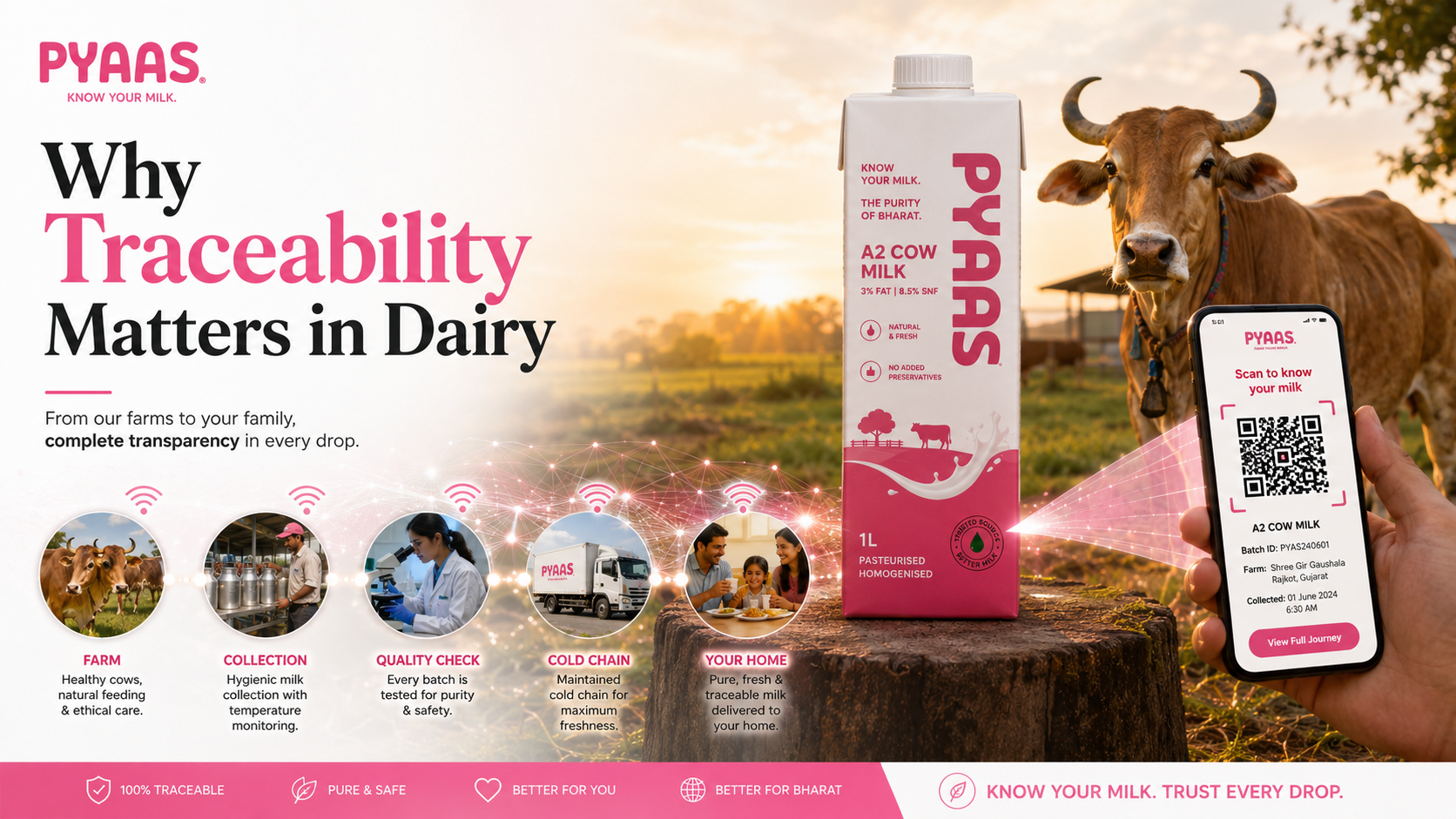
Why Traceability Matters in Dairy: The Future of Consumer Trust
5 July 2026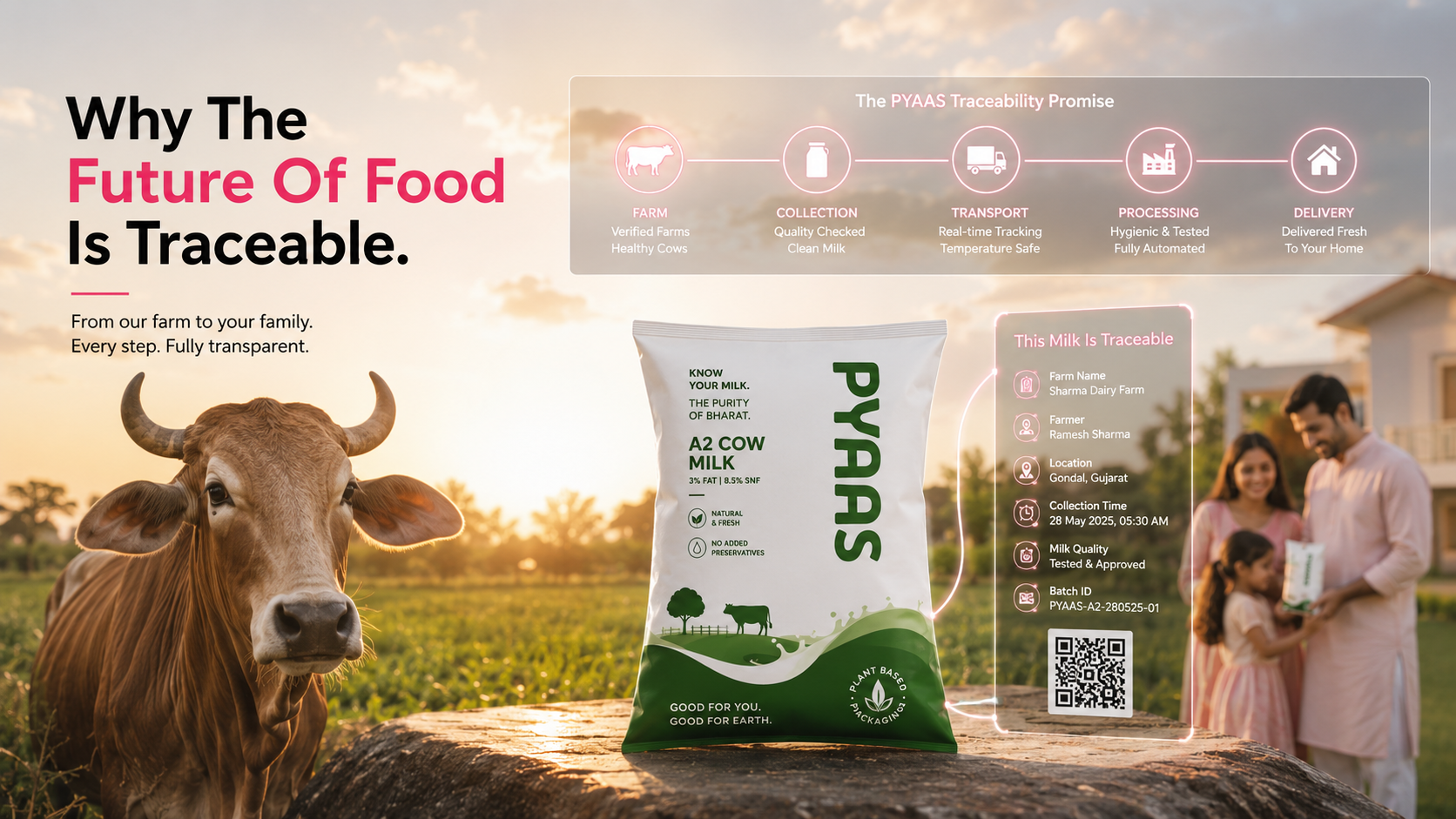
Why The Future Of Food Is Traceable
29 June 2026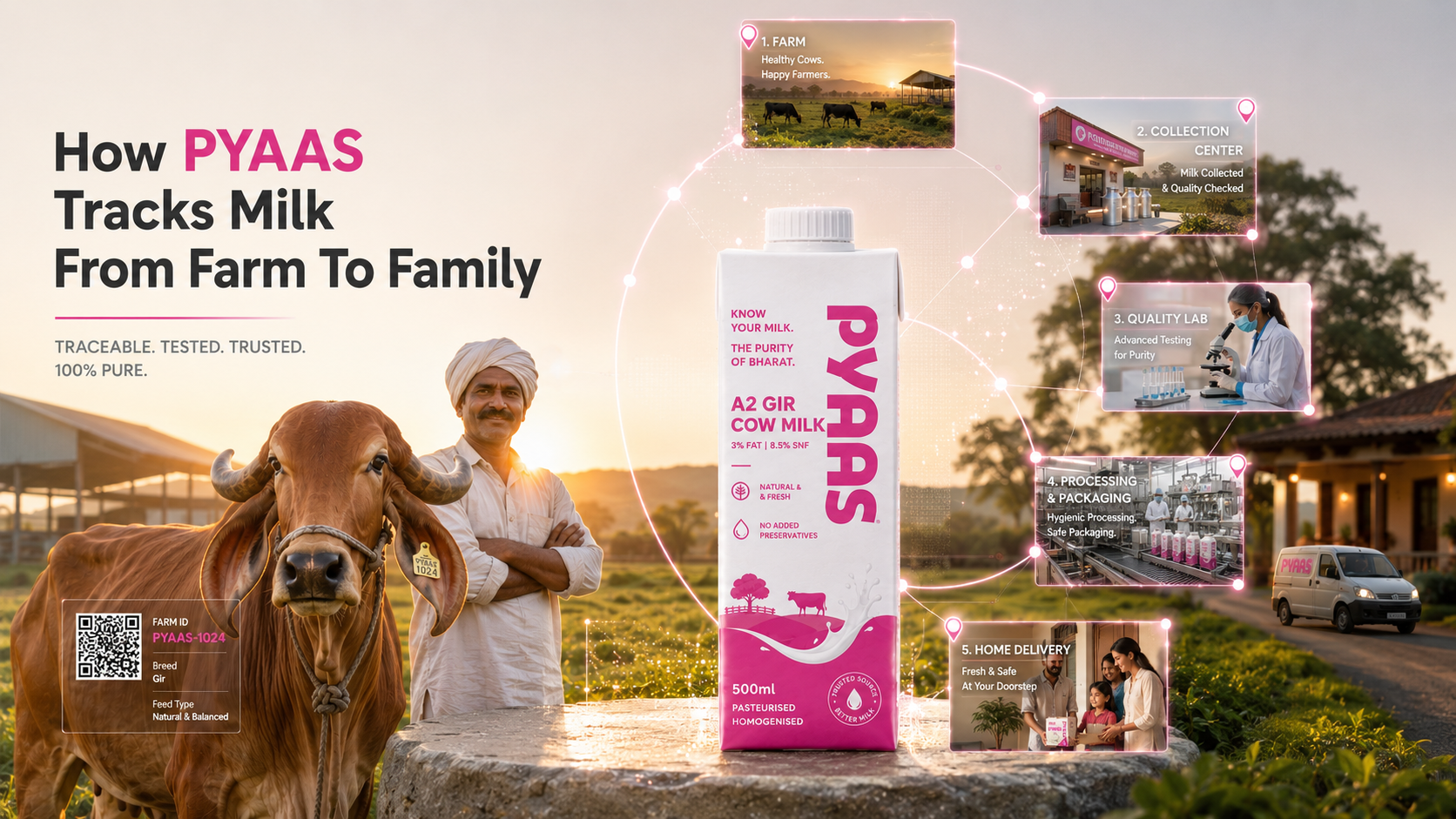
How PYAAS Tracks Milk From Farm To Family
28 June 2026