Why Traceability Matters in Dairy: The Future of Consumer Trust
For most of the last century, families bought milk the way they bought salt or sugar: trusting the brand on the packet and rarely asking what happened before it reached the kitchen. You knew the name of the company, but not the name of the farm. You recognised the carton, but you had no idea about the journey inside it. Today that quiet acceptance is fading fast. A new generation of Indian families wants to know exactly where their milk comes from, who milked the cow, and whether that specific batch was tested for purity. This shift is exactly why traceability matters in dairy, and why it is quietly becoming the foundation of consumer trust.
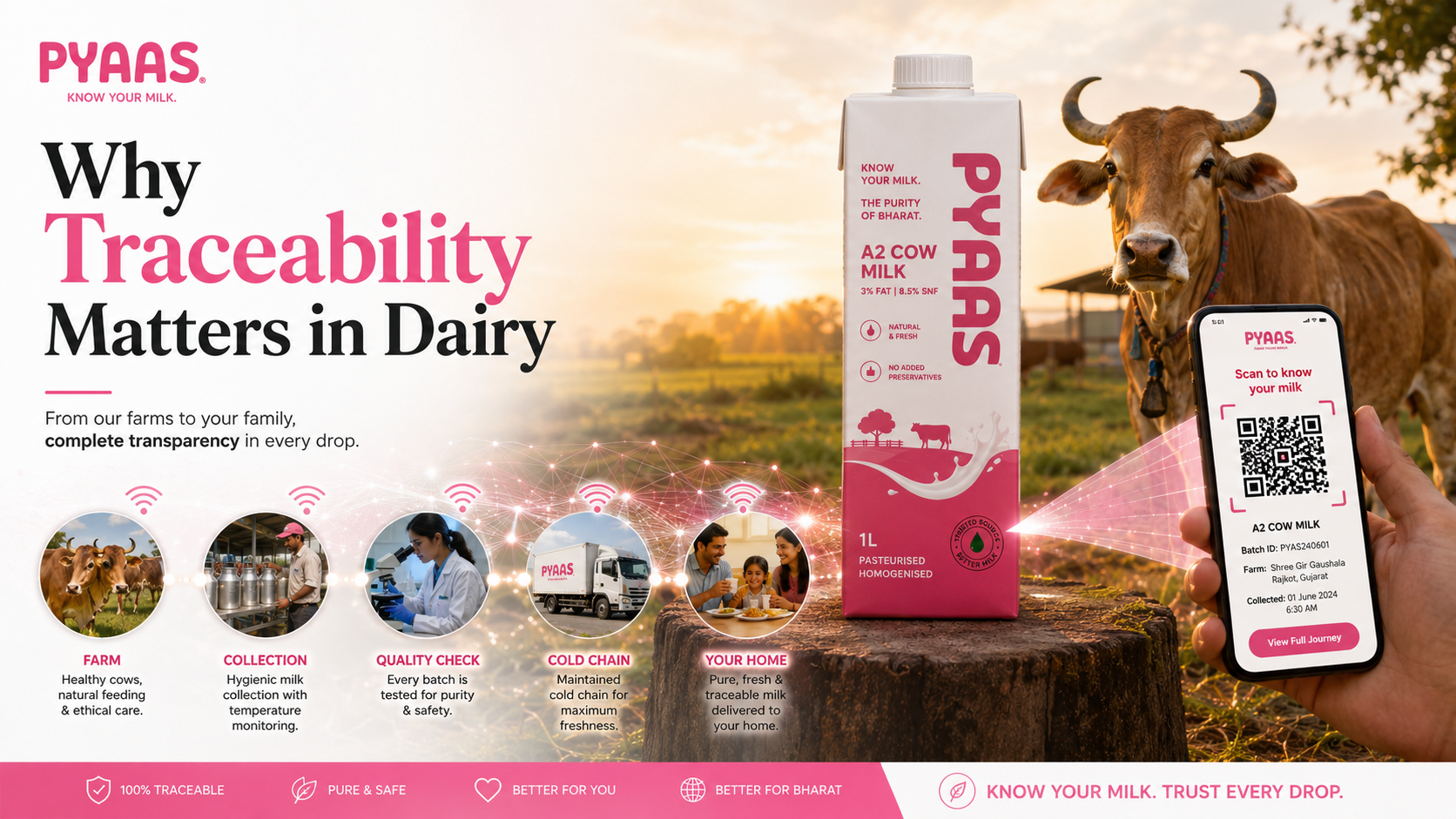
Traceability is the ability to follow a product through every stage of its journey, from the farm gate to your front door. In dairy, it means being able to answer simple but powerful questions: which farm produced this milk, when did it leave that farm, and what did the lab results say. At PYAAS, we built our entire model around this idea because we believe trust should be something you can verify, not just something you are asked to feel.
What Does Traceability Actually Mean in Dairy?
Traceability is not a marketing word. It is a practical system that records and reveals the real story behind a product. For milk, genuine farm-to-home traceability captures the parts of the supply chain that most brands keep hidden.
- The source farm: the exact, named farm where the milk was produced, not a vague region or a pooled collection centre.
- The farmer: the real person who cared for the cows and milked them that morning.
- The time: when the milk actually left the farm, so you understand how fresh it truly is.
- The quality test: that batch's lab results, including SNF and FAT, the two markers that reflect richness and purity.
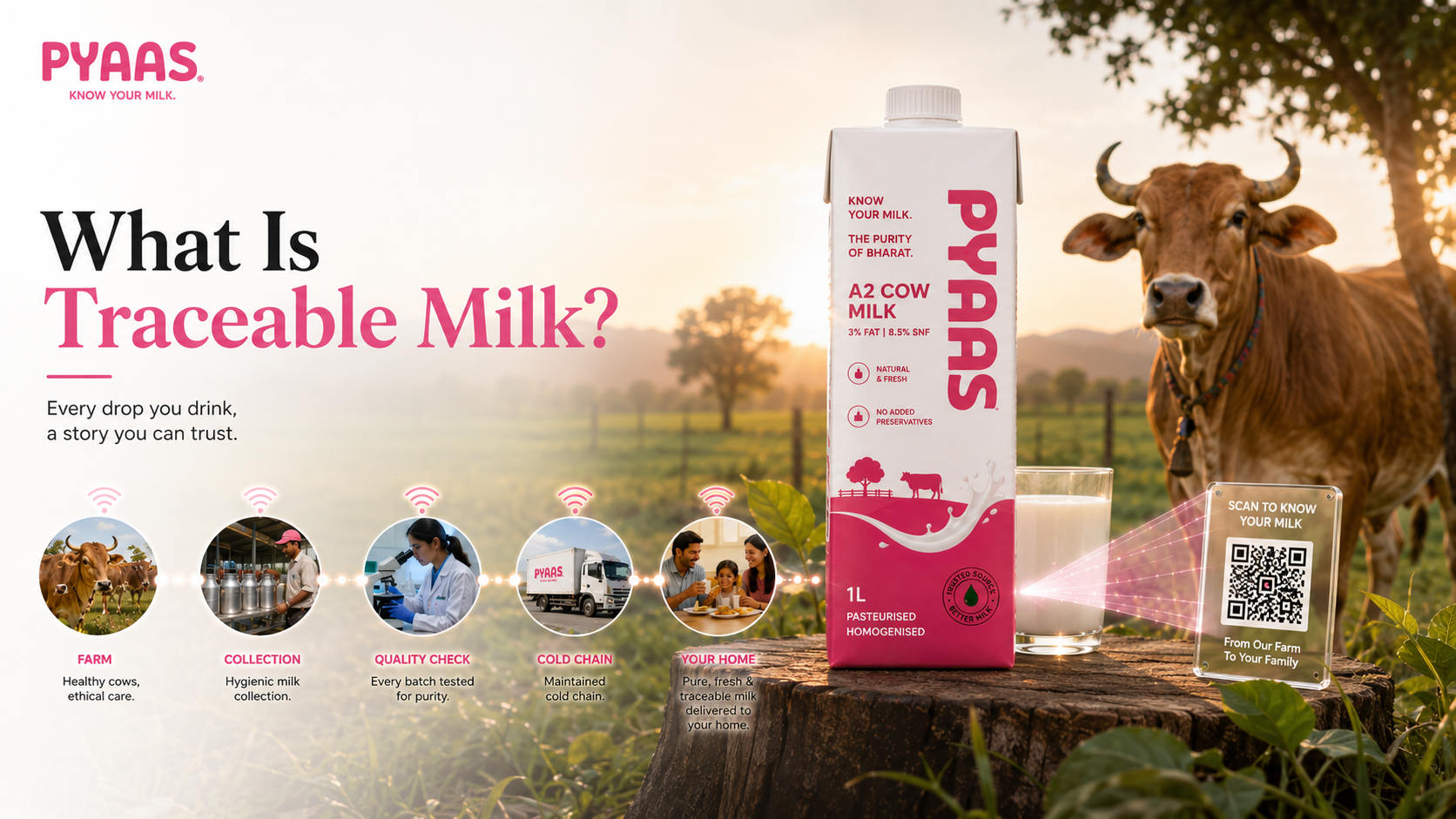
When all of this is tied to a single batch and made visible to you, milk stops being anonymous. It becomes accountable. If you want a deeper look at the idea itself, our explainer on what traceable milk really is walks through it step by step.
Why Consumer Trust in Dairy Has Eroded
To understand why traceability matters so much right now, you have to understand why trust slipped in the first place. India is the largest milk producer in the world, yet for many households the supply chain remains a black box. Milk often passes through several middlemen and collection points before it is packed, and at each step the link back to the original farm gets weaker.
That opacity creates room for problems. Concerns about quality, freshness and tampering are widespread, and most consumers have no reliable way to verify what they are buying. Our piece on the hidden problem with India's milk supply chain explains how this fragmentation developed, and our guide to milk adulteration in India shows why families have become cautious. When you cannot see the source, you are forced to take everything on faith. Traceability replaces that blind faith with simple, checkable facts.
How Technology Turns Transparency Into Reality
For a long time, true farm-to-home transparency was an aspiration that was simply too hard to deliver at scale. Records were on paper, batches were mixed, and there was no easy way to connect a packet in Delhi to a cow in a village. Technology has changed that completely.
The QR Code as a Window to the Farm
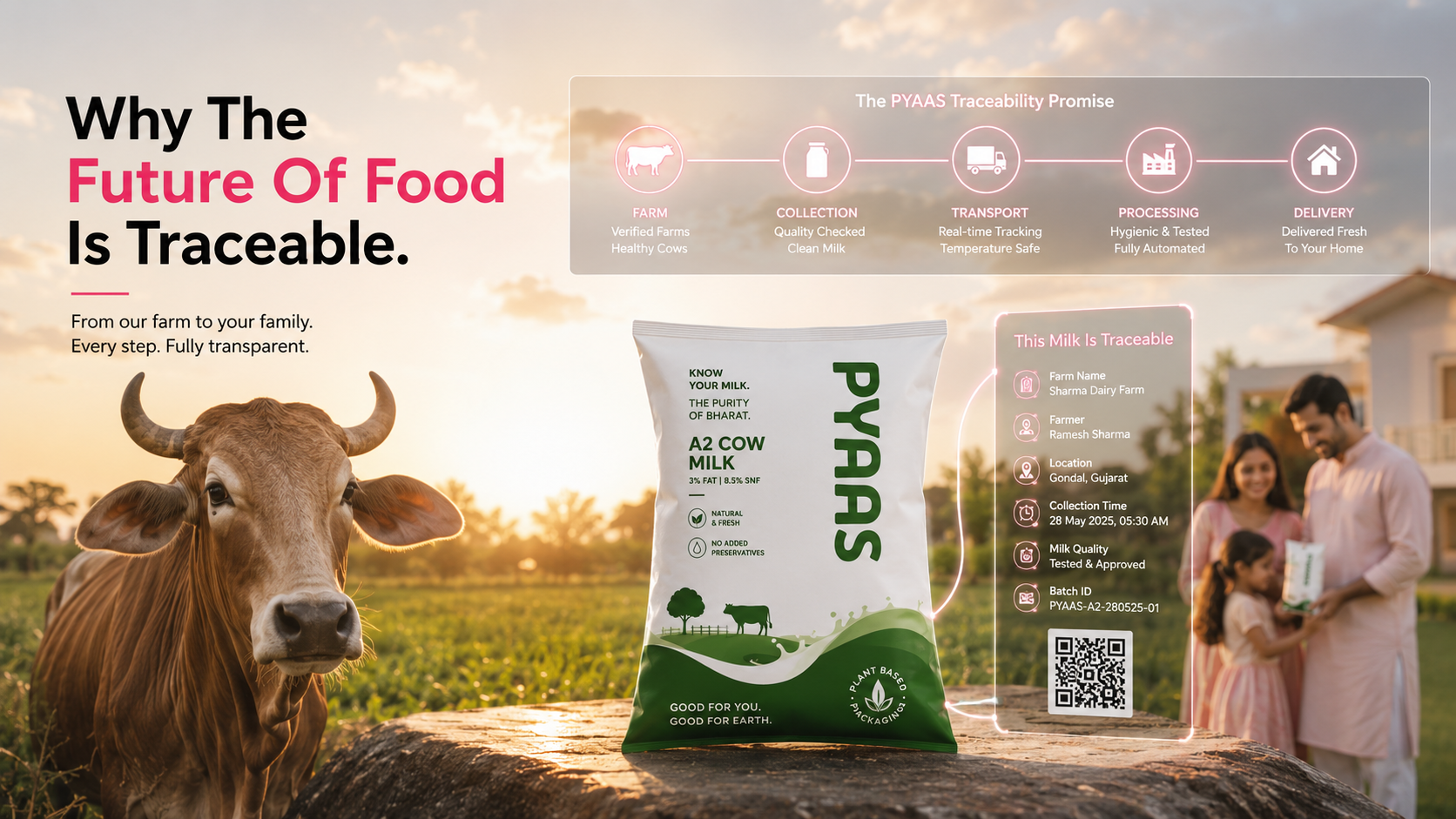
The clearest example is the humble QR code. At PYAAS, every carton, pouch and ghee jar carries a code you can scan with your phone. In seconds, it opens the real story of that batch: the named farm in Gonda, Uttar Pradesh, the farmer who produced it, the lab test for that lot, and the time the milk left the farm. There is no marketing gloss, just verifiable information. You can read more about how this works in our breakdown of how PYAAS tracks milk from farm to family.
Quality Testing You Can See
Traceability is only meaningful when it is paired with honest testing. Every batch is checked before it reaches you, and if a batch does not meet the mark, it does not get sold. Our look at the PYAAS quality testing process describes what we measure and why. The combination of digital tracking and visible quality data is what turns a promise into proof.
Who Benefits From Dairy Traceability?
It is easy to assume traceability only serves the buyer. In reality, it strengthens the whole chain.
- Families gain certainty: you know the origin, the freshness and the quality of every pack, which matters most when you are choosing milk for children or elders.
- Farmers gain recognition: when a farmer's name travels with the milk, good work is rewarded and the relationship between producer and household becomes direct and respectful.
- The brand earns durable trust: transparency cannot be faked, so it becomes a lasting advantage rather than a slogan.
This is why our sourcing is so deliberate. The way we choose partners, described in how PYAAS selects farmers, is built to protect both the family at the table and the family at the farm. You can also meet our founding family to understand the values that started it all.
Why Traceability Is the Future of Consumer Trust
Over the next decade, transparency will move from being a nice-to-have to being an expectation. Families that have once scanned a code and seen their milk's real journey rarely go back to buying blind. As awareness grows, the brands that hide their supply chains will find it harder and harder to earn loyalty, while those that open up will build the kind of trust that lasts.
We see this not just in milk but across food. The same instinct that makes a parent want to verify their milk also makes them curious about their A2 Bilona ghee and everything else on the table. The broader movement is captured in our reflection on why the future of food is traceable, where transparency becomes the default rather than the exception.
The PYAAS Promise: Know Your Milk
At PYAAS, we believe you deserve to know more than what is printed on a label. You deserve the whole story behind your milk, from a named farm in Gonda to your home in Delhi NCR, Lucknow or Ayodhya. That belief lives in three simple words on every pack: Know Your Milk. It is a single-origin promise that you can hold in your hand and verify with your phone.
If you have ever wished you could see past the packaging, that is exactly what we built. There is no pressure here, just an open invitation: the next time you pour a glass for your family, scan the code, meet the farm, and decide for yourself. When trust is something you can check, choosing milk becomes a lot simpler.
Written by
PYAAS Team
The PYAAS Team writes about traceable, single-origin A2 dairy and the people behind it, drawing on our work sourcing milk from named farms in Gonda, Uttar Pradesh.
More from PYAAS TeamCommon questions.
What is traceability in dairy?
Traceability in dairy is the ability to follow milk through every stage of its journey, from the farm gate to your home. It captures the source farm, the farmer, the time the milk left the farm and that batch's quality test. The goal is to make milk accountable rather than anonymous, so you can verify exactly what you are buying.
Why is traceability important for consumers buying milk?
Traceability replaces blind trust with checkable facts. Instead of relying only on the brand name, you can confirm the origin, freshness and quality of every pack, which matters most when choosing milk for children and elders. It also makes problems like adulteration far harder to hide, giving families genuine peace of mind.
How does PYAAS make its milk traceable?
Every PYAAS carton, pouch and ghee jar carries a QR code you can scan with your phone. The code reveals the named farm in Gonda, Uttar Pradesh, the farmer who produced the milk, that batch's lab test for SNF and FAT, and the time the milk left the farm. It is verifiable information rather than marketing language.
Does traceability help dairy farmers too?
Yes. When a farmer's name travels with the milk, good work is recognised and rewarded, and the link between producer and household becomes direct and respectful. Traceability builds a fairer, more transparent relationship across the whole supply chain, not just for the buyer.
Is traceable milk the future of the dairy industry?
Most signs point that way. As more families scan a code and see their milk's real journey, transparency is shifting from a nice-to-have to an expectation. Brands that open up their supply chains are likely to earn lasting loyalty, while those that stay opaque may struggle to keep consumer trust.
Get the next one in your inbox.
The occasional note on milk, ghee, and how we work. Plain words, no hype, and you can leave any time.
Keep reading.
What Is Traceable Milk? Why Modern Consumers Want to Know Their Milk
5 July 2026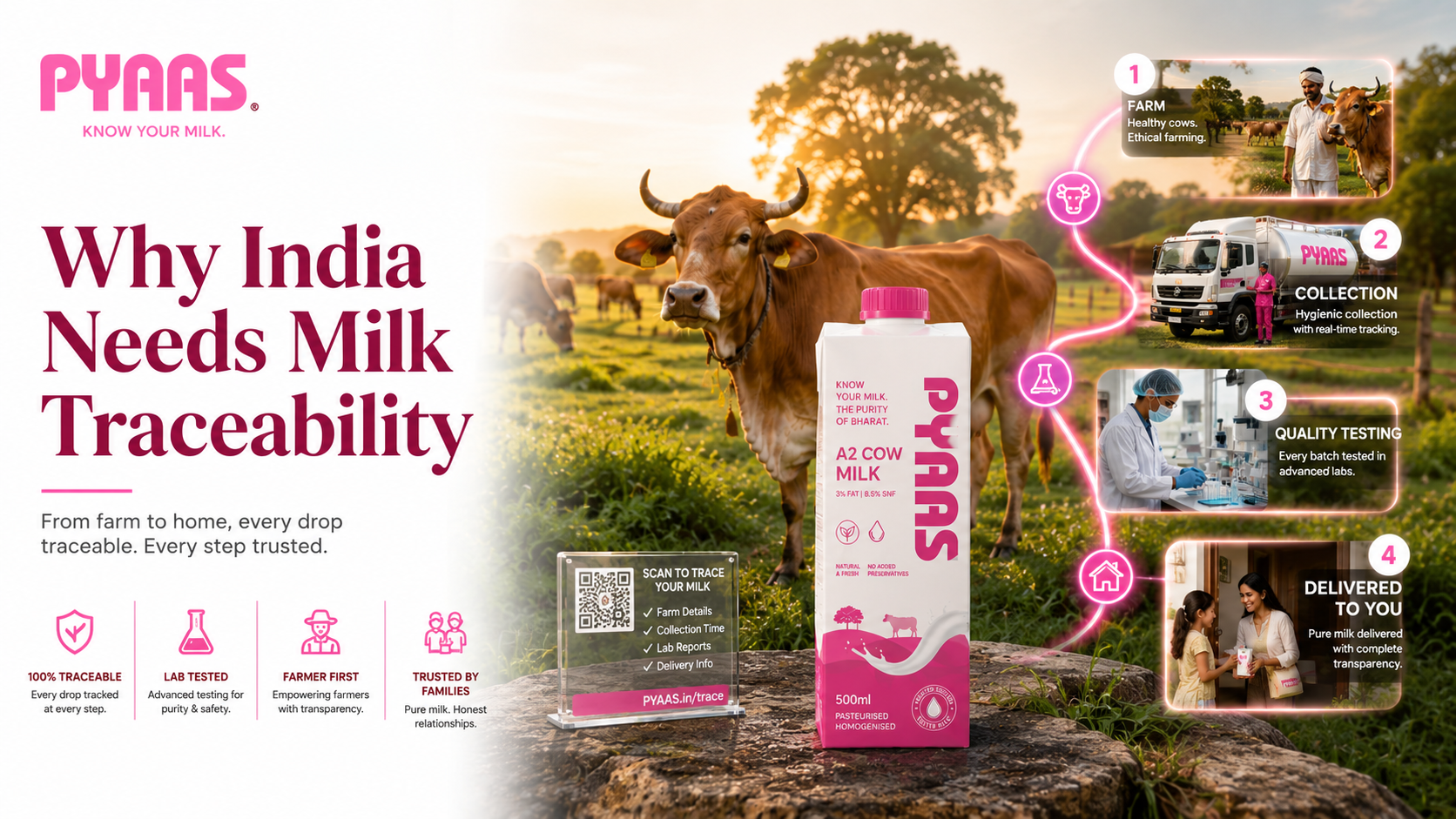
Why India Needs Milk Traceability
3 July 2026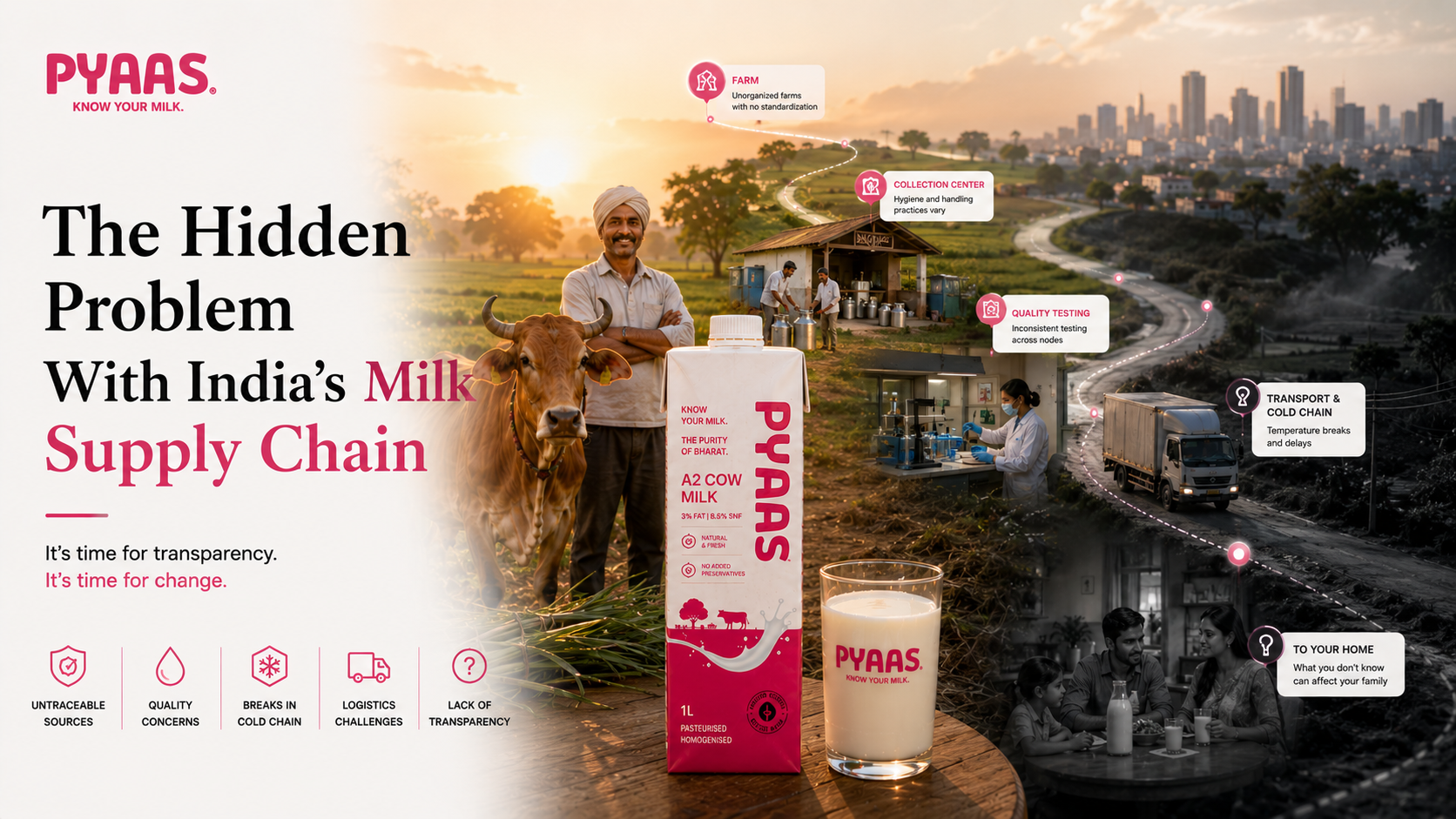
The Hidden Problem With India's Milk Supply Chain
7 July 2026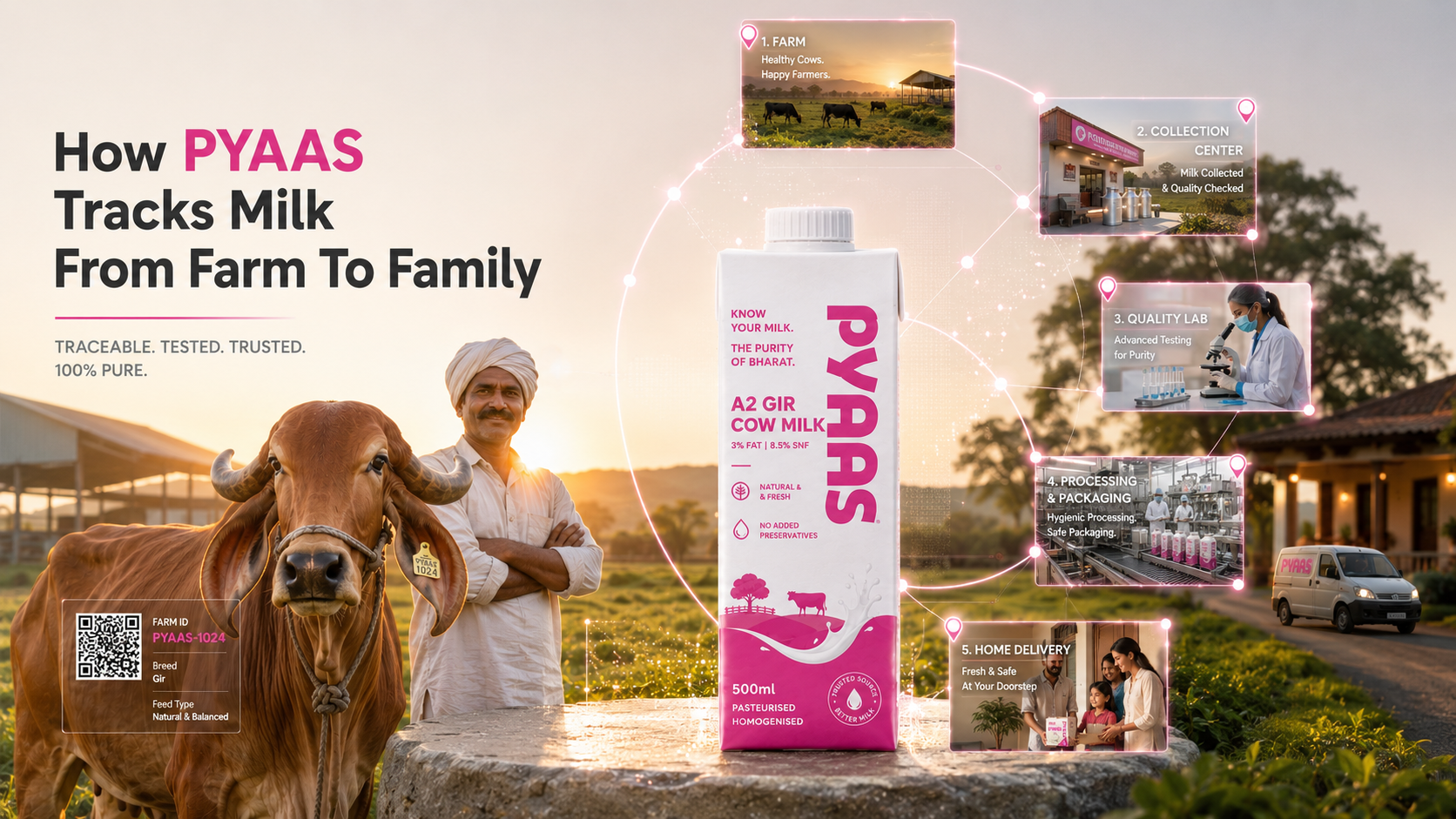
How PYAAS Tracks Milk From Farm To Family
28 June 2026