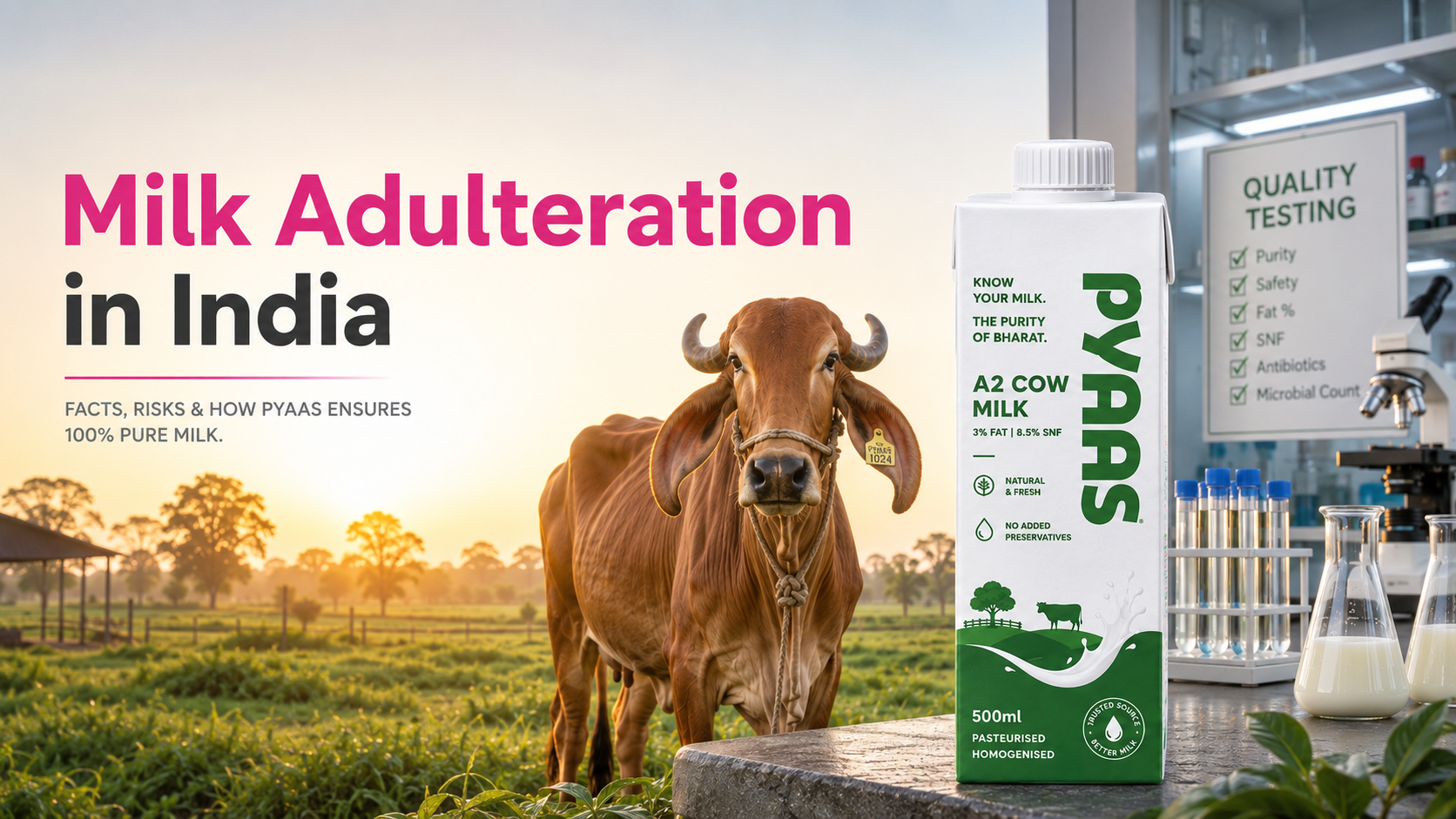
Milk Adulteration in India: What Consumers Need to Know
Milk is one of the most trusted foods in an Indian home. It goes into a child's morning glass, the evening chai, festival sweets and the curd that sets overnight. Because we depend on it so completely, the question of purity matters more here than almost anywhere else. Milk adulteration in India is a topic that worries many families, and rightly so: when something so basic to daily nutrition can be tampered with, every household deserves to understand what is really happening and how to protect itself.
The good news is that you are not powerless. Once you understand what milk adulteration actually means, the common adulterants to watch for, the warning signs at home and the role that traceability plays, you can make far more confident choices. This guide walks Indian consumers through everything that matters, in plain language, so you can truly know your milk.
What Is Milk Adulteration?
Milk adulteration happens when something is added to milk, or milk is altered in a way that changes its natural composition and lowers its quality. Sometimes the goal is to increase volume cheaply. Sometimes it is to mask milk that has already begun to spoil, or to artificially boost the apparent fat and solids so the milk passes a quick check.
It is important to separate two ideas. Standard dairy processes such as toning, where the fat content is adjusted to a defined level, are legal and clearly labelled. Adulteration is different. It is the hidden, unlabelled addition of substances that consumers never agreed to and often cannot detect by taste alone. The first protects the consumer; the second deceives them.
Common Adulterants Found in Indian Milk
Public food-safety discussions and regular FSSAI surveys in India have, over the years, flagged several recurring forms of adulteration. While the exact picture varies by region and supplier, these are the categories consumers most often hear about:
- Water: the simplest and most common dilution, which lowers the milk's natural nutrition and solids.
- Starch or flour: added to thicken watered-down milk so it looks richer than it is.
- Detergent and soap: used to create a creamy, frothy texture in low-quality or diluted milk.
- Synthetic or filler additives: substances intended to mimic the look or solids of real milk.
- Urea and salts: sometimes added to falsely raise the apparent protein or solids reading.
- Preservatives used improperly: chemicals added to extend shelf life beyond what is safe.
You do not need to memorise this list. The takeaway is simpler: adulteration is usually about making cheaper, weaker or older milk appear better than it is. That is exactly why where your milk comes from, and whether it can be verified, matters so much.
Why Milk Adulteration Is Such a Concern in India
India is the largest milk producer in the world, and our supply chain is long. Milk can pass through several hands between the animal and your kitchen: the farm, a collection point, an aggregator, a transporter and finally a retailer. Every additional step is a point where quality can drop and where, in the worst cases, tampering can occur without anyone being held accountable.
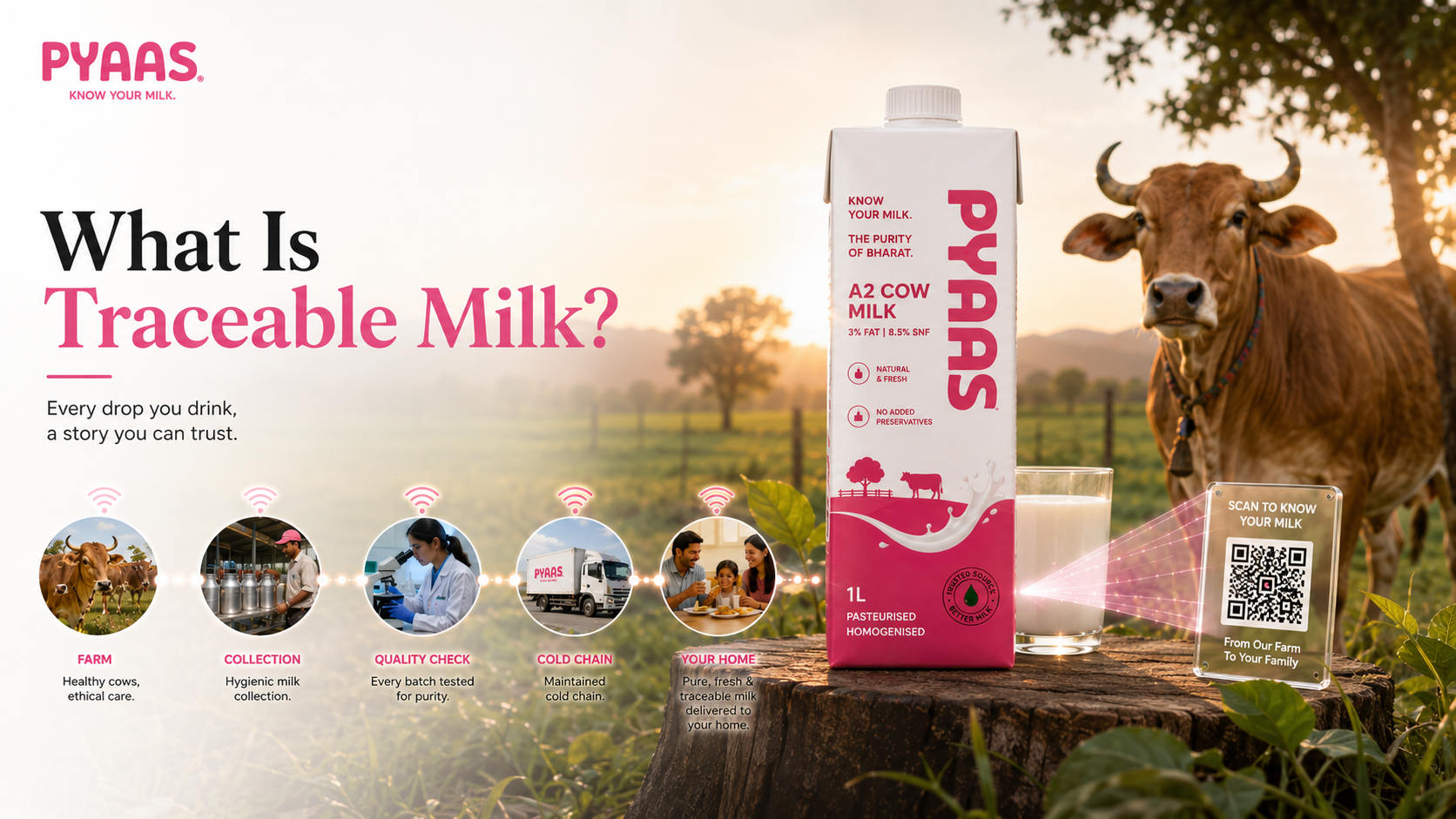
This complexity is the real root of the problem. We have written about this at length in the hidden problem with India's milk supply chain, and it is closely tied to why India needs milk traceability. When no one can tell you which farm your milk came from or when it was actually milked, trust is built on hope rather than proof. Regulation helps, and you can learn how the rules work in our explainer on FSSAI milk standards, but enforcement alone cannot watch every litre.
Warning Signs and Simple Checks at Home
While no kitchen test is as reliable as a proper laboratory analysis, a few sensible habits can help you spot obvious problems. Pay attention to:
- Unusual taste or smell: a soapy, bitter or chemical note is a clear reason to stop and question the source.
- Strange texture: milk that feels slippery between the fingers can indicate added detergent.
- Off colour: a yellowish or unnaturally bright white tint compared with what you usually buy.
- Too much froth: excessive, stable foam when shaken can be a sign of added substances.
- Quick spoiling: milk that curdles oddly or sours far too fast.
If you want a structured approach, our guide on how to check milk purity at home with seven simple tests walks you through each one step by step. Treat these as early-warning tools, not final verdicts. The moment something feels off, raise it with your supplier and expect a clear answer.
The Real Solution: Transparency and Traceability
Home tests catch the obvious cases. They cannot tell you which farm milked the cow, what that specific batch tested for, or how fresh it really is. That is the gap traceability closes. Instead of asking you to trust a brand blindly, traceable milk lets you verify the answers yourself.
Modern dairy is moving toward digital records, batch-level testing and supply-chain visibility, a shift we explore in what traceable milk really means. The questions a transparent brand should let you answer are simple:
- Which farm did this milk come from, and who is the farmer?
- What did this batch's quality test show for fat and solids?
- How fresh is it, and when did it leave the farm?
How PYAAS Approaches the Problem
At PYAAS, we believe the honest answer to milk adulteration is not a louder promise but proof you can hold in your hand. Our A2 cow milk is single-origin and traceable: it comes from named farms in Gonda, Uttar Pradesh, and every pack carries a QR code. Scan it and you can see the exact farm, the named farmer, that batch's lab test for SNF and FAT, and the time the milk left the farm. You can read more about how rigorous this is in our quality testing process, and about the people behind it through our founding family. This same care for purity runs through our small-batch A2 Bilona ghee, made the traditional way from the same trusted milk.
How to Choose Milk You Can Trust
When you next decide where your family's milk comes from, look past the marketing and ask practical questions:
- Can the brand tell you the source farm of your milk?
- Is there batch-level testing, and can you actually see the results?
- How quickly does the milk reach you after milking?
- Is the brand willing to be accountable when something goes wrong?
A brand that answers these openly is far less likely to cut corners, because transparency makes adulteration almost impossible to hide. That is the whole philosophy behind our Know Your Milk approach.
Milk adulteration in India is a real and understandable worry, but it is one you can navigate with knowledge rather than fear. Learn the warning signs, run the occasional home check, and most of all choose milk whose journey you can actually verify. If you would like to see what fully traceable milk looks like in practice, scan a PYAAS pack and watch the story of your milk unfold, one honest detail at a time.
Written by
PYAAS Team
The PYAAS Team writes about dairy transparency, milk quality and traceability, drawing on our work delivering single-origin A2 cow milk and A2 Bilona ghee from named farms in Gonda, Uttar Pradesh.
More from PYAAS TeamCommon questions.
What is milk adulteration?
Milk adulteration is the hidden addition of substances to milk, or altering it in a way that lowers its natural quality and composition. The aim is usually to increase volume cheaply or make weaker, older milk appear better than it is. Unlike legal, labelled processes such as toning, adulteration is unlabelled and deceives the consumer.
What are the most common adulterants found in milk in India?
Food-safety surveys in India most often flag water dilution, starch or flour for thickening, detergent for a creamy froth, and improperly used preservatives. Some cases also involve fillers, urea or salts added to fake higher solids and protein readings. The exact picture varies by region and supplier.
How can I check if milk is adulterated at home?
Watch for a soapy or chemical smell, a slippery texture, an off colour, excessive froth when shaken, or milk that spoils too quickly. Simple kitchen checks can catch obvious problems, but they are early-warning tools, not a substitute for a proper laboratory test. If something feels off, question your supplier immediately.
Why is milk adulteration such a big problem in India?
India has a very long dairy supply chain, with milk often passing through farms, collection points, aggregators, transporters and retailers. Each extra step is a point where quality can drop or tampering can go unnoticed. When no one can tell you the source farm or milking time, trust rests on hope rather than proof.
How does traceability help prevent milk adulteration?
Traceability lets you verify your milk instead of trusting blindly. With PYAAS, every pack carries a QR code that shows the exact farm in Gonda, the named farmer, that batch's lab test for SNF and FAT, and the time the milk left the farm. When a brand is this open, adulteration becomes almost impossible to hide.
Get the next one in your inbox.
The occasional note on milk, ghee, and how we work. Plain words, no hype, and you can leave any time.
Keep reading.

How to Check Milk Purity at Home: 7 Simple Tests Every Family Should Know
9 July 2026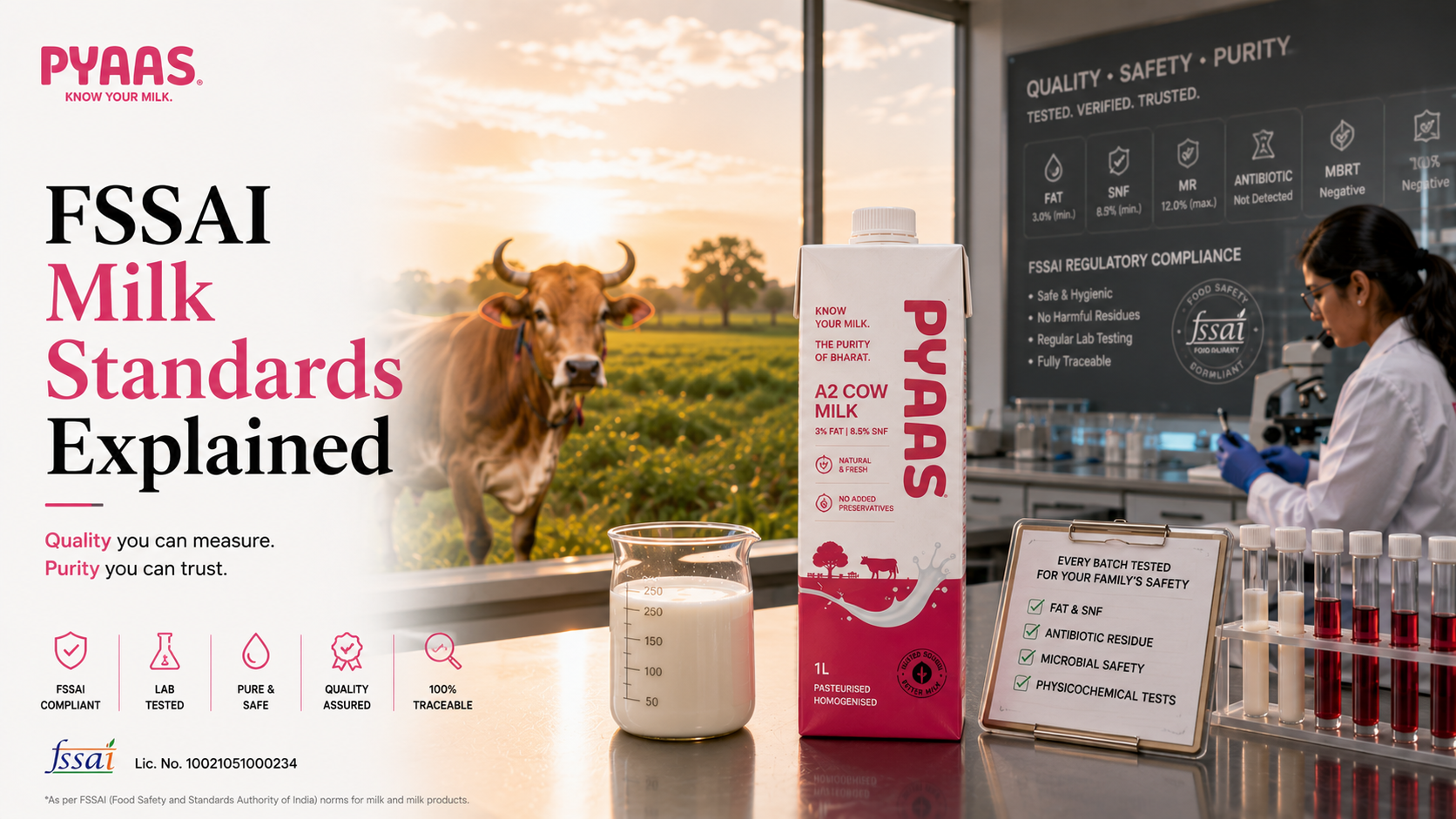
FSSAI Milk Standards Explained: How Milk Quality Is Regulated in India
6 July 2026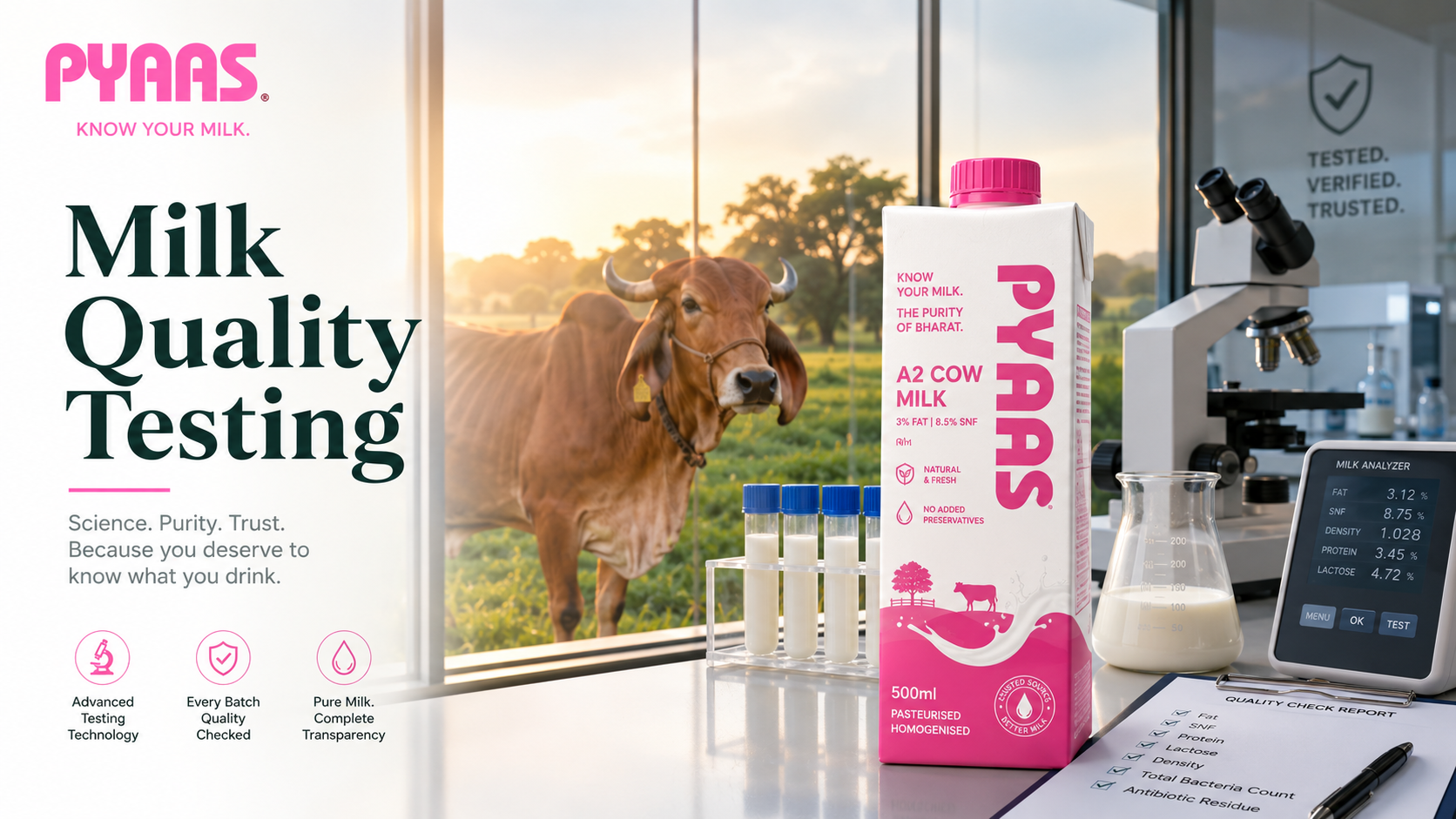
Milk Quality Testing: How Modern Dairies Ensure Safe and Pure Milk
3 July 2026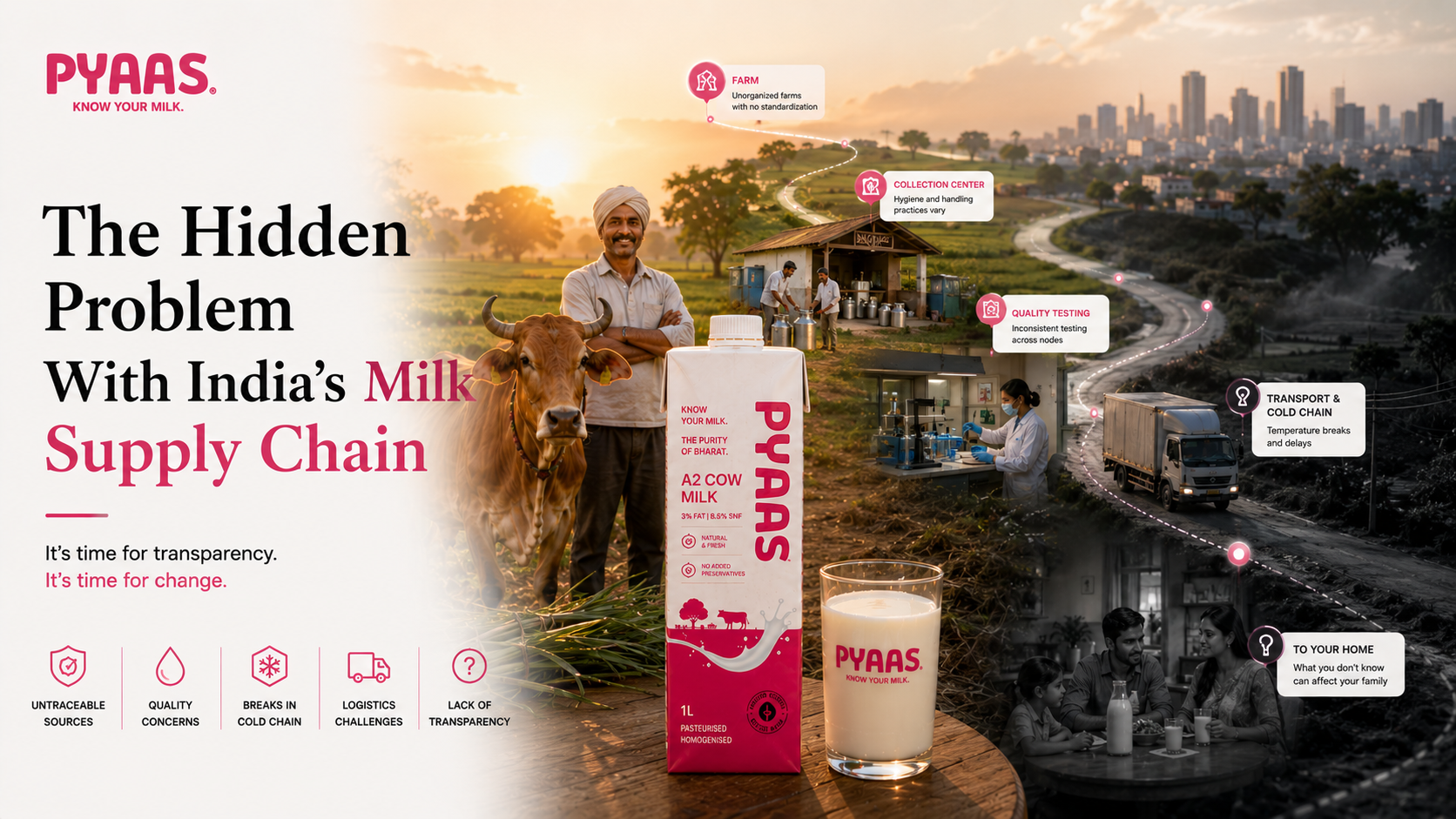
The Hidden Problem With India's Milk Supply Chain
7 July 2026