Inside The PYAAS Quality Testing Process
For decades, dairy brands have asked you to trust them. Trust the label, trust the brand name, trust the marketing. At PYAAS, we think trust should work the other way around: it should be something you can verify for yourself. That is the simple idea at the heart of the PYAAS quality testing process. We do not hide quality behind factory walls, technical jargon or vague promises. We show our work, batch by batch, so every Indian family can understand exactly how the milk in their carton was checked before it reached their kitchen.
This post takes you inside how PYAAS thinks about milk quality testing, from the farm in Gonda, Uttar Pradesh, to your doorstep in Delhi NCR, Lucknow and Ayodhya. You will see why quality begins long before milk reaches any machine, how every batch is tested for SNF and FAT, and how a single QR code on the pack turns those test results into something you can actually read. If you care about pure, safe, traceable milk for your family, this is the journey worth understanding.
Why Quality Testing Starts at the Farm, Not the Factory
Many people imagine that milk quality begins when milk arrives at a processing facility. In reality, it begins much earlier, at the farm. The health of the cows, the cleanliness of the milking area, the feed, the water and the daily care all shape the milk long before any collection happens. Great dairy products are built on great farming practices, and no amount of later testing can undo poor handling at the source.
This is why we start with the people. We work only with named farmers we know and visit, and the way PYAAS selects farmers and builds trust from the source is the first quality control step in the whole chain. When you know who milked the cow and where, accountability is built in from the very first moment.
The First Checks Happen on the Ground
- Animal care: Healthy, well-fed indigenous cows produce more consistent milk.
- Hygiene at milking: Clean udders, clean hands and clean vessels reduce contamination.
- Speed and temperature: Milk that is cooled quickly after milking stays fresher for longer.
- Single-origin collection: Keeping each farm's milk separate means a problem can be traced to one source, never mixed and hidden.
Testing Every Batch: SNF, FAT and Purity
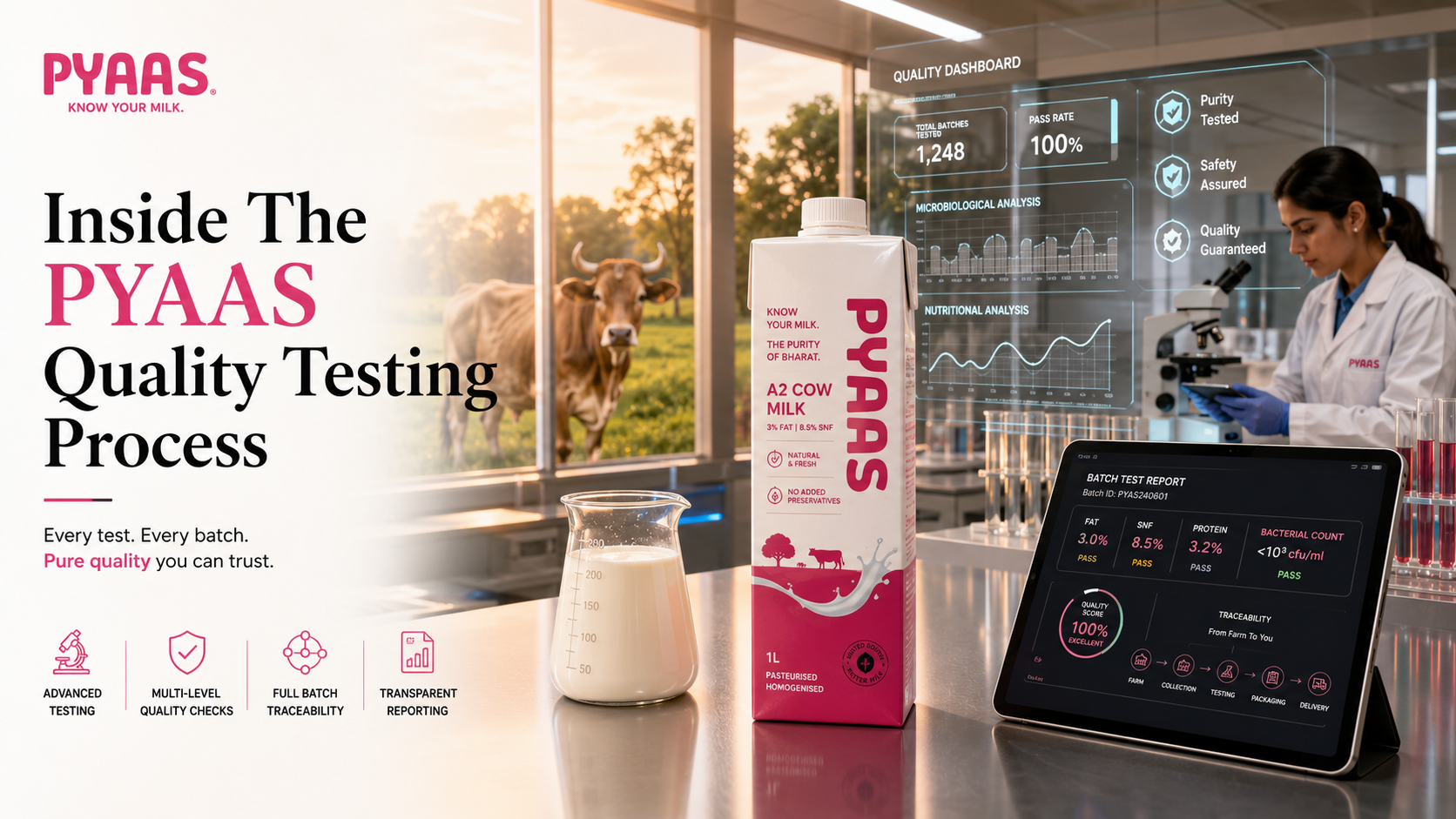
Once milk leaves the farm, it moves through several checkpoints, and at each one information can be recorded and verified. The two numbers most families have heard of are SNF (Solids-Not-Fat) and FAT. Together these tell you how rich and nutritionally complete the milk is. SNF covers proteins, lactose, vitamins and minerals, while FAT reflects the creaminess and energy content. Honest, naturally produced milk should meet sensible standards on both, and we believe you have every right to see those readings for your batch.
Beyond SNF and FAT, responsible dairies also watch for adulteration, the addition of water or unwanted substances that quietly lower quality. This is a real and well-documented concern in India, and we have written plainly about it in our guide to milk adulteration in India and what consumers need to know. If you want to verify quality in your own kitchen, our walkthrough on how to check milk purity at home with seven simple tests gives you practical checks anyone can do.
What the Numbers Actually Protect
- Consistency: Your milk should taste and perform the same from one day to the next.
- Safety: Testing helps catch problems before milk ever reaches a family.
- Honesty: Published readings make it hard to dilute quality without anyone noticing.
From Test Result to QR Code: Traceability You Can Scan
Traditional dairy systems relied heavily on manual oversight and trust in middlemen. The trouble is that once milk from many sources is pooled together, no one can tell you where any single drop came from. PYAAS was built to fix exactly this. We keep milk single-origin and tie every batch to a record you can open yourself.
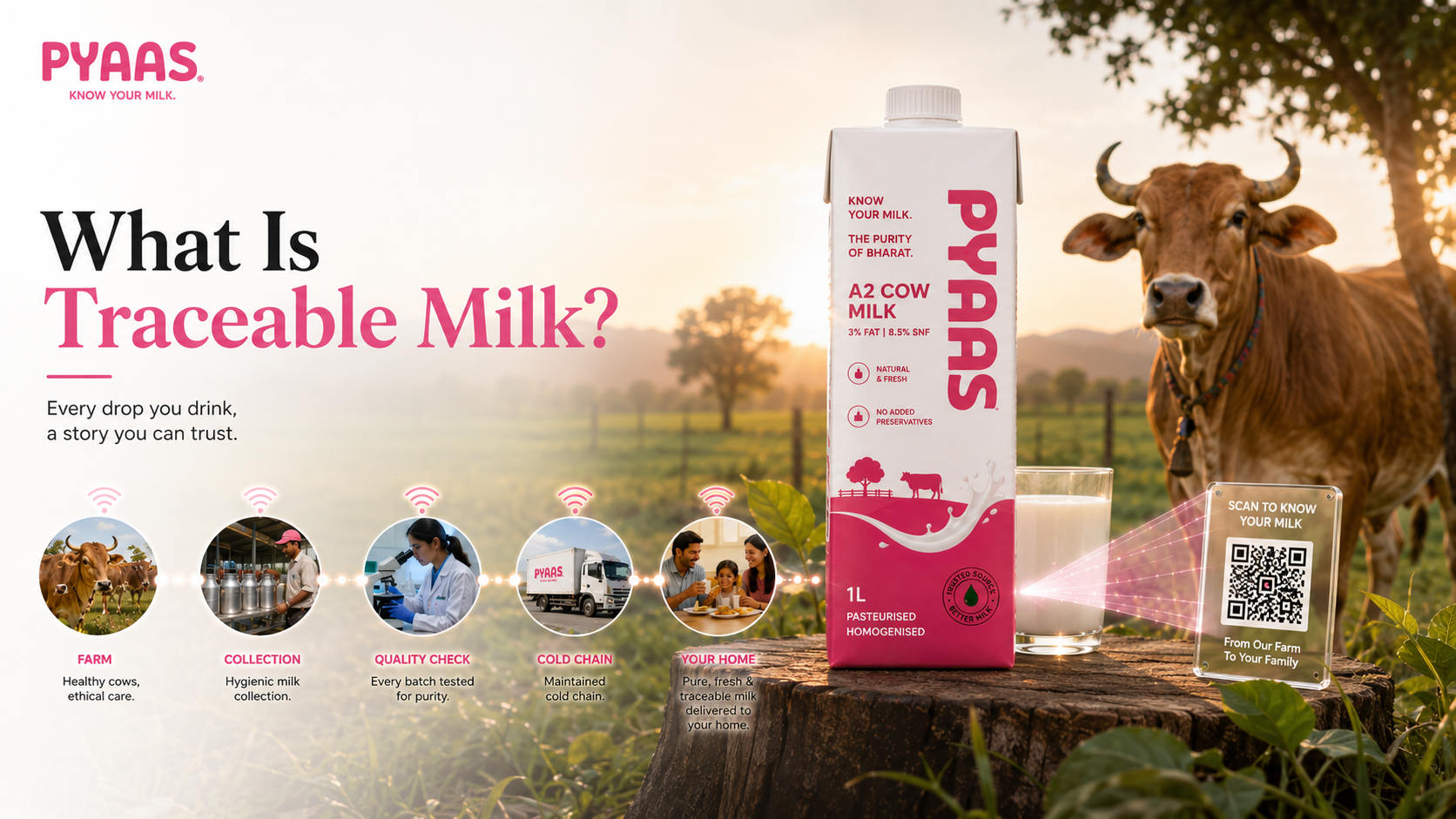
Scan the QR code on a PYAAS pack and you can see the exact farm, the named farmer, that batch's lab test for SNF and FAT, and the time the milk left the farm. There is no marketing layer in between, just the facts. This is what we mean by traceable milk, and if the idea is new to you, our explainer on what traceable milk is and why modern consumers want to know their milk is the best place to start. To understand why this matters for the whole country, read our piece on why traceability matters in dairy and the future of consumer trust.
The point of all this data is not to impress you with technology. The point is confidence. When information becomes accessible, trust becomes something you hold in your hand rather than something you are asked to assume. That belief sits at the centre of our Know Your Milk promise.
What Happens When a Batch Does Not Meet the Mark
An honest quality process is judged not by what it celebrates but by what it rejects. Real testing only means something if a failing batch is actually stopped. At PYAAS, milk that does not meet our standards does not get quietly mixed into the next lot to hide the gap. It is kept out, and the record reflects it. We explain this discipline in detail in our post on what happens when a milk batch fails quality testing.
This willingness to reject is also what protects the quality of our small-batch products made from that milk. The same care that goes into testing fresh milk carries through to our A2 Bilona ghee, which is slow-churned from the cream of milk that has already cleared these checks.
The Standards Behind the Scenes
Milk quality in India is not a free-for-all. The Food Safety and Standards Authority of India, or FSSAI, sets baseline rules for what milk must meet before it is sold. We aim to go beyond the minimum, not just touch it. For a clear, jargon-free look at the rulebook everyone in dairy must follow, see our guide to FSSAI milk standards and how milk quality is regulated in India.
Why Transparency Is the Real Quality Test
Food brands have long competed through claims. The future belongs to brands willing to show their evidence instead. Consumers, especially young Indian families, increasingly want visibility, accountability and proof, not promises. Imagine scanning any product and instantly seeing where it came from, who produced it and how it was tested. That level of openness will eventually become normal, and we want PYAAS to be one of the brands that helped make it ordinary.
Quality systems exist for operational excellence, yes, but their deeper purpose is consumer confidence. When you understand how your milk is handled, tested and delivered, trust grows naturally. It is no accident that our testing philosophy is inseparable from the values of our founding family, who started PYAAS because they wanted a dairy they would feel proud to serve their own children.
The PYAAS Promise
The PYAAS quality testing process is not a single inspection at the end of a line. It is a chain of decisions, checks and honest records that runs from a named farm in Gonda all the way to your kitchen, with SNF and FAT readings you can see and a QR code that proves it. We do this not because a rulebook forces us to, but because we believe you should be able to know your milk completely.
If you have ever wondered what is really inside the carton on your table, we invite you to scan, read and ask questions. Quality should never be a mystery, and with PYAAS, it never has to be. Know Your Milk.
Written by
PYAAS Team
The PYAAS Team writes about traceable, single-origin A2 milk and small-batch A2 Bilona ghee, sourced from named farms in Gonda and delivered fresh across Delhi NCR, Lucknow and Ayodhya.
More from PYAAS TeamCommon questions.
What does the PYAAS quality testing process actually check?
Every batch is checked for key quality markers, including SNF (Solids-Not-Fat) and FAT, which show how rich and nutritionally complete the milk is. We also guard against adulteration and keep milk single-origin so any issue can be traced to one farm. The readings are recorded for each batch rather than averaged or hidden.
Why does PYAAS say quality testing begins at the farm?
Because the health of the cows, the hygiene of the milking area, the feed and how quickly milk is cooled all shape quality before any machine is involved. No later test can fix poor handling at the source. That is why PYAAS starts with named, carefully selected farmers in Gonda, Uttar Pradesh.
How can I verify the quality of my own PYAAS milk?
Scan the QR code on the pack. It shows the exact farm, the named farmer, that batch's SNF and FAT test, and the time the milk left the farm. You can also try simple at-home purity checks to confirm freshness and rule out adulteration.
What does SNF and FAT mean for my family's milk?
SNF, or Solids-Not-Fat, covers proteins, lactose, vitamins and minerals, while FAT reflects creaminess and energy. Together they indicate how complete and rich the milk is. Honest, naturally produced milk should meet sensible standards on both, and PYAAS publishes these readings so you can see them yourself.
What happens if a PYAAS milk batch fails testing?
A failing batch is kept out, not quietly mixed into the next lot to hide the shortfall, and the record reflects it. An honest quality process is defined by what it rejects, not only what it passes. This discipline protects every product that follows, including our A2 Bilona ghee.
Get the next one in your inbox.
The occasional note on milk, ghee, and how we work. Plain words, no hype, and you can leave any time.
Keep reading.

What Happens When A Milk Batch Fails Quality Testing?
5 July 2026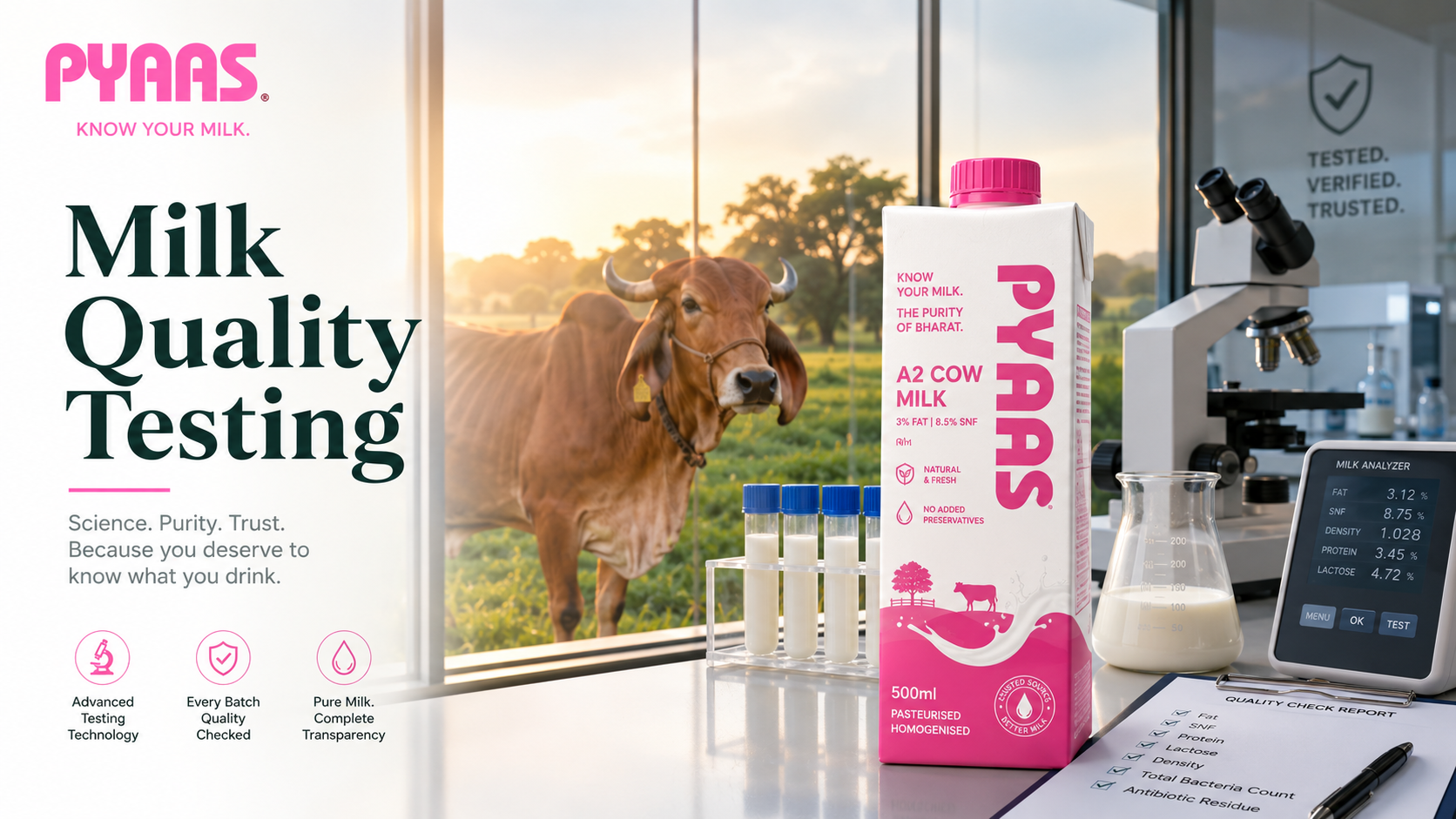
Milk Quality Testing: How Modern Dairies Ensure Safe and Pure Milk
3 July 2026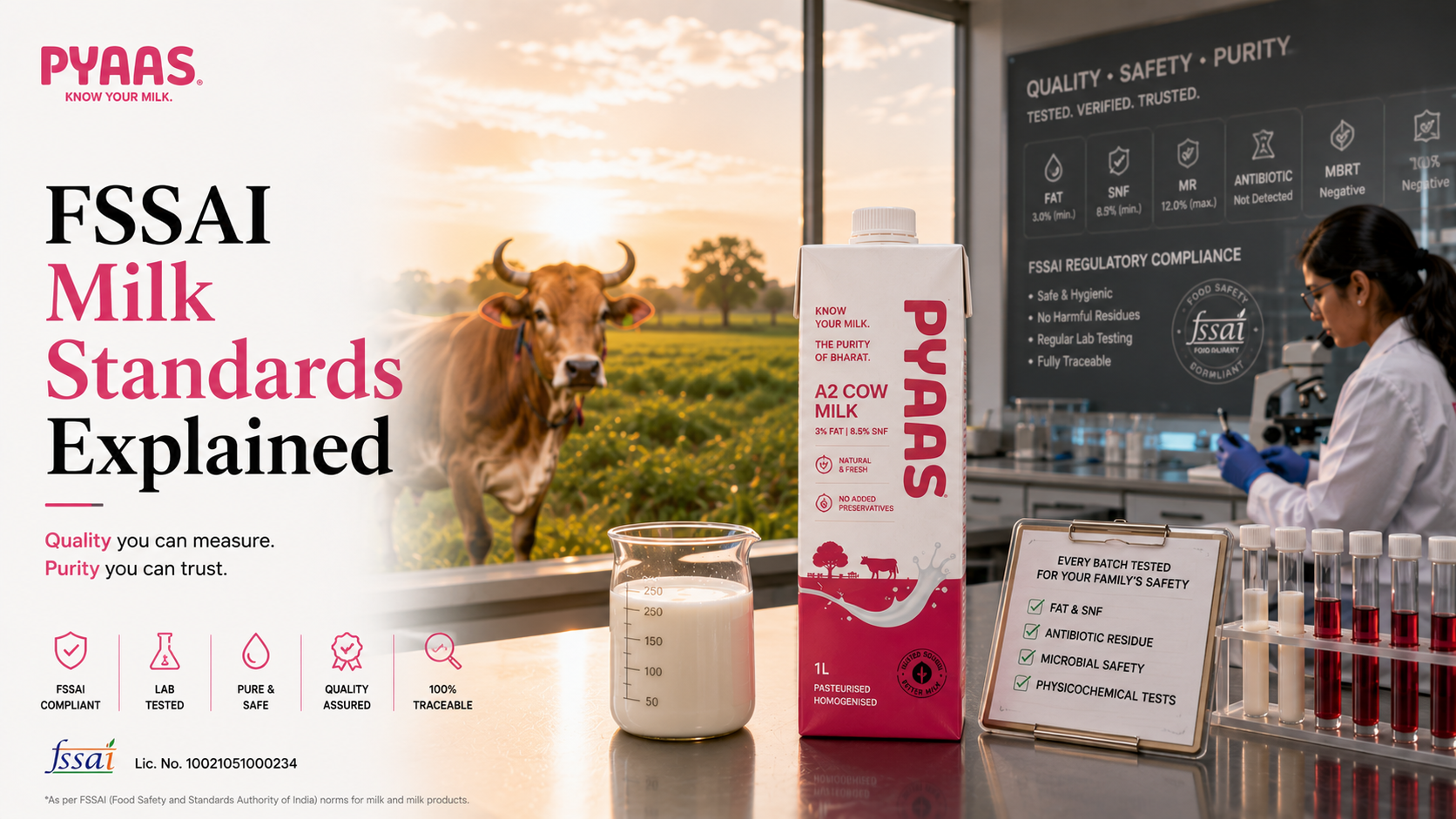
FSSAI Milk Standards Explained: How Milk Quality Is Regulated in India
6 July 2026
How to Check Milk Purity at Home: 7 Simple Tests Every Family Should Know
9 July 2026