The Hidden Problem With India's Milk Supply Chain
India is the largest milk producer on Earth. Every morning, millions of farmers wake before sunrise to care for their animals and collect milk that feeds a nation. So when families worry about the milk they pour into their children's glasses, the issue is almost never how much milk India makes. The hidden problem with India's milk supply chain is not production, demand or consumption. It is visibility.
For most households, milk simply appears. A pouch lands at the doorstep, a carton sits on a shelf, an order arrives through an app. What stays invisible is everything that happened before that moment: the farm, the farmer, the collection centre, the cold chain, the quality test. This article explains why that gap exists, why it quietly erodes trust, and how traceability is changing the question every family is starting to ask, which is not just "Is my milk fresh?" but "Where did my milk actually come from?"
The hidden problem is visibility, not production
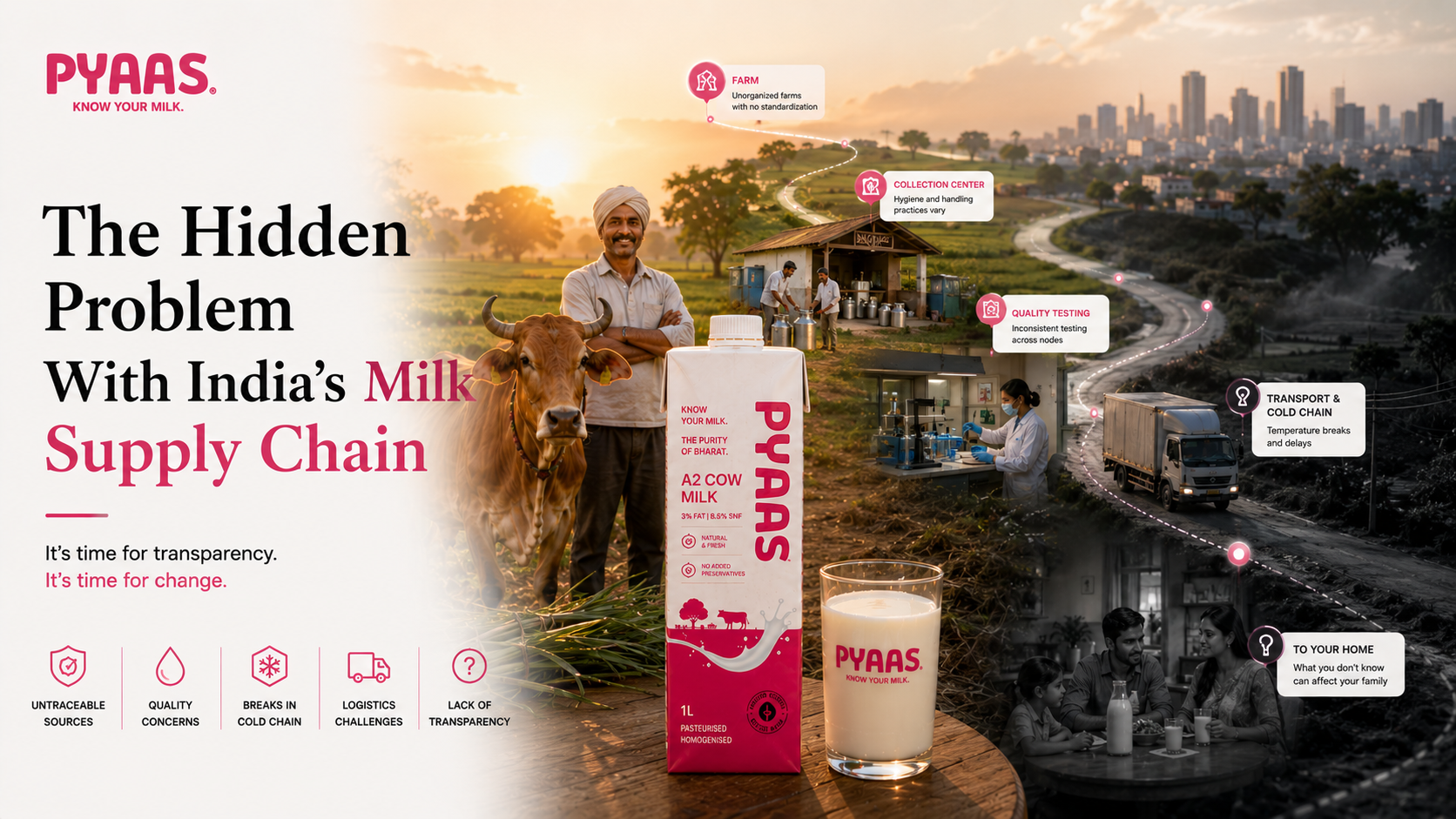
Over the last several decades, Indian dairy has scaled in extraordinary ways. The cooperative movement connected village farmers to city consumers and turned milk into one of the country's great success stories. But scale came with distance. Today a single glass of milk may pass through a farmer, a village collection point, a chilling centre, a processing plant, a distributor and a retailer before it reaches you.
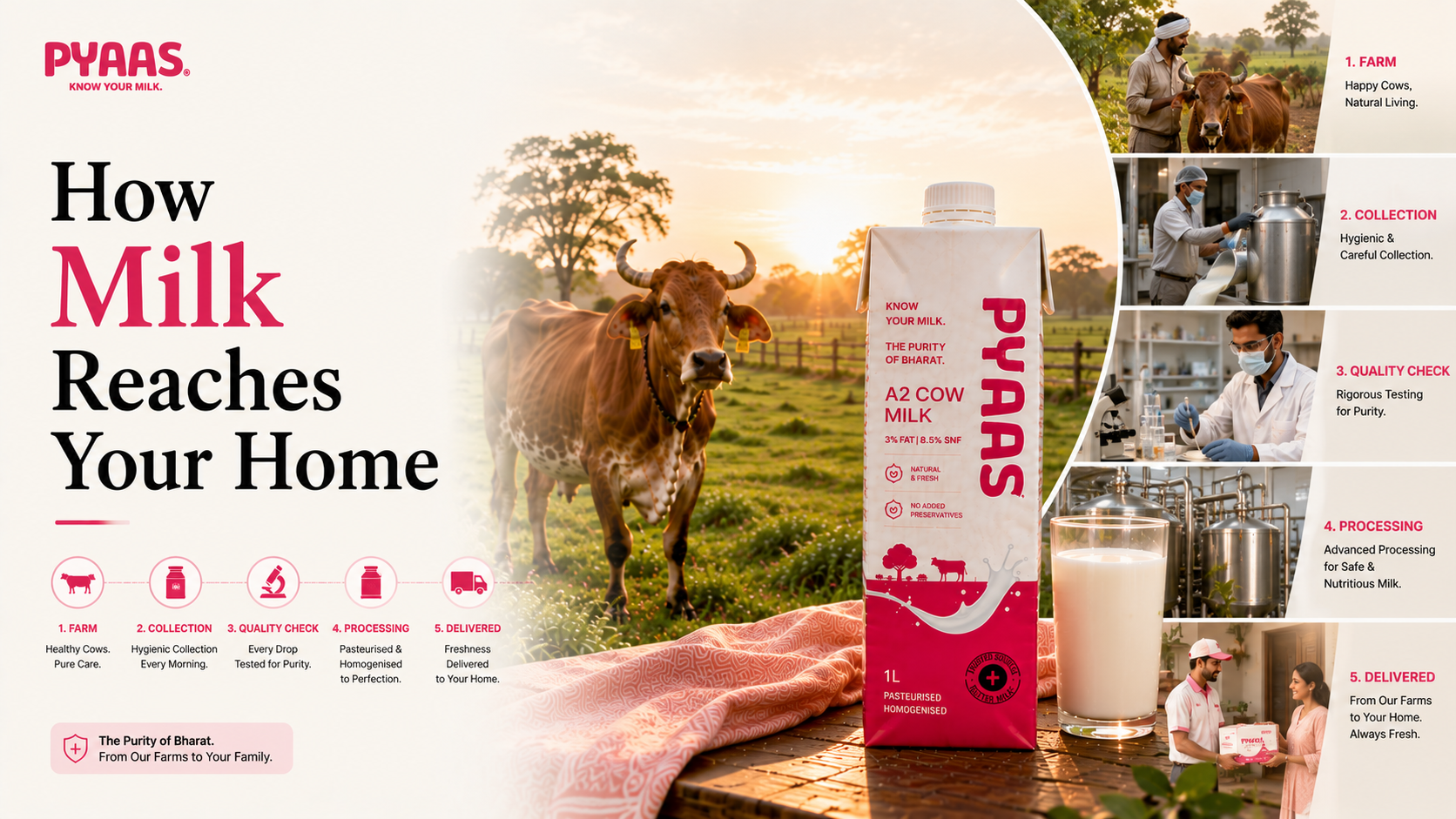
Each link in that chain adds efficiency. Each link also adds another layer between the family drinking the milk and the hands that produced it. The result is a strange modern situation: families know less about their milk than their grandparents did, even though the milk itself is processed, packaged and tested more than ever before. If you want to understand the full route, our guide to how milk reaches your home walks through every step from farm to table.
Why a long supply chain quietly breaks trust
A long, opaque supply chain is not just inconvenient. It creates real openings for problems that families cannot see or check.
- Adulteration risk: The more anonymous milk becomes, the easier it is for poor practices to hide inside a large, blended pool. We cover the warning signs in detail in our piece on milk adulteration in India.
- Loss of accountability: When milk from thousands of sources is mixed together, no single farmer is answerable for a single pack. Quality becomes an average rather than a promise.
- No origin, no story: Families cannot tell whether their milk came from a well-cared-for indigenous cow nearby or travelled for days from an unknown source.
- Trust by default: Consumers are asked to trust a brand simply because it is large or familiar, not because they can verify anything for themselves.
None of this means Indian milk is unsafe. Regulators like the FSSAI set standards, and you can read how those rules work in our explainer on FSSAI milk standards. The point is subtler: standards tell you what is allowed in general, but they do not tell you the story of the specific pouch in your fridge. That gap between "generally safe" and "I can see exactly where mine came from" is where trust quietly leaks away.
The shift families are already making: from trust to evidence
The biggest change happening in food today is not nutritional. It is informational. Families can track a food delivery rider in real time, watch a parcel cross the country and see exactly where a cab is on a map. Yet most people cannot name the farm behind their daily milk. The technology to close that gap already exists. The expectation already exists. Only the transparency has been missing.
That is why a growing number of households are moving from blind trust toward verifiable evidence. They want to know the breed, the farm, the test results and the time the milk left the source. This is the heart of traceable milk, and it reflects a wider movement of consumers demanding transparent food systems across every category they buy.
Why origin matters more than a label
Two cartons can both say "pure cow milk" and still be completely different products. One might come from a named indigenous cow on a known farm, the other from an anonymous blended pool. Breed, care and freshness all shape what ends up in the glass, which is why questions like A1 versus A2 beta-casein, or whether milk is genuinely single-origin, only have honest answers when origin is visible. Transparency turns a label into a verifiable claim.
How traceability solves the hidden problem
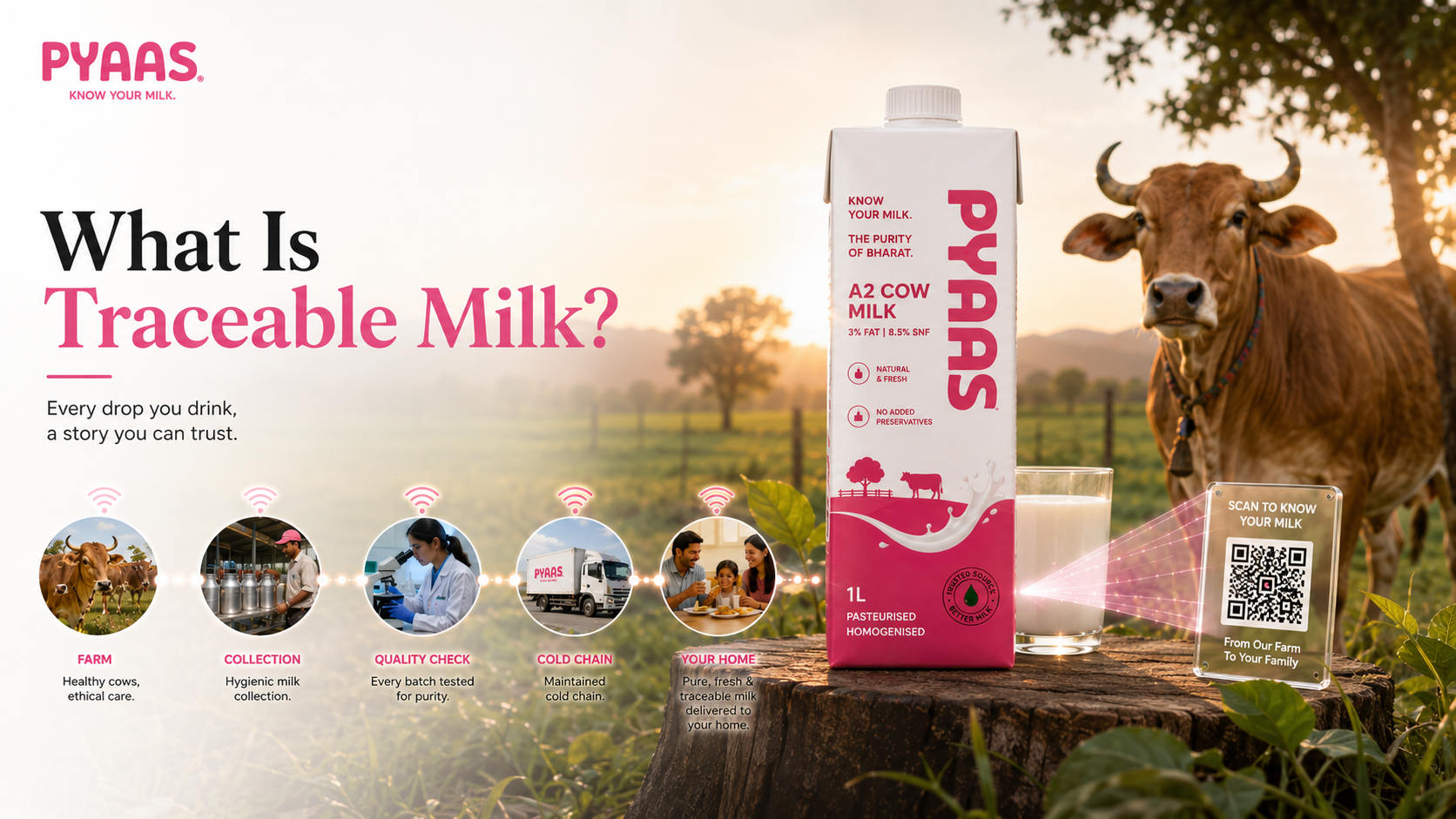
Traceability is simply the ability to follow milk backward, from your home all the way to the cow. Instead of asking families to trust a chain they cannot see, it makes the chain visible. Done well, traceability lets a consumer answer a few honest questions for themselves:
- Which farm did this batch come from? A real, named source rather than an unknown pool.
- Who is the farmer? A person you can recognise, not an anonymous supplier.
- What did the lab find? Batch-level quality results such as SNF and FAT for that specific milk.
- When did it leave the farm? So freshness is a fact, not a guess.
At PYAAS, this is exactly what our model is built around. We source single-origin A2 cow milk from named farms in Gonda, Uttar Pradesh, and deliver it fresh across Delhi NCR, Lucknow and Ayodhya. A QR code on every pack lets you scan and see the farm, the farmer, that batch's lab test and the time the milk left the source. That is the promise behind Know Your Milk: not a slogan, but a check you can run yourself. You can read more about the people we work with in our story on our founding family.
Traceability is becoming the standard, not the exception
The brands that earn loyalty over the next decade will not win on marketing alone. They will win by reducing the distance between the people who produce food and the people who consume it. Farmers should not be invisible, and families should not be left uninformed. As we argue in why traceability matters in dairy, visibility is shifting from a nice-to-have into a baseline expectation. The same thinking applies beyond fresh milk: even a jar of A2 Bilona ghee means more when you can trace the milk it began with.
What this means for your family
You do not need to become a dairy expert to benefit from transparency. You simply need to ask better questions before you buy: Can I see where this milk comes from? Is there a real farm and a real farmer behind it? Are there batch-level test results I can actually check? When a brand can answer yes, the hidden problem in the supply chain stops being hidden from you.
India does not have a milk shortage. It has a visibility gap. Closing that gap will not come from removing technology or returning to the past. It will come from using simple tools, a QR code, an honest lab report, a named farm, to reconnect families with the source of their food. We are still early in this journey, and we will not pretend to have every answer. But our goal is straightforward: help your family see the complete story behind every glass, so trust is something you can verify, not just hope for. Know Your Milk.
Written by
PYAAS Team
The PYAAS Team writes about traceable, single-origin A2 milk and small-batch A2 Bilona ghee, sourced from named farms in Gonda and delivered fresh across Delhi NCR, Lucknow and Ayodhya.
More from PYAAS TeamCommon questions.
What is the biggest problem with India's milk supply chain?
The biggest issue is not production or supply, since India is the world's largest milk producer. It is visibility. Milk passes through many hands between the farm and your home, so families rarely know which farm, farmer or quality test sits behind the pack they buy.
Why can't I tell where my milk comes from?
Most milk is collected from thousands of sources and blended together before processing and packaging. That scale adds efficiency but removes origin, so a single pack no longer maps to a single farm. Traceability solves this by linking each batch back to a named source.
How does a long supply chain affect milk quality and trust?
A long, opaque chain makes it harder to hold any single producer accountable, since quality becomes an average across many sources. It also creates openings for poor practices to hide inside a large blended pool. Visibility restores accountability by tying quality to a known farm and batch.
What is milk traceability and how does it help?
Traceability is the ability to follow milk backward from your home to the cow. With PYAAS, a QR code on the pack lets you see the farm, the named farmer, the batch's lab test and the time the milk left the source. It turns trust into something you can verify yourself.
Does FSSAI regulation already guarantee my milk is traceable?
FSSAI sets general safety and quality standards that all milk must meet, which is important. But those rules describe what is allowed in general, not the specific story of the pack in your fridge. Traceability adds that missing layer by showing the exact origin of your batch.
Get the next one in your inbox.
The occasional note on milk, ghee, and how we work. Plain words, no hype, and you can leave any time.
Keep reading.
What Is Traceable Milk? Why Modern Consumers Want to Know Their Milk
5 July 2026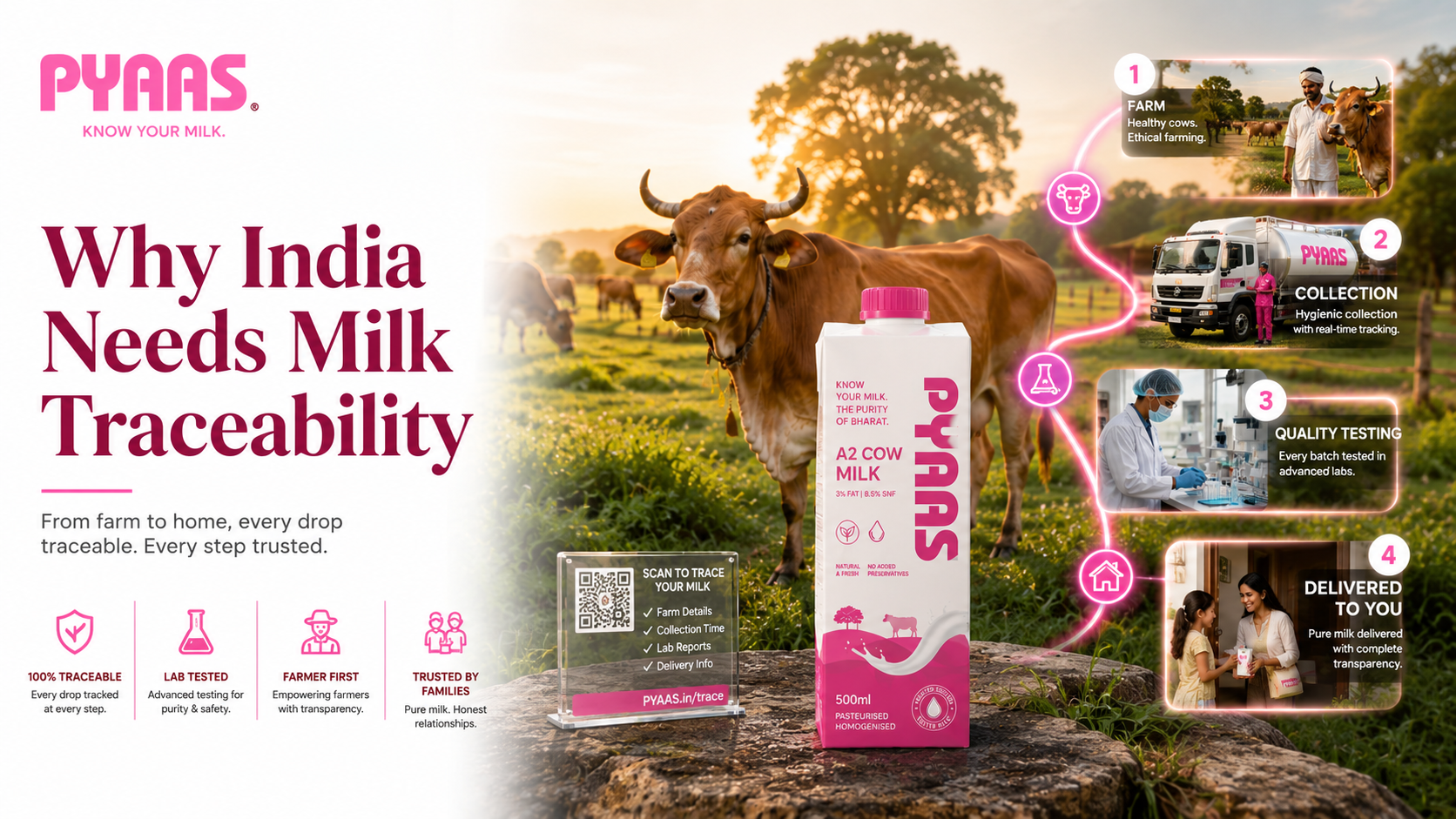
Why India Needs Milk Traceability
3 July 2026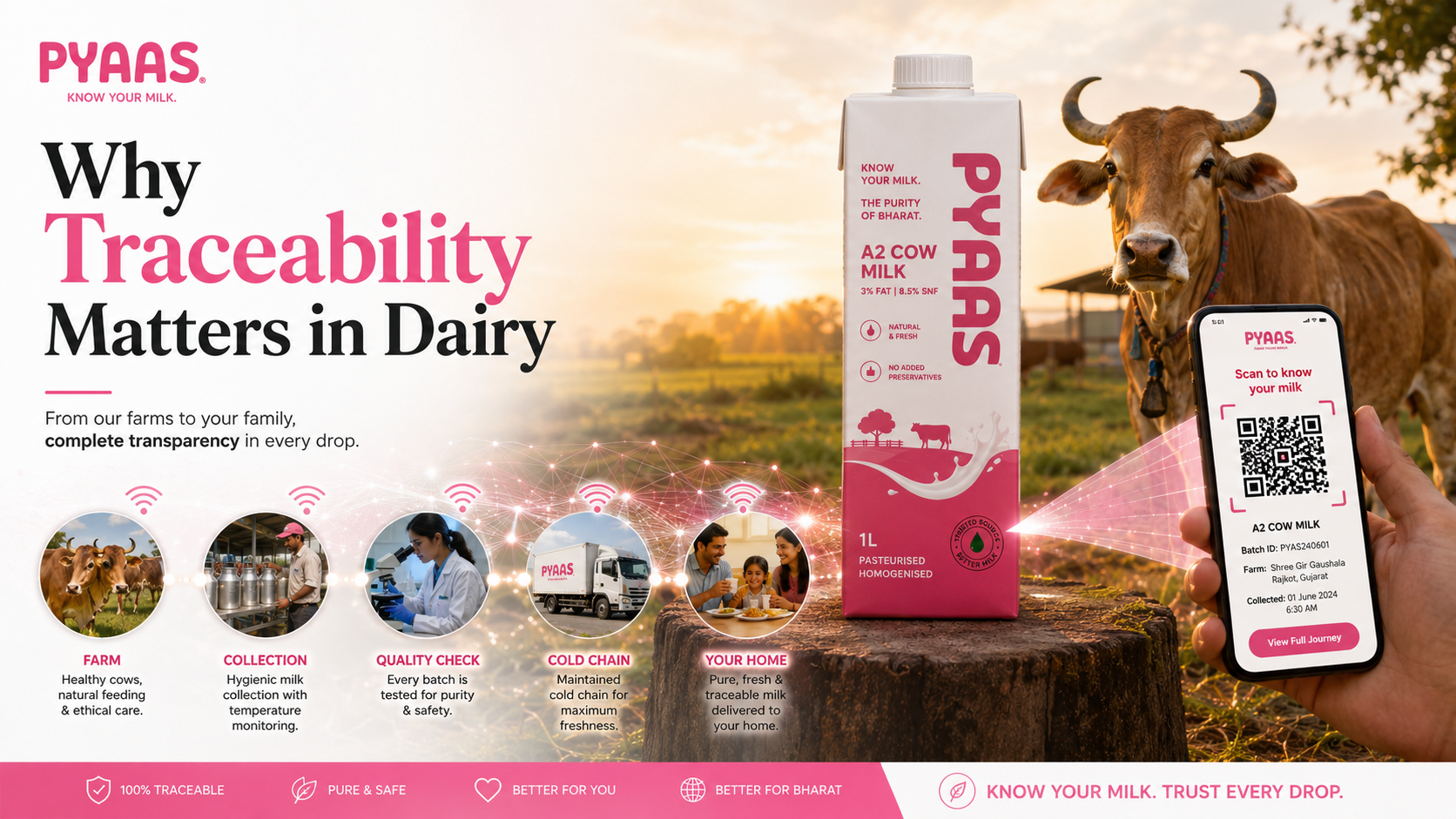
Why Traceability Matters in Dairy: The Future of Consumer Trust
5 July 2026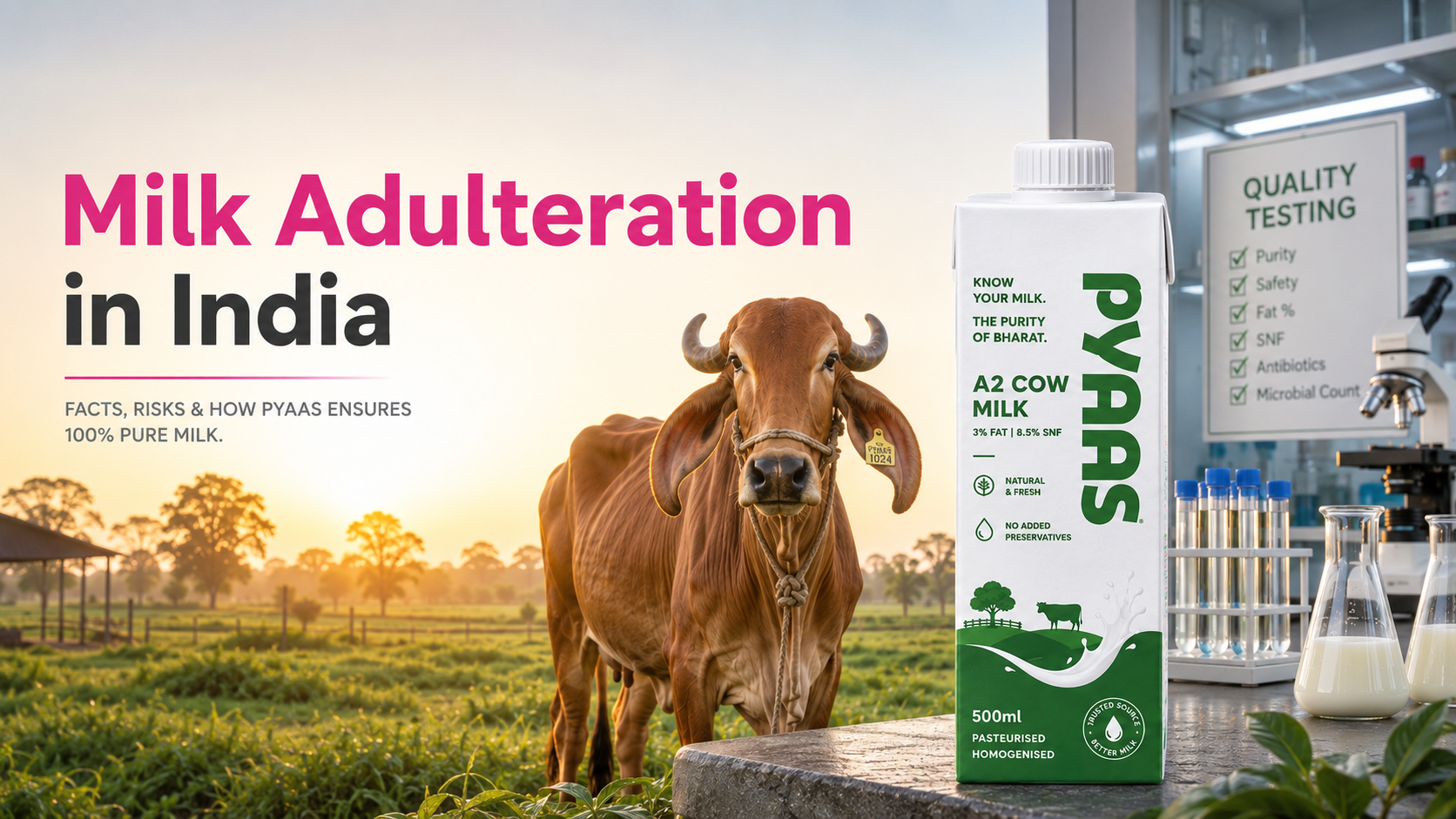
Milk Adulteration in India: What Consumers Need to Know
28 June 2026