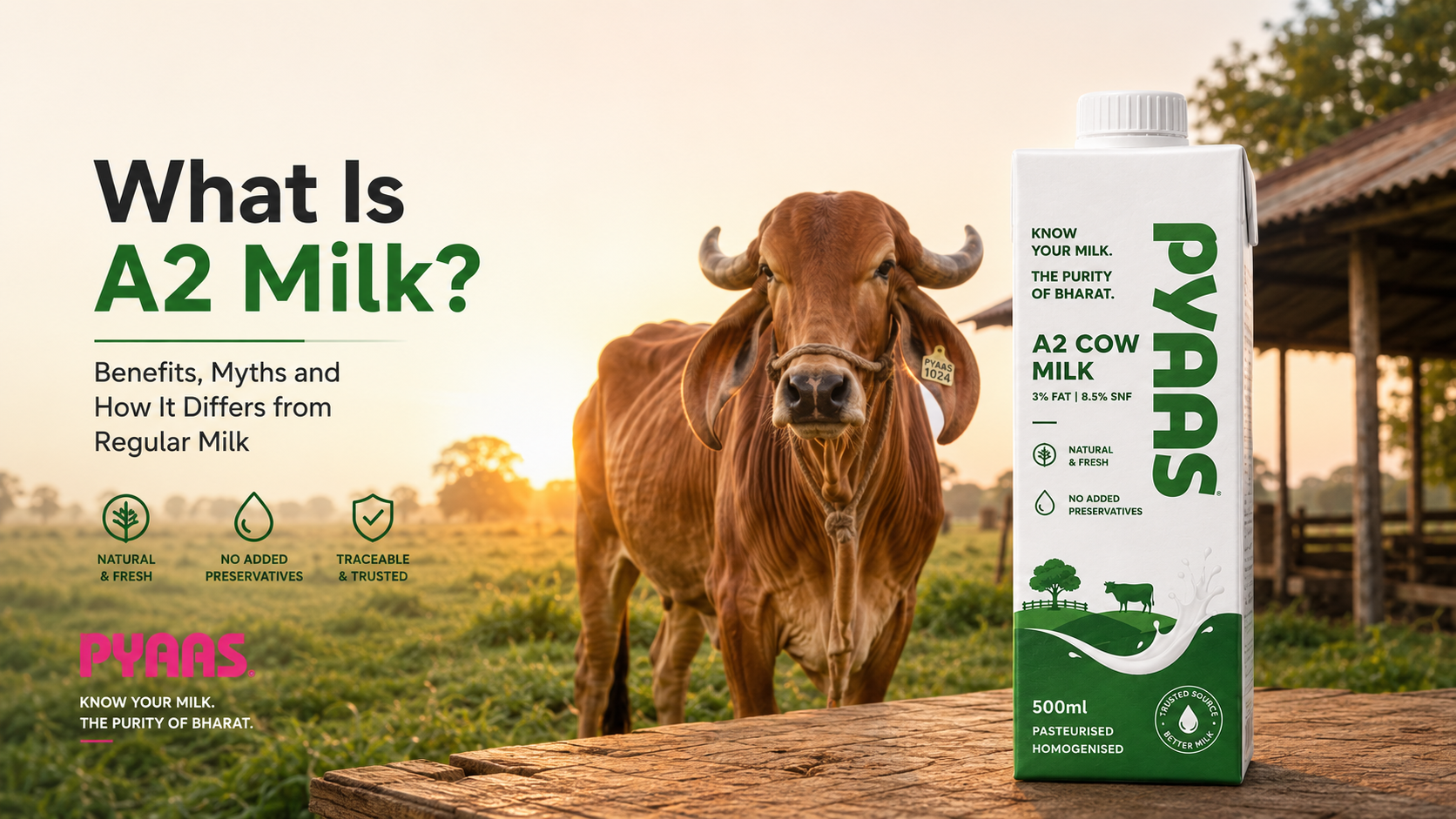
What Is A2 Milk? Benefits, Myths and How It Differs from Regular Milk
If you have walked through a grocery aisle in Delhi, Lucknow or Ayodhya lately, you have probably seen the words "A2 milk" on the pack and wondered what they actually mean. A2 milk has become one of the most talked about choices in Indian households, often promoted as gentler on the stomach and closer to the milk our grandparents drank. But between the marketing and the science, it is easy to feel confused. This guide explains what A2 milk really is, the benefits people genuinely report, the myths worth ignoring, and exactly how A2 milk differs from regular milk.
At PYAAS, we sell traceable, single-origin A2 cow milk, so we have a direct stake in getting this right. Our promise is simple: we would rather you understand your milk than be dazzled by it. So we will keep this honest, point out where claims are exaggerated, and help you decide whether A2 milk is the right choice for your family.
What Is A2 Milk?
All cow milk contains a protein group called casein, and the most common type is beta-casein. Depending on the cow's genetics, beta-casein comes in two main forms: A1 and A2. The difference is tiny on paper, a single building block in a long protein chain, but it changes how the protein behaves when your body digests it.
A2 milk is simply milk from cows that naturally produce only the A2 form of beta-casein. Many traditional Indian breeds, particularly Gir and Sahiwal cows, are widely associated with A2 milk. You can read more about these breeds in our deep dives on Gir cow milk and Sahiwal cow milk. Regular milk sold in much of the world often comes from high-yield crossbred cows that produce a mix of A1 and A2 beta-casein.
How A2 Milk Differs from Regular Milk
The phrase "regular milk" usually means standard pooled milk, often a blend that contains A1 beta-casein. Here is how the two compare in plain terms:
- Protein structure: Regular milk may contain both A1 and A2 beta-casein. A2 milk contains only the A2 form.
- Digestion of the protein: When A1 beta-casein is digested, it can release a fragment called BCM-7. A2 milk does not release this fragment in the same way, which is why some people find A2 milk easier on the stomach.
- Source breed: A2 milk in India is typically linked to indigenous breeds, while regular milk often comes from crossbred herds bred for higher yield.
- Lactose: This is a common point of confusion. A2 milk still contains lactose. It is not lactose-free, so it is not a guaranteed fix for genuine lactose intolerance.
One thing A2 and regular milk should always share is honesty about quality. The protein type tells you nothing about freshness, purity or how the milk was handled. That is why we encourage families to look beyond the label and learn what traceable milk really means before they buy.
A2 Milk Benefits: What People Actually Report
Let us separate the reasonable from the overblown. The most consistent feedback about A2 milk is around digestive comfort. Many people who feel bloated, heavy or uneasy after regular milk say A2 milk sits better with them. The leading explanation is the absence of the A1-linked BCM-7 fragment.
Beyond that, the core nutrition of A2 milk is broadly similar to good quality regular milk. It still offers:
- High quality protein for everyday strength and repair.
- Calcium, which supports bones and teeth, a topic we cover in our piece on why milk matters for bone health.
- Vitamins and minerals naturally present in fresh cow milk.
Who Might Prefer A2 Milk?
A2 milk can be a thoughtful choice for families who feel mild discomfort with regular milk but are not truly lactose intolerant, for households that value indigenous Indian breeds, and for anyone who simply wants the kind of milk associated with traditional desi cows. If your child is part of that household, our parent's guide to choosing quality milk is a useful next read.
A2 Milk Myths You Can Safely Ignore
Plenty of A2 milk claims do not hold up. Treating these honestly is part of how we earn your trust.
- Myth: A2 milk cures lactose intolerance. It does not. A2 milk contains lactose. If lactose is your issue, the protein type will not solve it.
- Myth: A2 milk is a medicine. A2 milk is food, not treatment. It can be part of a balanced diet, but it should not be marketed as a cure for any condition.
- Myth: All expensive milk is A2 milk. A premium price does not guarantee A2 beta-casein or even purity. What matters is the breed, the handling and proof of quality.
- Myth: The label alone is enough. A claim on a carton is only as good as the system behind it. Without traceability, "A2" is just a word.
If you want to dig deeper into the science of the protein difference itself, our companion article on A1 vs A2 milk breaks it down further without the hype.
How to Choose Genuinely Good A2 Milk
Because the A2 label is easy to print and hard to verify, the smarter question is not only "is it A2?" but "can I trust this milk?" Here is what we suggest you look for:
- Named source: Do you know which farm and which farmer the milk came from, or is it pooled from anonymous suppliers?
- Breed clarity: Genuine A2 milk should be linked to indigenous breeds, not vaguely described.
- Proof of quality: Look for evidence of testing, such as SNF and FAT readings for the batch, rather than just a marketing claim.
- Freshness you can confirm: Knowing when the milk left the farm matters as much as what kind of milk it is.
This is the heart of what we do. At PYAAS, every pack carries a QR code that lets you scan and see the exact farm in Gonda, Uttar Pradesh, the named farmer behind it, that batch's lab test for SNF and FAT, and the time the milk left the farm. That is the difference between being told your milk is good and being shown. We invite you to explore our Know Your Milk philosophy to see how this works in practice. If you also cook with traditional fats, our A2 Bilona ghee is made in small batches from the same trusted milk, and you can learn about it in our guide to A2 ghee benefits.
The Honest Bottom Line
A2 milk is a genuine and worthwhile category, not a miracle. It is milk from cows producing only A2 beta-casein, it is often easier to digest for some people, and it carries the same good nutrition you expect from quality cow milk. What it is not is a cure, a lactose solution, or a guarantee of purity on its own. The real value comes when A2 milk is paired with transparency about its source.
If knowing your milk matters to you, we would love to show you ours, farm, farmer, batch test and all. Take a quiet look at the science, ask the questions that matter, and choose the milk you can actually verify. That is the kind of confidence every Indian family deserves at the breakfast table.
Written by
PYAAS Team
The PYAAS Team writes about traceable, single-origin A2 dairy from named farms in Gonda, Uttar Pradesh, helping Indian families truly know their milk.
More from PYAAS TeamCommon questions.
What is A2 milk in simple terms?
A2 milk is cow milk that contains only the A2 form of the beta-casein protein. Regular milk often contains a mix of A1 and A2 beta-casein. In India, A2 milk is usually linked to indigenous breeds like Gir and Sahiwal.
Is A2 milk lactose-free or safe for lactose intolerance?
No. A2 milk still contains lactose, so it is not a solution for genuine lactose intolerance. The A2 difference is about the protein, not the sugar. People with true lactose intolerance should speak to a doctor before relying on any cow milk.
How is A2 milk different from regular milk?
The main difference is the beta-casein protein. Regular milk may contain A1 beta-casein, which releases a fragment called BCM-7 during digestion, while A2 milk does not release it in the same way. This is why some people find A2 milk easier on the stomach.
Is A2 milk actually healthier than regular milk?
A2 milk offers similar core nutrition to good quality regular milk, including protein and calcium. Its main reported advantage is digestive comfort for some people, not superior nutrition. It is food, not medicine, and should not be treated as a cure.
How can I be sure the milk I buy is genuinely A2?
Look beyond the label and ask for proof. Genuine A2 milk should come from a named indigenous breed and a known source, with evidence of quality testing. With PYAAS, you can scan a QR code on every pack to see the exact farm, the farmer and that batch's lab test.
Get the next one in your inbox.
The occasional note on milk, ghee, and how we work. Plain words, no hype, and you can leave any time.
Keep reading.
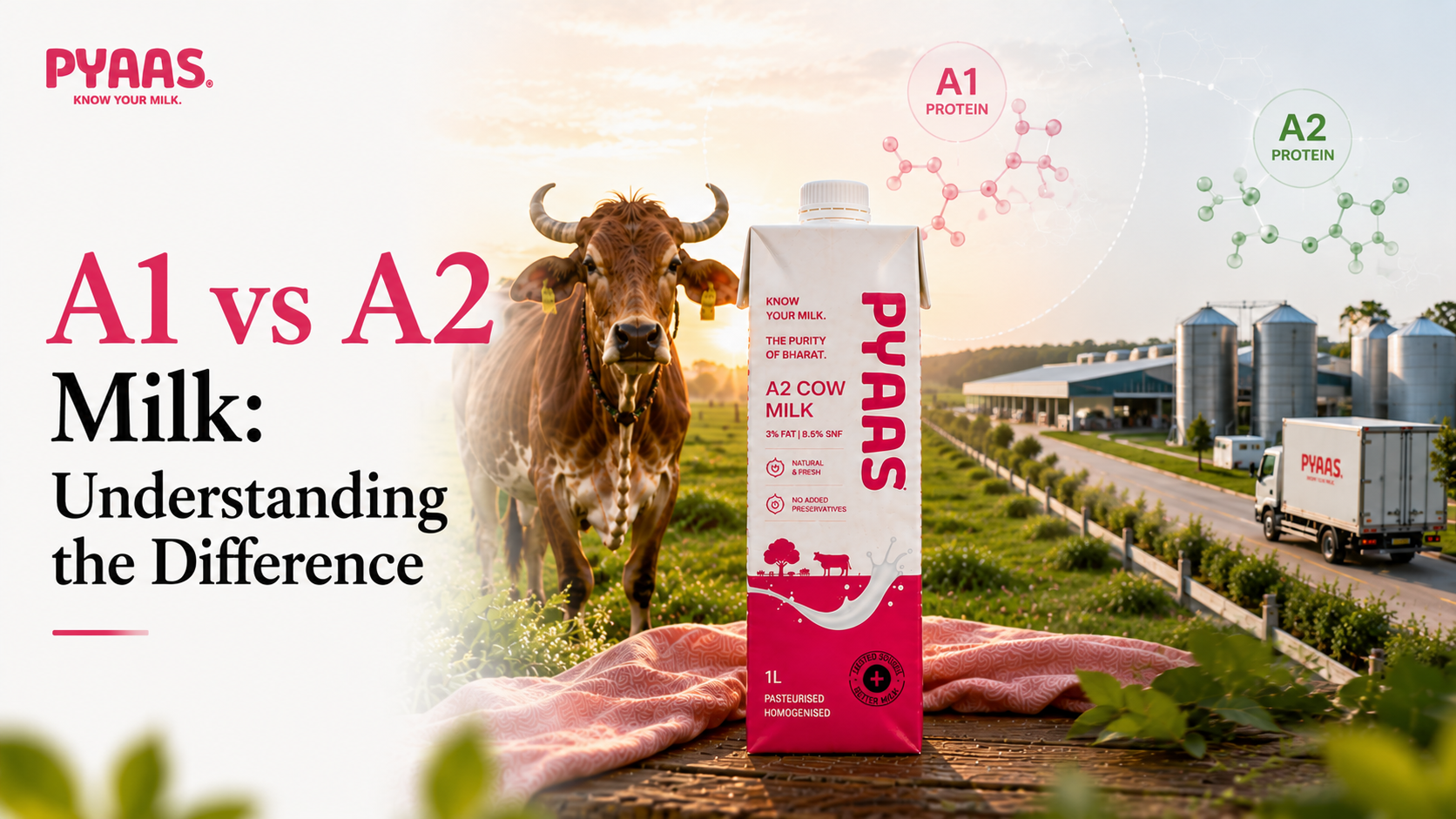
A1 vs A2 Milk: Understanding the Difference
9 July 2026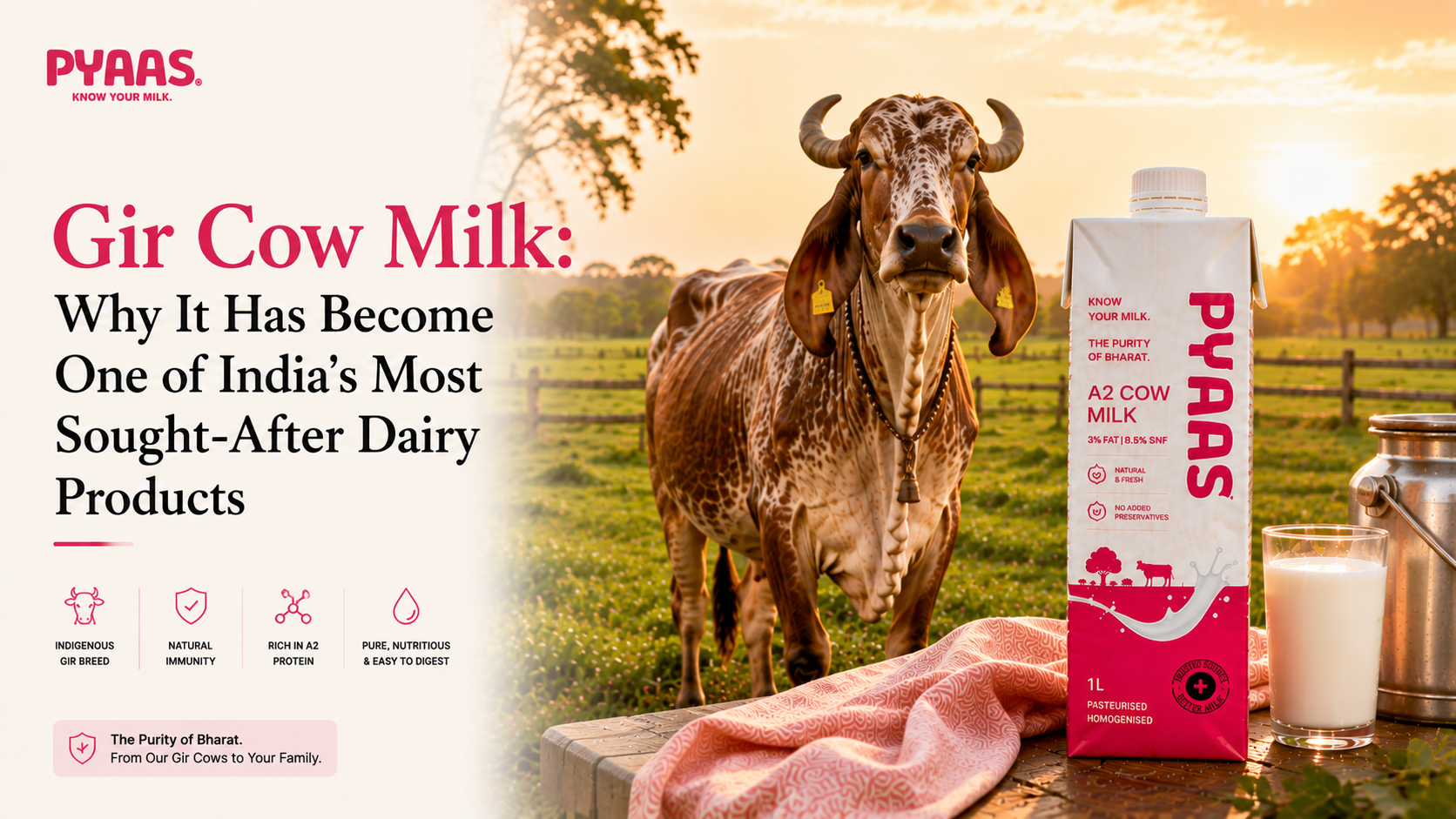
Gir Cow Milk: Why It Has Become One of India's Most Sought-After Dairy Products
11 July 2026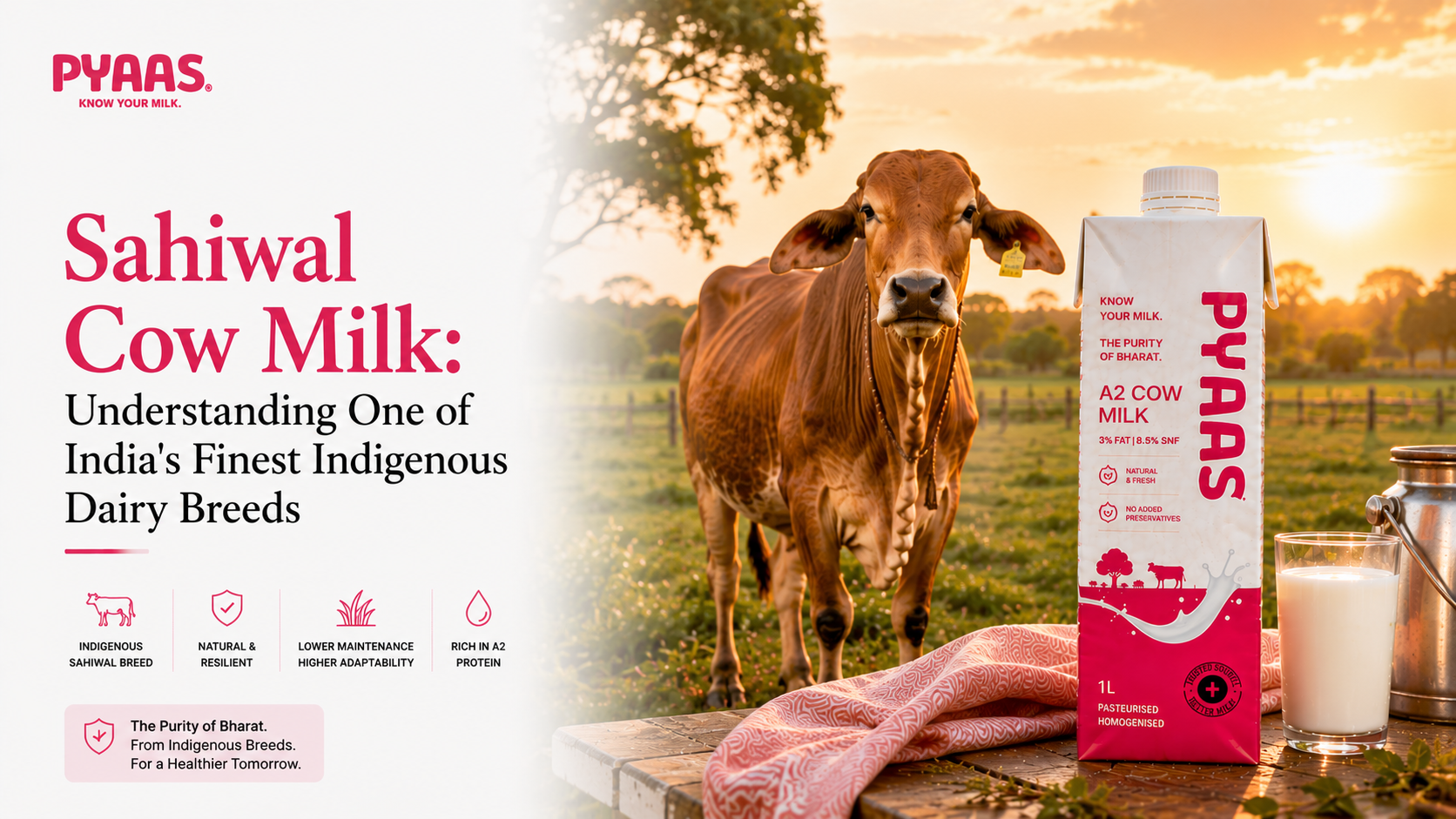
Sahiwal Cow Milk: Understanding One of India's Finest Indigenous Dairy Breeds
11 July 2026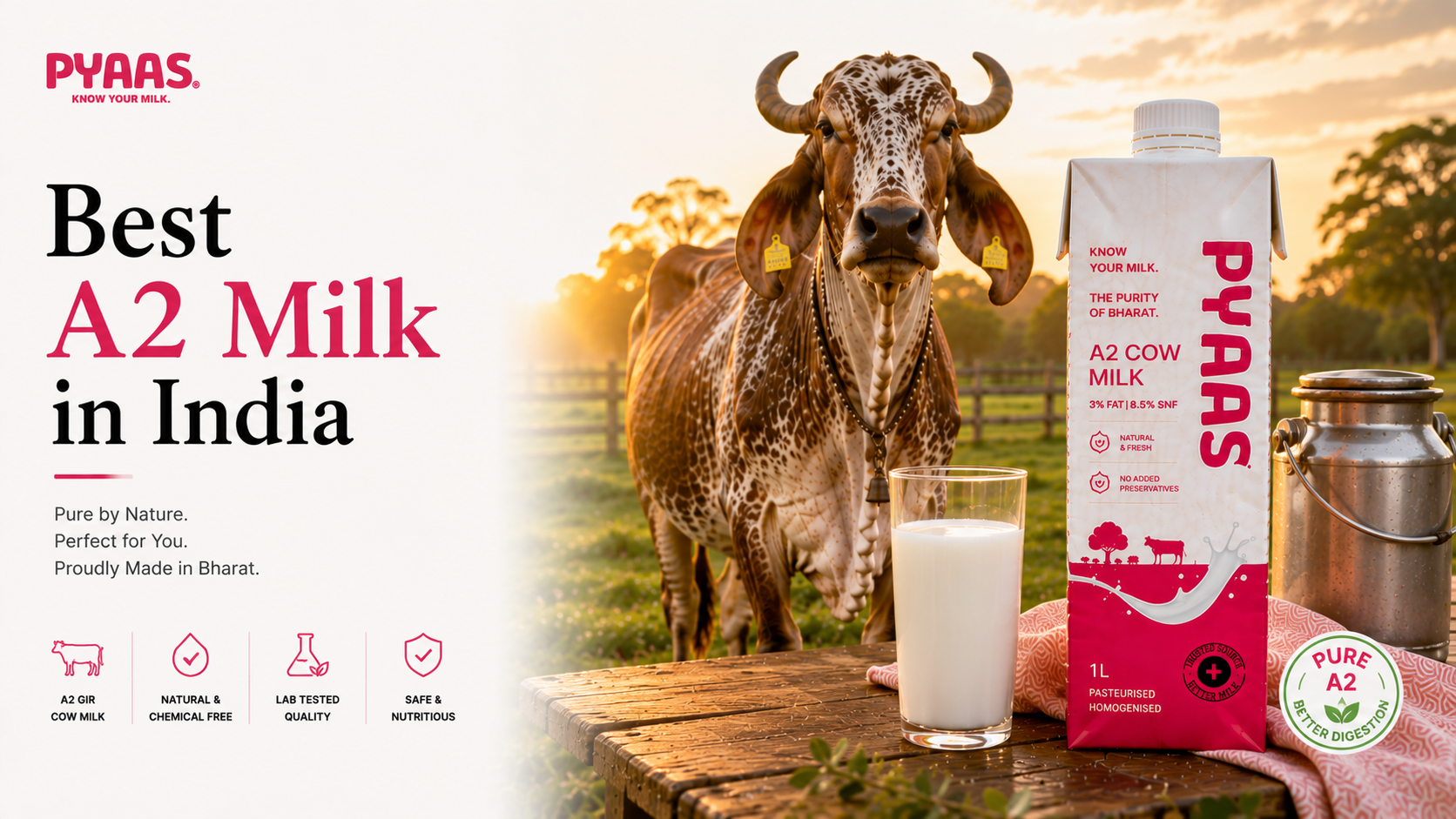
Best A2 Milk in India: What Should Consumers Look For?
12 July 2026