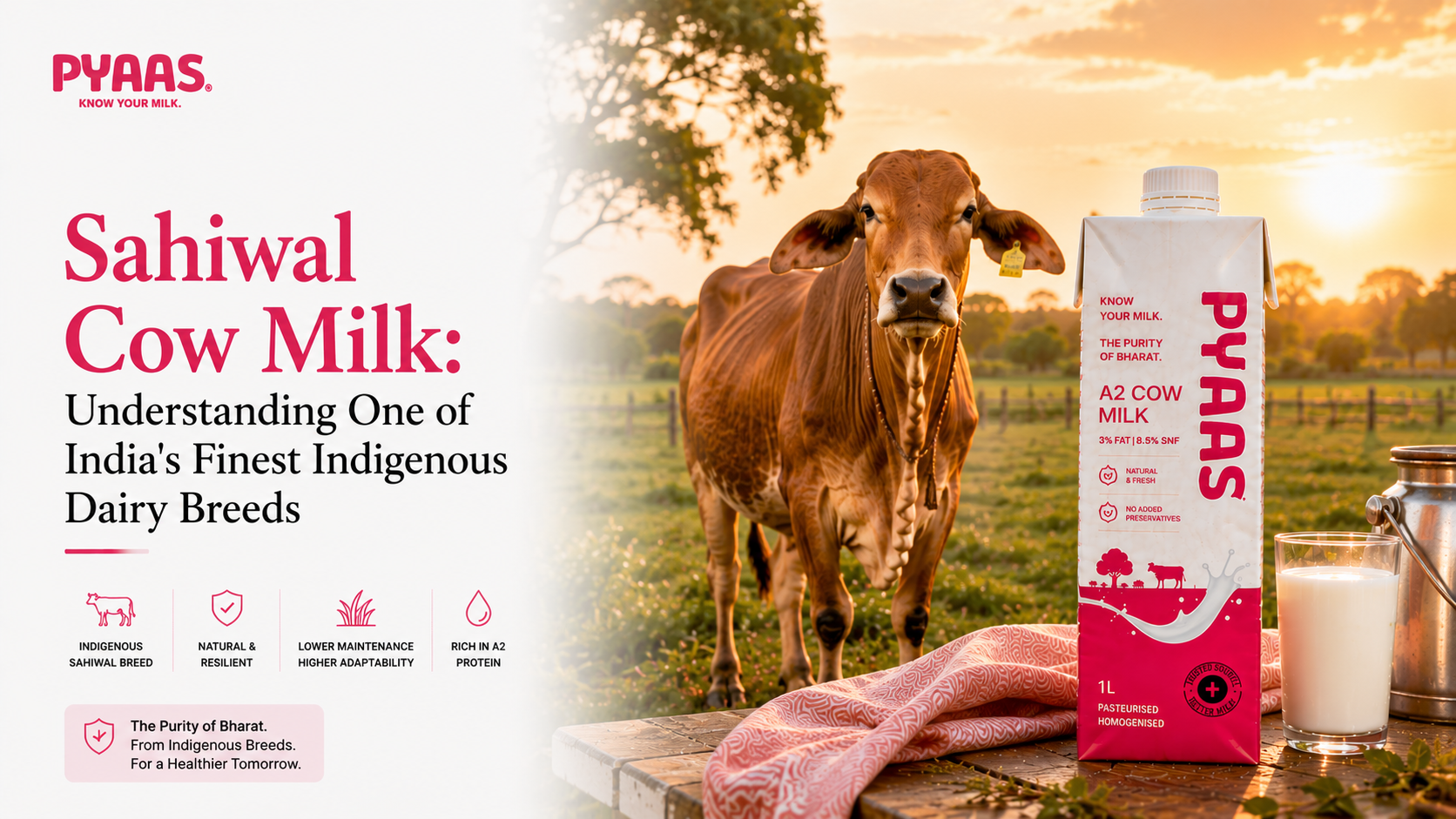
Sahiwal Cow Milk: Understanding One of India's Finest Indigenous Dairy Breeds
Sahiwal cow milk comes from the Sahiwal breed, one of India's most respected and productive indigenous dairy cattle. Prized for its hardiness, calm temperament and reliable yield in hot climates, the Sahiwal has shaped Indian dairy farming for generations. As more families look beyond ordinary packaged milk toward traceable, single-origin A2 milk, the Sahiwal breed has returned to the spotlight as a symbol of authentic, native Indian dairy.
If you have been researching the best indigenous cow breeds in India, you have almost certainly come across the Sahiwal. In this guide we explain where the breed comes from, what makes Sahiwal milk distinctive, its connection to A2 milk, and why knowing the breed behind your milk matters just as much as knowing the farm it came from.
What Is Sahiwal Cow Milk?
Sahiwal cow milk is the milk produced by the Sahiwal breed, a native dairy cow of the Indian subcontinent. The breed is part of a small group of indigenous cattle, often called desi cows, that are valued for both productivity and resilience. Unlike many crossbred herds, Sahiwal cattle have evolved over centuries to thrive in the Indian environment, which is one reason farmers and conscious consumers hold them in such high regard.
The milk itself is typically rich and full-bodied, with a natural sweetness that many families associate with traditional, farm-fresh dairy. Because the breed is so closely tied to heritage farming, Sahiwal milk has become shorthand for milk that is reared the way it has been for generations rather than industrialised at scale.
Origins and History of the Sahiwal Breed
The Sahiwal breed originated in the Punjab region of the Indian subcontinent, an area historically known for its dairy traditions. Farmers selected and bred these cattle over many years for a simple reason: they performed. Sahiwal cows could tolerate intense heat, resist many common diseases and still give a dependable supply of milk.
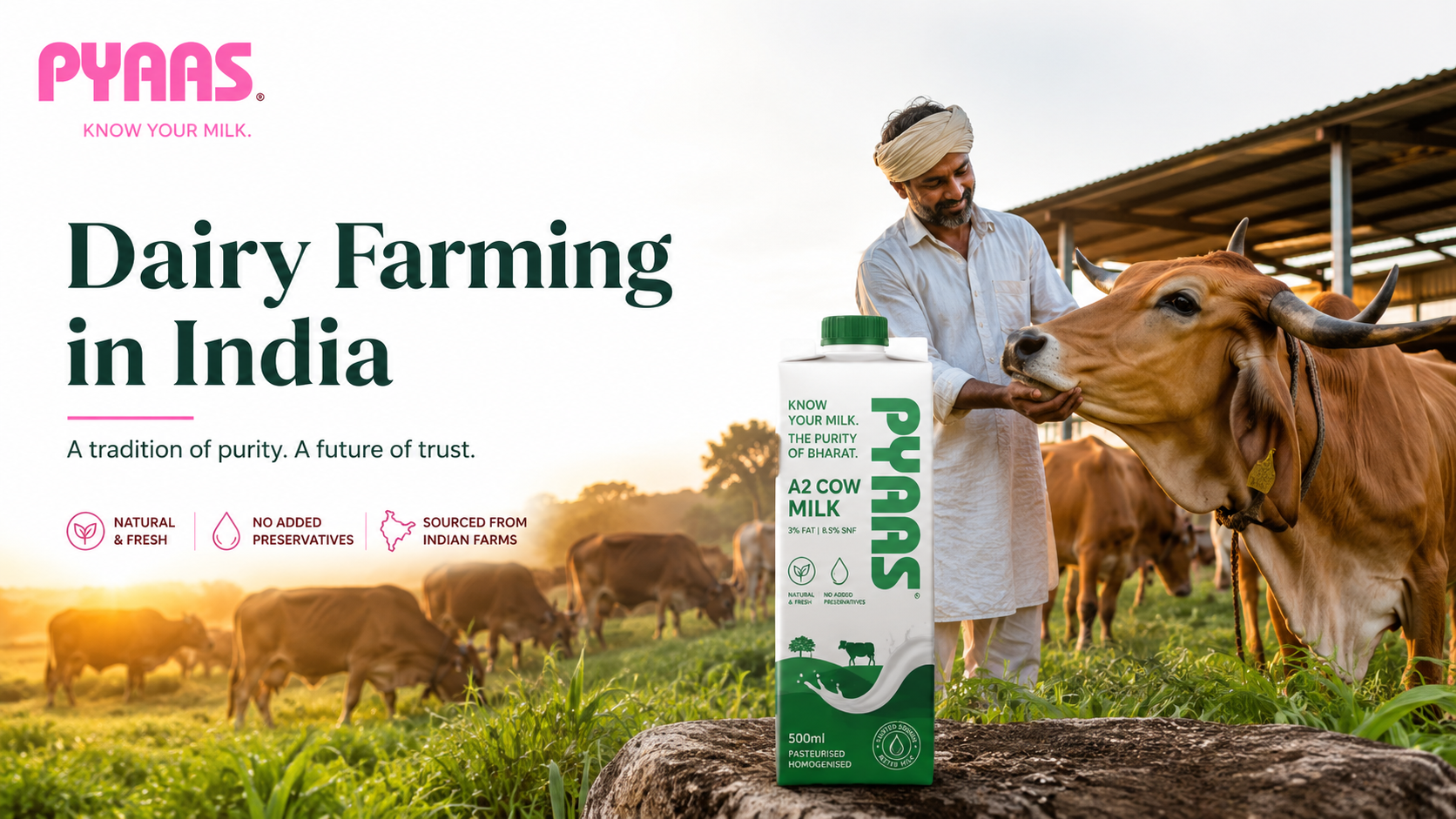
Those qualities made the breed valuable far beyond its homeland. Over the decades, Sahiwal cattle have been introduced to several countries across Asia, Africa and Australia as a sturdy tropical dairy animal. Today the breed is recognised internationally, yet its roots and finest expression remain firmly in India, where it continues to be a cornerstone of indigenous dairy farming. To understand how breeds like this fit into the wider picture, our guide to dairy farming in India is a helpful companion read.
Key Characteristics of Sahiwal Cattle
Sahiwal cows are easy to recognise and easier still to appreciate once you understand what they bring to a dairy herd. Their defining qualities include:
- Heat tolerance: They remain productive in the high temperatures of the Indian plains, where many imported breeds struggle.
- Disease resistance: Generations of natural selection have made them notably hardy, often needing fewer interventions than crossbred cattle.
- Reliable milk yield: Among indigenous breeds, the Sahiwal is one of the more generous milkers, balancing quality with quantity.
- Calm temperament: Their docile nature makes them well suited to small, family-run farms where animals are handled with care.
- Distinctive appearance: A reddish-brown coat, loose skin and a gentle build make them a familiar sight across northern India.
These traits make Sahiwal cattle especially valuable in tropical and subtropical climates, and they explain why the breed sits at the heart of so many conversations about preserving India's native dairy heritage.
Sahiwal Milk and the A2 Connection
One of the biggest reasons interest in Sahiwal milk has surged is its association with A2 milk. Indigenous Indian breeds such as the Sahiwal and the Gir are widely linked to milk that carries the A2 type of beta-casein protein, rather than the A1 variant more common in many high-yield crossbred and exotic cattle.
The difference comes down to a small variation in the protein structure of the milk, and it is a topic many families want to understand before they buy. If you are new to the subject, start with our explainer on what A2 milk is, then read A1 vs A2 milk: understanding the difference for a clear, balanced comparison. We keep our claims honest here: A2 milk is not a miracle product, but for many people the appeal of indigenous-breed milk is as much about heritage and traceability as it is about the protein itself.
Sahiwal Compared With Other Indigenous Breeds
Sahiwal milk is often mentioned alongside Gir milk, another celebrated desi breed. Both are prized A2-associated cattle with loyal followings. If you are weighing your options, our deep dive into why Gir cow milk has become so sought after pairs naturally with this article and helps you see how the two breeds compare.
Why the Breed Alone Is Not Enough: The Case for Traceability
Here is the honest truth that many premium dairy labels avoid saying out loud: a breed name on a carton does not guarantee what is inside. Milk sold as Sahiwal or A2 can only be trusted if you can verify the farm, the animal husbandry and the testing behind it. The breed is the starting point, not the finish line.
This is exactly why transparency has become central to how thoughtful families choose milk. Modern consumers increasingly want straightforward answers: Which farm did this milk come from? Who raised the cows? Was this batch tested? When did it leave the farm? Our piece on why traceability matters in dairy explains how this shift is reshaping the entire industry and rebuilding consumer trust.
Quality milk always begins with healthy, well cared for animals. Responsible dairy farms prioritise clean housing, good nutrition, regular veterinary care and humane handling. When those standards are visible and verifiable rather than simply claimed, you can finally judge milk on evidence instead of marketing.
How PYAAS Brings Sahiwal-Style Transparency to Your Door
At PYAAS, we believe every family deserves complete clarity about the milk they drink. Our A2 cow milk and small-batch A2 Bilona ghee are sourced from named farms in Gonda, Uttar Pradesh, and delivered fresh across Delhi NCR, Lucknow and Ayodhya.
The part we are most proud of is what happens on the pack. Scan the QR code and you can see the exact farm, the named farmer, that batch's lab test results for SNF and FAT, and the time the milk left the farm. That is real traceability, not a slogan. It is the same principle behind our Know Your Milk promise, and it grew directly out of the values of our founding family.
Supporting awareness of breeds such as the Sahiwal helps preserve a precious piece of India's agricultural heritage while strengthening the bond between farmers and the families they feed. Whether or not the milk on your table is from a Sahiwal cow, the questions the breed inspires are the right ones to ask. Know the breed, know the farm, and most of all, know your milk. When you are ready to taste the difference transparency makes, we would be glad to welcome you to the PYAAS family.
Written by
PYAAS Team
The PYAAS Team writes about indigenous cattle, A2 milk and dairy transparency, drawing on our work with named farms in Gonda, Uttar Pradesh to help families truly know their milk.
More from PYAAS TeamCommon questions.
What is Sahiwal cow milk?
Sahiwal cow milk is the milk produced by the Sahiwal breed, a native dairy cow of the Indian subcontinent. The breed is valued for its reliable milk yield, heat tolerance and disease resistance. The milk is typically rich and full-bodied, which is why many families associate it with traditional, farm-fresh dairy.
Is Sahiwal milk A2 milk?
Indigenous Indian breeds such as the Sahiwal are widely associated with A2 milk, which carries the A2 type of beta-casein protein rather than the A1 variant common in many crossbred cattle. The link between desi breeds and A2 milk is one reason interest in Sahiwal milk has grown. That said, the breed name alone cannot guarantee what is in a carton, which is why verified sourcing and testing matter.
Where does the Sahiwal breed come from?
The Sahiwal breed originated in the Punjab region of the Indian subcontinent, an area with a long dairy tradition. Farmers bred these cattle over many years for their ability to thrive in hot climates while still producing dependable milk. The breed has since been introduced to several countries, but its roots remain firmly in India.
Is Sahiwal milk better than regular milk?
Sahiwal milk is prized for its heritage, its A2 association and its rich taste, and many families prefer it for these reasons. However, no breed name on its own makes milk better or safer. What truly sets quality milk apart is transparency: knowing the farm, the animal care and the batch test results behind every pack.
How can I be sure the milk I buy is genuinely from a healthy, traceable source?
Look for milk that lets you verify its origin rather than just claim it. At PYAAS, you can scan a QR code on the pack to see the exact farm, the named farmer, that batch's lab test for SNF and FAT, and the time the milk left the farm. This kind of verifiable traceability is the most reliable way to judge milk on evidence instead of marketing.
Get the next one in your inbox.
The occasional note on milk, ghee, and how we work. Plain words, no hype, and you can leave any time.
Keep reading.
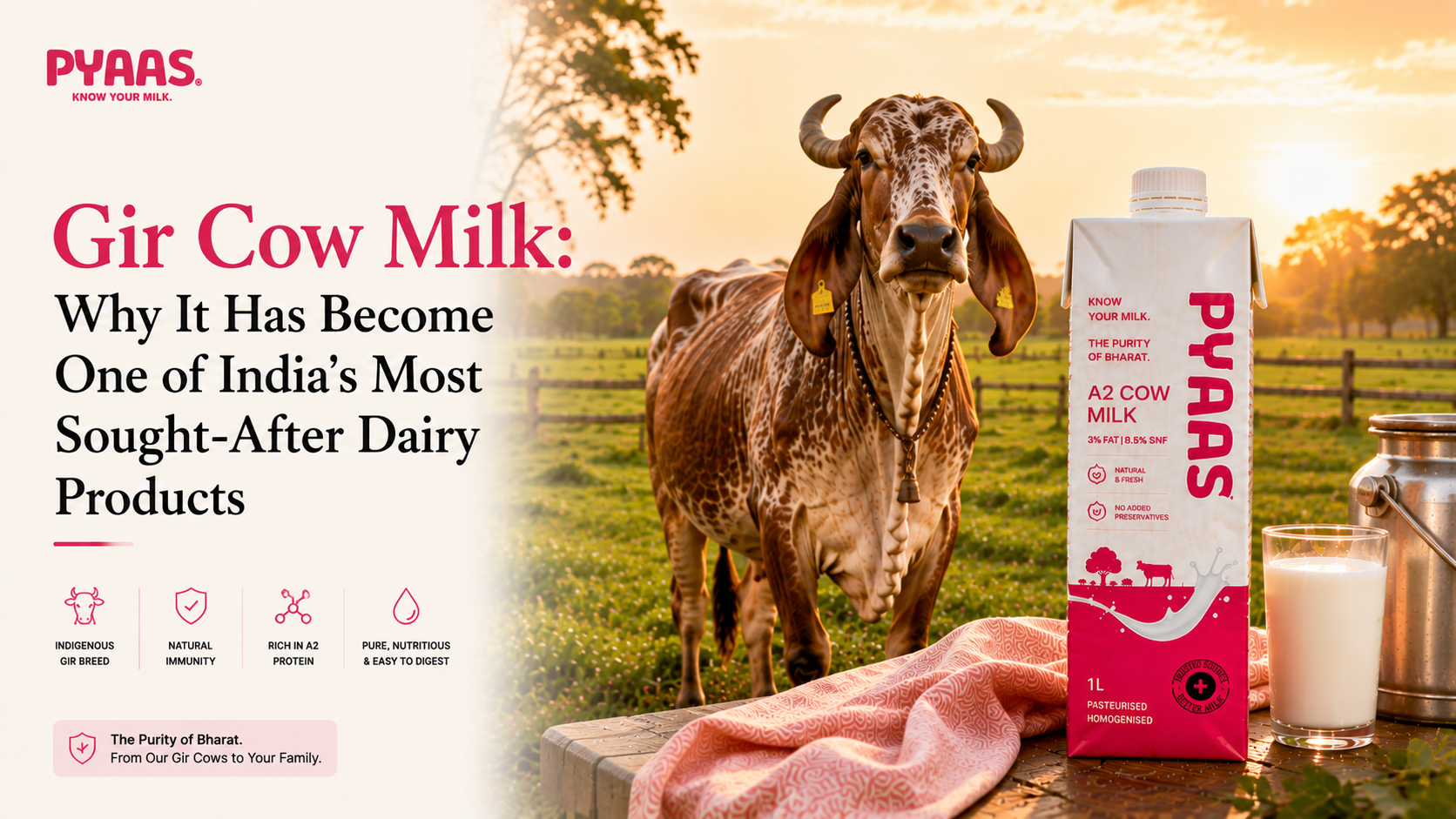
Gir Cow Milk: Why It Has Become One of India's Most Sought-After Dairy Products
11 July 2026
What Is A2 Milk? Benefits, Myths and How It Differs from Regular Milk
4 July 2026
A1 vs A2 Milk: Understanding the Difference
9 July 2026
Best A2 Milk in India: What Should Consumers Look For?
12 July 2026