Gir Cow Milk: Why It Has Become One of India's Most Sought-After Dairy Products
Walk into any conversation about premium dairy in India today and one name comes up again and again: Gir cow milk. Once a quiet pride of Gujarat's farms, milk from the Gir breed has become one of the country's most sought-after dairy products, prized by families who want more than just white liquid in a pouch. They want heritage, quality and a clear answer to a simple question: where did this milk actually come from?
At PYAAS, we hear that question every day. This guide explains what makes Gir cow milk special, why demand has grown so quickly, how it connects to the wider A2 milk conversation, and what you should genuinely look for before you pay a premium for it. Our promise is the same one that powers our whole brand: Know Your Milk, all the way back to the named farm and the named farmer.
What Is Gir Cow Milk?
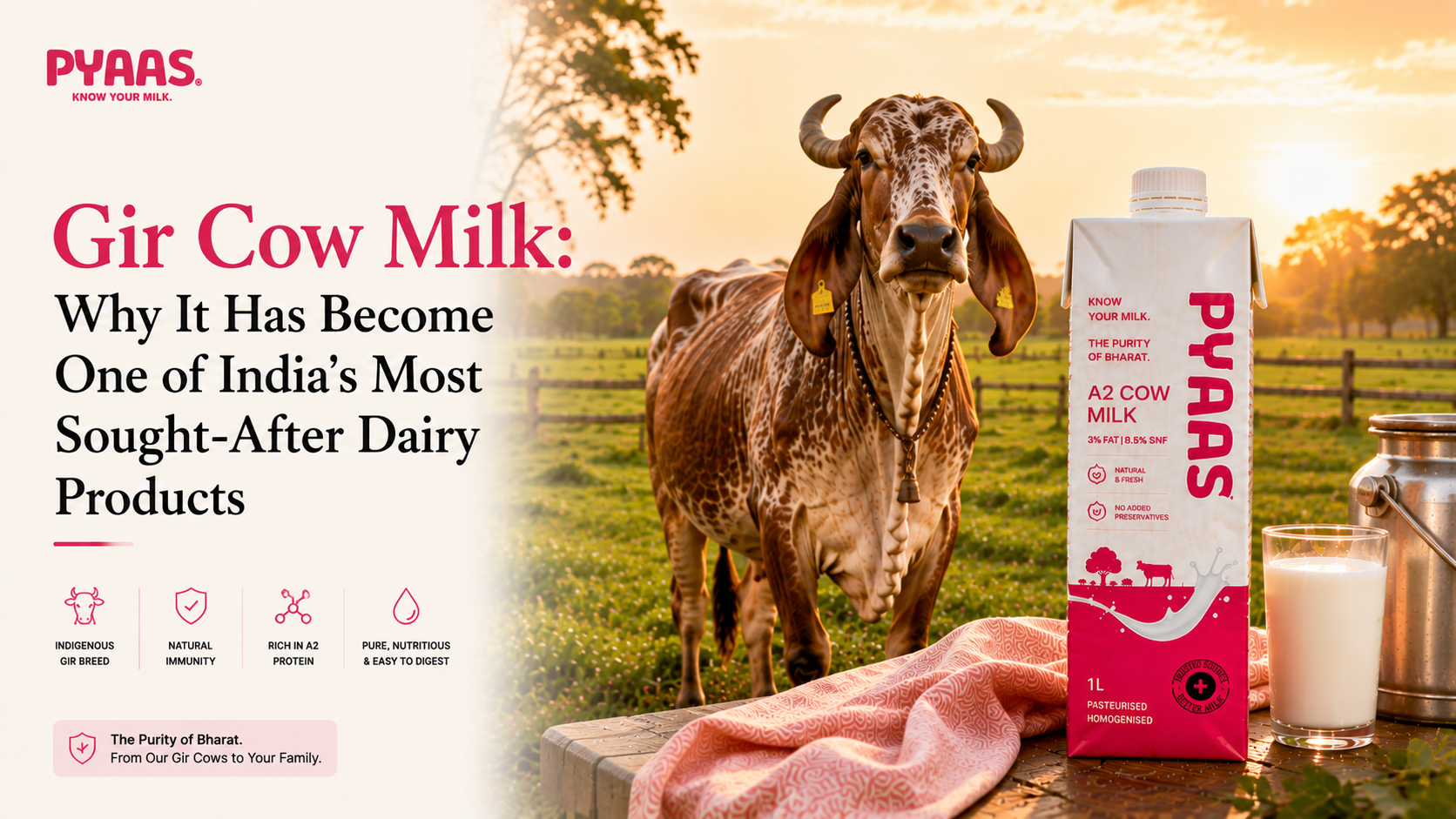
Gir cow milk is milk produced by the Gir breed, one of India's most respected indigenous (desi) cattle breeds. The Gir originates from the Gir forest region of Gujarat and has been part of Indian agriculture for centuries. The breed is easy to recognise: a domed forehead, long pendulous ears, a gentle nature and remarkable resilience in hot, demanding climates.
These qualities are exactly why Gir cattle have spread well beyond Gujarat and are now valued by dairy farmers across India. They cope with heat, resist many common ailments and maintain steady milk production where many crossbred animals struggle. For families, though, the appeal is simpler. Gir milk carries the reputation of a traditional, indigenous breed, and that reputation feels reassuring at a time when trust in mass-market dairy is low.
Why the Gir Breed Stands Out
- Indigenous heritage: A genuinely Indian breed, adapted to Indian conditions over generations.
- Hardiness: Strong tolerance to heat and good natural disease resistance.
- Calm temperament: Gentle animals that are well suited to small, attentive farms.
- Rich, characterful milk: Often described as creamier and more flavourful than generic pooled milk.
Why Gir Cow Milk Has Become So Sought After
Demand for Gir cow milk has climbed sharply in recent years, and it is not a passing fad. A few clear forces are driving it.
- The A2 milk movement: Gir cows are commonly associated with A2 beta-casein milk, which has pushed indigenous breeds into the spotlight. If you are new to this topic, our explainer on what A2 milk is, its benefits and myths is the best place to start.
- A return to indigenous breeds: Many Indian families feel a cultural pull toward desi cows and want to support the survival of native breeds.
- Distrust of anonymous dairy: After years of headlines about milk adulteration in India, people want milk with a known origin and a clear story.
- The premium, fresh shift: More households now compare farm fresh milk against packaged milk and choose the option they can trace.
Put simply, Gir cow milk sits at the meeting point of three strong trends: health awareness, heritage pride and the demand for transparency. That is a powerful combination.
Gir Cow Milk and the A2 Question
Much of the excitement around Gir milk is tied to A2 beta-casein. Milk proteins come in different forms, and the A1 versus A2 distinction has become one of the most discussed topics in modern dairy. Indigenous breeds like the Gir are frequently linked to A2 milk, which has helped raise awareness of desi cattle and their role in premium dairy farming.
It is worth being honest here. The A2 conversation is genuinely interesting, but it is also surrounded by exaggerated claims. We encourage families to read the balanced view in our guide to A1 versus A2 milk and the real difference, and to remember that breed alone does not guarantee quality. What truly matters is how the cow is raised, how the milk is handled and whether it has been properly tested.
Breed Is Not Enough: What Actually Makes Milk Good
This is the part many premium dairy stories skip. The word "Gir" on a label tells you about a breed, not about freshness, handling or honesty. High-quality milk, regardless of breed, depends on a few non-negotiables.
- Freshness: Milk that reaches you quickly, with a clear time it left the farm, keeps more of its natural goodness.
- Quality testing: Independent checks for SNF, FAT and purity, on every batch, not once a year. See how serious testing works in our look at how modern dairies ensure safe and pure milk.
- Responsible sourcing: Healthy, well-cared-for cows on farms you can actually name.
- Traceability: The ability to verify the origin yourself rather than taking a brand's word for it.
A premium price should buy you proof, not just a pretty story. If a seller cannot tell you the exact farm and show you a recent lab result, the breed label means very little.
How PYAAS Approaches Gir and Indigenous Milk
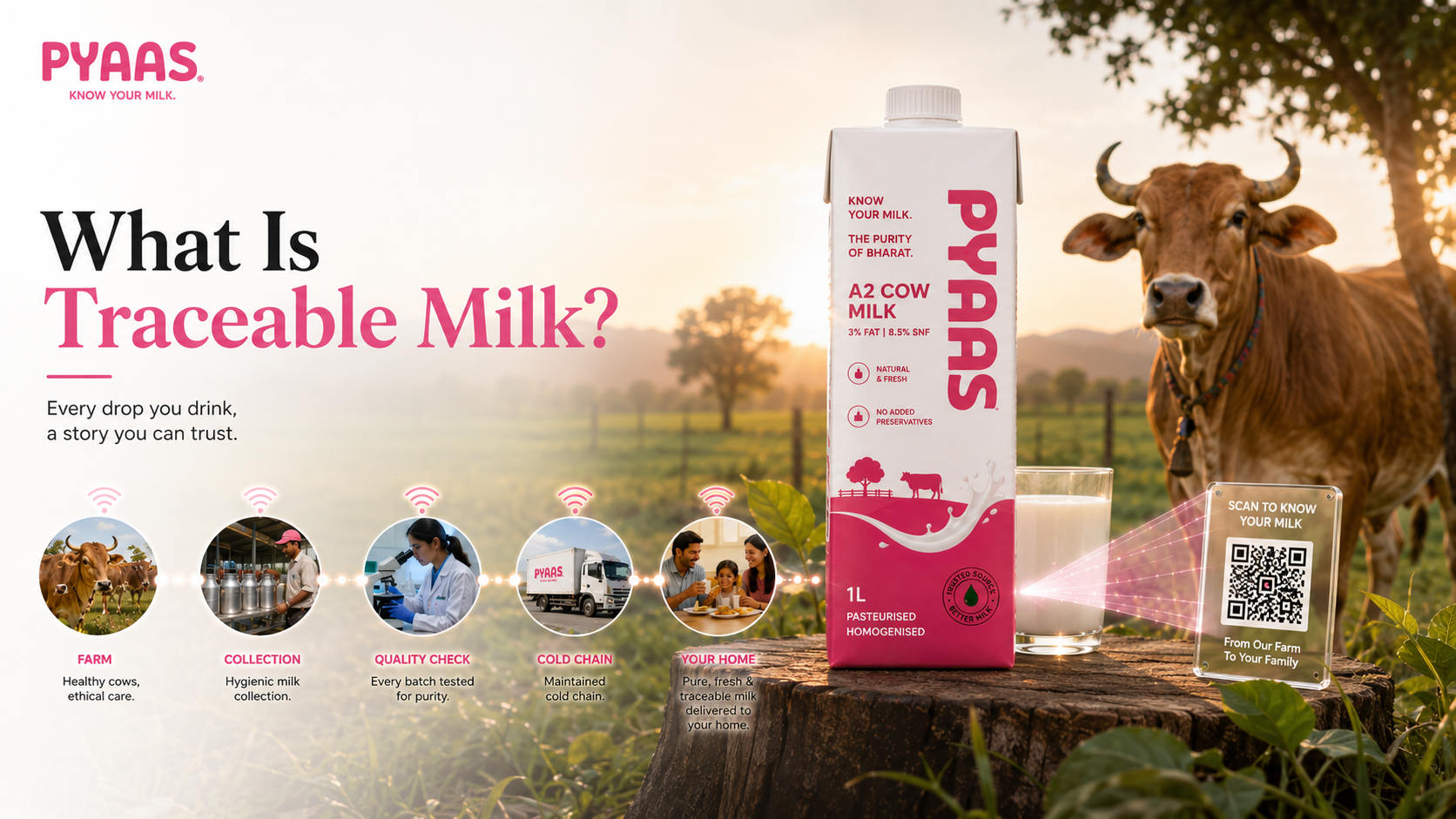
At PYAAS we believe families deserve complete visibility into the story behind their milk. That belief shapes everything we do. We work with named farms in Gonda, Uttar Pradesh, deliver fresh A2 cow milk and small-batch A2 Bilona ghee across Delhi NCR, Lucknow and Ayodhya, and we put the proof in your hands.
Every PYAAS pack carries a QR code. Scan it and you can see the exact farm, the named farmer, that batch's lab test for SNF and FAT, and the time the milk left the farm. This is what traceable milk really means, and it is the honest answer to the question every Gir milk buyer should be asking.
Our love for indigenous breeds also extends to ghee. The same care that goes into our milk goes into our A2 Bilona ghee, made in small batches using the traditional churning method that families have trusted for generations.
Beyond Gir: India's Indigenous Dairy Heritage
The Gir is celebrated, but it is far from the only treasure in India's cattle heritage. The Sahiwal, for example, is another outstanding native breed, and you can read about it in our guide to Sahiwal cow milk and India's finest indigenous breeds. Supporting awareness of these breeds helps preserve valuable agricultural heritage while strengthening the connection between consumers and the farmers who raise them.
For many of us at PYAAS, this is personal. Caring for indigenous cattle and the families who depend on them is part of our founding family story, and it is the reason we set out to build a dairy brand that puts the source first.
How to Choose Genuine Gir Cow Milk
If you are ready to try Gir cow milk, here is a simple, honest checklist.
- Ask for the farm: A trustworthy seller can name the farm and the farmer behind your milk.
- Look for batch testing: Seek recent lab results for SNF, FAT and purity, ideally one you can verify.
- Check freshness and timing: Know how recently the milk was collected and how it reached you.
- Prefer traceability over slogans: A QR code that opens the real story beats any marketing claim.
- Mind the cold chain and packaging: Milk should arrive cold, in clean cartons or pouches, never left to chance.
Gir cow milk has earned its place among India's most loved dairy products, and the heritage behind it is real. The best thing you can do as a buyer is pair that heritage with proof. If you would like milk you can actually trace, from a named farm to your family's table, that is exactly what we have built PYAAS to do. Whenever you are ready, we would be glad to help you Know Your Milk.
Written by
PYAAS Team
The PYAAS Team writes about indigenous dairy breeds, A2 milk and traceability for India's transparency-first dairy brand, sourcing traceable A2 milk and Bilona ghee from named farms in Gonda, Uttar Pradesh.
More from PYAAS TeamCommon questions.
What is Gir cow milk?
Gir cow milk is milk produced by the Gir breed, an indigenous (desi) cattle breed that originates from the Gir forest region of Gujarat. The breed is known for its hardiness, calm temperament and rich, characterful milk. It is one of India's most respected native dairy breeds.
Is Gir cow milk the same as A2 milk?
Gir cows are commonly associated with A2 beta-casein milk, which is why the breed features so heavily in the A2 conversation. However, breed alone does not guarantee A2 status or quality. Always look for milk that is freshly handled, properly tested and traceable to a named farm.
Why has Gir cow milk become so popular in India?
Demand has grown because Gir milk sits at the meeting point of three strong trends: rising health awareness, pride in indigenous breeds, and a desire for transparency after years of milk adulteration concerns. Families increasingly want milk with a known origin and a clear story rather than anonymous pooled milk.
Is Gir cow milk worth the premium price?
Gir milk has genuine heritage value, but a high price should buy you proof, not just a label. The most important factors are freshness, batch testing for SNF and FAT, responsible sourcing and traceability. If a seller cannot name the farm or show a recent lab result, the premium may not be justified.
How can I check if Gir cow milk is genuine?
Ask the seller to name the farm and the farmer, look for recent batch test results, and check how recently the milk was collected. The strongest proof is traceability, such as a QR code that opens the real farm and lab details. Genuine sellers welcome these questions.
Get the next one in your inbox.
The occasional note on milk, ghee, and how we work. Plain words, no hype, and you can leave any time.
Keep reading.
Sahiwal Cow Milk: Understanding One of India's Finest Indigenous Dairy Breeds
11 July 2026
What Is A2 Milk? Benefits, Myths and How It Differs from Regular Milk
4 July 2026
A1 vs A2 Milk: Understanding the Difference
9 July 2026
Best A2 Milk in India: What Should Consumers Look For?
12 July 2026