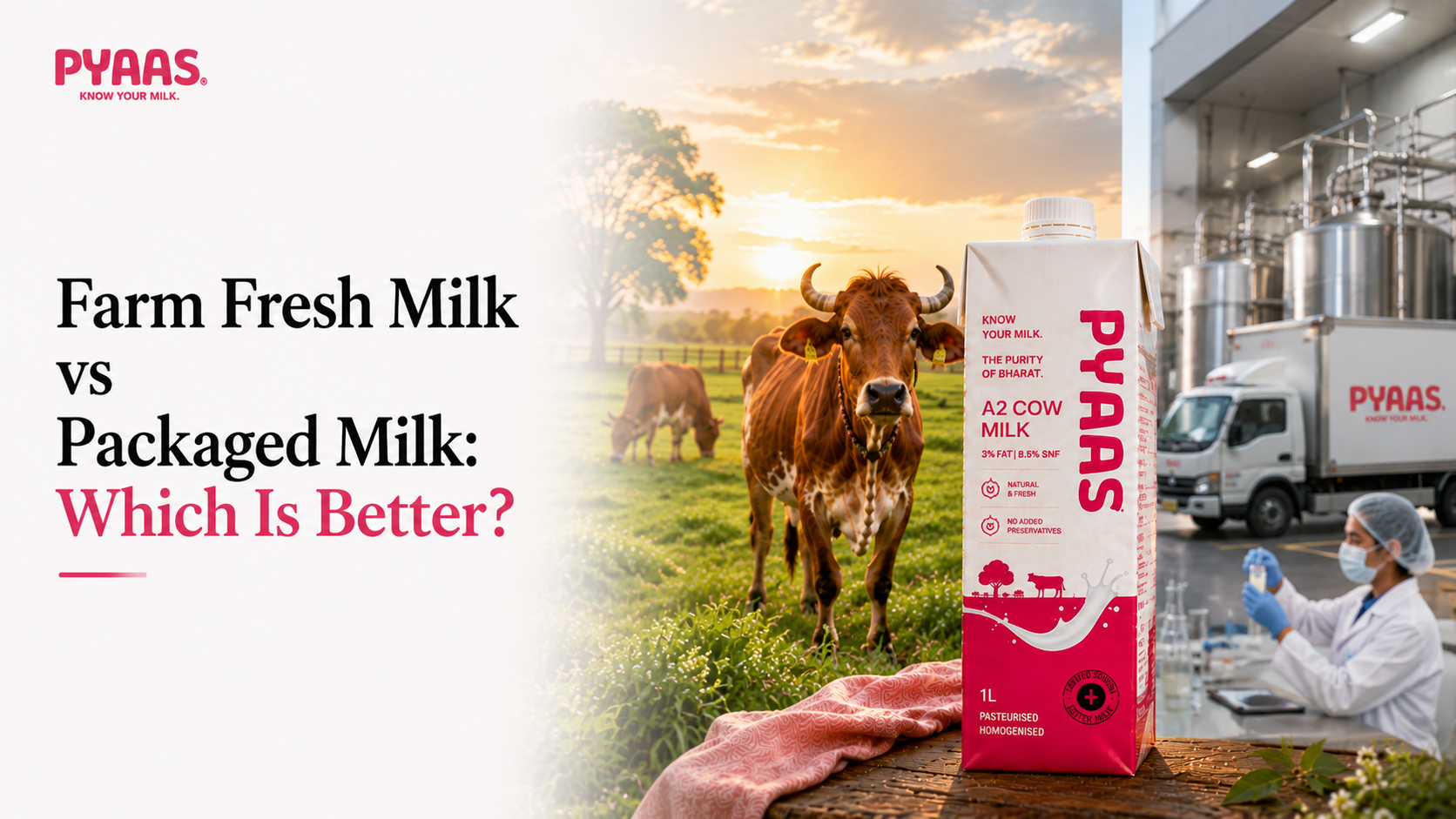
Farm Fresh Milk vs Packaged Milk: Which Is Better for Your Family?
Stand in front of any fridge in Delhi NCR, Lucknow or Ayodhya and the same question comes up: should your family drink farm fresh milk, or is packaged milk the safer, more convenient choice? It feels like a simple decision, but the honest answer is that the label "farm fresh" or "packaged" tells you far less than how the milk was actually sourced, tested and handled before it reached your kitchen.
In this guide we compare farm fresh milk vs packaged milk across the things that genuinely matter to an Indian household: freshness, safety, nutrition, quality control, traceability and everyday convenience. By the end you will have a clear, practical framework for choosing milk you can trust, whichever format you prefer.
What "Farm Fresh Milk" and "Packaged Milk" Actually Mean
Before comparing the two, it helps to define them honestly, because both terms are used loosely in marketing.
Farm fresh milk usually means milk sourced directly from a dairy farm and delivered to your home with minimal handling and a short time between milking and your doorstep. The promise is shorter travel, fewer middlemen and a closer connection to the source.
Packaged milk refers to milk that is processed, quality checked and sealed into cartons or pouches before reaching you through retail shelves or a delivery network. Good packaging is not the enemy: it protects milk from contamination, extends usable life and makes consistent, hygienic distribution possible at scale.
The catch is that "fresh" does not automatically mean clean, and "packaged" does not automatically mean processed beyond recognition. What separates good milk from poor milk is the quality of the supply chain behind it. If you want the bigger picture of that chain, our explainer on how milk reaches your home, the journey from farm to table walks through every step.
Freshness: How Time and Distance Affect Your Milk
Freshness is the headline reason most families lean toward farm fresh milk, and it is a fair one. The shorter the gap between milking and your glass, the better the natural taste and the lower the chance of slow quality loss along the way.
But freshness is not only about distance. It depends on the entire cold chain:
- How quickly the milk is chilled after milking.
- Whether the temperature stays low through transport and storage.
- How soon you actually drink it once it is in your fridge.
A carton of well handled packaged milk delivered the same morning can be fresher in practice than loose "farm fresh" milk that sat warm in an open vessel for hours. The real question is not the format, it is how the freshness is protected and proven. This is exactly why timing transparency matters, and why some brands now show you the exact time the milk left the farm.
Safety and Hygiene: The Part That Should Never Be Compromised
Safety is where the farm fresh milk vs packaged milk debate gets serious. Raw or loosely handled milk can carry harmful bacteria if it is not chilled, tested and packed properly. Packaging and pasteurisation exist to reduce that risk, not to ruin the milk.
If you want to understand the heat treatment that makes most retail milk safe, read our guide to pasteurised milk explained, what it is and why it matters. And because adulteration remains a real worry for Indian families, it is worth knowing the warning signs covered in milk adulteration in India, what consumers need to know.
Whichever format you choose, look for milk from a source that:
- Tests every batch for purity and basic quality, not just occasionally.
- Maintains a cold chain from the farm to your door.
- Follows recognised food safety norms such as the FSSAI framework that governs milk in India.
- Is willing to show its results rather than simply asking you to trust the label.
Nutrition and Quality Control: Sourcing Matters More Than Format
Here is the truth many marketing messages skip: both farm fresh milk and packaged milk can be genuinely nutritious when the cows are healthy and the handling is clean. Milk naturally provides protein, calcium and other nutrients regardless of whether it arrives in a pouch or from a nearby farm.
What changes the experience is the breed of cow, the feed, and how the milk is treated. For example, indigenous A2 cow milk has a different beta-casein profile from common A1 milk, a difference explained simply in A1 vs A2 milk, understanding the difference. If you are choosing for little ones, our parent's guide to choosing quality milk for children is a useful companion read.
Consistent quality control is what turns good milk into reliable milk. A trustworthy dairy checks SNF (solids not fat) and FAT levels batch by batch, so what you buy on Tuesday is as good as what you bought on Monday.
Traceability: The Deciding Factor Modern Families Should Demand
Freshness, safety and nutrition all share one weakness: you usually have to take someone's word for them. Traceability is what removes the guesswork. Instead of choosing between "fresh" and "trustworthy," you get proof.
At PYAAS, we believe the most important question is not farm fresh milk vs packaged milk, but rather: do you actually know your milk? Our single-origin A2 cow milk and small-batch A2 Bilona ghee come from named farms in Gonda, Uttar Pradesh, and every pack carries a QR code. Scan it and you can see the exact farm, the named farmer, that batch's lab test for SNF and FAT, and the time the milk left the farm.
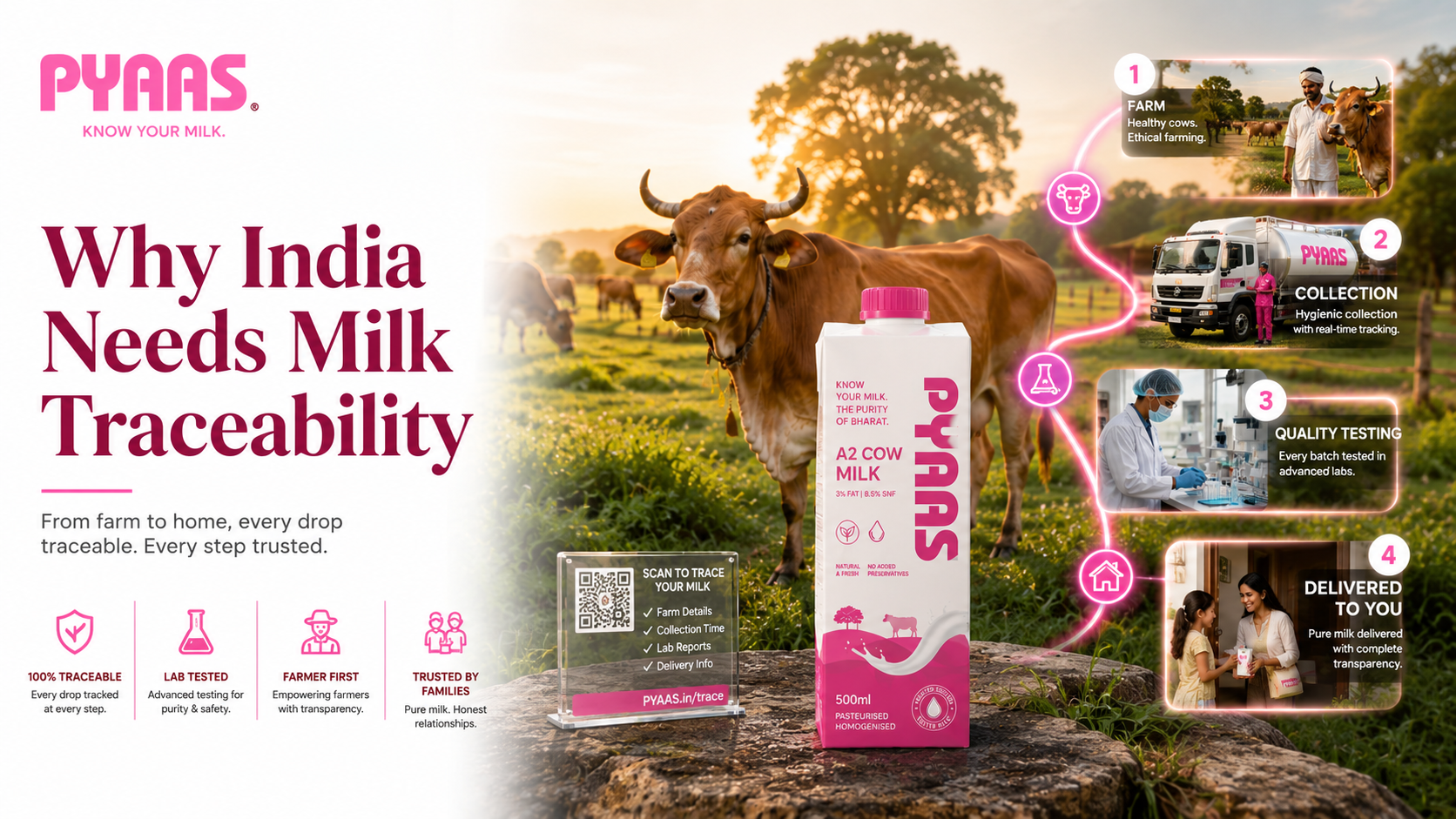
That is the idea behind Know Your Milk, and it is the principle that guides everything from how we choose partners to how we run the PYAAS quality testing process. If you would like to understand why this transparency movement matters for the whole country, see why India needs milk traceability.
So, Which Is Better for Your Family?
The honest verdict is that neither label wins on its own. Poorly handled farm fresh milk can be risky, and a forgettable packaged brand can be uninspiring. The better question is whether the milk, in whatever format, is fresh, safely handled, consistently tested and fully traceable.
Choose milk that proves its quality instead of just claiming it. When you can see the farm, the farmer and the test results behind your pack, the farm fresh milk vs packaged milk debate quietly disappears, because you are no longer guessing. You simply know.
If that is the kind of clarity you want for your family, you can explore our traceable A2 milk and our A2 Bilona ghee whenever you are ready. No pressure, just milk you can actually understand. We would rather you choose us because you can see the proof, not because we told you to.
Written by
PYAAS Team
The PYAAS Team writes about traceable, single-origin A2 cow milk and small-batch A2 Bilona ghee sourced from named farms in Gonda, Uttar Pradesh, helping Indian families truly know their milk.
More from PYAAS TeamCommon questions.
Is farm fresh milk better than packaged milk?
Neither is automatically better. Farm fresh milk can offer a shorter journey from cow to glass, while good packaging protects milk from contamination and extends usable life. What truly matters is whether the milk is chilled quickly, tested for purity and handled hygienically, regardless of the format.
Is packaged milk less nutritious than farm fresh milk?
Not necessarily. Both formats can deliver protein, calcium and other nutrients when the cows are healthy and the milk is handled properly. Processing like pasteurisation is designed to make milk safe, not to strip away its core nutrition, so sourcing and handling matter more than the format itself.
Is loose farm fresh milk safe to drink without boiling?
Loose or raw milk can carry harmful bacteria if it is not chilled, tested and packed properly, so many families boil it as a precaution. Milk from a source that tests every batch and maintains a proper cold chain is far safer. Always choose milk you can verify rather than relying on the word fresh alone.
How can I tell if my milk is genuinely fresh and pure?
Look beyond the label and check for proof. The most reliable sign is traceability, where you can see the source, the batch test results and how recently the milk was collected. With PYAAS, a QR code on the pack shows the exact farm, the named farmer and that batch's SNF and FAT test.
What should I look for when choosing milk for my family?
Prioritise freshness backed by a strong cold chain, batch by batch safety testing, healthy cow sourcing and clear traceability. Brands that follow FSSAI norms and are willing to show their results, rather than just claim quality, are usually the safest choice for everyday family use.
Get the next one in your inbox.
The occasional note on milk, ghee, and how we work. Plain words, no hype, and you can leave any time.
Keep reading.
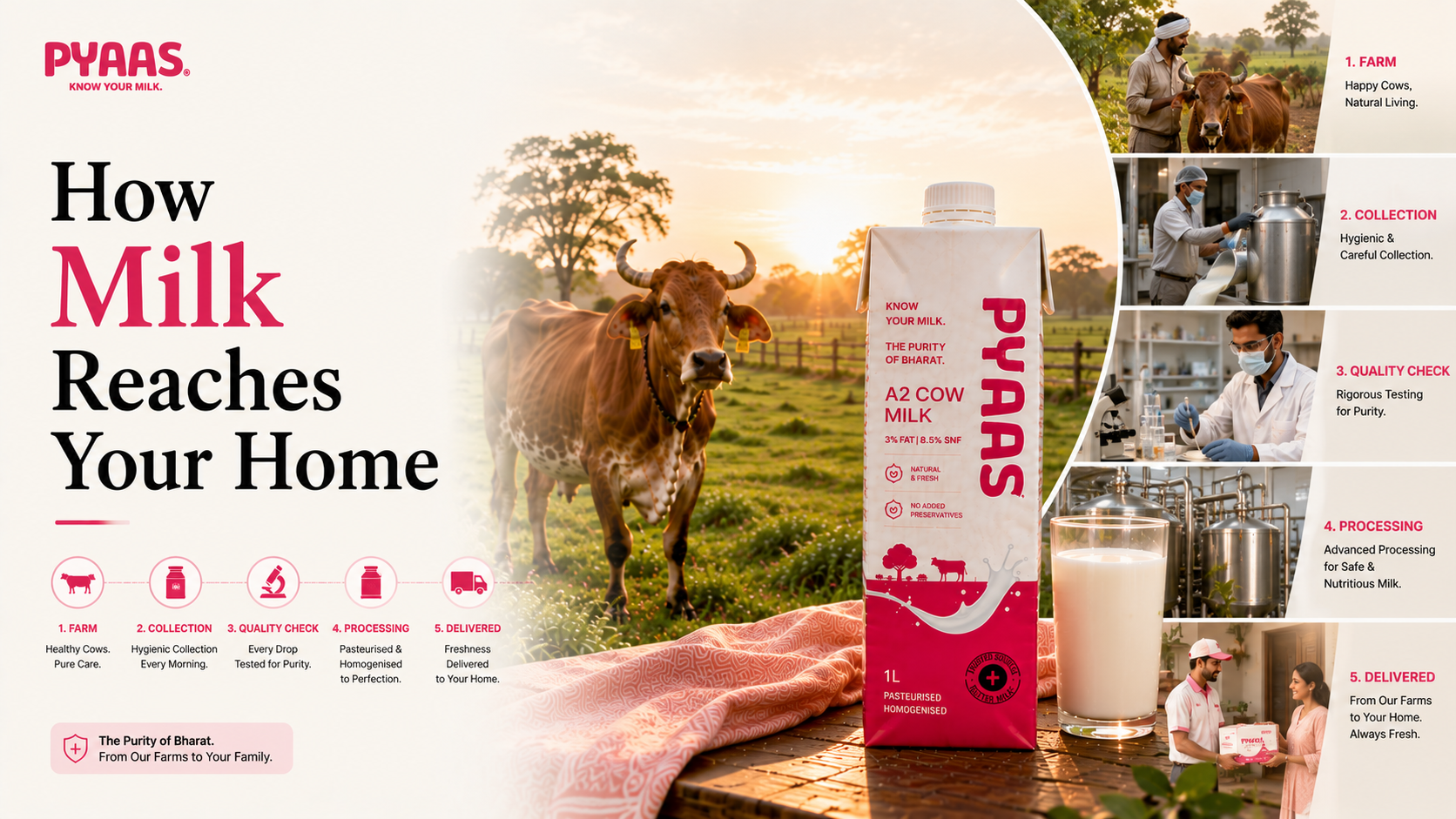
How Milk Reaches Your Home: The Journey from Farm to Table
11 July 2026
Pasteurised Milk Explained: What It Is and Why It Matters
11 July 2026
Milk Adulteration in India: What Consumers Need to Know
28 June 2026
Best Milk for Children: A Parent's Guide to Choosing Quality Milk
9 July 2026