Pasteurised Milk Explained: What It Is and Why It Matters
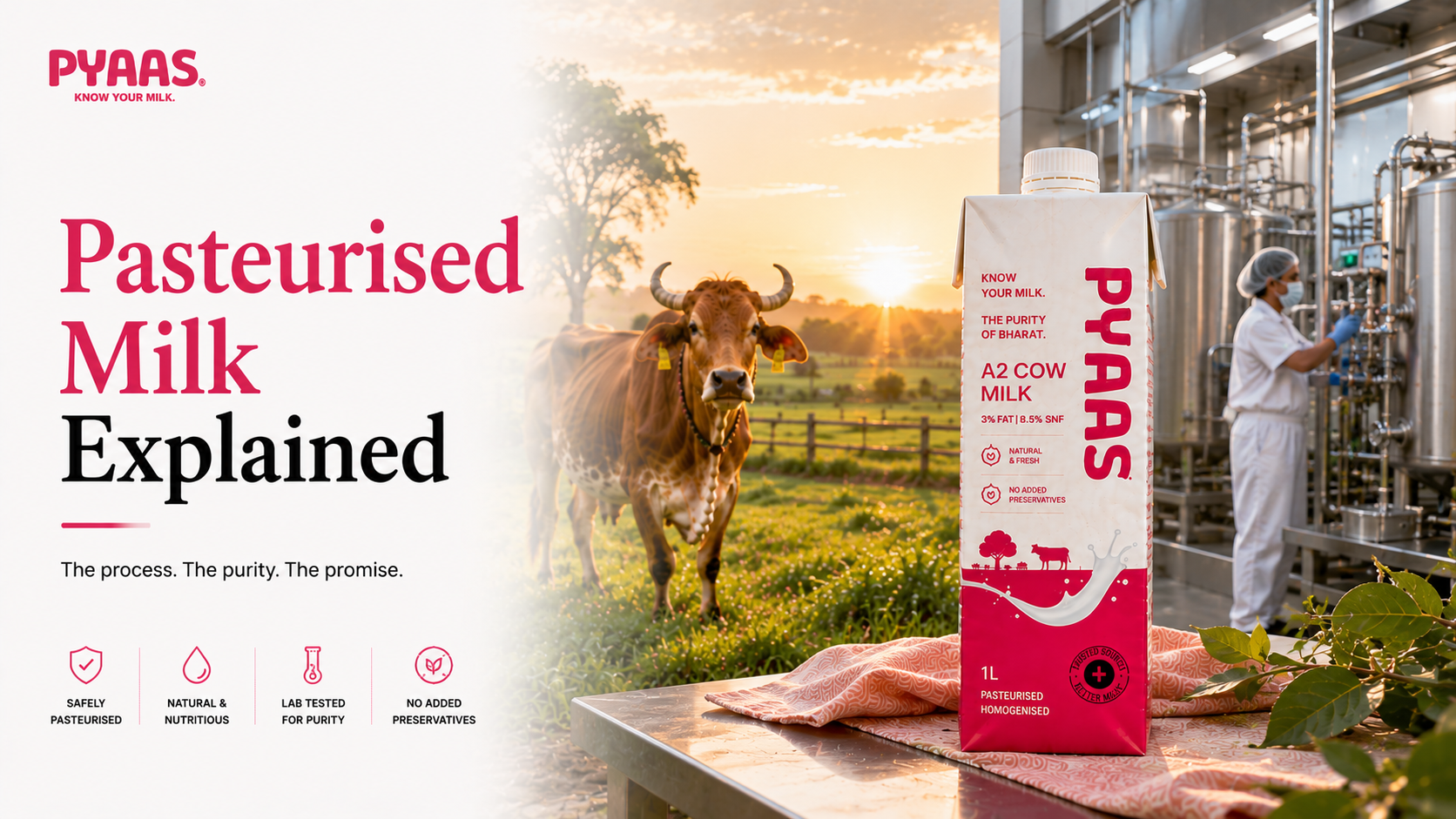
Walk down any milk aisle in India and you will see the word pasteurised printed on almost every carton and pouch. Most of us have read it a hundred times without ever asking what it actually means. Pasteurised milk is simply milk that has been gently heated to a precise temperature for a set time, then quickly cooled, in order to reduce harmful microorganisms while keeping the milk safe, fresh and nourishing for your family.
In this guide we explain what pasteurised milk is, how the process works, what it does to nutrition, and why it matters for households across Delhi NCR, Lucknow and Ayodhya. We will also be honest about its limits, because at PYAAS we believe good milk should come with good information. Pasteurisation makes milk safer, but it does not tell you which farm the milk came from or how that batch was tested. That is a separate promise, and it is the one we care about most.
What Is Pasteurised Milk?
Pasteurised milk is fresh milk that has been heat-treated to lower the number of harmful bacteria it may carry. The method is named after the French scientist Louis Pasteur, who discovered in the 1860s that heating a liquid for a short period could dramatically reduce spoilage organisms. The same principle is now one of the most trusted food-safety practices in the world.
Raw milk straight from a cow is a living, natural product. Even on a clean, well-run farm, it can pick up microorganisms from the environment, the equipment or handling. Pasteurisation is designed to address that risk without boiling the milk or stripping away what makes it valuable. The goal is balance: safer milk that still tastes like milk and still feeds your family well.
How Does Pasteurisation Work?
The process sounds technical, but the idea is gentle and simple. Milk is heated to a specific temperature, held there for a controlled length of time, and then rapidly cooled. The rapid cooling is just as important as the heating, because it locks in freshness and slows any remaining activity.
Common Methods of Pasteurisation
- HTST (High Temperature Short Time): The most widely used method, where milk is heated briefly and then cooled quickly. This is the standard you will find behind most everyday packaged milk.
- LTLT (Low Temperature Long Time): An older, gentler batch method that heats milk to a lower temperature for a longer time.
- UHT (Ultra High Temperature): A much higher heat for a very short burst, used for long-life milk that can sit on a shelf unopened for months.
The right method depends on how the milk will be packed, shipped and stored. What stays constant is the intent: reduce risk while protecting taste and goodness.
Does Pasteurisation Change Milk Nutrition?
This is the question worried parents ask most, and the honest answer is reassuring. Pasteurised milk keeps the nutrients families rely on. You still get high-quality protein, calcium, and important vitamins that support growing children and active adults. Minor changes to a few heat-sensitive vitamins can occur, but the core nutritional value of milk remains largely intact.
If you want to understand exactly what your glass delivers, our breakdown of milk nutrition facts and what is really inside your glass walks through protein, fat, calcium and more in plain language. Pasteurisation does not undo that goodness. It is a safety step layered on top of an already nourishing food.
Pasteurised Milk vs Raw Milk
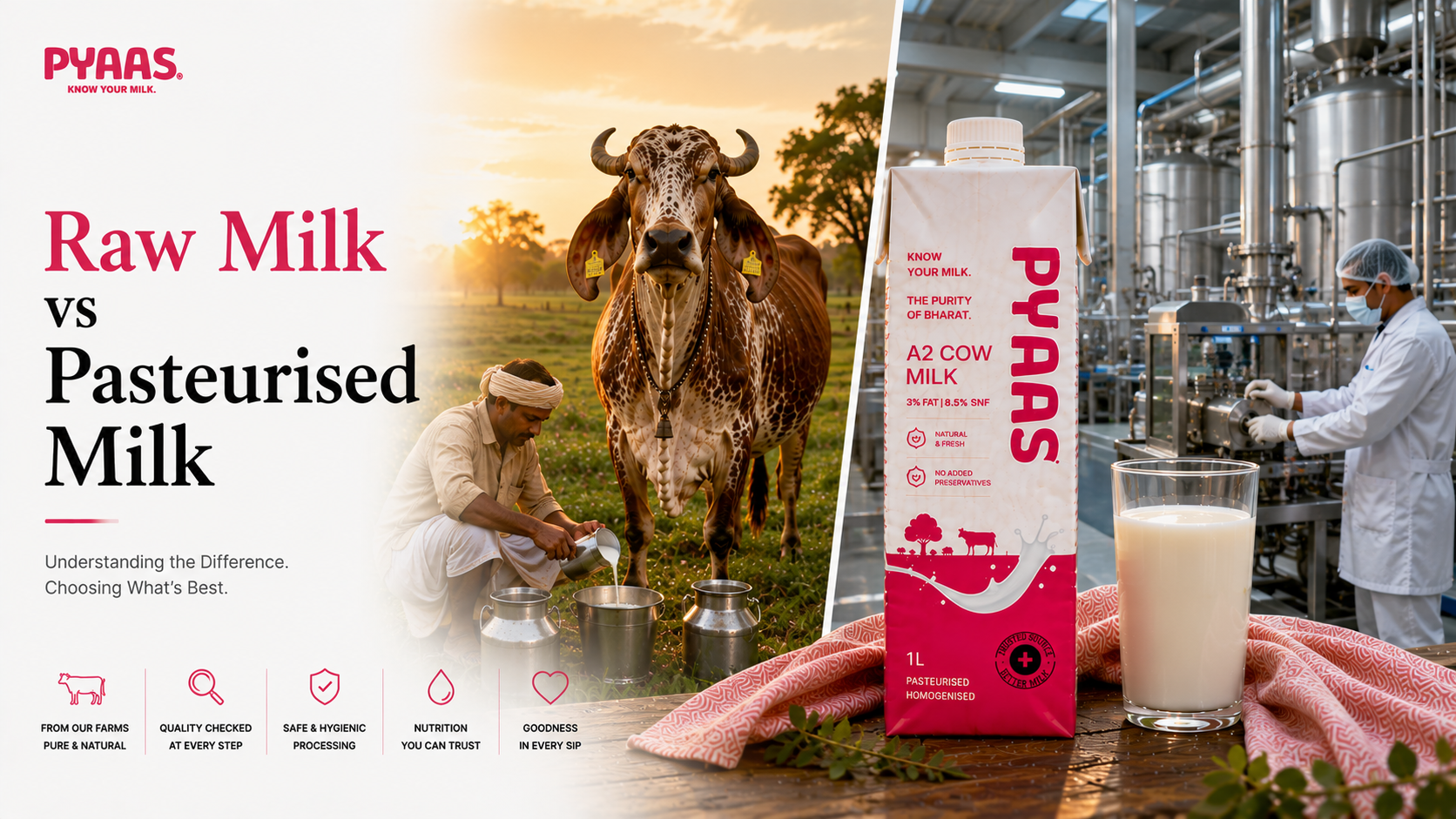
One of the most common dairy debates is pasteurised versus raw milk. Raw milk is milk that has not been heat-treated at all. Some people prefer the idea of milk in its most natural state, and we respect that curiosity. However, raw milk also carries a higher risk of harmful bacteria, which is why most food-safety authorities, including bodies that set standards in India, recommend pasteurisation for general consumption.
Pasteurised milk offers more consistency and a longer, safer shelf life, especially for vulnerable family members such as young children, pregnant women and the elderly. If you are weighing both sides carefully, our detailed comparison of raw milk vs pasteurised milk lays out the differences without scaremongering, so you can decide what suits your home.
Pasteurised, Homogenised, Toned: Clearing the Confusion
Milk labels are full of terms that get muddled together. Pasteurisation is about safety. Homogenisation is a separate process that breaks down fat globules so the cream does not separate and rise to the top. They are often done together but they are not the same thing. To see why your milk stays uniform in the carton, read our guide to homogenised milk explained.
Beyond processing, families also choose between packaged milk and fresh local milk. If you are still deciding what is best for your table, our honest look at farm fresh milk vs packaged milk compares freshness, safety and trust side by side.
Why Pasteurisation Matters but Is Not Enough
Pasteurisation solved a huge problem: it made milk safe to move across cities and into millions of homes. As supply chains grew longer, it became essential infrastructure for the modern dairy industry. We are genuinely grateful for it.
But here is the truth we want every family to hear. A pasteurised label tells you the milk was heat-treated. It does not tell you which farm the milk came from, whether that batch was tested for purity, or whether anything was added along the way. Safety from heat is not the same as honesty about source. Sadly, that gap is where problems hide. To understand the real-world stakes, see what we have written about milk adulteration in India and what consumers need to know.
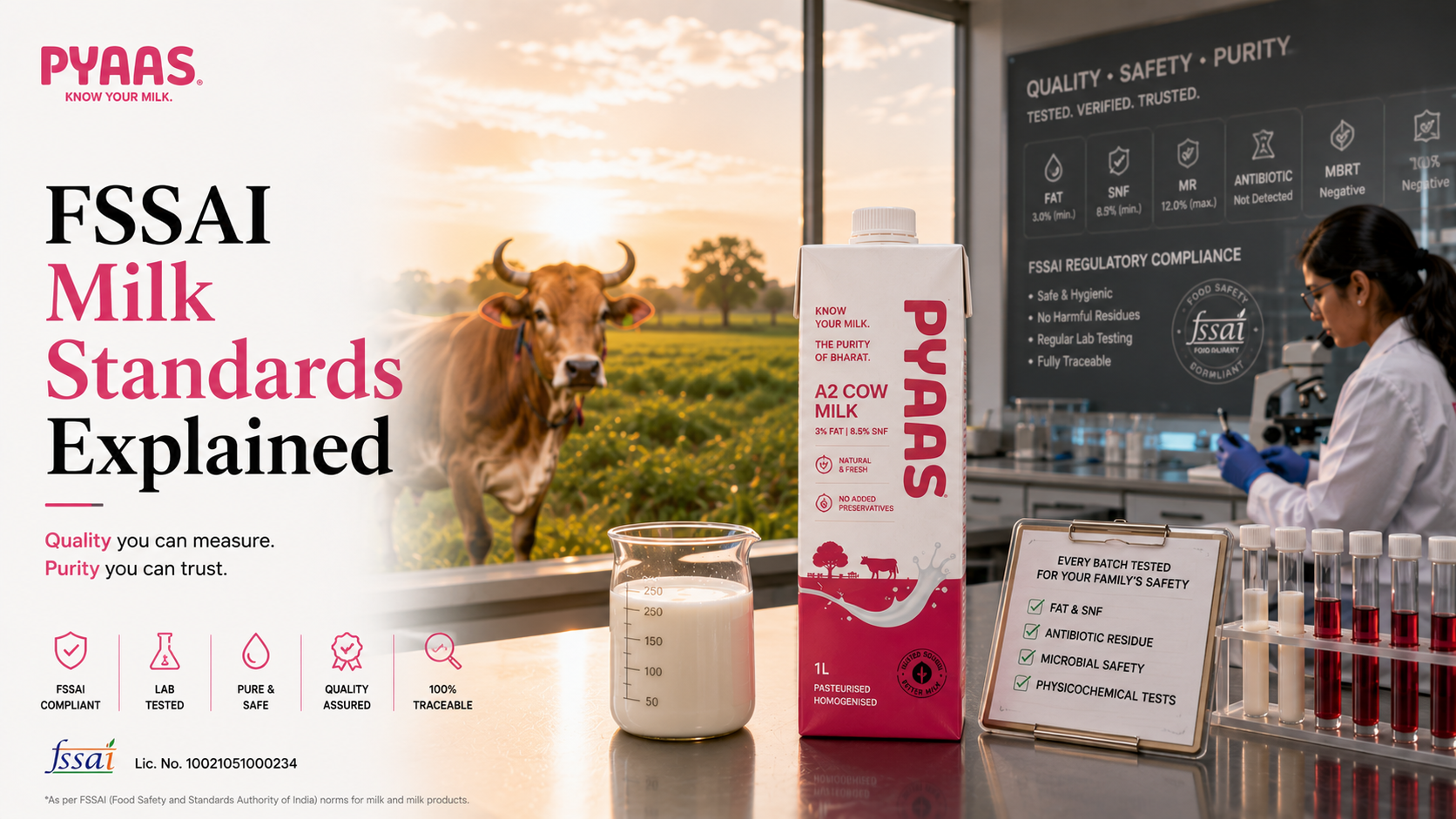
Responsible dairy goes further than heat treatment alone. It invests in farm selection, regular quality checks and clear standards. Regulatory frameworks help too, and you can learn how oversight works in our explainer on FSSAI milk standards in India.
The PYAAS Approach: Safe and Traceable
At PYAAS, we believe quality begins at the farm and continues through every step. Our single-origin A2 cow milk is sourced from named farms in Gonda, Uttar Pradesh, and delivered fresh to Delhi NCR, Lucknow and Ayodhya. We do not stop at the word pasteurised on the pack.
Every PYAAS carton and pouch carries a QR code. Scan it and you can see the exact farm, the named farmer, that batch's lab test results for SNF and FAT, and the time the milk left the farm. That is what we mean by transparency. It is the difference between trusting a label and actually being able to check it. The same care goes into our small-batch A2 Bilona ghee, made the traditional way from genuinely traceable milk.
To see the full philosophy behind it, visit our Know Your Milk page, where we explain how traceability turns a simple promise into something you can verify with your own eyes.
The Bottom Line
Pasteurised milk is heat-treated milk that is safer for everyday drinking while keeping the protein, calcium and goodness families count on. It is a vital safety step, and you should feel confident choosing it for your home. Just remember that safety and traceability are two different promises. Pasteurisation protects you from one risk. Knowing your source protects you from the rest.
If you have ever wished you could simply scan your milk and see exactly where it came from, that is the future we are quietly building, one honest batch at a time. We would be glad to have your family along for the journey.
Written by
PYAAS Team
The PYAAS Team writes about dairy honestly, helping Indian families understand what is in their milk and how to choose well. PYAAS delivers traceable, single-origin A2 cow milk and small-batch A2 Bilona ghee across Delhi NCR, Lucknow and Ayodhya.
More from PYAAS TeamCommon questions.
What is pasteurised milk in simple terms?
Pasteurised milk is fresh milk that has been heated to a specific temperature for a set time, then quickly cooled, to reduce harmful microorganisms. The process keeps milk safer to drink while protecting its taste and core nutrition. It is one of the most widely trusted food-safety practices in the world.
Does pasteurisation destroy the nutrients in milk?
No, pasteurised milk keeps the nutrients families rely on, including protein, calcium and most vitamins. There may be minor changes to a few heat-sensitive vitamins, but the overall nutritional value remains largely intact. You still get the goodness of milk, with an added layer of safety.
Is pasteurised milk safer than raw milk?
For general consumption, yes. Raw milk has not been heat-treated and can carry a higher risk of harmful bacteria. Pasteurised milk offers more consistency and a safer choice, which is why food-safety authorities recommend it, especially for children, pregnant women and the elderly.
What is the difference between pasteurised and homogenised milk?
Pasteurisation is about safety, as it uses heat to reduce harmful microorganisms. Homogenisation is a separate process that breaks down fat globules so the cream does not rise to the top. They are often done together, but they serve completely different purposes.
Does a pasteurised label tell me where my milk came from?
No. A pasteurised label only confirms the milk was heat-treated for safety. It does not reveal the farm, the farmer, or whether that batch was tested for purity. This is why PYAAS adds a QR code so you can trace the exact farm, the named farmer and that batch's lab results.
Get the next one in your inbox.
The occasional note on milk, ghee, and how we work. Plain words, no hype, and you can leave any time.
Keep reading.
Raw Milk vs Pasteurised Milk: Understanding the Differences
12 July 2026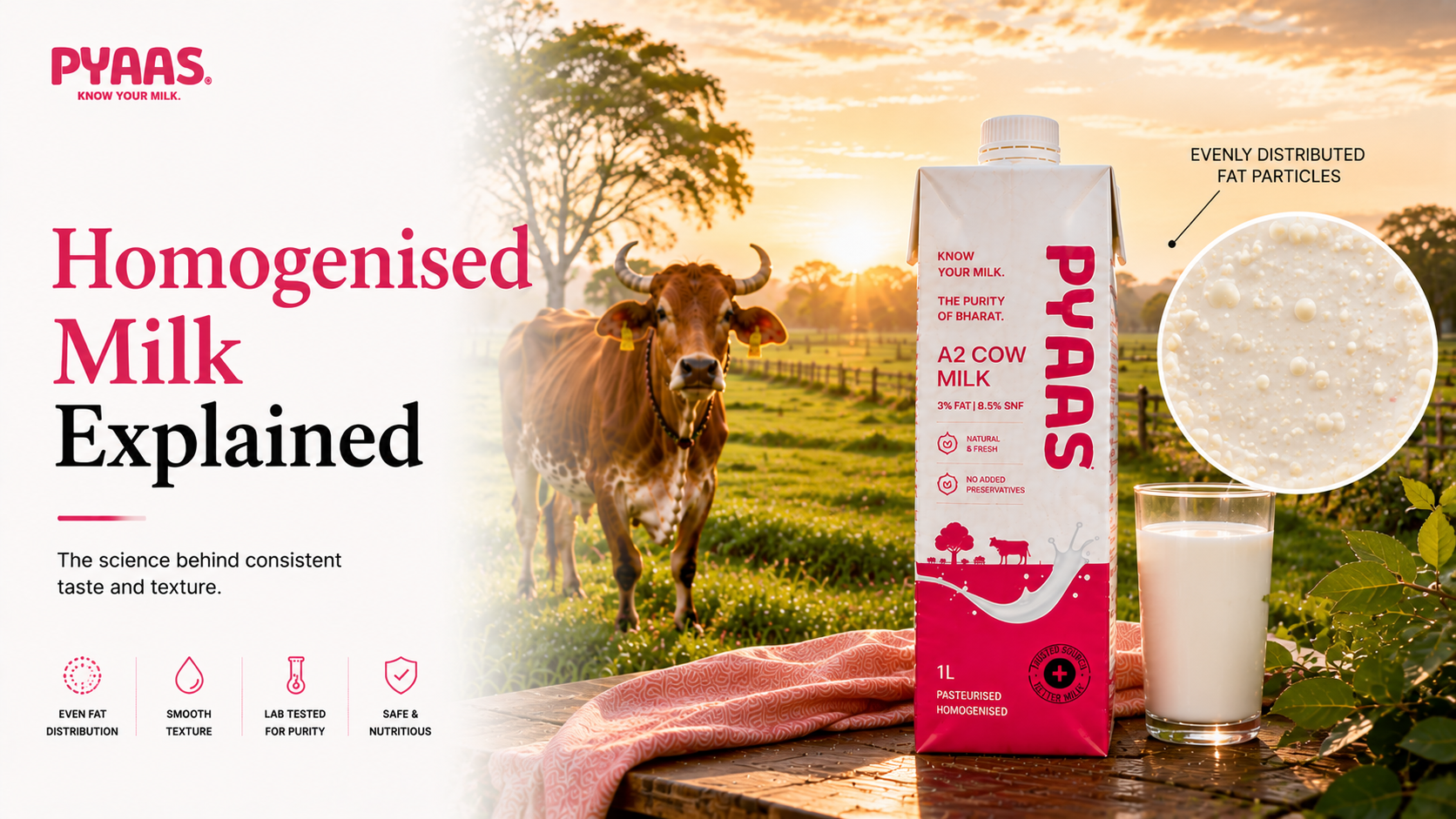
Homogenised Milk Explained: Everything You Need to Know
11 July 2026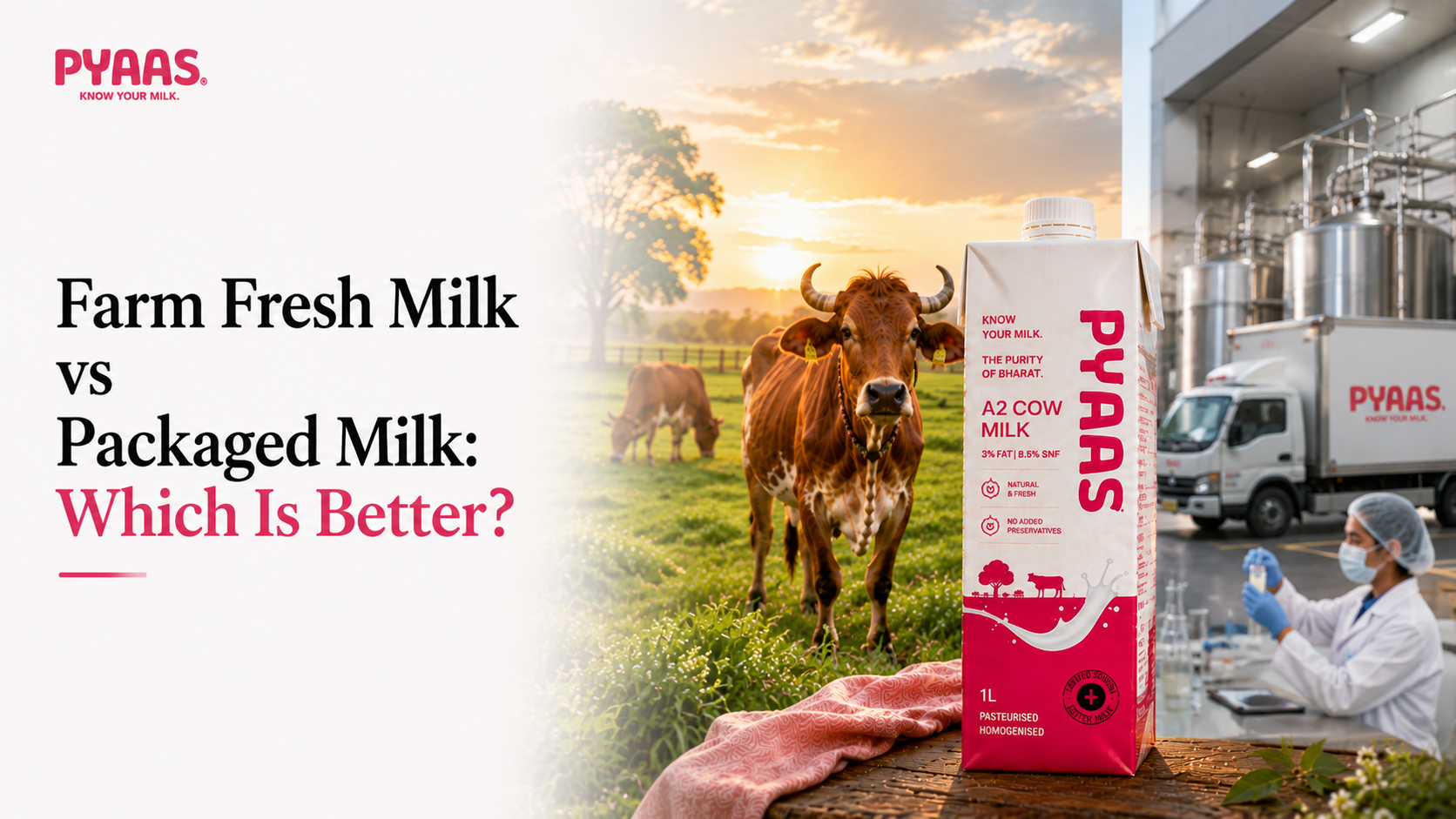
Farm Fresh Milk vs Packaged Milk: Which Is Better for Your Family?
9 July 2026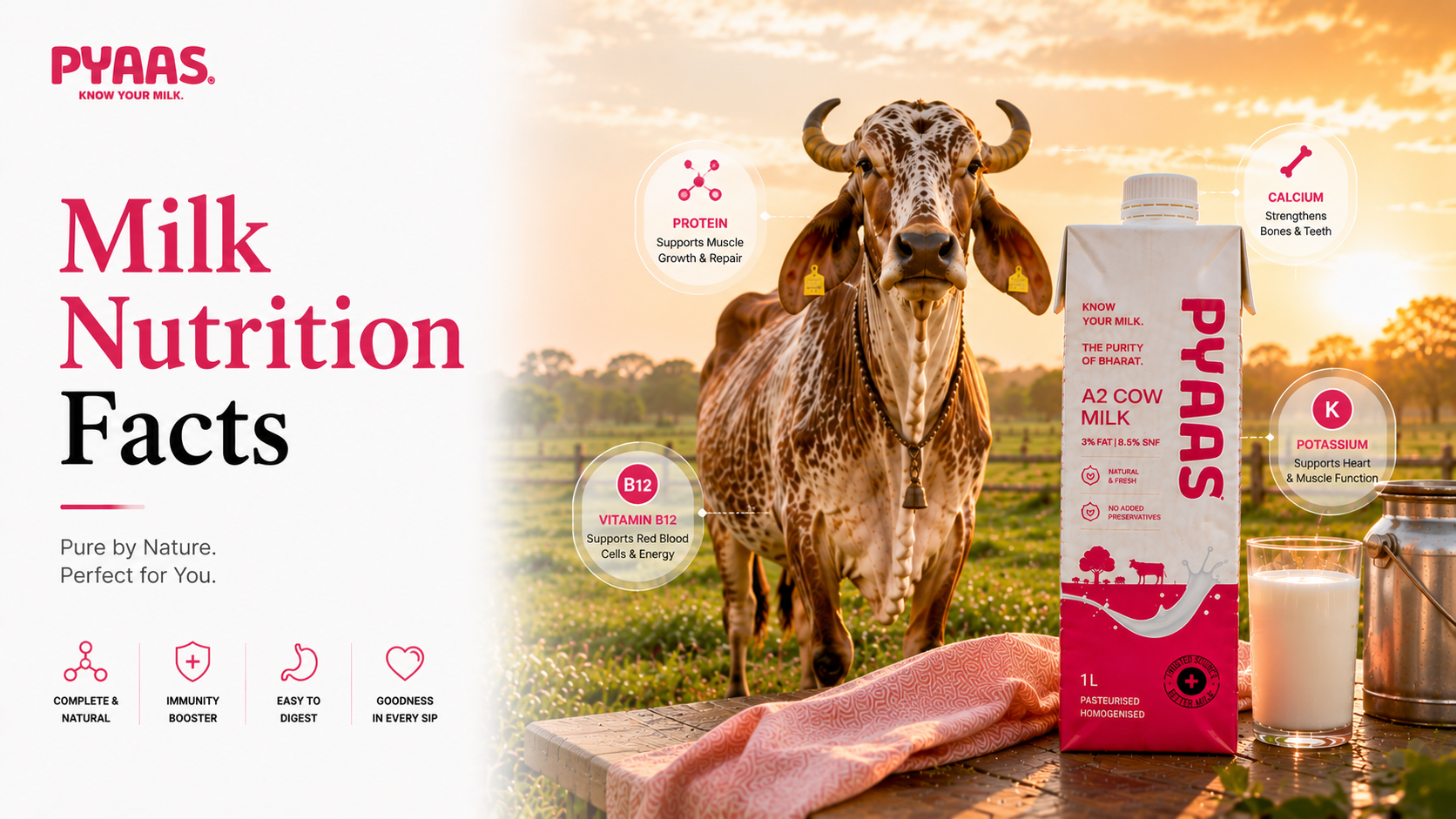
Milk Nutrition Facts: What Is Really Inside Your Glass of Milk?
12 July 2026