Milk Nutrition Facts: What Is Really Inside Your Glass of Milk?
Milk has been part of Indian kitchens for thousands of years, poured into morning chai, warmed before bed and stirred into the first meals a child ever eats. Yet most of us drink it on faith. We trust that the glass in front of us is nourishing, fresh and pure, without ever knowing exactly what is inside it. Understanding the real milk nutrition facts is the first step toward making a more confident choice for your family, because what is really inside your glass of milk shapes bone strength, energy and everyday health.
This guide breaks down the essential nutrients in milk, the role each one plays in the body, how processing affects them and, most importantly, why the source of your milk matters just as much as the nutrition label. At PYAAS, we believe families deserve to Know Your Milk down to the farm, the farmer and the lab test behind every batch.
What Is Really Inside a Glass of Milk?
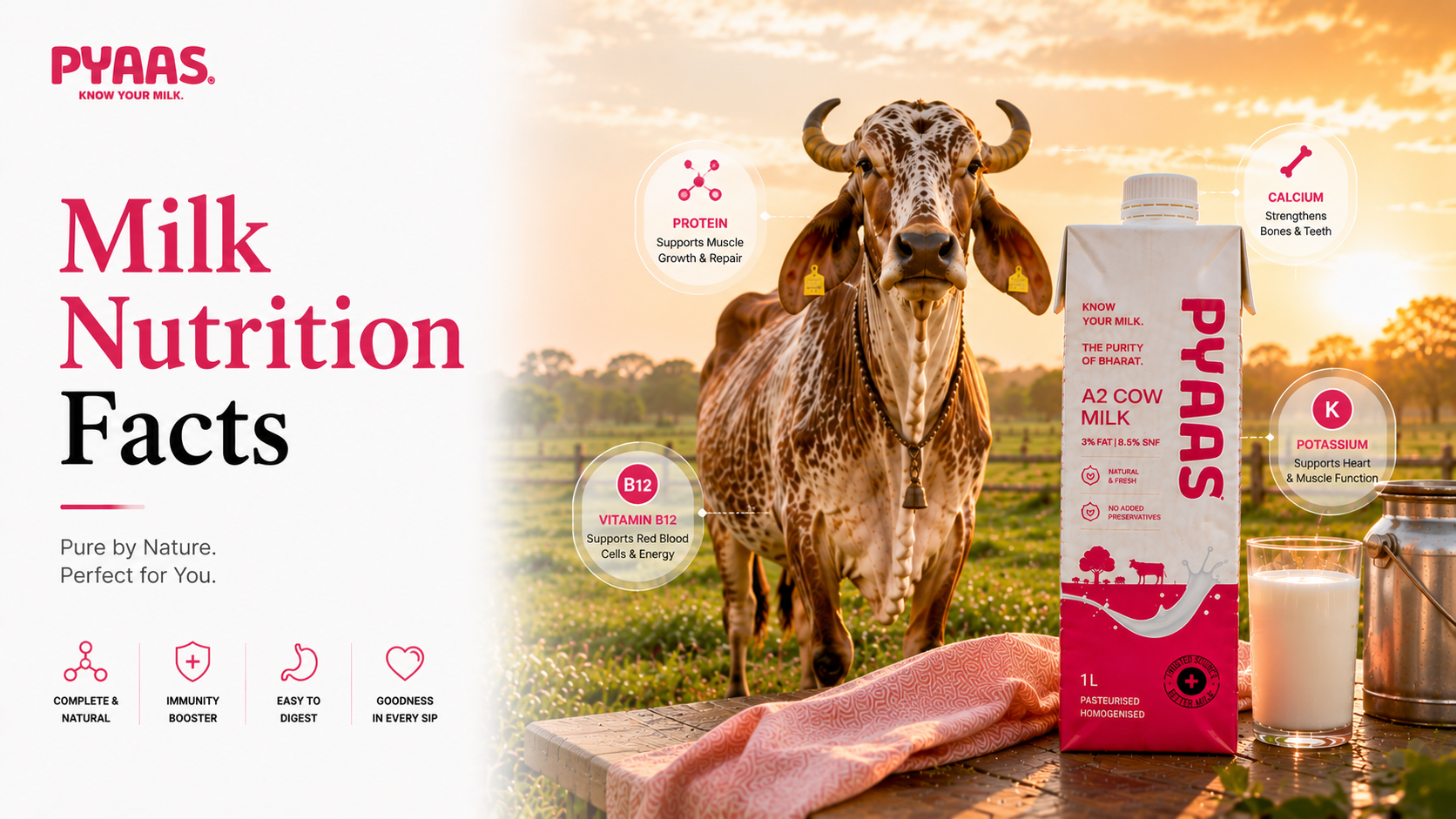
A single glass of cow milk is a complete package of macronutrients and micronutrients working together. Rather than offering one nutrient in isolation, milk delivers a naturally balanced mix that the body can use efficiently. The core components you will find in most fresh cow milk include:
- Protein: high-quality protein containing all the essential amino acids the body cannot make on its own.
- Calcium: the mineral most associated with milk, central to bones and teeth.
- Fat: a source of energy and the carrier for fat-soluble vitamins.
- Carbohydrate (lactose): milk's natural sugar, providing quick energy.
- Vitamins: including B12, riboflavin (B2) and vitamin A.
- Minerals: such as potassium, phosphorus and magnesium.
- Water: milk is mostly water, which is why hydration and freshness matter.
Two numbers you may have seen on dairy packs, SNF (solids-not-fat) and FAT, summarise much of this. FAT is the cream content, while SNF captures the protein, lactose and minerals. Together they are a useful shorthand for how rich and nutritious a batch of milk truly is.
The Key Nutrients in Milk and What They Do
Protein for Growth and Repair
Milk is prized for its high-quality protein, made up mainly of casein and whey. These proteins supply the essential amino acids needed for building and repairing muscle, supporting growth in children and helping the body recover after activity. For many Indian families, milk is one of the simplest everyday sources of complete protein, which is part of why it features so heavily in diets for growing kids and active adults.
Calcium and Phosphorus for Strong Bones
Calcium is the headline mineral in milk, and for good reason. It contributes to strong bones and teeth, supports normal muscle function and plays a role in nerve signalling. Working alongside phosphorus and vitamin D, calcium helps the skeleton stay dense and resilient across every stage of life. If you want to go deeper, our piece on why milk is important for bone health explains the science in plain language.
Vitamin B12 and Riboflavin for Energy
Milk naturally contains vitamin B12, a nutrient that supports the nervous system, the formation of red blood cells and normal energy metabolism. Because B12 is found mainly in animal-based foods, milk is an especially valuable source for vegetarian households across India. Riboflavin (vitamin B2) joins it in helping the body convert food into usable energy.
Potassium, the Overlooked Mineral
Many people focus so heavily on calcium that they overlook the potassium naturally present in milk. Potassium helps maintain normal blood pressure, supports muscle function and works to keep the body's fluid balance steady. It is a quiet but meaningful part of what makes milk more than just a calcium drink.
How Processing Changes Your Milk
The journey from udder to glass involves a few common steps, and each one affects what you finally drink. Pasteurisation uses controlled heat to make milk safe by reducing harmful microbes, while keeping the bulk of its nutrition intact. Homogenisation breaks down fat globules so the cream does not separate, giving a uniform texture. Both are standard, well-understood methods designed for safety and consistency.
It helps to understand these processes rather than fear them. Our explainers on pasteurised milk and why it matters and homogenised milk walk through exactly what happens and why. The richness of your milk also depends on the type you choose. If you are weighing creaminess against lighter options, comparing toned milk and full cream milk is a good place to start.
Why the Type and Source of Milk Matters
Two glasses of milk can show similar nutrition on paper yet be very different in reality. The breed of cow, the protein it produces and the way the milk is handled all shape the final product. This is why so many families now ask about A2 milk and how it differs from regular milk, since indigenous Indian cows naturally produce the A2 type of beta-casein protein that some people find gentler on digestion.
Nutrition is only half the story. A glass of milk is only as trustworthy as the supply chain behind it. Adulteration, unclear sourcing and long, opaque distribution chains can quietly undermine the very nutrients you are paying for. That is why traceability has become so important to modern consumers, and why we built PYAAS around it.
- Look for freshness: the sooner milk reaches you after milking, the better its quality.
- Look for honest sourcing: a trustworthy brand should tell you where the milk comes from.
- Look for proof, not just claims: lab values like SNF and FAT, shared openly, mean more than marketing words.
How PYAAS Helps You Know What Is in Your Glass
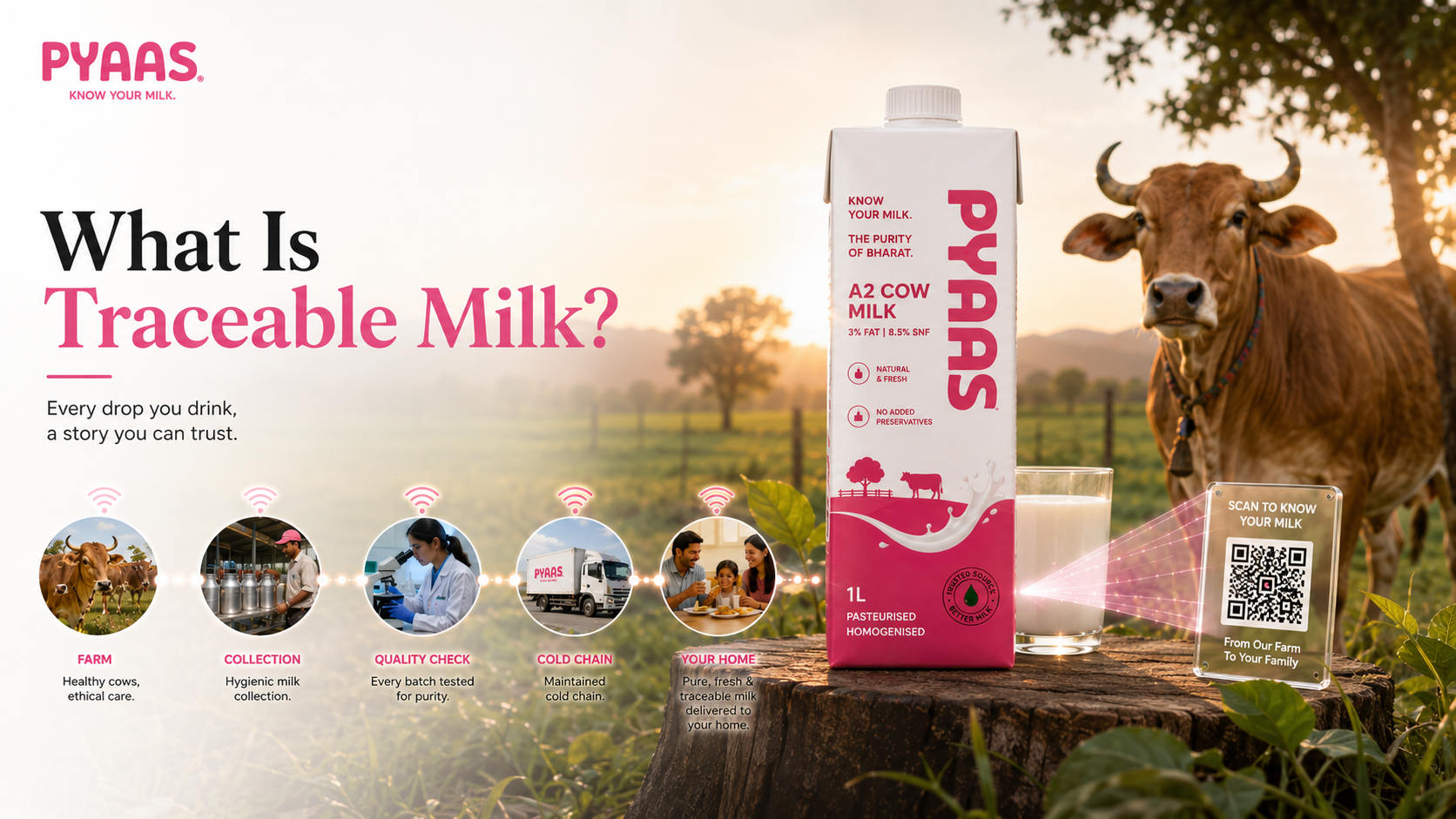
At PYAAS, we believe consumers deserve more than a label. Our single-origin A2 cow milk comes from named farms in Gonda, Uttar Pradesh, and is delivered fresh across Delhi NCR, Lucknow and Ayodhya. Every pack carries a QR code you can scan to see the exact farm, the named farmer, that batch's lab test for SNF and FAT, and the time the milk left the farm. That is what full traceability looks like in practice, and you can read more about why modern consumers want traceable milk.
The same care extends to our slow-churned A2 Bilona ghee, made in small batches from the same trusted milk. The story behind all of it begins with our founding family and a simple belief: that knowing your milk should not be a luxury.
Milk remains one of the most nutrient-dense foods you can give your family, offering protein, calcium, vitamins and minerals in a single, familiar glass. The best thing you can do is choose milk you can actually trace back to its source. When you can see the farm, the farmer and the test behind your milk, every glass becomes a little more reassuring. Know Your Milk.
Written by
PYAAS Team
The PYAAS Team writes about milk, nutrition and dairy transparency for Indian families, drawing on our work sourcing traceable, single-origin A2 cow milk from named farms in Gonda, Uttar Pradesh.
More from PYAAS TeamCommon questions.
What nutrients are inside a glass of milk?
A glass of cow milk contains high-quality protein, calcium, fat, lactose (its natural sugar), vitamins such as B12 and riboflavin, and minerals like potassium and phosphorus. It is mostly water, which is why freshness matters. These nutrients work together to support bones, muscles and everyday energy.
Is milk a good source of protein?
Yes. Milk provides high-quality protein made up of casein and whey, which together supply all the essential amino acids the body cannot make on its own. This protein supports muscle growth, repair and recovery. For many vegetarian families in India, milk is one of the simplest sources of complete protein.
Does pasteurisation reduce the nutrients in milk?
Pasteurisation uses controlled heat to make milk safe by reducing harmful microbes, while keeping the bulk of its nutrition intact. The core protein, calcium and minerals remain largely unaffected. It is a standard, well-understood method designed to protect families without sacrificing nutritional value.
What do SNF and FAT mean on a milk pack?
FAT refers to the cream content of the milk, while SNF (solids-not-fat) captures the protein, lactose and minerals. Together they are a useful shorthand for how rich and nutritious a batch of milk is. When a brand shares these lab values openly, it is a sign of genuine transparency.
How can I be sure the milk I buy is genuinely nutritious?
Look for freshness, honest sourcing and proof rather than just claims. Milk that reaches you soon after milking, from a named farm, with openly shared lab values, is far easier to trust. PYAAS milk carries a QR code so you can scan and see the farm, the farmer and that batch's SNF and FAT results.
Get the next one in your inbox.
The occasional note on milk, ghee, and how we work. Plain words, no hype, and you can leave any time.
Keep reading.
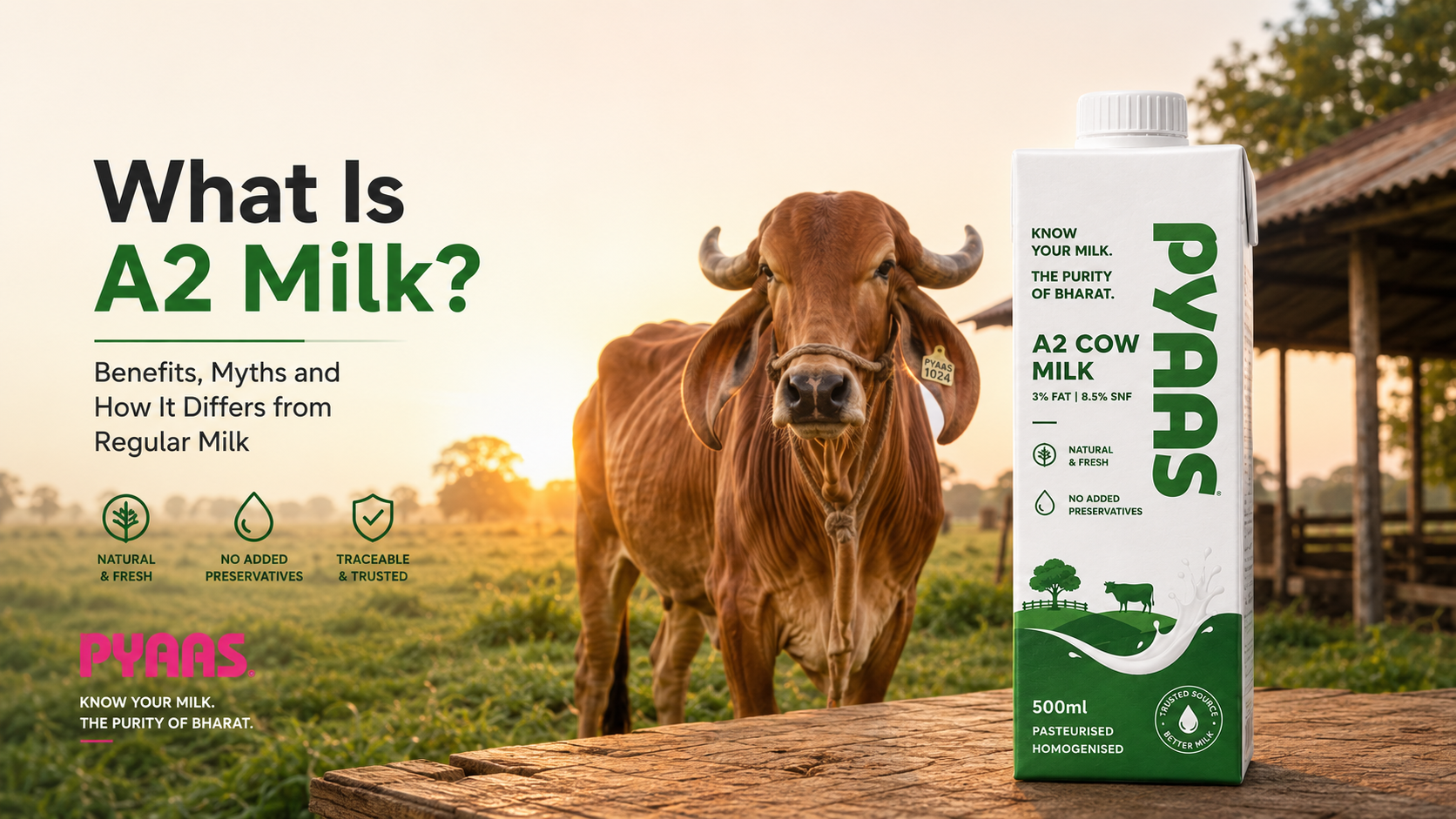
What Is A2 Milk? Benefits, Myths and How It Differs from Regular Milk
4 July 2026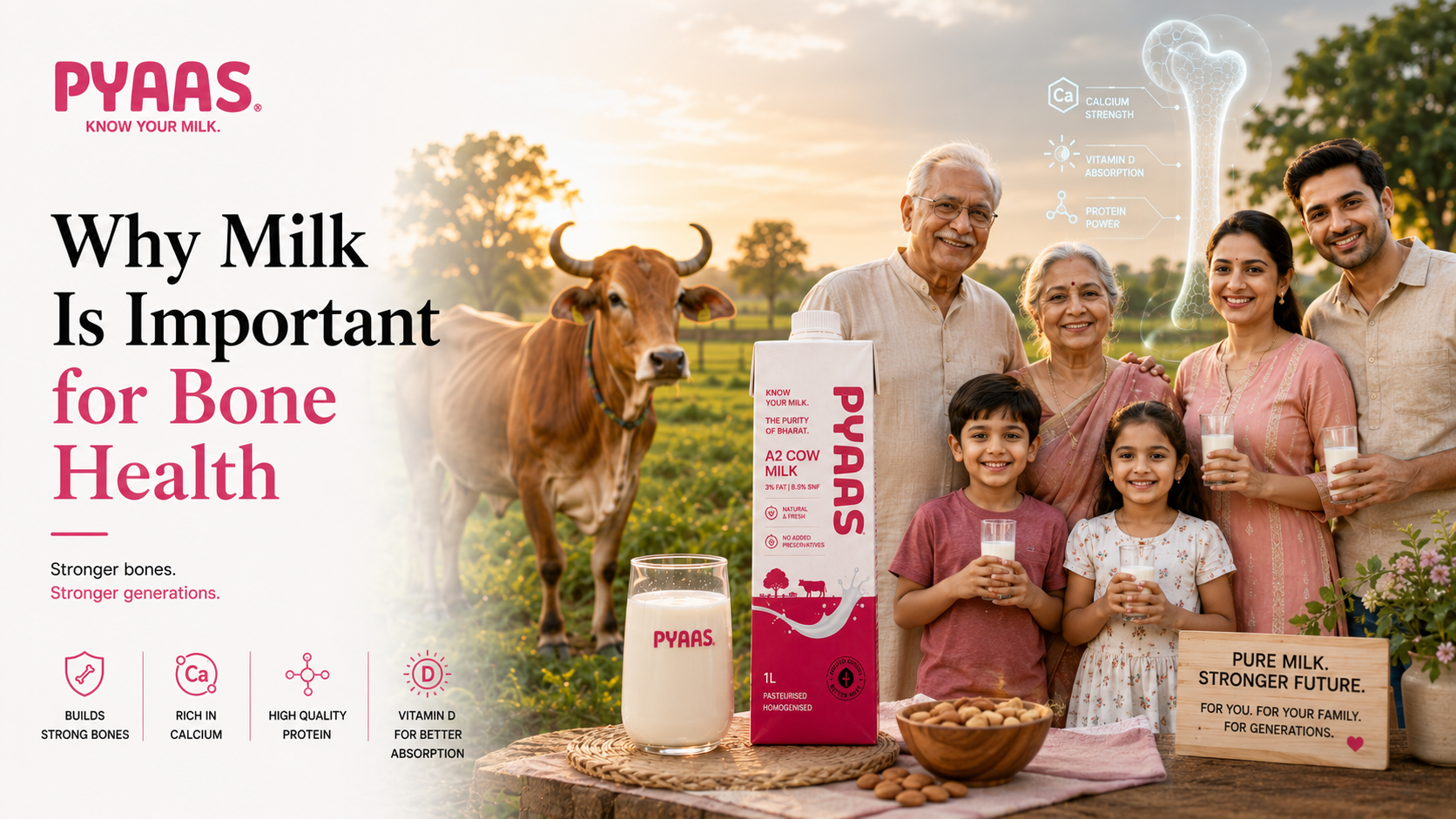
Why Milk Is Important for Bone Health: Understanding the Science
6 July 2026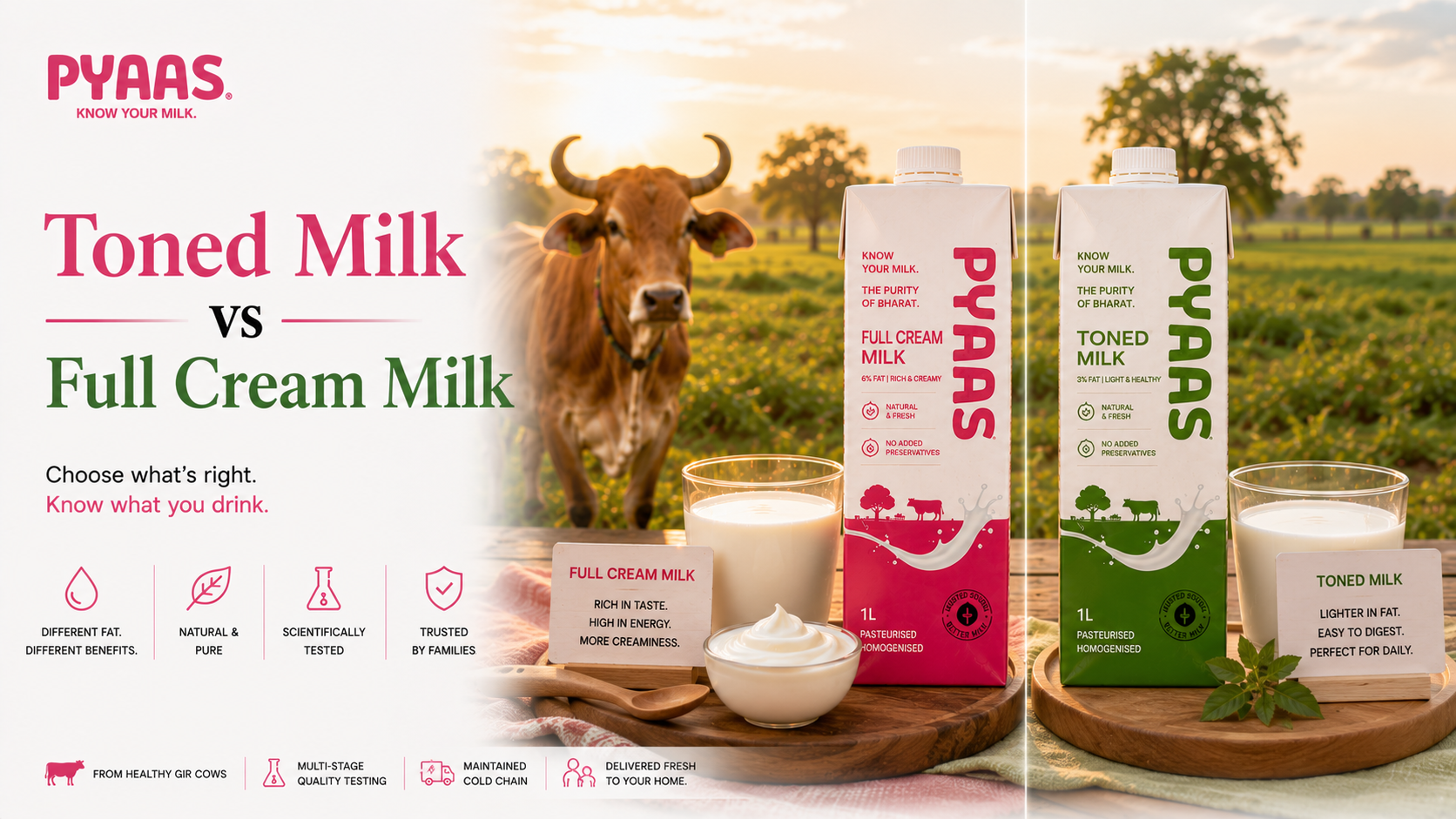
Toned Milk vs Full Cream Milk: Which One Should You Choose?
6 July 2026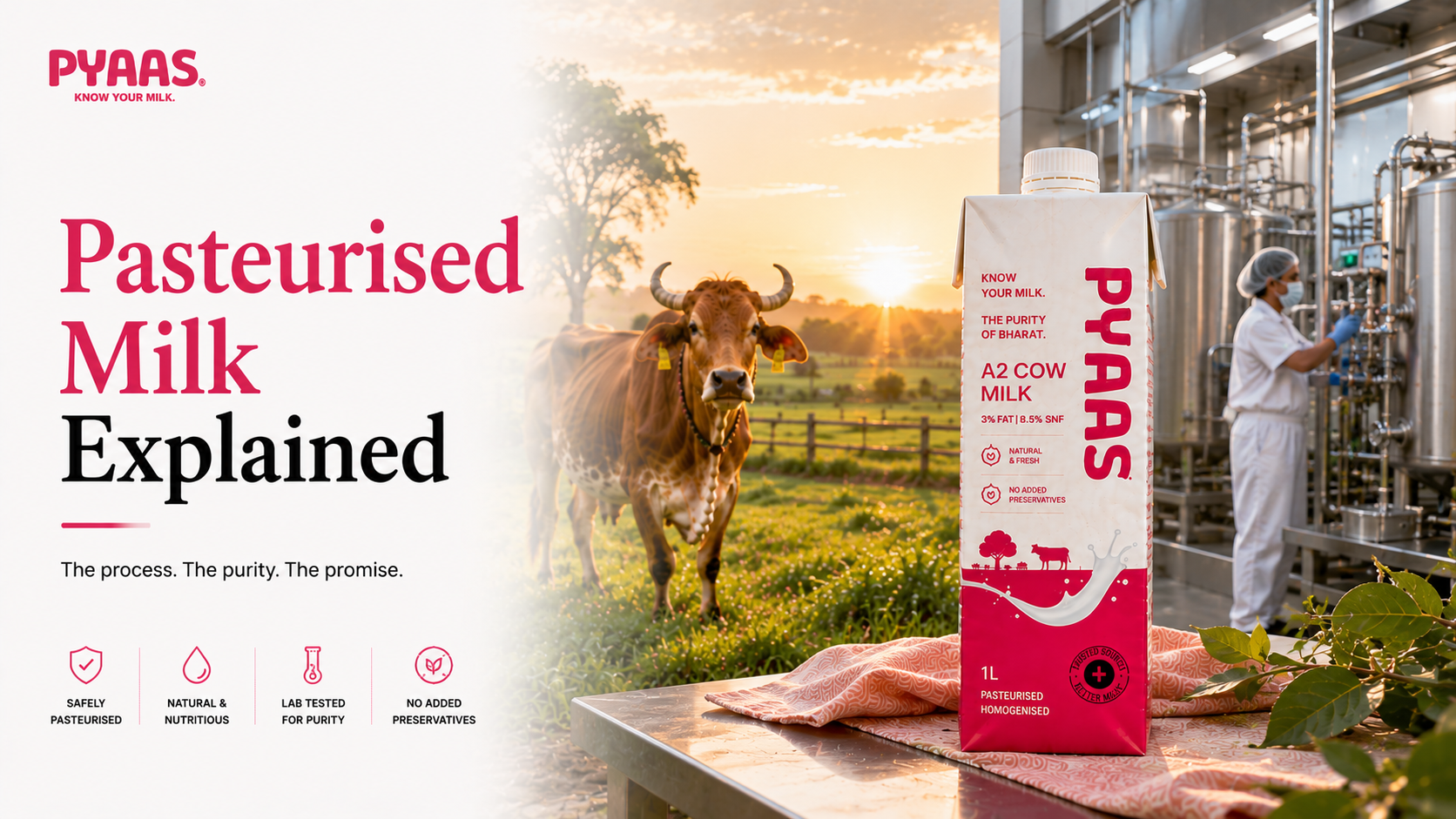
Pasteurised Milk Explained: What It Is and Why It Matters
11 July 2026