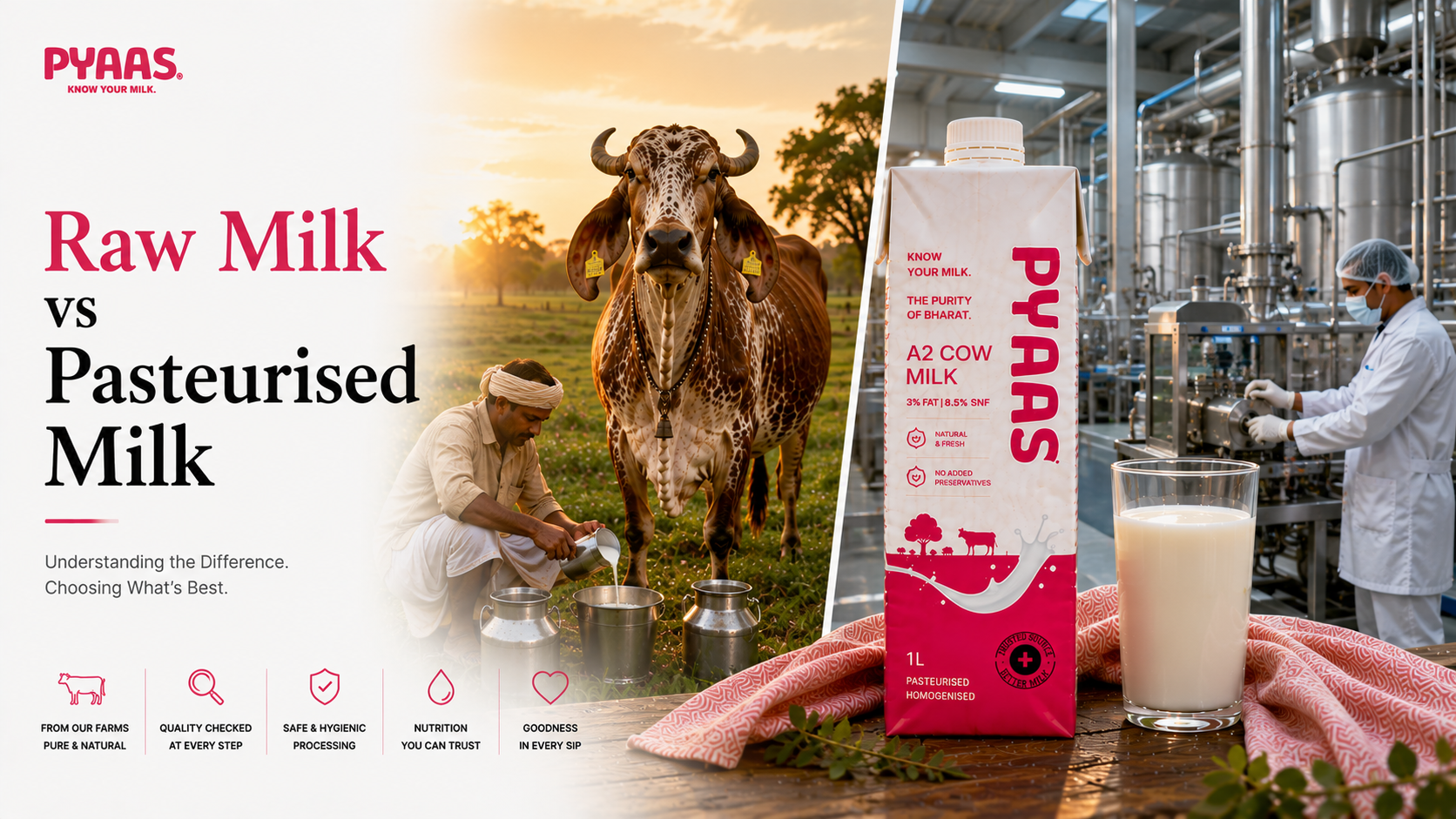
Raw Milk vs Pasteurised Milk: Understanding the Differences
If you have ever stood in front of the refrigerator wondering whether raw milk or pasteurised milk is the right choice for your family, you are not alone. The raw milk vs pasteurised milk debate is one of the most common questions Indian households ask, and the answer is rarely as simple as one being good and the other bad. Both have a long history in Indian kitchens, both deliver real nutrition, and both come with trade-offs that depend on how the milk is handled from the moment it leaves the cow.
At PYAAS, we believe the most useful thing we can do is help you understand the actual differences so you can decide with confidence. In this guide we explain what raw and pasteurised milk really are, how each affects safety and nutrition, and why the question of how your milk is produced and tracked often matters even more than whether it has been heated.
What Is Raw Milk?
Raw milk is milk that has not undergone pasteurisation. It is collected directly from the animal and reaches the consumer without the controlled heat treatment used in modern dairy processing. For most of human history, raw milk was the only milk anyone drank, and in many parts of India it is still consumed straight from the local dairy.
People are drawn to raw milk for a few honest reasons. Many feel it tastes richer and closer to the source, and some prefer it because it is minimally processed. Because raw milk has not been heated, its naturally occurring enzymes and live bacterial cultures remain intact, which is one reason traditional households have long valued it for curd setting and home preparations.
The trade-off is that raw milk carries whatever was present at the point of collection. Without heat treatment, the safety of raw milk depends almost entirely on animal health, clean handling, fast cooling and a short, well managed journey to your home. When any of those links is weak, the risk of harmful microorganisms rises. This is exactly why sourcing and supply chain visibility matter so much, a theme we explore in our look at farm fresh milk versus packaged milk.
What Is Pasteurised Milk?
Pasteurised milk is milk that has been gently heated to a specific temperature for a set time and then quickly cooled. The goal is straightforward: reduce harmful microorganisms while keeping the milk's core nutrition largely intact. Pasteurisation became one of the most important advancements in dairy because it allowed milk to travel further, last longer and reach more families safely as cities grew.
Today pasteurisation forms the foundation of modern dairy safety systems around the world. It does not sterilise milk and it is not meant to. It is a balanced process designed to lower risk without turning milk into a heavily processed product. If you want the full picture of how it works, we cover it in depth in pasteurised milk explained.
Raw Milk vs Pasteurised Milk: The Key Differences
When you compare the two side by side, the differences become clear. Understanding these helps you make a more informed choice rather than following a trend.
- Heat treatment: Raw milk receives none, while pasteurised milk is gently heated and rapidly cooled.
- Safety profile: Pasteurisation is designed to reduce harmful microorganisms, so pasteurised milk has a more consistent safety baseline. Raw milk safety depends heavily on sourcing and handling.
- Shelf life: Pasteurised milk generally keeps longer and travels better, while raw milk is best consumed quickly and locally.
- Enzymes and live cultures: Raw milk retains naturally occurring enzymes and bacteria that heating reduces.
- Taste and texture: Many people describe raw milk as fuller and closer to the source, though this is subjective and varies by farm and breed.
It is important to be honest here. Neither option is automatically superior for every family. What truly separates good milk from poor milk is not only whether it was pasteurised, but how clean the source was, how fast it was cooled, and whether anyone can actually verify those things.
Does Pasteurisation Reduce Nutrition?
This is one of the most common worries, and the honest answer is reassuring. Pasteurisation is a gentle process, and milk remains one of the most nutrient rich foods available regardless of the method used. Both raw and pasteurised milk deliver the nutrients families rely on.
- High quality protein that supports growth and daily repair.
- Calcium for strong bones and teeth, a topic we expand on in why milk is important for bone health.
- Essential vitamins and minerals that round out a balanced diet.
Pasteurisation can slightly affect a few heat sensitive components, but the core nutritional value, the protein and calcium families care about most, stays well preserved. In other words, choosing pasteurised milk does not mean choosing weaker milk.
Why the Source Matters More Than the Label
Here is the part of the conversation that often gets missed. Whether you choose raw or pasteurised, the quality of the milk is decided long before it reaches your kitchen. Quality milk depends on the entire supply chain, not a single step.
The Factors That Really Decide Milk Quality
- Animal health and breed: Healthy, well cared for cows produce better milk. This matters especially for indigenous breeds, as we explain in our guide on Gir cow milk.
- Hygiene at collection: Clean milking and equipment prevent contamination at the very first step.
- Speed and cold chain: Fast cooling and a short journey protect freshness and safety.
- Testing and verification: Regular checks for SNF, FAT and purity confirm what is actually in the milk.
Modern families are right to ask harder questions. Where did this milk come from? Which farm and which farmer? Was this batch tested? This is the heart of what we call traceability, and you can learn more in what is traceable milk. When you can verify the source, the raw versus pasteurised question becomes far less stressful, because you already know your milk is clean and accountable.
How PYAAS Approaches the Question
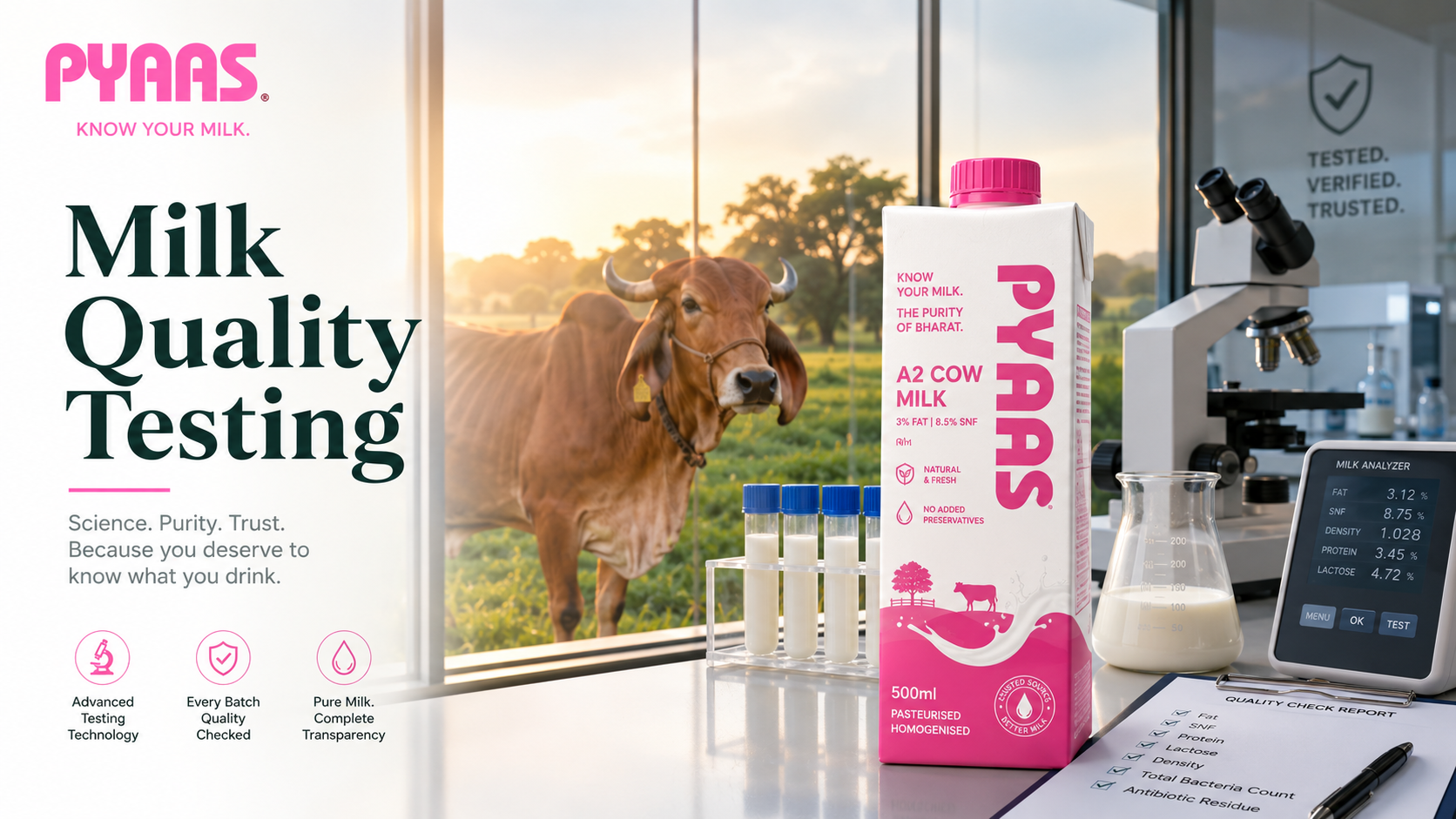
PYAAS delivers traceable, single origin A2 cow milk sourced from named farms in Gonda, Uttar Pradesh, reaching families across Delhi NCR, Lucknow and Ayodhya. Every pack carries a QR code you can scan to see the exact farm, the named farmer, that batch's lab test for SNF and FAT, and the time the milk left the farm. We also craft small batch A2 Bilona ghee for households that want the same honesty in their kitchen. The point is not to win the raw versus pasteurised argument, but to make sure you never have to guess about what you are pouring into your child's glass. You can see how we test every batch in our overview of milk quality testing.
So Which Milk Should You Choose?
If you have access to a trusted, transparent source with strict hygiene and fast cooling, raw milk can be a wonderful, traditional choice. If you want a consistent safety baseline and longer shelf life, pasteurised milk is a sensible and well proven option. For most families, the smartest move is to stop fixating on the label and start asking about the source. Want to verify your milk yourself at home? Our practical checklist on how to check milk purity at home is a great place to begin.
Whatever you choose, you deserve complete visibility into your milk's journey, from farm sourcing and quality testing to delivery. That belief is the reason we built PYAAS around full traceability, and it is the spirit behind everything in Know Your Milk. If you would like the same transparency in your daily kitchen staples, our A2 Bilona ghee is made the same way, slowly, honestly and fully traceable. Take a look when you are ready, and as always, know your milk.
Written by
PYAAS Team
The PYAAS Team writes about traceable, single origin A2 dairy from named farms in Gonda, Uttar Pradesh, helping Indian families truly know their milk.
More from PYAAS TeamCommon questions.
What is the main difference between raw milk and pasteurised milk?
Raw milk has not been heat treated, while pasteurised milk is gently heated and quickly cooled to reduce harmful microorganisms. Pasteurisation gives milk a more consistent safety baseline and a longer shelf life. Raw milk keeps its naturally occurring enzymes and live cultures but depends heavily on clean sourcing and fast handling.
Is pasteurised milk less nutritious than raw milk?
No, the difference is small. Pasteurisation is a gentle process and the core nutrients families care about, like protein and calcium, stay well preserved. It can slightly affect a few heat sensitive components, but pasteurised milk remains a nutrient rich food.
Is raw milk safe to drink in India?
Raw milk can be safe when it comes from healthy animals, is collected with strict hygiene, is cooled fast and reaches you quickly. The risk rises when any of those steps is weak, because raw milk has not been heat treated. The safest approach is to know your exact source and verify it.
Does pasteurised milk lose its taste?
Some people feel raw milk tastes fuller and closer to the source, but taste is subjective and varies by farm and breed more than by pasteurisation. Many families find good pasteurised milk fresh and pleasant. Quality sourcing usually affects flavour more than the heat treatment itself.
How do I know which milk is right for my family?
Focus on the source rather than just the label. Ask where the milk comes from, whether the farm and farmer are known, and whether the batch was tested for SNF, FAT and purity. When you can verify those details, both raw and pasteurised milk become much easier to trust.
Get the next one in your inbox.
The occasional note on milk, ghee, and how we work. Plain words, no hype, and you can leave any time.
Keep reading.
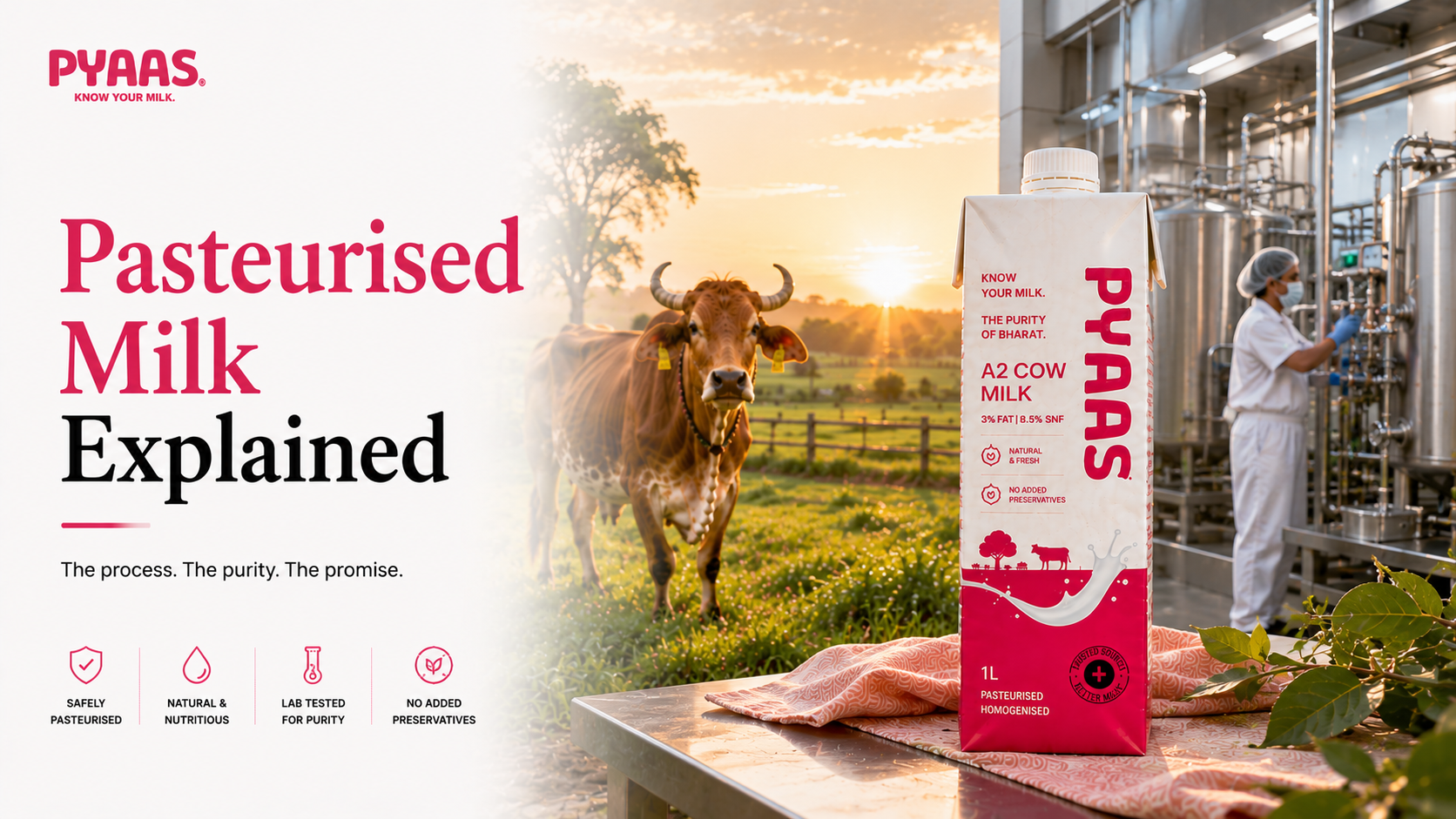
Pasteurised Milk Explained: What It Is and Why It Matters
11 July 2026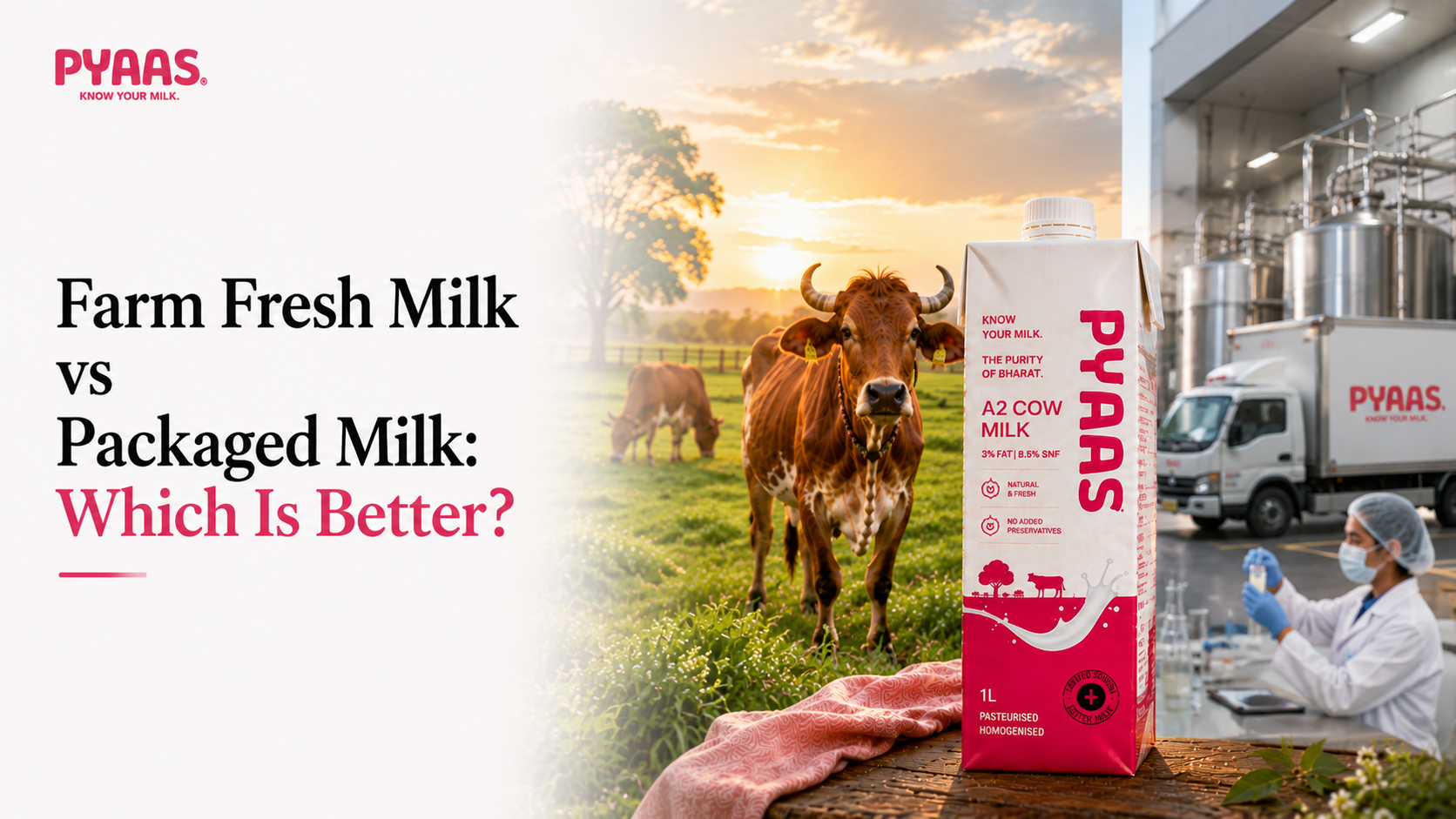
Farm Fresh Milk vs Packaged Milk: Which Is Better for Your Family?
9 July 2026
How to Check Milk Purity at Home: 7 Simple Tests Every Family Should Know
9 July 2026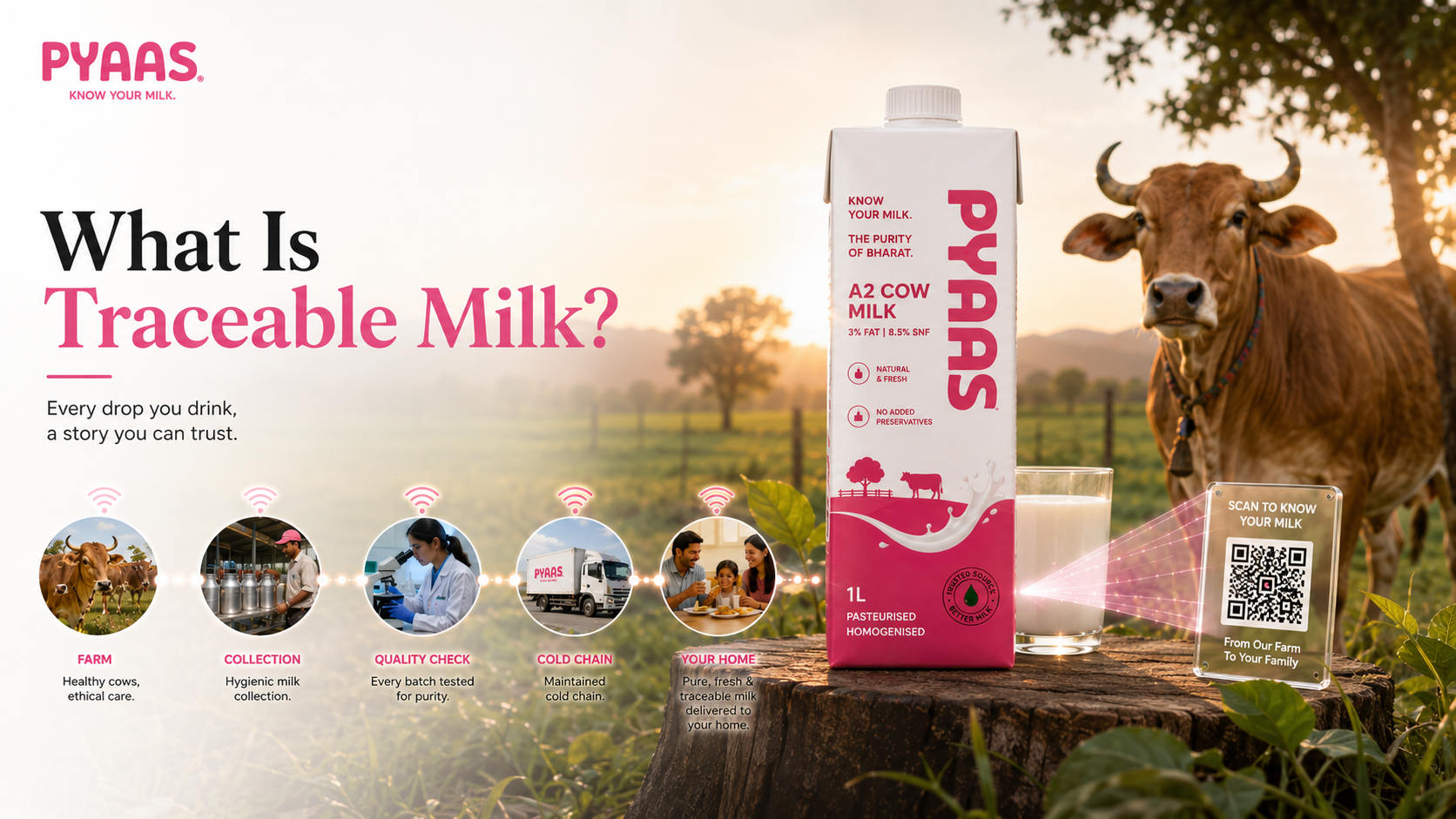
What Is Traceable Milk? Why Modern Consumers Want to Know Their Milk
5 July 2026