Best Milk for Children: A Parent's Guide to Choosing Quality Milk
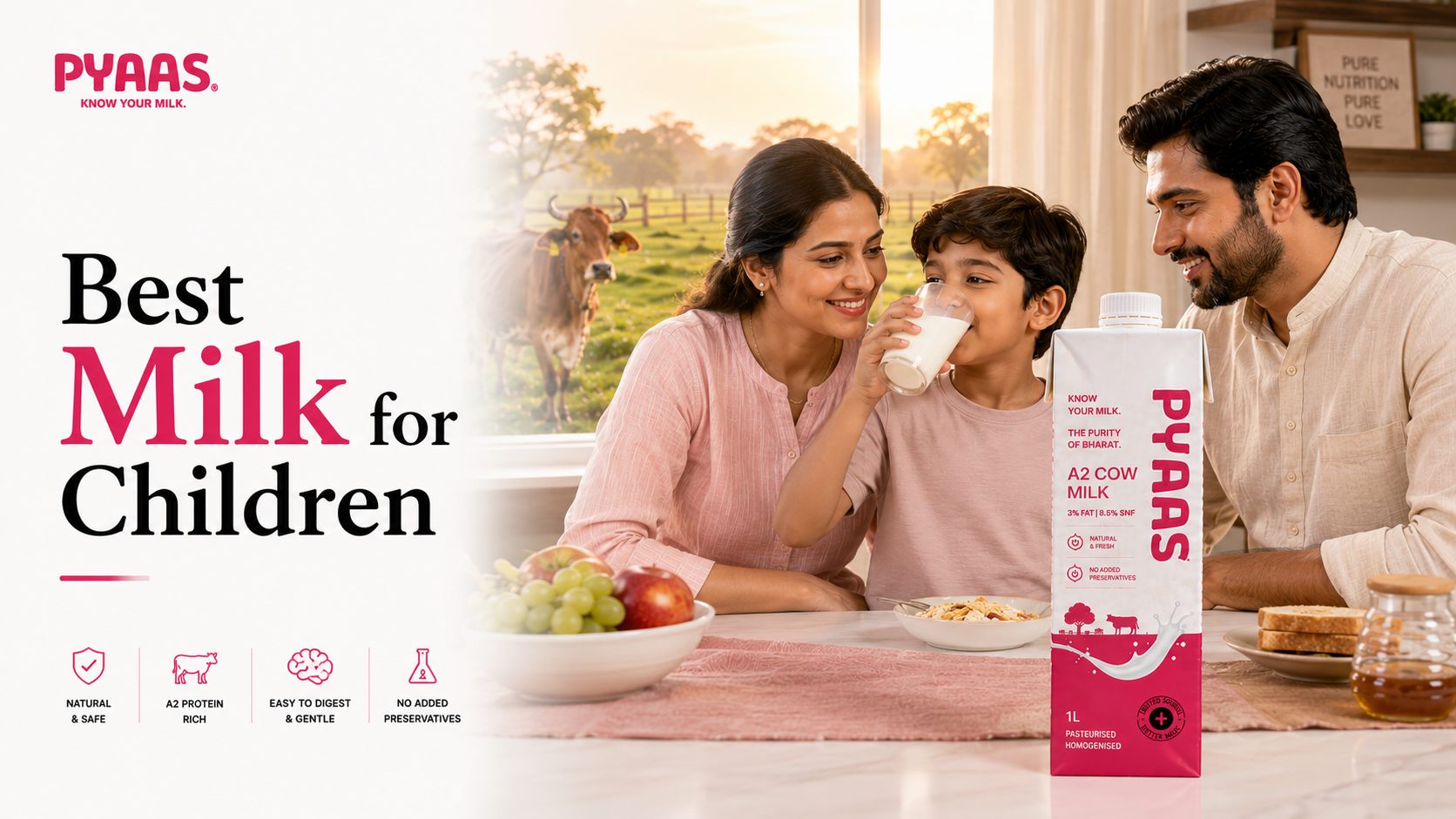
Childhood is a window of rapid growth. Bones lengthen, muscles build, the brain develops at remarkable speed, and the food a child eats every day quietly shapes all of it. For generations, Indian families have placed a glass of milk at the centre of that daily nourishment, and for good reason: milk naturally carries a useful combination of protein, calcium and several vitamins and minerals in one familiar, comforting form.
But here is the question most parents quietly wrestle with at the dairy aisle: with so many cartons, claims and labels competing for attention, what is the best milk for children, and how do you actually choose quality milk you can trust? This parent's guide cuts through the marketing and focuses on what really matters: nutrition, safety, freshness, sourcing and, increasingly, traceability. The goal is not to chase the most expensive pack on the shelf. It is to choose milk you can feel genuinely confident pouring into your child's glass, every single morning.
Why Milk Matters During Childhood
Milk earns its place in a child's diet because it delivers several growth-supporting nutrients together, in a form most children happily drink. Rather than memorising a chart, it helps to understand what milk naturally contributes:
- Protein supports the building of muscle and tissue during active growth years.
- Calcium is central to developing strong bones and teeth, a foundation laid largely in childhood.
- Vitamin D and other micronutrients help the body use calcium effectively and support overall development.
- Fats and energy give younger children the fuel they need for constant activity and growth.
Milk is one valuable part of a balanced plate, not a magic solution. If you want to go deeper on what a single glass actually delivers, our breakdown of milk nutrition facts is a useful next read, and so is the science behind why milk is important for bone health.
What Parents Should Actually Look For in Quality Milk
Choosing milk for children involves much more than comparing brand names. Marketing slogans are designed to reassure, but they rarely tell you how the milk was produced or handled. Instead of asking which carton looks most premium, the better questions are practical ones:
- Where does this milk come from? A single, known source is easier to trust than milk pooled from many unnamed places.
- How is its quality checked? Look for brands that test for purity and key markers like SNF and FAT, rather than simply asserting quality.
- How fresh is it, and how was it handled? Cold storage and quick delivery matter far more than a glossy label.
- Can the brand show its work? Transparency about the farm, the process and the testing is a strong sign of confidence.
These questions often reveal far more about real milk quality than any promotional phrase. If you find yourself unsure how to evaluate options for the youngest members of the family, our wider guidance on the best A2 milk in India and what consumers should look for applies just as well to children.
A Note on A2 Milk and Indigenous Breeds
Many Indian parents now ask specifically about A2 milk. The difference comes down to the type of beta-casein protein the milk contains, and milk from indigenous desi cow breeds is naturally A2. If this is new to you, start with our explainer on the difference between A1 and A2 milk. PYAAS provides single-origin A2 cow milk from named farms, which means the milk in your child's glass comes from one traceable source rather than an anonymous blend.
Freshness, Safety and the Risk of Adulteration
Freshness is one of the most important and most overlooked factors in milk quality. Milk is a living, perishable food. Proper collection, careful cold transport and clean storage all help preserve its goodness on the journey from the farm to your kitchen. Milk that reaches you quickly, kept cold the whole way, simply gives your family a better experience than milk that has spent too long in transit.
Safety is the other half of the equation, and it is where many Indian families feel real anxiety. Concerns about what is added to milk are not imaginary, and every parent deserves clear information rather than worry. Understanding milk adulteration in India and what consumers need to know helps you spot warning signs, and you can even run a few simple milk purity tests at home for added peace of mind. The most reassuring answer, though, is a brand that tests every batch before it ever reaches your child.
Why Traceability Is the New Standard for Family Milk
Modern families increasingly want to understand the story behind their food, and milk is no exception. Knowing where your milk originates, who produced it and how its quality was verified turns a routine purchase into a confident, informed choice. This is exactly why traceability is becoming a defining feature of premium dairy.
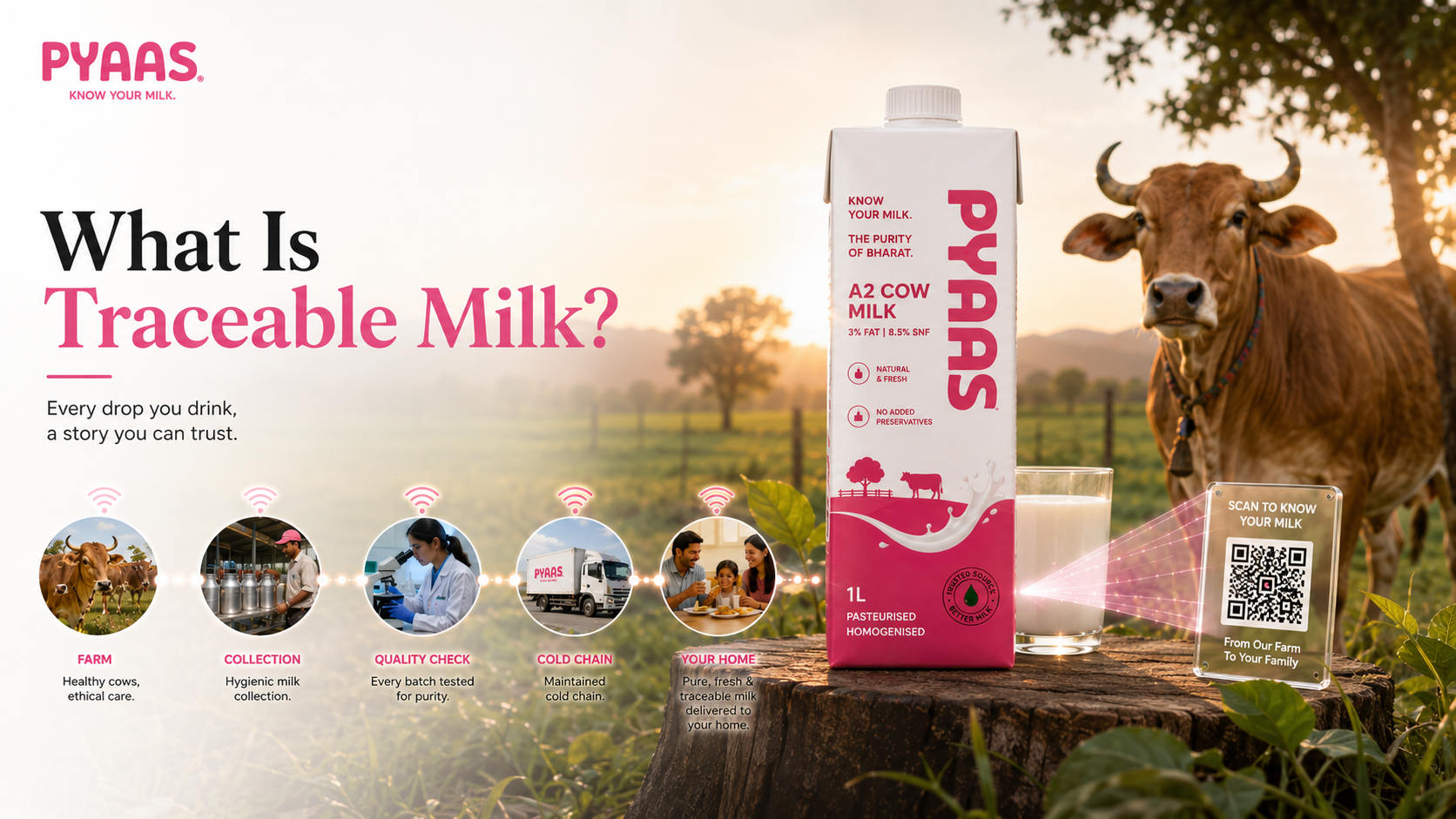
At PYAAS, traceability is not a buzzword printed on the carton. Every pack carries a QR code you can scan to see the exact farm in Gonda, Uttar Pradesh, the named farmer who produced that milk, that specific batch's lab test, and the time the milk left the farm. That is what our promise to Know Your Milk truly means: not a slogan, but information you can check yourself. For families who want to understand the bigger picture, our piece on what traceable milk is and why modern consumers want it explains why this matters so much for the next generation.
Building Healthy Habits Beyond the Glass
Choosing the best milk for your child is one important decision, but it works best as part of a wider routine. Developing healthy dietary habits early can support well-being for years to come. Pair good milk with varied, balanced meals and an active lifestyle, and let it be one dependable, nourishing constant in a busy household.
Many families also find that a steady supply removes daily friction, which is one reason more households are exploring the benefits of switching to daily milk delivery. And as children grow, the same principles of quality and transparency stay relevant whether you are choosing milk for them or for the adults in the home.
What About Ghee and the Wider Kitchen?
Milk is the starting point, but it is not the whole story of dairy in an Indian kitchen. The same care a family wants in its milk applies to cooking fats too. Small-batch A2 Bilona ghee, made the traditional way from the same single-origin milk, is a wholesome addition to many family meals when used thoughtfully.
Choosing With Confidence
The best milk for children is not defined by the loudest claim on the shelf. It is defined by honest sourcing, real quality testing, genuine freshness and the openness to show you exactly where it came from. When you can name the farm, the farmer and the test behind your child's glass, choosing quality milk stops being guesswork.
At PYAAS, we believe parents deserve complete confidence in the milk they bring home. We are a transparency-first family dairy, and you are welcome to learn more about our founding family and the values behind that promise. If you ever want to see the journey for yourself, scan the QR code on the pack. Know Your Milk, and pour with confidence.
Written by
PYAAS Team
The PYAAS Team writes about milk quality, nutrition and traceability for Indian families, drawing on our work sourcing single-origin A2 milk from named farms in Gonda, Uttar Pradesh.
More from PYAAS TeamCommon questions.
What is the best milk for children?
The best milk for children is fresh, properly tested milk from a known, single source that you can trust. Rather than chasing a brand name, look for honest sourcing, quality testing for markers like SNF and FAT, good cold-chain freshness and transparency about where the milk came from. Many Indian parents also prefer A2 cow milk from indigenous desi breeds.
Is A2 milk better for children?
A2 milk differs from regular milk in the type of beta-casein protein it contains, and milk from indigenous desi cow breeds is naturally A2. Many Indian families choose it for this reason. Whatever type you pick, freshness, purity and traceable sourcing matter most, so choose milk from a source you can verify.
How can I make sure the milk I give my child is pure and safe?
Choose a brand that tests every batch before it reaches you and is open about its sourcing and process. You can also run a few simple home purity tests for extra peace of mind. The strongest safeguard is traceability, such as scanning a QR code to see the farm, the farmer and that batch's lab test.
How much milk should children drink each day?
Milk needs vary with a child's age, appetite and overall diet, so there is no single number for every family. Milk is best treated as one valuable part of a balanced plate alongside varied meals and an active lifestyle. For specific quantities, it is always sensible to follow your paediatrician's guidance.
What does traceable milk mean for a family?
Traceable milk means you can see exactly where your milk came from and how its quality was verified, instead of trusting a label alone. With PYAAS, every pack carries a QR code that reveals the exact farm in Gonda, the named farmer, that batch's lab test and the time the milk left the farm. It turns a routine purchase into a confident, informed choice.
Get the next one in your inbox.
The occasional note on milk, ghee, and how we work. Plain words, no hype, and you can leave any time.
Keep reading.
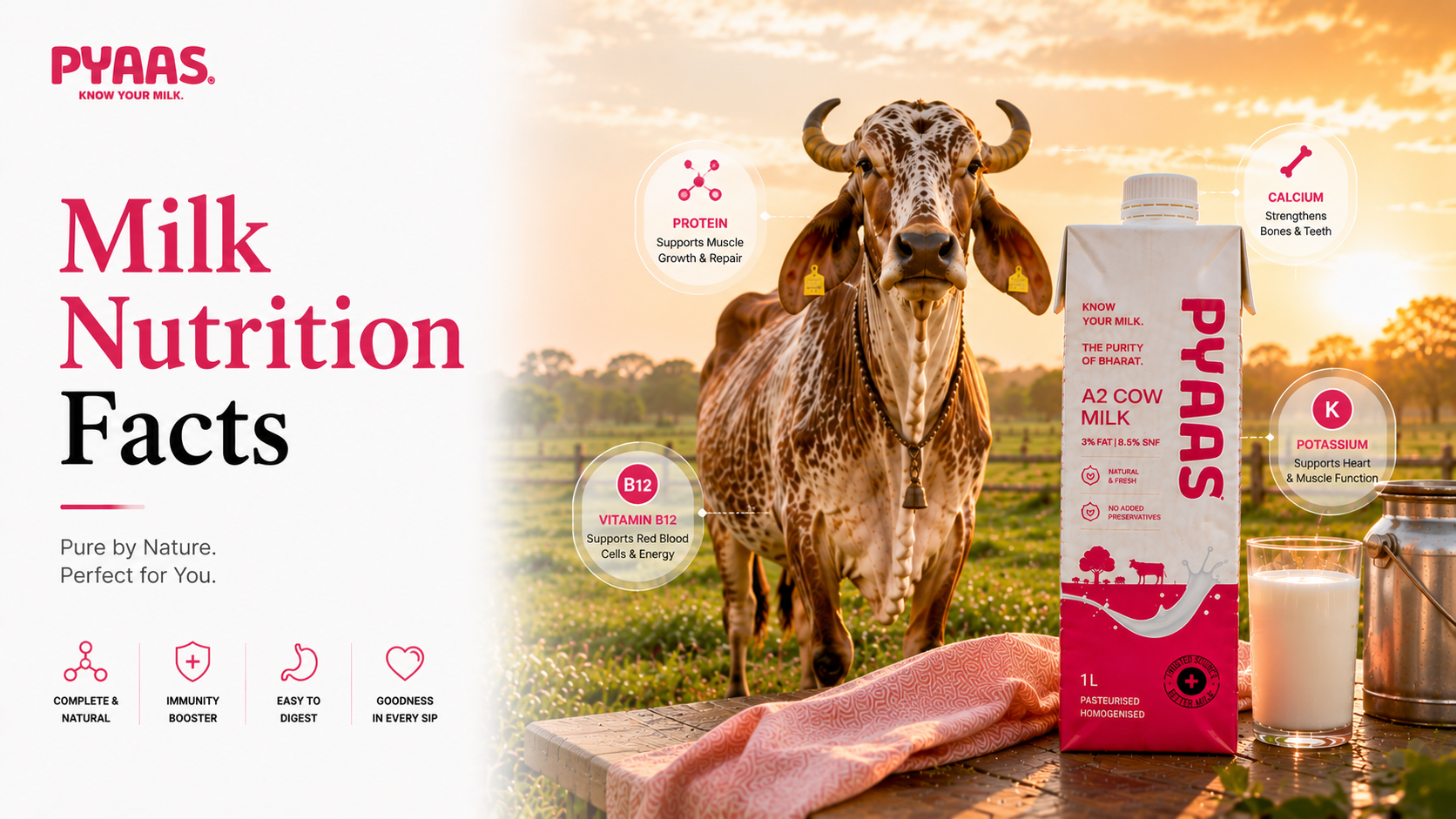
Milk Nutrition Facts: What Is Really Inside Your Glass of Milk?
12 July 2026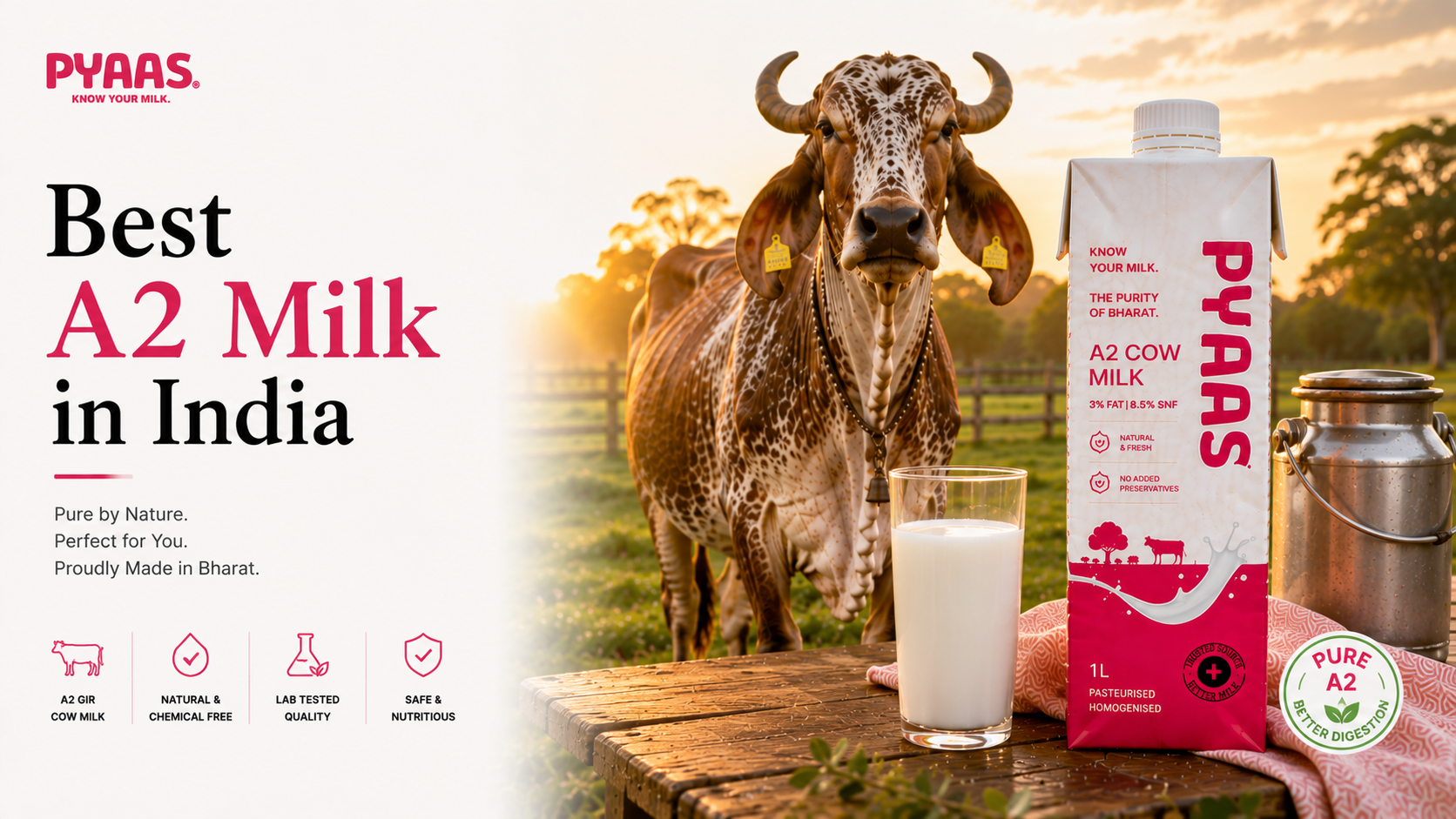
Best A2 Milk in India: What Should Consumers Look For?
12 July 2026
How to Check Milk Purity at Home: 7 Simple Tests Every Family Should Know
9 July 2026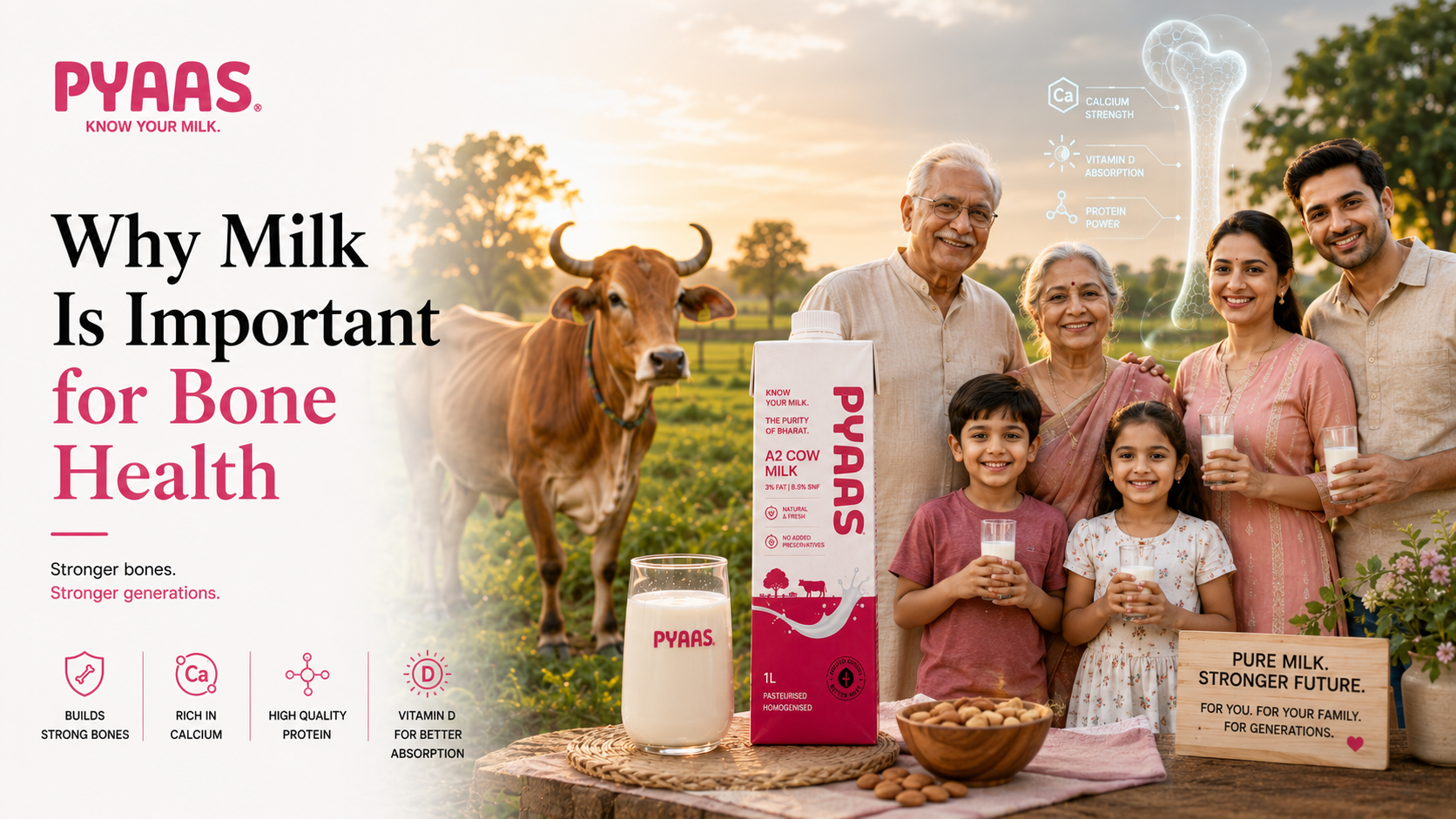
Why Milk Is Important for Bone Health: Understanding the Science
6 July 2026