Dairy Farming in India: Everything You Need to Know
India is the world's largest milk producer, and dairy farming sits at the heart of millions of households across the country. From a single cow tied in a village courtyard to organised farms running careful feed and milking schedules, dairy farming in India is a vast, deeply human story. If you have ever wondered how the milk in your kitchen actually reaches you, understanding dairy farming is the best place to start.
This guide covers everything you need to know about dairy farming in India: how it works, the cattle breeds that power it, the role technology now plays, the real challenges farmers face, and why traceability is quietly becoming the most important word in the industry. We write this as a brand built on a simple promise, Know Your Milk, so our goal is to help you make informed, confident choices about the milk your family drinks.
What Is Dairy Farming and Why It Matters in India
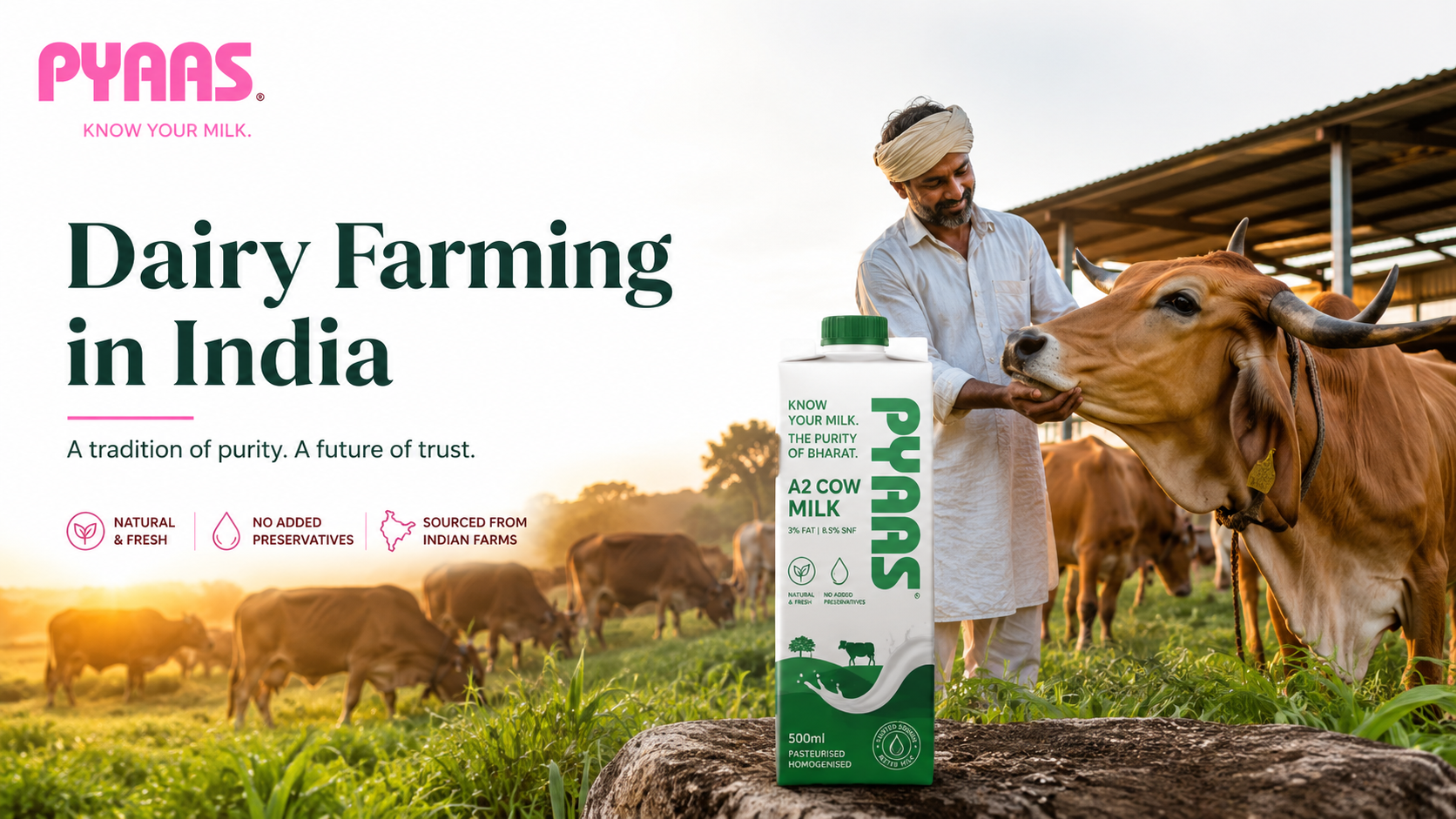
Dairy farming is the practice of raising and caring for milk-producing animals, mainly cows and buffaloes, to supply fresh milk and dairy products like ghee, curd and paneer. In India it is far more than an industry. It is a source of daily income for a huge number of rural families, often run by smallholders who keep just a few animals.
Because so much of India's milk comes from small farms rather than giant industrial operations, the country has a unique, decentralised dairy ecosystem. This is a strength, since it keeps livelihoods spread across villages, but it also makes consistency and quality harder to guarantee. That is exactly why the journey of milk from the animal to your home deserves a closer look. If you want the full picture, read our breakdown of how milk reaches your home.
How Dairy Farming Works: From Animal to Milk
Good milk begins long before milking. A well-run dairy operation depends on a few non-negotiable basics:
- Healthy, well-fed animals: balanced feed, clean drinking water and regular veterinary care directly shape the quality and quantity of milk.
- Clean milking practices: hygienic hands, vessels and surroundings prevent contamination at the very first step.
- Quick cooling and handling: milk is perishable, so the faster it is chilled and moved, the fresher and safer it stays.
- Honest record keeping: tracking each animal's health and each batch's quality builds a foundation of trust.
The dairy farmer carries all of this on their shoulders. Their care, timing and attention decide whether the milk that leaves the farm is something you would be happy to give your children. This is why we believe in choosing farmers carefully and building trust from the source rather than treating milk as an anonymous commodity.
Major Dairy Cattle Breeds in India
India is blessed with some of the finest indigenous, or desi, cattle breeds in the world. These breeds are well suited to the local climate and are valued for their milk, including the A2 type beta-casein protein that many families now prefer. Some of the most recognised breeds include:
- Gir: a hardy Gujarati breed prized for rich, nutritious A2 milk. Learn more about why Gir cow milk has become so sought after.
- Sahiwal: one of India's best dairy breeds, known for consistent yield and gentle temperament. See our deep dive on Sahiwal cow milk.
- Red Sindhi: a resilient breed that adapts well to heat and is valued for steady milk production.
- Tharparkar: a dual-purpose desi breed from the arid northwest, known for hardiness.
- Murrah buffalo: India's leading buffalo breed, producing thick, high-fat milk popular across the country.
If you are weighing your options at the kitchen table, our comparison of cow milk vs buffalo milk explains how these animals produce very different milk for different needs.
Why Indigenous A2 Breeds Are Gaining Attention
Many native Indian breeds naturally produce A2 milk, which differs from common A1 milk in a single component of its beta-casein protein. A growing number of families seek out A2 milk for its perceived gentleness on digestion. The science is still evolving, so we encourage you to read a balanced view in our guide on the difference between A1 and A2 milk before deciding what is right for you.
How Technology Is Transforming Dairy Farming
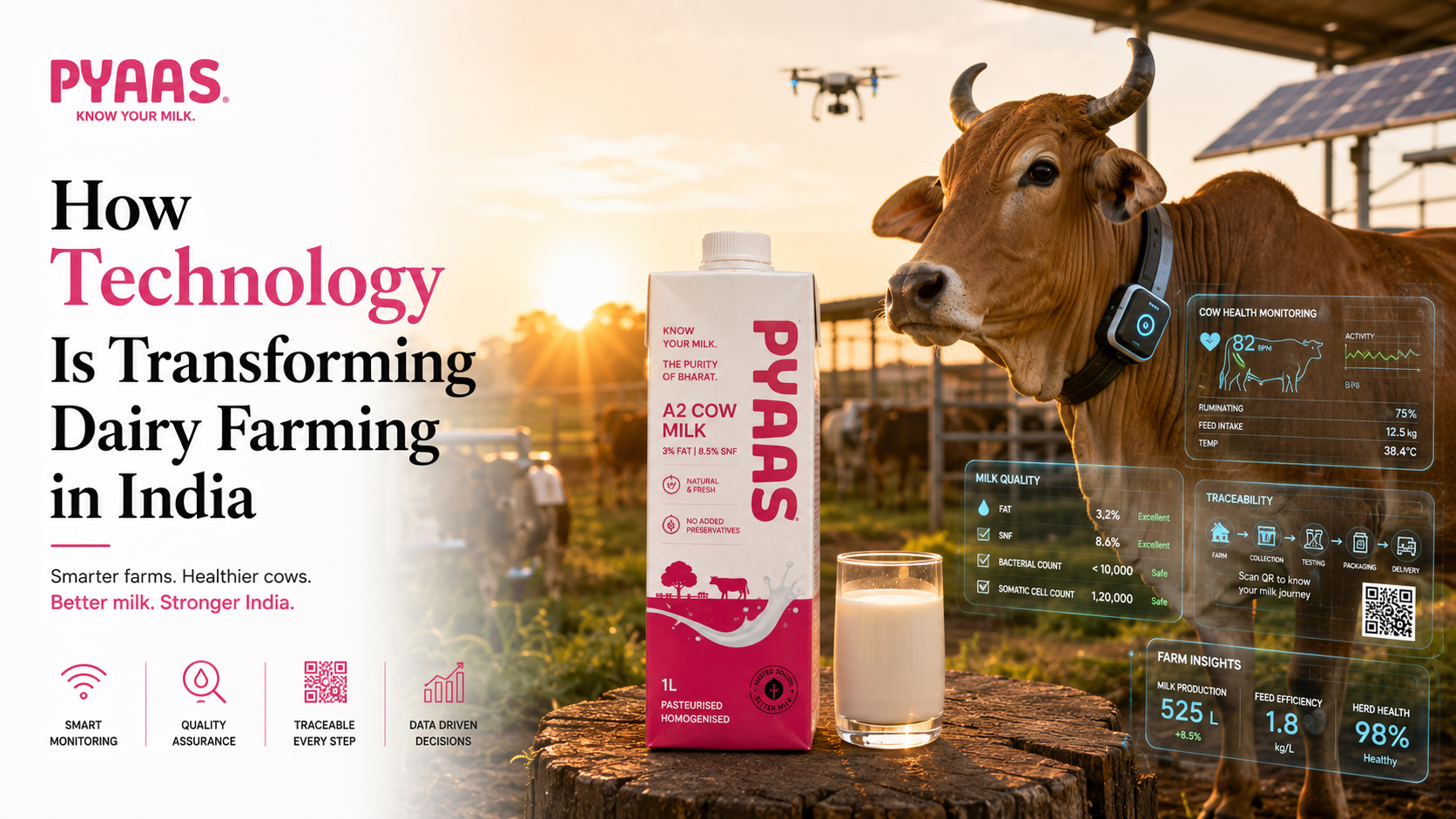
For a long time, Indian dairy ran almost entirely on trust and habit. That is changing fast. Modern dairy systems increasingly use:
- Digital herd and farm management: tracking each animal's health, feed and milking history.
- Lab-based quality testing: checking values like SNF (solids-not-fat) and FAT to confirm purity and richness.
- Cold-chain logistics: keeping milk chilled from farm to doorstep.
- Traceability tools: QR codes and batch records that let a consumer see exactly where their milk came from.
These innovations do more than improve efficiency. They turn invisible processes into visible, verifiable facts. To go deeper, see how technology is transforming dairy farming in India.
The Real Challenges Indian Dairy Farmers Face
For all its scale, dairy farming in India is not easy. Farmers regularly contend with:
- Rising costs: feed, fodder and veterinary care keep getting more expensive.
- Thin margins: small farmers often receive only a fraction of what consumers pay.
- Quality and adulteration concerns: a long, opaque supply chain creates room for problems. Our piece on milk adulteration in India explains what to watch for.
- Lack of recognition: the farmer behind your milk is almost always invisible to you.
Supporting farmers, paying them fairly and giving them visibility is not charity. It is the only sustainable way to secure good milk for the future.
Why Traceability Is the Future of Indian Dairy
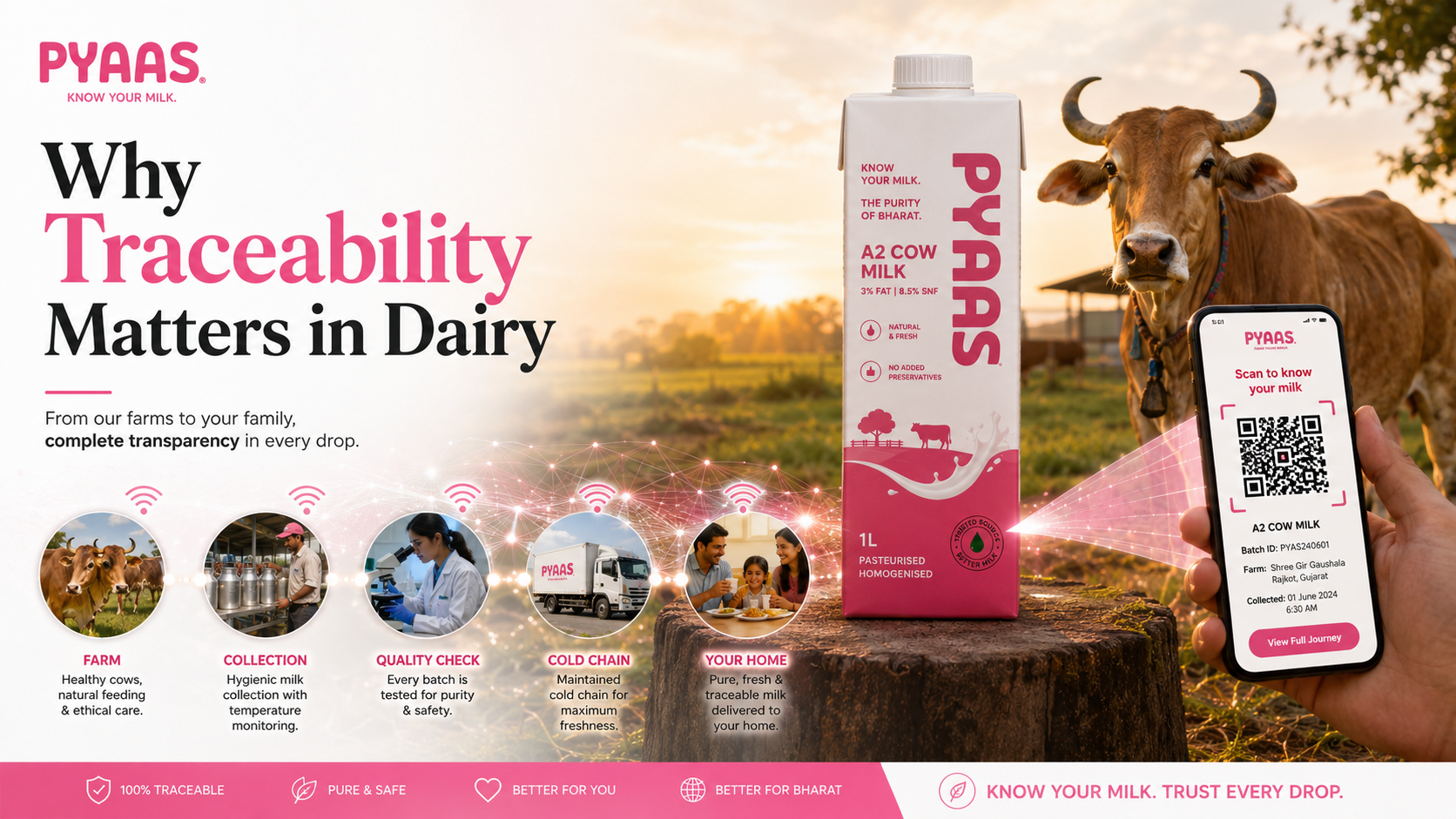
The biggest shift in dairy is not happening in the cowshed. It is happening in the minds of consumers. Families increasingly want to know who milked their cow, where the farm is, and whether that batch was actually tested. This demand is pushing the industry toward transparency, fair sourcing and verifiable quality.
This is exactly the gap PYAAS was built to close. Our milk is traceable and single-origin, sourced from named farms in Gonda, Uttar Pradesh, and delivered fresh in Delhi NCR, Lucknow and Ayodhya. Scan the QR code on the pack and you can see the exact farm, the named farmer, that batch's lab test for SNF and FAT, and the time the milk left the farm. To understand why this matters so much, read why traceability matters in dairy. Beyond fresh milk, the same care goes into our small-batch A2 Bilona ghee, made the traditional way.
Conclusion: Dairy Farming Deserves Visibility
Behind every carton and pouch of milk is a network of farmers, animals and quality checks working together to deliver something your family can trust. Dairy farming in India is vast, vital and full of hard-working people who rarely get the credit they deserve. The more you understand how it works, the better the choices you can make.
At PYAAS, we simply believe you have a right to know your milk. If that idea resonates with you, we would love for you to look behind the scenes and see the farms, the farmers and the people who make it possible.
Written by
PYAAS Team
The PYAAS Team writes about dairy farming, milk quality and traceability to help Indian families truly know their milk, from named farms in Gonda to your doorstep.
More from PYAAS TeamCommon questions.
Why is India the largest milk producer in the world?
India produces more milk than any other country thanks to its huge number of small dairy farmers and indigenous cattle and buffalo breeds suited to the local climate. Most milk comes from smallholders who keep just a few animals, which spreads dairy income across millions of rural households. This decentralised system is a major strength of Indian dairy.
Which are the best dairy cattle breeds in India?
Some of the most valued indigenous dairy breeds include Gir, Sahiwal, Red Sindhi and Tharparkar cows, along with the Murrah buffalo. Many of these desi cow breeds naturally produce A2 type milk, which a growing number of families prefer. Each breed is suited to different climates and milk needs.
What challenges do Indian dairy farmers face?
Indian dairy farmers deal with rising feed and veterinary costs, thin profit margins and a long, often opaque supply chain. Small farmers frequently receive only a fraction of the final price paid by consumers. Fair payment, recognition and transparency are key to making dairy farming sustainable.
How is technology changing dairy farming in India?
Modern dairy farms increasingly use digital herd management, lab-based quality testing for values like SNF and FAT, cold-chain logistics and traceability tools such as QR codes. These tools turn previously invisible processes into verifiable facts. The result is better efficiency, safety and consumer trust.
What is traceable milk and why does it matter?
Traceable milk lets you see exactly where your milk came from, including the farm, the farmer and the batch's lab test results. With PYAAS, you can scan a QR code on the pack to see the named farm in Gonda, the farmer, the SNF and FAT readings, and the time the milk left the farm. This visibility is becoming the foundation of trust in Indian dairy.
Get the next one in your inbox.
The occasional note on milk, ghee, and how we work. Plain words, no hype, and you can leave any time.
Keep reading.
How Technology Is Transforming Dairy Farming in India
5 July 2026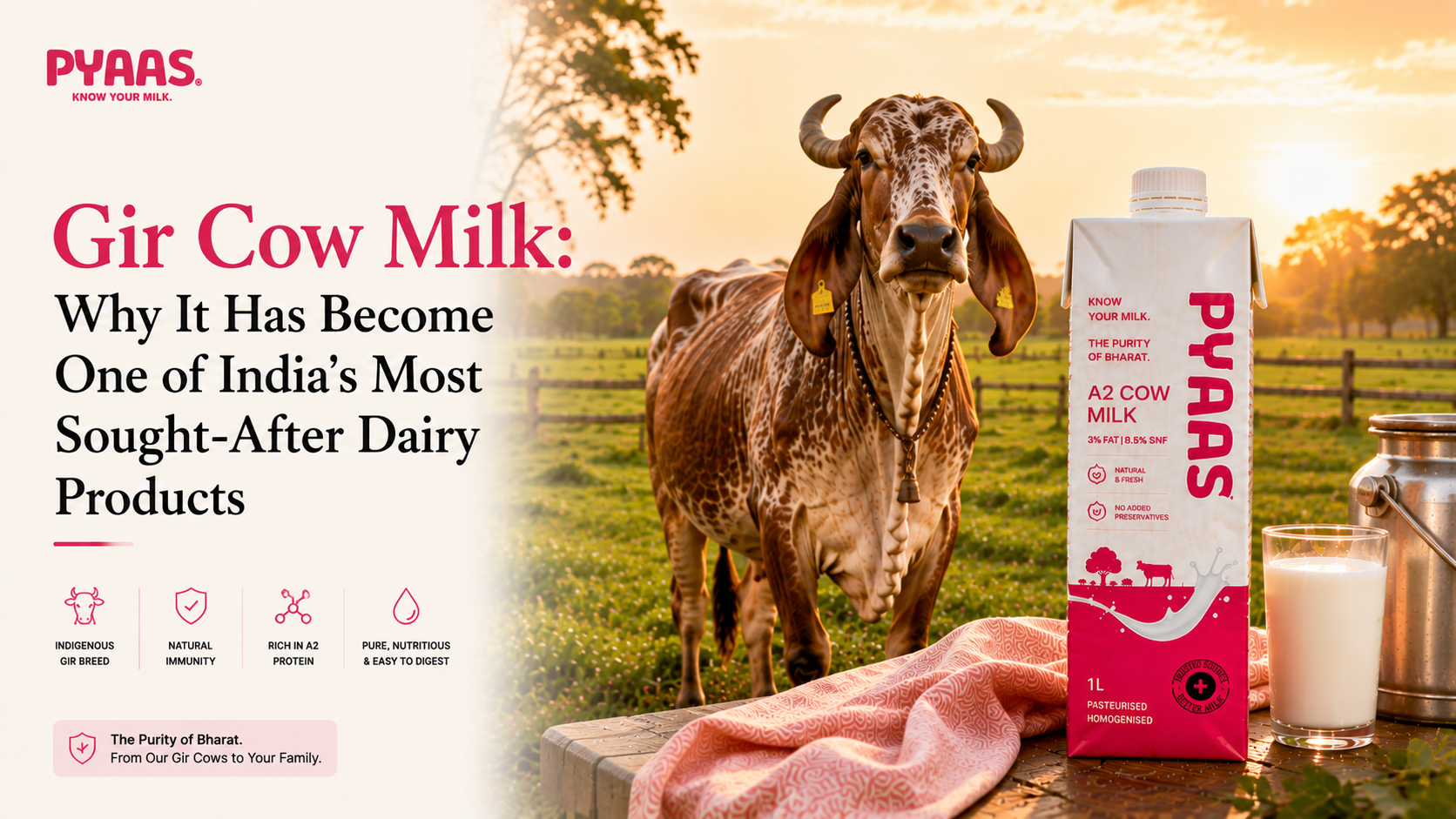
Gir Cow Milk: Why It Has Become One of India's Most Sought-After Dairy Products
11 July 2026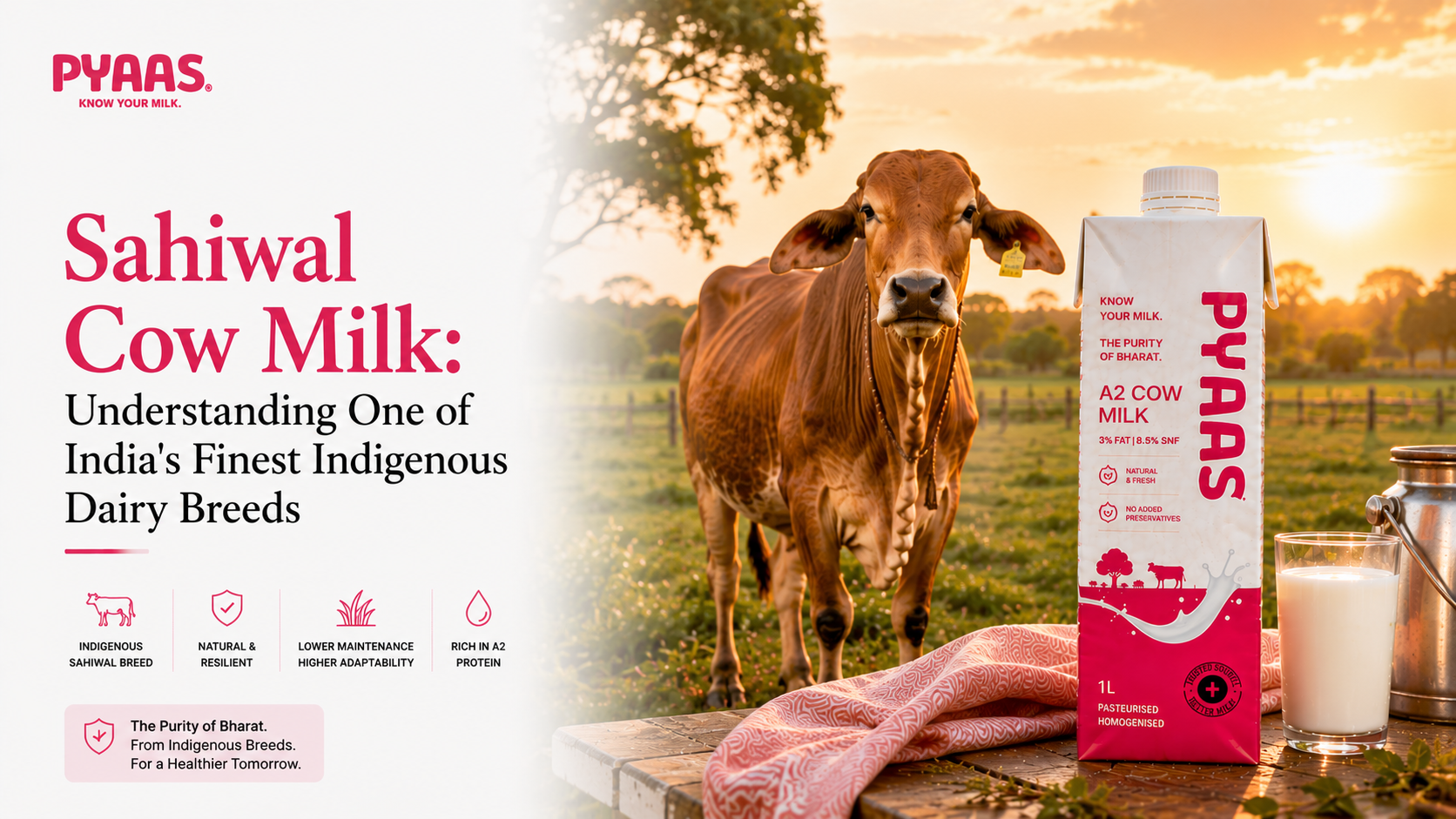
Sahiwal Cow Milk: Understanding One of India's Finest Indigenous Dairy Breeds
11 July 2026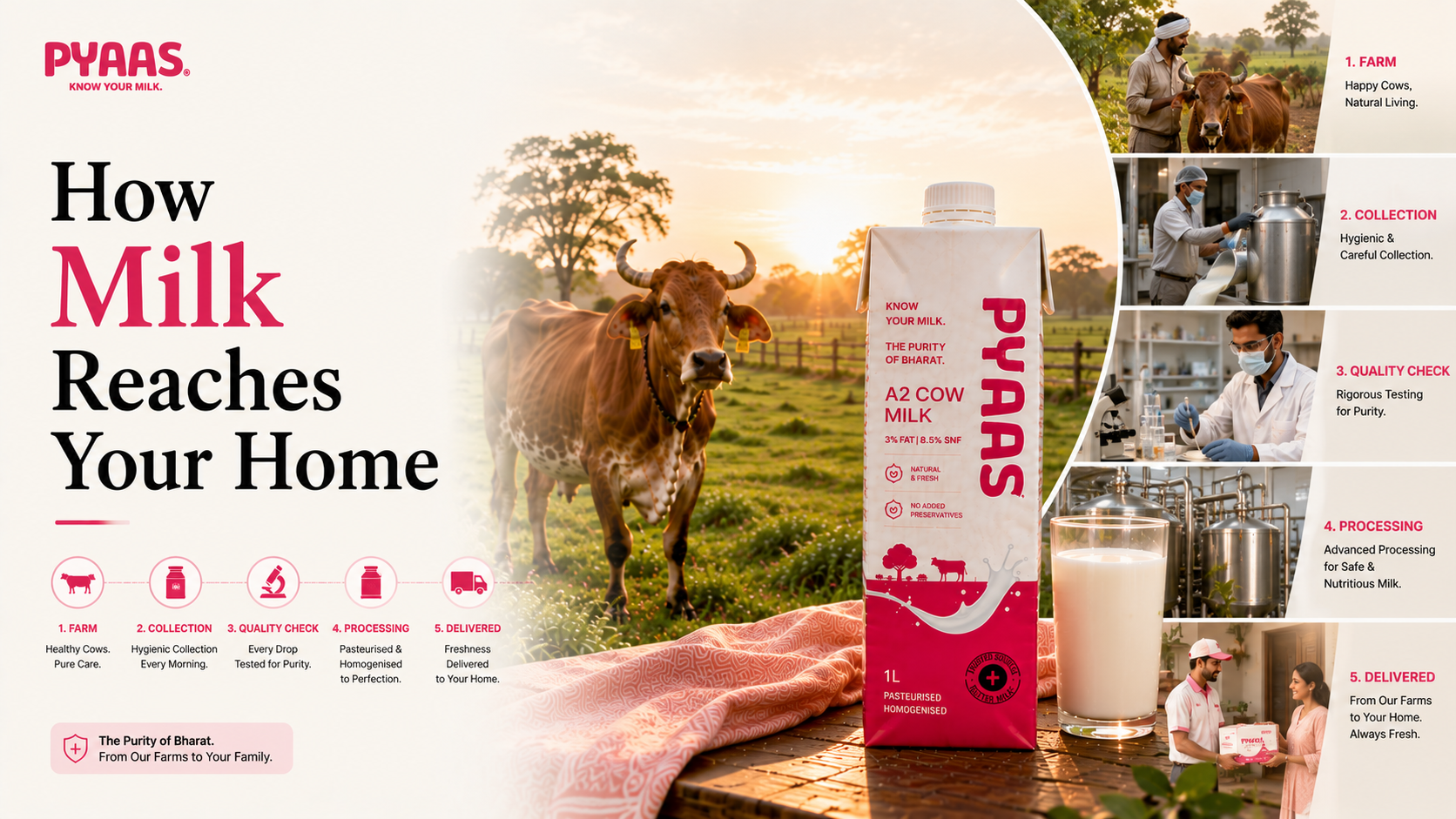
How Milk Reaches Your Home: The Journey from Farm to Table
11 July 2026