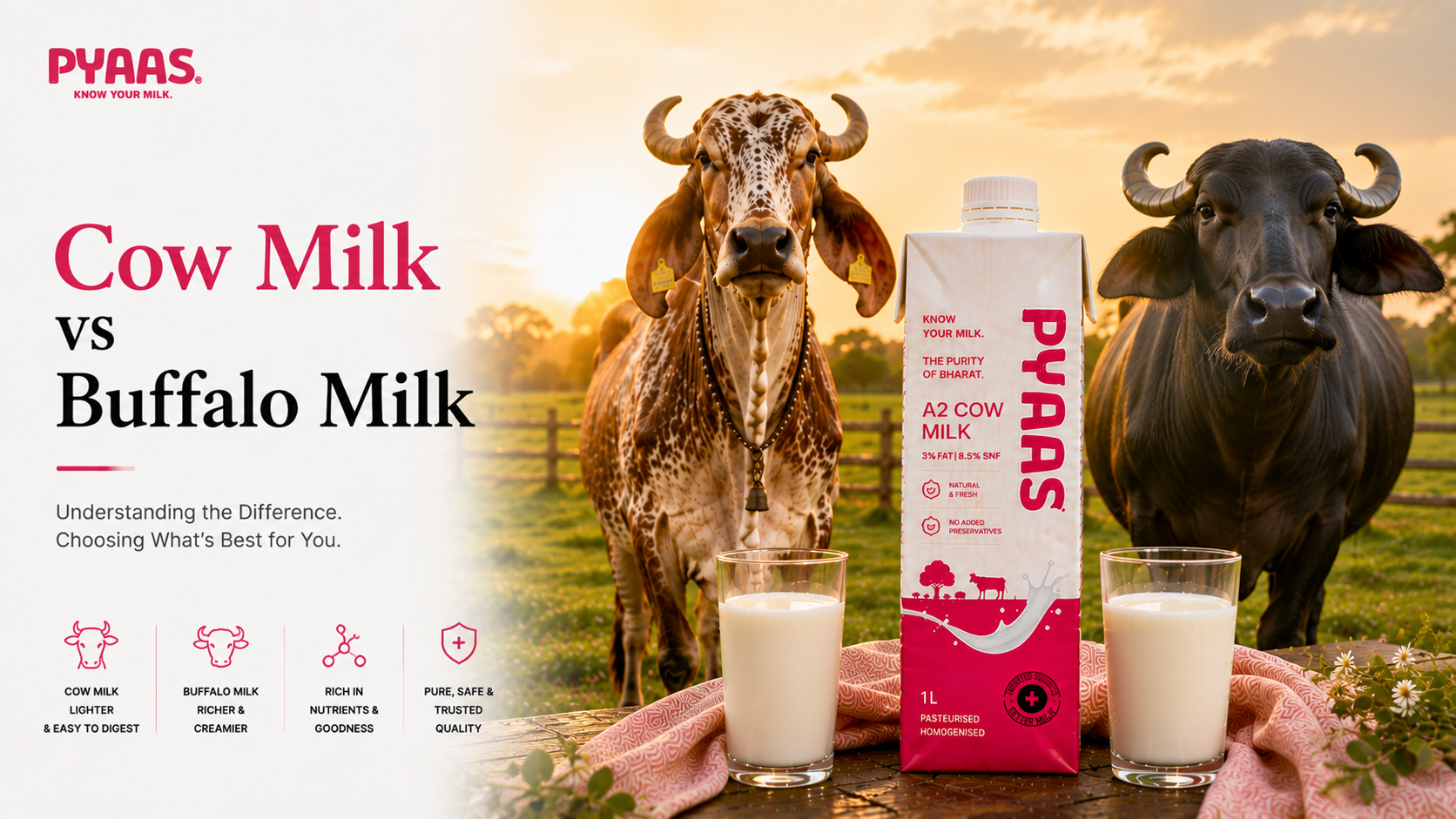
Cow Milk vs Buffalo Milk: Understanding the Key Differences
India runs on milk. We are one of the world's largest producers and consumers, and in almost every Indian kitchen the daily debate is the same: should the family buy cow milk or buffalo milk? Both have nourished generations, both have a loyal following, and both show up in our chai, our kheer and our morning glass. Yet most of us choose one over the other out of habit rather than understanding. Knowing the real differences between cow milk and buffalo milk, in composition, taste, texture and everyday use, helps you make a confident decision that suits your family.
This guide breaks down how cow milk and buffalo milk actually differ, where each one shines, and a point that matters more than the animal itself: how the milk is sourced, tested and brought to your home. At PYAAS, we believe the question is not only "cow or buffalo" but "do you truly know your milk." Let us walk through it together.
Cow Milk vs Buffalo Milk: The Core Differences
The simplest way to understand the cow milk versus buffalo milk question is to look at what each one is made of and how it behaves in your kitchen. The two come from different animals, carry different fat levels and feel different on the palate.
Cow milk is produced by dairy cattle and is generally lighter in texture with a mild, clean flavour. It tends to have a lower fat content than buffalo milk, which makes it feel easier and less heavy to drink on its own. Many Indian families associate cow milk, especially from indigenous breeds, with everyday drinking and a gentle taste that children take to easily.
Buffalo milk comes from water buffaloes and has long been central to Indian dairy farming. It is richer and creamier, with a higher fat content and a thicker body. That richness is exactly why so many traditional sweets, paneer and thick curd recipes call for buffalo milk: it delivers more cream and a fuller mouthfeel.
Composition and Texture at a Glance
- Fat content: Buffalo milk is typically higher in fat, giving it a creamier, heavier feel. Cow milk is usually lighter.
- Texture: Cow milk is thinner and pours more freely. Buffalo milk is dense and visibly thicker.
- Colour: Buffalo milk often looks whiter, while cow milk can carry a faint creamy or yellowish tint depending on the breed.
- Solids: Buffalo milk tends to carry more total solids, which is why it yields more paneer, khoya and ghee per litre.
How Cow Milk and Buffalo Milk Taste and Feel
One of the most noticeable differences is the everyday drinking experience, and this is where personal preference takes over.
Cow milk is often described as light, mild and easy to drink, with a clean finish that many people prefer plain or in tea. Buffalo milk is often described as rich, creamy and filling, with a fuller flavour that stands out in heavier preparations. Neither is "better" in absolute terms. A family that loves a thick, malai-topped glass may lean toward buffalo milk, while a household that wants a gentler daily drink may prefer cow milk.
If you are weighing the broader question of which milk suits different family members, our guide on the best milk for children and the companion piece on the best milk for seniors walk through how age and digestion can shape the right choice.
Everyday Uses in the Indian Kitchen
Both cow milk and buffalo milk earn their place in Indian cooking, and many homes keep both for different jobs.
- Daily drinking and tea: Cow milk is a popular everyday choice for its lighter body.
- Curd and dahi: Both set well, though buffalo milk produces a thicker, richer curd.
- Paneer and sweets: Buffalo milk's higher solids make it a favourite for paneer, kheer and traditional mithai.
- Ghee: The cream from both makes excellent ghee, and the prized A2 Bilona ghee is traditionally churned from cow milk curd using the slow bilona method.
If you enjoy cooking with ghee, you may find our explainer on bilona ghee versus regular ghee useful for understanding why the method matters as much as the milk.
Beyond Cow vs Buffalo: Why Quality and Source Matter More
Here is the part most comparisons skip. Whether you choose cow milk or buffalo milk, the category alone tells you very little about what is actually in your glass. Two cartons of cow milk can be worlds apart depending on the farm, the animal's care, the handling and the testing. The more important questions are about quality and trust.
Modern, informed families are increasingly asking:
- Which farm did this milk come from, and who is the farmer?
- How fresh is it, and how long ago did it leave the farm?
- Was this batch actually tested, and what were the SNF and FAT results?
- Is there any way to verify all of this for myself?
This is exactly why traceability is becoming the real differentiator in dairy, far more than the cow versus buffalo debate. A transparent supply chain protects your family against adulteration and uncertainty in a way no animal source can. To understand the scale of the issue, read our piece on milk adulteration in India, and learn why a growing number of households now insist on traceable milk they can verify.
The A2 Factor in Cow Milk
When people talk about premium cow milk in India, the conversation often turns to A2 milk and indigenous breeds. The A1 and A2 difference refers to a type of beta-casein protein found in milk, and many Indian families specifically seek out A2 cow milk from native breeds like Gir and Sahiwal. If you want to go deeper, our explainer on what A2 milk really is separates the genuine facts from the marketing myths.
How PYAAS Approaches the Question
At PYAAS, we focus on traceable, single-origin A2 cow milk and small-batch A2 Bilona ghee, sourced from named farms in Gonda, Uttar Pradesh, and delivered fresh across Delhi NCR, Lucknow and Ayodhya. Our belief is simple: you should not have to take anyone's word for what is in your milk.
Every PYAAS pack carries a QR code. Scan it and you can see the exact farm, the named farmer who milked the cows, that batch's lab test, including SNF and FAT, and the time the milk left the farm. That is what real transparency looks like, and it is the heart of our promise. You can learn more about the philosophy behind it on our Know Your Milk page, or get to know our founding family and why we started this journey.
So, Which Should You Choose?
If you want a lighter, milder daily drink, cow milk is a natural fit, and A2 cow milk from indigenous breeds is worth exploring. If you love thick curd, rich paneer and a creamier glass, buffalo milk has long been the traditional favourite. Both can be excellent. What matters most is that whatever you pour, you can trust where it came from and what it contains.
Whichever you choose, choose milk you can actually verify. That is the shift worth making for your family, and it is the simple idea behind everything we do at PYAAS. Know your milk, and let the rest fall into place.
Written by
PYAAS Team
The PYAAS Team writes about dairy with one goal: helping Indian families understand exactly what is in their milk. PYAAS delivers traceable, single-origin A2 cow milk and small-batch A2 Bilona ghee you can verify by scanning a QR code.
More from PYAAS TeamCommon questions.
What is the main difference between cow milk and buffalo milk?
The biggest difference is fat and texture. Buffalo milk is richer, creamier and higher in fat with more total solids, while cow milk is generally lighter and milder. This is why buffalo milk yields more paneer and ghee, and cow milk is often preferred as an everyday drink.
Which milk is better for daily drinking, cow or buffalo?
It depends on your preference. Cow milk is lighter and easier to drink plain or in tea, while buffalo milk is thicker and more filling. Many families keep both for different purposes. What matters most is choosing milk from a trusted, transparent source you can verify.
Is buffalo milk creamier than cow milk?
Yes, buffalo milk is typically creamier because it carries a higher fat content and more total solids. That richness gives it a thicker body and makes it a popular choice for curd, paneer and traditional Indian sweets.
Which milk is better for making ghee and paneer?
Buffalo milk's higher solids make it a favourite for paneer and khoya because it gives a higher yield. For ghee, cream from both works well, though traditional A2 Bilona ghee is usually churned from cow milk curd using the slow bilona method.
Does the cow milk vs buffalo milk choice matter more than the source?
The source often matters more than the category. Two cartons of cow milk can differ greatly depending on the farm, care and testing. Choosing traceable milk, where you can see the farm, the farmer and the batch lab results, gives your family far more confidence than the animal type alone.
Get the next one in your inbox.
The occasional note on milk, ghee, and how we work. Plain words, no hype, and you can leave any time.
Keep reading.
What Is A2 Milk? Benefits, Myths and How It Differs from Regular Milk
4 July 2026
Full Cream Milk Benefits: Why Many Families Prefer Rich, Creamy Milk
13 July 2026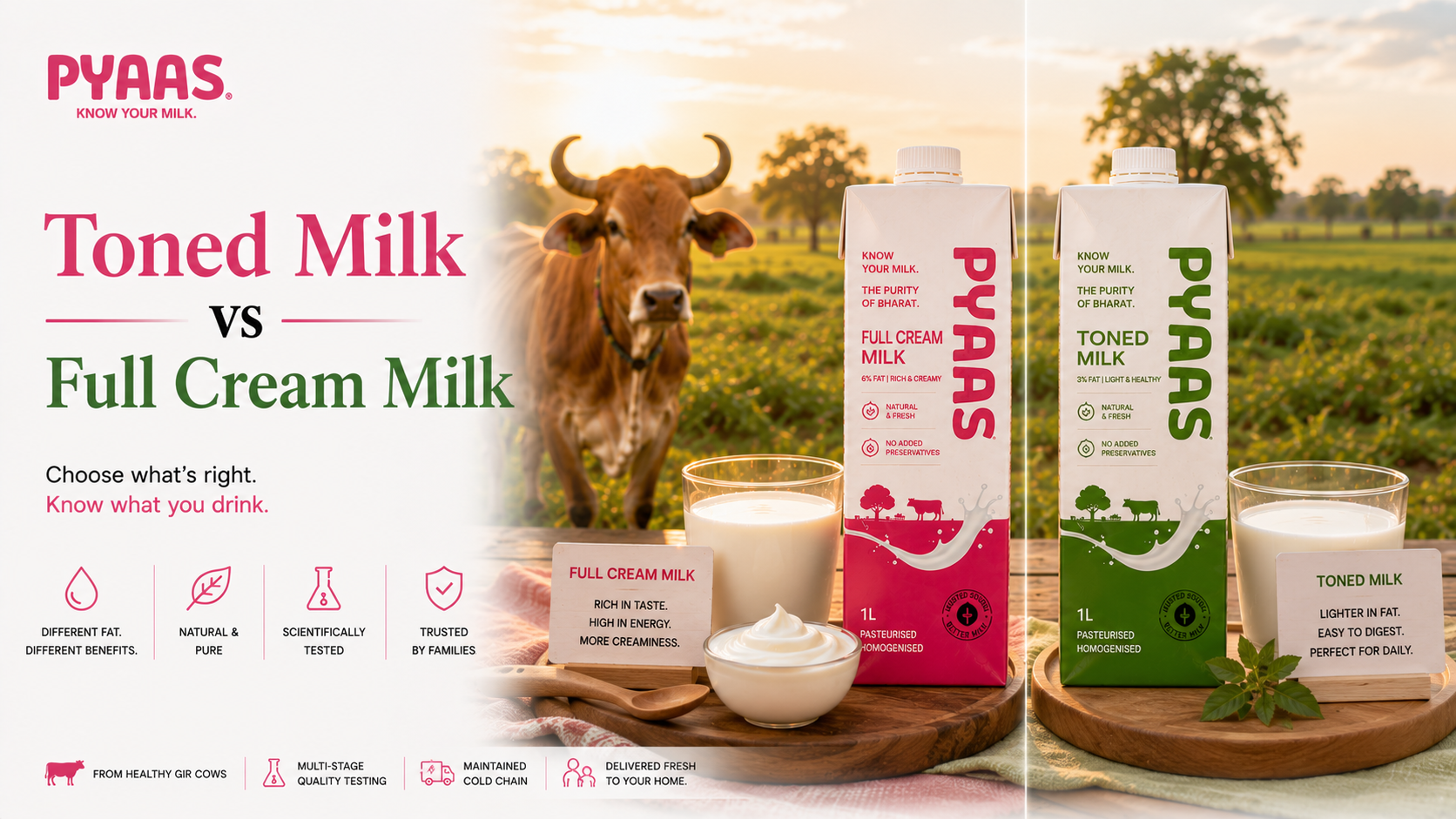
Toned Milk vs Full Cream Milk: Which One Should You Choose?
6 July 2026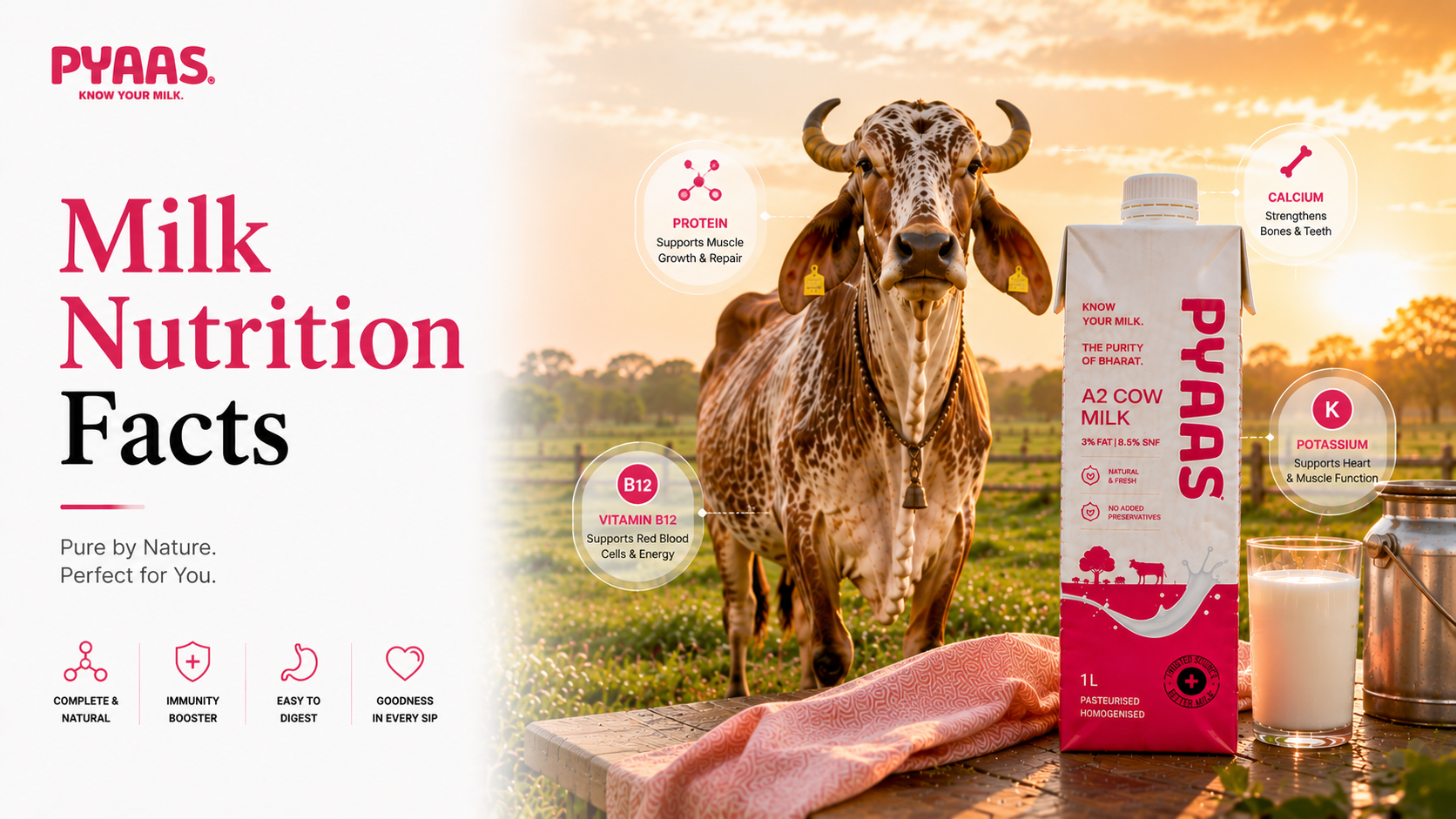
Milk Nutrition Facts: What Is Really Inside Your Glass of Milk?
12 July 2026