
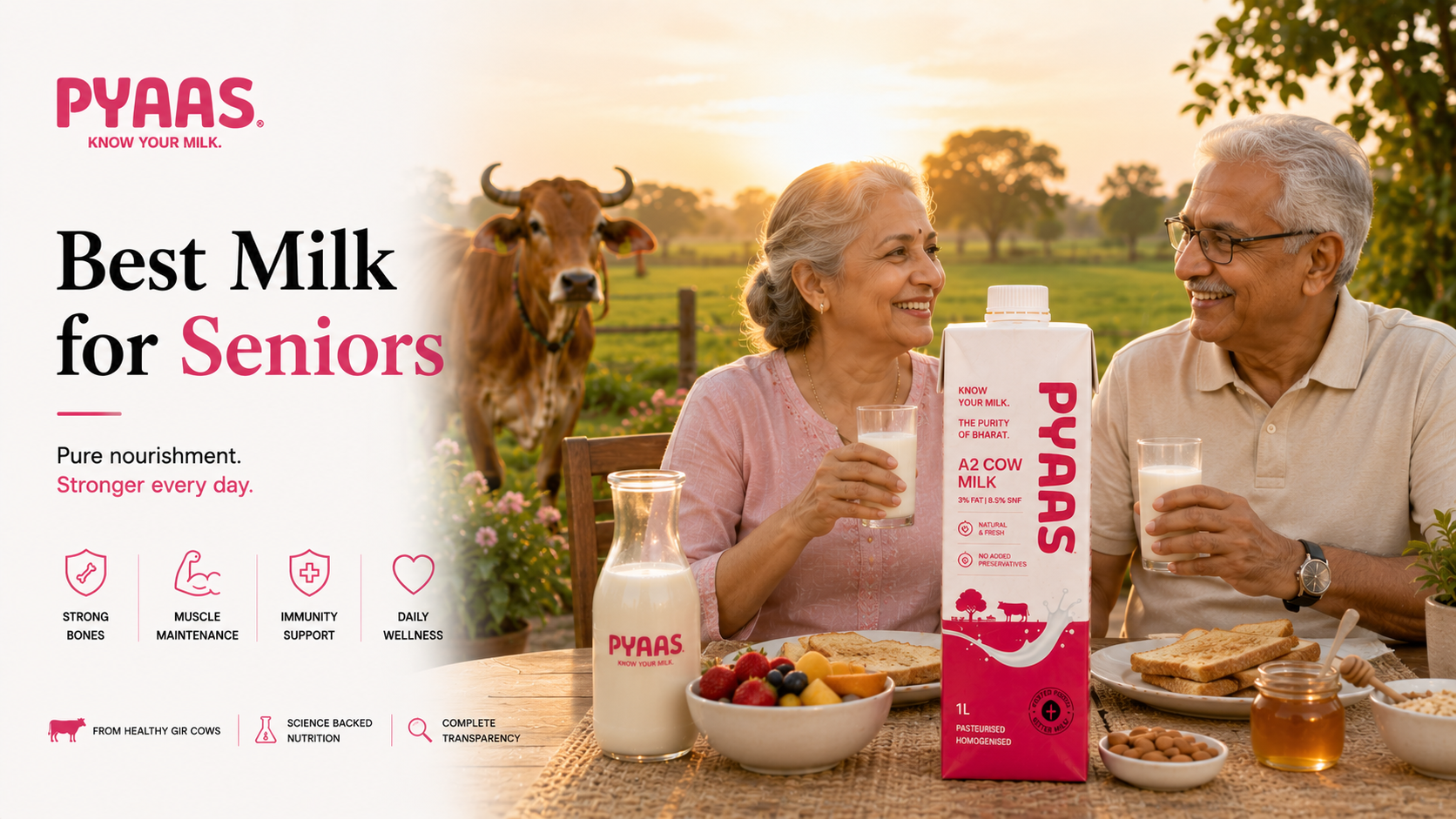
Best Milk for Seniors: What Older Adults Should Look For
As we grow older, food stops being just fuel and becomes a quiet form of self care. Appetite often shrinks, digestion can get more sensitive, and the body needs more help holding on to bone strength and muscle. This is exactly why milk stays on so many Indian tables well into the later years. A single glass delivers protein, calcium and other nutrients in a soft, familiar, easy to digest form that suits a senior's daily rhythm. The real question is not whether milk belongs in a senior's diet, but which milk truly serves an older body best.
Choosing the best milk for seniors is about more than picking a brand off the shelf. For older adults, freshness, gentleness on the stomach, consistent quality and honest sourcing matter more than they ever did. In this guide we walk through what older adults and their families should actually look for, why A2 cow milk often suits ageing digestion, and how traceability gives you the confidence that what is in the glass is exactly what the label promises.
Why Milk Still Matters in the Senior Years
With age, the body becomes less efficient at building and protecting bone and muscle. Bone density naturally declines, which raises the risk of fractures, and many seniors find it harder to eat enough protein across the day. Milk helps fill both gaps at once. It is one of the most convenient ways to get high quality protein and well absorbed calcium without preparing a heavy meal.
For older adults, milk typically supports:
- Bone strength: calcium and vitamin D work together to help maintain bone density. We explain this in depth in our guide to why milk is important for bone health.
- Muscle maintenance: protein helps slow the natural loss of muscle that comes with ageing.
- Easy nourishment: a warm glass is gentle, comforting and simple to digest when appetite is low.
- Daily routine: milk fits effortlessly into morning chai, evening haldi doodh or a light bedtime drink.
If you want a clear breakdown of what a glass actually delivers, our piece on milk nutrition facts lays it out simply.
What Older Adults Should Look For in Their Milk
Not all milk is equal, and the differences matter more for a senior than for anyone else. Here are the qualities that should guide the choice.
1. Gentle Digestion
Many older adults notice that regular milk feels heavy or causes discomfort. Some of this comes down to the type of protein in the milk. Most conventional milk contains A1 beta-casein, while indigenous Indian cow breeds produce A2 beta-casein, which many people find easier to digest. This is one reason families increasingly choose A2 cow milk for elders in the home. To understand the science without the marketing noise, read our explainer on what A2 milk is, its benefits and myths.
2. Freshness
Freshness affects both taste and how the milk sits in the stomach. Milk that travels for days through long, opaque supply chains loses its just-from-the-farm quality. For seniors, fresh milk that reaches the home quickly after milking is gentler and more pleasant to drink. PYAAS milk is single-origin and delivered fresh in Delhi NCR, Lucknow and Ayodhya, so it spends less time in transit and more time being what it should be: fresh.
3. Clean, Honest Quality
Adulteration remains a genuine worry across the country, and an older body is less forgiving of impurities. Look for a brand that tests every batch and is open about it. Quality assurance is not a luxury here; it is the baseline. The reassurance of knowing your milk has been checked matters most for the people we want to protect most.
4. Right Fat Level for the Individual
Fat is not the enemy, but the right level depends on the person. Some seniors need richer, full-bodied milk to keep up calorie and energy intake when appetite is low. Others, managing weight or specific conditions, may prefer a lighter option. The point is to choose deliberately rather than by default, ideally with a doctor's guidance for any specific health condition.
Why Traceability Is the Senior Difference
For families caring for elders, peace of mind is everything. You want to know that the milk going to your parents or grandparents is genuinely what it claims to be. This is where traceability changes everything. Instead of trusting a label blindly, you can verify the journey of the milk itself.
With PYAAS, every pack carries a QR code. Scan it and you see the exact farm in Gonda, Uttar Pradesh, the named farmer who produced that batch, the lab test for that specific batch including SNF and FAT, and the time the milk left the farm. Nothing hidden, nothing assumed. This is the heart of our Know Your Milk promise, and it is especially meaningful when the milk is meant for someone whose health you guard closely.
To understand why this transparency is becoming the new standard in dairy, see our piece on why traceability matters in dairy.
A2 Cow Milk and Ghee: A Gentle Pairing for Elders
Many Indian families pair A2 cow milk with traditional A2 Bilona ghee in a senior's diet. A small amount of pure ghee, made the slow churned way, is a long-standing part of Indian wellness traditions and adds gentle, wholesome richness to daily food. If you are curious about how it is made and why it is valued, our guide to A2 ghee benefits is a good starting point, and you can explore our small-batch A2 Bilona ghee as well.
Whether it is milk in the morning or a spoon of ghee in the dal, the same principles apply: choose what is fresh, traceable and tested, and let quality do the quiet work of supporting health over the years.
How Senior Needs Compare to Other Ages
The fundamentals of good milk stay the same across a lifetime, but the priorities shift. Children need milk for growth, working adults for sustained energy and bone maintenance, and seniors for protecting what the body has built while staying gentle on digestion. If you are choosing milk for a multi-generation household, our companion guide on the best milk for adults helps you balance everyone's needs from a single source you can trust.
Simple Tips for Serving Milk to Seniors
- Serve it warm: warm milk is easier on sensitive digestion and more comforting at night.
- Keep portions modest: smaller, regular servings often sit better than one large glass.
- Add gentle flavour: a pinch of haldi, a few strands of saffron or a little cardamom can make milk more inviting.
- Mind any intolerance: if lactose is an issue, speak with a doctor about suitable options and portions.
- Stay consistent: a steady daily habit delivers more benefit than the occasional glass.
The best milk for an older adult is fresh, gentle, honestly made and easy to trust. At PYAAS we believe the families caring for India's elders deserve that trust without having to take it on faith, which is why every pack lets you see the farm, the farmer and the test behind it. If you are choosing milk for someone you love, we would be honoured to help you know exactly what is in their glass. You can learn more about the people behind this work on the page about our founding family.
Written by
PYAAS Team
The PYAAS Team writes about traceable, single-origin A2 cow milk and small-batch A2 Bilona ghee, helping Indian families know exactly where their dairy comes from.
More from PYAAS TeamCommon questions.
What is the best type of milk for seniors?
Many older adults find fresh A2 cow milk gentle and easy to digest, since indigenous Indian cow breeds produce A2 beta-casein rather than the A1 protein in much conventional milk. The best choice is also fresh, tested for purity and traceable to a known farm. For any specific health condition, it is wise to confirm the right option with a doctor.
Is A2 milk easier to digest for older adults?
Many people report that A2 milk feels lighter on the stomach than regular A1 milk, which is one reason families choose it for elders. A2 milk comes from indigenous cow breeds that produce A2 beta-casein. Individual experiences vary, so it helps to start with a modest serving and see how it suits the person.
How much milk should a senior drink each day?
There is no single number that suits everyone, since needs depend on overall diet, health and any intolerance. Smaller, regular servings often sit better for seniors than one large glass. A doctor or dietitian can give guidance tailored to the individual's calcium, protein and energy needs.
Why does traceability matter when choosing milk for elders?
When milk is for someone whose health you guard closely, you want to be sure it is exactly what the label claims. Traceability lets you verify the source instead of trusting blindly. With PYAAS, scanning the QR code on a pack reveals the exact farm, the named farmer, that batch's lab test and the time the milk left the farm.
Should seniors drink full cream or toned milk?
It depends on the individual. Seniors with low appetite may benefit from richer, full-bodied milk to maintain energy and calorie intake, while those managing weight or specific conditions may prefer a lighter option. The key is to choose deliberately rather than by default, ideally with a doctor's input for any health concern.
Get the next one in your inbox.
The occasional note on milk, ghee, and how we work. Plain words, no hype, and you can leave any time.
Keep reading.
Best Milk for Adults: What Should You Look For?
6 July 2026
Why Milk Is Important for Bone Health: Understanding the Science
6 July 2026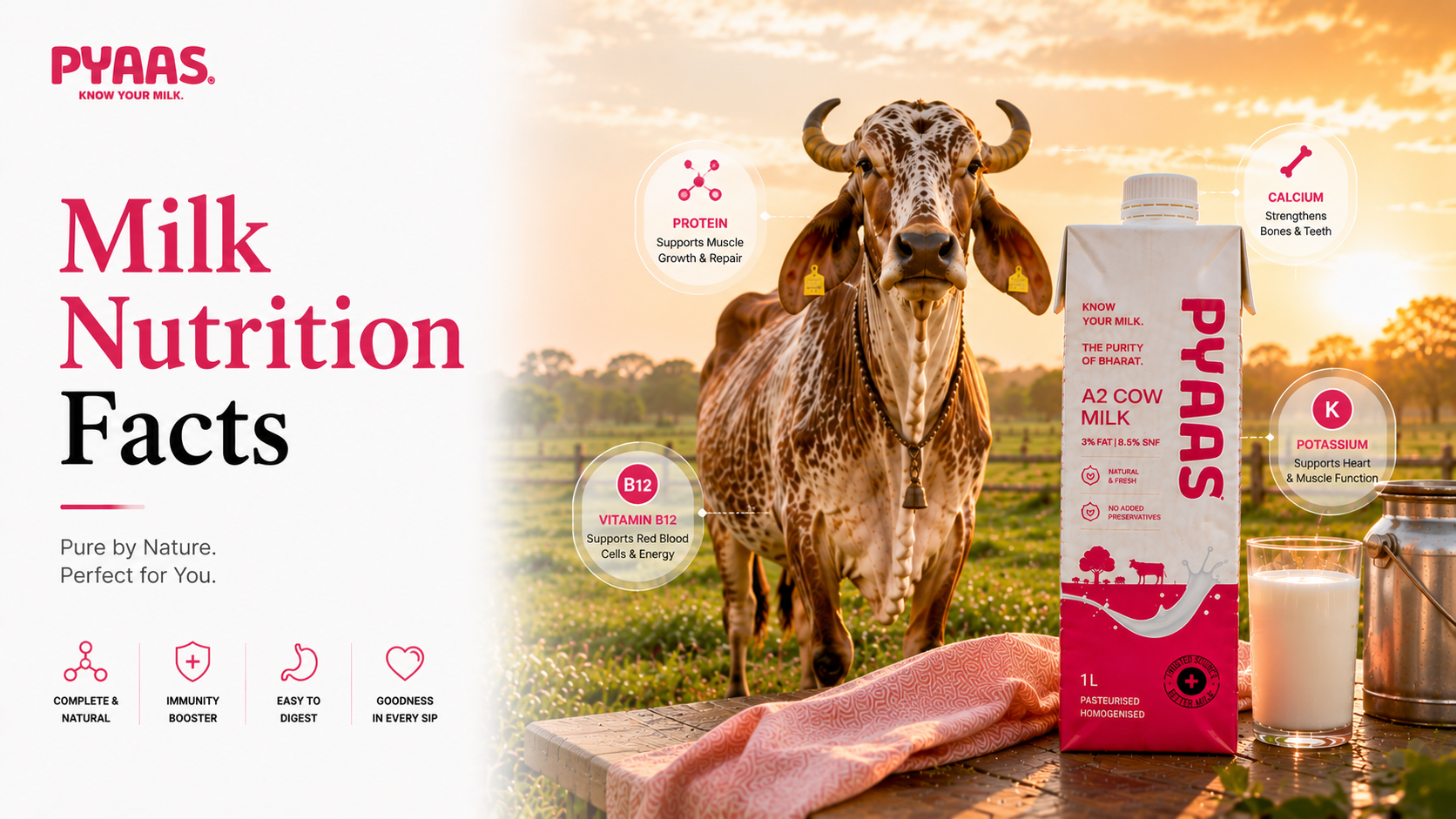
Milk Nutrition Facts: What Is Really Inside Your Glass of Milk?
12 July 2026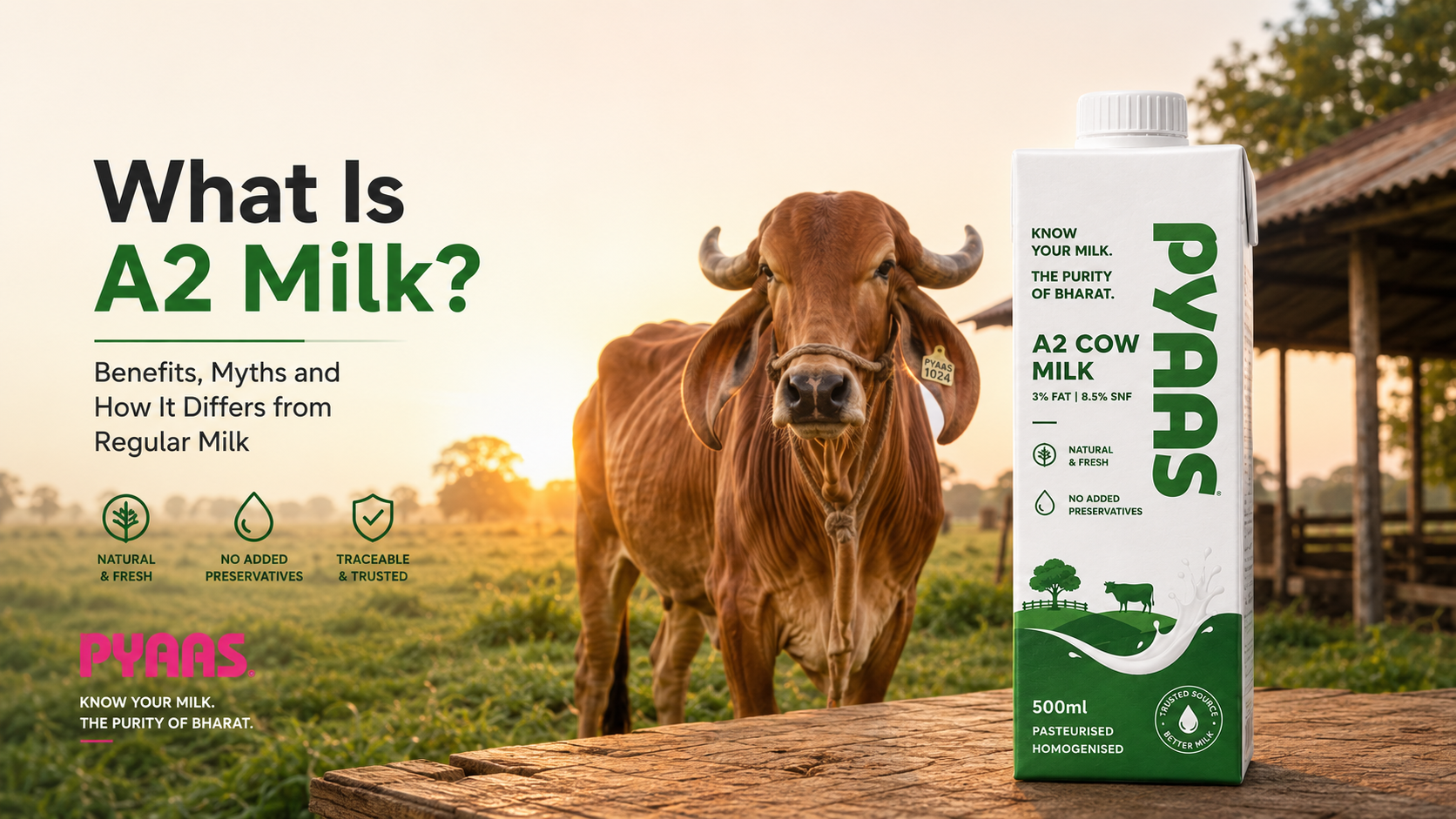
What Is A2 Milk? Benefits, Myths and How It Differs from Regular Milk
4 July 2026