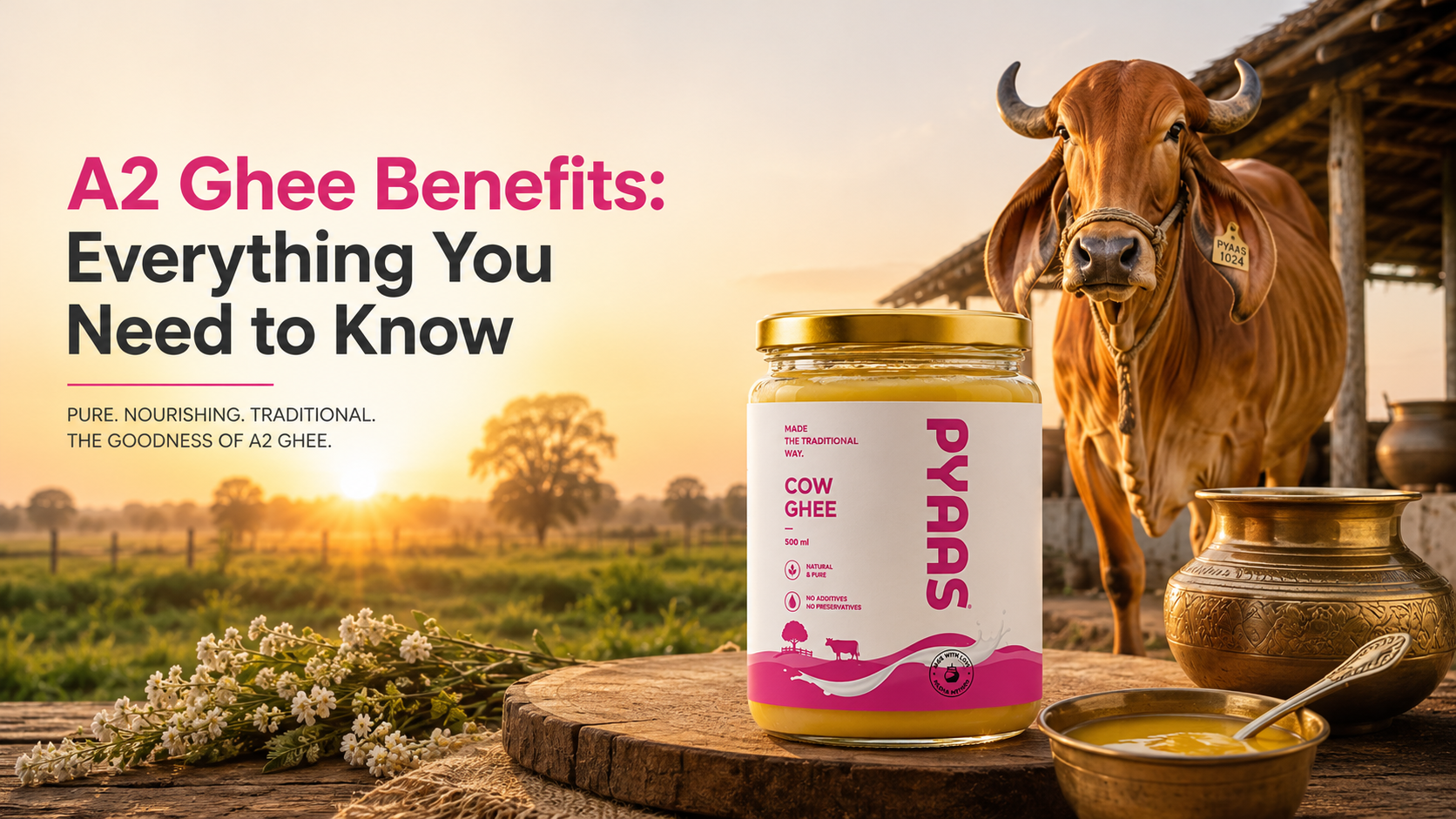
A2 Ghee Benefits: Everything You Need to Know About Traditional Ghee
A2 ghee has quietly become one of the most talked about premium foods in Indian kitchens, and for good reason. It carries the warmth of a grandmother's kitchen, the aroma of slow cooked tradition, and a growing body of curiosity about what really makes one jar of ghee different from another. If you have ever stood in a store wondering whether A2 ghee is worth it, or asked yourself what A2 ghee benefits actually mean for your family, this guide is written for you.
At its simplest, A2 ghee is clarified butter made from the milk of cows that naturally produce only the A2 type of beta-casein protein. In India, that protein is closely associated with indigenous desi breeds such as Gir, Sahiwal, Red Sindhi and Tharparkar. But the protein is only half the story. The way the ghee is made, the quality of the milk it begins with, and whether you can actually trace where it came from matter just as much. Let us walk through everything you need to know about traditional A2 ghee, honestly and in plain language.
What Is A2 Ghee?
To understand A2 ghee, it helps to start with the milk. Cow milk contains a protein called beta-casein, which comes in two main forms: A1 and A2. Many indigenous Indian cow breeds produce predominantly A2 beta-casein, while several high-yield crossbred and exotic breeds tend to produce A1. A2 ghee is simply ghee churned from the cream or curd of A2 milk.
If you want the full picture on the protein difference, we have explained it in depth in our guide on A1 vs A2 milk and in our overview of what A2 milk really is. For ghee specifically, the breed of cow and the quality of the milk are the foundation. As the old kitchen wisdom goes, good ghee can only come from good milk.
How Traditional A2 Bilona Ghee Is Made
The most respected method of making A2 ghee in India is the traditional bilona process. It is slow, hands-on and rooted in generations of practice. The steps generally look like this:
- Boiling and culturing: Fresh A2 milk is boiled, cooled and set into curd with a natural culture, much like making dahi at home.
- Hand churning: The curd is churned, traditionally with a wooden bilona, to separate out white butter known as makkhan.
- Slow simmering: The butter is gently heated until the water evaporates and the milk solids settle and turn golden, releasing that unmistakable nutty aroma.
- Straining: The clear golden ghee is strained off and stored, leaving behind the toasted solids.
This curd-first, slow-cooked approach is what gives traditional ghee its rich flavour and grainy texture. We cover the contrast between this and faster industrial methods in bilona ghee vs regular ghee, and you can see the full process step by step in how ghee is made from fresh milk to golden ghee. Our own A2 Bilona ghee follows this small-batch tradition rather than shortcuts.
A2 Ghee Benefits: What People Value
Ghee has been part of Indian cooking, wellness and ritual for centuries, and A2 ghee carries that legacy forward. While we never want to overstate health claims or invent figures, here is an honest look at why families increasingly choose it:
- A traditional cooking fat: Ghee has a high smoke point, which makes it well suited to Indian cooking styles like tempering, frying and roasting.
- Rich flavour and aroma: A2 ghee made the bilona way has a deep, nutty character that many people find unmatched in everyday recipes.
- Connection to desi breeds: For families who prefer milk from indigenous cows, A2 ghee feels like a natural extension of that choice.
- Cultural and culinary versatility: From a spoonful on hot dal to halwa, parathas and festive sweets, ghee remains a kitchen staple across generations.
Some people also report finding A2 dairy easier on digestion than A1, though individual experiences vary and the science is still developing. The honest answer is that A2 ghee is valued as much for its tradition, taste and sourcing story as for any single nutritional headline.
Ghee in the Indian Kitchen
Beyond nutrition, ghee plays a role that is almost emotional. It is the finishing touch on a meal, the base of countless sweets, and a part of festivals and daily rituals. That cultural depth is a big reason A2 ghee commands its premium place. If you are choosing fats for the whole household, our piece on why families prefer rich, creamy milk pairs well with this discussion.
What Makes Good A2 Ghee: Quality and Sourcing
Not all ghee labelled A2 is created equal. The quality of the final jar depends on a chain of decisions that begins long before churning:
- The milk itself: High-quality ghee begins with clean, fresh milk from healthy, well-cared-for cows.
- The breed and farm: Knowing that the milk truly comes from A2 yielding desi cows matters.
- The method: Traditional bilona churning over slow heat versus a fast factory process changes both character and quality.
- Storage and testing: Proper handling and honest quality checks keep ghee pure from farm to jar.
This is also where most ghee falls short on transparency. A label can say almost anything, but very few brands let you verify it. That gap is exactly why we built PYAAS around traceability. You can read how we keep our standards in inside the PYAAS quality testing process.
Why Traceability Changes the Ghee You Buy
Here is the question we think every family should ask: when you buy A2 ghee, can you actually see where the milk came from? For most products, the answer is no. You are trusting a claim on a carton with no way to check it.
PYAAS was built to change that. Our A2 milk and small-batch A2 Bilona ghee are single-origin and sourced from named farms in Gonda, Uttar Pradesh, then delivered fresh across Delhi NCR, Lucknow and Ayodhya. Scan the QR code on the pack and you can see the exact farm, the named farmer, the batch's lab test for SNF and FAT, and the time the milk left the farm. That is the difference between being told your ghee is pure and being shown.
If this idea resonates, explore Know Your Milk to understand our philosophy, and read why traceability matters in dairy for the bigger picture. You can also meet our founding family and the values that started it all.
How to Choose A2 Ghee You Can Trust
When you are standing in front of the shelf or scrolling online, look past the marketing words and check for substance:
- Clear sourcing: Does the brand name the breed, the region or the farm, or does it stay vague?
- Production honesty: Is it genuinely bilona made, or just described with traditional sounding language?
- Verifiable quality: Is there any way to confirm the claims, such as batch testing or a scannable trace?
- Freshness and handling: How is the product made, stored and delivered to you?
The best A2 ghee combines old-world tradition with the ability to prove what is inside the jar. Tradition gives you flavour and heritage. Transparency gives you peace of mind.
If you have read this far, you already care more about your food than most. That is exactly the kind of curiosity we hope to reward. Whether you choose our jar or someone else's, ask where your ghee comes from, look for proof rather than promises, and let your kitchen be filled with ghee you can actually trust. At PYAAS, our mission stays simple: Know Your Milk.
Written by
PYAAS Team
The PYAAS Team writes about traceable, single-origin A2 dairy from named farms in Gonda, Uttar Pradesh, helping Indian families truly know their milk and ghee.
More from PYAAS TeamCommon questions.
What is A2 ghee?
A2 ghee is clarified butter made from the milk of cows that naturally produce only the A2 type of beta-casein protein. In India it is closely linked to indigenous desi breeds such as Gir, Sahiwal, Red Sindhi and Tharparkar. It is valued for its traditional flavour, aroma and connection to heritage dairy practices.
How is A2 bilona ghee different from regular ghee?
Bilona ghee is made the slow, traditional way: the milk is cultured into curd, hand churned into white butter, and then simmered into ghee. Many regular ghees skip the curd stage and use faster, cream-based industrial methods. The bilona process gives a richer aroma and grainy texture that many families prefer.
What are the benefits of A2 ghee?
A2 ghee is a traditional cooking fat with a high smoke point that suits Indian cooking like tempering and frying. It offers a deep, nutty flavour and a strong connection to indigenous breeds and heritage. Some people find A2 dairy easier on digestion than A1, though experiences vary and the science is still developing.
How can I tell if A2 ghee is genuine?
Look past the marketing words and check for substance. Genuine A2 ghee should name the breed, region or farm, be made the bilona way, and ideally offer a way to verify the claim. With PYAAS, you can scan the QR code on the pack to see the exact farm, the farmer and the batch lab test.
Is A2 ghee good for daily cooking?
Yes, ghee has been a daily staple in Indian kitchens for centuries. Its high smoke point makes it well suited to roasting, frying and tempering, and it adds flavour to dal, parathas, halwa and festive sweets. As with any fat, it is best enjoyed as part of a balanced diet.
Get the next one in your inbox.
The occasional note on milk, ghee, and how we work. Plain words, no hype, and you can leave any time.
Keep reading.
Bilona Ghee vs Regular Ghee: What's the Difference?
12 July 2026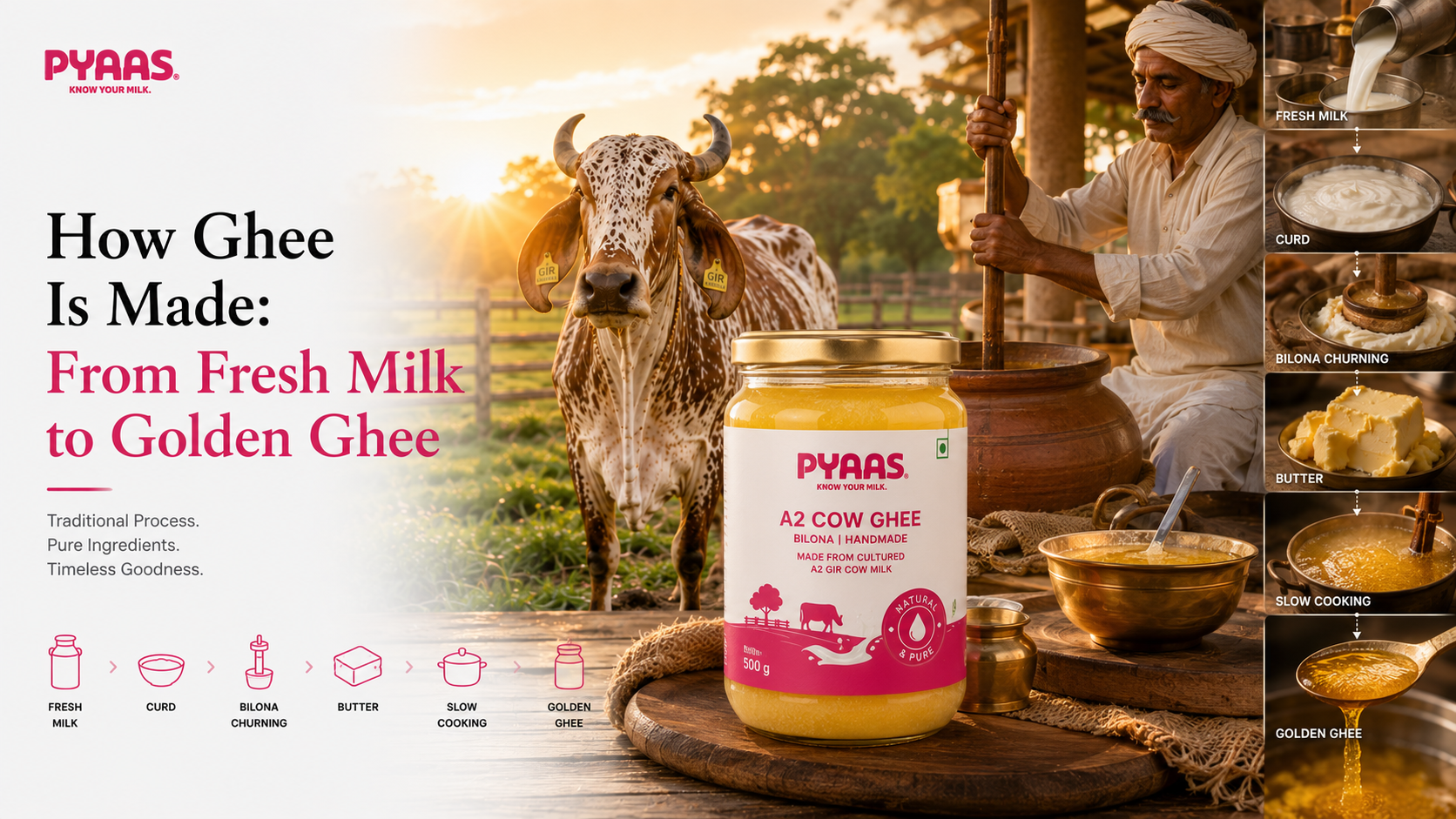
How Ghee Is Made: From Fresh Milk to Golden Ghee
13 July 2026
Desi Cow Ghee Explained: Why Consumers Are Choosing Traditional Ghee
7 July 2026
A1 vs A2 Milk: Understanding the Difference
9 July 2026