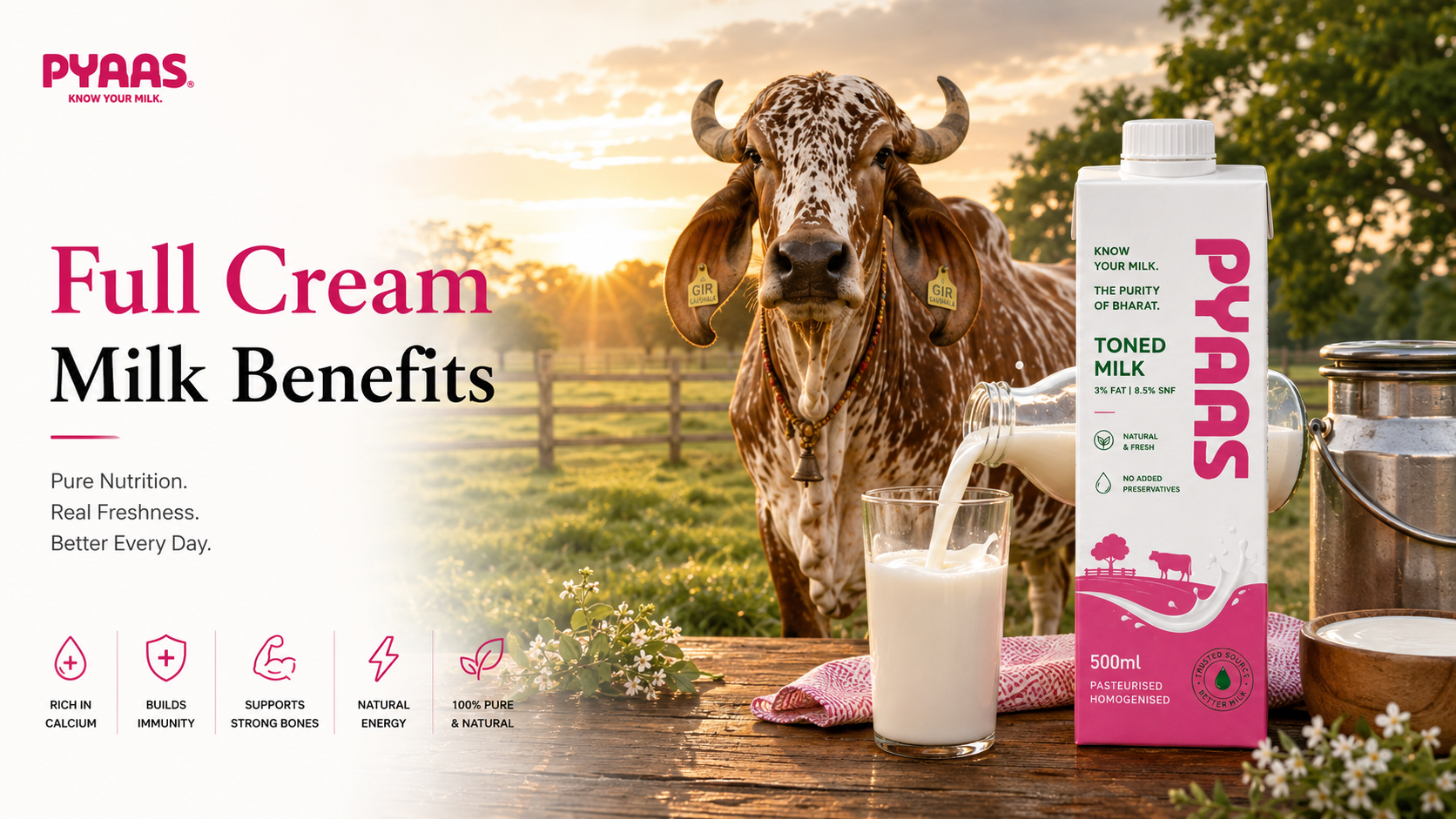
Full Cream Milk Benefits: Why Many Families Prefer Rich, Creamy Milk
Few things in an Indian kitchen feel as comforting as a glass of rich, creamy milk. For generations, full cream milk has been the milk our grandparents poured into morning tea, the milk that thickened the kheer at every festival, and the milk that made homemade paneer soft and generous. Even today, when supermarket shelves carry toned, double-toned and skimmed options, many families still reach for full cream milk first. The reasons go beyond habit. Full cream milk offers a fuller flavour, a creamier mouthfeel and a versatility in cooking that lower-fat varieties simply cannot match.
In this guide we explain what full cream milk actually is, the genuine benefits that make so many households prefer it, how it compares with other milk categories, and the one factor that matters more than the label on the carton: knowing exactly where your milk comes from. Whether you are choosing milk for your children, your parents or your daily chai, understanding full cream milk helps you make a confident, informed choice.
What Is Full Cream Milk?
Full cream milk is milk that retains a higher proportion of its natural milk fat compared with toned or double-toned varieties. In India, full cream milk is typically standardised to a higher fat percentage, which gives it the rich, rounded taste people associate with traditional dairy. Nothing artificial is added to make it creamy. The cream is simply the milk fat that occurs naturally, kept in rather than removed.
Because the fat content is higher, full cream milk also carries more of the flavour compounds and fat-soluble nutrients that dissolve in milk fat. This is part of why a cup of full cream milk feels more satisfying and tastes noticeably richer than a thinner, lower-fat alternative. If you have ever wondered why some milk tastes watery and some tastes indulgent, fat content is usually the answer.
How Full Cream Milk Differs From Toned and Double-Toned Milk
The primary difference between full cream milk and other milk categories is fat content. Toned and double-toned milk are created by reducing the fat, often to suit specific dietary goals or to lower calories. Full cream milk keeps more of its natural fat, which is why it is preferred for cooking and for anyone who wants a richer drink. If you are weighing up the trade-offs, our detailed comparison of toned milk versus full cream milk walks through exactly which one suits different households.
The Real Benefits of Full Cream Milk
Many families prefer full cream milk not for one single reason, but for the everyday experience it delivers. Here are the benefits people most often value:
- A richer, creamier taste. The higher fat content gives full cream milk a smooth, rounded flavour that makes tea, coffee and plain milk far more enjoyable.
- Better results in cooking. From paneer and kheer to milk-based gravies and traditional sweets, full cream milk gives body and richness that lower-fat milk struggles to provide.
- A more satisfying drink. Because fat slows digestion slightly, a glass of full cream milk can feel more filling, which many parents appreciate for active, growing children.
- Natural fat-soluble nutrients. Milk naturally contains fat-soluble vitamins, and keeping the fat in means keeping more of that natural goodness.
- Familiar, traditional appeal. For many Indian families, full cream milk is simply the milk that tastes the way milk is supposed to taste.
Milk in general is a valuable everyday source of protein, calcium and other nutrients. To understand what is genuinely inside your glass beyond just the fat, our breakdown of milk nutrition facts is a useful companion read.
Who Should Choose Full Cream Milk?
The right milk depends on individual lifestyle, age and usage. Full cream milk is often a strong choice for:
- Growing children who are active and benefit from the energy and richness of full-fat milk.
- Households that cook with milk daily and want better texture in sweets, paneer and gravies.
- Anyone who simply prefers a richer taste in their tea, coffee or plain glass of milk.
People managing specific dietary goals, such as reducing fat intake on medical advice, may prefer a toned variety instead. There is no single best milk for everyone. The most useful approach is to match the milk to the person and the purpose. If you are choosing for the youngest members of the family, our guide to the best milk for children covers this in depth.
A Note on Cow Milk and Buffalo Milk
Full cream milk can come from cows or buffaloes, and the two differ in fat, flavour and texture. Buffalo milk is naturally higher in fat, while cow milk is lighter and, in the case of indigenous breeds, often easier to digest. If you are deciding between them, our comparison of cow milk versus buffalo milk explains the practical differences for everyday use. At PYAAS, we focus on single-origin A2 cow milk, which many families find gentle, fresh and easy to enjoy daily.
Why Freshness and Sourcing Matter More Than the Label
Here is something many consumers overlook. Whether you choose full cream, toned or A2 milk, the category on the carton tells you only part of the story. Factors such as how the farm is managed, how quickly the milk is chilled and packed, how it is tested and whether you can trace its origin often have a greater impact on quality than the fat percentage alone.
A creamy carton from an unknown source can still hide problems. Fresh, well-handled milk from a known farm protects flavour and safety in a way that no label claim can guarantee on its own. This is why we encourage families to look past marketing and ask better questions. If you want to be confident your milk is genuine, our guide on how to check milk purity at home shares simple tests any household can do.
Modern consumers increasingly want to know: Which farm did this come from? When was it milked? Was it tested? Brands that can answer these questions honestly build far stronger trust. That belief sits at the heart of our Know Your Milk promise.
The PYAAS Approach: Full Traceability From Farm to Family
At PYAAS, we believe a richer glass of milk should also be a more transparent one. Our milk is single-origin A2 cow milk, sourced from named farms in Gonda, Uttar Pradesh, and delivered fresh across Delhi NCR, Lucknow and Ayodhya. Every pack carries a QR code. Scan it and you can see the exact farm, the named farmer, that batch's lab test for SNF and FAT, and the time the milk left the farm.
That level of traceability changes how you experience milk. Instead of trusting a generic label, you can see the people and the process behind your purchase. The same care extends to our small-batch A2 Bilona ghee, made the traditional way from cultured cream. Our work began as a family commitment to honest dairy, and you can read more about our founding family and why we built PYAAS around transparency.
If you would like to understand the bigger picture of where dairy is heading, our piece on what traceable milk really means explains why more families are demanding to know their milk.
Making the Right Choice for Your Family
Full cream milk earns its place in so many Indian homes for good reason. It tastes richer, performs better in cooking and carries the familiar comfort of traditional dairy. But the most important decision is not only full cream versus toned. It is choosing milk you can actually trust, from a source you can verify.
If a rich, creamy glass of milk is what your family loves, you deserve to enjoy it with complete confidence about where it came from. That is exactly what we set out to offer: honest, traceable dairy that lets you taste the richness and know the story behind it. When you are ready, we would be glad to help you Know Your Milk.
Written by
PYAAS Team
The PYAAS Team writes about transparent, traceable dairy from named farms in Gonda, Uttar Pradesh, helping Indian families understand and truly Know Your Milk.
More from PYAAS TeamCommon questions.
What is full cream milk?
Full cream milk is milk that retains a higher proportion of its natural milk fat compared with toned or double-toned varieties. Nothing artificial is added to make it creamy. The fat is simply kept in rather than removed, which gives it a rich texture and rounded flavour.
What are the main benefits of full cream milk?
Full cream milk offers a richer, creamier taste, better results in cooking dishes like paneer and kheer, and a more satisfying drink because the fat slows digestion slightly. It also retains more of milk's natural fat-soluble nutrients. Many Indian families prefer it for its familiar, traditional flavour.
Is full cream milk good for children?
Full cream milk can be a good choice for active, growing children because the higher fat content provides energy and a more satisfying drink. Every child is different, so it is sensible to consider age and any specific dietary advice from a doctor. Above all, choose fresh, well-sourced milk you can trust.
What is the difference between full cream milk and toned milk?
The primary difference is fat content. Full cream milk keeps more of its natural fat, giving a richer taste and better cooking results, while toned and double-toned milk have some fat removed to lower calories. The right choice depends on your taste, how you use milk, and any dietary goals.
Does the brand or source of full cream milk matter?
Yes, often more than the fat percentage on the label. How the farm is managed, how quickly milk is chilled and packed, whether it is tested, and whether you can trace its origin all affect quality. Choosing traceable milk from a known farm gives you far more confidence than a generic label claim.
Get the next one in your inbox.
The occasional note on milk, ghee, and how we work. Plain words, no hype, and you can leave any time.
Keep reading.
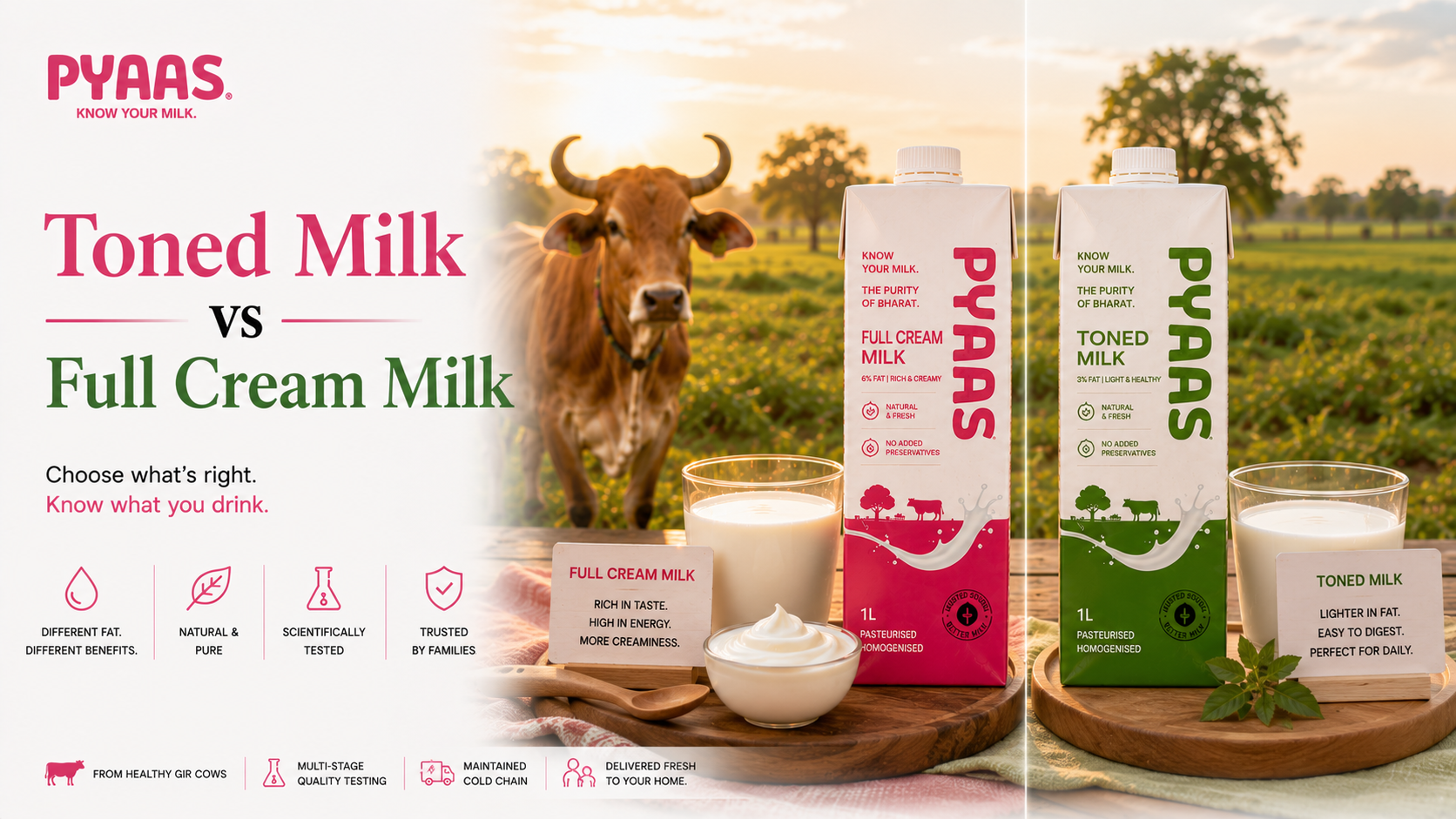
Toned Milk vs Full Cream Milk: Which One Should You Choose?
6 July 2026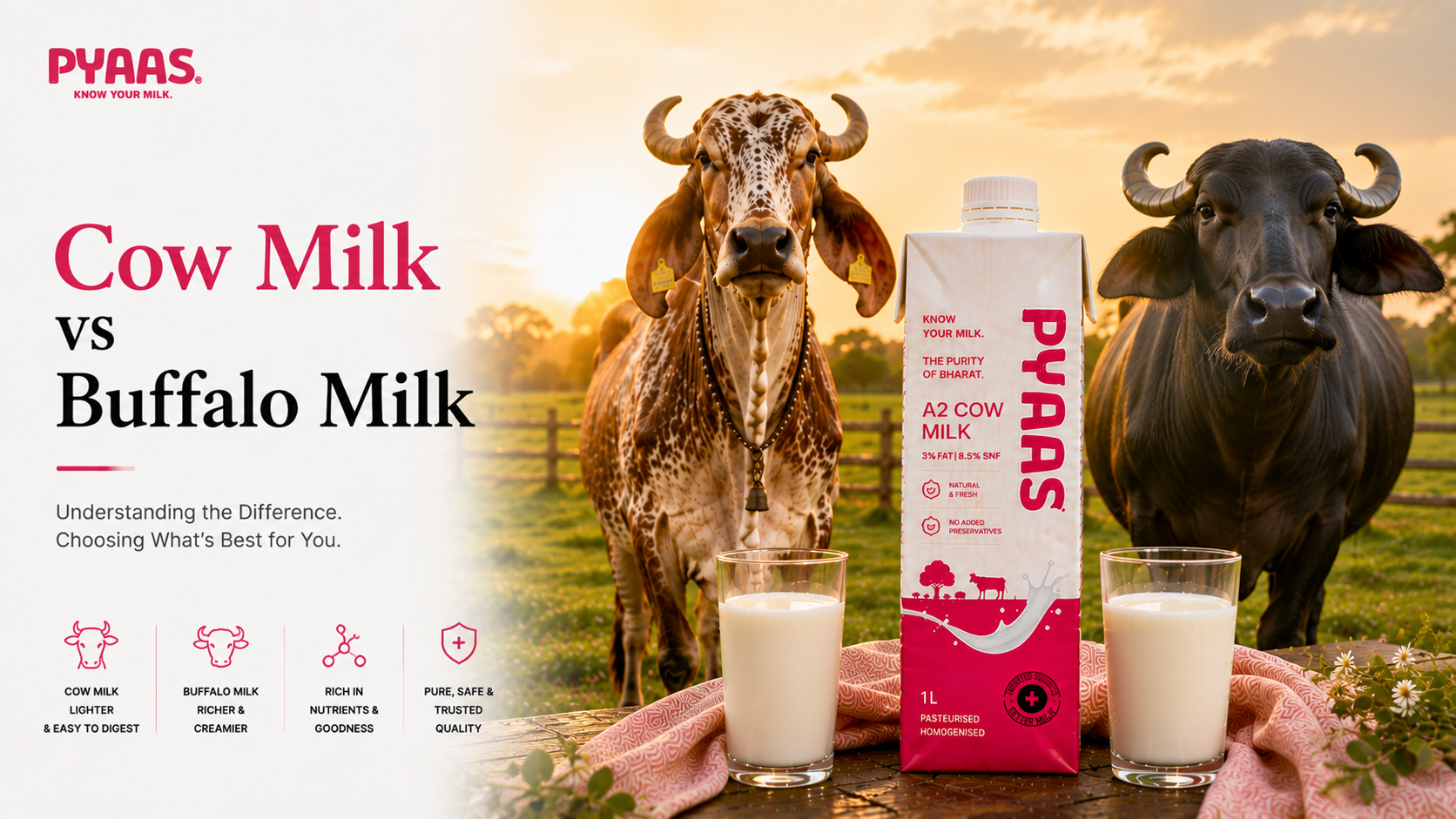
Cow Milk vs Buffalo Milk: Understanding the Key Differences
12 July 2026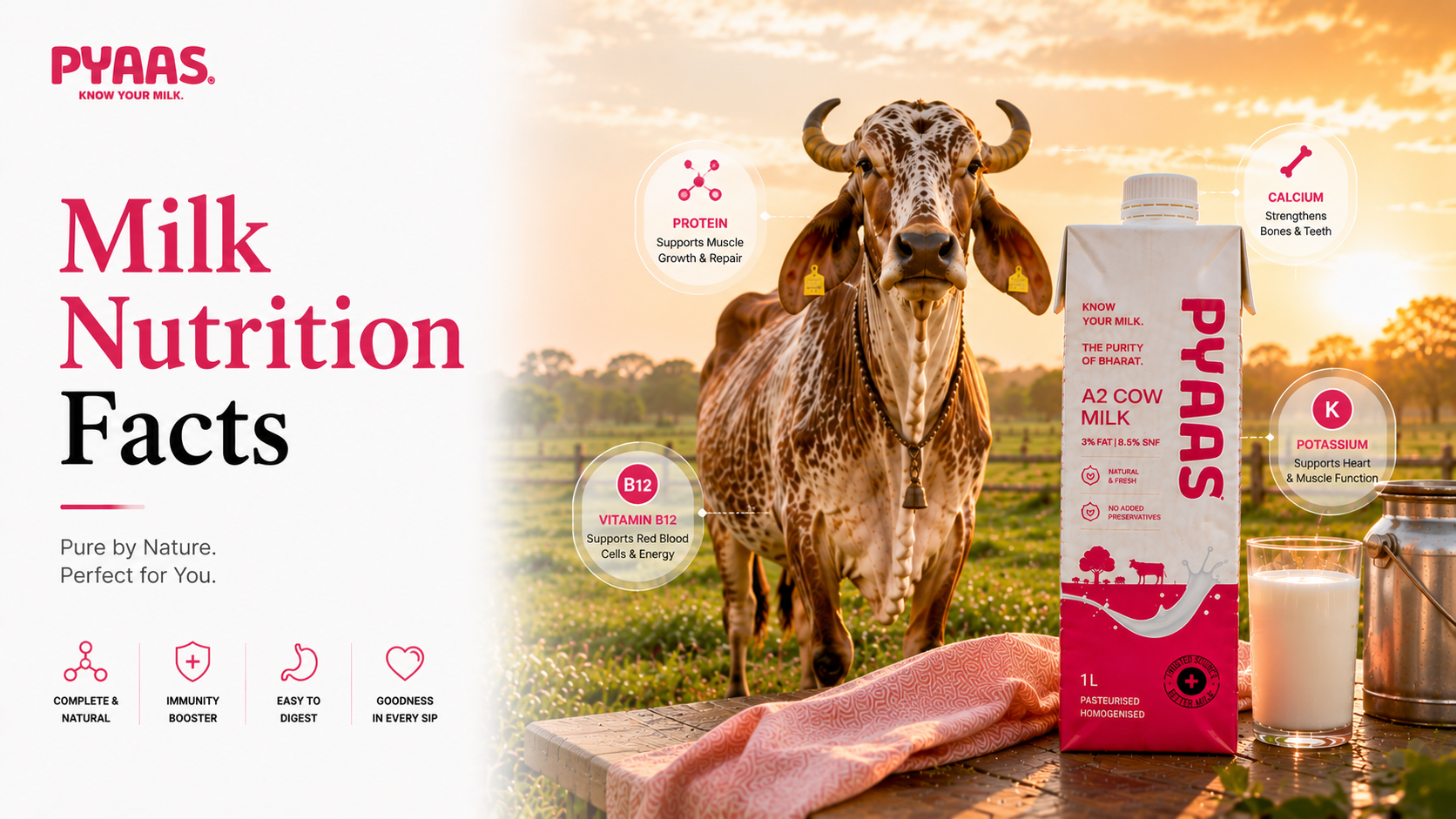
Milk Nutrition Facts: What Is Really Inside Your Glass of Milk?
12 July 2026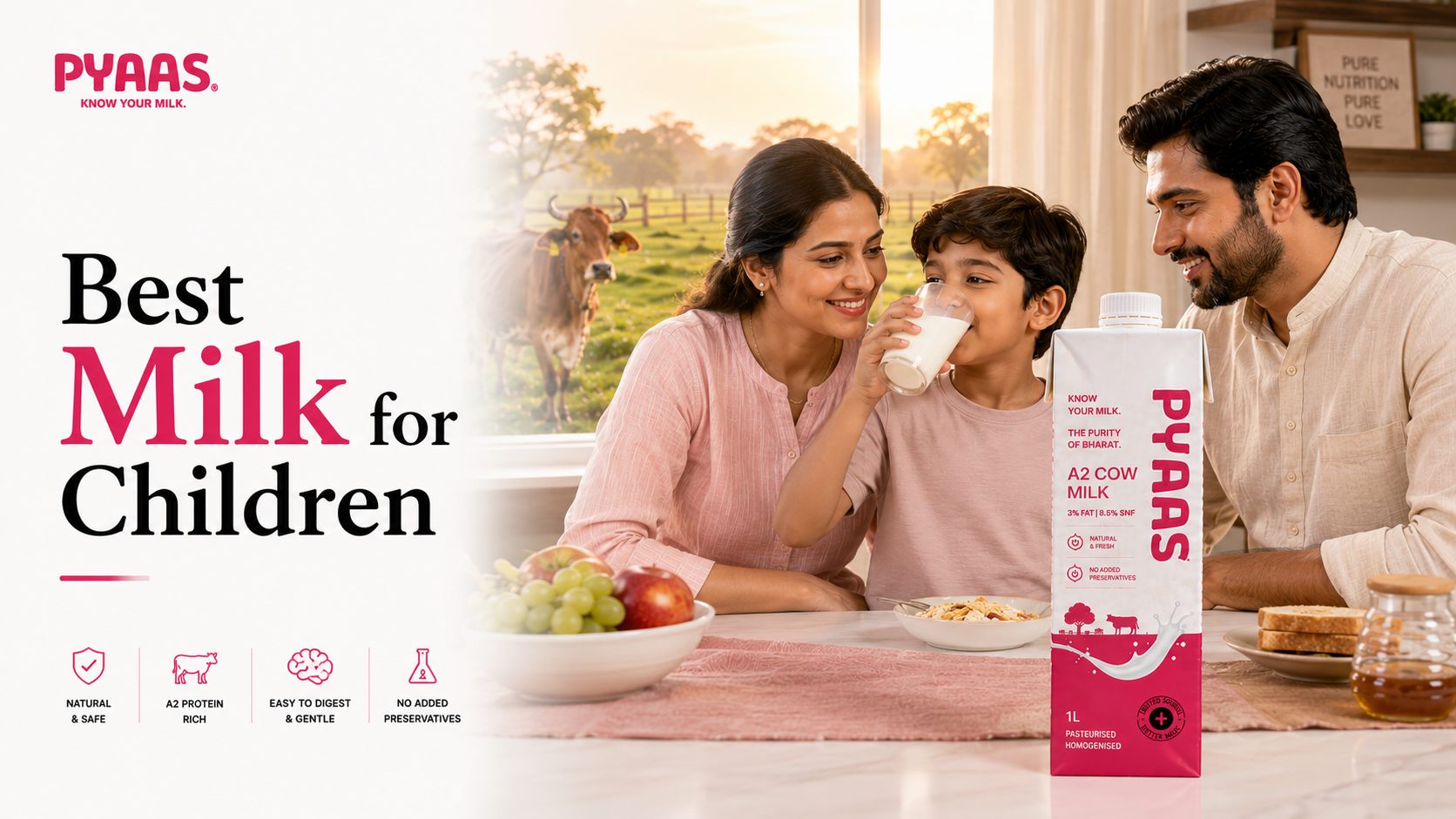
Best Milk for Children: A Parent's Guide to Choosing Quality Milk
9 July 2026