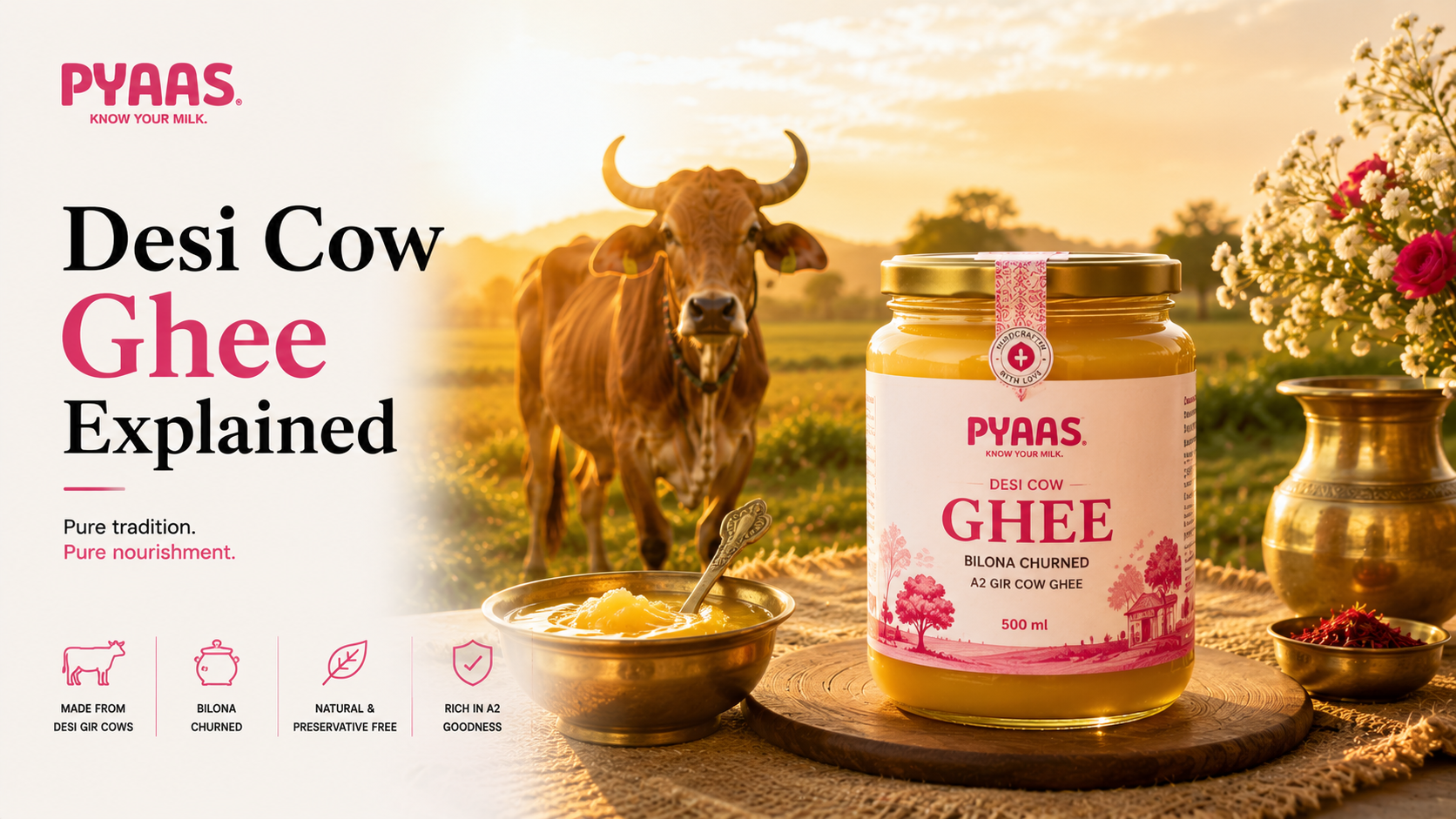
Desi Cow Ghee Explained: Why Consumers Are Choosing Traditional Ghee
Walk into any Indian kitchen and you will likely find a jar of ghee within arm's reach of the stove. For generations, ghee has carried our tadkas, our festival sweets and our everyday comfort food. But in the last few years a quieter shift has taken place: families are no longer satisfied with just any ghee. They are asking for desi cow ghee, and they want to know exactly where it came from. This guide explains what desi cow ghee really is, how traditional ghee is made, and why so many consumers are choosing it over mass-produced alternatives.
The word "desi" simply means "of the land." Desi cow ghee is ghee prepared from the milk of indigenous Indian cattle breeds such as Gir, Sahiwal, Red Sindhi and Tharparkar. These are the cows that have lived alongside Indian farmers for centuries, suited to our climate and tied to our food heritage. As shoppers grow more curious about purity, breed and sourcing, the humble jar of ghee has become a symbol of a much bigger demand: the right to know your food.
What Is Desi Cow Ghee?
Desi cow ghee is clarified butter made specifically from the milk of native Indian cow breeds, rather than from buffalo milk or from high-yield crossbred cattle. The term points to two things at once: the animal and the tradition. The milk comes from indigenous breeds, and the ghee is often prepared using time-honoured methods rather than industrial shortcuts.
Many of these indigenous breeds naturally produce A2 type milk, which contains the A2 beta-casein protein. This is why desi cow ghee and A2 ghee are often spoken about together. If you are new to the protein conversation, it helps to first understand the difference between A1 and A2 milk, because the same milk that goes into your glass is the milk that becomes ghee.
Desi Cow Ghee vs Regular Ghee
The difference is not only the breed. It is also the process. Regular commercial ghee is frequently made by melting stored cream or butter at scale. Traditional desi ghee is made by culturing curd and churning it, a slower and more careful route. To understand exactly how these methods diverge, our explainer on Bilona ghee vs regular ghee breaks down each step.
How Traditional Bilona Ghee Is Made
The traditional bilona method is what gives genuine desi ghee its reputation. It is unhurried by design, and every stage matters.
- Culturing: Fresh milk is first turned into curd, the same way it happens in an Indian home.
- Churning: The curd is churned to separate butter from buttermilk, traditionally using a wooden churner.
- Slow simmering: The butter is gently heated until the water evaporates and the milk solids settle, leaving golden, fragrant ghee.
- Small batches: Because the process is slow, true bilona ghee is made in small quantities rather than mass volumes.
This method takes more time and more milk to produce the same quantity of ghee, which is one reason authentic desi cow ghee is positioned as a premium product. If you want the full picture from raw milk to finished jar, read how ghee is made, from fresh milk to golden ghee. At PYAAS, our A2 Bilona ghee follows this small-batch tradition rather than industrial shortcuts.
Why Consumers Are Choosing Desi Cow Ghee
The move toward traditional ghee is not nostalgia alone. Several practical reasons are driving it.
1. A Return to Indigenous Breeds
Indian families increasingly want milk and ghee from native cattle. Breeds like Gir and Sahiwal have supported Indian agriculture for centuries and are closely linked to A2 milk. If you are curious about the breeds themselves, our pieces on Gir cow milk and Sahiwal cow milk explain why these indigenous cows have become so sought after.
2. Interest in the A2 Protein
Many shoppers choose desi cow ghee because it comes from A2 milk. The conversation around A2 beta-casein has made people pay closer attention to the source of their dairy fat, not just the label on the front.
3. The Desire for Transparency
Perhaps the biggest shift is this: modern consumers want proof, not promises. They are asking which farm the milk came from, which breed produced it and how the ghee was made. Brands that answer these questions honestly build far stronger trust. This is the heart of what Know Your Milk stands for, and it is the same demand reshaping the wider category, as we explore in why traceability matters in dairy.
How to Choose Genuine Desi Cow Ghee
With so many jars claiming to be "pure desi" or "A2," it helps to know what actually signals quality. Here is what thoughtful buyers look for.
- Clear breed and source information: Does the brand tell you which cattle the milk came from, and from where?
- An honest production method: Is the ghee made using the traditional bilona route, or is that just marketing language?
- Aroma, grain and colour: Genuine desi ghee tends to have a rich aroma, a grainy texture and a natural golden hue.
- Traceability you can verify: The strongest sign of confidence is a brand that lets you check the journey for yourself.
That last point is where the future of dairy is heading. Instead of trusting a claim printed on a carton, consumers increasingly want to verify it. To understand how this works in practice, see what traceable milk really means.
The PYAAS Approach to Ghee and Trust
At PYAAS, we believe a jar of ghee should be able to tell its own story. Our A2 Bilona ghee begins with single-origin A2 cow milk from named farms in Gonda, Uttar Pradesh, the same milk we deliver fresh to families across Delhi NCR, Lucknow and Ayodhya. It is prepared in small batches in the traditional way, not melted at industrial scale.
What makes our promise verifiable is traceability. Scan the QR code on the pack and you can see the exact farm, the named farmer behind that batch, the lab readings for that milk and the time it left the farm. This is not a slogan; it is the standard we hold ourselves to. You can read more about the people who started this in the story of our founding family.
Desi cow ghee is far more than a cooking fat. It is a link to indigenous breeds, to traditional craft and to a way of eating that values knowing the source. If you have been searching for ghee you can genuinely trust, look for the things that matter: the breed, the method and the proof. When a brand is willing to show you all three, you are no longer just buying ghee. You are choosing to know your milk.
Written by
PYAAS Team
The PYAAS Team writes about A2 milk, traditional ghee and dairy traceability, helping Indian families understand exactly where their dairy comes from and why it matters.
More from PYAAS TeamCommon questions.
What is desi cow ghee?
Desi cow ghee is clarified butter made from the milk of indigenous Indian cattle breeds such as Gir, Sahiwal, Red Sindhi and Tharparkar. The word desi means of the land, pointing to native cows and traditional preparation. Many of these breeds naturally produce A2 milk, which is why desi cow ghee and A2 ghee are often discussed together.
What is the difference between desi cow ghee and regular ghee?
The difference lies in both the breed and the process. Desi cow ghee comes from indigenous cows and is often made using the traditional bilona method, where curd is churned and the butter is slowly simmered. Regular commercial ghee is frequently produced at scale from stored cream or butter, using faster industrial methods.
How is traditional bilona ghee made?
Bilona ghee is made by first culturing fresh milk into curd, then churning that curd to separate butter from buttermilk. The butter is gently simmered until the water evaporates and the milk solids settle, leaving golden ghee. Because the process is slow and uses more milk per jar, authentic bilona ghee is made in small batches.
Is desi cow ghee the same as A2 ghee?
They overlap closely but are not identical terms. Desi cow ghee refers to ghee from indigenous Indian cows, while A2 ghee refers to ghee made from milk containing the A2 beta-casein protein. Because many desi breeds naturally produce A2 milk, ghee from them is usually A2 ghee as well.
How can I tell if desi cow ghee is genuine?
Look for clear breed and source information, an honest description of the production method, and a natural aroma, grainy texture and golden colour. The strongest signal is traceability that you can verify yourself. PYAAS lets you scan a QR code on the pack to see the exact farm, the named farmer and that batch's lab readings.
Get the next one in your inbox.
The occasional note on milk, ghee, and how we work. Plain words, no hype, and you can leave any time.
Keep reading.
Bilona Ghee vs Regular Ghee: What's the Difference?
12 July 2026
A2 Ghee Benefits: Everything You Need to Know About Traditional Ghee
4 July 2026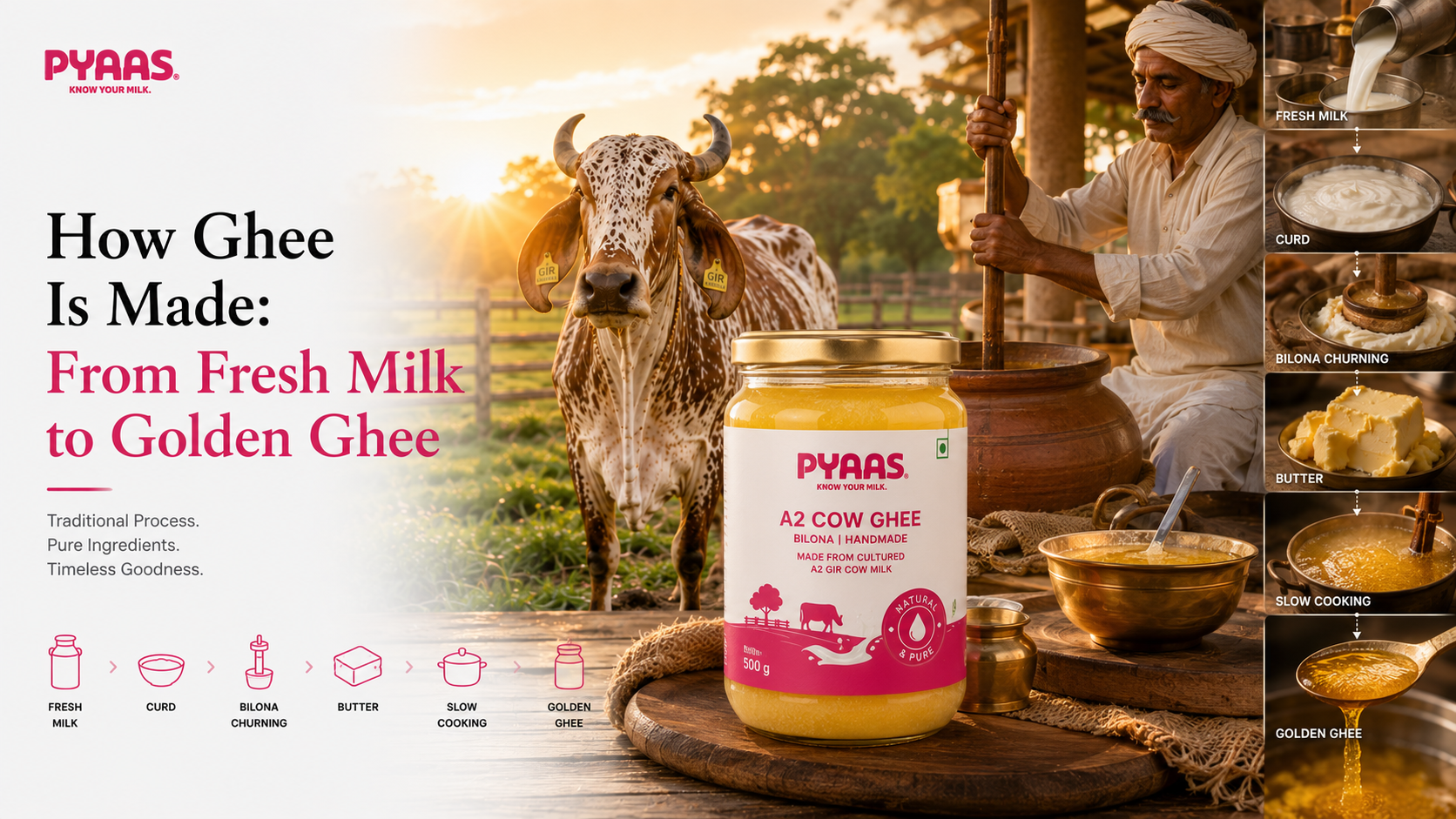
How Ghee Is Made: From Fresh Milk to Golden Ghee
13 July 2026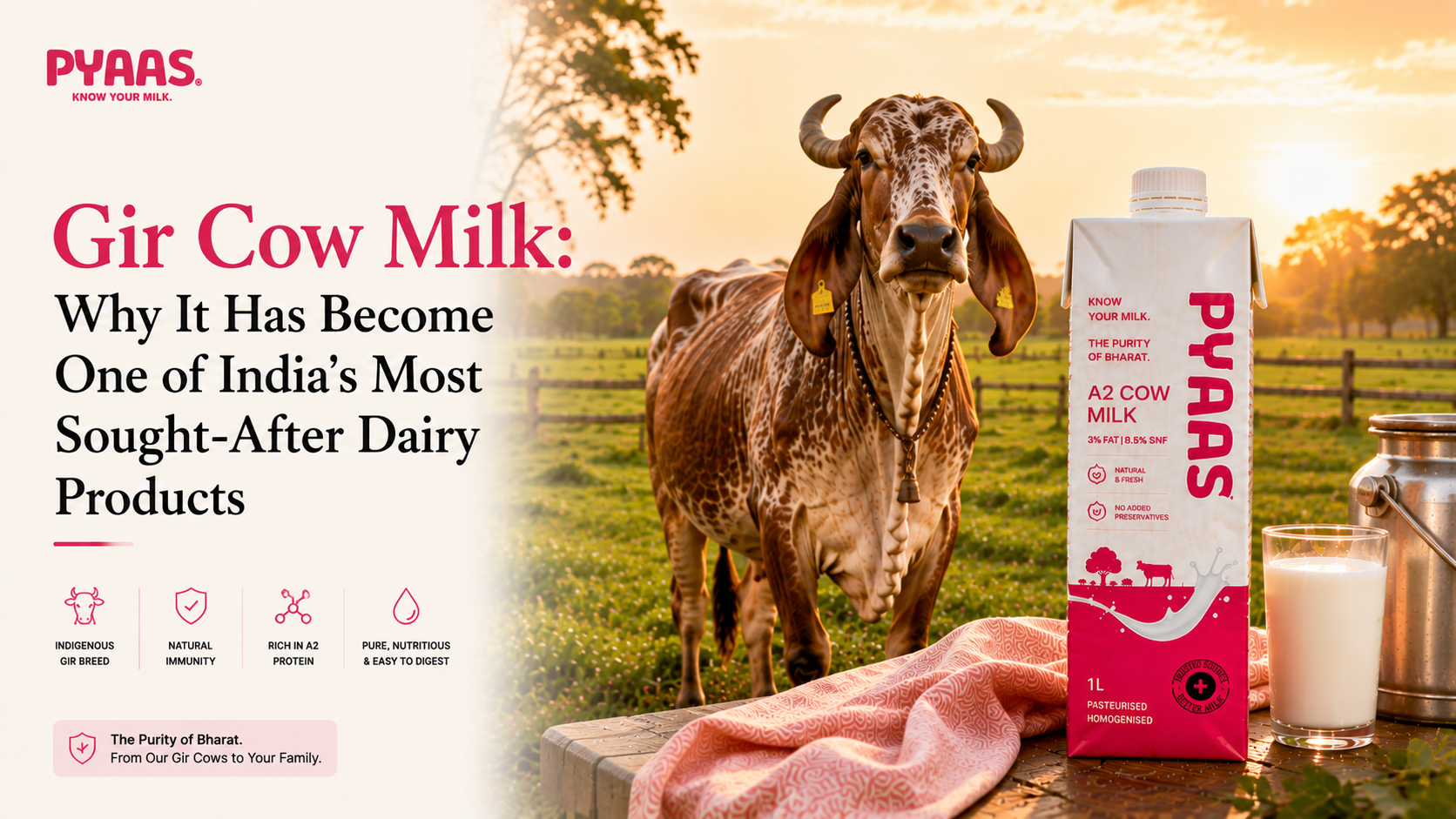
Gir Cow Milk: Why It Has Become One of India's Most Sought-After Dairy Products
11 July 2026