How Technology Is Transforming Dairy Farming in India
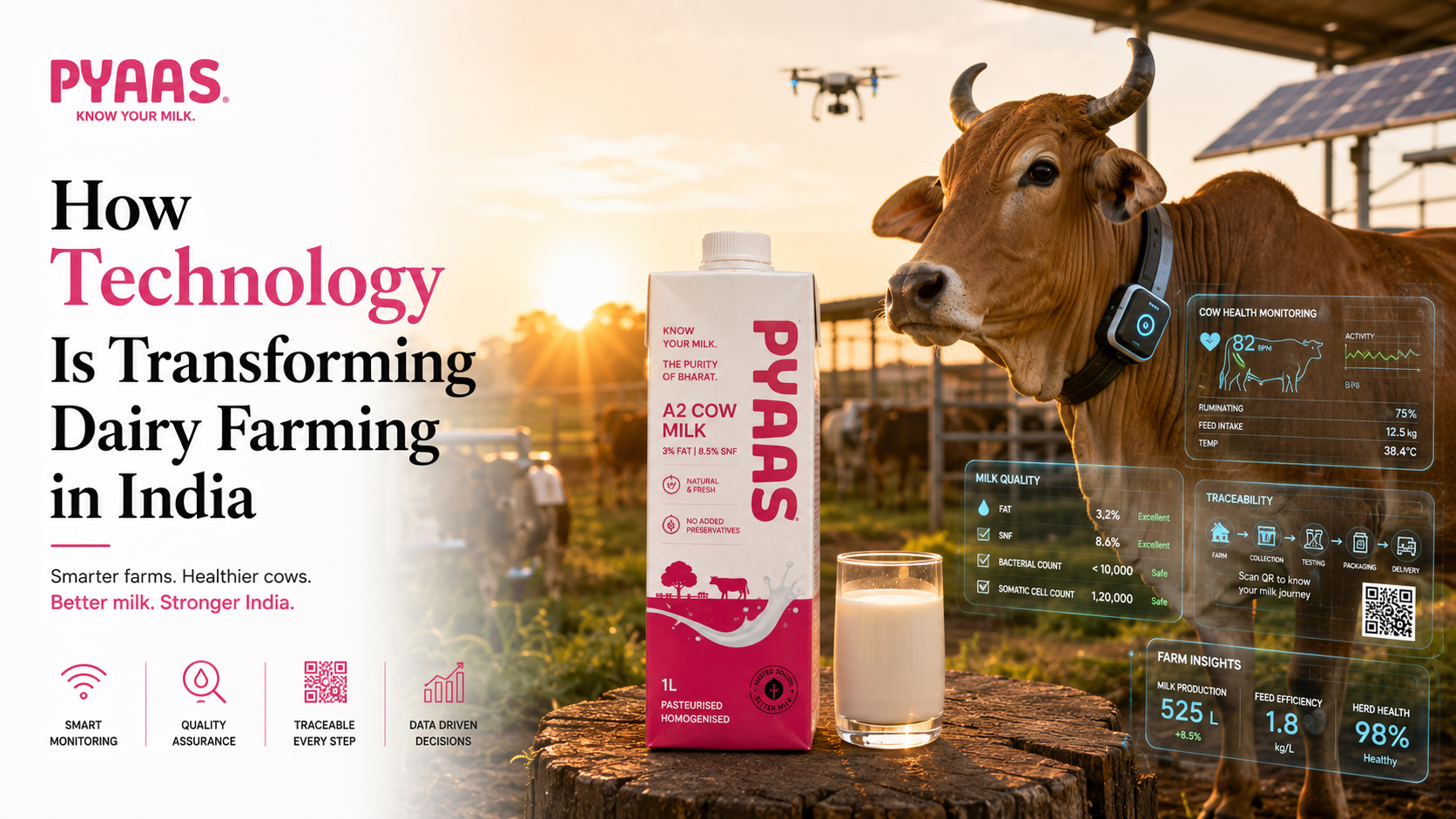
For generations, dairy farming in India ran on instinct, observation and handwritten ledgers. A farmer knew his herd by sight, judged milk by smell and kept records in a notebook by the milking shed. That world is changing fast. Today, technology is transforming dairy farming in India at every step of the chain, from how cattle are cared for on the farm to how a city family checks where their morning milk came from.
This shift is one of the biggest in the history of Indian dairy. Mobile apps now sit beside milking buckets, lab equipment tests quality in minutes, and a simple QR code can connect a household in Delhi NCR to a named farm hundreds of kilometres away. Below, we look at how innovation is reshaping the dairy industry, what it means for farmers and families, and why traceability has become the heart of it all.
Why Indian Dairy Needed a Technology Upgrade
India is the largest milk producer in the world, yet much of that milk still passes through a long, fragmented supply chain before it reaches a home. Milk often changes hands several times between the cow and the carton, and at each step trust depends on people you will never meet. For decades, families simply had no way to verify what was inside the milk they drank every day.
Modern consumers expect more. They want milk that is fresh, safe and honest, and they want proof rather than promises. Meeting these expectations at scale is almost impossible with paper records and word of mouth. Technology is what makes large-scale honesty practical. If you want a deeper look at where the old system falls short, our piece on the hidden problem with India's milk supply chain explains it clearly.
Smarter Farms: Digital Records and Herd Management
The first place technology shows up is on the farm itself. Many progressive dairy farmers now keep digital records instead of dusty registers, and this small change makes a big difference to milk quality and animal welfare.
- Cattle health tracking: vaccination dates, treatments and check-ups logged so nothing is missed.
- Feed and nutrition records: consistent feeding leads to more consistent milk.
- Breeding and milk yield data: helping farmers understand each animal and plan ahead.
- Daily collection logs: the exact quantity and time of each milking, captured automatically.
These records improve day-to-day decisions and protect the health of the herd. Healthy, well-managed cows give better milk, which is why good dairy starts long before the testing lab. To understand what high-quality farming looks like end to end, see our overview of dairy farming in India.
Better Quality Testing With Modern Tools
Quality testing is where technology has perhaps made the clearest difference. In the past, judging milk meant relying on look, smell and basic checks. Today, modern equipment can measure milk far more precisely and far more quickly.
Dairies now routinely test for SNF (Solids-Not-Fat) and FAT, the two figures that describe how rich and nutritious a batch of milk truly is. Technology also helps screen for adulteration and contamination before milk ever reaches a family. This creates consistency across every batch, season after season.
Catching Problems Before They Reach Your Home
The real value of fast, accurate testing is that a poor batch can be stopped early. When testing happens close to the source and the results are recorded, nothing slips through quietly. We explain exactly how this works in practice in inside the PYAAS quality testing process, and what we do when a batch does not pass in what happens when a milk batch fails quality testing. Families curious about the basics can also read our guide to 7 simple milk purity tests you can do at home.
Traceability: The Most Exciting Change of All
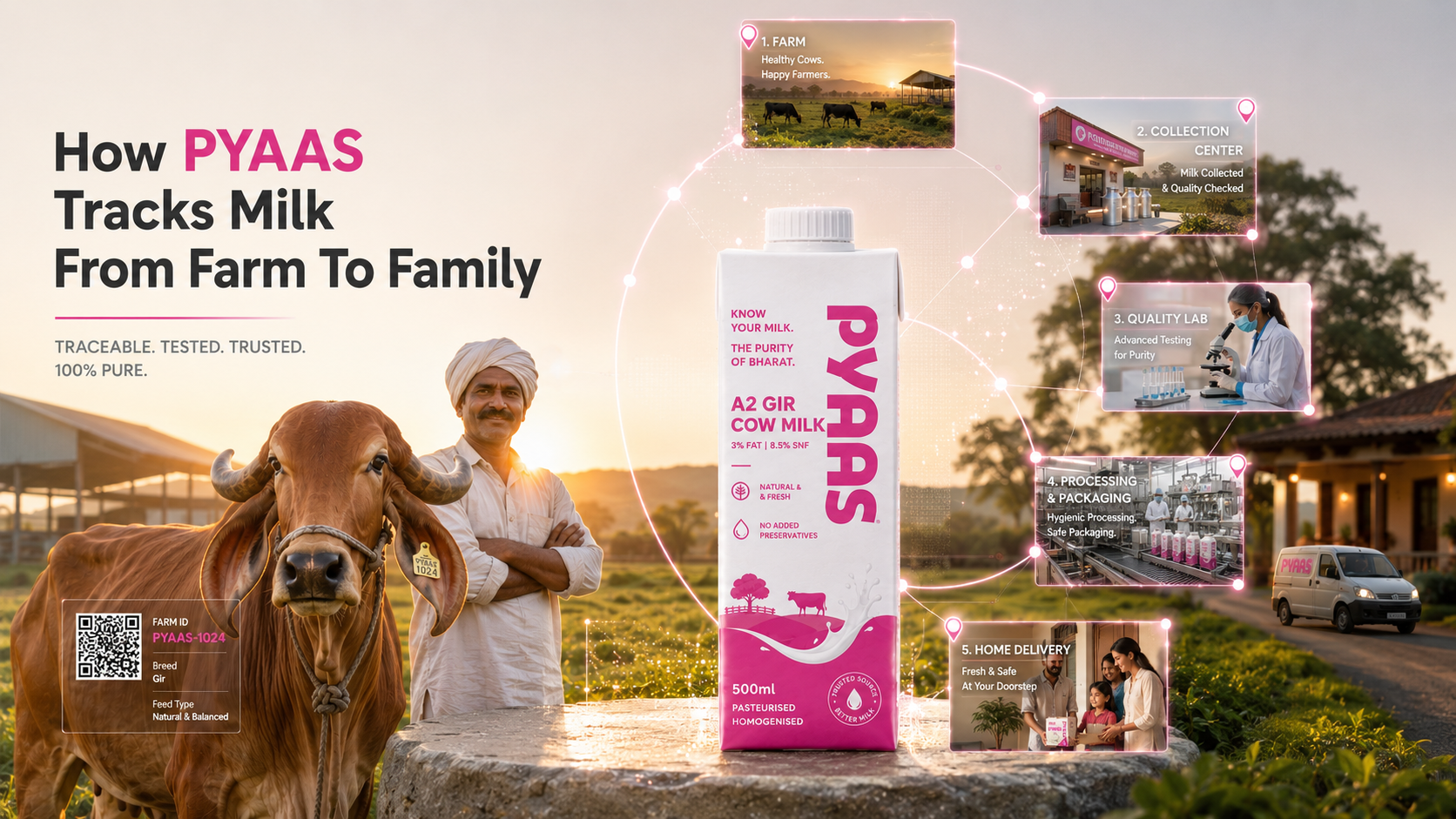
If one technology defines the future of Indian dairy, it is traceability. Traceable milk can be followed across its entire journey, from a specific farm and a named farmer, through testing, to the moment it is delivered to your door. Instead of trusting a brand blindly, you can simply check for yourself.
Today, consumers increasingly expect to know things that were once invisible:
- Which farm their milk came from and which farmer milked it.
- That batch's lab results, including SNF and FAT.
- The time the milk left the farm, so they know how fresh it really is.
- The breed of cow and whether the milk is genuinely A2.
This is exactly the visibility we built into PYAAS. Every pack carries a QR code that opens this information, so families can Know Your Milk at a glance. To understand the idea more fully, read what traceable milk really is and why we believe traceability matters for consumer trust.
How Technology Helps Farmers, Not Just Families
It is easy to think of dairy technology as something built only for city consumers, but farmers gain just as much. Digital systems give farmers a fairer, clearer relationship with the brands they supply.
- Faster, transparent payments based on recorded quantity and quality.
- Recognition for good work, since their name and their care travel with the milk.
- Better planning through data on yield, feed and herd health.
- A direct connection to families, rather than being lost in a long chain of middlemen.
The result is a more connected dairy ecosystem where everyone benefits from honesty. This is the thinking behind how we choose who we work with, which you can read about in how PYAAS selects farmers.
Cold Chain, Logistics and Freshness
Milk is delicate, and technology is also transforming how it travels. Modern dairy operations rely on temperature-controlled storage, planned delivery routes and careful handling so that milk stays fresh from the farm to your kitchen. Better logistics mean milk reaches families quickly, often within hours of leaving the farm, with quality intact.
This focus on freshness is why so many families now prefer farm-direct dairy over milk that has spent days in a long supply chain. If you are weighing your options, our comparison of farm fresh milk versus packaged milk is a helpful place to start.
What This Means for Trust and the Future of Dairy
The greatest impact of all this technology may simply be trust. For the first time, a brand can move beyond marketing claims and offer real visibility into where milk comes from, how it was tested and how fresh it is. Transparency turns a leap of faith into a verifiable fact, and that is what builds lasting confidence.
Over the coming decade, the dairies that thrive will be the ones that combine good farming, strong quality systems and open technology. The same thinking is shaping premium products like A2 Bilona ghee, where families want to know not just that the ghee is pure, but exactly which milk and which method made it. Technology is becoming the bridge between farms and families, and traceability is the language they share.
The PYAAS View
At PYAAS, we believe technology should help you understand your food, not confuse you with jargon. We source single-origin A2 cow milk from named farms in Gonda, Uttar Pradesh, test every batch and let you scan a QR code to see the farm, the farmer, the SNF and FAT results and the time the milk left the farm. It is the same care that drives our founding family every single day.
You do not need to become a dairy expert to drink better milk. You just need a brand willing to show you the truth. That is what all this technology is finally making possible, and it is the future we are building, one transparent batch at a time. Know Your Milk.
Written by
PYAAS Team
The PYAAS Team writes about dairy science, milk quality and traceability to help Indian families understand exactly what they drink, drawing on our work sourcing single-origin A2 milk from named farms in Gonda, Uttar Pradesh.
More from PYAAS TeamCommon questions.
How is technology transforming dairy farming in India?
Technology is improving every stage of Indian dairy, from digital herd and feed records on the farm to faster, more accurate quality testing in the lab. It also powers logistics that keep milk fresh and traceability systems that let families see where their milk came from. The result is a dairy chain that is more efficient, more consistent and far more transparent than before.
What is milk traceability and why does it matter?
Milk traceability means being able to follow milk across its full journey, from a specific farm and named farmer through testing to your door. It matters because it replaces blind trust with proof, letting you verify freshness, quality and origin. With PYAAS, a QR code on the pack shows the farm, the farmer, the SNF and FAT results and the time the milk left the farm.
Does technology improve milk quality and safety?
Yes. Modern testing equipment measures SNF and FAT precisely and can screen for adulteration far faster than older manual methods. When testing happens close to the source and results are recorded, poor batches can be caught and stopped before they reach a family. This creates more consistent, safer milk season after season.
How does dairy technology help farmers?
Farmers benefit through fairer, faster payments based on recorded quantity and quality, and through recognition because their name travels with the milk. Digital records also help with herd health, feed planning and yield tracking. Most importantly, technology connects farmers directly to families instead of losing them in a long chain of middlemen.
How can I check where my milk comes from?
If your dairy uses traceability, you can scan the QR code on the pack to see the source farm and batch details. With PYAAS, that scan reveals the named farm in Gonda, Uttar Pradesh, the farmer, the lab results and the time the milk left the farm. This is what we mean by Know Your Milk.
Get the next one in your inbox.
The occasional note on milk, ghee, and how we work. Plain words, no hype, and you can leave any time.
Keep reading.
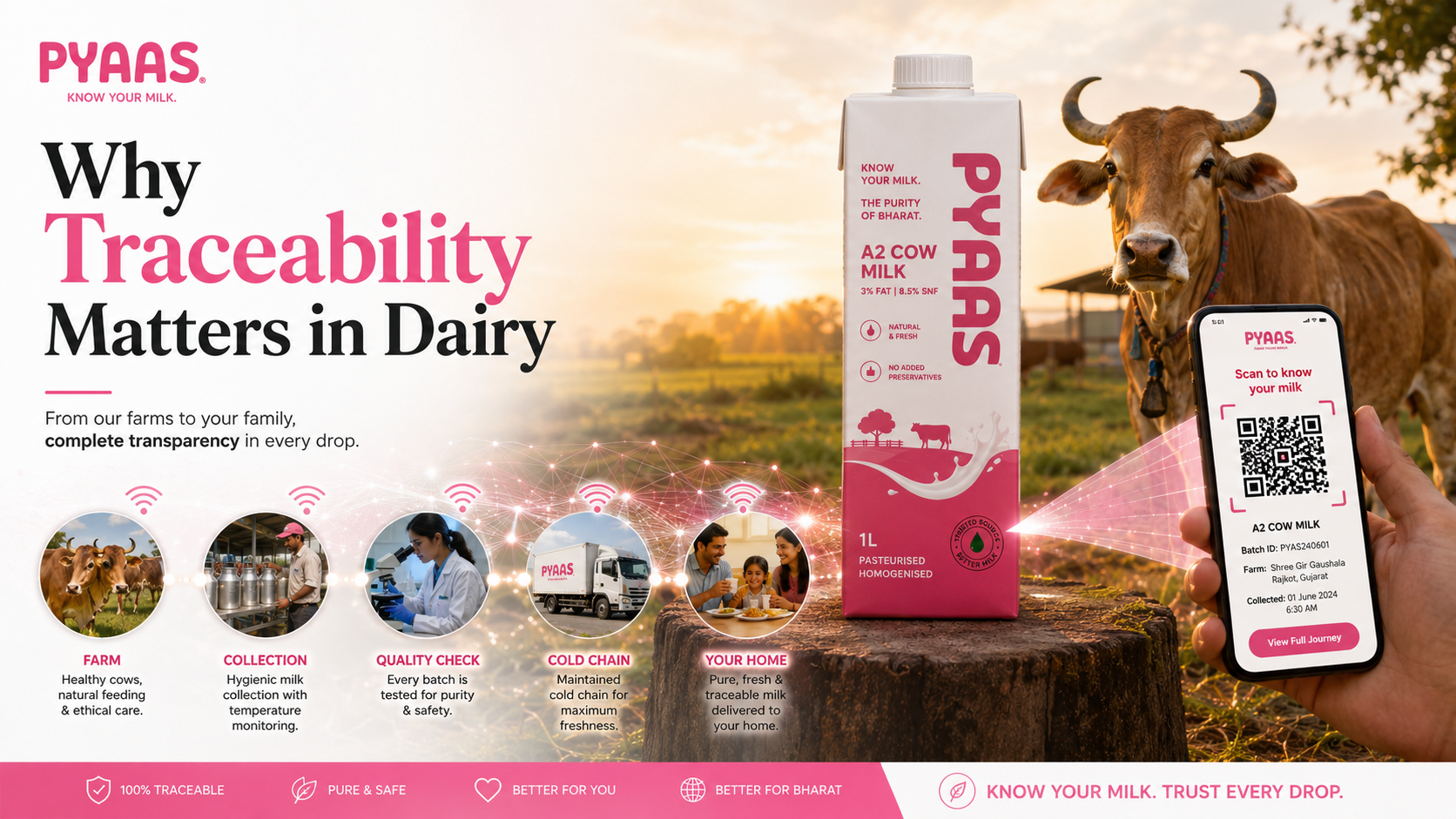
Why Traceability Matters in Dairy: The Future of Consumer Trust
5 July 2026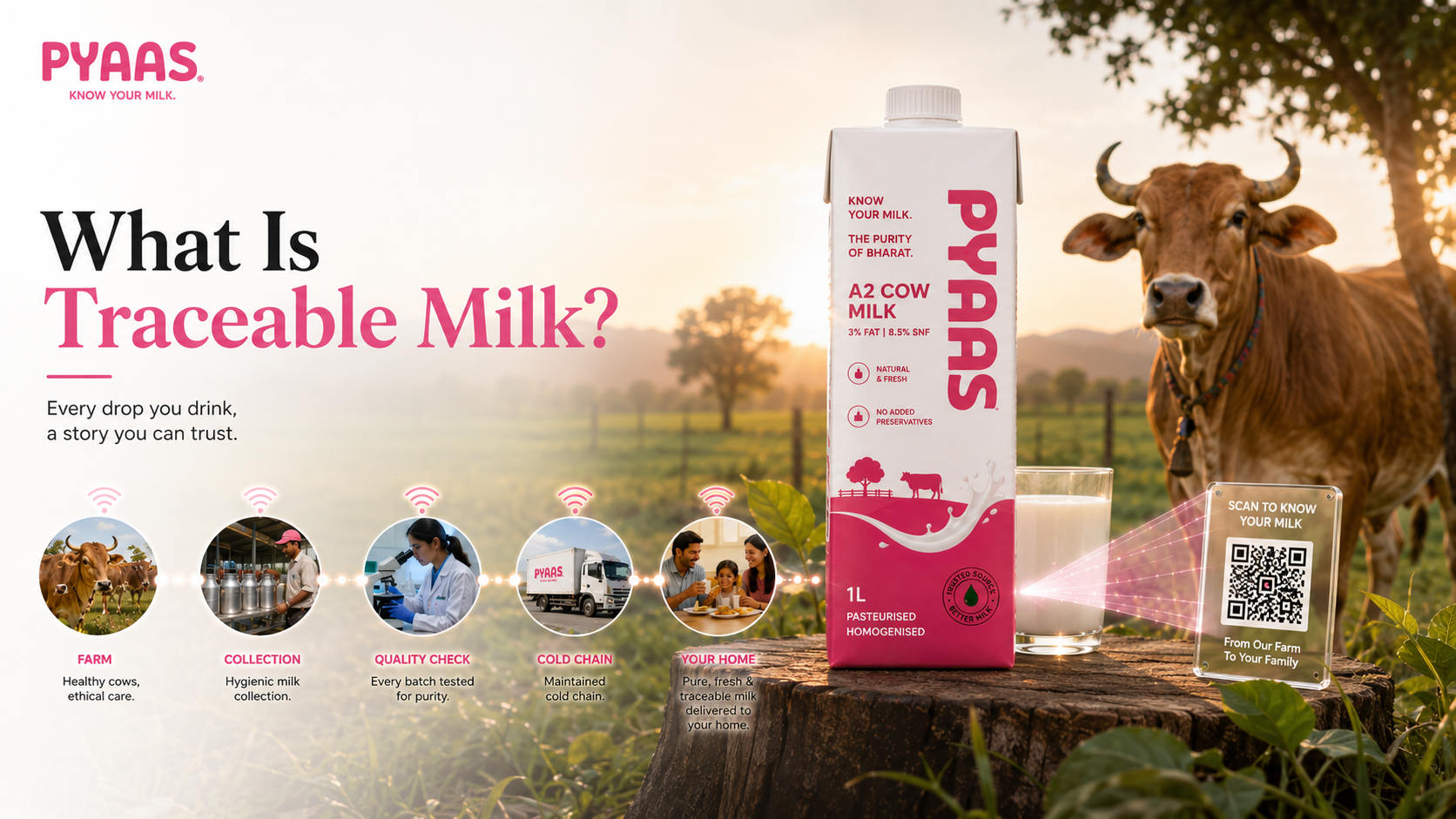
What Is Traceable Milk? Why Modern Consumers Want to Know Their Milk
5 July 2026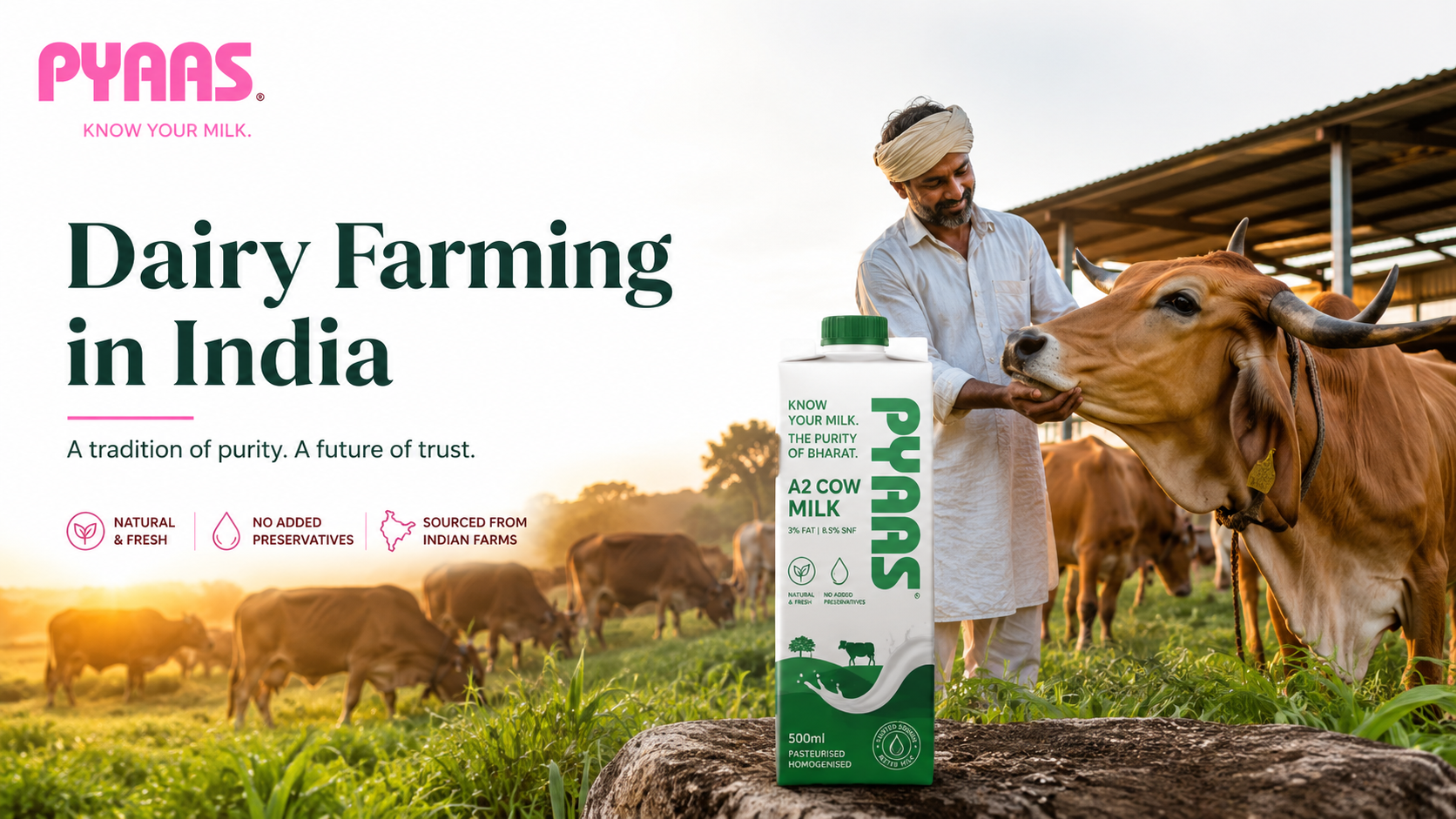
Dairy Farming in India: Everything You Need to Know
3 July 2026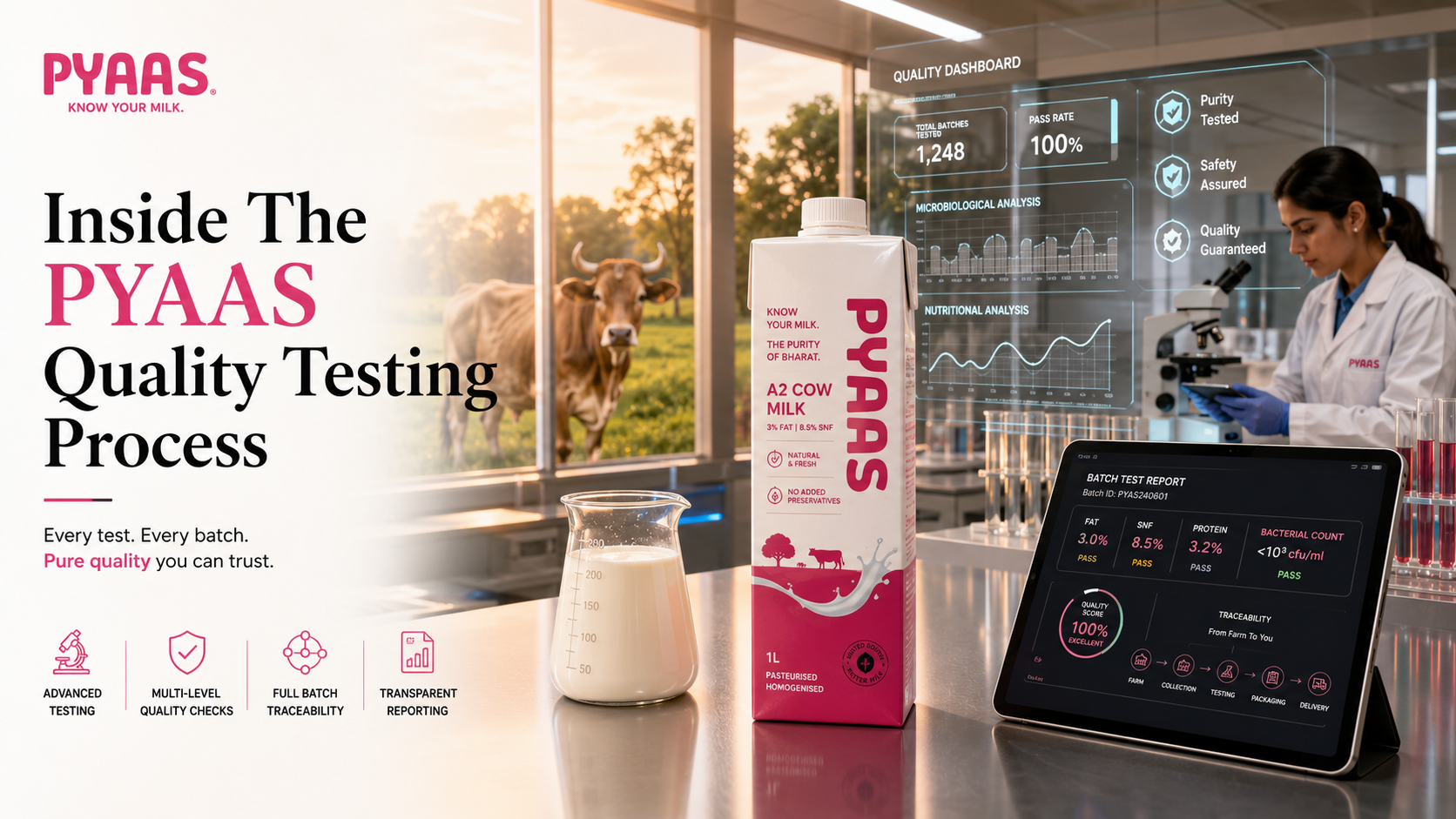
Inside The PYAAS Quality Testing Process
5 July 2026