Malai and Milk Cream, Explained
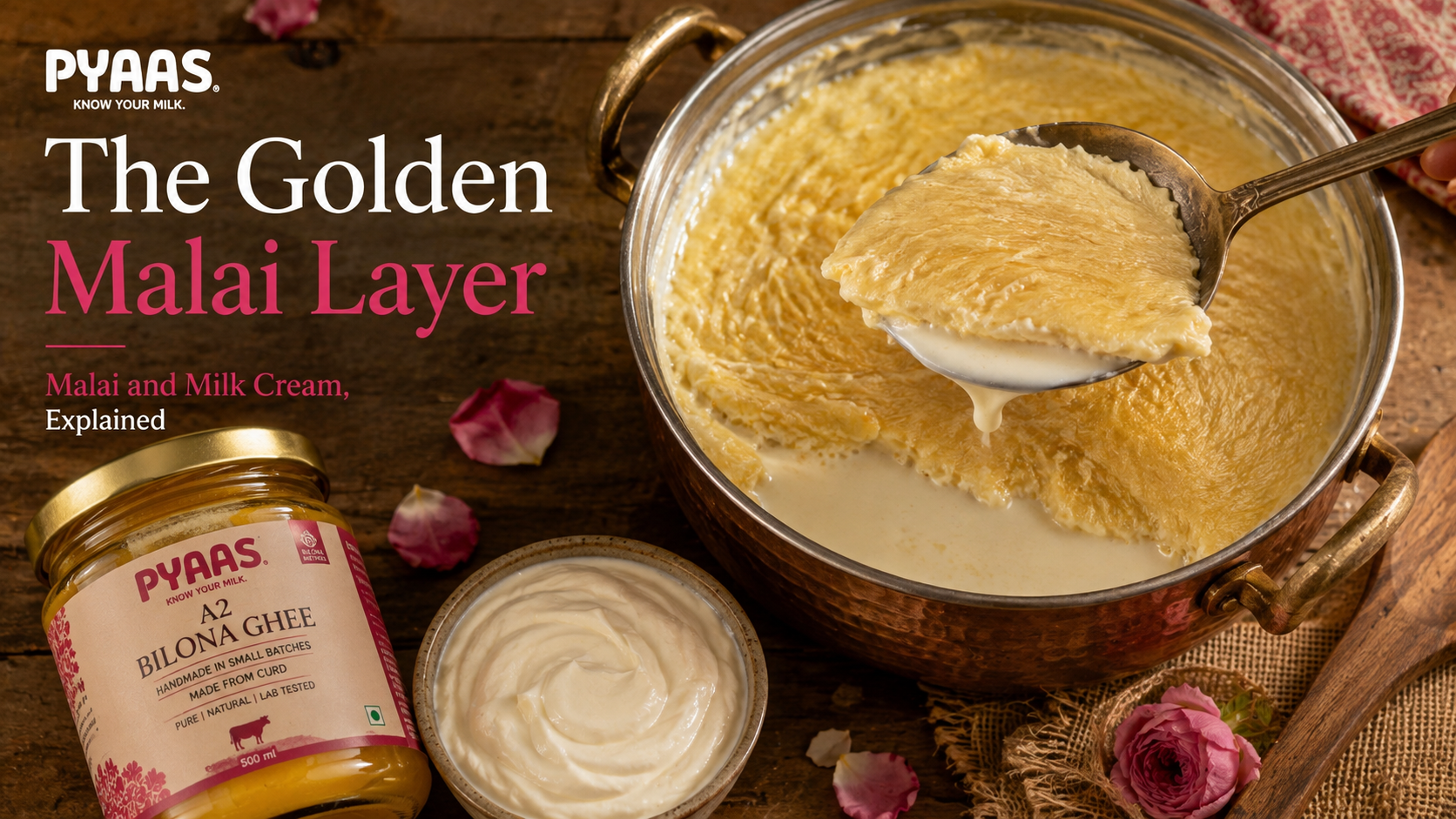
Boil a pot of good whole milk, let it cool on the counter, and something quietly beautiful happens: a wrinkled golden skin gathers across the top. Skim it, save it, repeat over a few days, and you have malai, the raw material of white butter, ghee and half the richest sweets in Indian kitchens. To really understand malai milk cream is to understand where a lot of traditional cooking begins.
Cream, malai and the difference between them
Let us untangle the words first. Cream is the fat-rich part of milk. In fresh, untouched milk it naturally rises to the top because fat is lighter than water, forming what dairy people call the cream line. Malai is what you get when heat gets involved: boil the milk and that rising cream, along with some protein, thickens and sets into the soft, foldable layer you can lift with a spoon.
So cream is the fat that separates; malai is the cooked, gathered version of it that Indian homes have been collecting for centuries. Both are the same story at heart, which is that whole milk carries fat, and left alone, that fat likes to float.
Why the cream line only appears on some milk
Here is the detail that explains why the milk of your childhood behaved differently from most packets today. Almost all packaged milk is homogenised. Homogenisation forces milk through fine nozzles that shatter the fat globules into droplets so small they stay suspended forever. Convenient, uniform, and completely unable to form a proper malai.
Non-homogenised milk is left as nature made it. The fat stays whole, so it rises, and you get a genuine cream line and a genuine malai layer. Neither approach is wrong, but if you want to make malai, ghee or butter at home the traditional way, you need milk that has not been homogenised into permanent uniformity.
- Homogenised milk: fat broken small, stays mixed, no cream line, no real malai.
- Non-homogenised milk: fat intact, rises naturally, gives a cream line and a proper malai when boiled and cooled.
What families do with malai
Malai is not a leftover; it is an ingredient with a queue of uses. Across generations, homes have treated the daily malai layer as a small, accumulating treasure.
- Malai for butter and ghee: collected malai is churned into fresh white butter, which is then simmered to make ghee. It is one of the oldest home routes to golden ghee.
- In sweets: malai is the soul of malai kofta, ras malai, malai peda and countless festival dishes.
- In everyday cooking: a spoon of malai enriches gravies, dal, and even a simple paratha.
- Malai with sugar or honey: a humble childhood treat that many people still remember fondly.
From malai to ghee: the same idea as bilona
The home habit of saving malai to make ghee is a direct cousin of the traditional bilona method. In bilona ghee, curd is churned to lift its butter, and that butter is slowly cooked into ghee, rather than extracting cream directly. Both routes rely on the same non-homogenised starting point and the same patient hand. We walk through the full journey in how ghee is made from fresh milk to golden ghee, and compare methods in bilona ghee versus regular ghee.
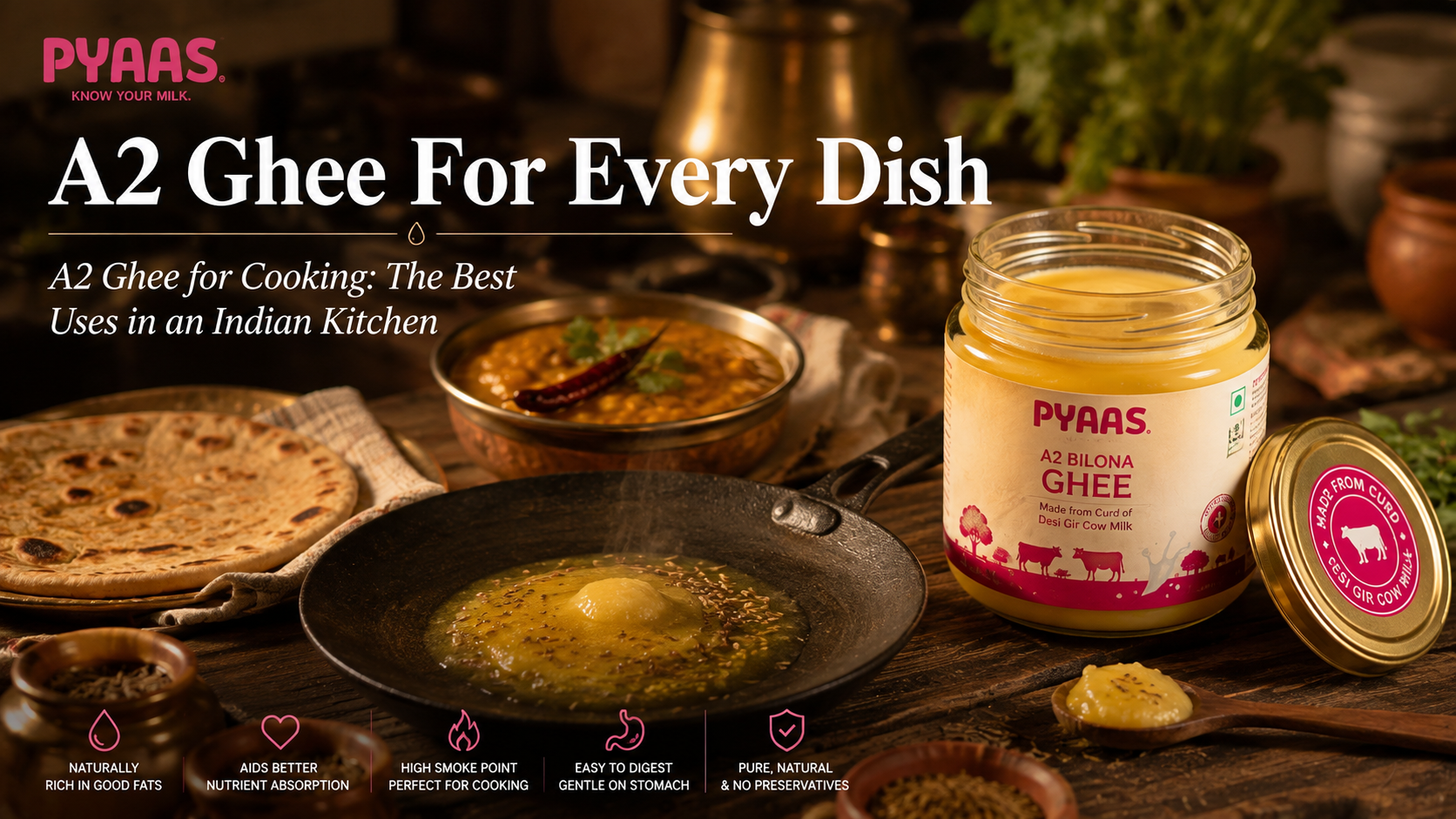
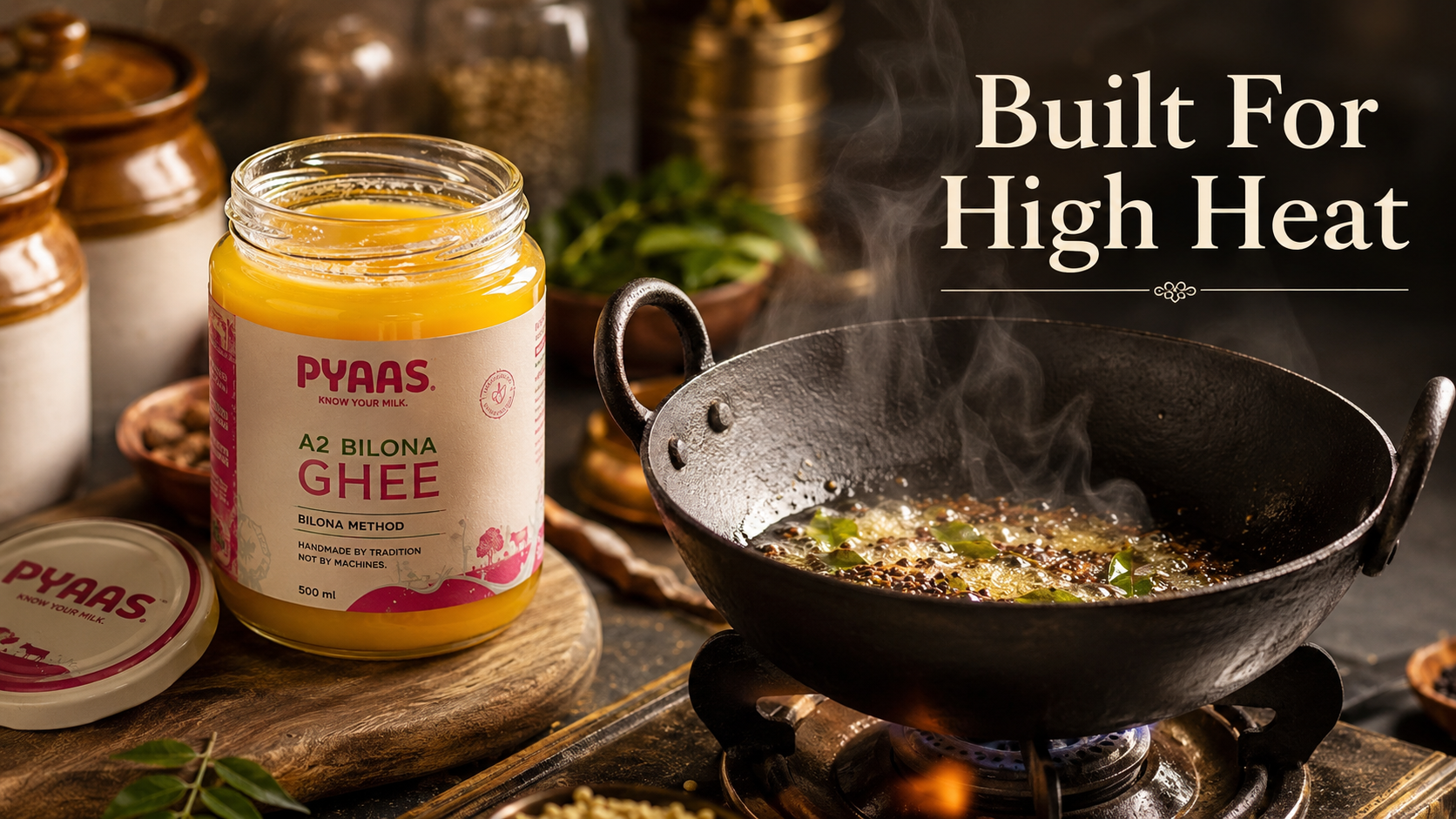
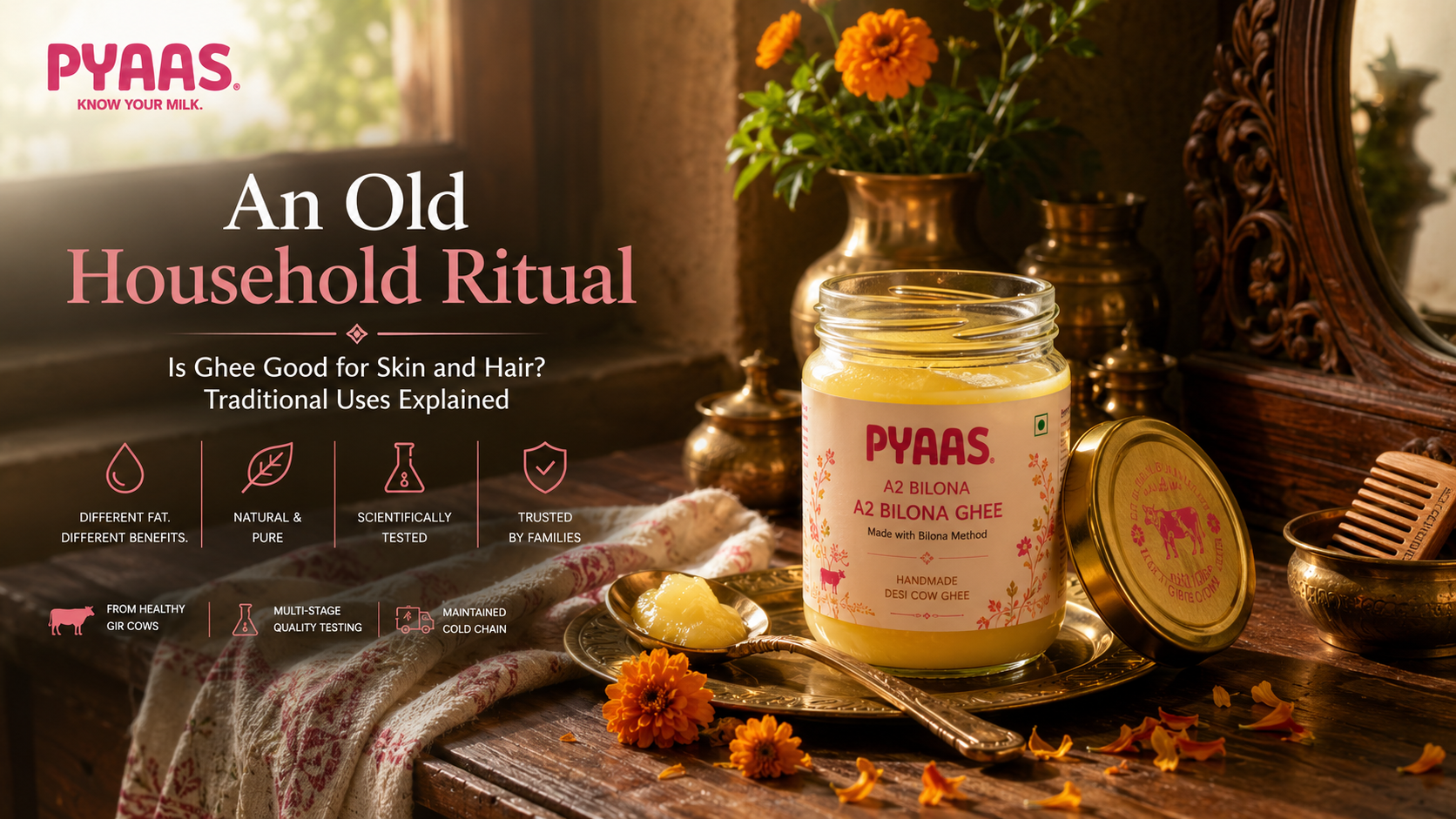
PYAAS A2 Bilona cow ghee, which is live and ships across India today, is made in small batches this careful way, from the cream of milk churned and slowly simmered rather than shortcut through machines. The richness you can taste starts with the same principle as that malai layer on your morning milk.
Why the milk behind the malai matters
A good malai layer is, in a way, an honesty test for milk. Rich, clean malai comes from milk that is genuinely whole and freshly handled. Watered-down or over-processed milk gives a thin, poor skin, if any at all. When milk comes from a single, known farm and is cooled and moved carefully, its fat stays intact and its malai is generous and clean-tasting.
This is part of why single-origin milk is worth caring about, a point we make in single-origin milk, why one farm beats a thousand. When milk from many sources is pooled and processed, character gets flattened. Milk you can trace back to one farm keeps its cream, its taste and its story. Every PYAAS pack carries a QR code that shows you exactly that: the farm, the farmer, and the batch's quality record.
A gentle word on enjoying malai
Malai is milk fat, so it is rich and energy-dense. It also carries fat-soluble vitamins and a lot of flavour, and in sensible amounts it is a perfectly normal part of eating dairy the way Indian families always have. There is no need to fear it or to overdo it; balance, as always, does the work. If you have specific dietary concerns, your doctor is the right guide.
The layer worth understanding
Next time a golden skin gathers on your boiling milk, you will know exactly what you are looking at: the fat of the milk, risen and cooked into malai, the same cream that becomes butter, ghee and celebration sweets. It only appears when milk is whole and honest, which makes it a small daily reminder of what real milk is supposed to do. Knowing your malai, like knowing your milk, starts with knowing where it came from.
Written by
Naina Sharma
PYAAS is an honest, traceable Indian dairy brand from Gonda, Uttar Pradesh.
More from Naina SharmaCommon questions.
What is malai made of?
Malai is the fat-rich cream that rises to the top of milk, thickened by heat. When you boil whole milk and let it cool, the milk fat and some protein gather at the surface as a soft golden layer. That layer of malai milk cream is prized for making butter, ghee and rich sweets.
Why does malai not form on packet milk?
Most packet milk is homogenised, a process that breaks fat into tiny droplets so it stays evenly mixed and never rises. Non-homogenised milk keeps its fat intact, so the cream separates naturally and you get a proper malai layer when you boil and cool it.
Can I use malai to make ghee at home?
Yes, this is a traditional method. Families collect malai over several days, churn it into white butter, then simmer that butter to make ghee. It is the same principle behind bilona ghee, where cream from curd is churned and slowly cooked into golden ghee.
Get the next one in your inbox.
The occasional note on milk, ghee, and how we work. Plain words, no hype, and you can leave any time.