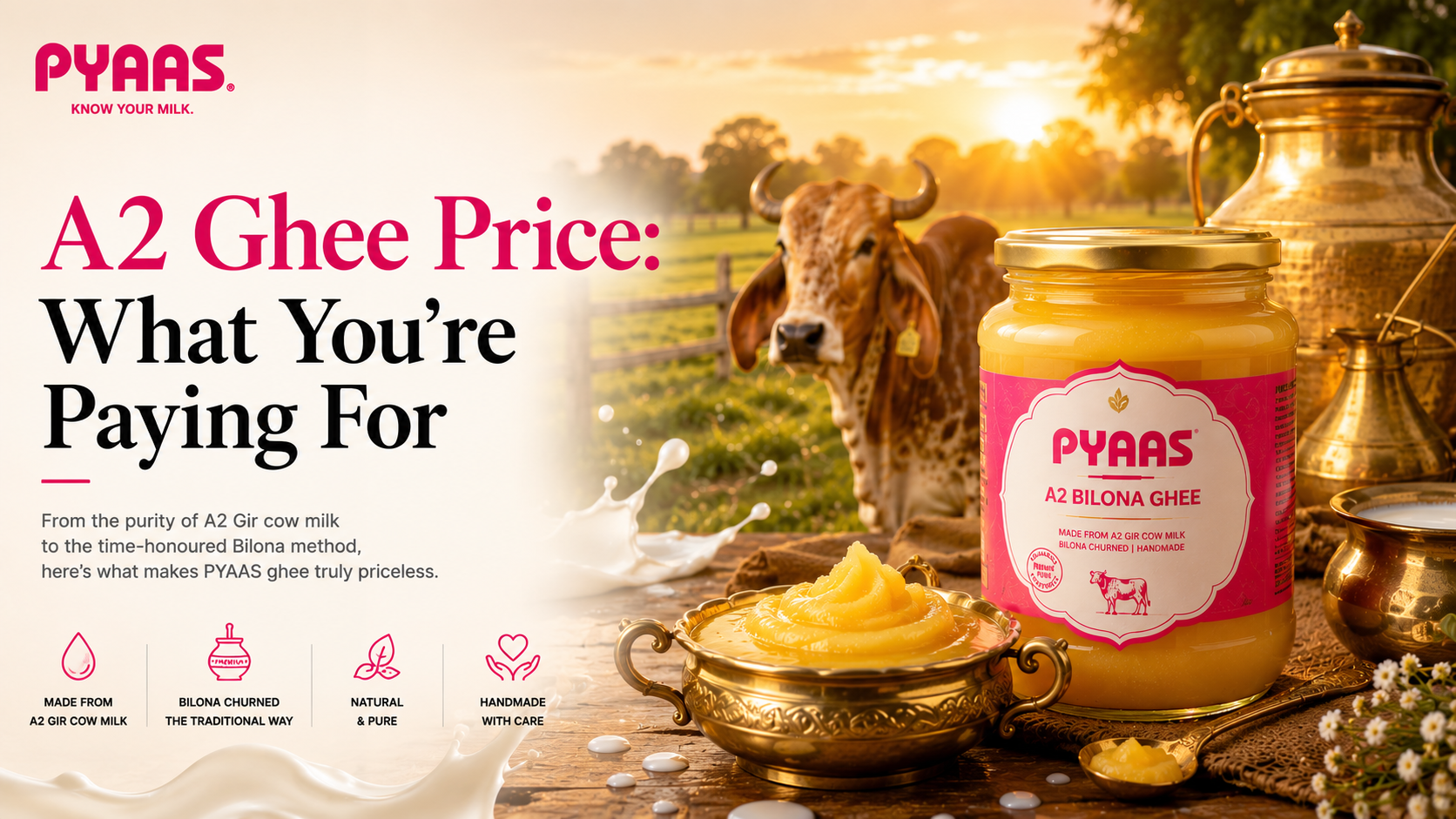
A2 Ghee Price in India: What You’re Actually Paying For
Stand in front of the ghee shelf and the prices can range wildly, from a modest jar to something that costs several times as much and calls itself A2 Bilona. It is fair to ask: is the premium real, or is it just a story? Here is exactly what you are paying for.
1. The milk it starts from
A2 ghee begins with A2 cow milk, from indigenous breeds like Gir and Sahiwal. That milk is more expensive to produce than pooled commodity milk, and the ghee inherits that cost from the very first step.
2. The method
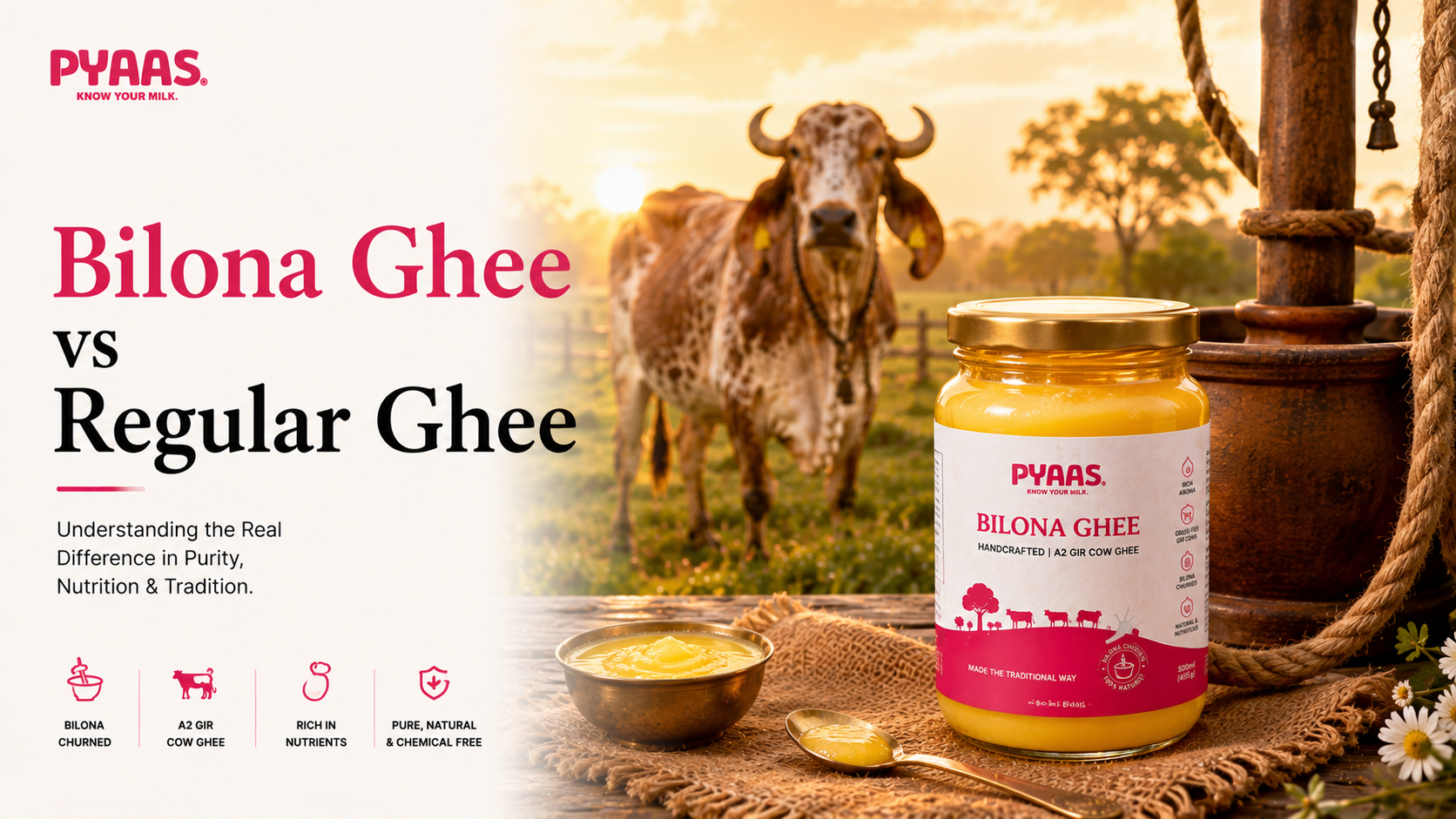
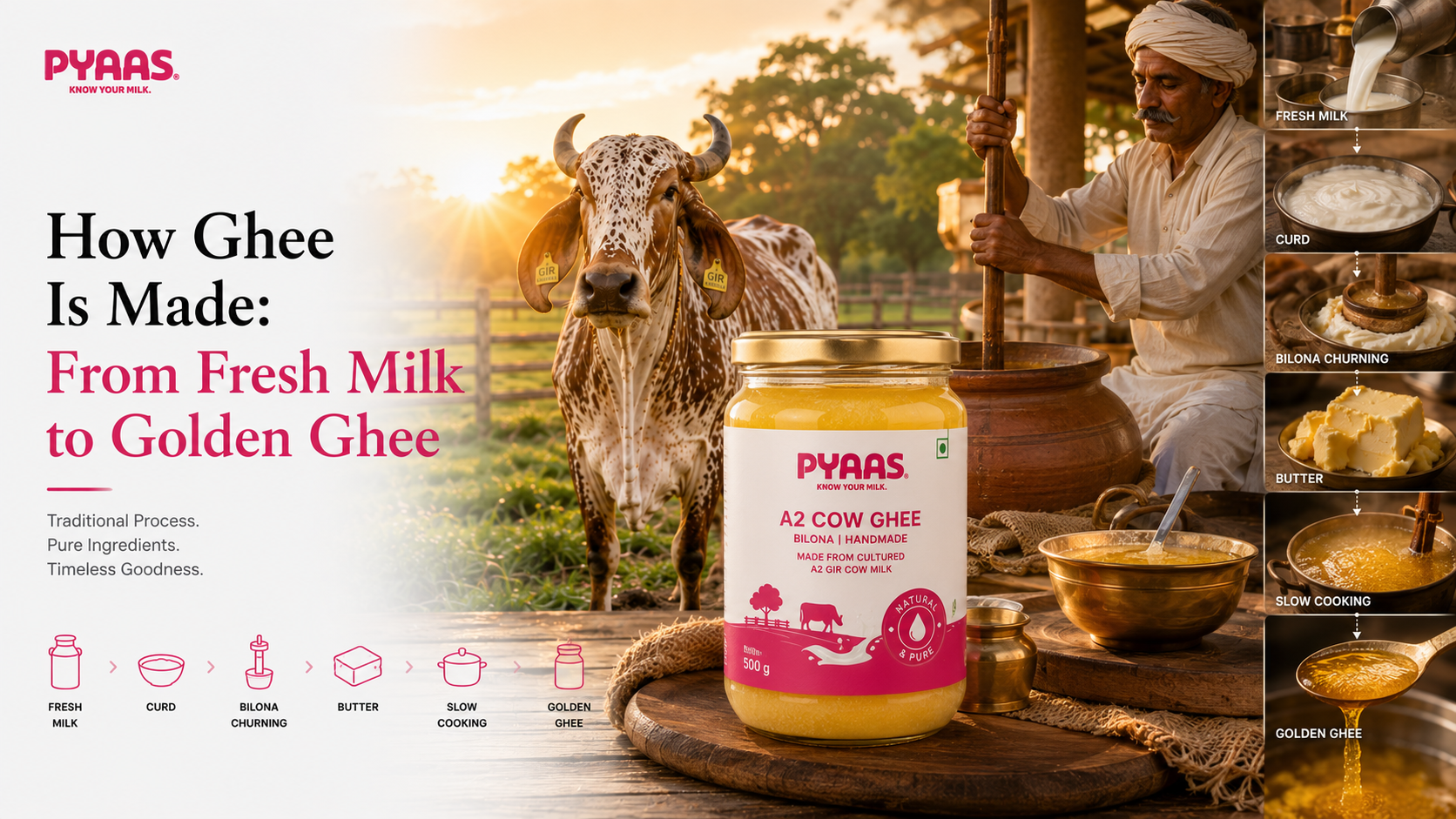
Ordinary ghee is often made quickly and directly from cream. Bilona ghee takes the long road, milk is set into curd, hand-churned to butter, then slow-cooked to ghee. It is more labour, more time and smaller batches. We break it down in Bilona ghee versus regular ghee and how ghee is made.
3. The yield
This is the number most people underestimate. It takes a lot of milk to make a little ghee, often around 25 to 30 litres of milk for roughly one kilogram. When you buy a jar of ghee, you are really buying all the milk that went into it, concentrated.
4. The traceability
Verifiable ghee costs more than anonymous ghee because someone has done the work to keep it single-origin and testable. With PYAAS, that means milk from named farms in Gonda, Uttar Pradesh, and a jar you can trace back to the farm and batch. That accountability is part of the price, and arguably the part most worth paying for. See our pure cow ghee.
How to judge a fair price
A high price is not automatically honest, and a low price is not automatically a bargain. Ask:
- Does the brand name the farm and the breed?
- Is the method stated, and is it genuinely Bilona?
- Can the ghee be traced to a source?
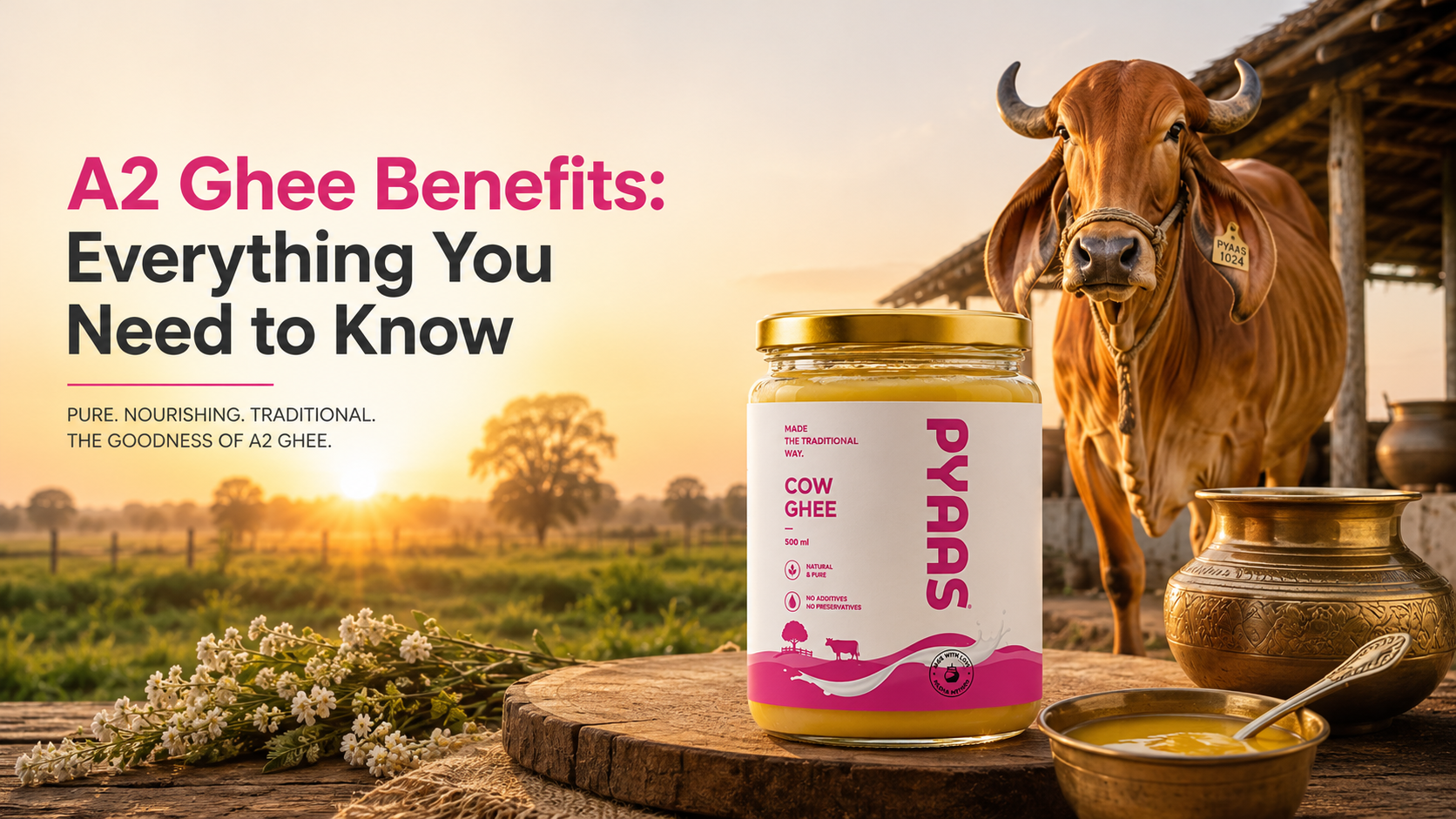
If the answer is yes, the premium is buying real things, better milk, harder work, lower yield, full traceability. Learn the benefits of A2 ghee to decide if those things matter to you.
Cheap ghee can be perfectly fine. But when you pay more for A2 Bilona ghee, you should know precisely what the extra is for, and be able to check that you are getting it.
Written by
PYAAS
Part of the PYAAS team, writing the journal the same way we make our milk, slowly and honestly.
More from PYAASCommon questions.
Why is A2 Bilona ghee so expensive?
Because it costs more to make. It starts from A2 cow milk, uses the labour-intensive Bilona method of setting curd and hand-churning, and needs a large amount of milk to yield a small amount of ghee. Those real costs, plus traceability, sit behind the price.
How much milk does it take to make one kilogram of ghee?
It takes a substantial quantity of milk, often in the region of 25 to 30 litres, to produce roughly one kilogram of ghee. The exact figure depends on the milk’s fat content and the method used.
How do I know a premium ghee price is justified?
Look past the label to the source. A fair premium is backed by a named farm, a stated method such as Bilona, A2 milk and traceability you can verify. If a brand cannot explain where the milk came from, the premium is just a price.
Get the next one in your inbox.
The occasional note on milk, ghee, and how we work. Plain words, no hype, and you can leave any time.