The Farmer Economics Problem Indian Dairy Ignores
I have stood at enough collection points in Gonda, before the sun is properly up, to know the expression on a farmer's face when the milk is weighed and the rate is read back to him. It is not anger. It is something quieter and harder to watch: acceptance. He has no leverage over the number, so he has stopped expecting to.
I am Aryan Sharma, and I started PYAAS because that number, and everything broken behind it, is the real story of Indian dairy farmer economics. It is a story the industry would rather you not think about while you pour milk into your morning tea.
The margin that never reaches the farm
India is the largest milk producer in the world, and yet the person who actually produces it, the farmer with a handful of cows, often earns the thinnest slice of what you pay. The reason is structural. Most milk in this country is pooled: gathered from thousands of scattered farms, mixed together, and moved up a chain of collectors, transporters, processors and distributors before it reaches your door.
Every layer in that chain has to be paid, and the farmer sits at the very bottom of it. He is a price-taker. The rate is set far away, based on fat and solids, and handed down to him. When input costs rise, feed, veterinary care, labour, the milk price rarely rises to match. He absorbs the squeeze because he has nowhere else to sell before the milk spoils.
What a broken margin does to your milk
Here is the part people miss: the farmer's economics are your food-safety problem too. When a farmer cannot earn a fair living from honest milk, the whole system tilts toward the wrong incentives.
- Quantity over quality. If you are paid mostly by volume, you optimise for volume, not for the health of the herd or the richness of the milk.
- Corners on cattle care. Good feed and proper veterinary attention cost money a squeezed farmer does not have.
- The pull toward adulteration. When margins are impossible, the temptation to stretch milk enters the chain, usually not at the farm, but somewhere in the anonymous middle where no name is attached.
None of this is the farmer being dishonest. It is a system that pays too little for honesty and asks no questions about the rest.
Why we built PYAAS around the farmer, not the shelf
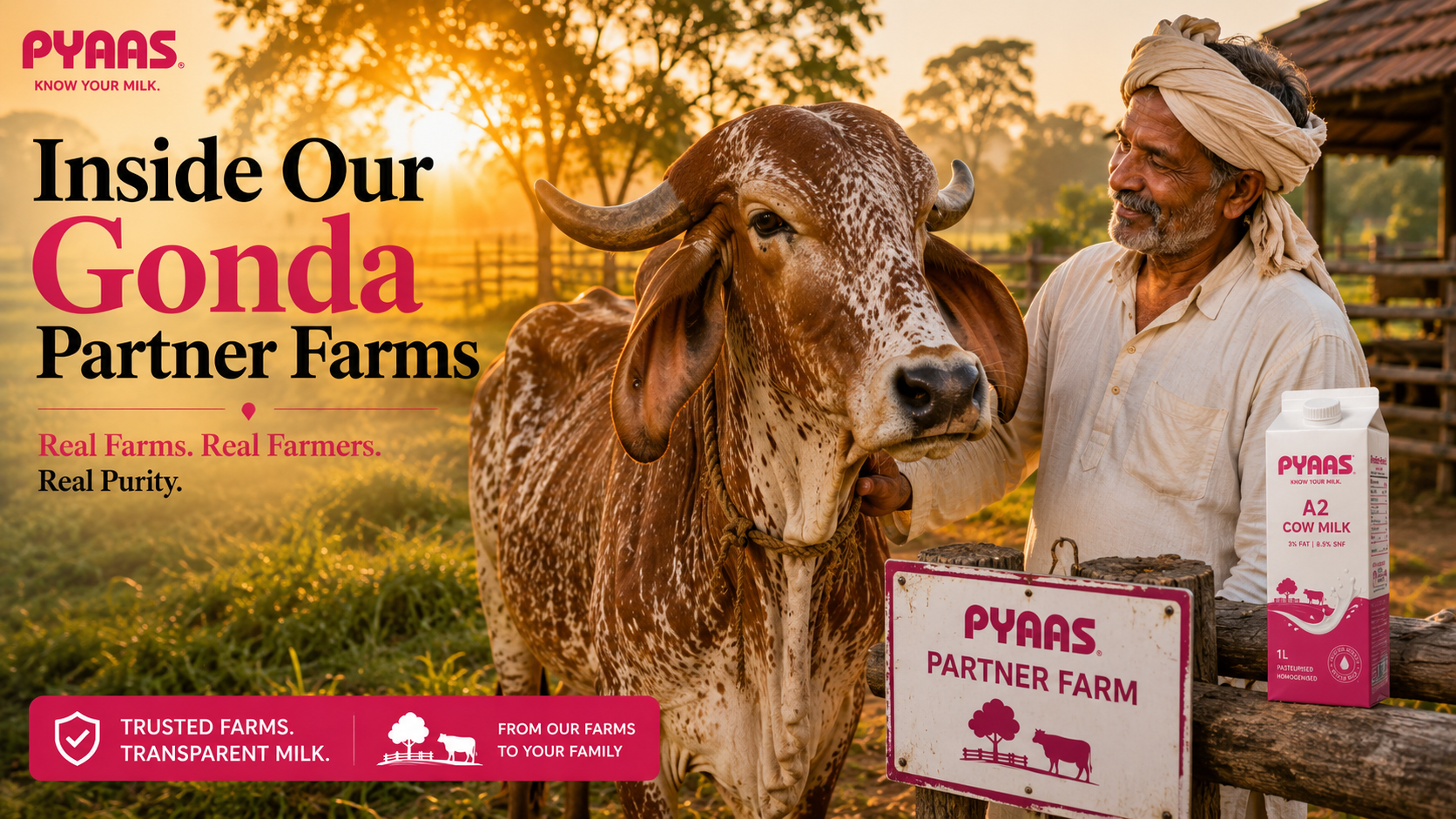
At PYAAS, we made a deliberate choice to keep milk single-origin instead of pooling it. We work with named farms in Gonda, Uttar Pradesh: Sri Radha Mohan Dairy Farm, where Ram tends a herd of 76 cows, Gonard Dairy with farmer Harsh Singh, and Ranjeet Singh Dairy Farm. Fewer hands sit between the farm and the pack, which means less margin is lost to the middle, and more of the value can stay closer to where the work actually happens.
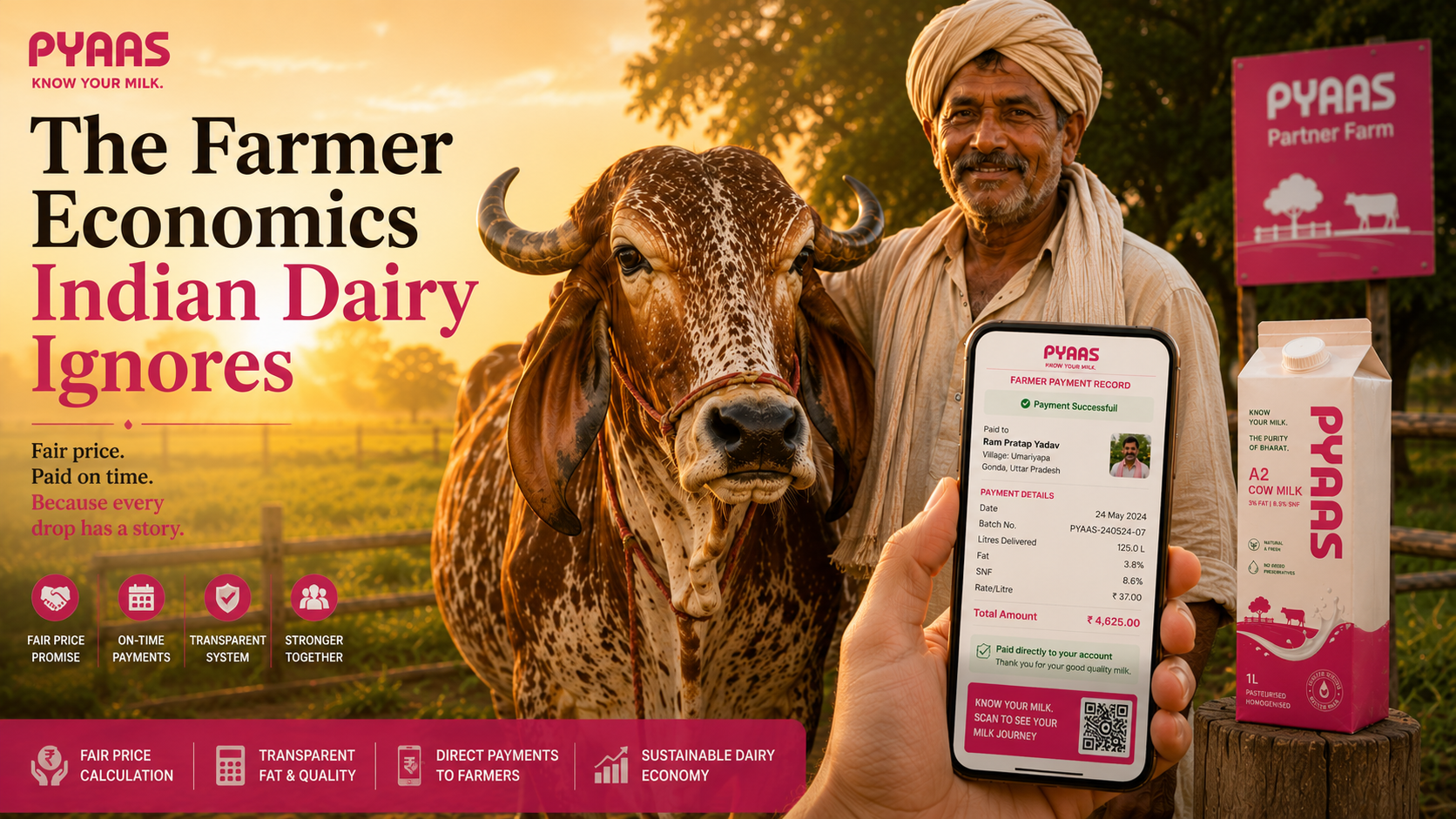
Then we put the farmer's name on it. Every PYAAS pack is traceable by QR code to the exact farm, the farmer, and that batch's quality record. Our A2 Bilona cow ghee ships across India today, and fresh A2 cow milk launches in Lucknow from August 2026, expanding across Uttar Pradesh. When a farmer's name and reputation travel with the milk all the way to your kitchen, quality stops being someone else's problem, it becomes his pride and his advantage.
What honest farmer economics could look like
I do not think the answer is charity or a one-time better price. The answer is a market that can actually see the farmer, so that doing the right thing, better feed, healthier cows, cleaner milk, becomes the thing that pays. Traceability is not a marketing gimmick to me; it is the mechanism that lets a good farmer be rewarded for being good, instead of being averaged into an anonymous pool with everyone else.
We are early, and honest about that. But the vision behind PYAAS, building toward a ₹100 crore dairy brand, only means something to me if the farmers in Gonda are visibly better off for having built it with us. If you want to see the people behind your milk, start on our Know Your Milk page. The farmer economics problem is not unsolvable. It is just ignored, and I would rather spend my mornings at the collection point working on it than pretend it is not there.
Written by
Aryan Sharma
Aryan Sharma is the Founder & CEO of PYAAS, an independent, transparency-first dairy brand based in Gonda and Lucknow, Uttar Pradesh. Every PYAAS pack is traceable to its farm by QR — Know Your Milk.
More from Aryan SharmaCommon questions.
Why do Indian dairy farmers earn so little?
Most milk in India is pooled from thousands of scattered farms and moved up a long chain of collectors, transporters, processors and distributors before it reaches you. The farmer sits at the bottom as a price-taker: the rate is set far away on fat and solids and handed down to him, and when feed and veterinary costs rise the milk price rarely rises to match. He absorbs the squeeze because he has nowhere else to sell before the milk spoils.
How does PYAAS change farmer economics?
PYAAS keeps milk single-origin instead of pooling it, working with named farms in Gonda, Uttar Pradesh. Fewer hands sit between the farm and the pack, so less value is lost to the anonymous middle, and the farmer's name and reputation travel with the product. Every pack is traceable by QR code to the farm, the farmer and that batch's quality record.
Does traceability actually help farmers?
Yes, because it lets a good farmer be seen and rewarded for being good, instead of being averaged into an anonymous pool with everyone else. When a farmer's name and reputation are attached to the milk all the way to your kitchen, better feed, healthier cows and cleaner milk become the things that pay, rather than costs a squeezed farmer cannot afford.
Get the next one in your inbox.
The occasional note on milk, ghee, and how we work. Plain words, no hype, and you can leave any time.
Keep reading.
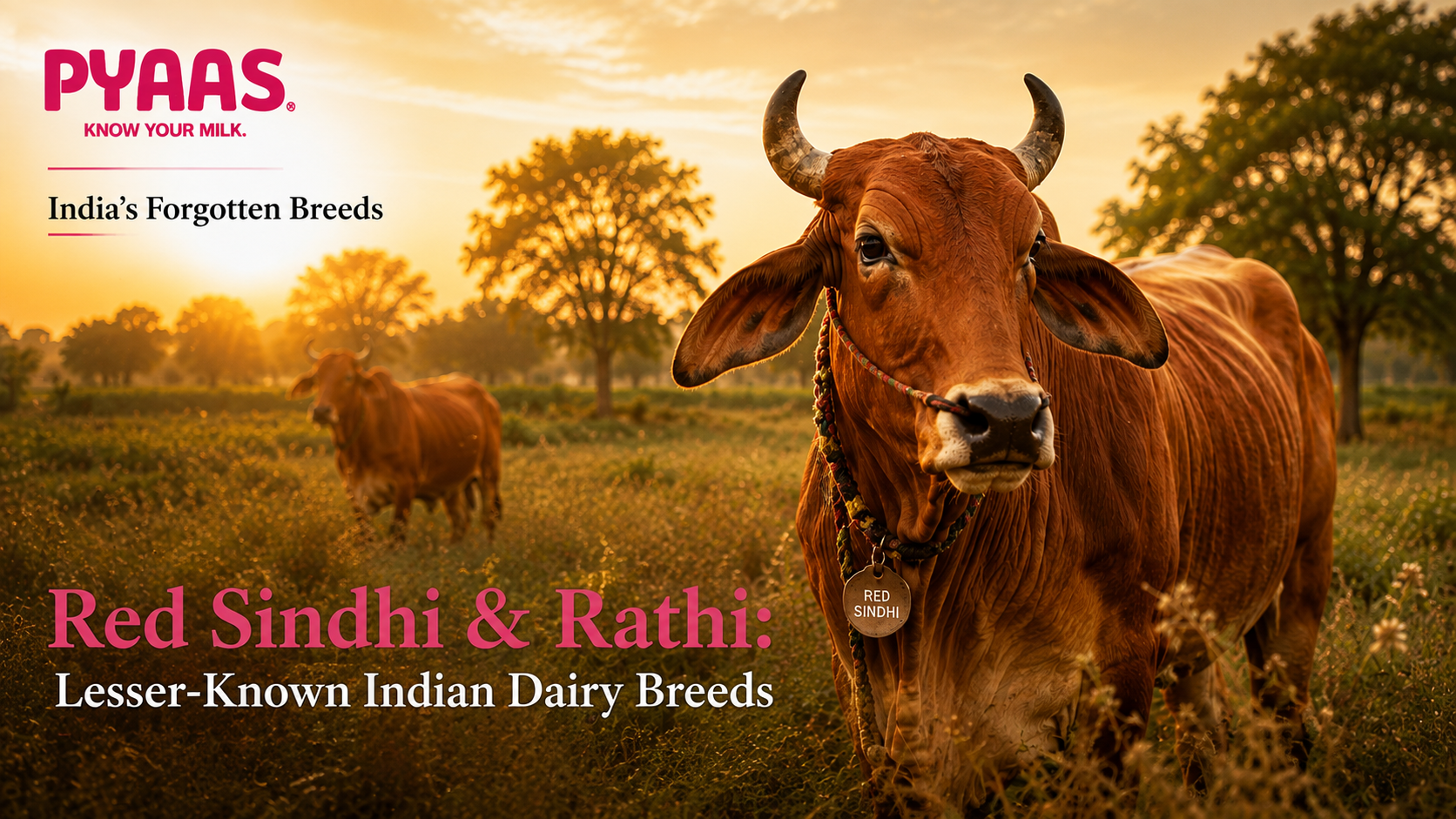
Red Sindhi & Rathi: Lesser-Known Indian Dairy Breeds
24 August 2026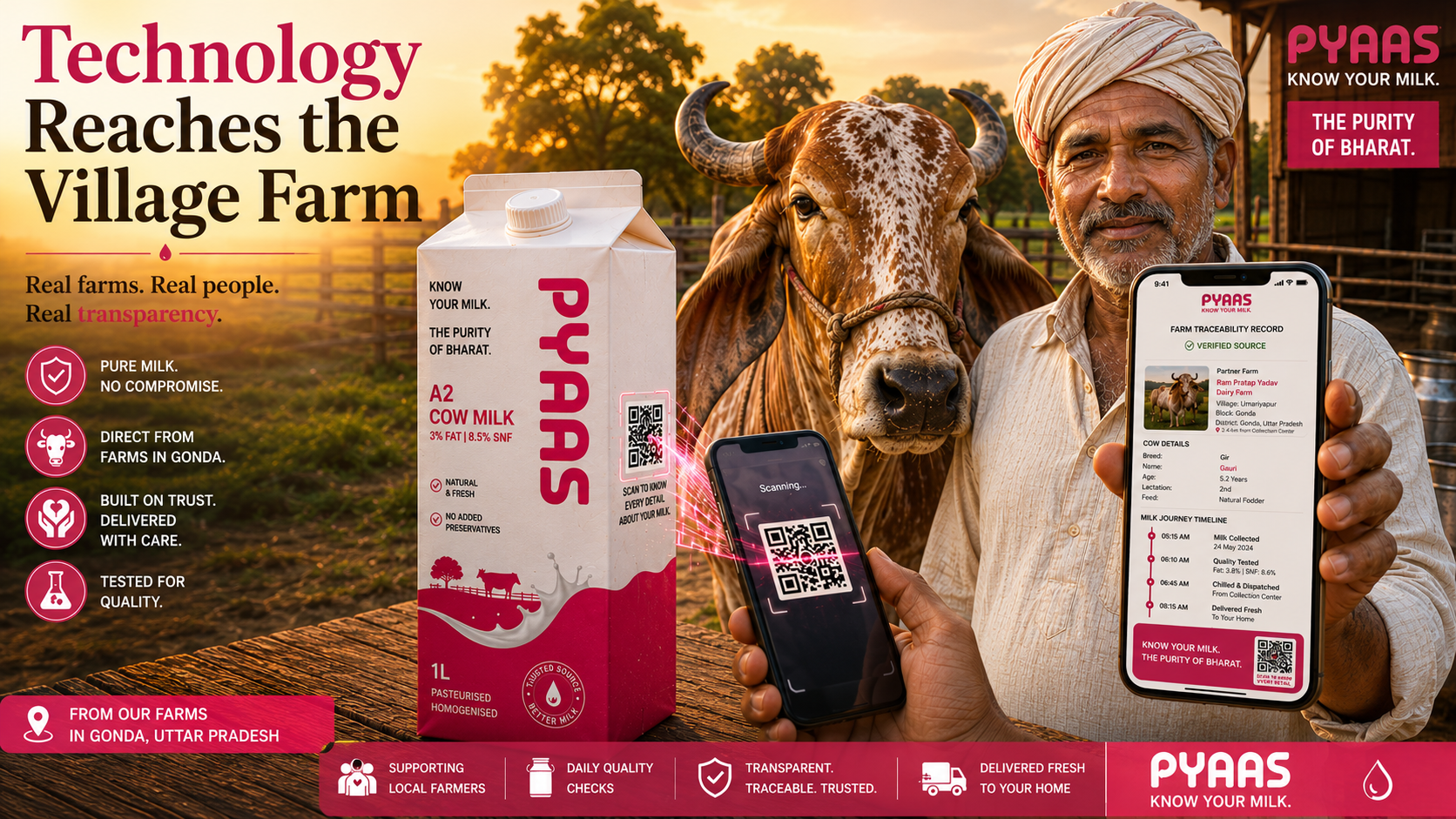
How Technology Reaches the Village Dairy Farm
12 August 2026
What I Learned at Sri Radha Mohan Dairy Farm — Aryan Sharma
28 July 2026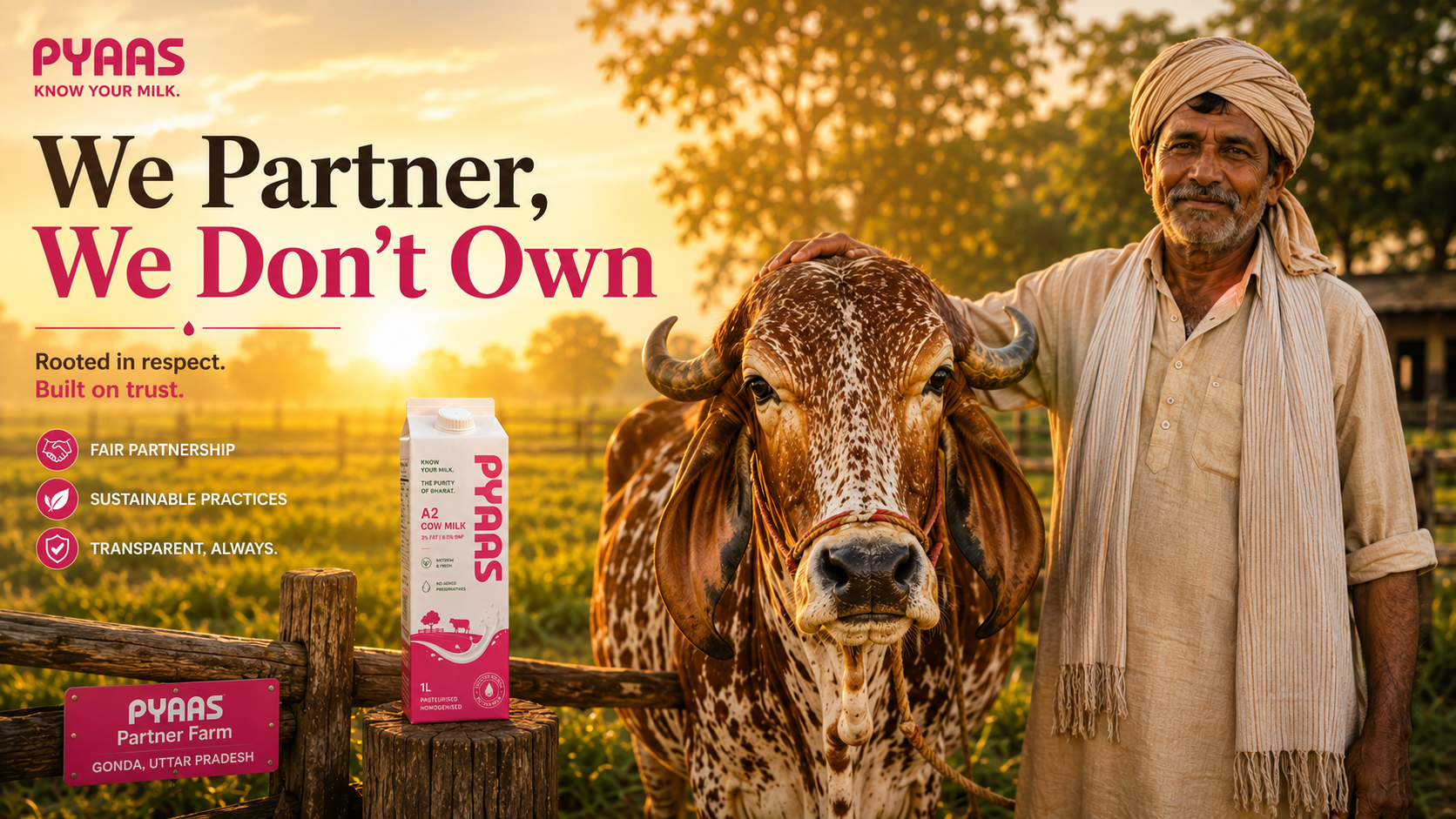
Why PYAAS Partners With Farms Instead of Owning Them
26 July 2026