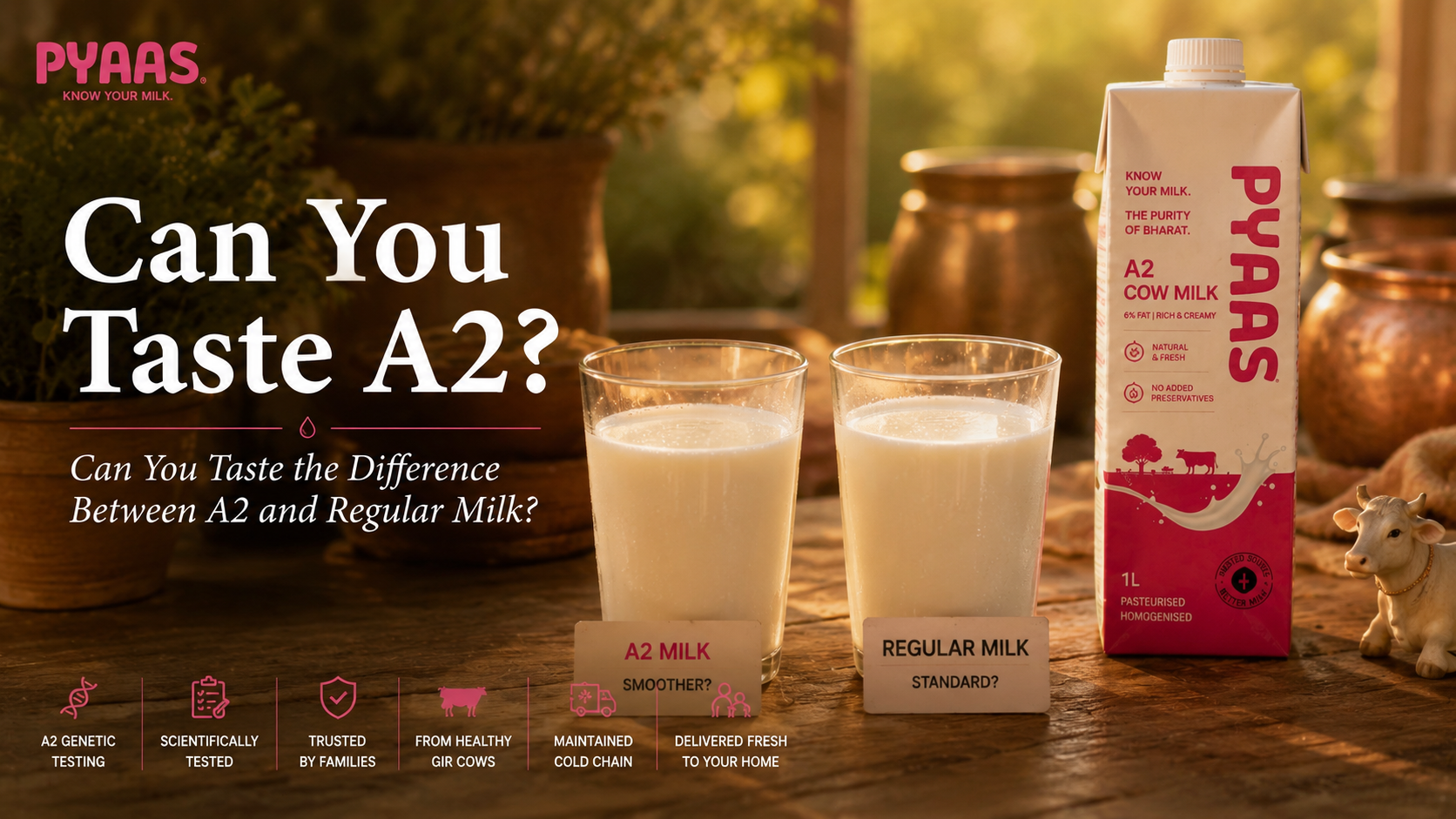
Can You Taste the Difference Between A2 and Regular Milk?
It is one of the most common questions we get, usually asked with a slightly suspicious squint: can you actually taste A2 vs regular milk? People expect a confident yes, because that is what a lot of marketing implies. The honest answer is more interesting, and a lot more useful once you understand what really shapes the milk in your glass.
The short, honest answer
In a fair blind taste, most people cannot reliably tell A2 milk from regular milk by flavour alone. That is not a knock on A2, it is simply what A2 is and is not. A2 is a protein story, not a taste story. If you are choosing A2 hoping it will taste dramatically different, you are likely to be underwhelmed. If you are choosing it for other reasons, read on, because those reasons are real.
Why A2 is not really about flavour
Cow milk contains a protein called beta-casein in two main forms, A1 and A2. When A1 is digested, it can release a fragment called BCM-7, which some research links to digestive discomfort in certain people. A2 milk comes only from cows whose milk carries the A2 form of that protein. Notice what that difference is about: digestion and protein structure, not sweetness, creaminess or aroma. There is no strong reason a swap between A1 and A2 protein should register on your tongue, and in practice it usually does not. Our explainer on A1 vs A2 milk walks through the biology if you want the detail.
So what are you actually tasting?
When someone insists a particular milk tastes better, they are almost always tasting something other than the A1 or A2 protein. The genuine flavour drivers in milk are:
- Freshness. How recently the milk was drawn is the single biggest factor. Fresh milk simply tastes cleaner and rounder.
- Fat content. Full-cream milk tastes richer than toned or skimmed milk. This has nothing to do with A2.
- Handling and hygiene. Clean, cold, careful handling protects flavour. Poor handling introduces off notes.
- The cows' feed and conditions. What the animals eat subtly shapes the milk.
- How long it has been sitting. Time and temperature dull and stale milk quickly.
Give someone genuinely fresh, well-handled milk and they will often say it tastes better and assume A2 gets the credit. In reality, freshness and care did the work.
Why single origin genuinely changes the experience
Here is where taste and sourcing quietly connect. Most commodity milk is pooled from countless anonymous sources into one enormous tank, then homogenised and processed for a long, uniform shelf life. That process is efficient, and it also flattens character. Single-origin milk from one known farm is a different proposition: fewer steps between animal and glass, more accountability, and a fresher, more distinct result. If you have ever noticed a real difference in a good glass of milk, single origin and freshness are usually why, not the protein type. We make the fuller case in our piece on single-origin milk and why one farm beats a thousand.
Then why choose A2 at all?
If A2 will not wow your taste buds, is there a point? Yes, just an honest one:
- Possible digestion comfort. Some people find A2 milk gentler on the stomach. The science is still developing, but the lived experience is real for many.
- The care that comes with it. Honest A2 sourcing usually means more attention to the animals and more traceability.
- Knowing your source. A2 done right forces a level of transparency that anonymous milk never offers.
What A2 is not is a cure, a flavour upgrade, or a fix for lactose intolerance, since it still contains lactose. We would rather you choose it for the right reasons than be quietly disappointed for the wrong ones.
How to actually judge milk yourself
Want to know if a milk is good? Skip the label debate and run a simple honest test at home. Taste it truly fresh and cold. Notice whether it is clean and pleasant or flat and off. Check that it has not been watered down or adulterated, using the practical methods in our guide to checking milk purity at home. Those steps tell you far more about the milk in front of you than whether it wears an A2 sticker.
How PYAAS thinks about taste and truth
Our promise is Know Your Milk, and part of knowing is not being misled. So we will not tell you that A2 tastes better, because in a fair test it usually does not. What we will tell you is that freshness, single origin and careful handling genuinely shape flavour, and those are things we can show you. Every PYAAS pack carries a QR code you scan to see the exact farm, the farmer and that batch's quality-checked record. When our fresh A2 cow milk launches in Lucknow from August 2026, the flavour you notice will come from freshness and care you can trace, not from a marketing claim on the front.
The honest bottom line
Can you taste the difference between A2 and regular milk? Honestly, not reliably, because A2 is about protein, not flavour. What you can taste is freshness, fat and how the milk was handled and sourced. So choose A2 for possible comfort and for knowing your source, and choose any milk for how fresh and clean it truly is. That is the more honest, and far more delicious, way to think about your glass.
Written by
PYAAS
PYAAS is an honest, traceable Indian dairy brand from Gonda, Uttar Pradesh.
More from PYAASCommon questions.
Does A2 milk taste different from regular milk?
Not reliably. A2 refers to a protein difference, not a flavour difference, so in a fair blind taste most people cannot tell A2 from regular milk by taste alone. What people often notice and attribute to A2 is actually freshness, fat content or how clean the milk is, rather than the A1 or A2 protein itself.
Why does some milk taste better than others?
Taste in milk is driven mostly by freshness, fat content, how cleanly it was handled, the cows' feed and how long ago it was milked. Fresh, well-handled, single-origin milk tends to taste cleaner and fuller. These factors matter far more to flavour than whether the milk is A2 or regular.
If A2 does not change taste, why choose it?
People choose A2 mainly for possible digestion comfort, since some find it gentler, and because A2 sourcing often comes with more care and traceability. It is not about a better flavour. Choose A2 for how it feels and for knowing your source, not because you expect a dramatically different taste.
Get the next one in your inbox.
The occasional note on milk, ghee, and how we work. Plain words, no hype, and you can leave any time.
Keep reading.
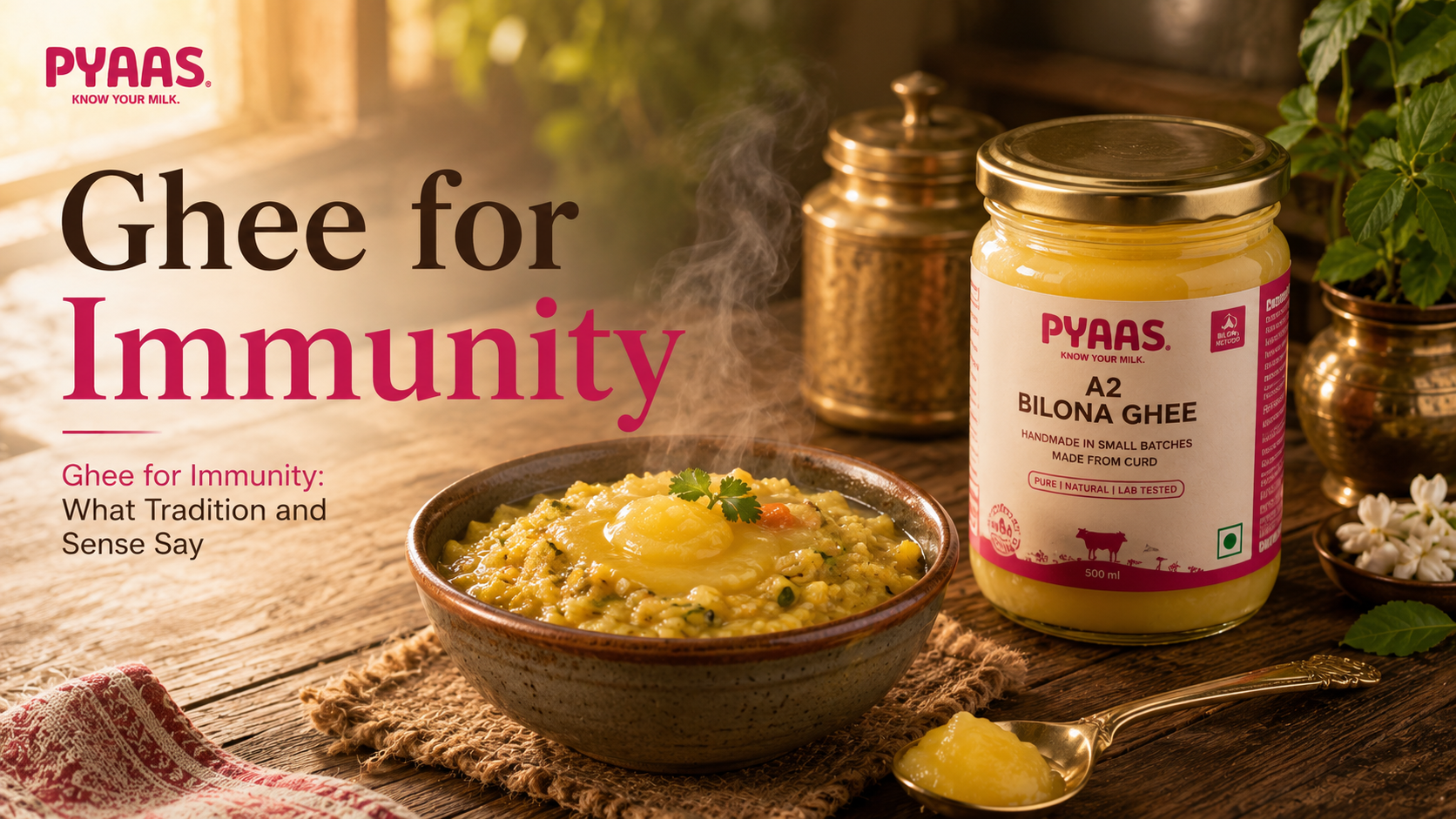
Ghee for Immunity: What Tradition and Sense Say
3 September 2026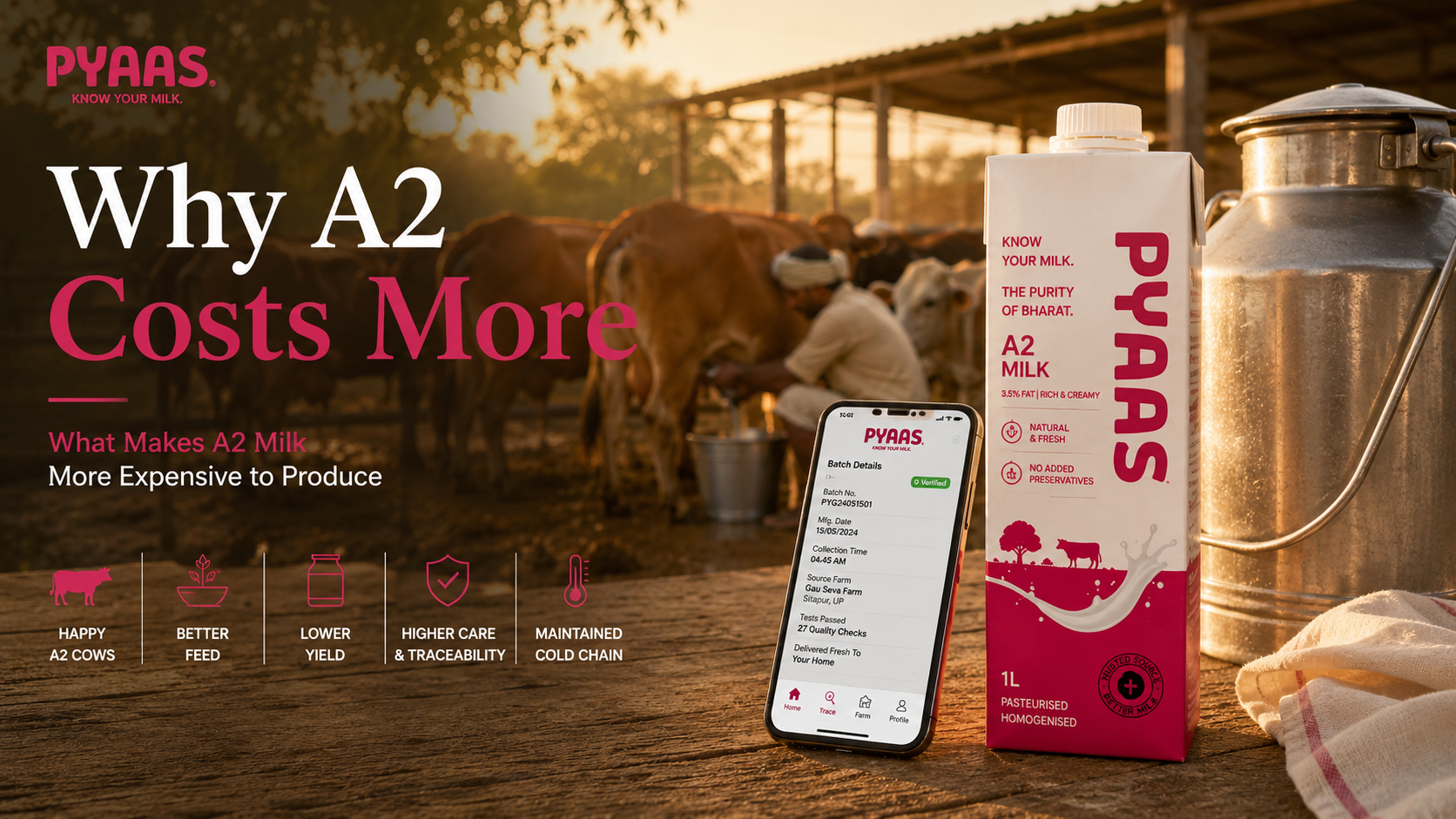
What Makes A2 Milk More Expensive to Produce
3 September 2026
How to Store Ghee So It Stays Fresh for Months
3 September 2026
When to Introduce Ghee to Your Baby: A Parent's Guide
3 September 2026