What Happens When You Scan a PYAAS Pack's QR Code
The first time you hold a PYAAS pack, there is a small square of black and white in the corner that most brands treat as a formality. To me it is the whole point. Open your phone camera, point it at that QR code, and in about a second the pack stops being anonymous. I am Kushagra Shekhar Kaushik, Founder and CTO of PYAAS, and I want to walk you through exactly what happens in that second, because I am the person who built it.
Here is the uncomfortable truth I started from. Most of us have never once known where the milk in our fridge actually came from. Not the region, not the farm, not the person who milked the cow that morning. When you scan a milk pack QR code from PYAAS, that question finally has a specific answer on your screen, and that answer is the reason the brand exists.
What actually happens when you scan the QR code
The QR code is not a link to our homepage or a marketing video. It carries a batch identifier, a short code unique to the run of milk your pack came from. When you scan it, your phone opens that batch's record, and the page assembles itself from data we captured on the farm and as the milk made its way to you. Nothing is reconstructed after the fact, and nothing about you is tracked in return.
There is no login, no app to download and no form to fill in. It loads as a plain, fast web page on an ordinary phone, because a promise you have to struggle to verify is not much of a promise. You can see a working version of it right now on our sample milk report, which shows the exact shape of what a scan reveals.
The farm and the farmer behind your pack
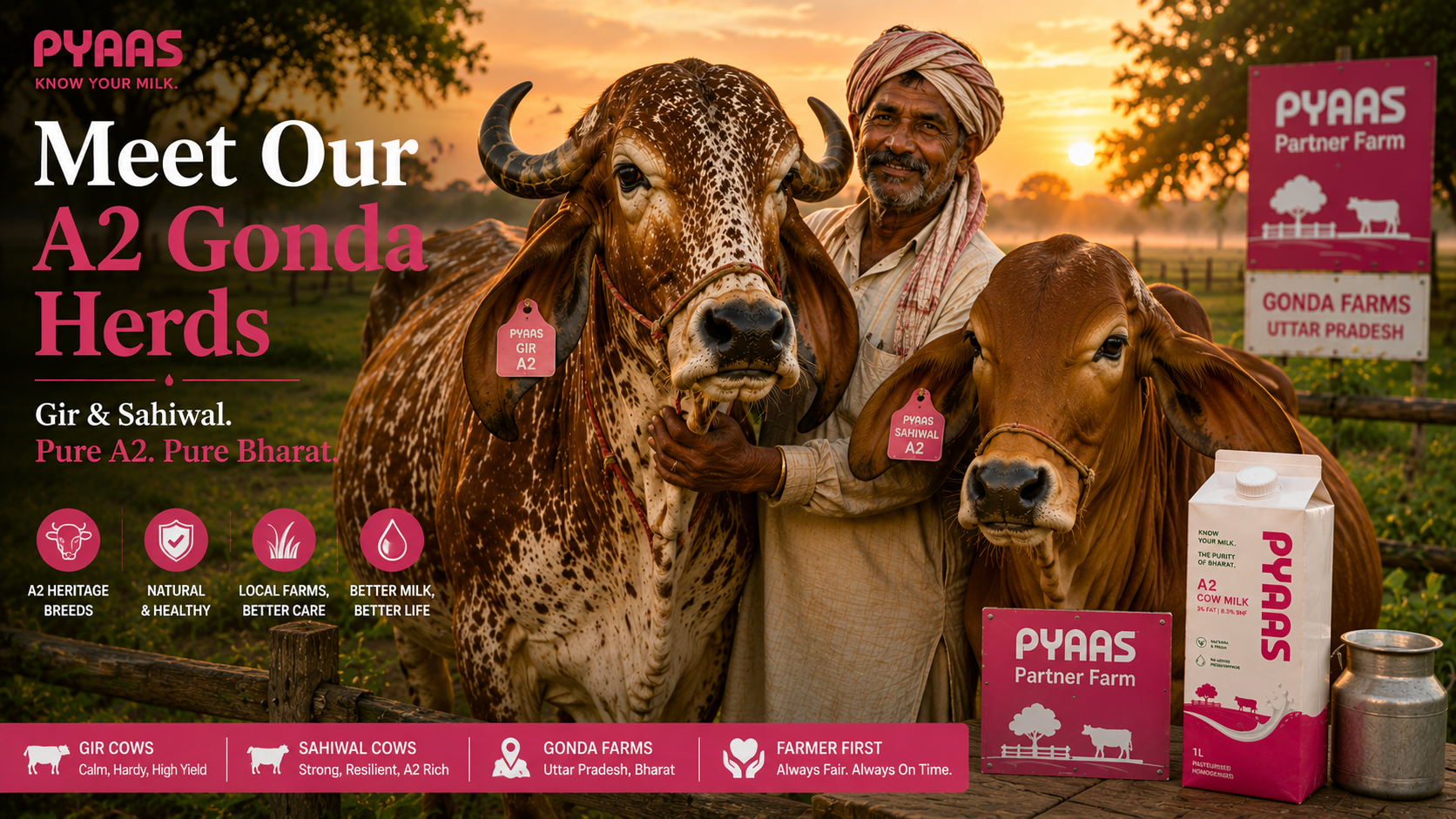
The first thing the record shows is origin. PYAAS milk is single-origin, which means it is not pooled from thousands of anonymous suppliers. It comes from named partner farms in Gonda, Uttar Pradesh, and the record names them plainly: Sri Radha Mohan Dairy Farm, a herd of 76 cows tended by a farmer named Ram, alongside Gonard Dairy and Ranjeet Singh Dairy Farm.
You see which farm or farms contributed to that pack, the share each one added, and the farmer's name sitting next to their milk. These are Holstein Friesian and Sahiwal herds, and the A2 milk comes from the A2 cows within them. When a real person's name sits beside the milk you are about to pour for your family, the pressure to get every detail right runs all the way back to the field. That accountability is a feature, not a slogan.
The batch's quality record
The next section is the part I am most protective of: the quality record for that specific batch. Every batch is quality checked before it is sealed, and I insisted that we show you the numbers behind that check rather than flatten them into a vague badge.
- Fat — the milk fat content of that batch.
- SNF — solids-not-fat, the proteins, lactose and minerals in the milk.
- An overall quality score that blends the results into a single figure for the pack.
Because the milk is single-origin, we can also show you the split: which farm contributed how much, and each contributing farm's own quality figures. I would rather you read the working than trust a green tick. If you want the plain-language version of what those numbers mean, we cover it in what Know Your Milk really means.
Why we built it to be checkable, not just printed
Any brand can print reassuring words like pure and farm-fresh on a carton. Almost none will let you audit them. We built the trace this way on purpose: the printed claim and the honest answer have to be the same answer, or the whole system collapses. That is also why the data is captured at the source instead of assembled later to look good. If you want the bigger argument for why this matters, I made it in why traceability matters in dairy.
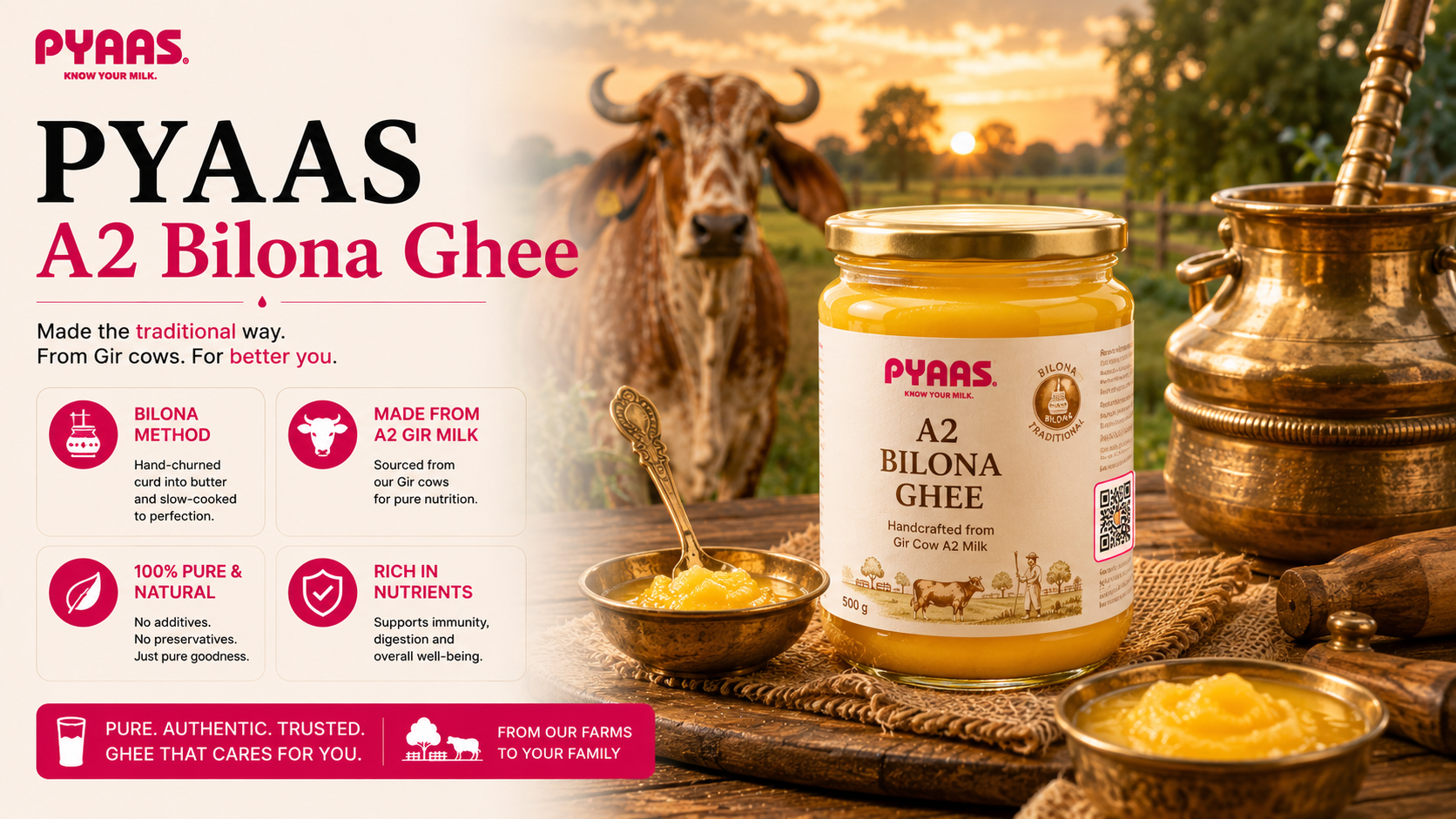
Today our A2 Bilona ghee ships across India, and our fresh A2 cow milk launches in Lucknow from August 2026, expanding across Uttar Pradesh from there. As PYAAS grows, the trace only gets richer, more farms, more of the journey visible, and the same one-second scan. My job as CTO is simple to say and hard to keep: as we scale, the answer you get when you scan a milk pack QR code has to stay exactly as specific and as honest as it is today. Scan the code, and know your milk.
Written by
Kushagra Shekhar Kaushik
Kushagra Shekhar Kaushik is the Founder & CTO of PYAAS, an independent, transparency-first dairy brand based in Gonda and Lucknow, Uttar Pradesh, building the technology that makes every pack traceable to its farm by QR.
More from Kushagra Shekhar KaushikCommon questions.
What do I see when I scan the QR code on a PYAAS pack?
You see that pack's batch record: the named farm or farms in Gonda, Uttar Pradesh that the milk came from, the farmer behind each one, the share each farm contributed, and the batch's quality record, including Fat, SNF and an overall quality score. It opens as a fast web page, with no app or login needed.
Do I need an app to scan a PYAAS milk pack QR code?
No. Any phone camera or QR scanner works. Scanning opens a plain web page for that specific batch, so there is nothing to download, nothing to sign up for, and nothing about you is tracked in return.
Is PYAAS fresh milk available now?
PYAAS A2 Bilona ghee ships across India today. PYAAS fresh A2 cow milk launches in Lucknow from August 2026 and will expand across Uttar Pradesh. You can preview exactly what a scan will reveal on the PYAAS sample milk report right now.
Get the next one in your inbox.
The occasional note on milk, ghee, and how we work. Plain words, no hype, and you can leave any time.
Keep reading.
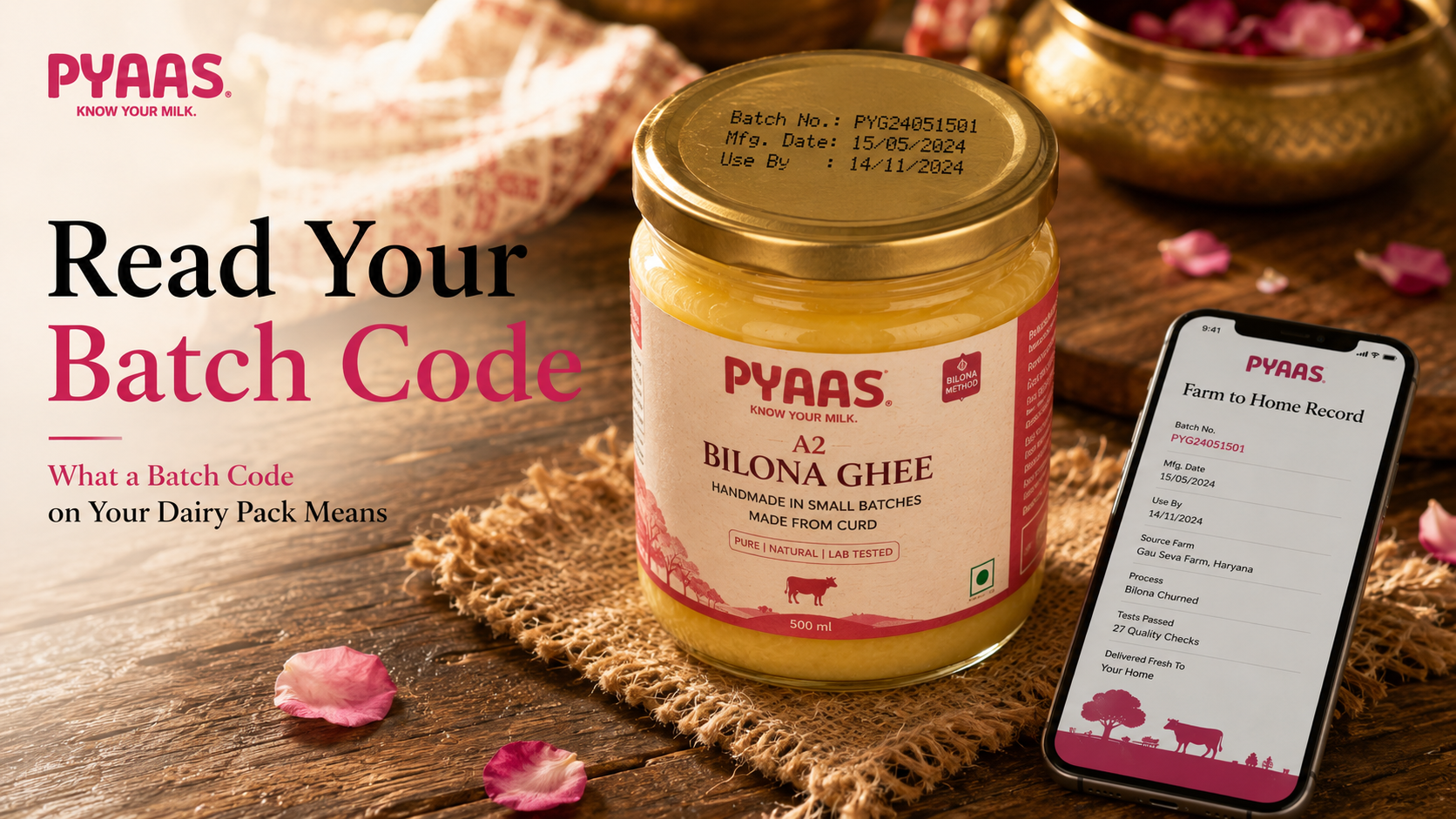
What a Batch Code on Your Dairy Pack Means
2 September 2026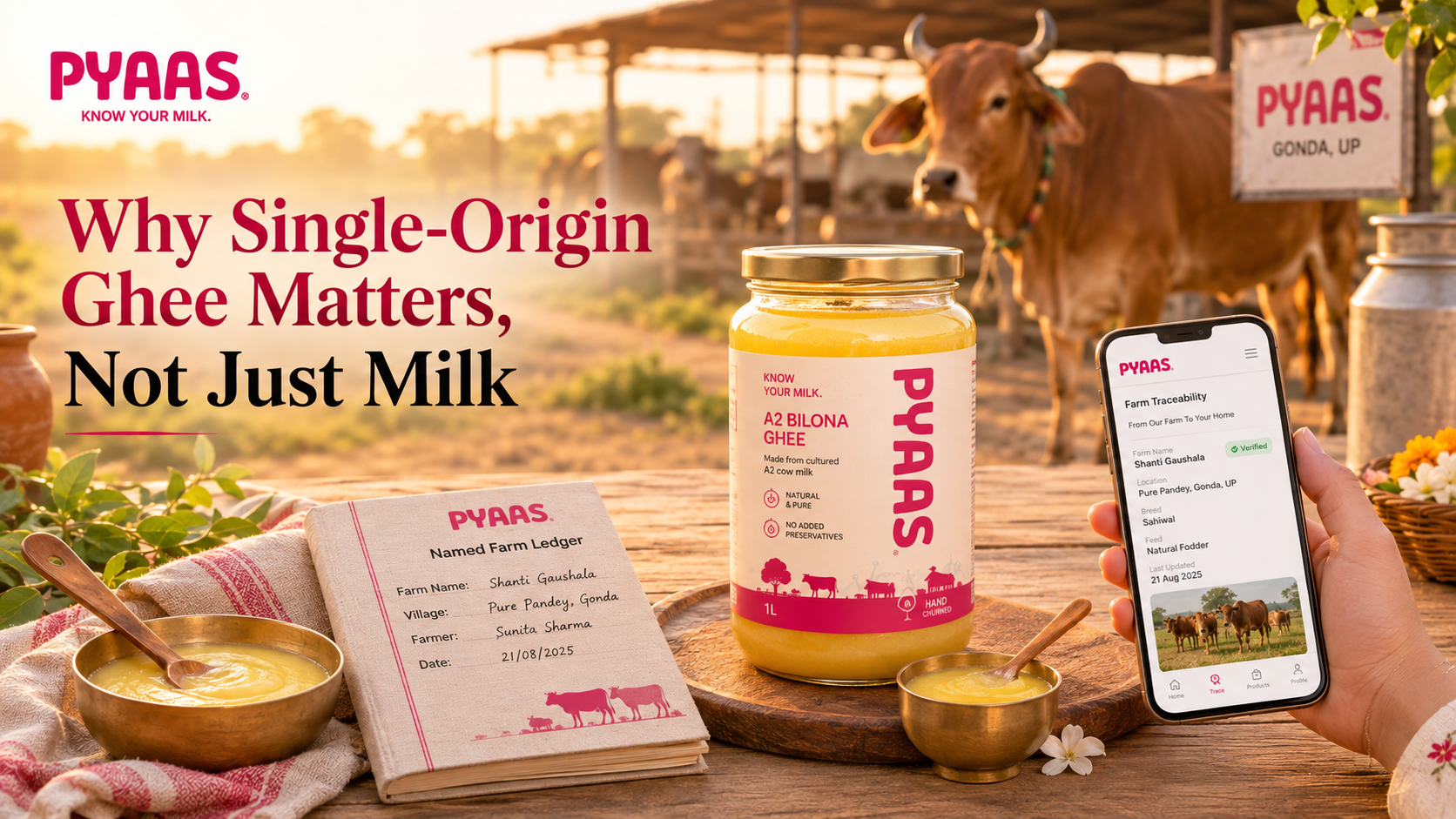
Why Single-Origin Ghee Matters, Not Just Milk
23 August 2026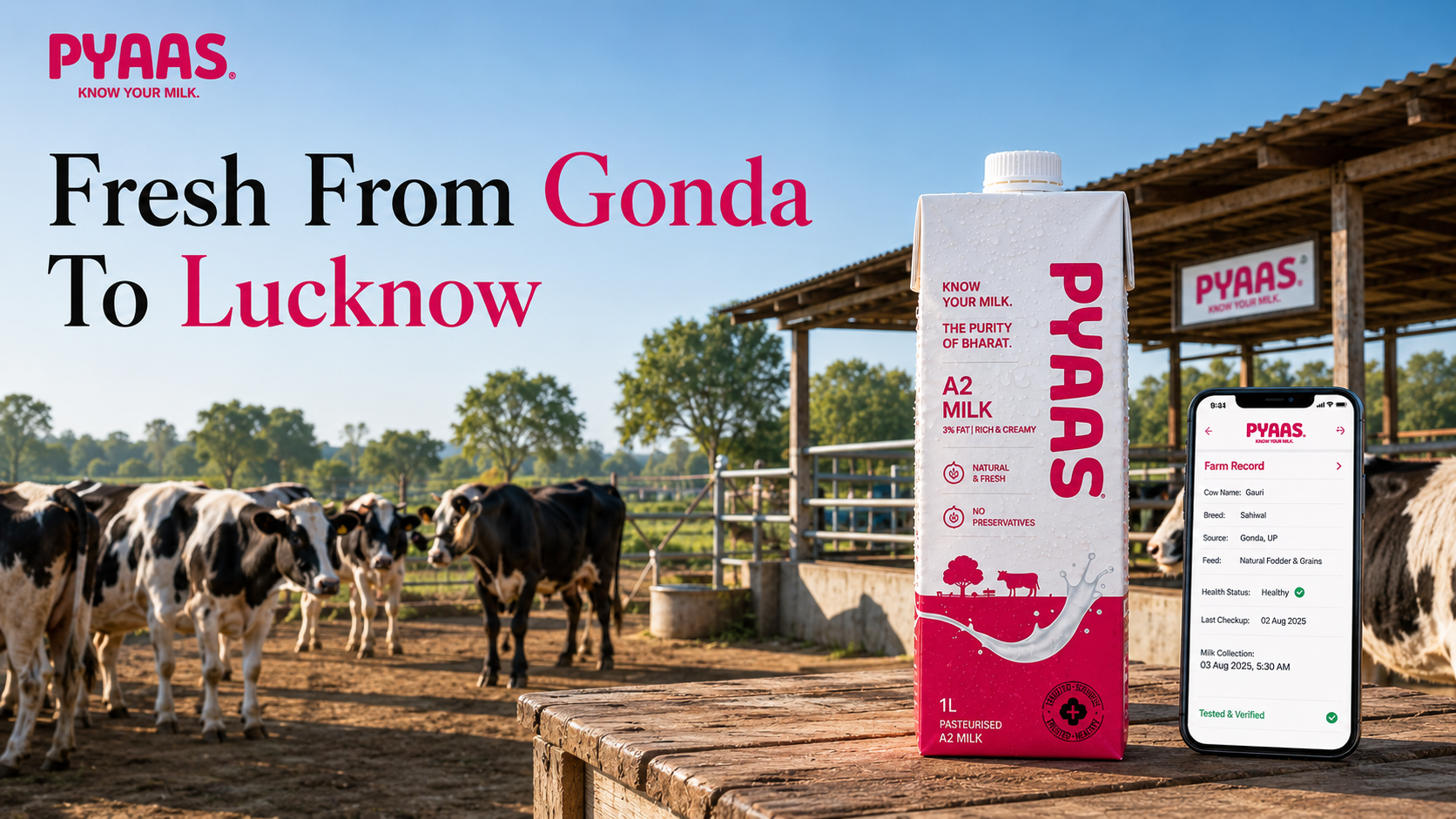
How PYAAS Keeps Milk Fresh From Gonda to Lucknow
21 August 2026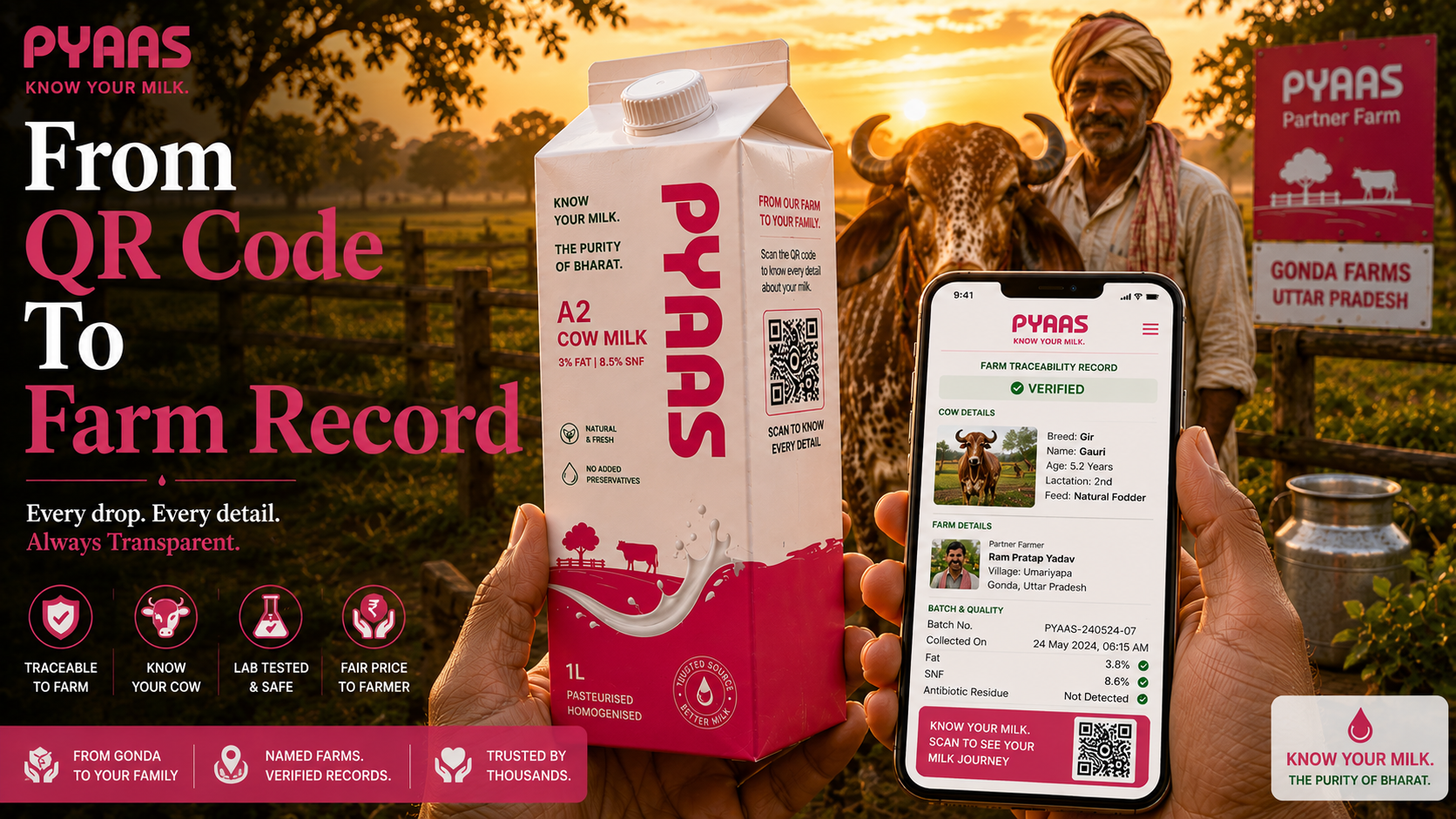
From QR Code to Farm Record: The Full Trace
28 July 2026