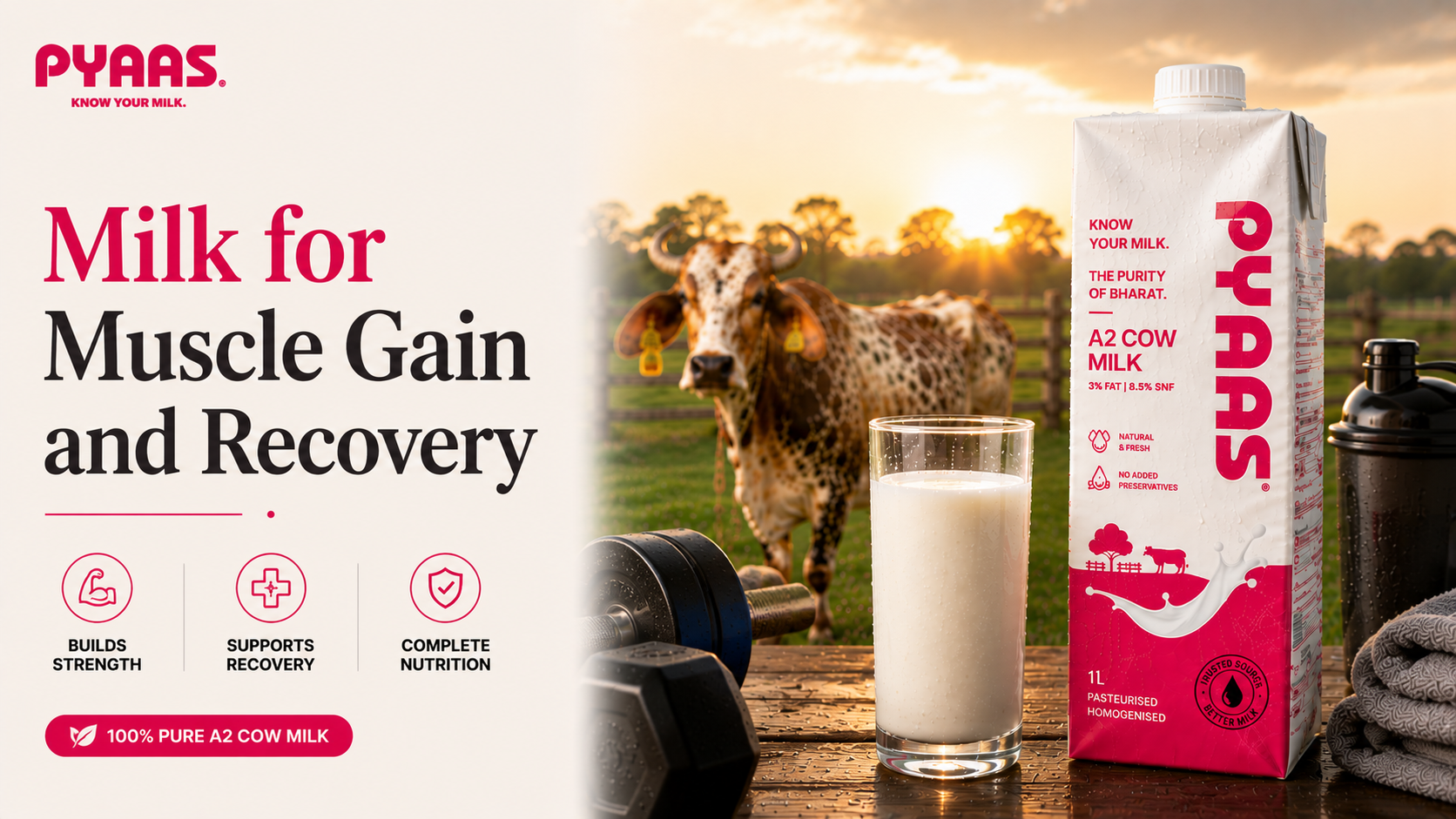
Milk for Muscle Gain and Recovery: What the Science Says
Long before shiny tubs of protein powder lined every gym, athletes drank milk. It turns out that old habit was onto something. Milk is one of nature’s more complete recovery foods. Here is what it actually does for muscle, minus the marketing.
A naturally complete protein
Milk protein comes in two forms that work well together:
- Whey, which digests quickly and delivers amino acids fast.
- Casein, which digests slowly and releases amino acids over hours.
That fast-and-slow combination is one reason milk is valued around training, a quick hit for repair, plus a steady supply afterwards. Both forms contain the full set of essential amino acids your muscles need.
More than just protein
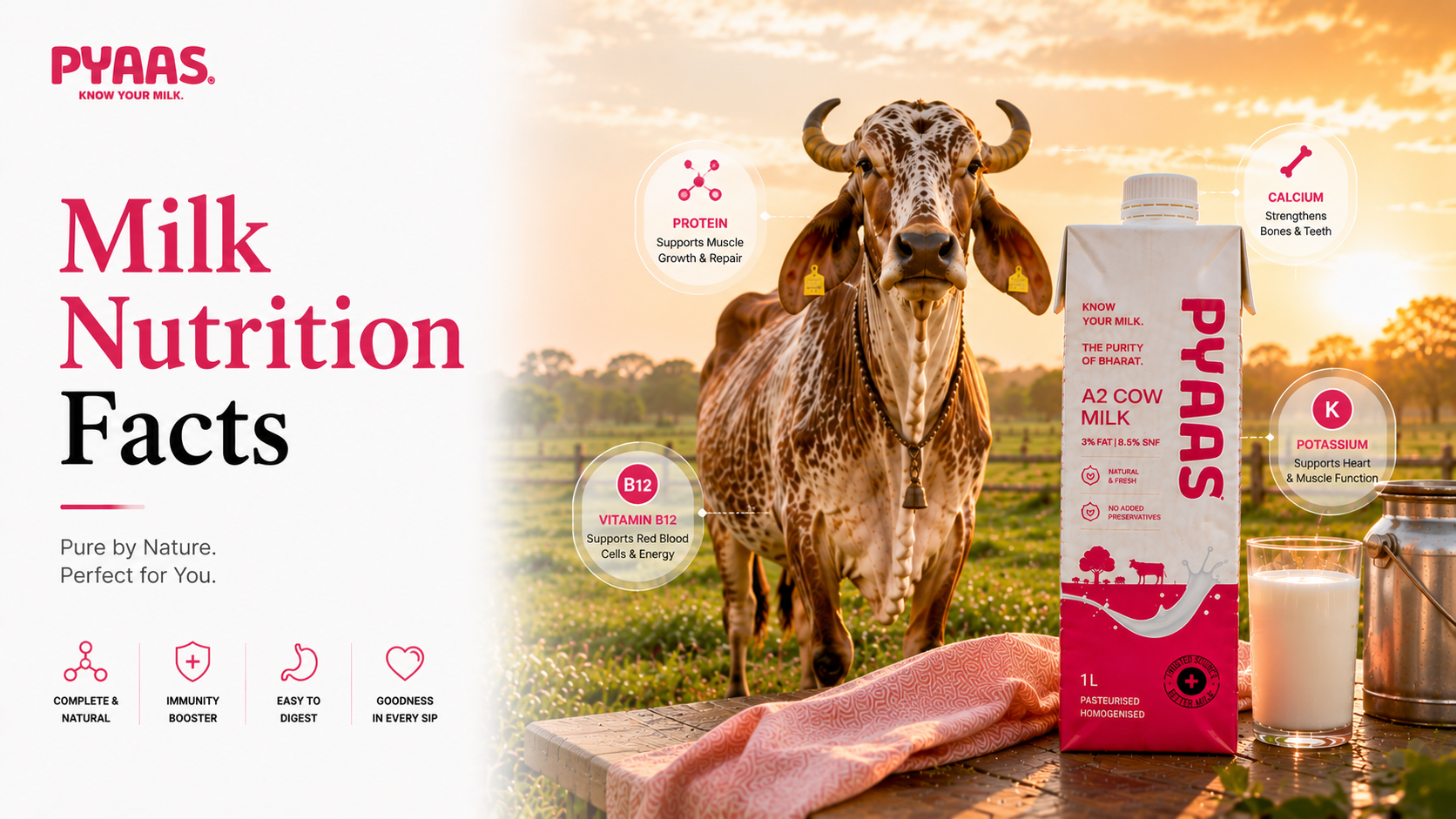
Recovery is not only about protein. Milk also brings:
- Carbohydrates, which help replenish energy after a hard session.
- Fluids and electrolytes, useful for rehydration.
- Calcium and other micronutrients, supporting bones that carry the load. See milk nutrition facts.
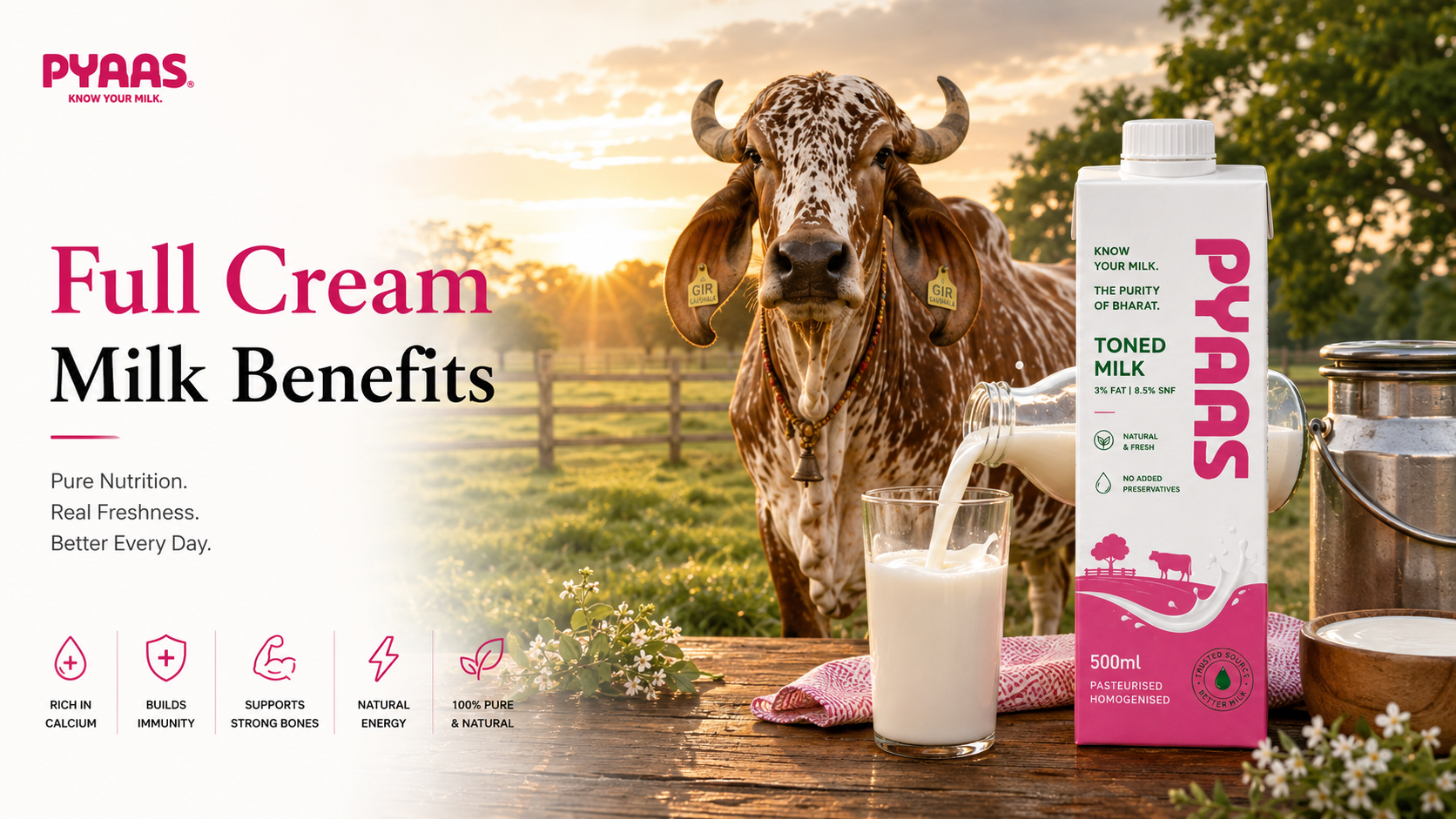
Full cream milk adds more energy for those trying to gain, while lighter options suit those watching intake. Read full cream milk benefits.
Milk versus protein powder
This is not a rivalry. Protein powder is concentrated and convenient. Milk is a whole food with protein, carbs and micronutrients built in. Many people use milk as the base and only add powder if they genuinely struggle to hit their protein target. Neither is a magic bullet, total daily protein and consistent training do the heavy lifting.
How to use it
- Have milk after training as part of your recovery, if it suits you.
- Focus on meeting your protein needs across the whole day, not just one shake.
- Pick the fat level that matches your goal, richer for gaining, lighter for leaning.
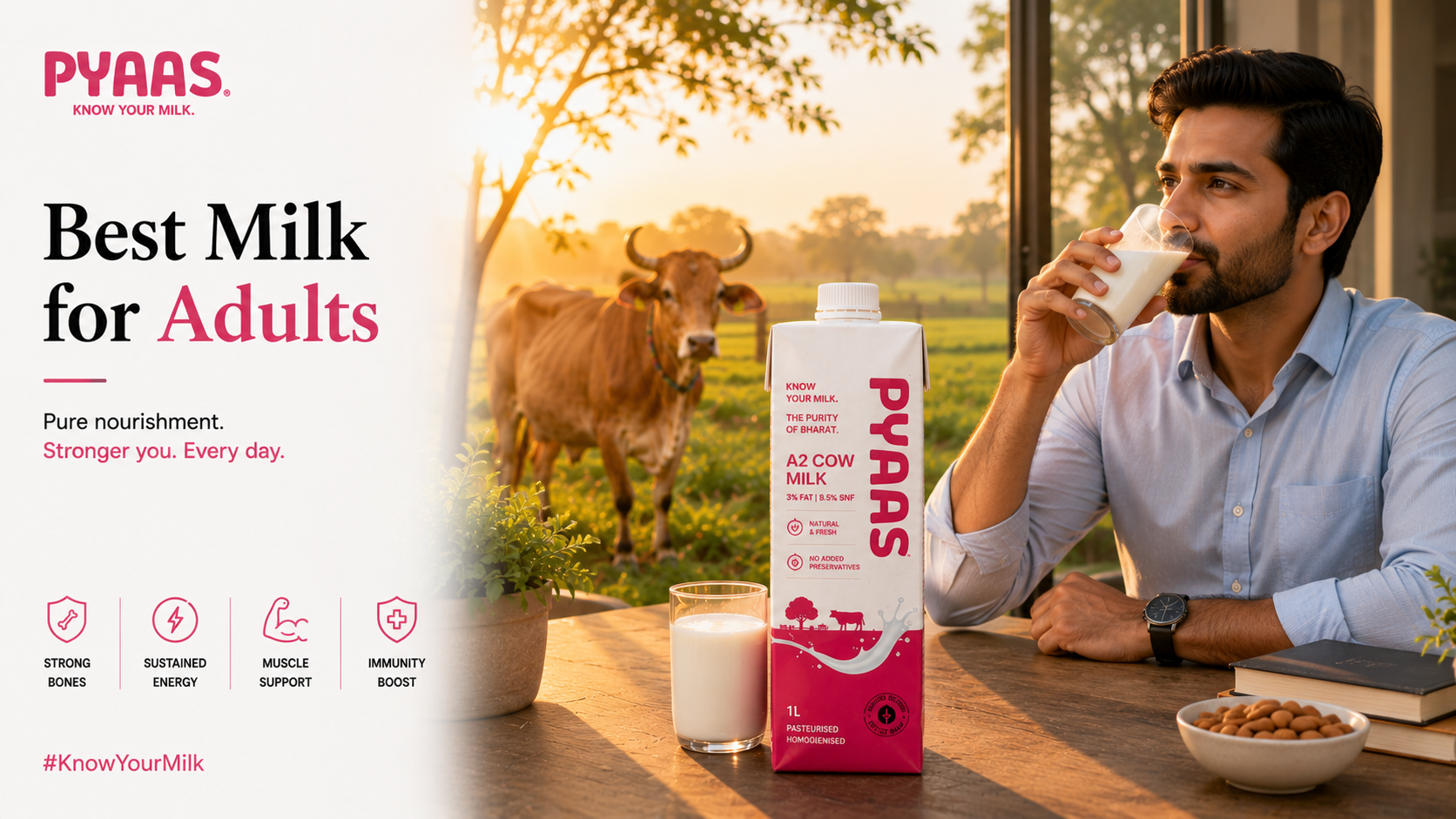
Quality still counts. Diluted or low-SNF milk gives you less of what you came for. PYAAS delivers single-origin A2 cow milk with honest, traceable SNF and FAT for every batch, so the protein you are counting on is actually there. For adults choosing everyday milk, see best milk for adults. Sometimes the best recovery drink is the one that has been in the fridge all along.
Written by
PYAAS
PYAAS is an independent, transparency-first dairy brand based in Gonda and Lucknow, Uttar Pradesh, founded by Aryan Sharma and Kushagra Shekhar Kaushik. Every pack is traceable to its farm by QR — Know Your Milk.
More from PYAASCommon questions.
Is milk good for muscle gain?
Yes, milk is a naturally complete protein source containing both whey and casein, along with carbohydrates that help recovery. It has long been used as an affordable post-workout drink, though total daily protein and training matter most.
Is milk better than protein powder?
Milk is whole food with protein, carbohydrates, calcium and more, while protein powder is concentrated and convenient. Neither is simply better, many people use milk as a base and add powder only if they struggle to meet protein needs.
When should I drink milk for recovery?
Many people have milk after training to support muscle repair, but the bigger driver is meeting your protein needs across the whole day. Fit milk into that pattern in a way that suits you.
Get the next one in your inbox.
The occasional note on milk, ghee, and how we work. Plain words, no hype, and you can leave any time.