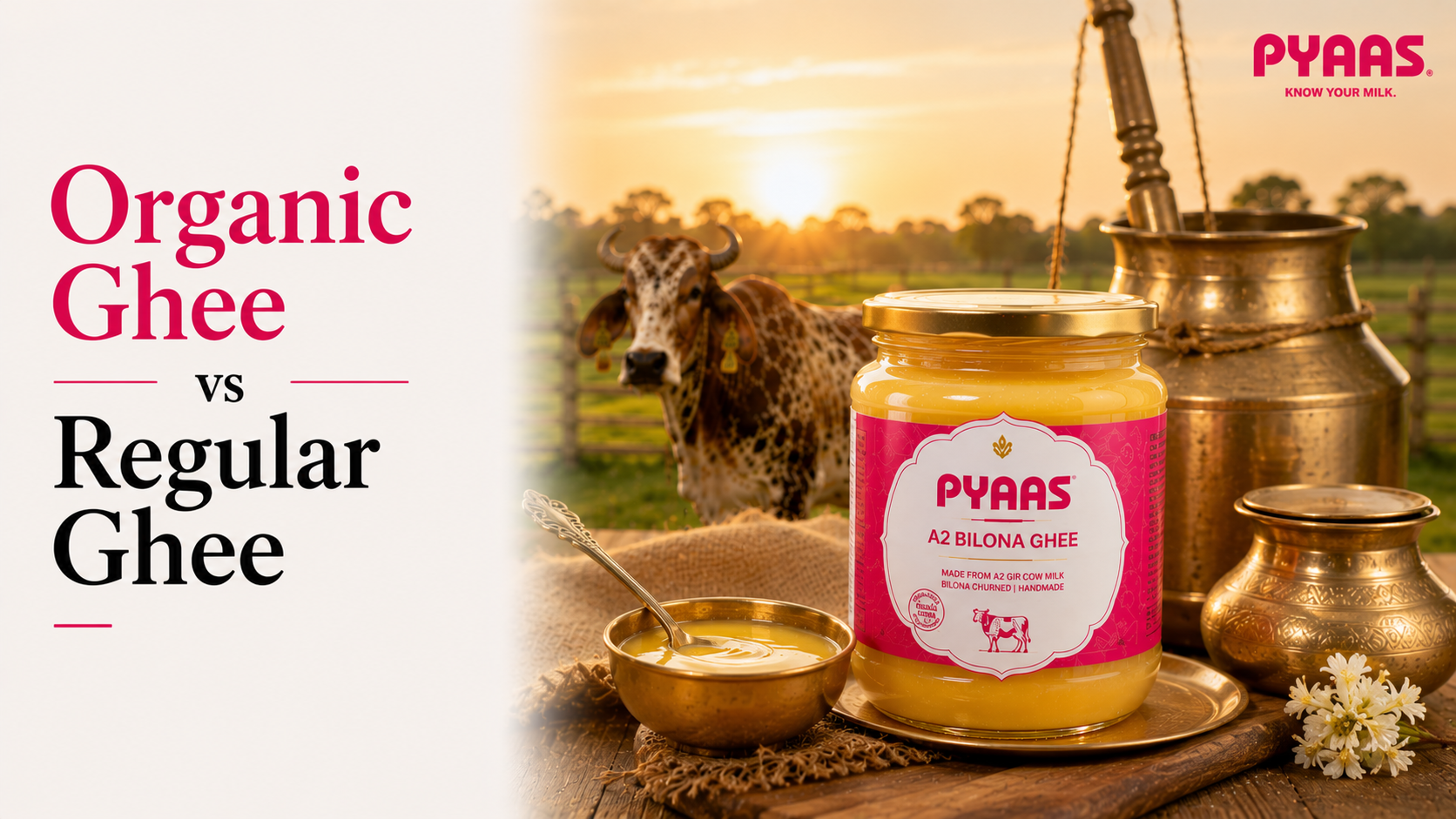
Organic Ghee vs Regular Ghee: What “Organic” Really Means
The ghee shelf has quietly become one of the most crowded in the store. Organic ghee, desi ghee, A2 ghee, Bilona ghee, cultured ghee. Each word adds a little to the price, and most of us are not sure which ones actually add to the quality. Let us sort it out.
What organic changes
Organic ghee simply means the milk came from cows raised the organic way: feed grown without synthetic pesticides or fertilisers, no routine antibiotics, no added hormones. It is a genuine quality signal about how the animal was fed and cared for.
But notice what organic does not tell you. It says nothing about how the ghee itself was made, or whether you can trace it to a real farm.
What method changes
How ghee is made matters at least as much as how the cows were fed. There are two broad routes:
- Direct cream method: the fast, industrial route, ghee is made straight from cream. Efficient, and how most commodity ghee is produced.
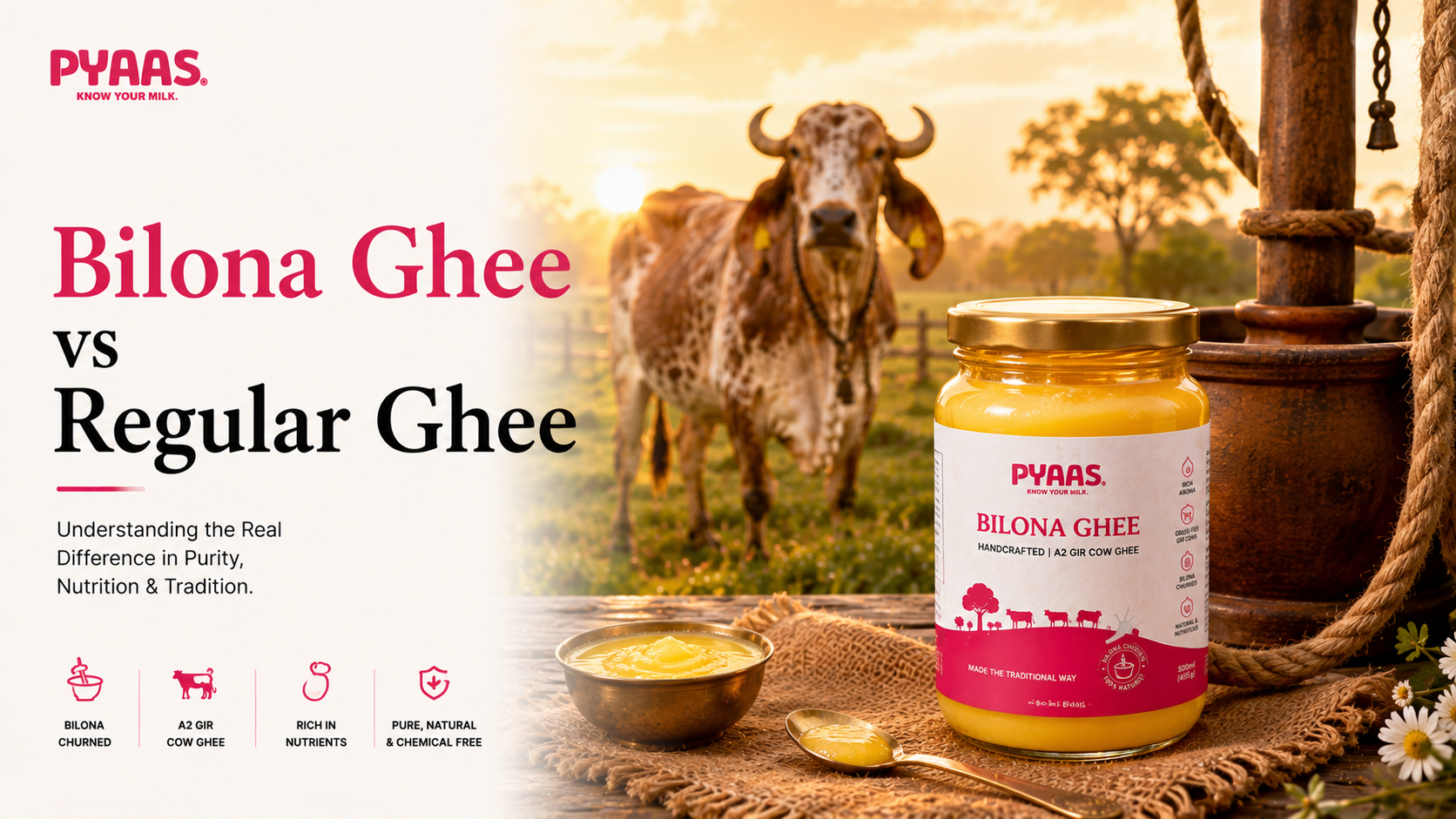
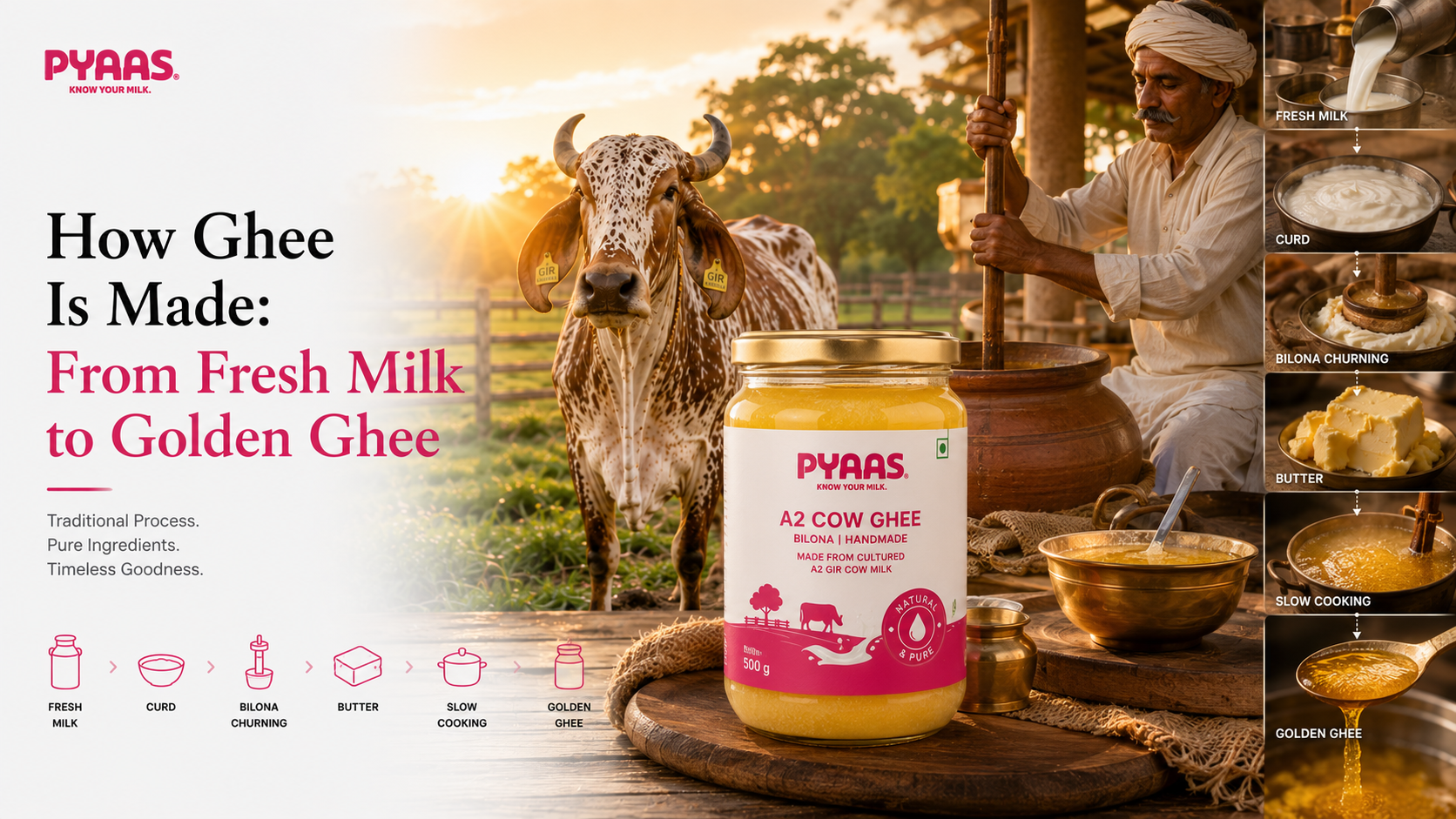
- Bilona method: the traditional route, milk is set into curd, hand-churned to butter, then slow-cooked to ghee. Slower, small-batch, and prized for aroma and texture.
We compare them fully in Bilona ghee versus regular ghee and walk through the process in how ghee is made.
What the breed changes
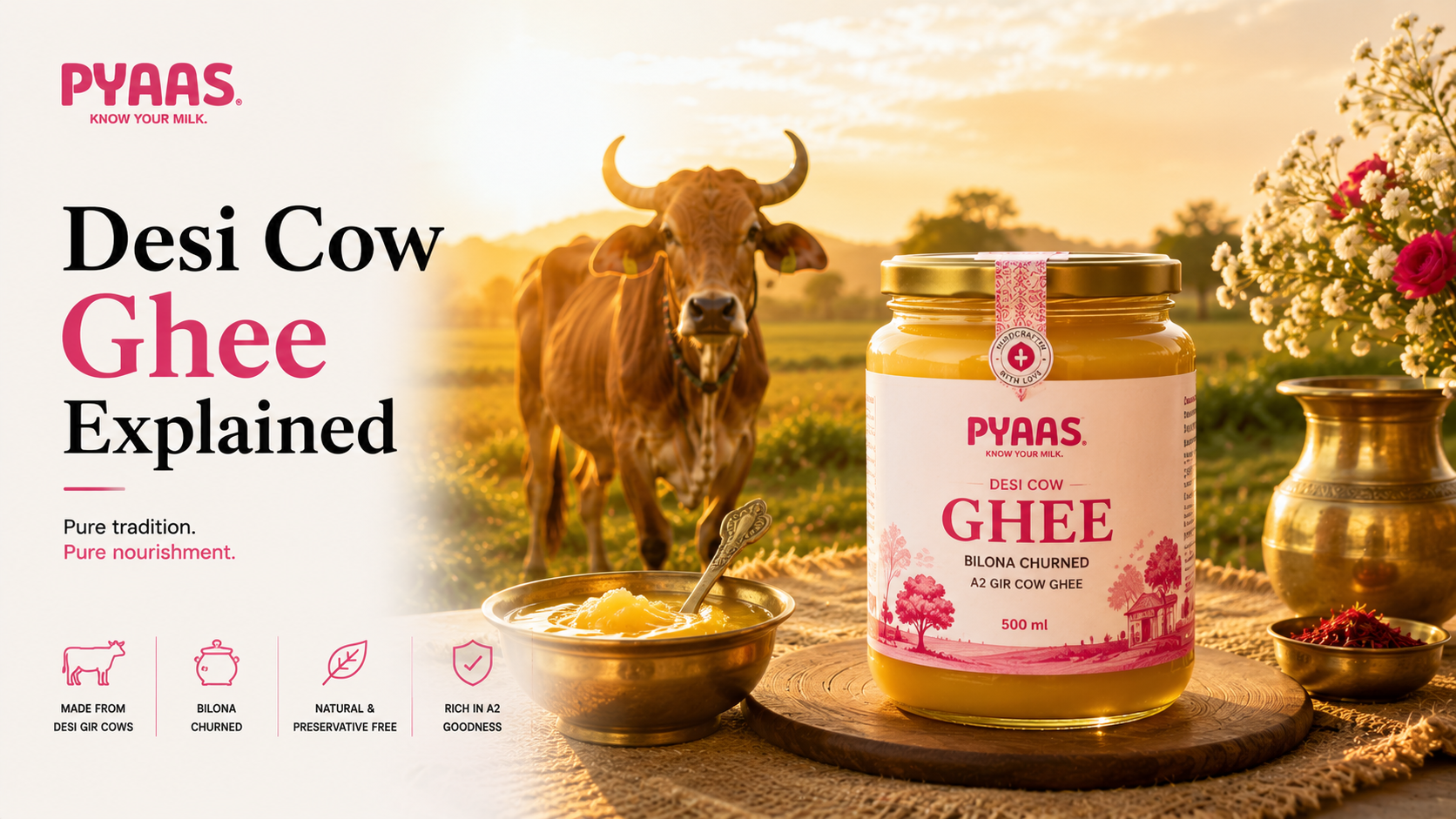
A2 ghee comes from A2 cow milk, from breeds like Gir and Sahiwal. Many families prefer it for the same reasons they prefer A2 milk. This is separate again from both organic and Bilona, another independent lever on quality. Read desi cow ghee explained.
The word that ties it together: traceable
Organic, A2 and Bilona are all real quality signals, but they share one weakness. Each is only as honest as the source behind it. If the ghee cannot be traced to a named farm, you are trusting the jar, not the milk.
PYAAS makes small-batch A2 Bilona ghee from milk sourced at named farms in Gonda, Uttar Pradesh, including our flagship Sri Radha Mohan Dairy Farm. Because the milk is single-origin, the ghee can be traced back to the exact farm and batch. You can see it for yourself on our pure cow ghee page and meet the farms.
So do not buy the loudest word on the jar. Buy the ghee whose maker can tell you where the milk came from, and prove it.
Written by
PYAAS
PYAAS is an independent, transparency-first dairy brand based in Gonda and Lucknow, Uttar Pradesh, founded by Aryan Sharma and Kushagra Shekhar Kaushik. Every pack is traceable to its farm by QR — Know Your Milk.
More from PYAASCommon questions.
What is the difference between organic ghee and regular ghee?
Organic ghee is made from the milk of cows raised on organically grown feed without routine antibiotics or hormones. Regular ghee carries no such requirement on how the cows are fed or raised. Organic is a sourcing claim, and it says nothing on its own about the method used to make the ghee.
Is Bilona ghee the same as organic ghee?
No. Bilona describes the traditional method, curd is set, hand-churned to butter and slow-cooked, while organic describes how the cows are raised. Ghee can be Bilona, organic, both or neither, so check each claim separately.
What should I check before buying premium ghee?
Check the source of the milk, the breed of cow, the method of making, and whether the brand can trace the ghee to a named farm and batch. A verifiable source matters more than any single word on the jar.
Get the next one in your inbox.
The occasional note on milk, ghee, and how we work. Plain words, no hype, and you can leave any time.