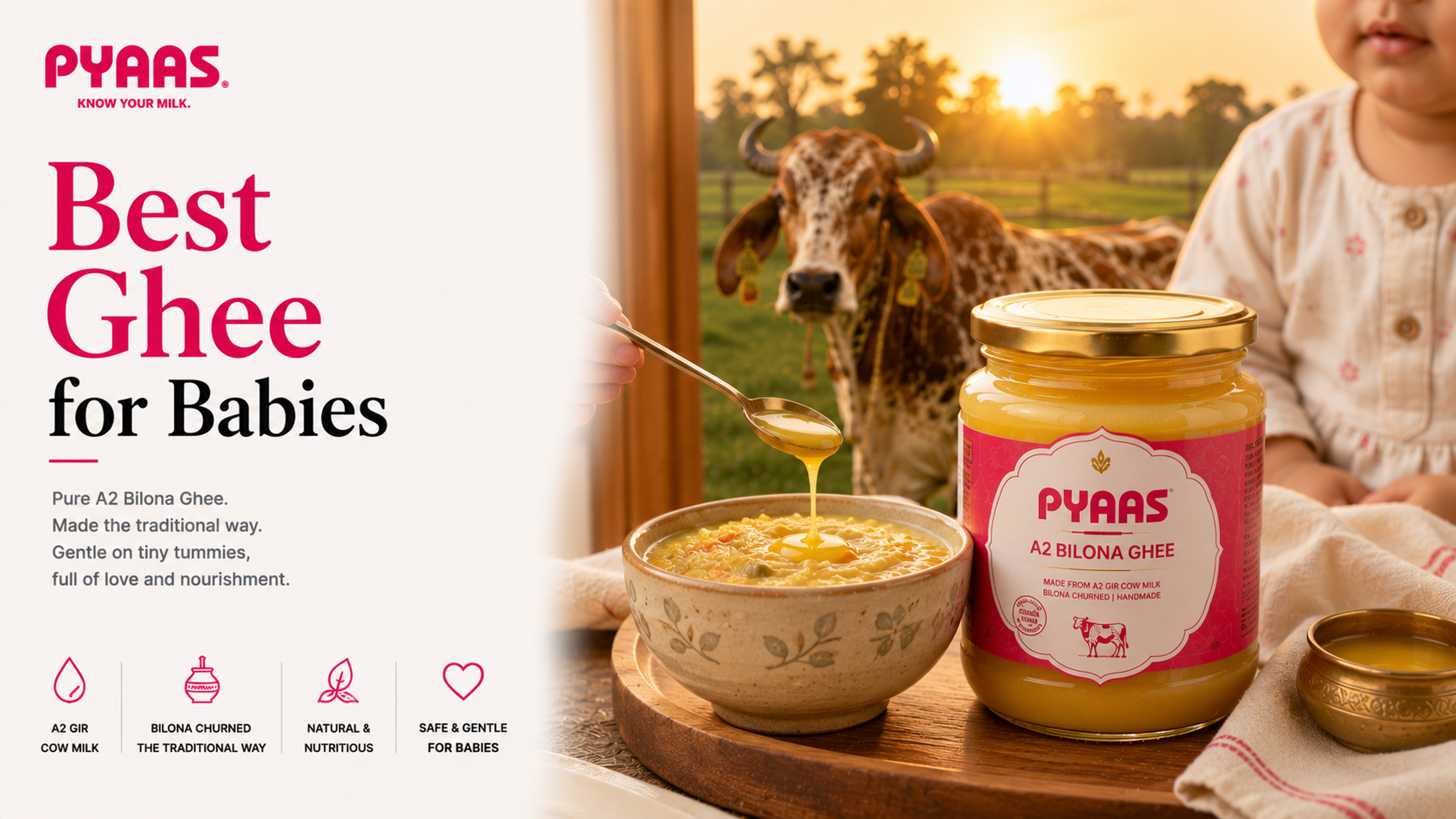
Best Ghee for Babies: A Parent’s Guide
Ghee holds a special place in Indian homes, and for generations it has been one of the first rich foods added to a baby’s meals. If you are a parent weighing which ghee to choose for your little one, this guide covers what actually matters, and why purity sits above everything else.
A note first: babies are individual, and this is general information, not medical advice. Always check with your paediatrician before introducing any new food, including ghee.
Why ghee, and when
Ghee is calorie-dense and carries fat-soluble vitamins, which is why a small amount is traditionally added to a baby’s food once solids begin, often around six months. It is usually stirred in tiny quantities into khichdi, dal, mashed vegetables or porridge, adding energy and a gentle richness.
What to look for in ghee for babies
For an adult, an average ghee may be fine. For a baby, the bar is higher, because a small body is far less forgiving of impurity. Look for:
- Purity you can verify: ghee with no adulteration, backed by a source you can check.
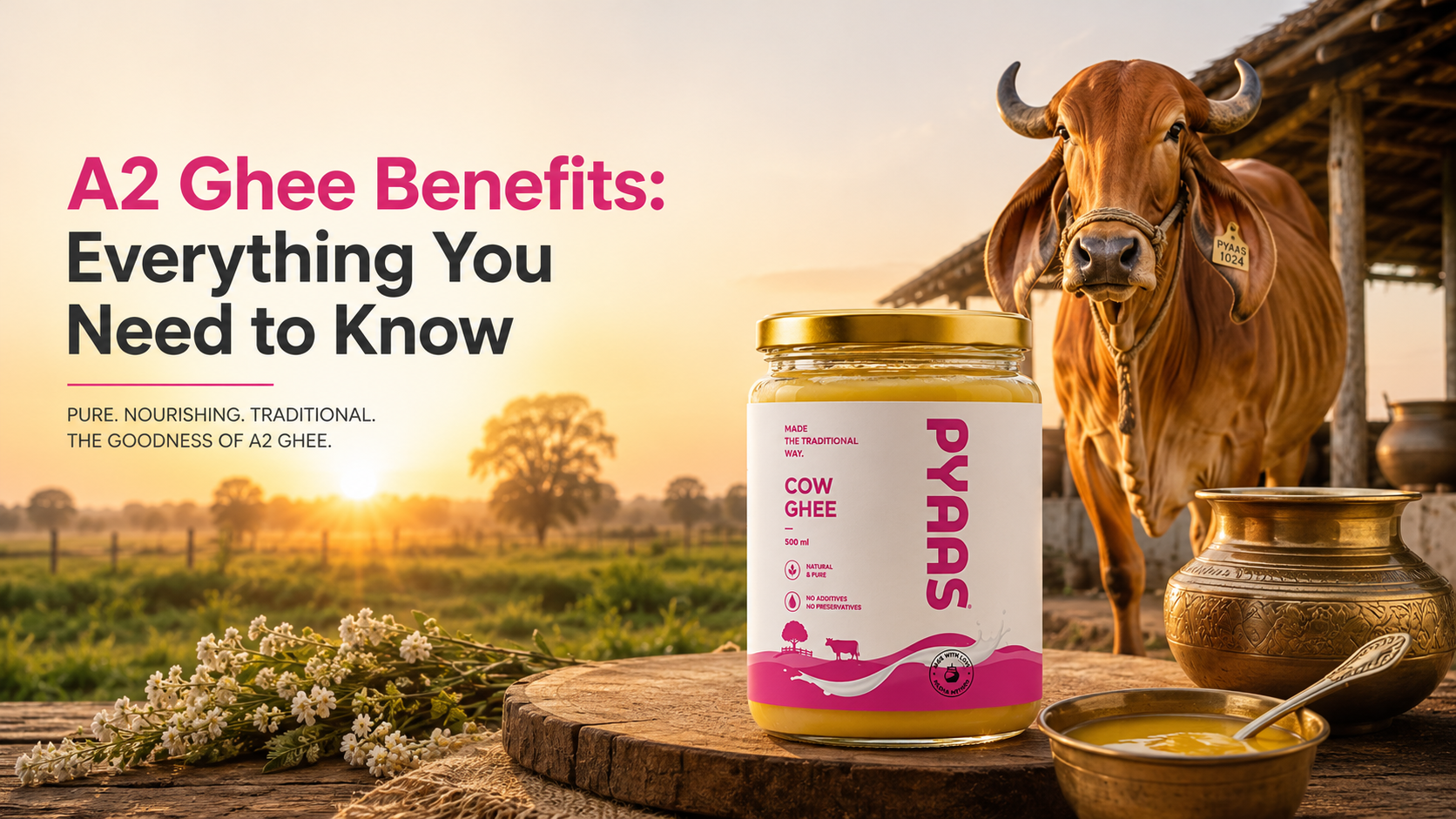
- A2 cow ghee: many parents prefer it, from breeds like Gir and Sahiwal. See A2 ghee benefits.
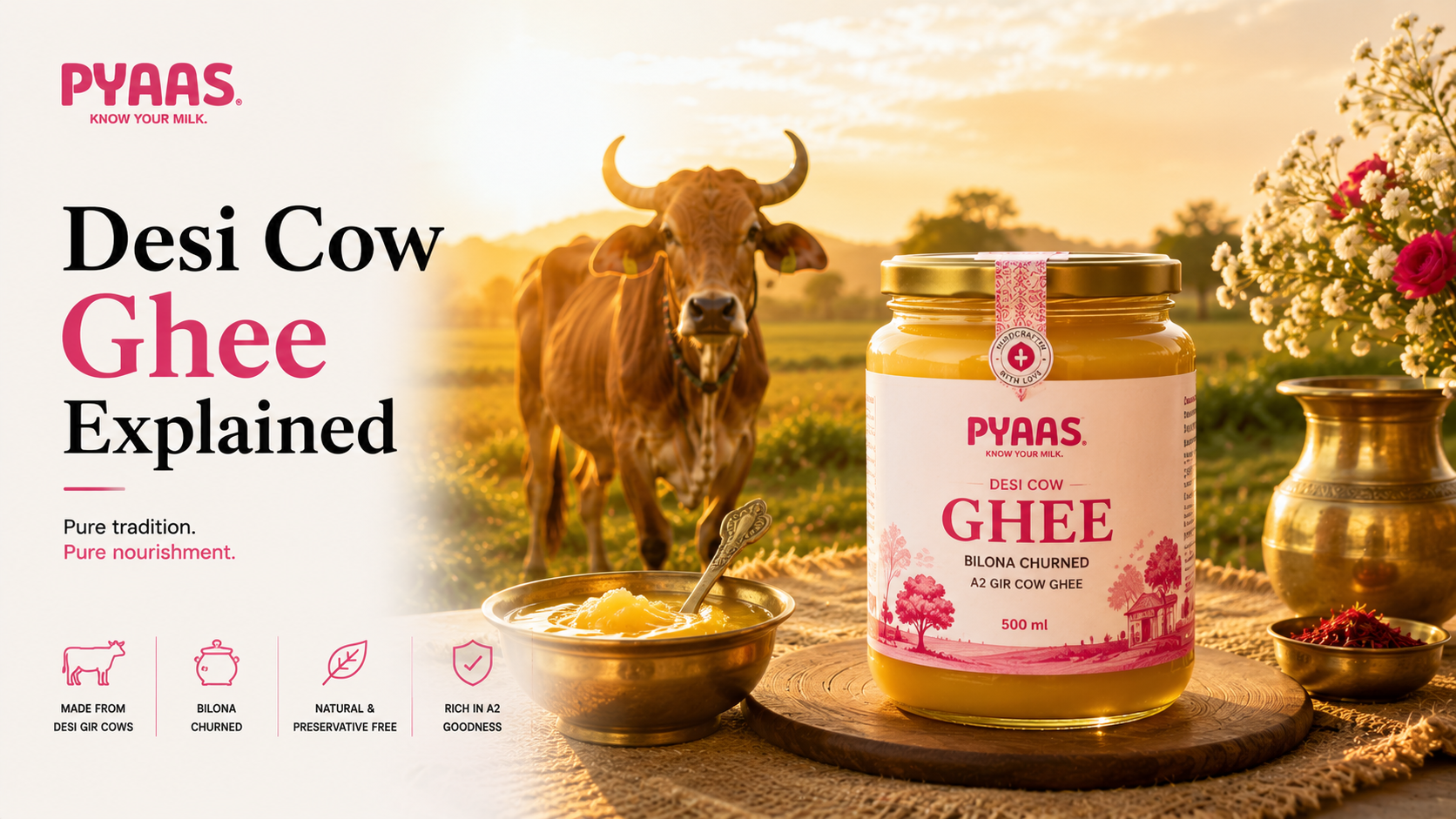
- Traditional Bilona method: curd-churned and slow-cooked. Read desi cow ghee explained.
- A traceable source: a named farm and a batch you can trace, so there are no surprises.
Why traceability matters most for little ones
When you feed a baby, you want to be certain, not hopeful. Anonymous ghee from an unnamed source asks you to trust a jar. Traceable ghee lets you see where the milk came from and that the batch was tested. PYAAS makes small-batch A2 Bilona ghee from milk sourced at named farms in Gonda, Uttar Pradesh, traceable back to the farm and batch, which is exactly the kind of certainty a parent wants. See our pure cow ghee.
How to introduce it
- Start with a very small amount, a few drops to a quarter teaspoon, mixed into food.
- Introduce it on its own for a few days so you can watch for any reaction.
- Increase gradually, guided by your paediatrician.
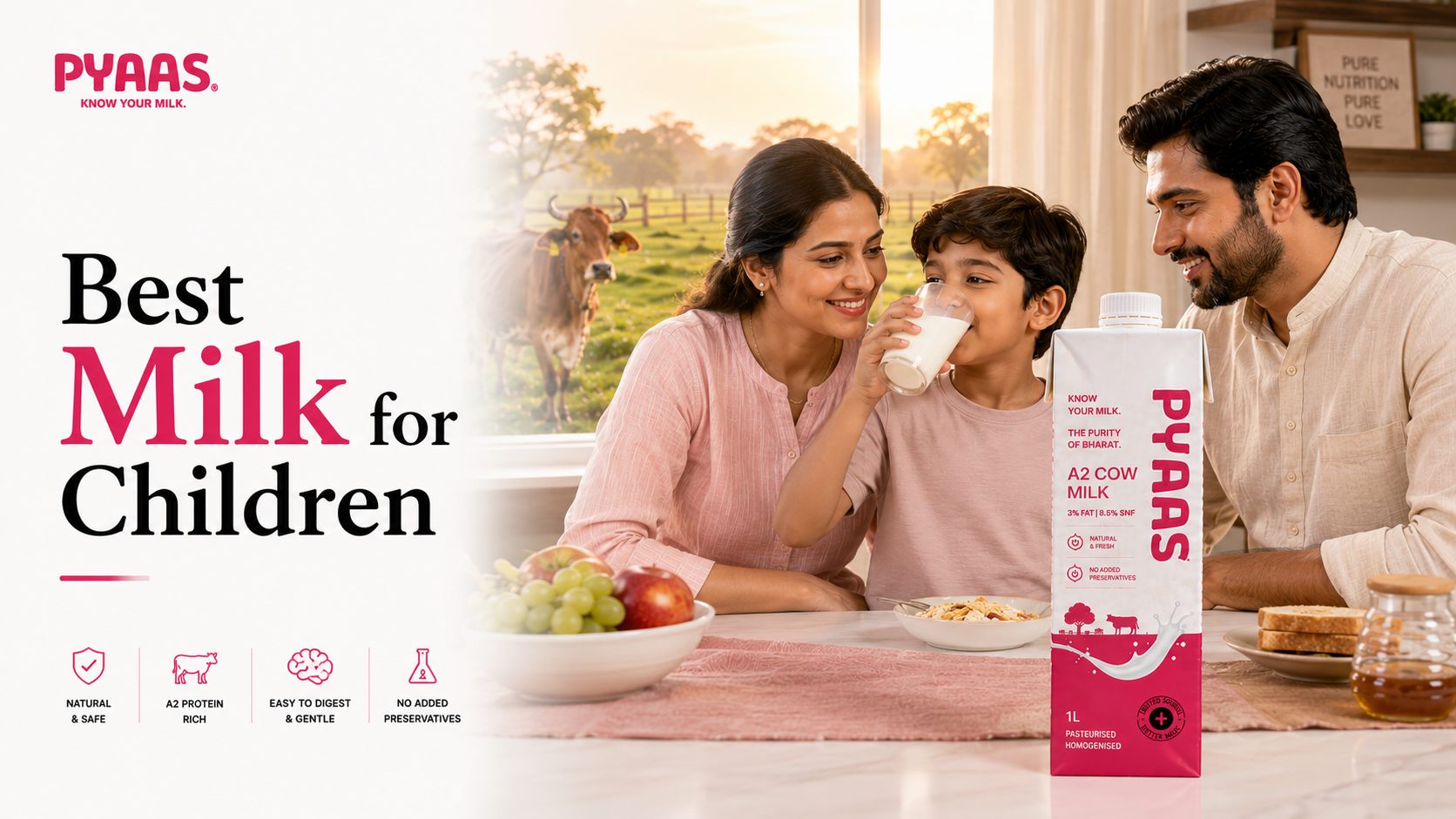
The same thinking applies to your child’s milk, covered in best milk for children. For the foods that go to your baby first, choose the one thing you can never regret, a source you can see.
Written by
PYAAS
PYAAS is an independent, transparency-first dairy brand based in Gonda and Lucknow, Uttar Pradesh, founded by Aryan Sharma and Kushagra Shekhar Kaushik. Every pack is traceable to its farm by QR — Know Your Milk.
More from PYAASCommon questions.
When can babies start eating ghee?
Ghee is often introduced along with solid foods, commonly from around six months, in tiny amounts mixed into khichdi, dal or porridge. Every baby is different, so check with your paediatrician before starting.
Which ghee is best for babies?
For babies, purity and traceability matter most. Many parents choose A2 cow ghee made by the traditional Bilona method from a named, verifiable source, so they know exactly what their child is eating.
How much ghee should a baby have?
Usually a very small amount, a few drops to a quarter teaspoon mixed into food, is enough to start. Introduce it gradually and watch for any reaction, and follow your paediatrician’s guidance.
Get the next one in your inbox.
The occasional note on milk, ghee, and how we work. Plain words, no hype, and you can leave any time.