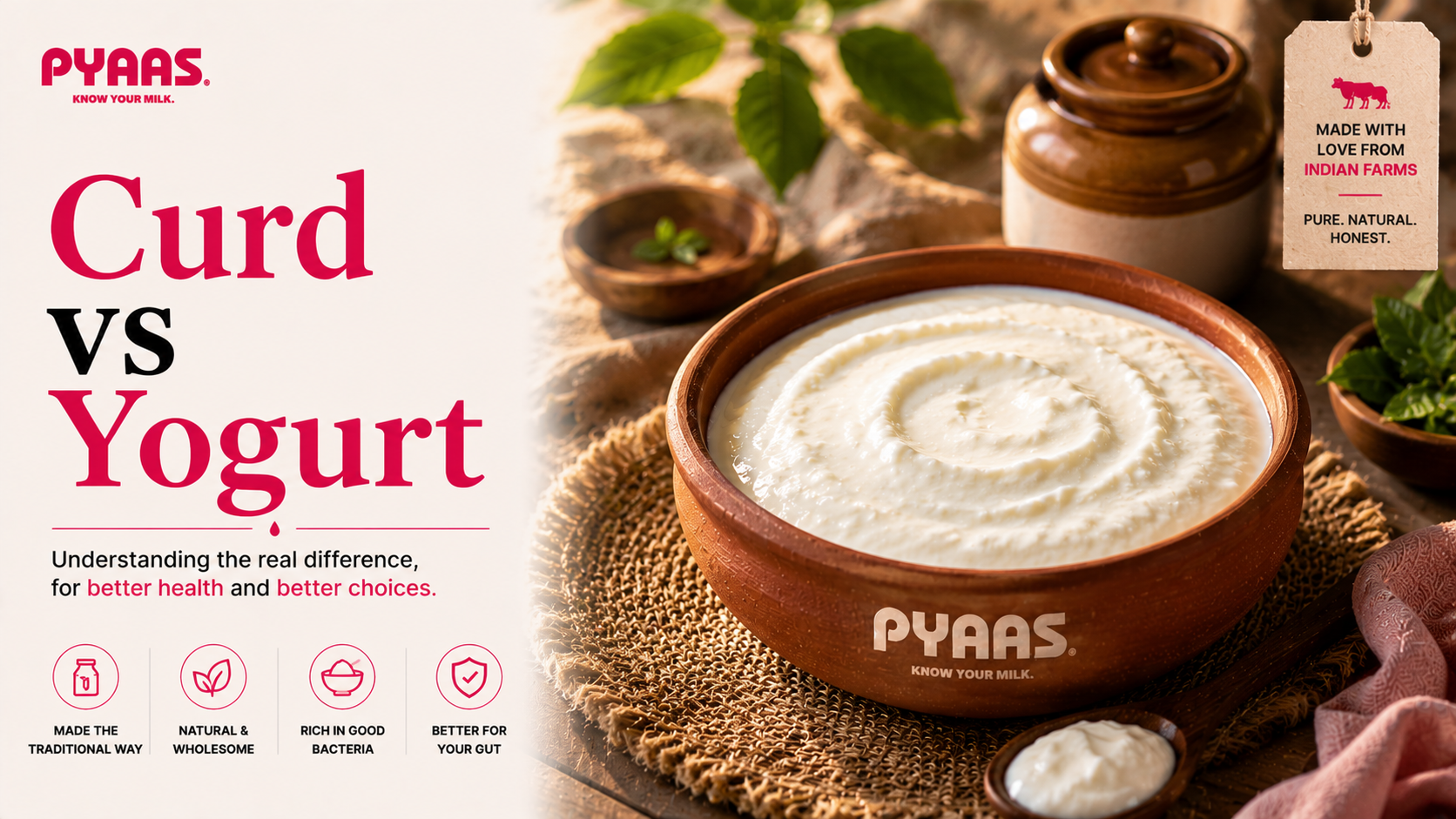
Curd vs Yogurt: What’s the Difference?
Ask for curd in India and yogurt abroad and you will get something that looks almost the same. Are they identical? Not quite. The differences are small but real, and worth knowing. Here is the simple version.
What they have in common
Both curd and yogurt are fermented milk. In each case, friendly bacteria turn the lactose in milk into lactic acid, which thickens the milk and gives it that pleasant tang. Both deliver protein, calcium and probiotics.
The real difference: the culture
- Curd (dahi) is traditionally set at home using a natural starter, a spoon of existing curd, which carries a mix of naturally present bacteria. The exact cultures vary from kitchen to kitchen.
- Yogurt is usually made commercially with specific, standardised bacterial strains, giving a consistent product batch after batch.
That is the heart of it: dahi is a living home tradition, yogurt is a standardised version of the same idea.
Texture and use
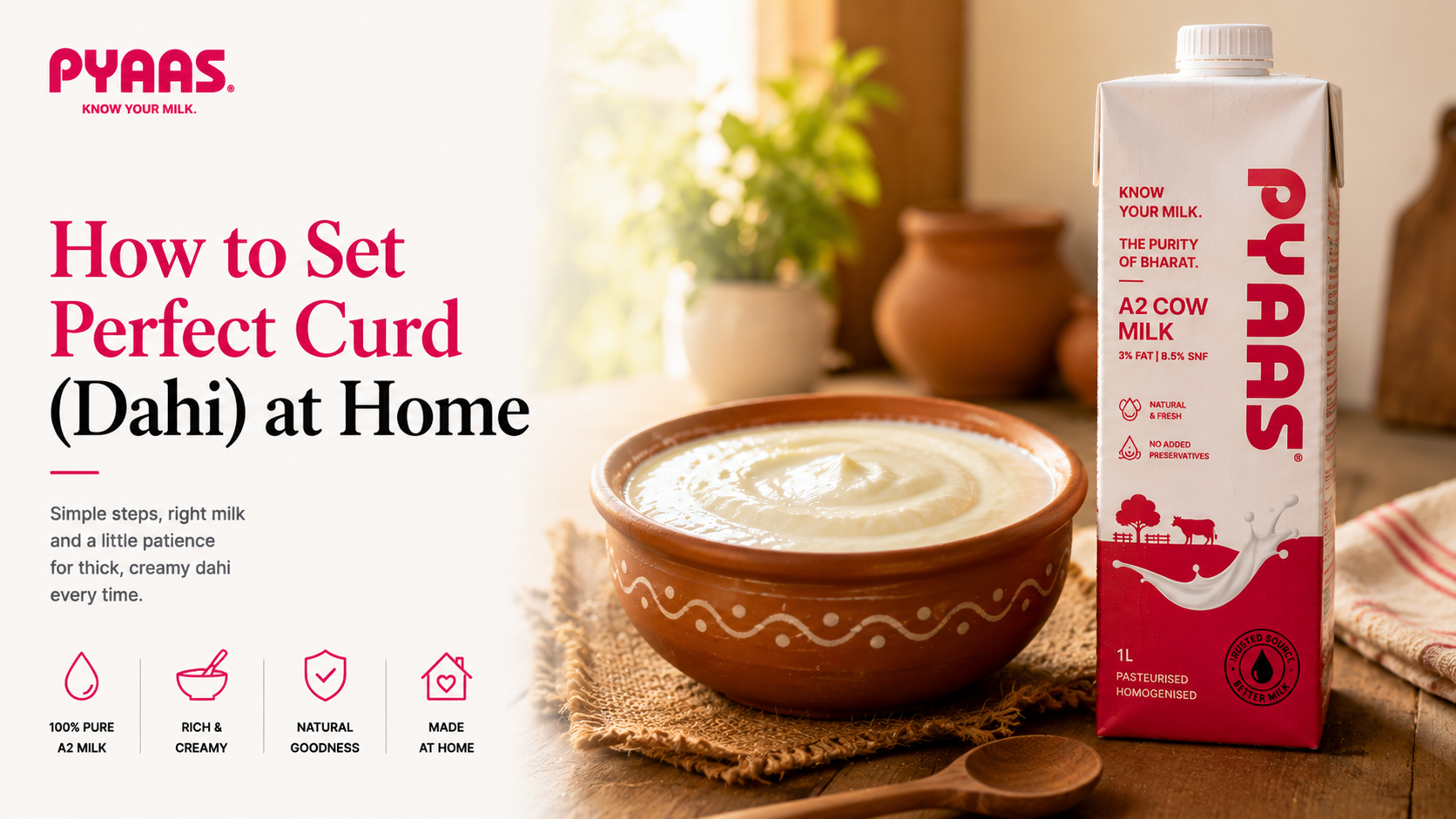
Homemade curd ranges from soft to firm depending on the milk and the set, and it is the base for raita, chaas and lassi. Commercial yogurt is often smoother and sometimes flavoured or sweetened, which is where sugar can creep in, so read the label. To master curd at home, see how to set perfect dahi.
Which is healthier?
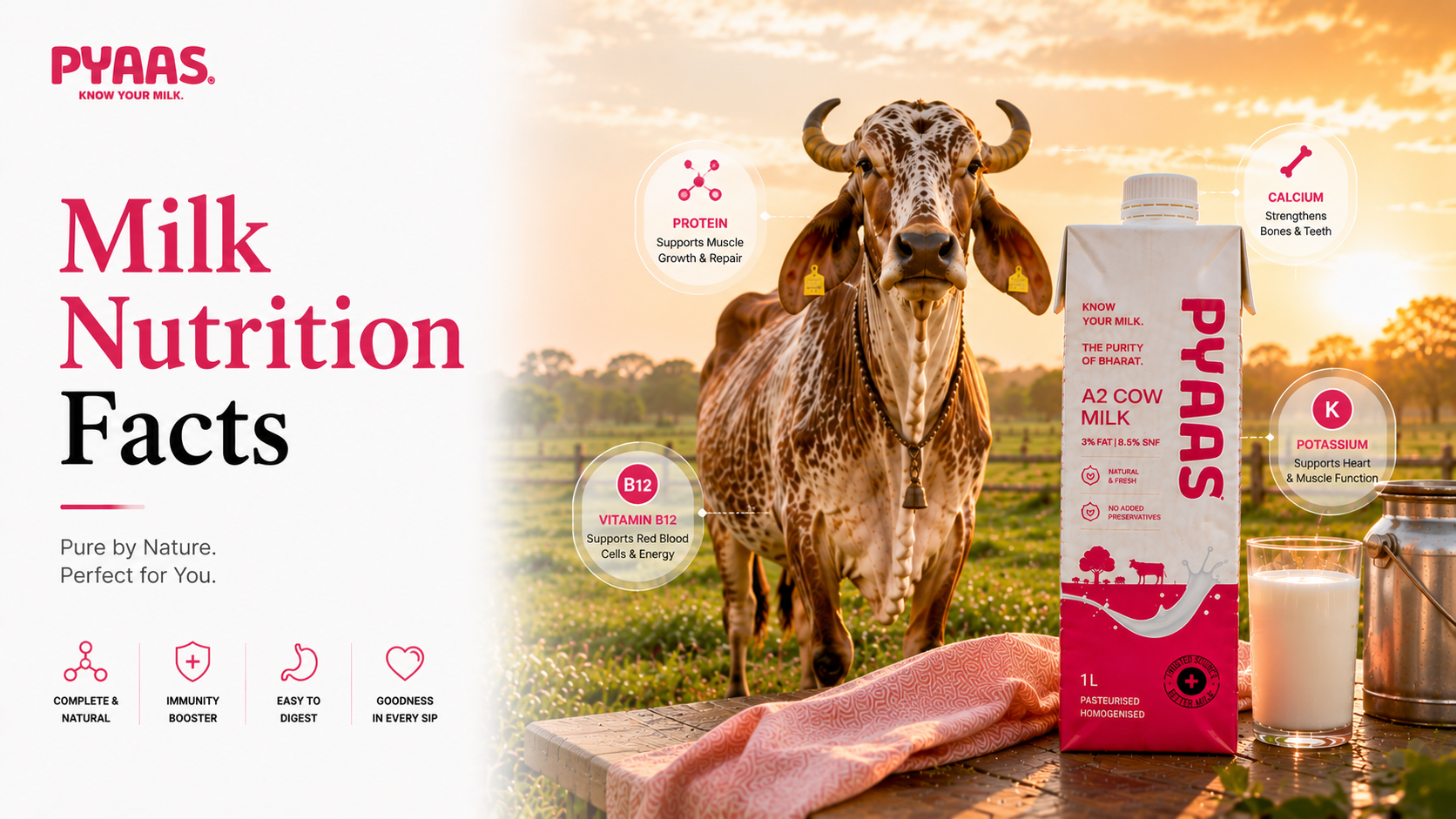
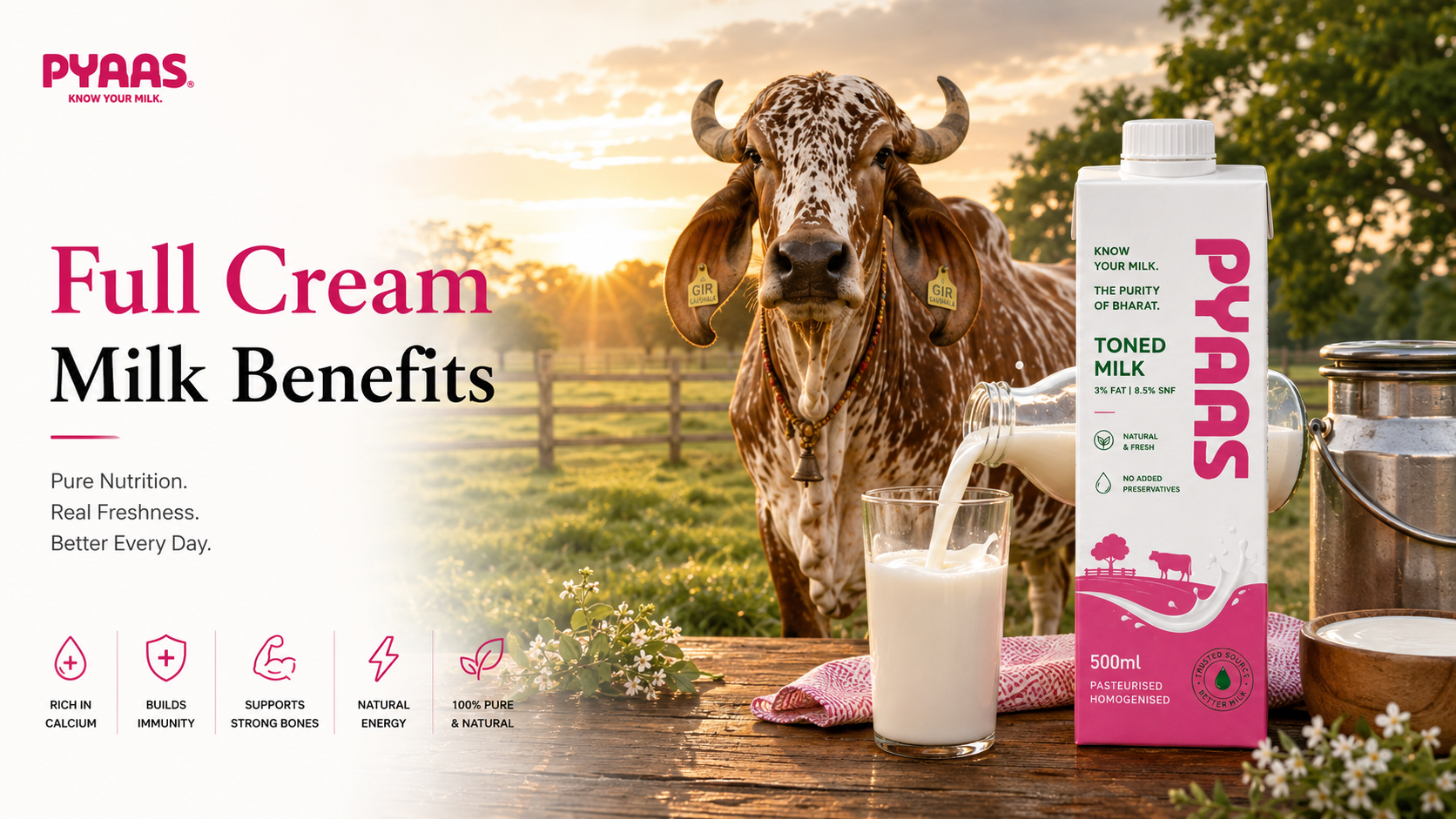
Broadly, they are similar, both are nutritious fermented dairy. The bigger variable is what goes in: fresh curd made from good, undiluted milk is hard to beat, while a heavily sweetened flavoured yogurt is a different thing. As always, the quality of the milk underneath decides a lot, see full cream milk benefits.
So use the words however your kitchen prefers. Just know that when you set thick dahi at home from fresh milk, you are making something as good as any yogurt on the shelf.
Written by
PYAAS
PYAAS is an independent, transparency-first dairy brand based in Gonda and Lucknow, Uttar Pradesh, founded by Aryan Sharma and Kushagra Shekhar Kaushik. Every pack is traceable to its farm by QR — Know Your Milk.
More from PYAASCommon questions.
Is curd the same as yogurt?
They are close but not identical. Curd, or dahi, is traditionally set at home with a natural starter containing a mix of bacteria, while commercial yogurt is made with specific standardised cultures. Both are fermented milk and nutritionally similar.
Is curd or yogurt healthier?
Both are good sources of protein, calcium and probiotics, and neither is clearly healthier as a rule. Fresh homemade curd made from good milk is excellent, while some flavoured commercial yogurts add sugar, so check the label.
Can I make yogurt-style curd at home?
Yes. Setting dahi at home with warm milk and a spoon of existing curd as a starter gives you fresh, additive-free fermented milk. The milk quality strongly affects the result.
Get the next one in your inbox.
The occasional note on milk, ghee, and how we work. Plain words, no hype, and you can leave any time.