Ethical Dairy: What Cow Welfare Really Means
Ethical is one of the most used and least defined words on a food label. It feels good, it sells well, and it often means very little. If we are going to talk seriously about cow welfare ethical dairy, we owe you an actual definition rather than a warm feeling. So let us be plain about what cow welfare really means, where the honest limits are, and why we think accountability matters more than adjectives.
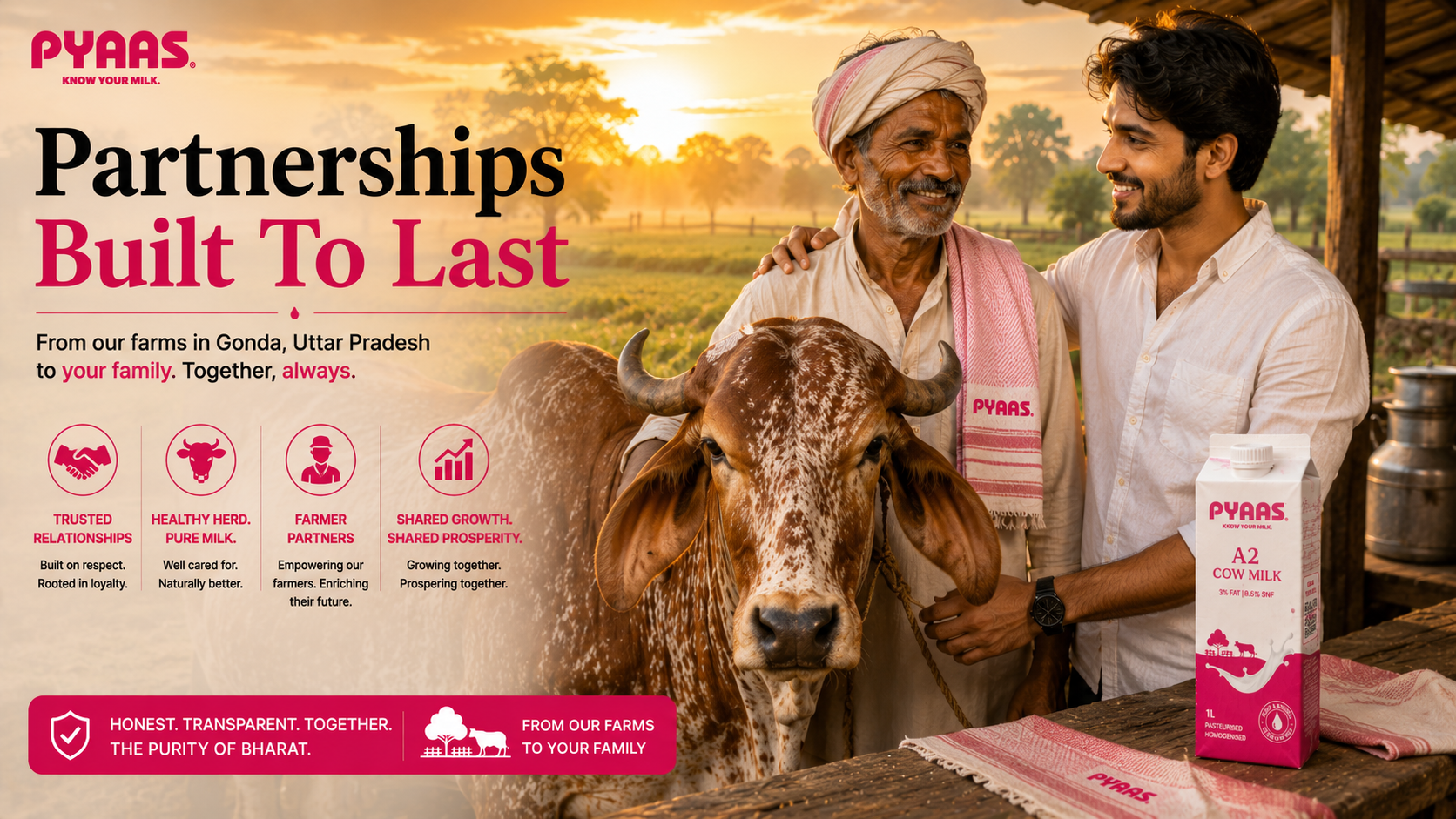
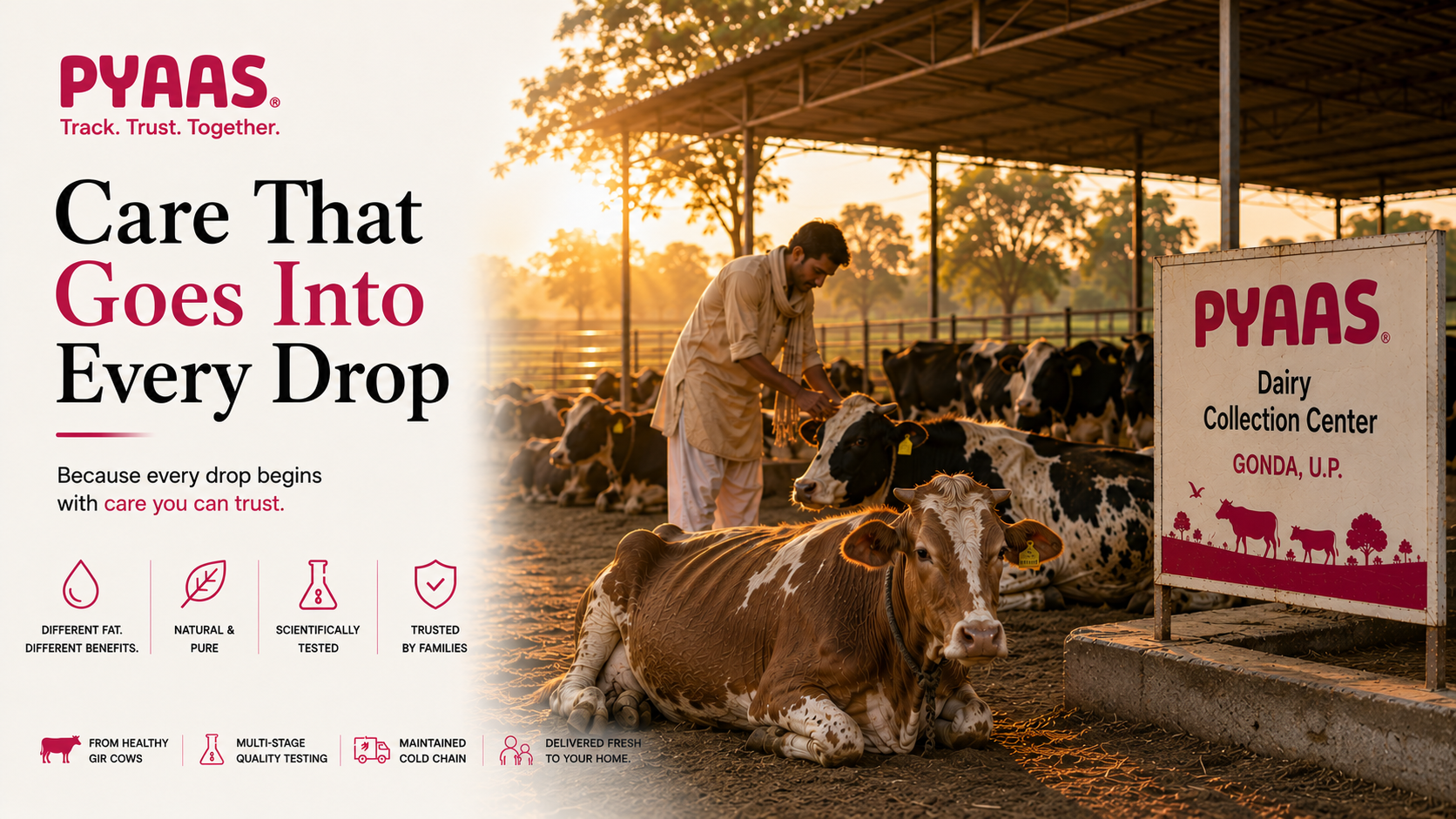
PYAAS does not own cows. We partner with named farms in Gonda, Uttar Pradesh, which shapes how we talk about this. We cannot honestly claim to control every moment of an animal's life, so instead we focus on what we can stand behind: naming the farms and making them traceable.
What cow welfare actually involves
Welfare is not a mystical quality. It is a set of fairly ordinary, daily conditions that add up to an animal living reasonably well. Broadly, good welfare means a cow has:
- Good nutrition: adequate, appropriate feed and clean water.
- Comfort: space to move, rest and lie down, with shelter from heat and rain.
- Health: protection from disease and prompt care when unwell.
- Room for natural behaviour: the ability to move and behave normally.
- Gentle handling: calm, low-stress treatment by the people around them.
None of this is glamorous, and that is the point. Welfare lives in the boring, repeated details of daily care, not in a single photogenic moment. A farm is doing right by its animals when these basics are genuinely met, day after day, whether or not anyone is watching.
Why welfare and milk quality are linked
There is a practical thread here too, and it is worth naming honestly. Animals that are well fed, healthy and unstressed tend to be part of a better-run operation overall. Care is not separate from quality; it usually travels with it. A farmer who pays attention to a cow's comfort is often the same farmer paying attention to cleanliness and handling.
We should be careful not to overstate this into a slogan. Good welfare is worth pursuing because it is right, first, and because it reflects a well-managed farm, second. It is not a marketing shortcut, and we will not pretend one photo of a happy cow proves anything about a whole system.
The problem with unaccountable welfare claims
Here is where a lot of ethical dairy talk falls apart. Sweeping claims, happy cows, cruelty-free, all-natural, are almost impossible to check when the milk comes from an anonymous pool of unnamed sources. If you cannot find out which farm your milk came from, you certainly cannot assess how the animals there are treated. The claim floats free of any reality you could verify.
This is exactly why PYAAS leans on named farms rather than broad promises. When your pack traces back to Sri Radha Mohan Dairy Farm, run by a farmer named Ram, or to Gonard Dairy, there is a real place and a real person attached to the milk. That does not by itself prove perfect welfare, and we will not claim it does. But it makes the question answerable, which is more than most labels can offer. You can meet one of those farmers in meet Ram, the farmer behind Sri Radha Mohan Dairy Farm.
Why naming farms is the honest move
Accountability is uncomfortable, and that is what makes it meaningful. It is easy to make an unverifiable promise and impossible to be held to it. It is harder to say here is the actual farm, here is the farmer, trace it yourself. We prefer the harder path because it is the only one where ethics can be checked rather than merely asserted. Our wider thinking on single sources is in single-origin milk: why one farm beats a thousand, and you can see our partners on the farms page.
Being honest about the limits
Real transparency includes admitting what we do not control. PYAAS partners with farms; the daily welfare of the animals is the farmers' work, carried out on their land with their herds of Holstein Friesian and Sahiwal cows. We can build relationships, name our partners and make them traceable. We cannot honestly promise that every animal, everywhere, has a flawless life, and any brand that promises that should make you suspicious.
What we can offer is a system where accountability is possible: named partners, traceable packs, and a refusal to hide behind vague words. That is a more modest claim than most ethical marketing makes, and we think that modesty is exactly what makes it trustworthy.
Ethical dairy, done honestly, is less about a glowing label and more about whether anyone can be held responsible for how animals are treated. Feel-good words cost nothing. Naming your farms and letting people trace their milk costs something, because it means standing behind real places and real people. At PYAAS, that is the version of cow welfare we are willing to put our name to, not perfection promised, but accountability offered. Knowing your milk should include knowing whose care it came from.
Written by
Naina Sharma
PYAAS is an honest, traceable Indian dairy brand from Gonda, Uttar Pradesh.
More from Naina SharmaCommon questions.
What does cow welfare actually mean in dairy?
Cow welfare covers the basics of an animal living well: good food and clean water, room to move and rest, protection from heat and disease, and gentle handling. Cow welfare ethical dairy is about those everyday conditions being genuinely met, not just claimed. It is measured in daily care, not slogans.
How can I tell if a dairy brand is genuinely ethical?
Look for specifics and accountability rather than vague words. A brand that names its farms and lets you trace your pack back to a real place is easier to hold responsible than one making broad, unverifiable claims. Transparency does not guarantee perfection, but it makes ethics checkable.
Does PYAAS own its cows?
No. PYAAS partners with named farms in Gonda, Uttar Pradesh rather than owning cows itself. Welfare on those farms is the farmers' daily work, and traceability is how that work becomes visible and accountable to you. We prefer naming real partners over making sweeping welfare claims.
Get the next one in your inbox.
The occasional note on milk, ghee, and how we work. Plain words, no hype, and you can leave any time.
Keep reading.
Saving India's Native Cow Breeds: Why It Matters
19 August 2026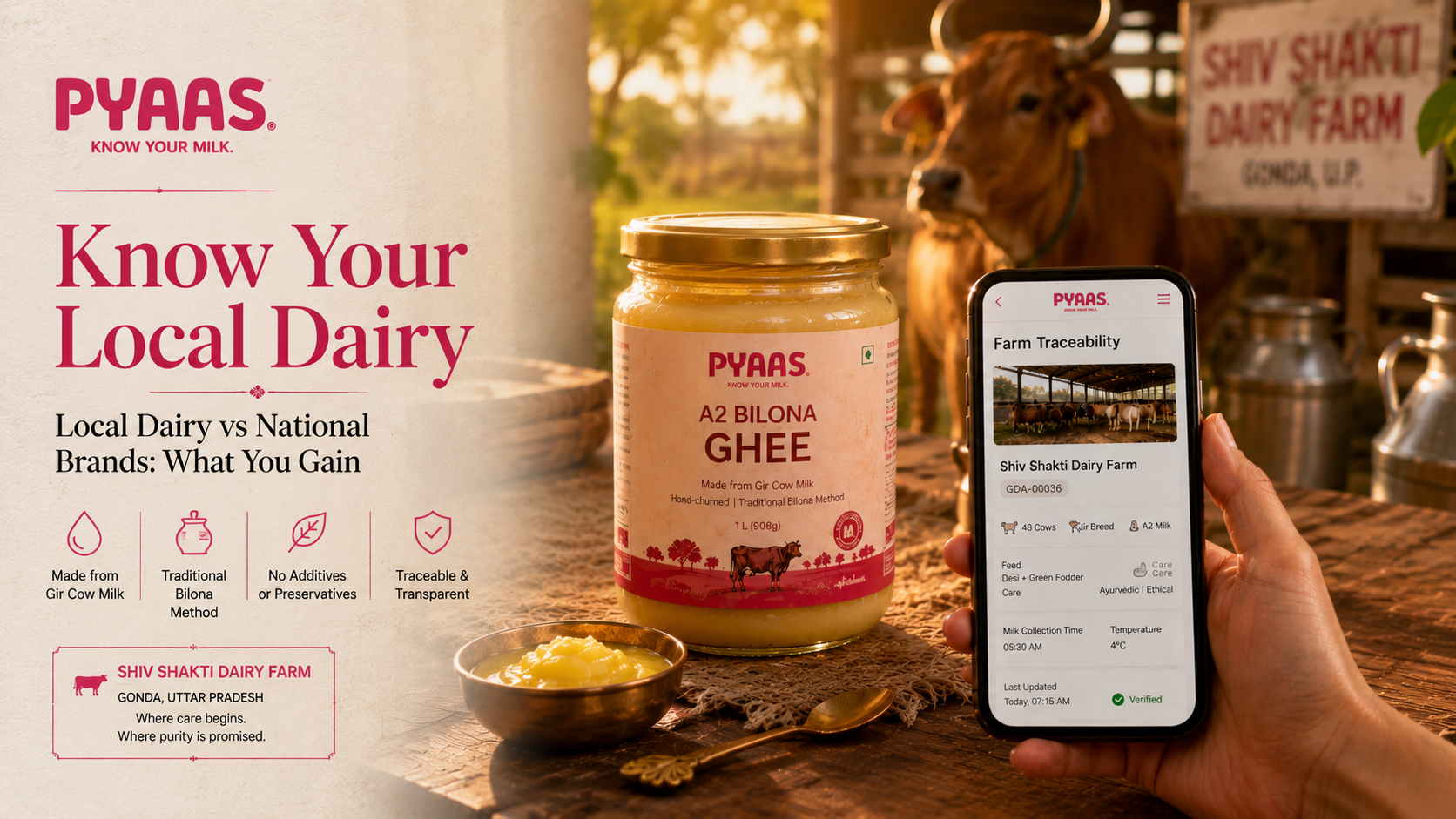
Local Dairy vs National Brands: What You Gain
23 August 2026
Sustainable Dairy Starts at the Farm
2 August 2026
How Data Reduces Waste in the Dairy Supply Chain
26 July 2026