How Data Reduces Waste in the Dairy Supply Chain
Most people picture dairy waste as one carton going off in the back of the fridge. Working on the technology side of PYAAS, I have come to see it very differently. By the time milk reaches your fridge, it has already survived the riskiest part of its life. The real losses happen upstream, in the hours and handoffs between the cow and the carton, and almost all of them share one root cause: nobody in the chain had the right information at the right moment.
I am Kushagra Shekhar Kaushik, Founder and CTO of PYAAS, and my job is the traceability system behind the brand. People usually frame that system as a trust tool, and it is. But the same data that lets you know your milk is one of the most practical ways I know to reduce dairy supply chain waste. This is how I think about it.
Where dairy actually loses milk
Spoiled milk is only the visible end of the problem. In a typical pooled supply chain, waste hides in a handful of places:
- Supply and demand never quite line up. Produce more than the day needs and the surplus ages out; produce less and you scramble. Both are expensive.
- Quality problems are caught late. When milk from many farms is mixed together, one bad lot can compromise a much larger volume, and by the time it is noticed, that milk has already travelled.
- Cold-chain gaps go unrecorded. A break in temperature during transport shortens shelf life invisibly, so milk turns sooner than anyone planned for.
- Old stock sits behind new stock. Without batch-level dating, the freshest milk often moves first and the older milk quietly expires.
None of these are exotic failures. They are ordinary gaps in information, repeated thousands of times a day across the country.
Why traceability data is a waste tool, not just a trust tool
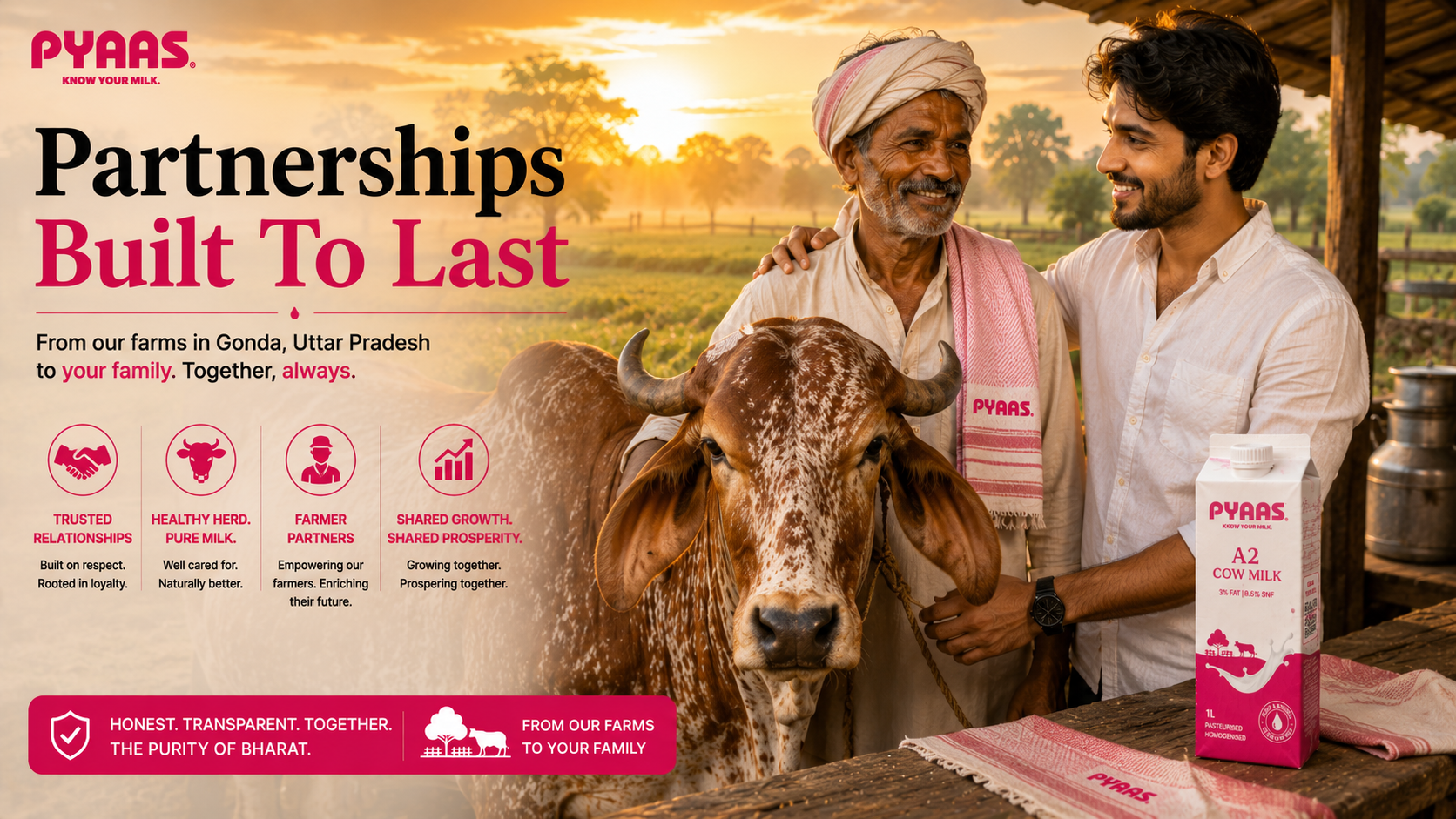
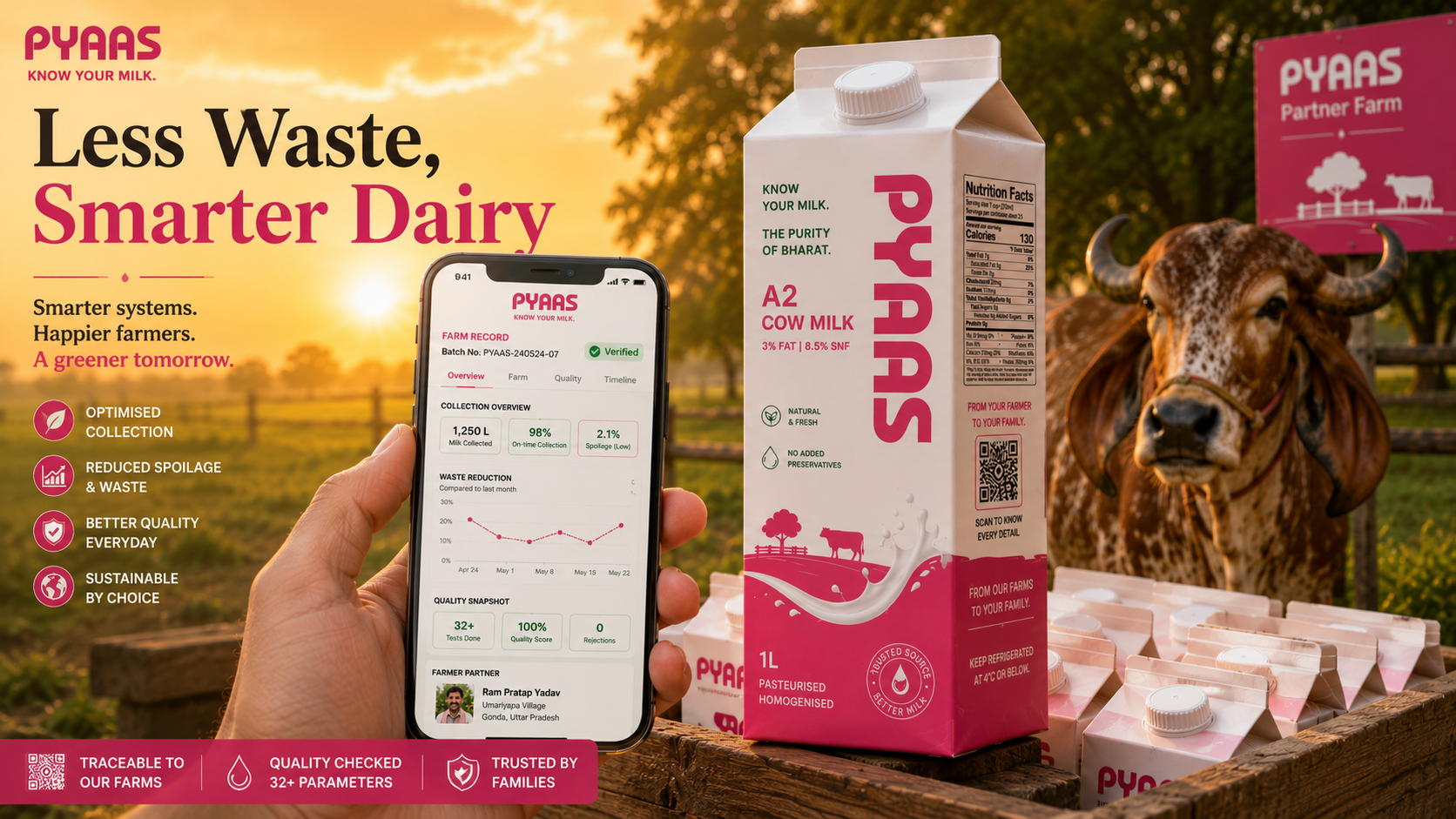
The traceability system at PYAAS assigns every pack a QR code that links to the exact farm, the farmer and that batch's quality record. We built it so a customer can verify where their milk came from. But look at it from the operations side and the same record becomes a waste-reduction engine.
Because each batch is identified and dated, we can move the oldest milk first instead of guessing. Because the source is a named farm rather than an anonymous pool, a quality issue is contained to one batch and one farm, not smeared across a whole day's supply. And because every batch leaves a data trail, we can see patterns over time, which farm, which route, which conditions tend to produce problems, and fix the cause instead of absorbing the loss.
Single-origin makes this possible. When you keep milk from Sri Radha Mohan Dairy Farm, Gonard Dairy and Ranjeet Singh Dairy Farm separate and identifiable rather than pooling it, a problem stays small enough to catch and correct. Pooling is convenient, but it is also how a small issue becomes a large amount of wasted milk.
How we use data at PYAAS
In practice, the work is unglamorous and that is the point. We record quality at the source, not just at the end, so a batch that is off never enters the chain in the first place. We keep batch records that tie every litre to its farm and its check, so nothing moves anonymously. And as we prepare for the fresh-milk launch, a lot of my time goes into demand forecasting, estimating what each area will actually order so we ask our farmers to fill orders we can sell, not tanks we hope to sell.
The data also flows back the other way. When a farmer like Ram, Harsh Singh or Ranjeet Singh can see exactly how their batches performed, quality becomes a conversation grounded in evidence instead of blame. That feedback loop is one of the quieter ways technology reduces waste: it helps prevent the next bad batch rather than just recording the last one.
Sustainability is really a supply-chain discipline
I am wary of treating sustainability as a slogan, so here is the plain version. Every litre of milk that spoils also wastes the water the cow drank, the feed she ate, the fuel that carried the milk and the farmer's morning. Cutting waste is not a side benefit of sustainability; in dairy it is most of the work. The greenest litre of milk is the one that actually gets consumed instead of thrown away.
There is a farmer-economics angle too. Waste is income that never reaches the people who did the hardest work. When data helps us lose less between the farm and the family, more of the value stays with the farm. An honest supply chain and an efficient one turn out to be the same project.
What we are building toward
To be clear about where we stand today: PYAAS A2 Bilona cow ghee is live and shipping across India now, while fresh A2 cow milk is pre-launch, opening in Lucknow from August 2026 and expanding across Uttar Pradesh. We are building the traceability and batch-record system before the milk launches precisely so the supply chain starts clean, rather than trying to bolt data onto waste after the fact.
We are building toward a ₹100 crore dairy brand, and I am convinced the path runs straight through waste. A brand that promises to help you know your milk should also know its own supply chain well enough to stop wasting it. If we get the data right on our named farms first, reducing dairy supply chain waste stops being a sustainability campaign and simply becomes how PYAAS runs. That is the version of this business worth building.
Written by
Kushagra Shekhar Kaushik
Kushagra Shekhar Kaushik is the Founder & CTO of PYAAS, an independent, transparency-first dairy brand based in Uttar Pradesh, building the technology that makes every pack traceable to its farm by QR.
More from Kushagra Shekhar KaushikCommon questions.
How does data actually reduce waste in the dairy supply chain?
Waste in dairy usually comes from a mismatch between what is produced and what can be sold before it turns, plus quality problems that are caught too late. Data helps on both fronts: batch-level records let you match supply to real demand, move the oldest stock first, and catch a quality issue at a single farm before that milk travels any further. At PYAAS, every pack is traceable by QR to the exact farm, farmer and that batch's quality record, which turns waste from a guess into something you can measure and act on.
Does traceability really make dairy more sustainable?
Yes, in a concrete way. Every litre of milk that spoils also wastes the water, feed and effort that went into producing it. So the single biggest sustainability lever in dairy is simply making sure less milk is lost between the cow and the table. Traceability data does not add cows or land; it makes the milk we already produce go further, which is exactly what sustainability should mean in a supply chain.
Is PYAAS milk available now?
PYAAS A2 Bilona cow ghee is live and shipping across India today. Fresh A2 cow milk is pre-launch: it launches in Lucknow from August 2026 and will expand across Uttar Pradesh. The traceability and batch-record system described here is being built for that launch so the supply chain starts clean rather than being fixed later.
Get the next one in your inbox.
The occasional note on milk, ghee, and how we work. Plain words, no hype, and you can leave any time.
Keep reading.
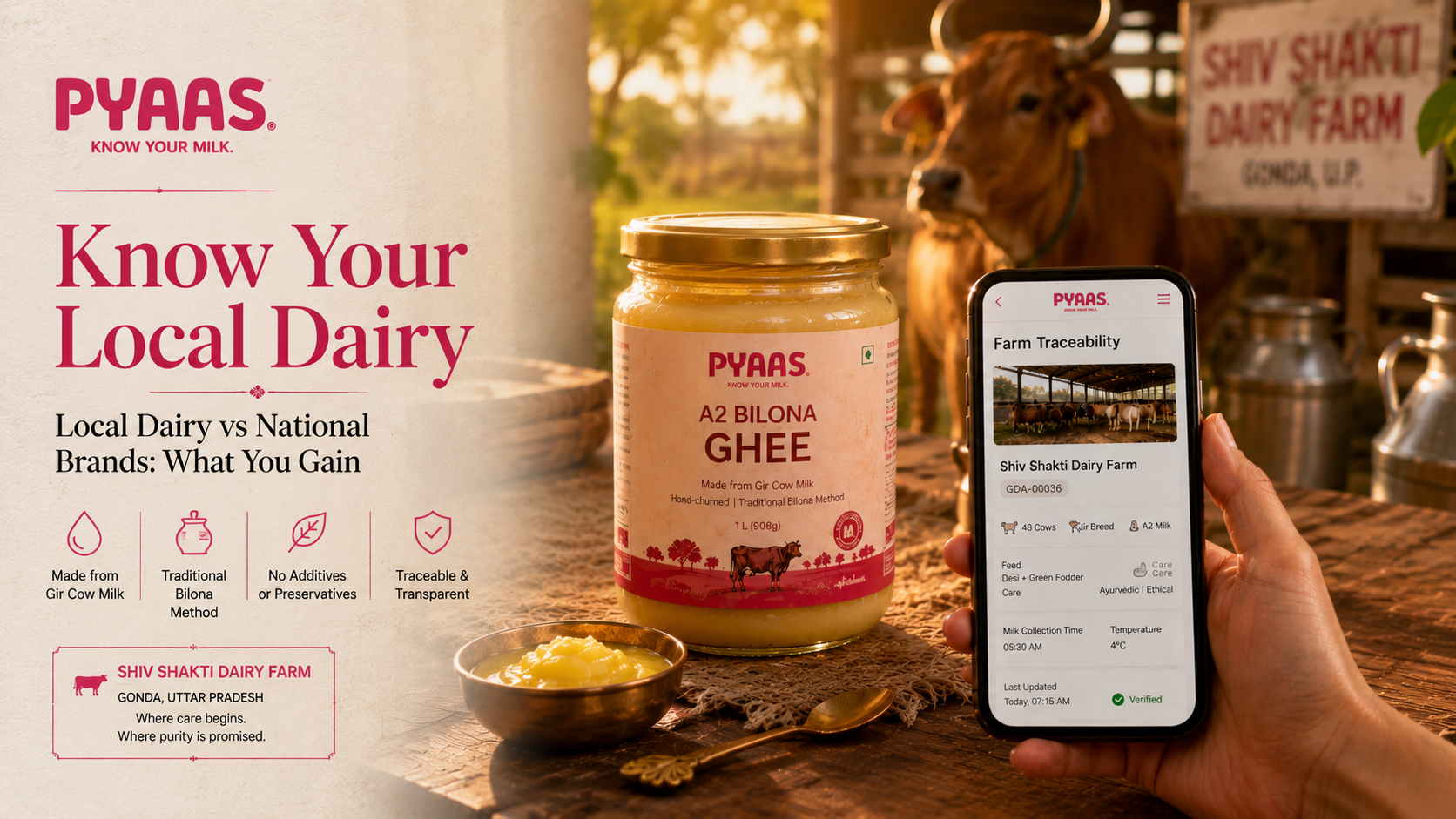
Local Dairy vs National Brands: What You Gain
23 August 2026
Saving India's Native Cow Breeds: Why It Matters
19 August 2026
Ethical Dairy: What Cow Welfare Really Means
19 August 2026
Sustainable Dairy Starts at the Farm
2 August 2026