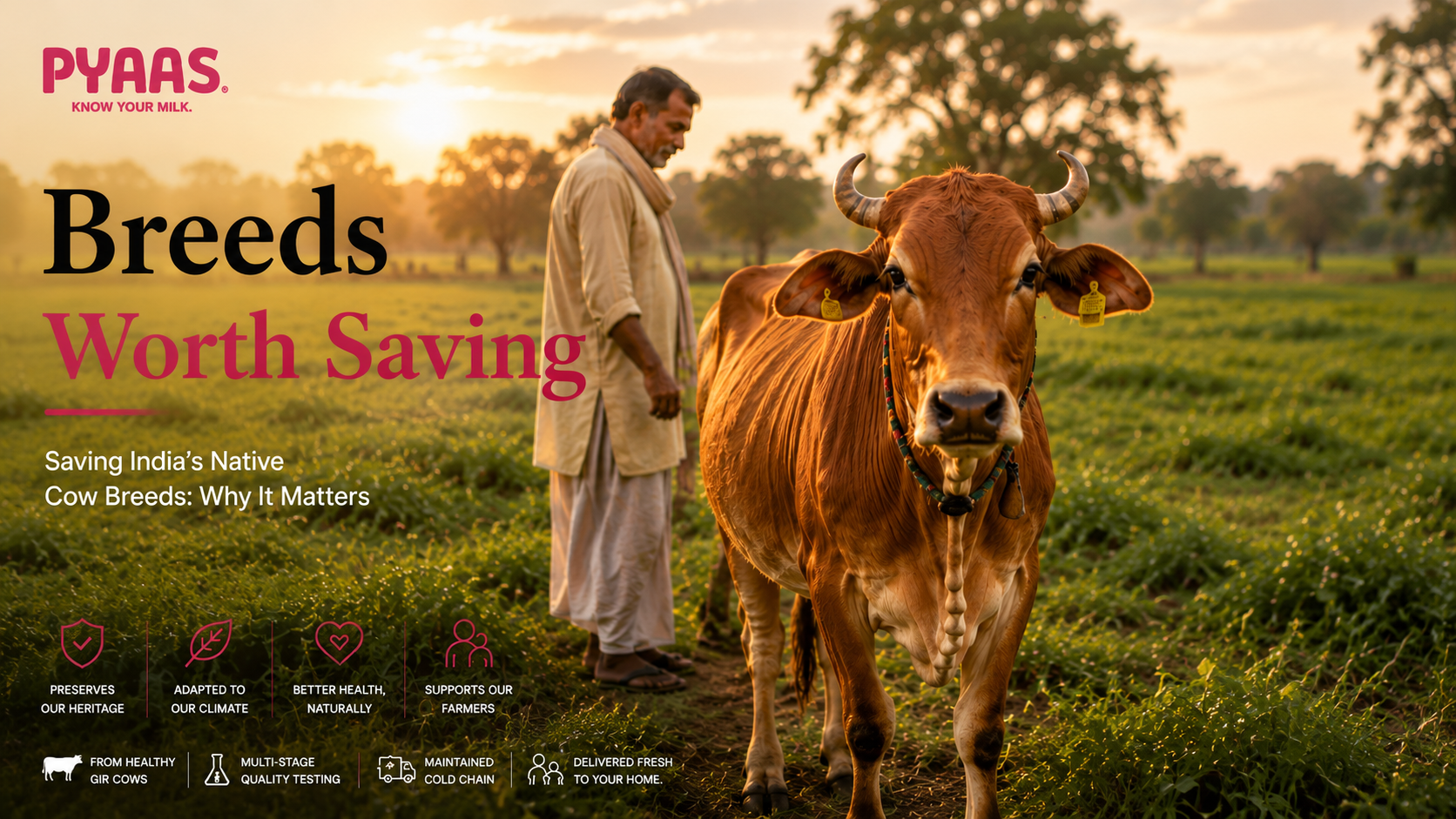
Saving India's Native Cow Breeds: Why It Matters
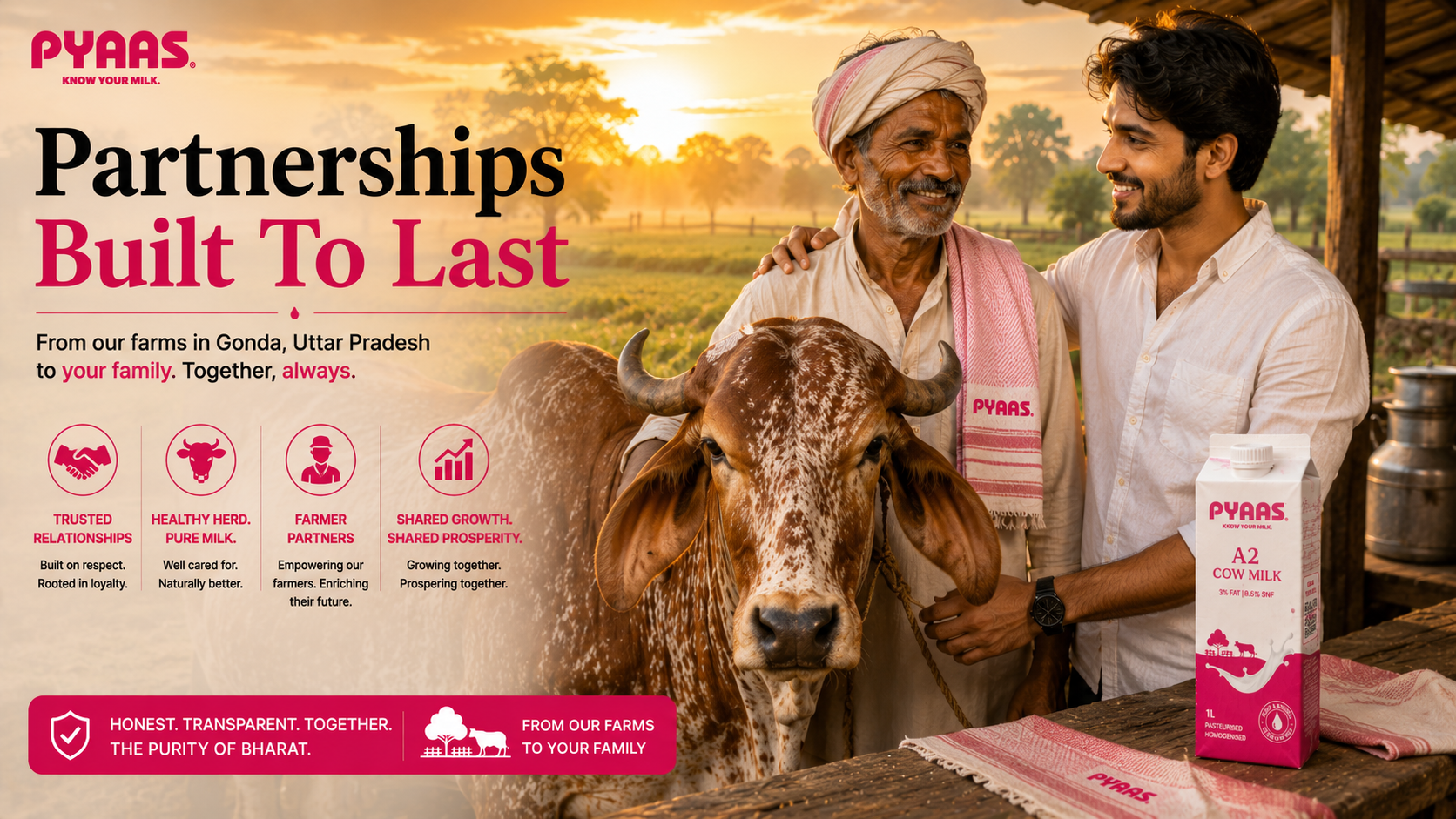
A cow breed is a living library. Every indigenous breed in India carries centuries of quiet adaptation, to heat, to local feed, to disease, written into its genes and impossible to recreate once it is gone. That is why native cow breeds conservation is not a nostalgic hobby but a practical concern about biodiversity and resilience. When a breed disappears, we do not just lose an animal; we lose options we may badly need later.
This is a topic where it is easy to get carried away with romance, so we will try to stay grounded and honest. Native breeds matter for real reasons, A2 genetics are part of the story, and conservation is genuinely hard. Let us take those in turn.
Why indigenous breeds are worth protecting
India's native cattle evolved over generations to thrive in local conditions that would challenge many imported breeds. That adaptation is exactly what makes them valuable. Broadly, indigenous breeds tend to offer:
- Heat tolerance: the ability to cope with hot Indian climates.
- Hardiness: resilience to local diseases and modest conditions.
- Genetic diversity: a wide gene pool that keeps future options open.
- Cultural roots: deep ties to regional farming traditions.
Genetic diversity is the quiet hero of that list. A narrow gene pool is a fragile one; a diverse one gives farming the raw material to adapt to new challenges, whether that is a changing climate or an emerging disease. Every breed we keep alive is a bit more resilience banked for the future.
Where A2 fits into the story
You cannot talk about indigenous Indian cattle for long without A2 coming up, and here we have to be precise, because a lot of loose claims float around. Many indigenous Indian cows tend to carry A2 genetics, which is part of why the topic gets so much attention. But, and this matters, A2 is a per-animal genetic trait. It is confirmed cow by cow, not assumed for an entire breed or herd.
So the honest phrasing is that A2 is common in certain native breeds, not that any breed is uniformly A2. Even within a single herd, A2 milk comes only from the A2 cows in that herd, identified individually. If you want to understand the trait itself properly, we explain it in what is A2 milk: benefits, myths and how it differs from regular milk. Getting this right is part of respecting both the science and the animals.
The Sahiwal: one of India's finest
Among indigenous dairy breeds, the Sahiwal stands out. It is prized for its hardiness and its adaptation to hot climates, and it is one of the breeds people point to when they talk about India's dairy heritage. PYAAS partner herds in Gonda include Sahiwal cows alongside Holstein Friesian, which means supporting these farms indirectly supports keeping breeds like the Sahiwal in working herds. If you would like to go deeper, we have a dedicated piece on Sahiwal cow milk.
Why conservation is harder than it sounds
It would be easy to end with a rousing call to save every native cow, but honesty demands nuance. Conservation is genuinely difficult. Farmers make livelihoods, not statements, and they naturally favour animals that are productive and viable for them. Preserving a breed cannot mean asking farmers to bear a loss for the sake of biodiversity; that is neither fair nor sustainable.
Real conservation works when keeping indigenous breeds also makes sense for the people who keep them. That means valuing what these breeds offer, their hardiness, their milk, their fit with local conditions, so that farmers have practical reasons to maintain them. Sentiment alone does not keep a breed alive; a working, valued place in real farms does.
We should also resist the trap of pitting breeds against each other. Indigenous breeds are not magic and crossbred or exotic cows are not villains. The goal is diversity and resilience, keeping a rich mix of genetics alive, not declaring one breed superior in all things. Overclaiming in either direction does the actual animals no favours.
How honest dairy can help, modestly
PYAAS is not a conservation programme, and we will not pretend to be one. But there is a modest, real connection. By partnering with named farms that keep herds including Sahiwal cows, and by making those farms visible and traceable, we help create a small market reason for such herds to exist and be looked after. You can see our partner farms on the farms page.
That is a humble contribution, not a rescue mission, and we want to be clear about the difference. Saving India's native breeds is a big, collective effort that stretches far beyond any one brand. What we can do is refuse to flatten the truth, name our farms, describe our herds accurately, and respect that A2 is a cow-by-cow trait rather than a breed-wide slogan. In a field crowded with romantic overclaiming, telling the story straight is its own small act of conservation. Knowing your milk means knowing the animals behind it honestly, breeds, genetics and all.
Written by
PYAAS
PYAAS is an honest, traceable Indian dairy brand from Gonda, Uttar Pradesh.
More from PYAASCommon questions.
Why does saving native cow breeds matter?
Native cow breeds conservation protects genetic diversity, hardiness and traits suited to local conditions that can be lost forever if a breed disappears. Indigenous Indian breeds are adapted to heat and local environments, which makes them a valuable resource. Losing them narrows our options for the future.
Are all indigenous Indian cows A2?
Many indigenous Indian cows tend to carry A2 genetics, but A2 is a per-animal genetic trait, so it must be confirmed cow by cow rather than assumed for a whole breed or herd. It is more accurate to say A2 is common in certain breeds than to call any breed entirely A2. Individual testing is what confirms it.
Is the Sahiwal a native Indian breed?
Yes, the Sahiwal is one of India's well-known indigenous dairy breeds, valued for its hardiness and adaptation to hot climates. PYAAS partner herds include Sahiwal cows alongside Holstein Friesian. Supporting farms that keep breeds like the Sahiwal is one small way conservation gets encouraged.
Get the next one in your inbox.
The occasional note on milk, ghee, and how we work. Plain words, no hype, and you can leave any time.
Keep reading.
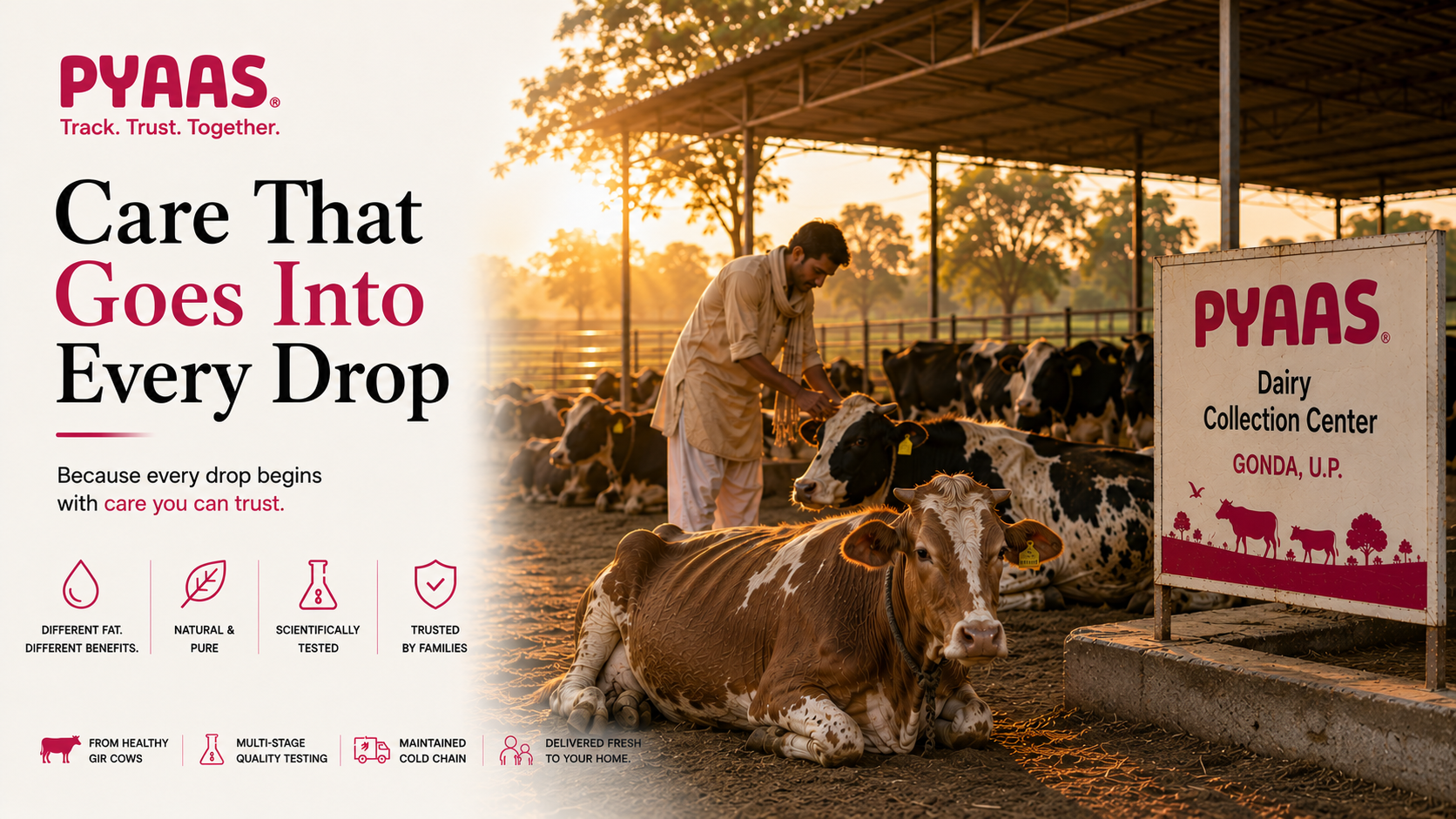
Ethical Dairy: What Cow Welfare Really Means
19 August 2026
Local Dairy vs National Brands: What You Gain
23 August 2026
Sustainable Dairy Starts at the Farm
2 August 2026
How Data Reduces Waste in the Dairy Supply Chain
26 July 2026