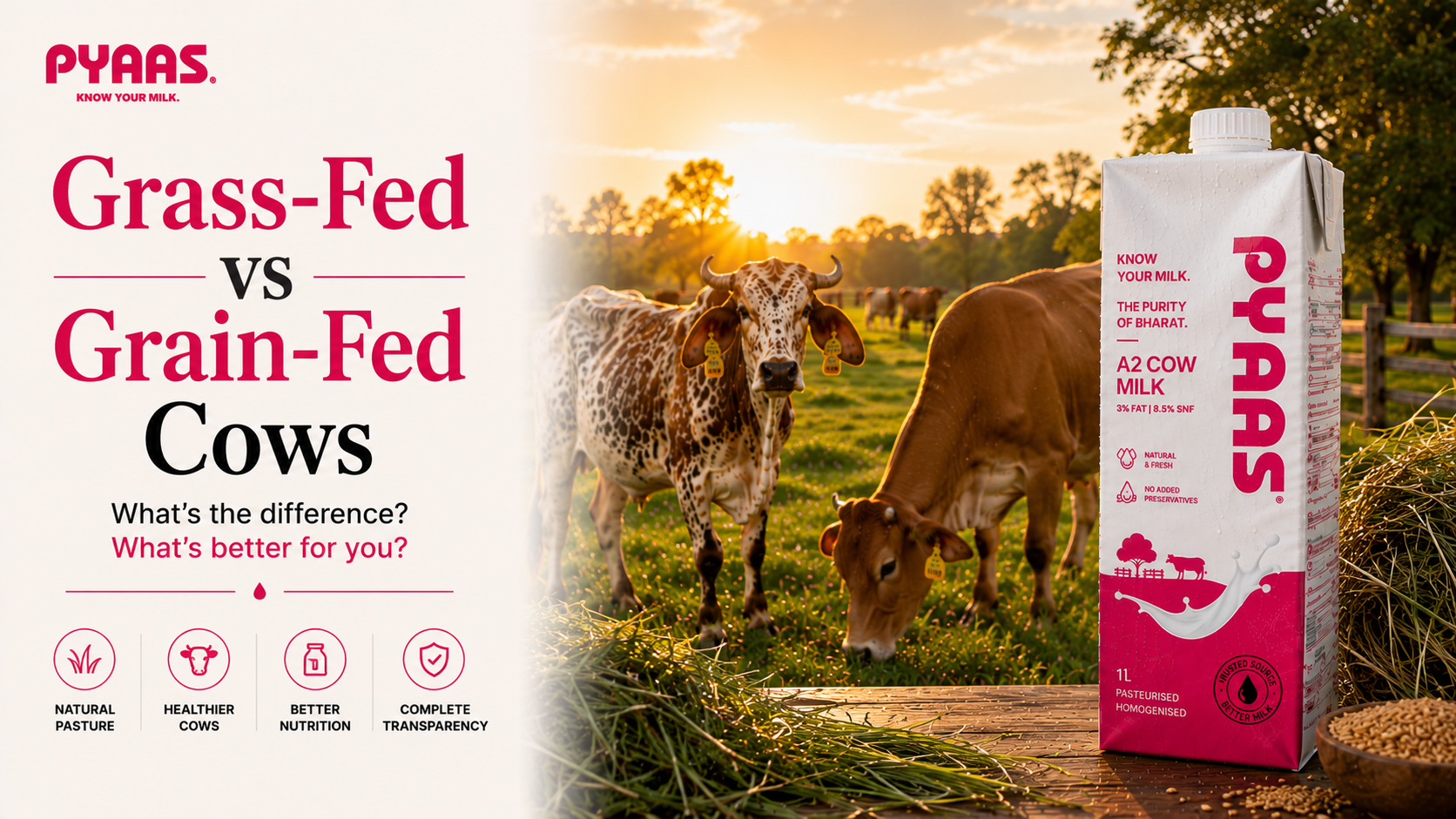
Grass-Fed vs Grain-Fed Cows: What It Means for Your Milk
You are what you eat, the saying goes. It turns out that is true of cows as well. A cow’s diet leaves a fingerprint on her milk, which is why grass-fed and grain-fed have become talking points on dairy labels. Here is what the terms actually mean, without the hype.
Grass-fed, in plain terms
Grass-fed cows get most of their nutrition from grass, forage and other roughage, grazing where they can. It is closer to how cattle have eaten for most of history, and it tends to be associated with more time outdoors.
Grain-fed, in plain terms
Grain-fed cows receive a larger share of concentrated feed, grains and mixed rations, which delivers consistent energy and supports steady milk yield. It is common in intensive systems built for volume.
In real life, many Indian herds sit somewhere between the two, forage plus supplementary feed, rather than at either extreme.
What actually changes in the glass
Diet can shift a few things:
- Fat profile: grass-fed milk can carry a modestly different balance of fatty acids.
- Colour and flavour: more forage can lend a slightly deeper colour and a fuller taste to the fat.
- Seasonality: grazing-based milk can vary a little through the year as pasture changes.
Real, but easy to overstate. The differences are smaller than a premium label often implies, and they are dwarfed by whether the milk is fresh, clean and honestly sourced.
Why the farm matters more than the buzzword
Grass-fed is a claim about diet, and like any claim it depends on the farm being real and knowable. It is difficult to verify a feeding practice for milk that has been pooled from thousands of anonymous farms. It is straightforward when the milk comes from one named farm you can ask about.
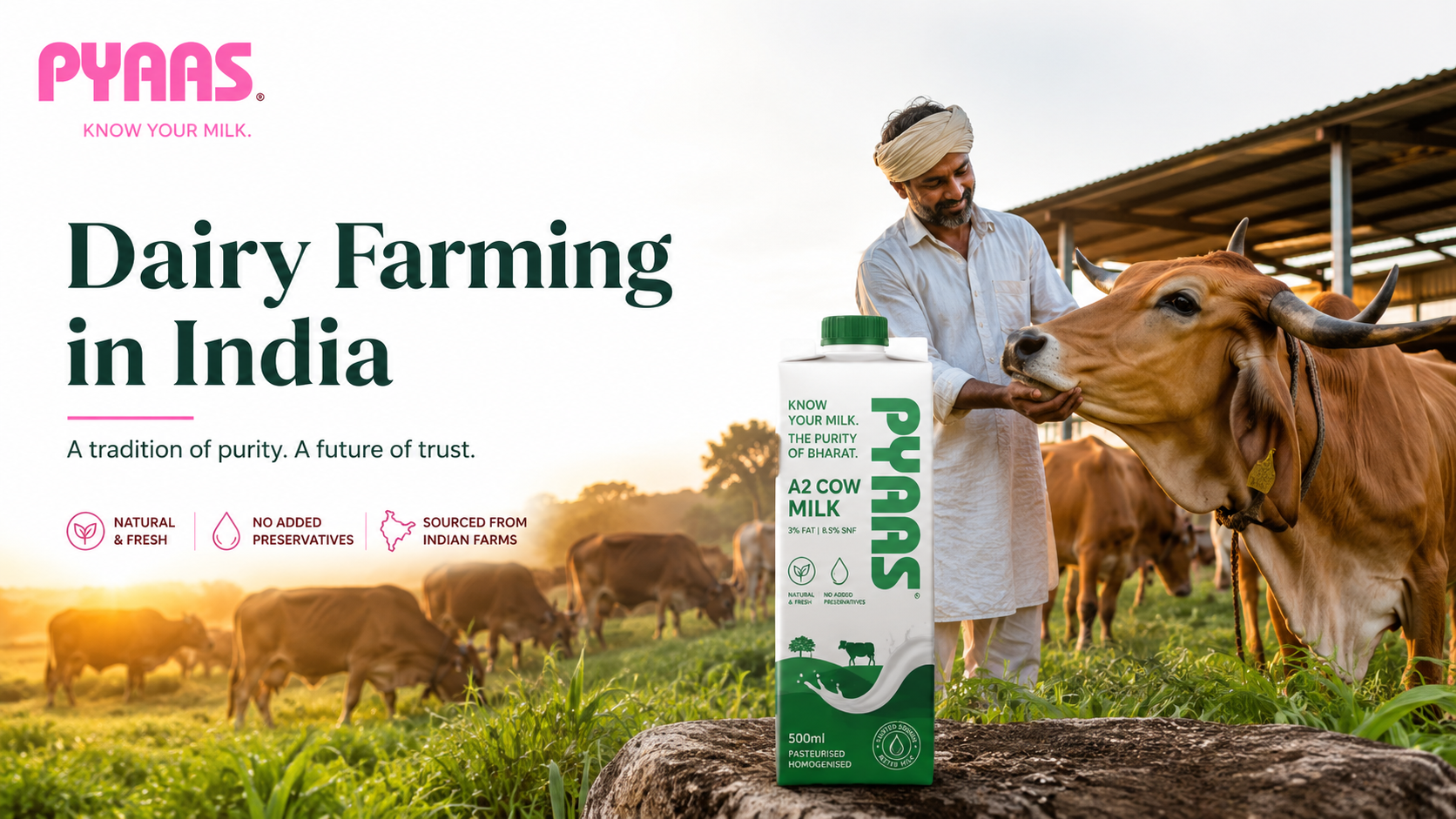
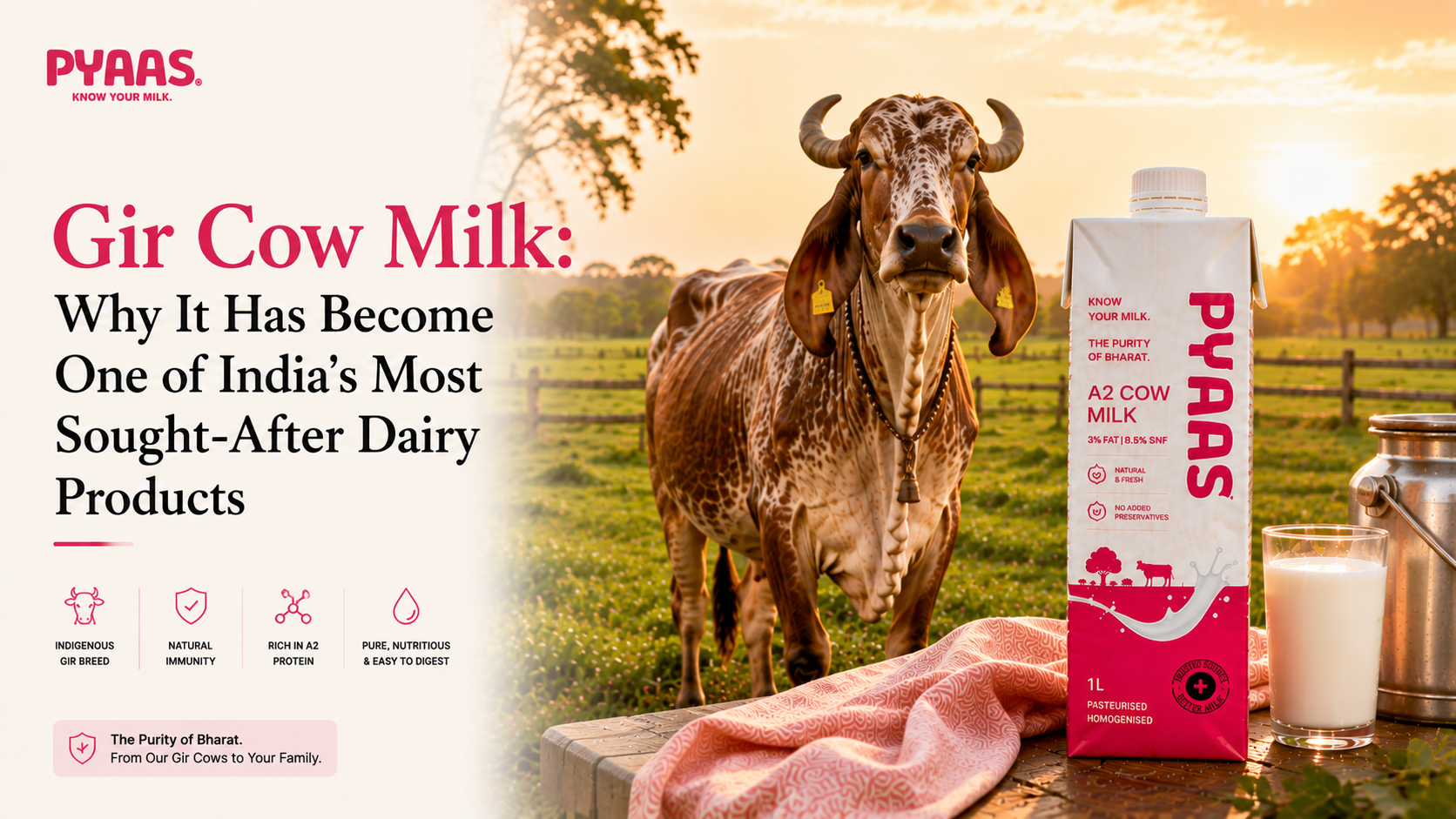
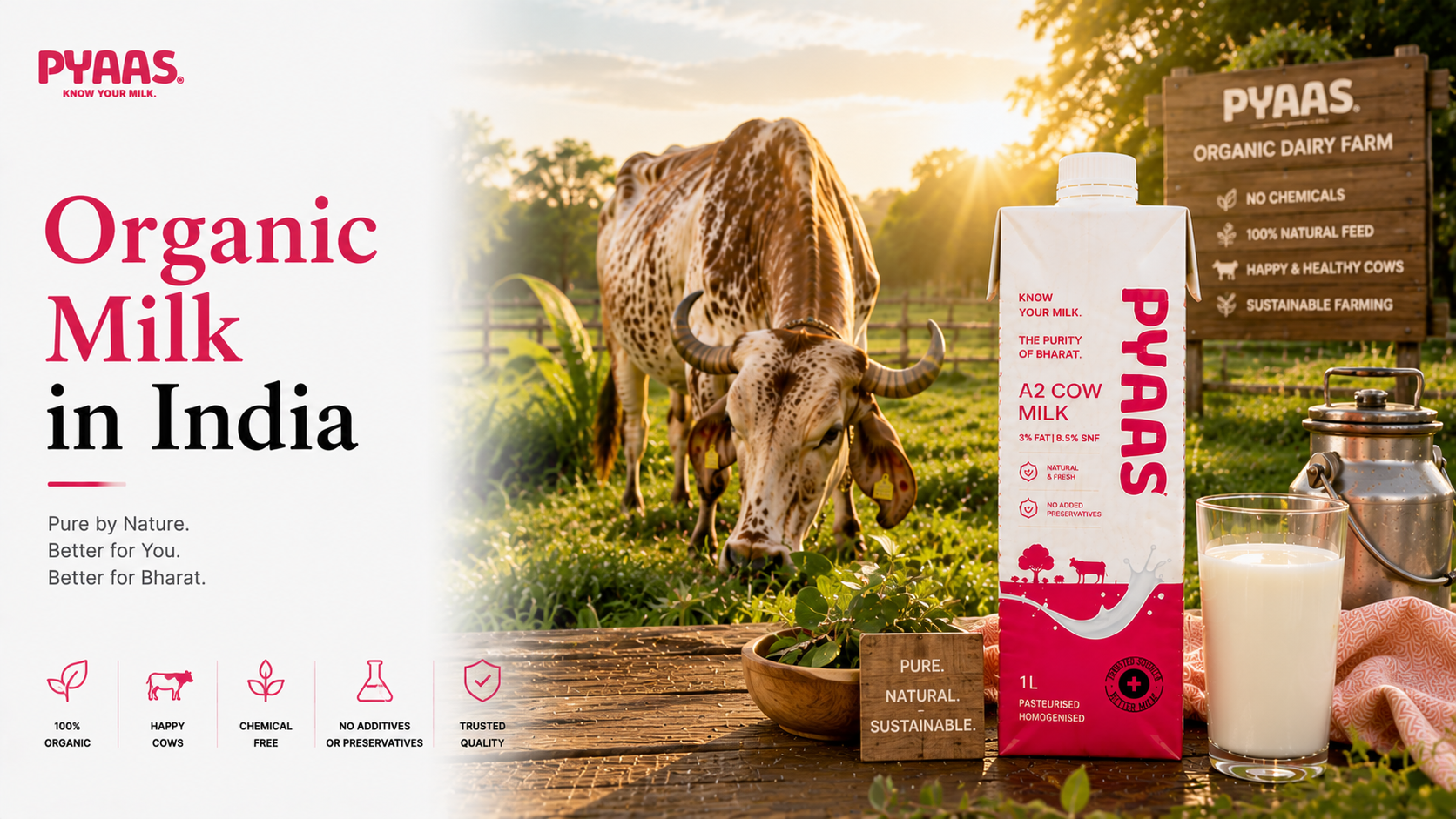
PYAAS sources single-origin A2 cow milk from named farms in Gonda, Uttar Pradesh, including our flagship herd of Gir and Sahiwal cows. Because every pack is traceable, the diet and care behind your milk are questions with real answers rather than slogans. Learn more about dairy farming in India and meet the farms behind PYAAS.
So enjoy the grass-fed conversation, but do not let it distract you from the bigger question, can you trace this milk to a farm and a test? That is what changes the glass most of all.
Written by
PYAAS
PYAAS is an independent, transparency-first dairy brand based in Gonda and Lucknow, Uttar Pradesh, founded by Aryan Sharma and Kushagra Shekhar Kaushik. Every pack is traceable to its farm by QR — Know Your Milk.
More from PYAASCommon questions.
What is the difference between grass-fed and grain-fed milk?
Grass-fed milk comes from cows whose diet is mainly grass and forage, while grain-fed cows receive more concentrated grain feed. Diet can influence the milk’s fat profile and flavour, though how the cows are managed and how fresh the milk is also matter a great deal.
Is grass-fed milk healthier?
Grass-fed milk can have a modestly different fat and nutrient profile, but the differences are smaller than marketing sometimes suggests. Freshness, cleanliness and a traceable source are just as important to the milk you actually drink.
How are cows fed at PYAAS partner farms?
PYAAS sources from named farms in Gonda, Uttar Pradesh, where herds are managed on traditional feeding practices. Because the milk is single-origin and traceable, you can always ask about the specific farm behind your pack.
Get the next one in your inbox.
The occasional note on milk, ghee, and how we work. Plain words, no hype, and you can leave any time.