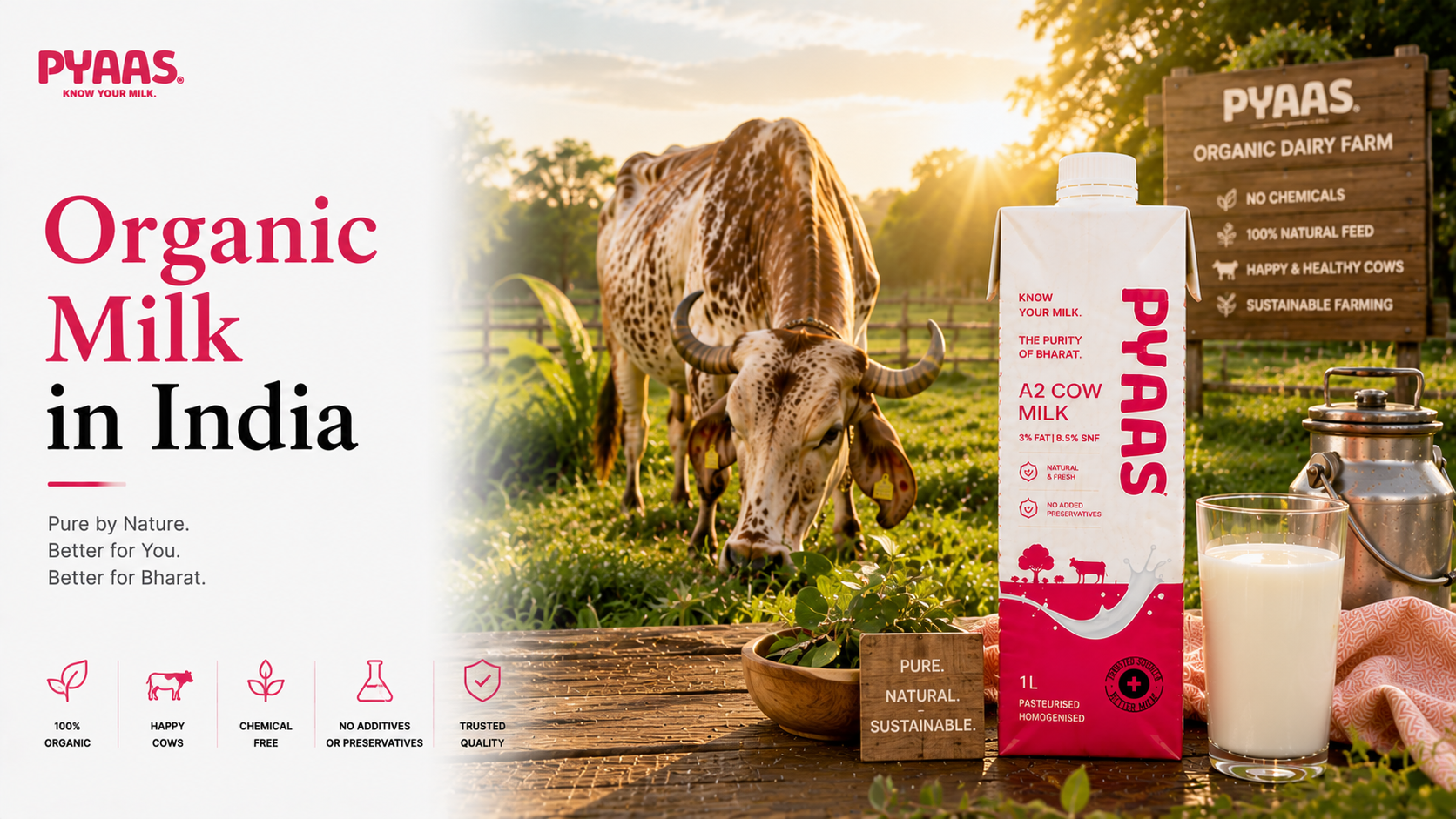
Organic Milk in India: What Does It Really Mean?
Walk down any premium grocery aisle in Delhi, Lucknow or Ayodhya and the word "organic" is everywhere. It sits on milk cartons, ghee jars and pouches, promising something purer, safer and more natural. But what does organic milk in India actually mean? Is it a regulated claim, a health upgrade, or simply a label that lets a brand charge more? For families trying to make the right choice for their children, the answer matters.
The honest truth is that "organic" describes how the milk is farmed, not necessarily how trustworthy or fresh it is by the time it reaches your kitchen. Understanding the difference between an organic claim and genuine, verifiable quality is the single most useful skill an Indian milk buyer can develop. This guide explains what organic milk really is, how it is produced, what the label can and cannot tell you, and why traceability often matters even more than the word on the pack.
What Does Organic Milk Actually Mean?
Organic milk comes from dairy farms that follow a defined set of farming and animal management practices. The core idea is responsible, low-input farming that avoids synthetic chemicals and respects animal welfare. In broad terms, organic dairy standards usually aim to address the following:
- Feed: cows are fed on fodder grown without synthetic pesticides or chemical fertilisers.
- Antibiotics and hormones: routine use of growth hormones and preventive antibiotics is restricted or prohibited.
- Animal welfare: cows are given space to graze and live in conditions closer to their natural behaviour.
- Soil and environment: the wider farm is managed to protect soil health and reduce chemical run-off.
In India, food labelling and safety sit under the FSSAI framework, and organic claims are governed by recognised national certification systems. The key point for consumers is simple: "organic" is a claim about the farming process. It is meaningful only when it is backed by a credible certification and verifiable sourcing, not when it is printed on packaging as a marketing word.
Is Organic Milk Healthier Than Regular Milk?
This is the question most families really want answered. The reassuring reality is that the fundamental nutritional composition of milk, its protein, fat, calcium and other nutrients, is largely similar whether the milk is organic or conventional. The main differences relate to how the cows are raised and fed, rather than a dramatic change in what ends up in your glass.
That does not make organic farming pointless. Reduced chemical inputs and better animal welfare are genuine benefits. But it does mean you should be cautious of any brand that treats "organic" as a guarantee of superior health outcomes. A far more useful lens is to look at what kind of milk it is and where it comes from. If you are weighing your options, our guide on choosing quality milk for children walks through what actually moves the needle for a growing family.
Organic Versus A2 Versus Traceable
It helps to keep three separate ideas apart, because brands often blur them together:
- Organic is about the farming method.
- A2 is about the type of protein in the milk, linked to the beta-casein produced by indigenous breeds. You can learn more in our explainer on what A2 milk is and how it differs from regular milk.
- Traceable is about proof: being able to verify exactly where the milk came from and what it contained.
A milk can be organic without being A2, or A2 without being traceable. The most reassuring option for a family is milk that is both honestly produced and fully verifiable.
How Is Organic Milk Produced and Certified?
Organic dairy production starts long before the milking. It begins with the land used to grow fodder, the breed of cow, the way the animals are housed, and the absence of routine chemical inputs. Because all of this is harder and slower than conventional intensive farming, organic milk is usually positioned as a premium product, which is why it commands higher prices.
Certification is what turns an organic claim into something you can trust. A genuine organic product is verified by an accredited body, and that verification should be easy to check. When evaluating any organic dairy product, look for:
- A recognised certification rather than a vague "natural" or "farm pure" label.
- Clear sourcing information about the farm or region the milk comes from.
- Evidence of quality testing for purity and composition.
- Honest, specific claims instead of broad, unverifiable promises.
To understand how reputable dairies verify safety and composition behind the scenes, see our breakdown of how modern dairies ensure safe and pure milk.
Why Traceability Matters More Than the Label
Here is the heart of the matter. A label tells you what a brand wants you to believe. Traceability lets you check it for yourself. Many consumers focus entirely on the front of the pack, but understanding the farm, the supply chain and the quality systems behind a product often provides far more meaningful insight than any single word ever could.
Modern Indian families increasingly want answers to a handful of honest questions before they buy:
- Which farm did this milk actually come from?
- Who is the farmer behind it?
- Was this specific batch tested, and what did the results show?
- How fresh is it, and how long ago did it leave the farm?
These questions matter whether the milk is organic, A2 or conventional, because transparency is what creates accountability. A brand that lets you verify its claims has far more incentive to keep them true. This shift toward openness is reshaping the whole category, as we explore in why traceability matters in dairy and in our look at why consumers are demanding transparent food systems.
What to Check Before You Buy Any Premium Milk
Whether a carton says organic or not, a few simple checks will serve your family well:
- Source transparency: can you find out where the milk comes from?
- Freshness: how quickly does it travel from farm to home?
- Quality assurance: is there real testing behind the product?
- Honest communication: are the claims specific and checkable, or vague and emotional?
The PYAAS Approach: Know Your Milk
At PYAAS, we believe every family deserves complete visibility into their milk's journey, not just a reassuring word on a carton. We source traceable, single-origin A2 cow milk and small-batch A2 Bilona ghee from named farms in Gonda, Uttar Pradesh, and deliver it fresh across Delhi NCR, Lucknow and Ayodhya.
The difference is something you can hold in your hand. Scan the QR code on the pack and you can see the exact farm, the named farmer, that batch's lab test for SNF and FAT, and the time the milk left the farm. That is the principle we call Know Your Milk, and it is built on relationships with real farmers, which is why we are careful about how we select the farmers we work with. The same care goes into our A2 Bilona ghee, made in small batches the traditional way.
So when you next see "organic" on a milk pack, treat it as one piece of the picture, not the whole story. Ask where the milk came from, whether it was tested, and how fresh it is. Whether you choose organic, A2 or conventional milk, the brands worth your trust are the ones willing to show you everything. That openness, not a single label, is what real quality looks like.
Written by
PYAAS Team
The PYAAS Team writes about dairy transparency, A2 milk and traceability, drawing on direct relationships with named farms in Gonda, Uttar Pradesh, to help Indian families know exactly what is in their milk.
More from PYAAS TeamCommon questions.
What does organic milk mean in India?
Organic milk comes from dairy farms that follow defined farming and animal management practices, such as avoiding synthetic pesticides in fodder and restricting routine hormones and antibiotics. In India, food safety sits under the FSSAI framework, while organic claims are governed by recognised certification systems. The word describes how the milk is farmed, so it is meaningful only when backed by a credible certification.
Is organic milk healthier than regular milk?
The fundamental nutritional composition of milk, including protein, fat and calcium, is largely similar whether it is organic or conventional. The main differences relate to how the cows are raised and fed rather than a dramatic change in nutrition. Organic farming offers real benefits like reduced chemical inputs and better animal welfare, but you should be cautious of brands that treat organic as a guarantee of superior health.
What is the difference between organic milk and A2 milk?
Organic is about the farming method, while A2 is about the type of protein in the milk, linked to the beta-casein produced by certain indigenous breeds. A milk can be organic without being A2, or A2 without being organic. The two terms describe completely different things, so it helps to keep them separate when comparing products.
Why is organic milk more expensive?
Organic dairy farming is slower and more demanding than conventional intensive farming, because it relies on chemical-free fodder, better animal welfare and stricter management of the land. These higher production requirements, along with certification costs, are why organic milk is usually positioned as a premium product. The higher price reflects the farming process, not necessarily a higher nutritional value.
How can I verify that milk is genuinely organic or pure?
Look for a recognised certification rather than vague words like natural or farm pure, and check for clear sourcing information and evidence of quality testing. The most reassuring option is traceable milk, where you can verify the exact farm, the farmer and the batch test for yourself. A brand that lets you check its claims has a strong incentive to keep them true.
Get the next one in your inbox.
The occasional note on milk, ghee, and how we work. Plain words, no hype, and you can leave any time.
Keep reading.
What Is A2 Milk? Benefits, Myths and How It Differs from Regular Milk
4 July 2026
Farm Fresh Milk vs Packaged Milk: Which Is Better for Your Family?
9 July 2026
Milk Quality Testing: How Modern Dairies Ensure Safe and Pure Milk
3 July 2026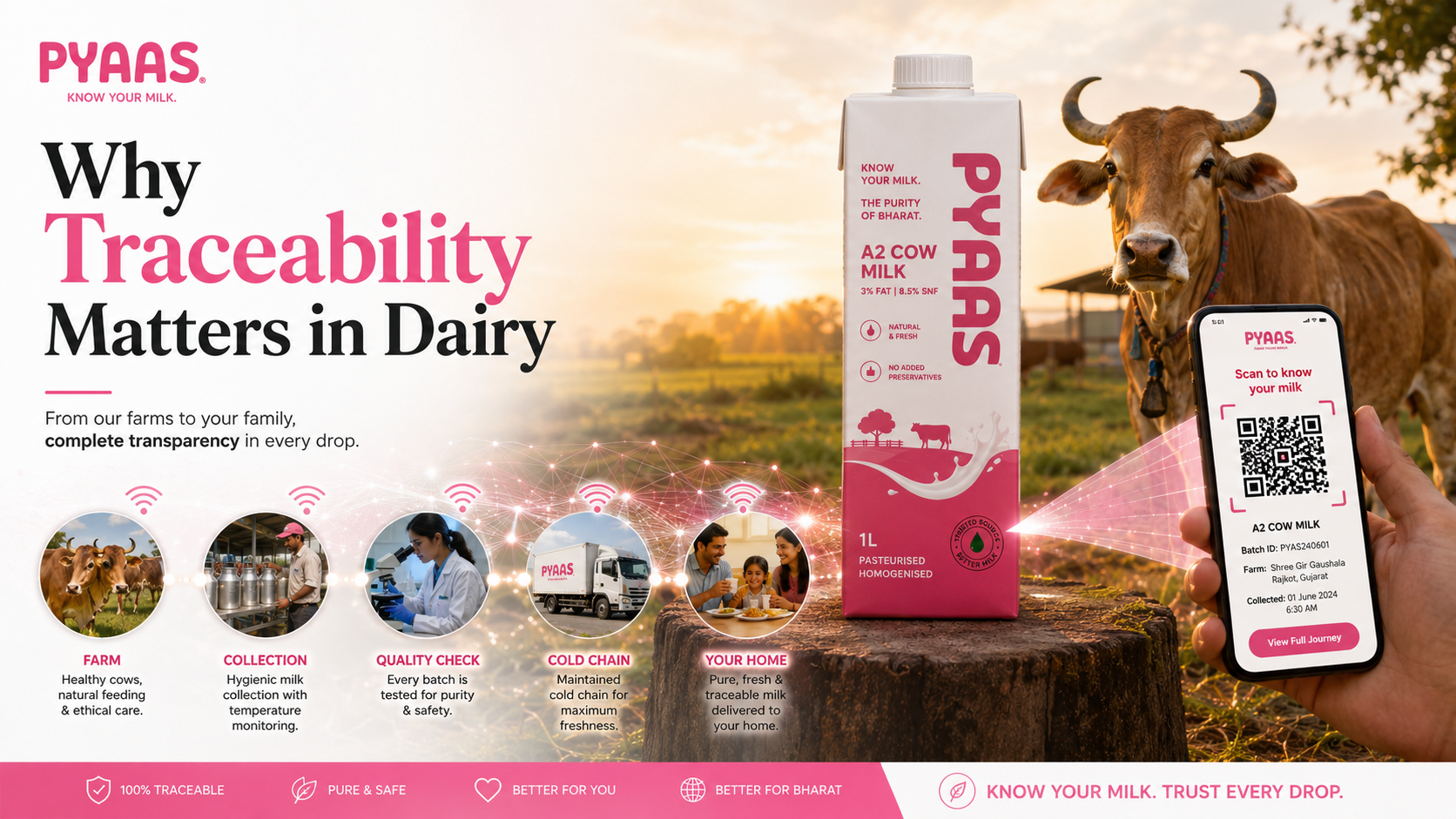
Why Traceability Matters in Dairy: The Future of Consumer Trust
5 July 2026