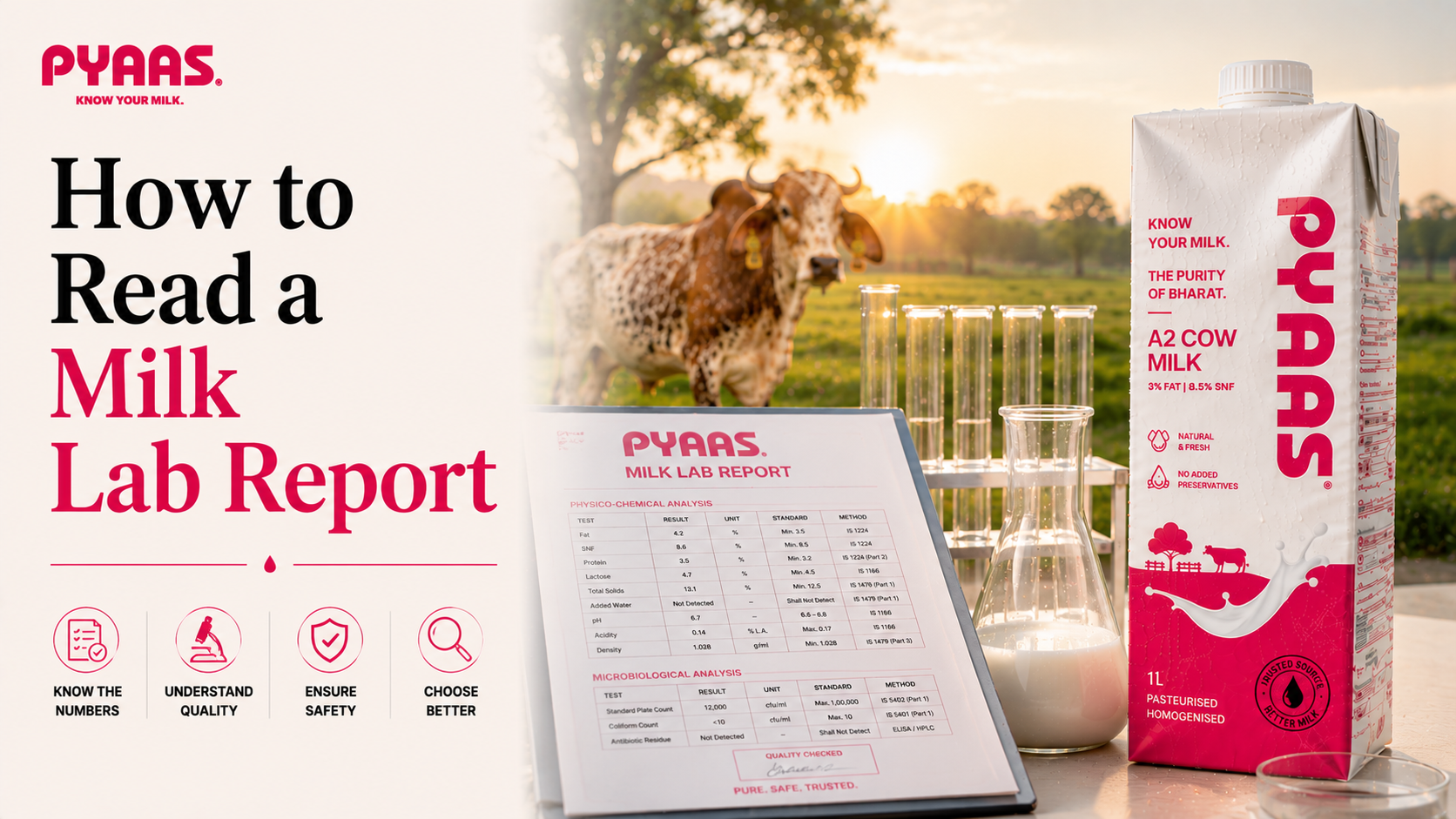
How to Read a Milk Lab Report
More dairies now say they test their milk, and some will even show you a lab report. That is progress. But a report only helps if you can read it. So here is a plain-language guide to what is actually on a milk lab report, and how to tell a meaningful one from a decorative one.
The core parameters
Most milk reports start with the same essentials:
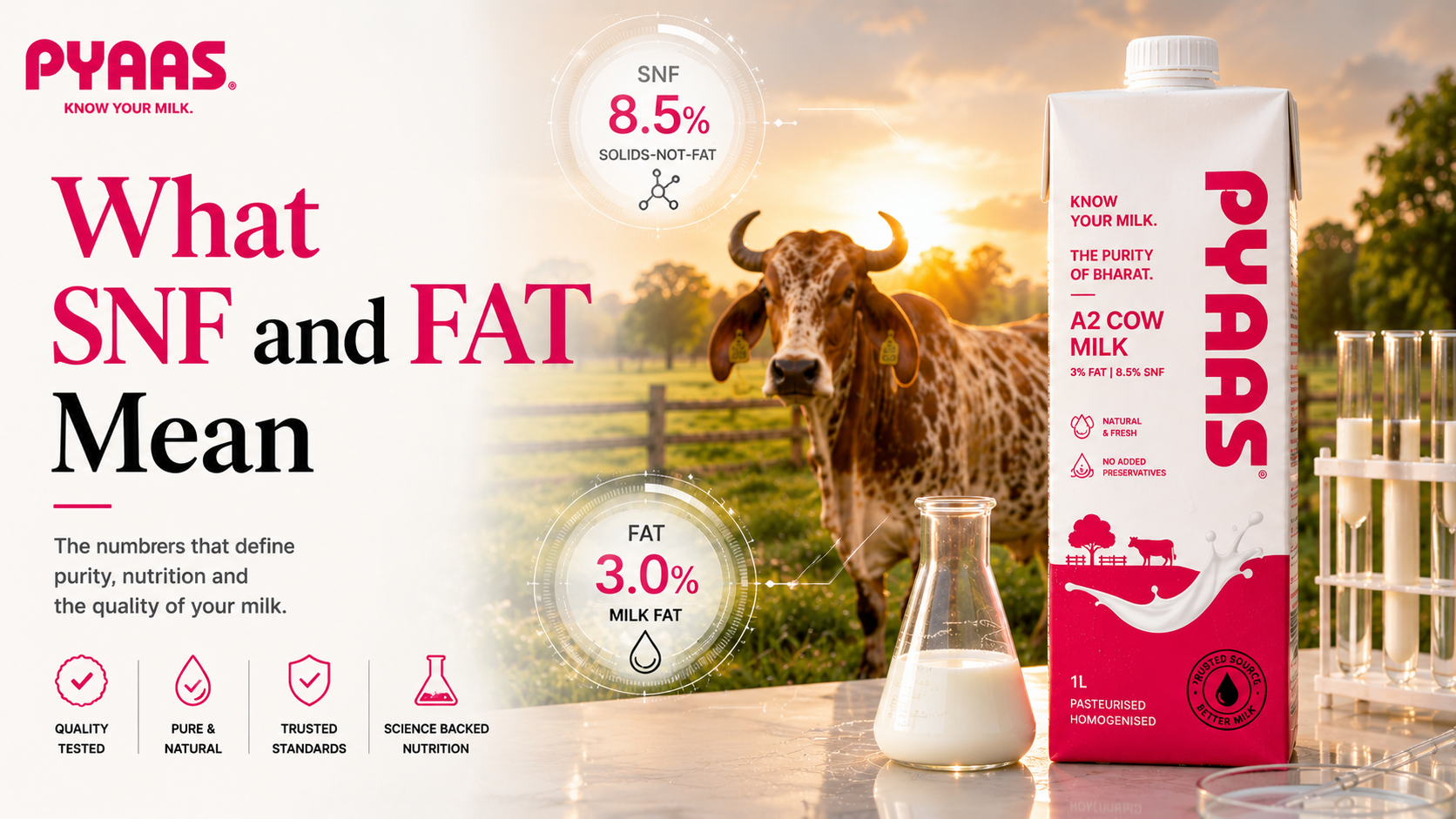
- FAT (%): the fat content. Cow milk usually sits around 3.5 to 4.5 percent. See what SNF and FAT mean.
- SNF (%): Solids-Not-Fat, the proteins, lactose and minerals. Cow milk is commonly 8.5 percent or above.
- CLR or density: the Corrected Lactometer Reading, which together with FAT and SNF helps flag dilution.
- Added water: an estimate of whether milk has been thinned.
The safety checks
Beyond composition, a good report looks for what should not be there:
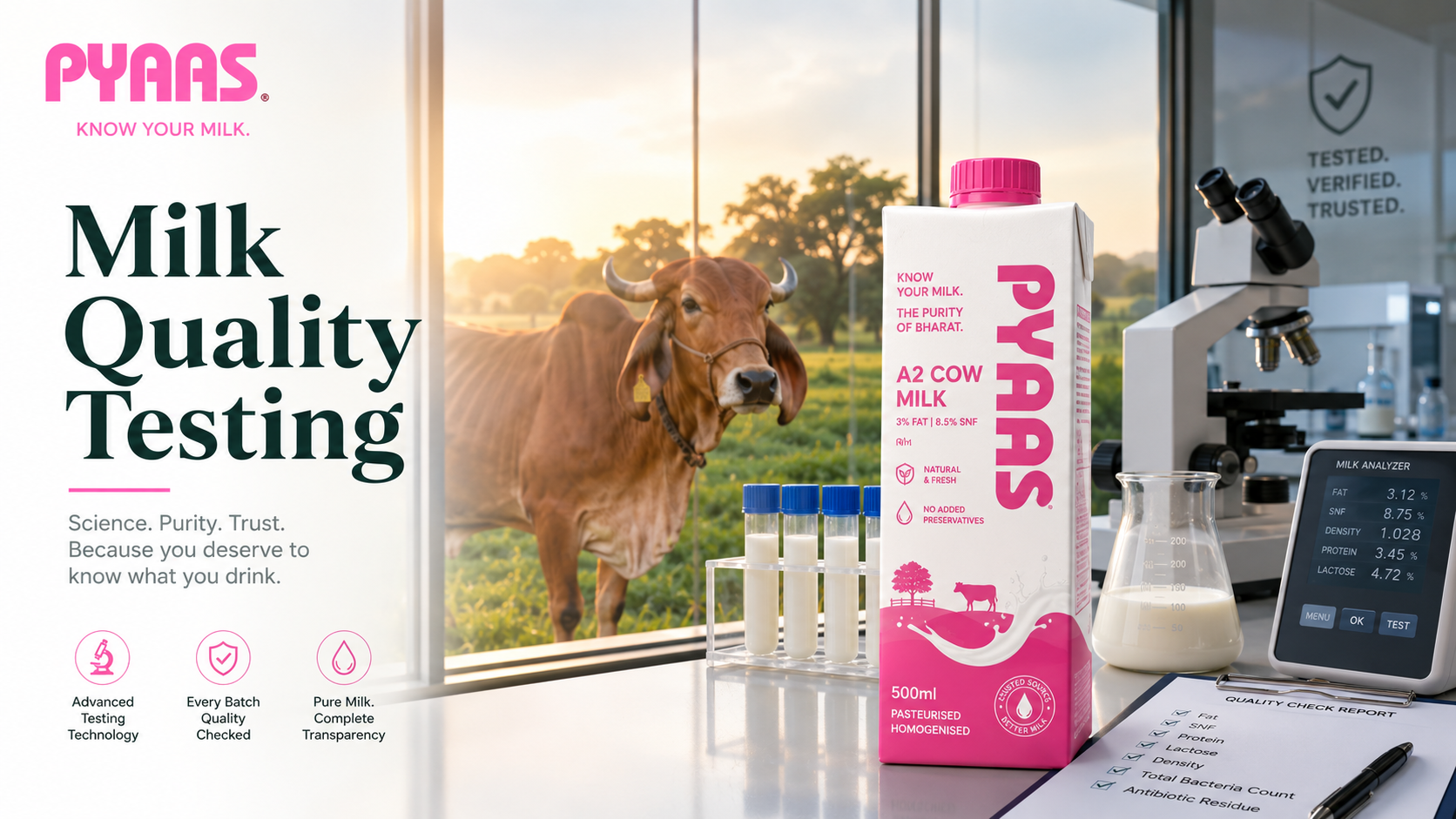
- Adulterants: checks for substances sometimes used to mask diluted or spoiled milk.
- Temperature: milk tested and kept cold is milk that has been handled well.
- Microbial quality: where done, an indication of bacterial load and hygiene.
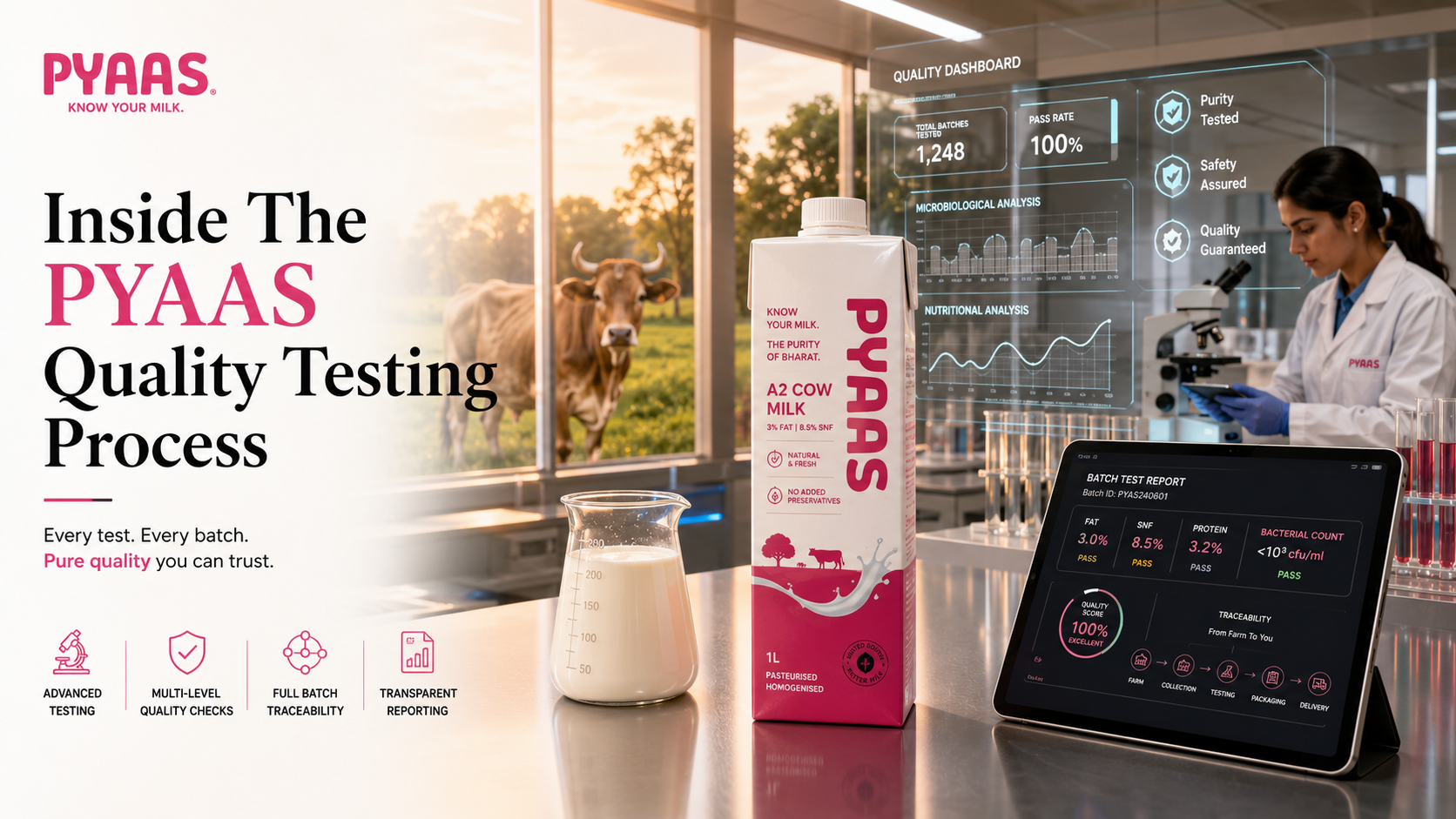
You do not need to memorise thresholds. You need to know these lines should exist and be within normal ranges. Our team walks through the process in inside the PYAAS quality testing process.
The real test: is it tied to your milk?
This is the question that separates trust from theatre. A single certificate posted on a website tells you a sample passed once, long ago. A report tied to the specific batch you bought, dated and traceable to a named farm, tells you about the milk actually in your fridge.
That is exactly how PYAAS does it. Scan the QR code on your pack and you open the lab test for that batch, linked to the farm it came from. It is the same principle as modern milk quality testing, but pointed at you, the person drinking it.
A lab report is only as good as your ability to connect it to your glass. Learn to read the few numbers that matter, insist that they belong to your batch, and milk stops being something you hope about and becomes something you know.
Written by
PYAAS
PYAAS is an independent, transparency-first dairy brand based in Gonda and Lucknow, Uttar Pradesh, founded by Aryan Sharma and Kushagra Shekhar Kaushik. Every pack is traceable to its farm by QR — Know Your Milk.
More from PYAASCommon questions.
What parameters are on a milk lab report?
A typical milk report includes FAT and SNF, and often density or CLR, added water, temperature at testing, and checks for adulterants. Microbiological tests may also assess bacterial load and safety.
How do I know a milk lab report is trustworthy?
A trustworthy report is tied to a specific batch and date, not a generic sample, and ideally you can link it to the exact pack you bought. Reports that are recent, batch-specific and openly shared are more credible than a one-time certificate on a website.
Does PYAAS share lab reports with customers?
Yes. Every PYAAS pack carries a QR code that opens the lab test for that batch, so you can read the actual results for the milk you are drinking rather than a general claim.
Get the next one in your inbox.
The occasional note on milk, ghee, and how we work. Plain words, no hype, and you can leave any time.