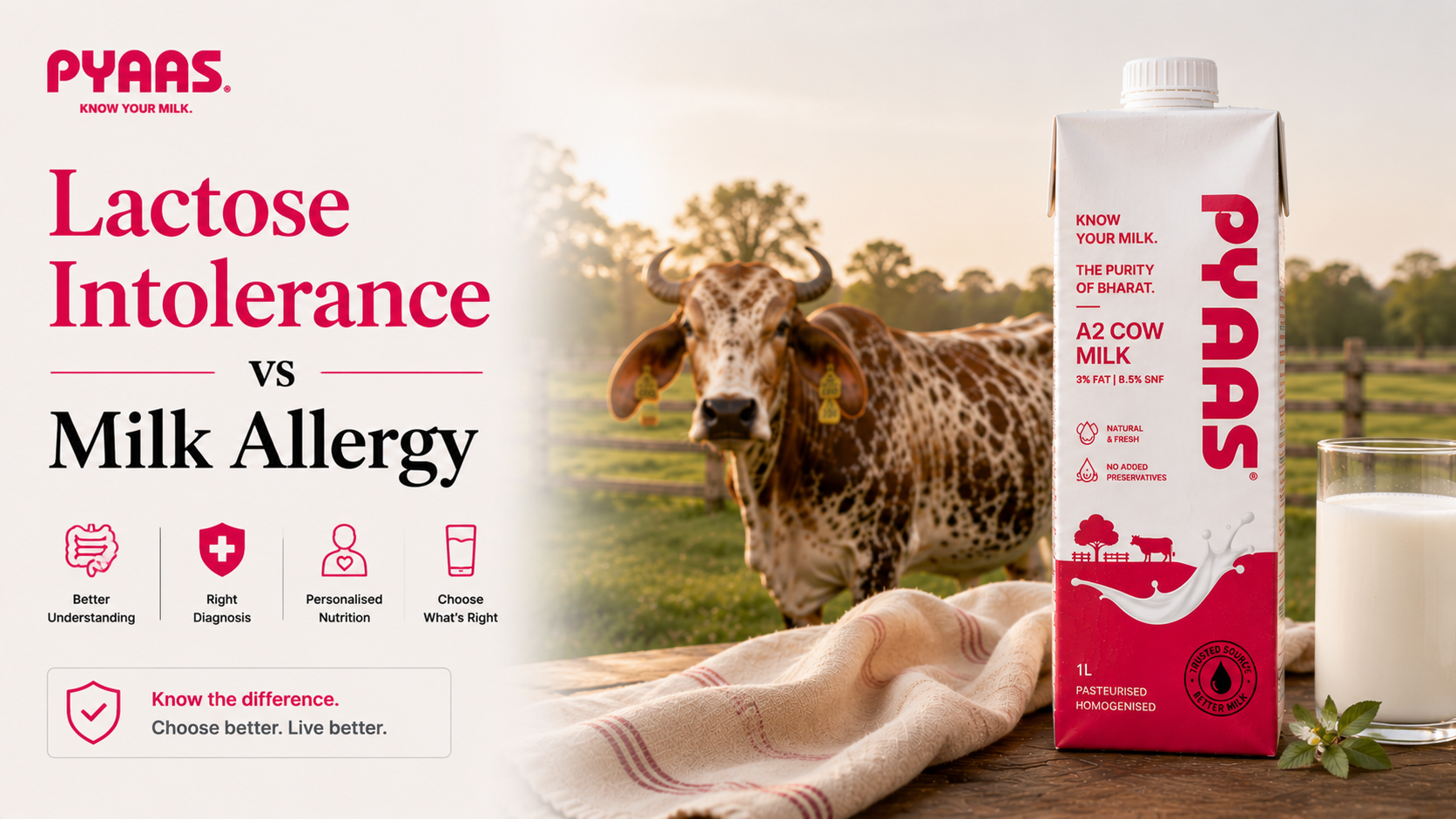
Lactose Intolerance vs Milk Allergy: Know the Difference
They sound similar and people use them as if they mean the same thing, but lactose intolerance and milk allergy are genuinely different conditions, with different causes, symptoms and seriousness. Confusing them can lead to the wrong choices, so let us make the distinction clear.
Important: this is general information, not medical advice. If you suspect either condition, especially in a child, please see a doctor.
Lactose intolerance: a digestion issue
Lactose is the natural sugar in milk. To digest it, the body needs an enzyme called lactase. People with lactose intolerance make too little lactase, so lactose passes through undigested and causes discomfort.
- Cause: not enough lactase enzyme.
- Symptoms: bloating, gas, stomach cramps, loose motions, usually a while after drinking milk.
- Nature: uncomfortable, but not an immune reaction, and often dose-dependent, small amounts may be tolerated.
Milk allergy: an immune response
A milk allergy is different in kind, not just degree. Here the immune system reacts to the proteins in milk, such as casein or whey, treating them as a threat.
- Cause: an immune reaction to milk proteins.
- Symptoms: can include rashes, swelling, vomiting and, in severe cases, serious reactions that need urgent care.
- Nature: potentially more serious, and more common in young children.
Where A2 milk fits, and does not
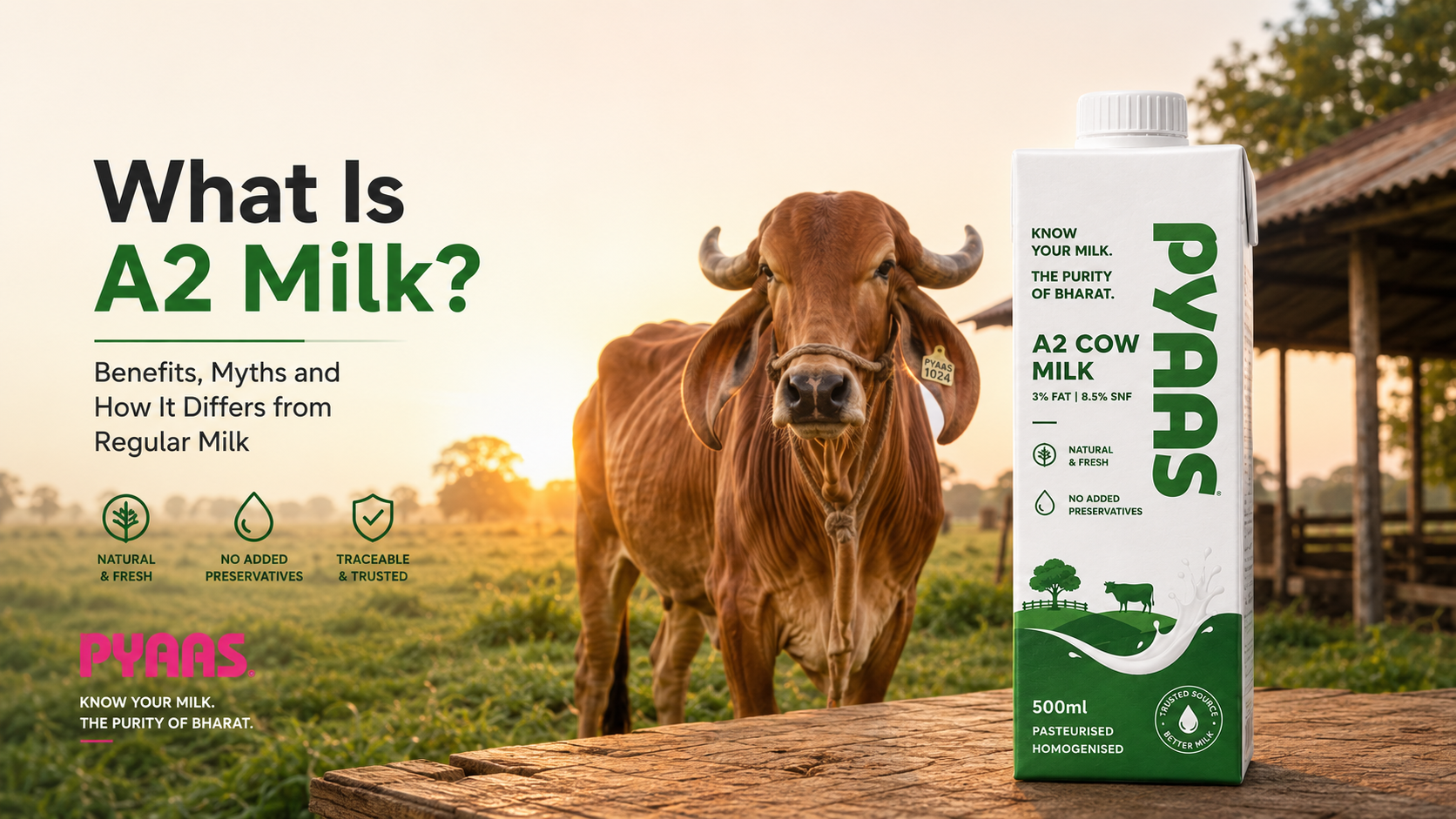
This is a common point of confusion. A2 milk is about the type of beta-casein protein, not about lactose. So:
- A2 milk still contains lactose, it is not a fix for lactose intolerance.
- Some people who feel uneasy after regular milk report A2 milk sits more comfortably, which is a distinct matter from lactose. Read what A2 milk is.
A2 is not a medical treatment for either condition. It is simply a different kind of milk that some people prefer.
What to actually do
If milk consistently troubles you or your child, do not guess between these two, and do not simply switch brands hoping for the best. See a doctor, who can help you tell lactose intolerance from a milk allergy and manage each properly. Knowing which one you are dealing with is the whole point, and it is not something to self-diagnose.
For everyone else, understanding what is in your glass, from proteins to milk nutrition, simply helps you make a more informed choice.
Written by
PYAAS
PYAAS is an independent, transparency-first dairy brand based in Gonda and Lucknow, Uttar Pradesh, founded by Aryan Sharma and Kushagra Shekhar Kaushik. Every pack is traceable to its farm by QR — Know Your Milk.
More from PYAASCommon questions.
What is the difference between lactose intolerance and milk allergy?
Lactose intolerance is a digestive issue, the body struggles to break down lactose, the sugar in milk, causing bloating or discomfort. A milk allergy is an immune response to milk proteins that can be more serious. They have different causes and different implications.
Can lactose-intolerant people drink A2 milk?
A2 milk still contains lactose, so it is not a solution for true lactose intolerance. However, some people who find regular milk uncomfortable report that A2 milk sits easier, which is a separate issue from lactose. Listen to your body and consult a doctor.
How do I know which one I have?
See a doctor. Symptoms overlap but the tests and management differ, and a milk allergy in particular needs proper medical guidance. Do not self-diagnose, especially for children.
Get the next one in your inbox.
The occasional note on milk, ghee, and how we work. Plain words, no hype, and you can leave any time.