Skimmed Milk vs Whole Milk: Which Suits You?
Stand at the fridge and the choice looks simple, yet somehow never is. Skimmed for the diet-conscious, whole for the flavour-lovers, and a nagging sense that one of them must be the right answer. Here is the honest truth about skimmed vs whole milk: there is no single winner. There is only which one suits your body, your goals and your plate. Let us clear the confusion without the hype.
What actually separates them
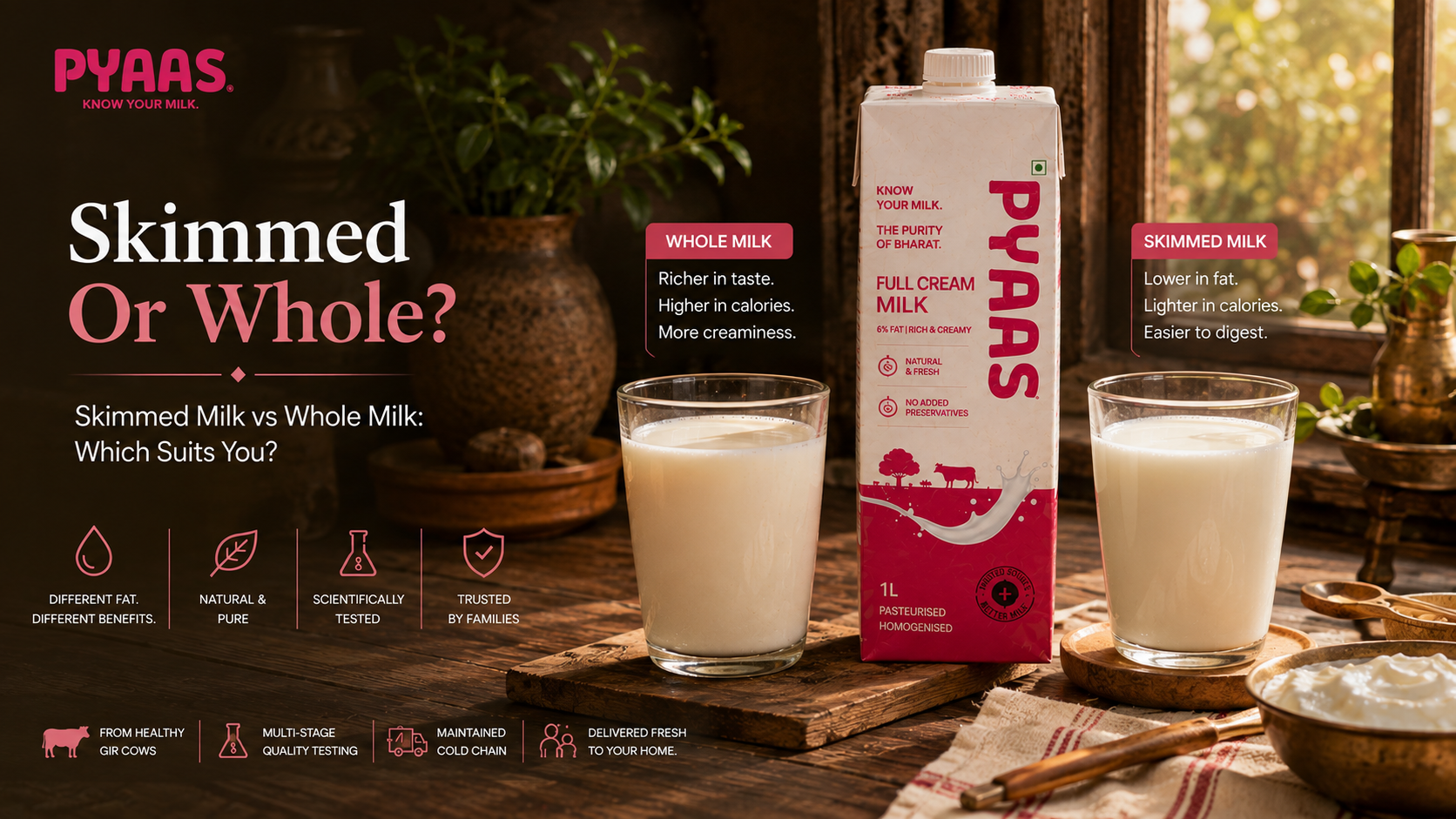
The entire difference between skimmed and whole milk is fat. Whole milk keeps its natural cream, giving it a richer taste and more calories. Skimmed milk has had nearly all the fat removed, leaving it lighter and lower in calories. That single change, the fat, is what drives everything else people argue about. It is worth understanding what stays the same, because a lot of people get this wrong.
What stays the same
Removing fat does not gut the milk of everything good. Both skimmed and whole milk deliver:
- Protein, in broadly similar amounts. Skimming does not remove protein.
- Calcium, also broadly similar. The calcium is not in the cream.
- The core character of milk as a nutritious everyday drink.
So if you switch to skimmed, you are not losing your protein or calcium. You are mainly losing fat and calories. If you want a fuller tour of what is in the glass either way, our guide to milk nutrition facts lays it out.
What is different, honestly
The differences are real, just narrower than the marketing suggests:
- Calories. Whole milk has more, because fat is calorie-dense. Skimmed is lighter.
- Satisfaction. Whole milk is more filling and satisfying, which some people find helps them eat less overall.
- Fat-soluble vitamins. Some vitamins ride along with the fat, so whole milk retains more of them naturally.
- Taste and texture. Whole milk is richer and creamier. Skimmed is thinner and cleaner.
The outdated idea worth dropping
For years, the reflex was that fat is bad, so skimmed must be healthier. Nutrition thinking has become more nuanced. Full-fat dairy is no longer automatically cast as the villain, and for many people whole milk fits a balanced diet perfectly well. This does not mean whole milk is now the winner either. It means the honest answer is genuinely it depends, and anyone selling you a hard rule is oversimplifying.
Who skimmed milk suits
Skimmed milk tends to fit you if:
- You are actively managing calories and want the nutrition without the fat load.
- A doctor has advised you to reduce saturated fat for a specific reason.
- You simply prefer a lighter, cleaner-tasting glass.
- You get plenty of healthy fats elsewhere in your diet.
Who whole milk suits
Whole milk tends to fit you if:
- You want something more satisfying that keeps you fuller.
- You are cooking or want richer taste and texture.
- You value the fat-soluble nutrients that come with the cream.
- Calories are not your primary concern and you enjoy the fuller flavour.
Children, in particular, often need the energy and fat that whole milk provides, but the right choice for a child is a question for your pediatrician, not a chart.
A note on A2 and toning
It is worth untangling two separate ideas people often confuse. Skimmed versus whole is about fat content. A2 versus regular is about protein type. They are unrelated dials. You can have whole A2 milk or lean regular milk, and vice versa. If the A2 side of things interests you, our explainer on what A2 milk really is keeps the two ideas cleanly apart. And remember, neither skimming nor A2 is a cure for anything, they are just choices about what your milk contains.
What matters more than the fat label
Here is the point most fat comparisons miss. Whether you drink skimmed or whole, the quality of the milk underneath matters more than the fat percentage on the front. Fresh, clean, unadulterated milk from a known source beats stale, watered-down milk of any fat level. That is why PYAAS focuses on sourcing you can verify. Every PYAAS pack carries a QR code you scan to see the exact partner farm in Gonda, the farmer and that batch's quality-checked record. Choose your fat level to suit your body, but choose your milk to be genuinely good in the first place. Our Know Your Milk page explains what that transparency looks like.
The honest bottom line
In the skimmed vs whole milk debate, there is no crown to hand out. Skimmed is lighter and lower in calories, whole is richer, more filling and holds more fat-soluble nutrients, and both keep their protein and calcium. The right choice is the one that fits your goals, your taste and any advice from your doctor. What PYAAS asks you to care about just as much is what sits beneath the fat label: real farms, honest handling and milk you can trace. Choose the fat level for you, and let the milk itself be something you can actually know.
Written by
PYAAS
PYAAS is an honest, traceable Indian dairy brand from Gonda, Uttar Pradesh.
More from PYAASCommon questions.
Is skimmed milk healthier than whole milk?
Not automatically. Skimmed milk has less fat and fewer calories, which suits some goals, while whole milk is more satisfying and carries fat-soluble nutrients. Newer thinking is less anti-fat than it once was. In the skimmed vs whole milk question, the healthier choice depends on your diet, needs and what a doctor advises for you.
Does skimmed milk have less protein or calcium than whole milk?
No. Removing the fat does not remove the protein or calcium, so skimmed and whole milk are broadly similar on those. The main difference is fat and calories. Whole milk also retains more fat-soluble vitamins that come with the fat, which is one honest point in its favour.
Which milk is best for weight loss, skimmed or whole?
Skimmed milk is lower in calories, so it can help if you are managing calories closely. But whole milk is more filling, which can reduce overall snacking for some people. There is no universal best for weight loss, so choose based on your overall diet and, ideally, professional guidance.
Get the next one in your inbox.
The occasional note on milk, ghee, and how we work. Plain words, no hype, and you can leave any time.