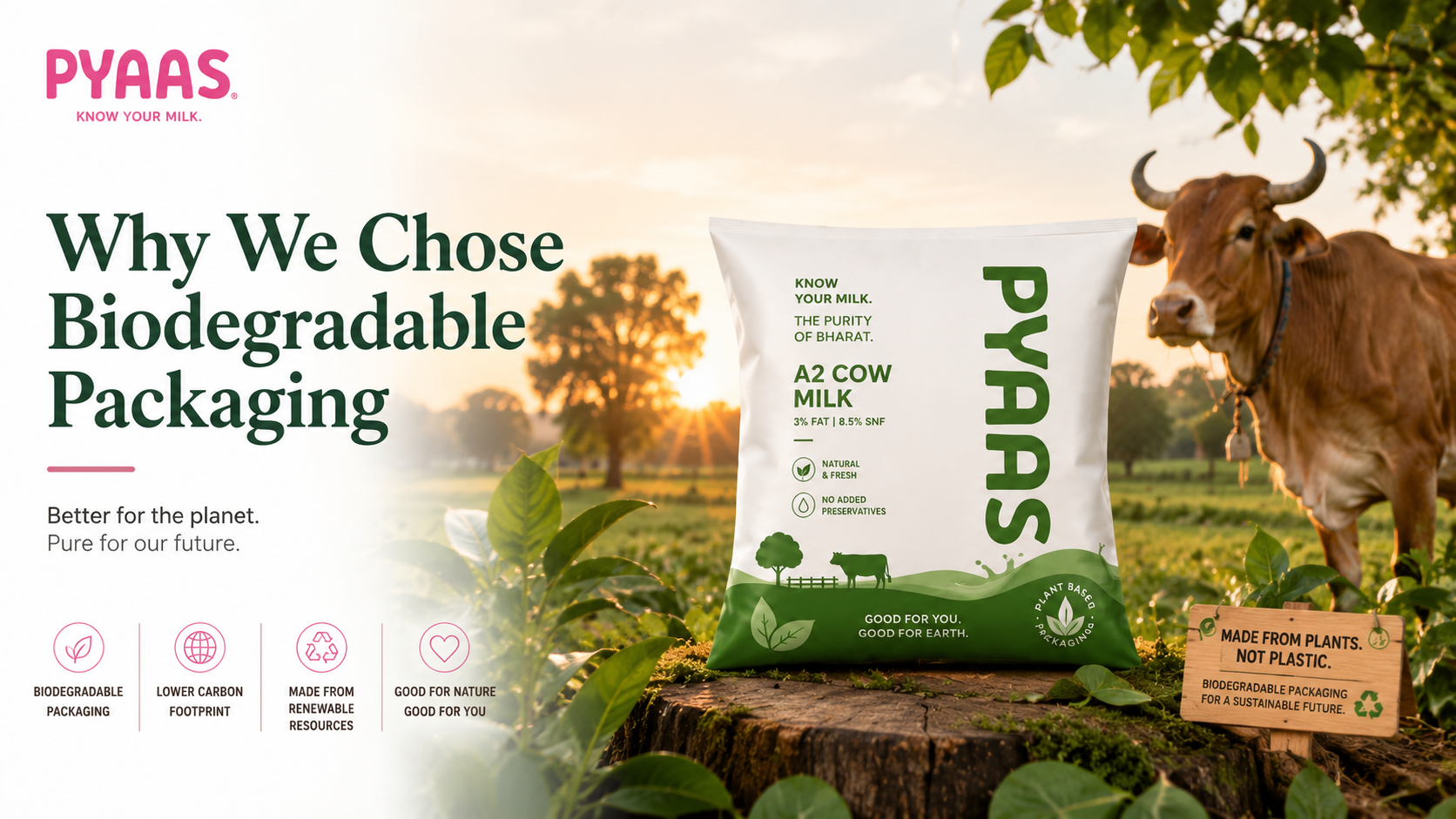
Why We Chose Biodegradable Packaging
Every day, millions of dairy products travel across India. Milk reaches doorsteps, ghee reaches kitchens, and families enjoy the convenience of fresh dairy without a second thought. But once the milk is poured and the carton is empty, a second journey begins, one that most brands never talk about. The packaging stays behind. It outlives the product, and often it outlives us. When we sat down to build PYAAS, we kept asking ourselves a simple question: if we are building the future of dairy, shouldn't we also think honestly about the future of packaging?
This post explains why we chose biodegradable packaging, what that choice really means, and where we are honest about the limits. As a transparency-first brand, we will not pretend the entire problem is solved. We would rather tell you the truth about the direction we are walking in, the same way we tell you exactly which farm your milk came from. Sustainable dairy packaging is not a marketing badge for us. It is part of the same promise as the QR code on every pack.
Why Packaging Became a Question We Could Not Ignore
Most people think packaging exists for one reason: to protect the product. That is true, and it matters. Good dairy packaging keeps milk safe, preserves freshness through the cold chain, and protects quality from the farm to your fridge. But packaging carries a second job that the industry has quietly avoided discussing for decades. Every package eventually becomes part of a larger environmental story, and conventional plastic can linger in landfills and waterways long after it has served its purpose.
Consumer expectations are changing fast, especially among the young families we serve in Delhi NCR, Lucknow and Ayodhya. People increasingly want products that match their values. They are asking harder questions, not just about what is inside the pack, but about what the pack leaves behind. The next generation of food brands will be judged not only on what they sell, but on how they operate. We would rather lead that conversation than be dragged into it later.
What Biodegradable Packaging Actually Means
The word "biodegradable" gets used loosely, so let us be precise and honest. Biodegradable packaging is designed to break down naturally into simpler substances under the right environmental conditions, with the help of microorganisms, over a far shorter time than conventional plastic. The key phrase is "the right conditions." Some materials need industrial composting facilities, while others break down more easily. Anyone who tells you a single material magically solves everything is overselling it.
Here is how we think about the materials we evaluate:
- End-of-life behaviour: what genuinely happens to this pack after a family is done with it, not what the label hopes happens.
- Product safety: the packaging must still protect milk and ghee through the cold chain, because spoiled food is its own kind of waste.
- Honesty of claims: we avoid vague green language and prefer to describe what a material does in plain terms.
- Practicality in India: a solution only counts if it works within the real waste systems our cities have today.
We deliver milk in cartons and pouches and our A2 Bilona ghee in a jar. Each format raises a different packaging question, and we treat them as distinct problems rather than pretending one answer fits all.
How Transparency and Sustainability Are the Same Promise
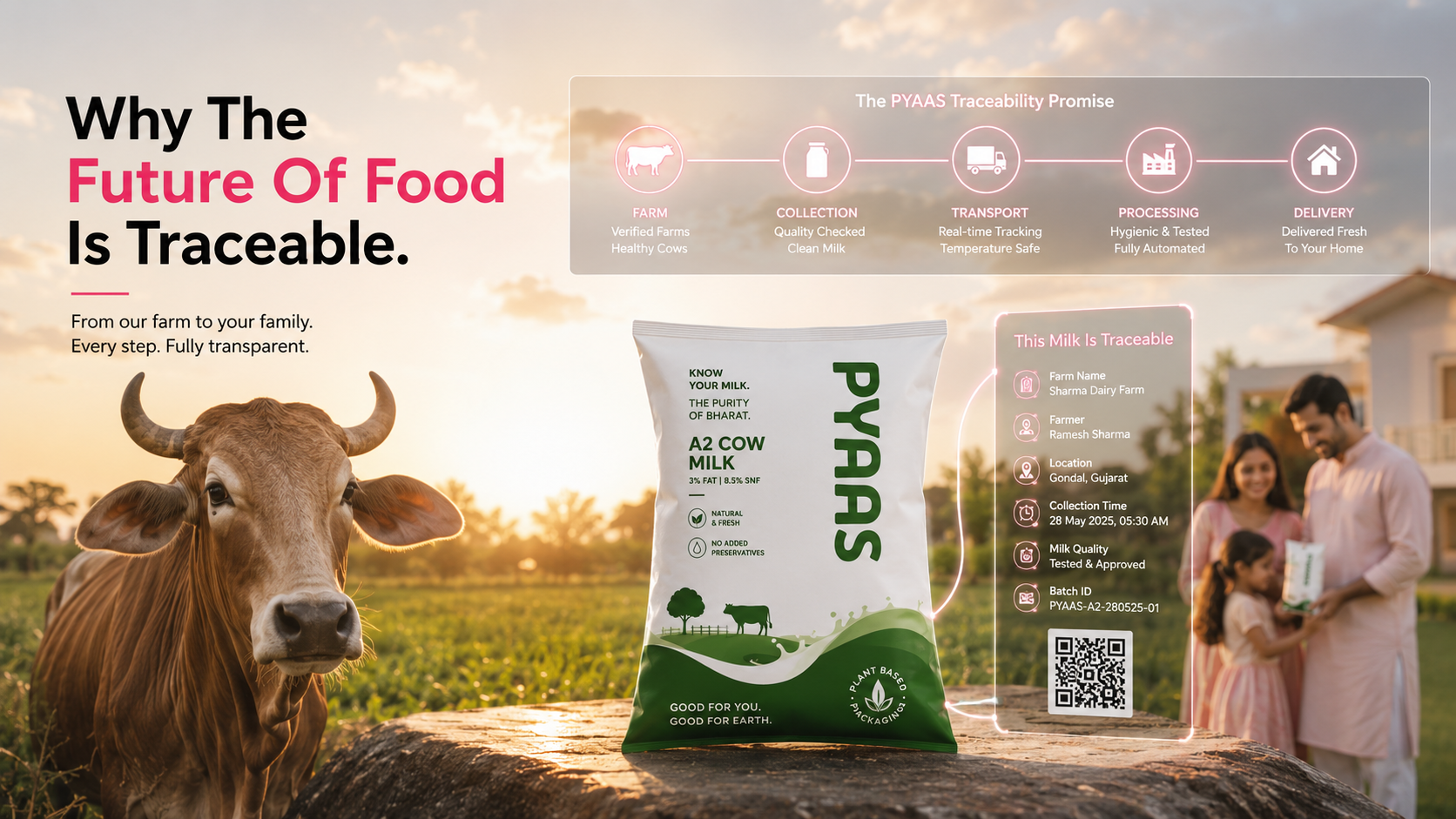
At first glance, traceability and sustainability look like separate topics. In practice, they grow from one root: visibility. Our whole brand is built on letting you see what is usually hidden. Scan the QR code on a PYAAS pack and you can see the exact farm in Gonda, Uttar Pradesh, the named farmer who milked your cows, that batch's lab results for SNF and FAT, and the time the milk left the farm. That is what we mean when we say Know Your Milk.
Packaging is simply the next layer of that same honesty. If we ask you to trust us about the milk, we owe you the same candour about the material it arrives in. You can read more about the philosophy behind this in what "Know Your Milk" really means, and about the broader shift in why consumers are demanding transparent food systems. Transparency should not stop at the product. It should extend to how the product is made, moved, and eventually thrown away.
Why Indian Families Are Driving This Change
The families who choose traceable, single-origin A2 milk tend to be the same families who think about what their choices mean for their children's future. They are reading labels, asking where things come from, and noticing when a brand is vague. This is the same instinct that makes people want traceable milk in the first place. Once you start asking "where did this come from," it is natural to also ask "where does this go."
Where We Are Honest About the Limits
No sustainability journey is perfect, and we will not pretend ours is. Innovation in food packaging takes time. New materials need testing, investment, and continuous improvement to make sure they protect the product as reliably as what they replace. Some greener options are not yet available at the scale or cost that lets a young dairy brand use them everywhere overnight. What matters to us is direction, not a finished trophy.
We believe businesses should actively search for better solutions instead of accepting existing limitations as permanent. That is the same mindset that shapes how PYAAS tracks milk from farm to family and how we run our quality testing process. We treat packaging as one more system to improve over time, openly, with you watching. If a material does not live up to its promise, we would rather say so than hide behind a green logo.
What a Better Packaging Future Looks Like
The dairy industry is entering a period of real innovation, and packaging is part of it. We imagine a future where a family can know not only the farm their milk came from, but also exactly what their packaging is made of and how to dispose of it responsibly. That future is more transparent, more accountable, and ultimately more sustainable. The brands that lead this transition honestly will help define the future of food.
For PYAAS, the goal is simple to state and hard to earn: balance quality, transparency and environmental responsibility in every pack we put in your hands. Milk that is good for your family should not be quietly bad for the planet your family inherits. That belief sits alongside everything else we do, from the way we select our farmers to the care that goes into our small-batch A2 Bilona ghee.
Our Quiet Commitment
We are not here to make grand claims we cannot back up. We are here to do the slow, honest work of building a dairy brand families can trust completely, including in the things most brands hope you never think about. Packaging is one of those things. As we keep building PYAAS, we remain committed to exploring and adopting packaging that aligns with the future we want to create, and to telling you honestly how far along that road we are.
Because the products we leave behind matter just as much as the products we deliver. If you care about what goes into your milk, we think you will care about this too. Take a moment to scan the next pack you receive, see exactly where your milk came from, and hold us to the same standard for everything around it. Know Your Milk.
Written by
PYAAS Team
The PYAAS Team builds India's transparency-first dairy brand, delivering traceable single-origin A2 cow milk and small-batch A2 Bilona ghee from named farms in Gonda, Uttar Pradesh.
More from PYAAS TeamCommon questions.
What is biodegradable packaging?
Biodegradable packaging is designed to break down naturally into simpler substances under the right environmental conditions, with the help of microorganisms. It does this over a far shorter time than conventional plastic. The key is that many materials need the right disposal conditions, such as composting, to break down properly.
Why did PYAAS choose to move toward biodegradable packaging?
PYAAS is a transparency-first dairy brand, and we believe honesty should extend beyond the milk to the material it arrives in. Conventional plastic can linger in landfills long after the product is gone. Choosing greener packaging is part of the same promise as the QR code on every pack.
Does biodegradable packaging still keep milk and ghee fresh?
Yes, product safety is non-negotiable for us. Any packaging we use must still protect milk and ghee through the cold chain, because spoiled food is its own form of waste. We evaluate materials on both their end-of-life behaviour and their ability to preserve quality.
Is PYAAS packaging completely plastic-free today?
We are honest about the limits. Greener materials take time, testing and investment to use reliably at scale, so this is a journey rather than a finished claim. What matters to us is direction, and we will keep telling you openly how far along that road we are.
How does sustainable packaging connect to milk traceability?
Both grow from the same root: visibility. PYAAS lets you scan a QR code to see your exact farm, farmer and batch lab results, and we believe you deserve the same candour about packaging. Transparency should not stop at the product, it should extend to how it is made, moved and disposed of.
Get the next one in your inbox.
The occasional note on milk, ghee, and how we work. Plain words, no hype, and you can leave any time.
Keep reading.
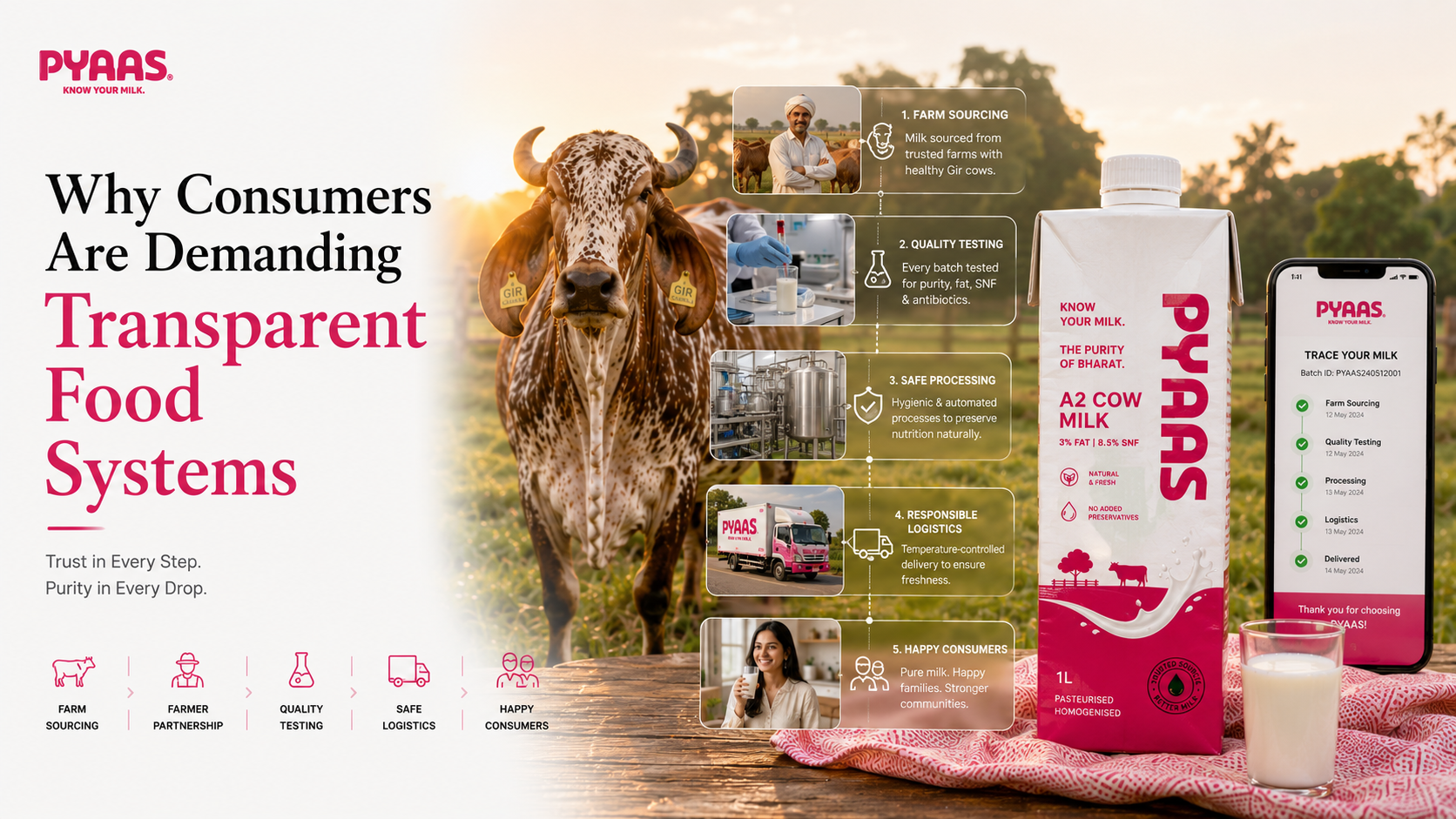
Why Consumers Are Demanding Transparent Food Systems
13 July 2026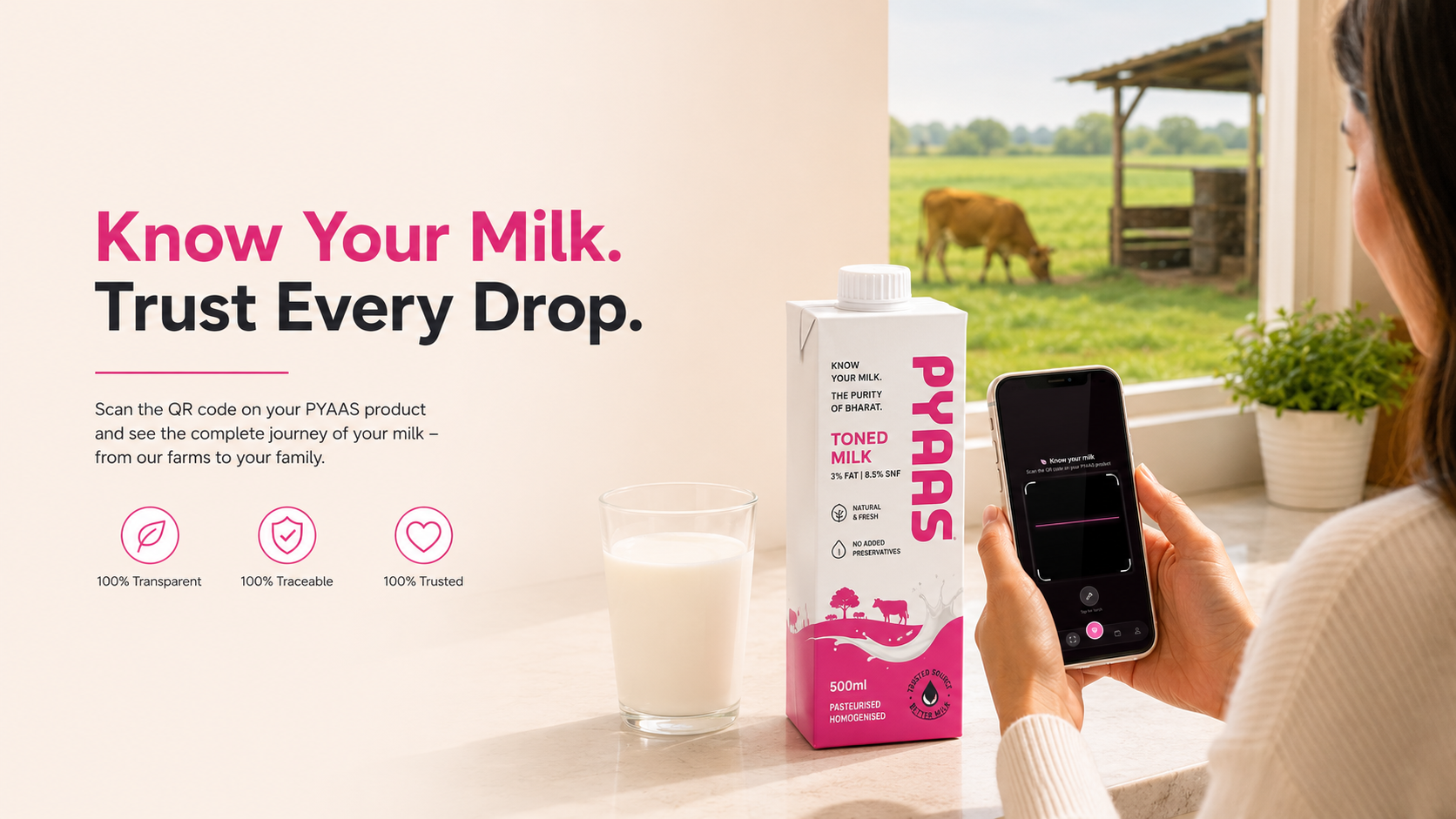
What "Know Your Milk" Really Means
28 June 2026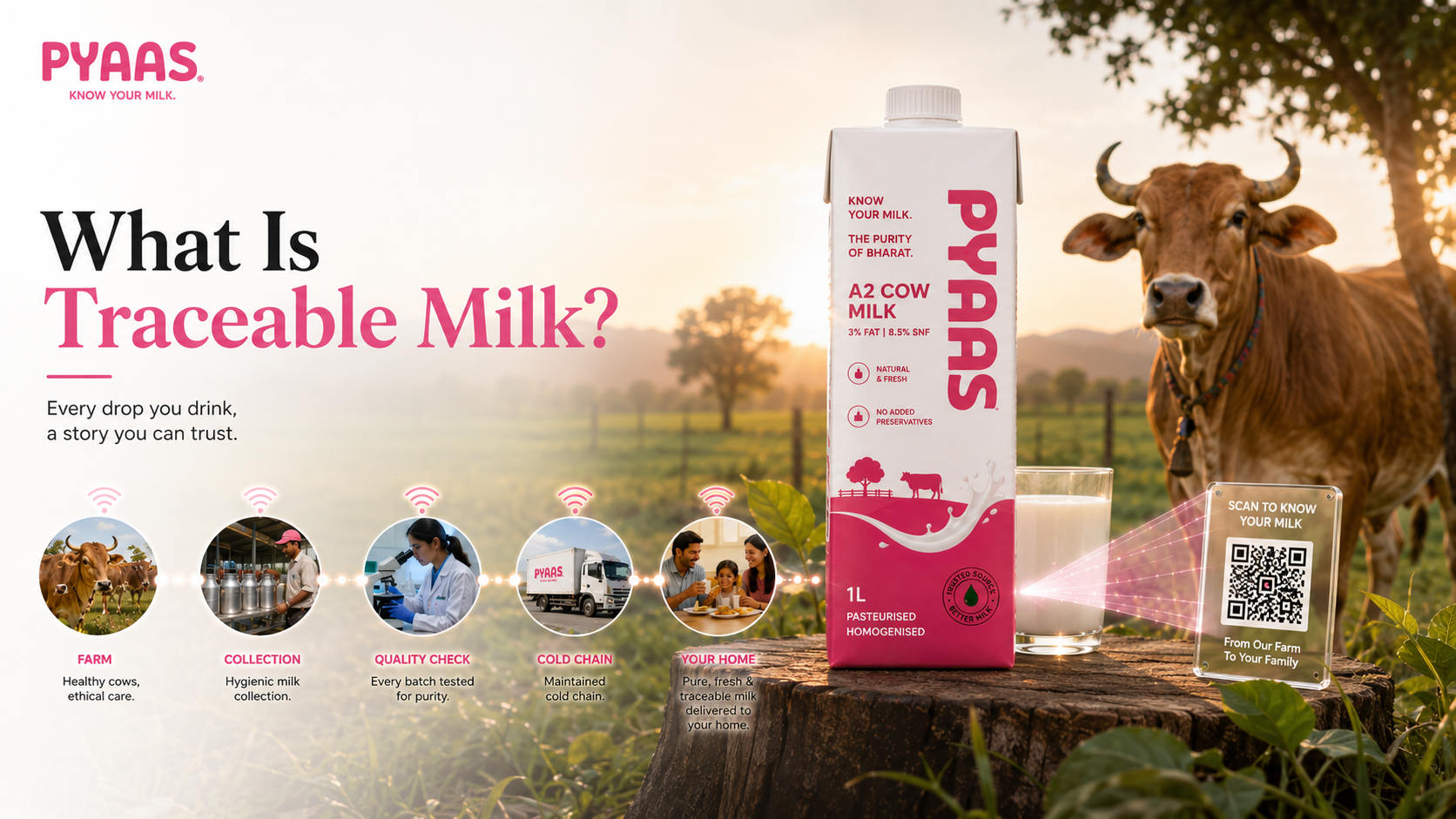
What Is Traceable Milk? Why Modern Consumers Want to Know Their Milk
5 July 2026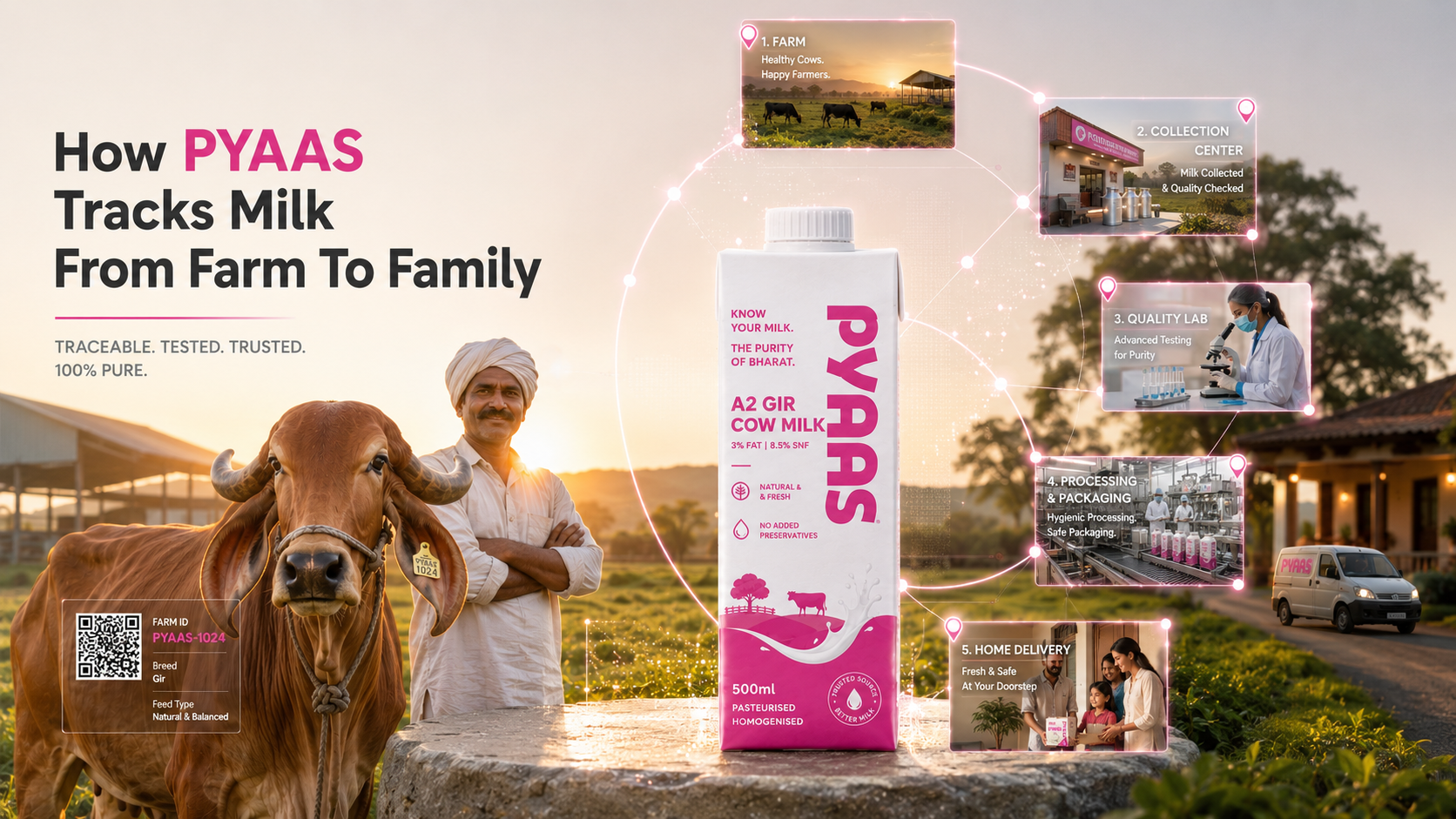
How PYAAS Tracks Milk From Farm To Family
28 June 2026