Farm to Home Milk Explained: The Journey Behind Every Glass
When you pour milk into your child's glass each morning, how much of its story do you actually know? For most Indian families, the honest answer is: very little. We see a brand name on a carton, we trust a price, and we hope for the best. Farm-to-home milk is the idea that you should never have to hope. It is a way of producing and delivering milk where you can follow every step of the journey, from the farm where the cow was milked to the moment the pouch reaches your kitchen.
This is not a marketing phrase. It is a different way of thinking about the food we feed our families. In this guide we will walk through the complete farm-to-home milk journey, explain why each stage matters, and show how traceability is quietly changing what "premium dairy" really means in India. The goal is simple: by the end, you should be able to ask the right questions and recognise milk you can genuinely trust.
What Does Farm-to-Home Milk Actually Mean?
Farm-to-home milk describes a dairy supply model where the distance between the farmer and your family is short, visible and accountable. Instead of milk being pooled from countless unnamed sources, blended and passed through many hands, farm-to-home milk keeps the link between a specific farm and your home intact.
The difference comes down to three words: transparency, traceability and trust. Transparency means the brand is willing to show you how the milk is produced and handled. Traceability means you can actually verify it, not just take someone's word. Trust is the result when the first two are real. If you want a deeper look at this idea, our guide on what traceable milk really means unpacks why so many families are now asking where their milk comes from.
The Journey Behind Every Glass, Stage by Stage
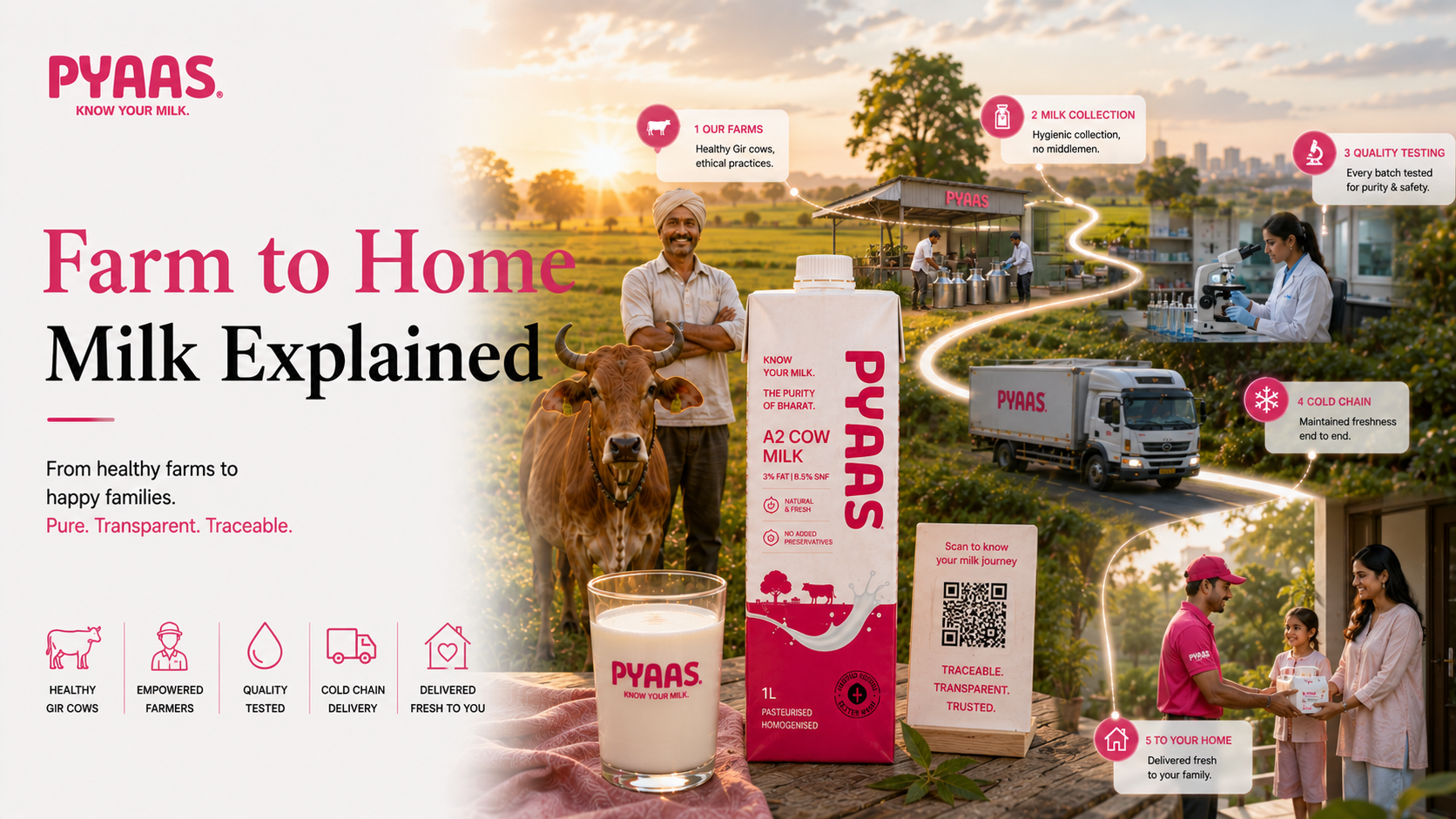
Every glass of milk passes through several distinct stages before it reaches you. Understanding each one helps you see where quality is protected and where, in conventional supply chains, it is often lost.
1. The Farm and the Farmer
Quality begins at the source, long before milk is ever collected. The breed of cow, what she is fed, how she is cared for and how clean the milking is all shape the milk you eventually drink. This is why the strongest dairy brands build close, lasting relationships with named farmers rather than buying from anonymous aggregators.
- Breed and milk type: Indigenous cows like Gir and Sahiwal naturally produce A2 protein milk. You can read more in our pieces on Gir cow milk and Sahiwal milk.
- Care and feed: Healthy, well-fed cows in clean conditions give cleaner, more consistent milk.
- Trust at the source: Knowing the farmer by name changes everything. It turns a faceless commodity into a relationship.
2. Collection and Quality Testing
Soon after milking, milk should be checked before it moves any further. Responsible dairies test for purity and composition early, so that nothing questionable enters the chain. These checks typically look at the fat content, the SNF (solids-not-fat) and signs of adulteration. To understand why this step is so important in India, see our explainer on milk adulteration in India.
Testing is not a one-time formality. It is an ongoing discipline that keeps quality consistent batch after batch. When a brand is willing to share these results with you instead of hiding them, that is a strong signal of honesty.
3. The Cold Chain and Freshness
Milk is one of the most perishable foods in your kitchen. Even excellent milk loses its value quickly if it is not kept cold from the moment of collection to the moment of delivery. This is why a well-managed, temperature-controlled cold chain matters so much. It protects:
- Freshness: Cold milk stays fresh and tastes the way it should.
- Safety: Proper temperatures slow the growth of bacteria.
- Nutrition: Careful handling preserves the goodness milk is meant to deliver.
Speed matters too. The shorter the time between the farm and your home, the fresher the milk. For a closer look at this part of the story, our article on how milk reaches your home follows the route step by step.
4. Packaging and Delivery
The final stage is getting milk to your door in a form that keeps it safe and fresh. Modern farm-to-home brands use sealed cartons and pouches designed to protect the milk, often with thoughtful, more sustainable materials. Daily or scheduled delivery means you receive milk close to when it was produced, rather than milk that has been sitting on a shelf.
Why Traceability Is the Heart of Farm-to-Home Milk
You can describe a beautiful journey on a label, but words on packaging are easy to print. What makes farm-to-home milk meaningful is the ability to verify that journey for yourself. This is where traceability turns a promise into proof.
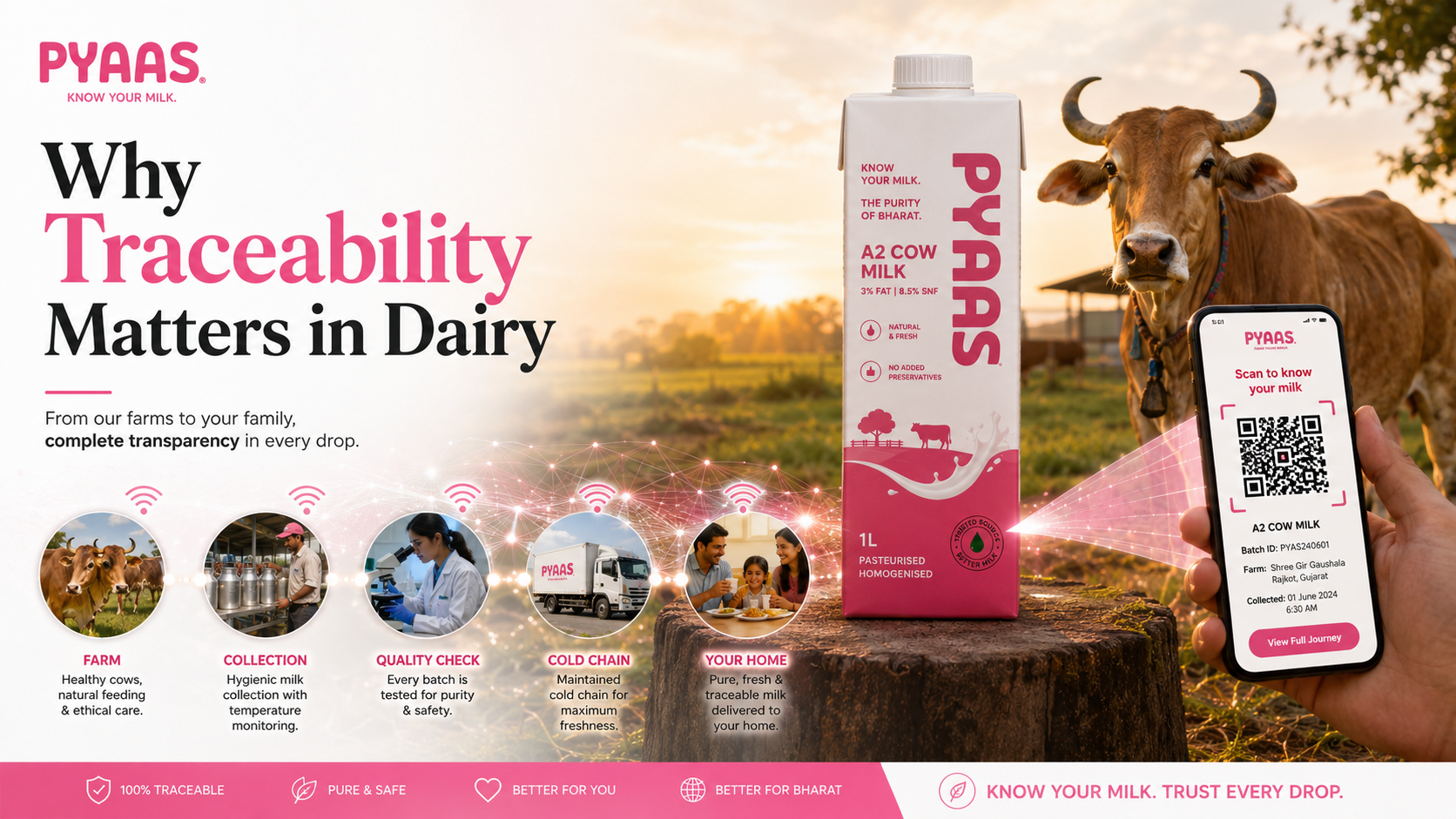
At PYAAS, every pack carries a QR code. When you scan it, you can see the exact farm your milk came from, the named farmer behind it, that batch's lab test for SNF and FAT, and the time the milk left the farm. Nothing is hidden behind a brand name. You move from trusting a logo to seeing the facts. This is the foundation of our Know Your Milk promise, and it reflects the values we were built on as a family business, which you can read about on the page about our founding family.
Traceability also protects you in a country where milk adulteration remains a real concern. When a batch can be traced back to a specific source and a specific test, accountability is built into the system. If you are weighing your options, our comparison of farm fresh milk versus packaged milk is a helpful next read.
How to Recognise Genuine Farm-to-Home Milk
Not every brand that uses the phrase "farm-to-home" actually delivers it. Here is what to look for so you can tell the difference between a slogan and the real thing:
- Can you see the farm? Genuine traceability names the source, not just a region.
- Are test results shared openly? Look for batch-level information like SNF and FAT, not vague claims.
- Is the milk truly fresh? Ask how soon after milking the milk reaches you.
- Is there a verifiable link? A QR code that shows real, batch-specific details is far stronger than printed assurances.
- Is the milk single-origin? Milk from one named farm tells a clearer story than milk blended from many.
These same principles apply when you are choosing A2 milk specifically. Our guide to the best A2 milk in India walks through what conscientious buyers should check before they commit.
The Future of Premium Dairy Is Transparency, Not Packaging
For a long time, "premium" in dairy meant nicer packaging or a higher price. That definition is changing. The next generation of Indian families is not satisfied with prettier cartons. They want to know the farm, the farmer, the test and the journey. They want food systems that respect their right to know what they are feeding their children.
This shift is bigger than milk. It is part of a wider movement toward transparent, accountable food. Beyond fresh milk, the same farm-to-home thinking shapes how we make our small-batch A2 Bilona ghee, where the source and the slow, traditional method matter just as much as the final golden jar.
At PYAAS, we believe you should know far more than the brand name printed on a carton. You should know the farm. You should know the journey. You should know the story behind every glass. That belief is the reason we built our entire model around traceable, single-origin A2 milk sourced from named farms in Gonda, Uttar Pradesh, and delivered fresh across Delhi NCR, Lucknow and Ayodhya. If knowing your milk matters to you and your family, we would be honoured to show you exactly where yours comes from. Know Your Milk.
Written by
PYAAS Team
The PYAAS Team writes about traceable, single-origin A2 dairy and the farmers behind it, helping Indian families know exactly where their milk comes from.
More from PYAAS TeamCommon questions.
What does farm-to-home milk mean?
Farm-to-home milk is a dairy model where the link between a specific farm and your home stays short, visible and accountable. Instead of milk blended from many anonymous sources, you can follow its journey from collection to delivery. The aim is transparency, traceability and trust at every stage.
How is farm-to-home milk different from regular packaged milk?
Regular packaged milk is often pooled from many unnamed sources and passes through several hands before it reaches you. Farm-to-home milk keeps the connection to a specific, named farm intact and lets you verify it. With brands like PYAAS, you can scan a QR code to see the farm, the farmer and that batch's lab test.
Why does traceability matter in milk?
Traceability turns a brand's promise into proof you can check yourself. It lets you see the exact farm, the named farmer and that batch's SNF and FAT results rather than trusting a label. In a country where milk adulteration is a real concern, this accountability protects your family.
How can I tell if milk is genuinely farm-to-home?
Look for whether the brand names the actual farm, shares batch-level test results openly, and offers a verifiable link such as a QR code. Truly fresh, single-origin milk from one named source tells a clearer story than milk blended from many. If a brand only prints assurances without proof, treat it as marketing.
How does PYAAS make its milk traceable?
Every PYAAS pack carries a QR code that you can scan to see the exact farm, the named farmer, that batch's lab test for SNF and FAT, and the time the milk left the farm. The milk is single-origin A2 cow milk from named farms in Gonda, Uttar Pradesh. It is delivered fresh across Delhi NCR, Lucknow and Ayodhya.
Get the next one in your inbox.
The occasional note on milk, ghee, and how we work. Plain words, no hype, and you can leave any time.
Keep reading.
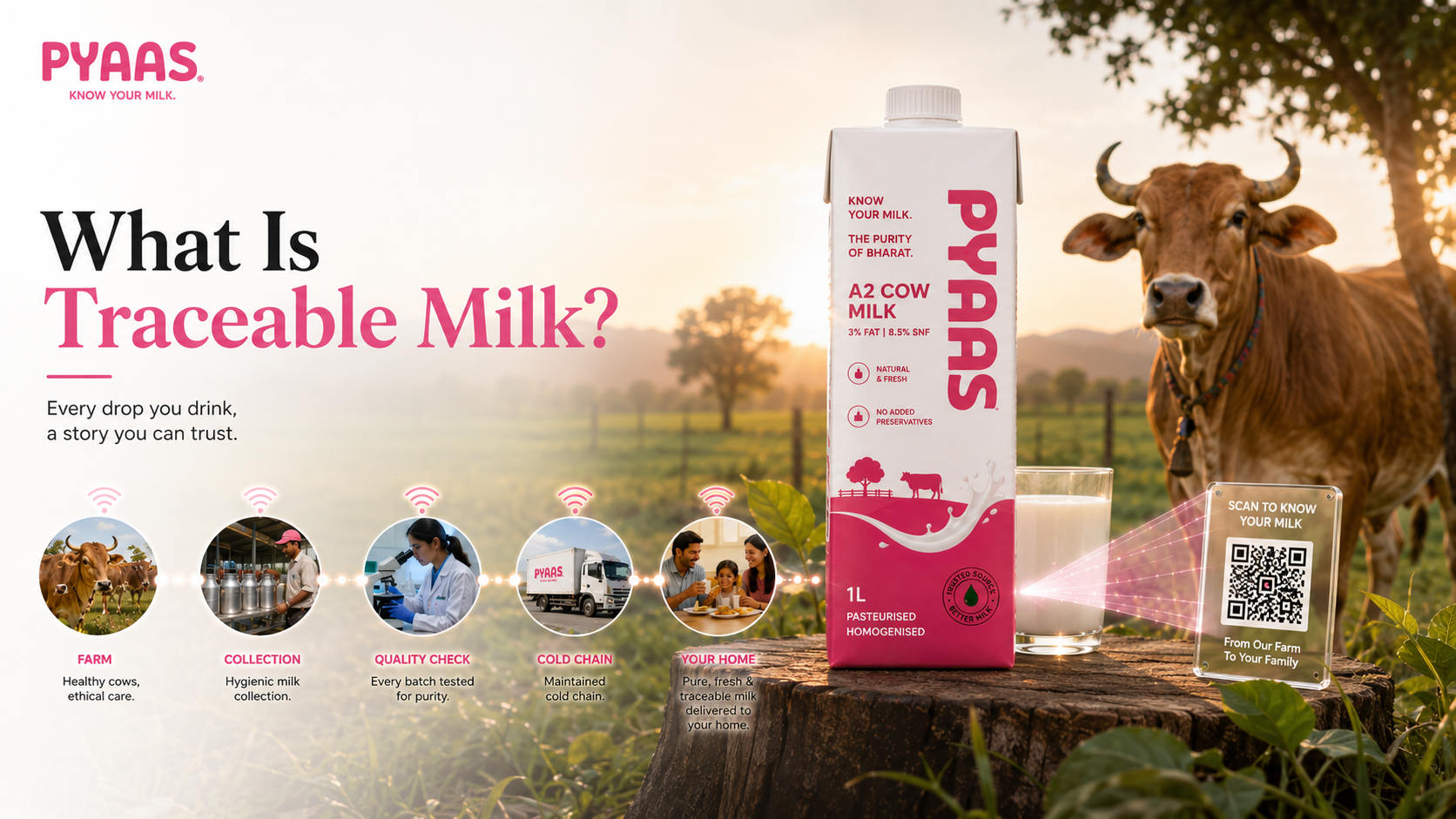
What Is Traceable Milk? Why Modern Consumers Want to Know Their Milk
5 July 2026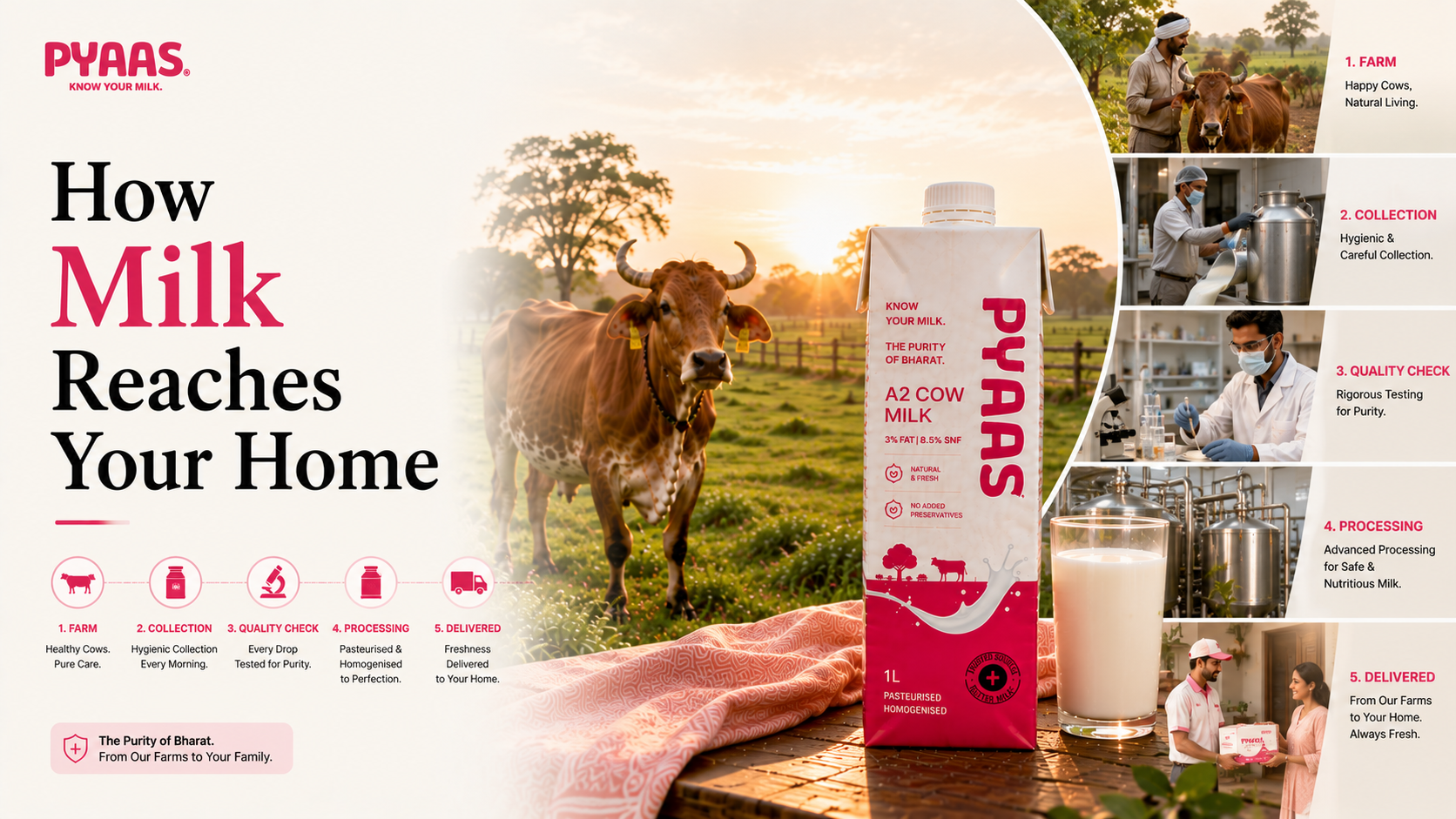
How Milk Reaches Your Home: The Journey from Farm to Table
11 July 2026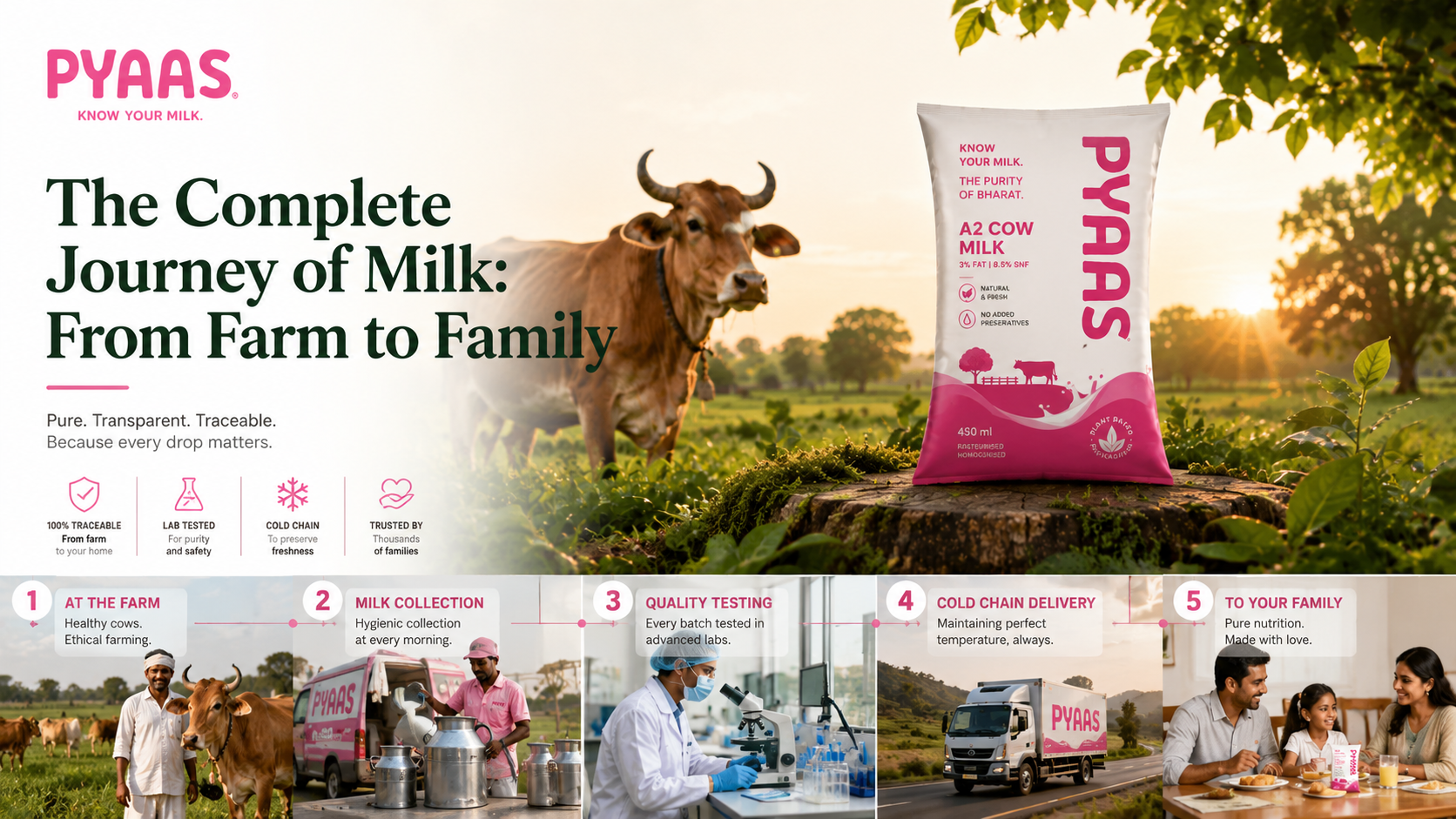
The Complete Journey of Milk: From Farm to Family
4 July 2026
Farm Fresh Milk vs Packaged Milk: Which Is Better for Your Family?
9 July 2026