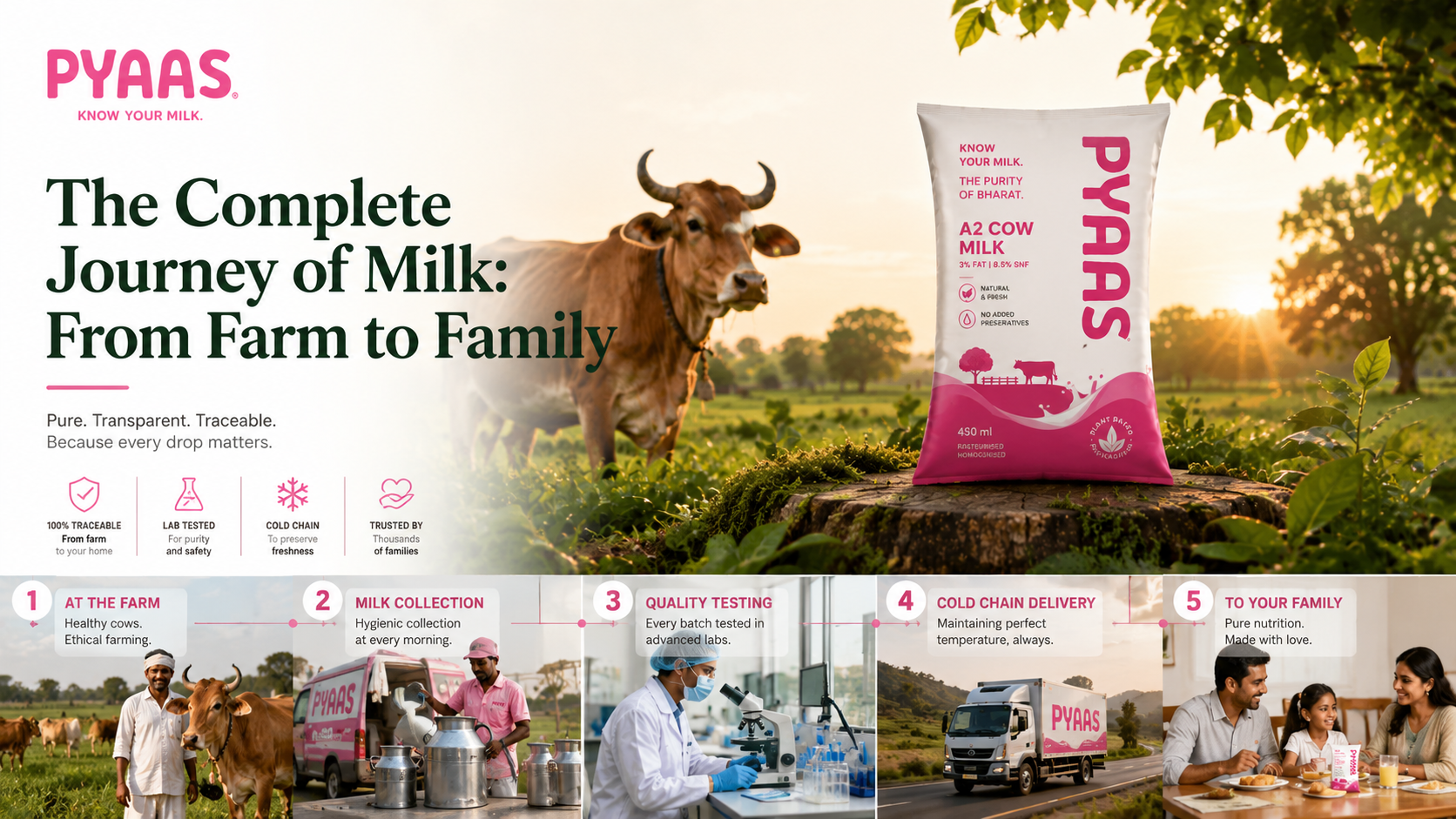
The Complete Journey of Milk: From Farm to Family
Every morning, milk arrives quietly: a carton in the fridge, a pouch on the kitchen counter, a warm glass at the breakfast table. It looks simple. Yet behind that single glass sits one of the most coordinated and time-sensitive journeys in our food system. The complete journey of milk from farm to family moves through caring hands, careful testing, cold logistics and thoughtful packaging, often within hours. Most families never get to see any of it.
At PYAAS, we think you should. When you understand how milk actually travels from a named farm in Gonda, Uttar Pradesh to your home in Delhi NCR, Lucknow or Ayodhya, you stop buying milk as a faceless commodity and start choosing it as a product you trust. This guide walks through every stage of that journey, explains why each step matters for freshness and safety, and shows how traceability is quietly rewriting what good dairy means for Indian families.
Stage 1: It Begins on the Farm
Long before milk reaches you, it begins with healthy animals and patient farmers. Good milk is not made in a factory. It is grown on a farm through daily, unglamorous work: feeding cattle balanced diets, providing clean water, keeping sheds dry and well ventilated, and watching closely for any sign of illness. Calm, well-cared-for cows give better milk, and indigenous Indian breeds are central to this story.
The breed matters more than most people realise. Native desi cows such as Gir and Sahiwal naturally produce A2 type milk, which carries a different beta-casein protein than much of the conventional milk supply. If you want to understand why this distinction has become so important, our guide on Gir cow milk and why it is so sought after is a good place to start. The farm stage sets a ceiling on quality: no amount of processing later can improve on milk that began poorly.
- Animal health: balanced feed, clean water and veterinary care
- Hygienic milking: clean udders, sanitised equipment and trained hands
- Breed and origin: indigenous A2 breeds, raised on a known farm
Stage 2: Milking, Collection and the First Race Against Time
The moment milk leaves the animal, a clock starts ticking. Fresh milk is one of the most perishable foods in any Indian kitchen, and the first transition, from the milking shed into the wider supply chain, is where quality is most often won or lost. This is the stage where speed and cleanliness matter most.
In a transparent system, milk is chilled quickly after milking and the time it left the farm is recorded, not estimated. That single timestamp is one of the most honest things a dairy can share with you. We explain how this works in practice in our deep dive on how PYAAS tracks milk from farm to family, where every batch carries the story of where it came from and when.
Stage 3: Quality Testing and Accountability
Before milk travels any further, it should be tested. Reputable dairies check each batch for key indicators that tell you whether the milk is genuine, nutritious and safe. Two of the most familiar measures are SNF (Solids Not Fat) and FAT, which together reflect the richness and authenticity of the milk.
Testing is also the front line against adulteration, a real and persistent problem in India. Detergents, starch, added water and other contaminants do appear in parts of the unorganised supply chain. If you want to spot the warning signs yourself, read our practical articles on 7 simple milk purity tests every family should know and milk adulteration in India. Within FSSAI's regulatory framework, consistent testing is what turns a promise of purity into something you can actually verify.
What honest testing looks like
- Batch-level checks: SNF and FAT measured per batch, not just occasionally
- Adulteration screening: watching for water, starch and other contaminants
- Shared results: lab figures you can actually see, not hidden in a file
Stage 4: Cold Chain, Transport and Processing
Because milk spoils so easily, temperature control is everything once it moves. A cold chain is the unbroken sequence of temperature-controlled steps that keeps milk cold from the moment it is collected until it reaches your door. Break that chain even briefly and quality drops, regardless of how good the milk was at the farm.
Depending on the product, milk may also be gently processed. Pasteurisation uses controlled heat to make milk safe while preserving its character, and you can learn more in our explainer on what pasteurisation is and why it matters. Some milk is homogenised so the cream does not separate, while traceable single-origin milk is often kept closer to its natural state. Each choice is a trade-off between shelf life, texture and how close the milk stays to the farm it came from.
Stage 5: Packaging, Delivery and Reaching Your Family
The final stretch is packaging and delivery. Good packaging protects milk from light, air and contamination while carrying the information that lets you make an informed choice. PYAAS milk reaches homes in cartons and pouches, and our small-batch A2 Bilona ghee arrives in a jar, slow-churned the traditional way from the same trusted milk. The point of packaging is not decoration. It is protection and proof.
This is also where traceability becomes tangible. A QR code on the pack can reveal the exact farm, the named farmer, that batch's lab test for SNF and FAT, and the time the milk left the farm. That is the difference between trusting a logo and knowing your milk. To see how this fits into the bigger picture, explore what traceable milk really means and the principles behind our Know Your Milk promise.
Why the Whole Journey Matters Now
For decades, Indian families had almost no visibility into this journey. You bought a brand and hoped for the best. That is changing fast. Parents choosing milk for their children, families managing health at home, and anyone tired of guessing now want real answers about origin, handling and purity.
Transparency is what turns milk from a commodity into a trusted product. When you can name the farm, see the test and check the time it left, dairy becomes a relationship rather than a gamble. That belief shapes everything we do, from how we work with farmers to how we built our founding family around a single idea: every family deserves to know the complete story behind their milk.
You do not need to memorise every stage of this journey to benefit from it. You simply deserve a dairy that is willing to show you the whole thing, honestly, from farm to family. When you are ready to taste the difference traceability makes, we would be glad to welcome you to the PYAAS family. Know Your Milk.
Written by
PYAAS Team
The PYAAS Team writes about traceable, single-origin A2 dairy from named farms in Gonda, Uttar Pradesh, helping Indian families truly know their milk.
More from PYAAS TeamCommon questions.
What are the main stages in the journey of milk from farm to family?
The journey typically moves through farming, milking and collection, quality testing, cold chain transport, gentle processing, packaging and final delivery. Each stage protects freshness, safety and nutrition. In a traceable system, every step is recorded so you can verify where your milk came from and when it left the farm.
Why is the cold chain so important for milk?
Milk is highly perishable, so it must stay cold from collection until it reaches your home. A cold chain is the unbroken sequence of temperature-controlled steps that preserves quality. If the chain breaks even briefly, milk can spoil and lose value, no matter how good it was at the farm.
How can I be sure the milk reaching my family is pure?
Look for milk that is tested at the batch level for SNF and FAT and screened for adulteration like added water or starch. The strongest assurance is traceability: a QR code that shows the exact farm, the named farmer, the batch lab test and the time the milk left the farm. That lets you verify purity instead of just trusting a label.
What does traceable milk mean and why does it matter?
Traceable milk lets you follow your milk back to a specific farm and batch, with details like the farmer's name, lab results and the time it was collected. It matters because it turns milk from an anonymous commodity into a product you can verify. For families choosing milk for children or health, that transparency builds real trust.
Is farm to family milk the same as A2 milk?
Not automatically. Farm to family describes the short, transparent supply route from a known farm to your home, while A2 refers to the type of beta-casein protein in the milk. Indigenous Indian breeds such as Gir and Sahiwal naturally give A2 milk. PYAAS combines both: traceable, single-origin A2 cow milk delivered fresh.
Get the next one in your inbox.
The occasional note on milk, ghee, and how we work. Plain words, no hype, and you can leave any time.
Keep reading.
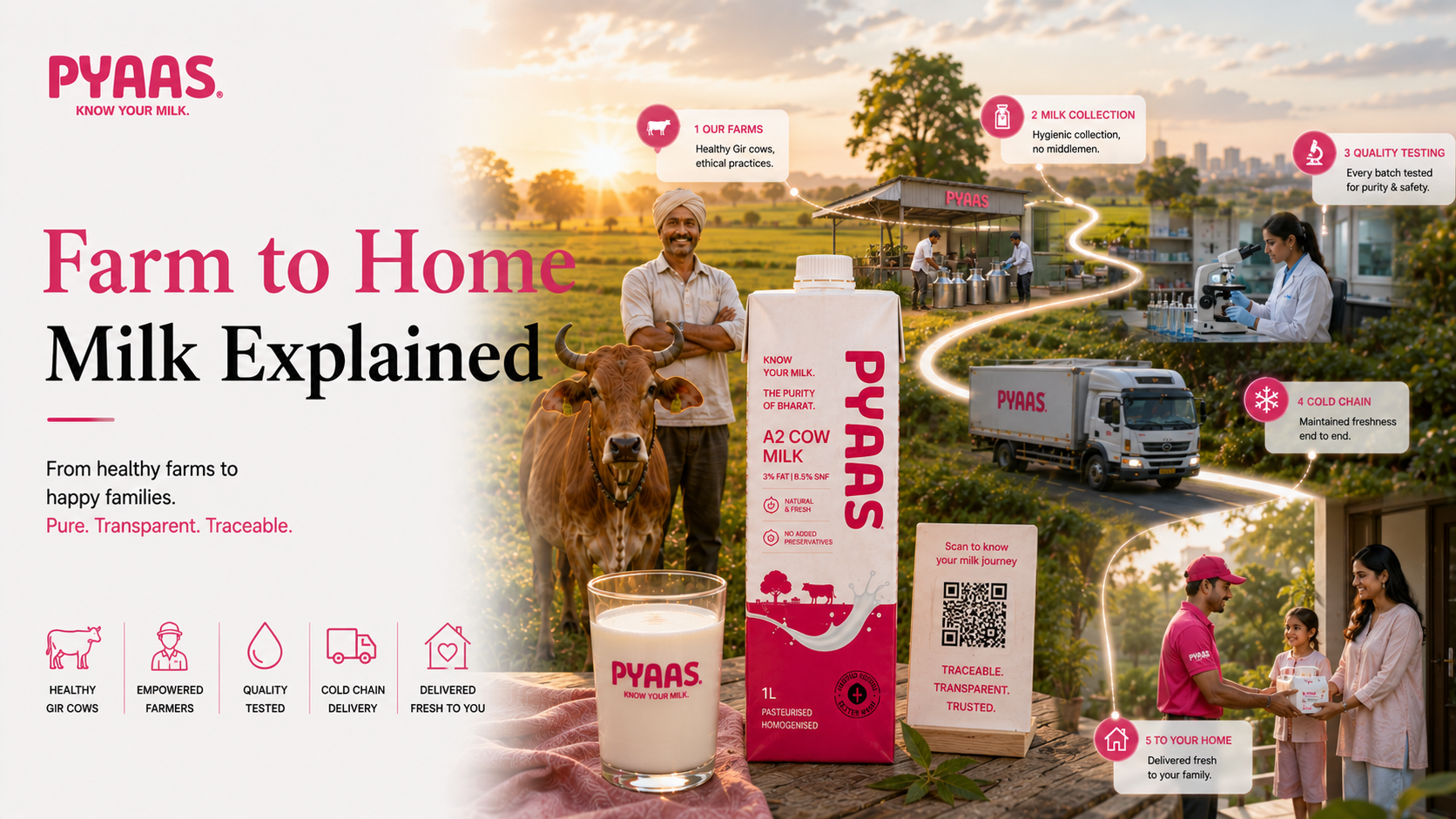
Farm to Home Milk Explained: The Journey Behind Every Glass
7 July 2026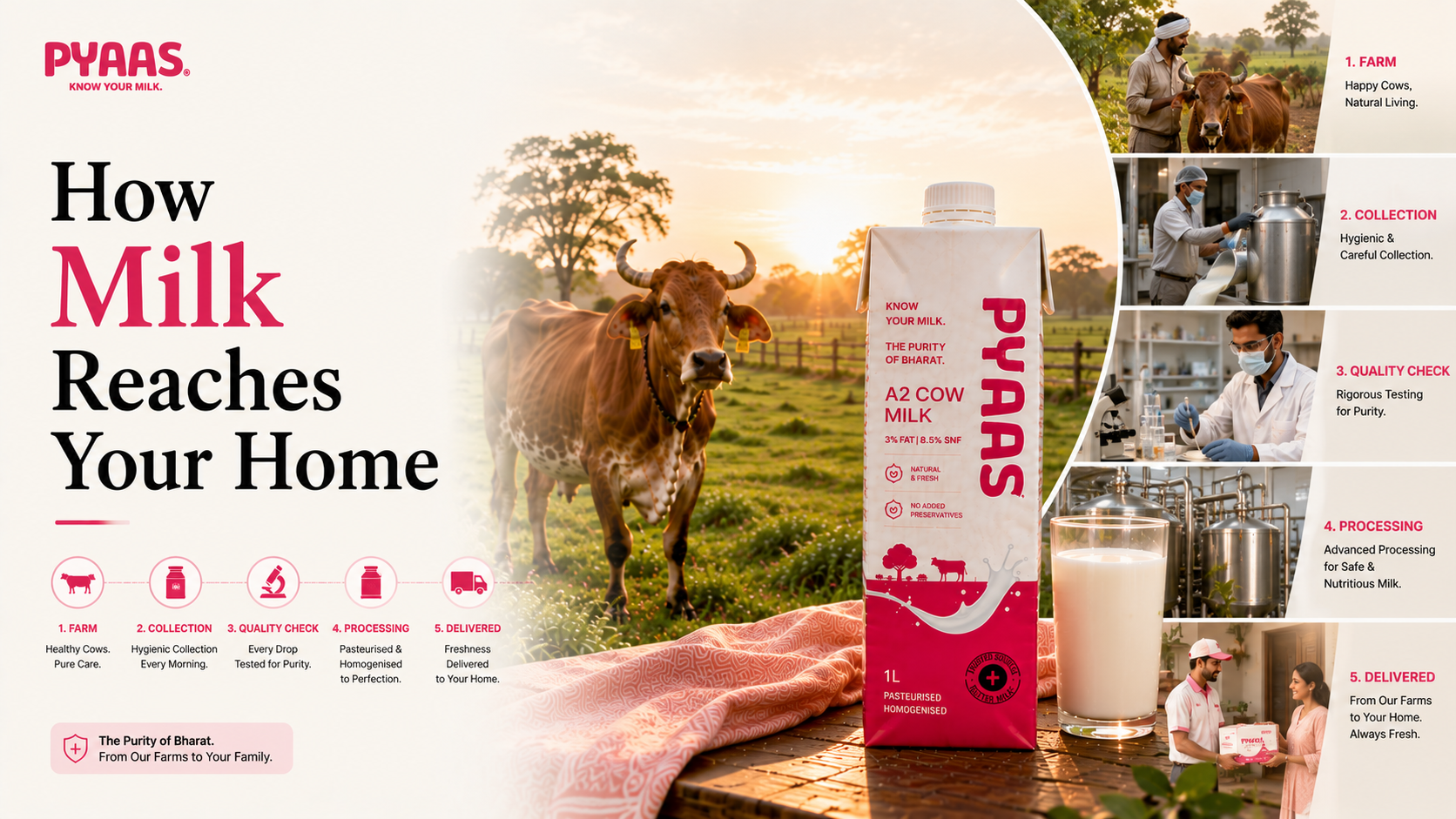
How Milk Reaches Your Home: The Journey from Farm to Table
11 July 2026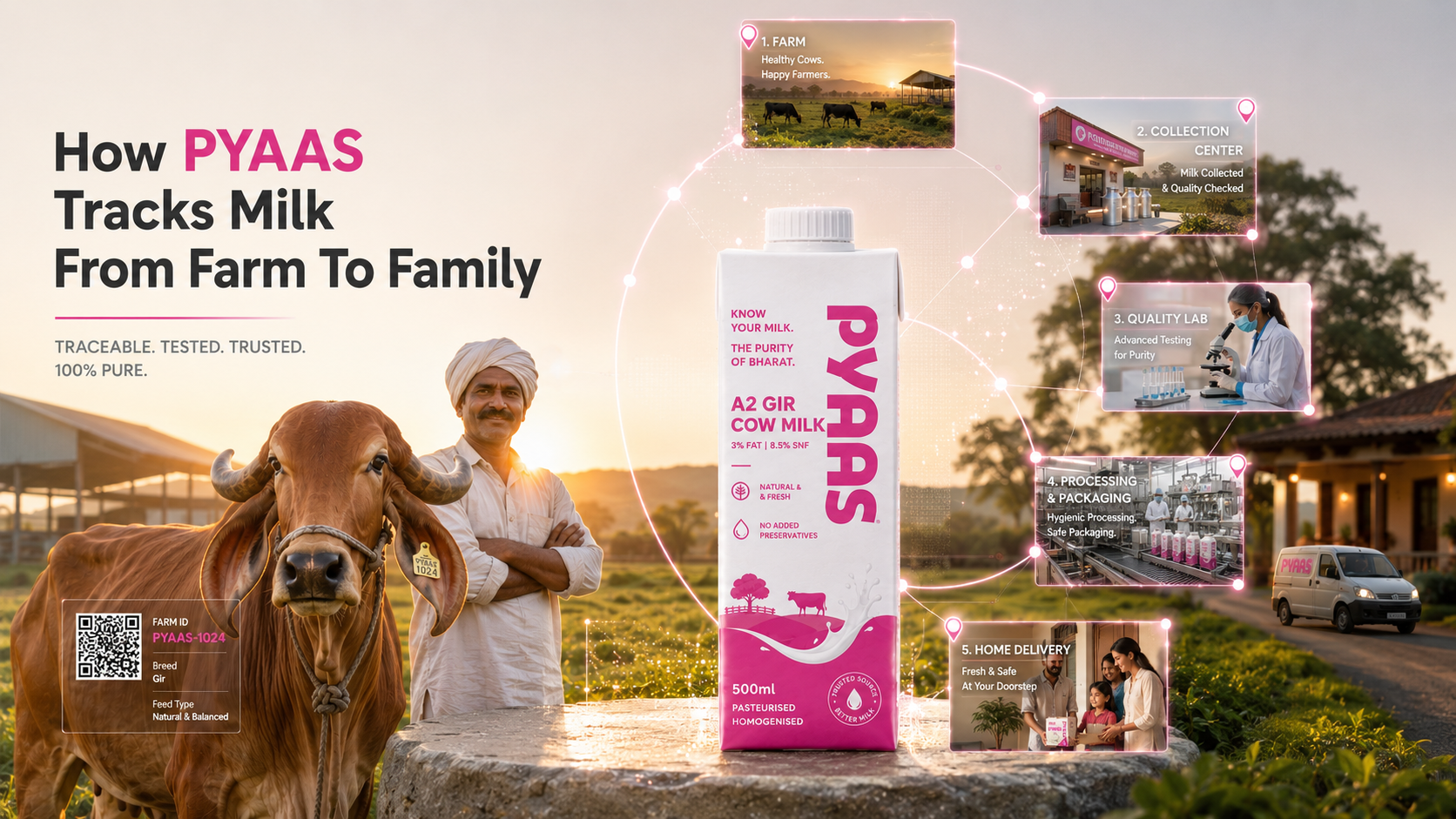
How PYAAS Tracks Milk From Farm To Family
28 June 2026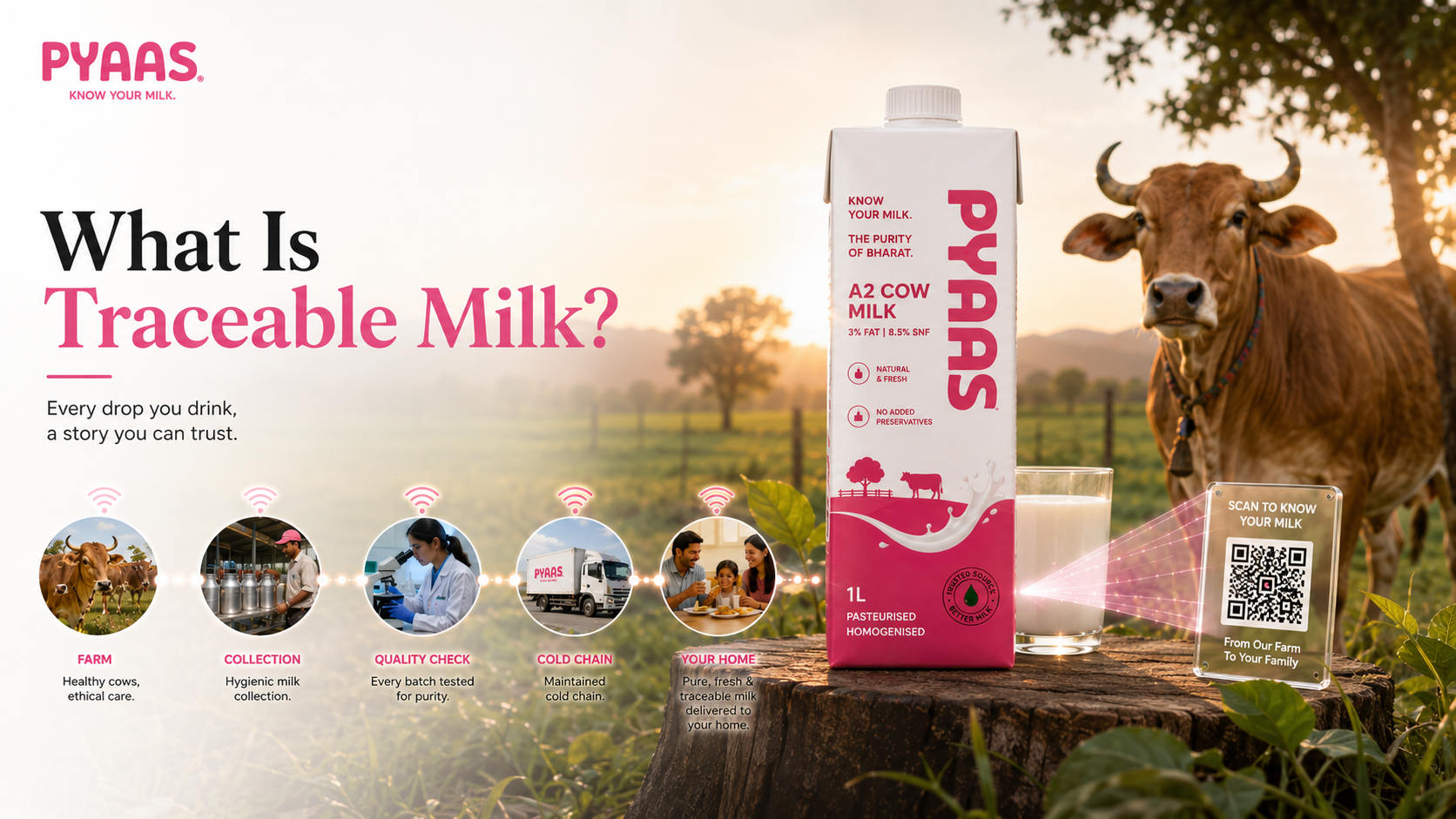
What Is Traceable Milk? Why Modern Consumers Want to Know Their Milk
5 July 2026